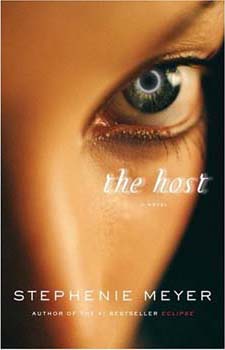
Excellent advice from author Larry Correia

Larry just wrote a great post about Writing Gun Stuff. Down at the bottom, he says this:

I’m not one of those people who gets hung up on “rules of writing”. . .  If it is awesome, and your readers like it, write it. [emphasis added]

Amen to that. And if you’re going to write about characters with guns, read the rest of the of the post.

Share

Similar Posts

  • On writing lesson 5 is up

    In lesson 5, I share insights on creativity that elude many who start down the path of writing. Not knowing them can cause a lot of frustration and convince writers to quit. Don’t be frustrated. You’re going to learn:

    • What creativity really is
    • How it actually works
    • What it requires
    • And two of the main tools that will help you practice it–hunting zing and creative Q&A

    Here it is: Lesson 5: How do you get and develop ideas?

    Enjoy!

    Share
  • How many copies do average authors sell?

    I posted earlier about the sales number for best-selling authors. What about the average author?

    Here’s Patrick Nielsen Hayden, an editor at Tor Books, in an interview on io9.com about the future effects of e-text on publishing:

    io9: Does it make a difference to you if an author has an online reputation? Does that go into your decisions to acquire books?

    PNH: Obviously it makes a difference if an author has a public online profile of some sort, even just down to the level of having a moderately popular blog. Most books sell 5, 10, or 15 thousand copies. Most are midlist books. With those people, even a modest online presence can make a difference in sales.

    The whole interview is interesting. In fact, he says something that I think is important to note about what today’s novelists and, to a lesser degree, short story writers are actually providing:

    One thing I’m sure of is that we’re [Tor Books] going to be in linear immersive narratives that produce the reading trance. We won’t be moving towards a “choose your own adventure” thing. People will do those things, but those are different art forms. There’s something about immersive text that you can read in order – it’s persisted through many technological changes. This fiction stuff works pretty well. It’s been around a long time

    I think he’s right. The EXPERIENCE you get in the reader’s trance, similar to the one you get in a movie, is a strong experience. The media used to convey that experience doesn’t really matter as long as it makes it easy to get into the trance.

    Check out the whole interview.

    Share
  • Meyer on the Brain

    Watch an interesting Borders interview with Meyer about Host and Twilight. The thing I keep seeing in her interviews is that this woman follows her passion. She follows the story that wows her. It’s nice, of course, that millions of fans want to share that wow with her. But I don’t know that a writer can be successful doing anything else.

    Here’s Orson Card’s blurb about Meyer in Time’s list of the 100 Most Influential People

    Nobody was looking for Twilight. A Mormon housewife writes a young-adult novel about a love affair between a teenage girl and a vampire?

    Is this Anne Rice lite? Not in the eyes of the teenagers—and their mothers—who have embraced the book.

    But Stephenie Meyer’s Twilight does raise some questions, and I’ve asked them. “You really want your teenage daughter to live inside the story of a girl who lies to her parents, invites a boy to sleep in her bed and trusts him not to take advantage of her?”

    These women look at me as if I’m insane. “But she can trust him. He really loves her. He’s…perfect.”

    In an era when much of the romance genre has been given over to soft porn, and dark fantasy is peopled with one-dimensional characters bent on grim violence, many readers have become hungry for pure romantic fantasy—lots of sexual tension, but as decorous as Jane Austen.

    Meyer, 34, did not calculatedly reach for that audience. Instead, she wrote the story she believed in and cared about. She writes with luminous clarity, never standing between the reader and the dream they share. She’s the real thing. Still, who’d have thought it? Today Mr. Darcy is a vampire.

    Card is author of Ender’s Game, Empire and Women of Genesis

    Share
  • Another review and interview for Servant of a Dark God

    On Saturday, gun nut (and author of Monster Hunter International) Larry Correia had a group of his buddies show up to the signing. They explained the explosive target business to me. Larry read the book over the weekend and then held forth in this review.

    In this interview with Lon Prater I discuss the how much work it required for me to write this novel.

    Share
  • Indie Thoughts: Resources for Indie Writers

    About this time last year I got the last of my rights back to the Dark God properties. I thought it would take twenty or thirty hours to figure out the whole indie publishing thing. And then the awesome John Brown story machine would kick in gear.

    Reality promptly woke me up and slapped me around a bit. This last year has been quite the learning curve. Here’s what I’ve had to pick up:

    • Designing book covers
    • Finding artists
    • Working with artists in a way that actually works
    • Copy editing
    • Formatting book interiors
    • Fonts, fonts, fonts
    • Using ISBNs
    • Using InDesign to create files for both POD books and epubs
    • eBook structure
    • Editing ebooks (okay, just get Calibre ebook editor right now. We luvs it, Precious)
    • Validating ebooks (http://validator.idpf.org/)
    • Converting epubs to Amazon’s mobi format
    • Uploading ebooks to the various ebook retailers: Amazon, NookPress, Kobo, iTunes (I upload via Draft2Digital), Smashwords
    • The pros and cons of CreateSpace vs Lightning Source
    • Using CreateSpace to publish POD books
    • Registering books with the US Copyright Office
    • Writing better book descriptions
    • Using keywords and categories on Amazon
    • Setting prices in the indie market
    • Creating an email list (I love MailChimp. They make me happy every time I go to their site)
    • Advertising and promoting as an indie

    One of the things I love about this business is that there is always more to learn. But I’m happy to be over that curve. For folks just starting out, let me share some of the resources I found super helpful with a number of the things listed above.

    Posts by a mega indie-seller Russell Blake to give you the right perspective about indie publishing. I’ve read a lot of posts the last few years about being an indie author. These are the best I’ve come across.

    Online courses to help you on the publishing side.

    • Designing Book Covers and Designing Book Interiors with Dean Wesley Smith (look for “Online Workshops”). I don’t agree with Dean on all his ideas about pricing and promotion, but these two courses helped a great deal.
    • InDesign CS6 to EPUB, Kindle, and iPad with Anne-Marie Concepción at Lynda.com. Awesome.

    The most practical and clear-headed books about indie promotion I’ve read. For other clear-headed advice, see the Russell Blake posts above.

    The most helpful book on copyright.

    The most helpful book on copy editing as well as info to put into front and back matter.

    Helpful threads on Kindle boards

    Other great resources

    Good luck!

    Share