My daughters have introduced me to Studio C, a comedy program that started with The Divine Comedy troupe on the BYU campus who all growed up and were given a gig on TV. They do these hilarious skits.
Next is John Branyan’s brilliant “Three Little Pigs”. My family and I have been enjoying this for months.
Finally, here’s something to think about. You know I enjoyed Jonathan Haidt’s book The Righteous Mind. Matt Wolfe pointed it out his TED talk to me. The one that preceeded his book. If you’re conservative, like I am, this talk will, at times, annoy you. But the ideas behind it are great.
In July, I blogged some spending 101 for Congress and the President, including contigency planning for alien invasions. I thought I made some good points. However, through the whole spending debate that occured this last spring nobody in the media or elsewhere was able to make clear what is going on with the US government. Nobody except Dave Ramsey. He explained it on Fox and then on his website. If you take the big federal numbers and translate them to a size we can understand, here’s the situation:
– Joe and Susie (the Federal government) make $55,000 a year
– They spend $96,000 a year
– At the same time, they have $366,000 in credit card debt
Look at those numbers again. Every year those clowns in Washington are adding $41,000 a year to that massive debt total. Soon enough, our overspending will kill our ability to do anything else except pay the interest on that debt. 150 years after America abolishes slavery, we decide that debt slavery really is a good idea. Yea! Give us shackles! Give us shackles!
No wonder our credit score as a nation (our bond rating) was reduced.
So what did the government do this last Spring? They agreed to find some way to cut spending from $96,000 to $78,000. Meaning they’re still adding $28,000 dollars a year to the government’s massive credit card debt total. Which we have to pay!
If the US Government was a family, they would be making $55,000 a year, they spend $96,500 a year, & are $366,000 in credit card debt. What’s the first step to get out of debt? Stop overspending! But that means a family that is used to spending $96,500 a year has to learn how to live on $55,000. That’s a tough pill to swallow. It works the same way for the government. You can’t borrow your way out of debt, whether you’re a typical American family or the entire U.S. government. At some point, you’ve got to say, “Enough is enough!” and make the hard cuts necessary to win over the long haul. – Dave Ramsey
The answer is NOT to print more money.
If you do that, you reduce the value of each dollar. It’s called inflation. As Ron Paul rightly points out, it acts effectively as a tax. Or as I like to put it–a PAY CUT. How many of you would like to get a nice fat 10% or 20% pay cut this year? Furthermore, instead of fixing the problem, the overspending continues, which means more pay cuts in the future. More fun!
No, the thing we have to do is STOP SPENDING MORE THAN WE MAKE. Here’s what has to happen.
We must write into law that Congress balance its budget every year–they must not be able to spend more than they take in except in rare emergencies. This means they might need to build up a rainy-day fund.
We must cut our spending. Now. I linked to an idea Ron Paul has for this in my 101 post where we just go back to 2007 levels of spending.
We must work to increase our revenues. Not through hiking taxes to monstrous levels, but by providing optiomal regulatory conditions for economic growth. See my 101 post.
We need to make sure the taxes are visible, so the American people can easily see what’s going on. Congress has mandated that lenders provide clients an APR so they can clearly see the rate they will pay on a mortgage. Why shouldn’t we mandate that the IRS send out an ATR–annual tax rate (or maybe Annual Grab Rate or Annual Tax Burden or you come up with the name)–which includes all Federal taxes translated into one total rate?
We need to give everyone the opportunity to pay for the soldiers that defend them and the roads they drive on, even if it’s just $50-100 a year for the very poor.
We must send people to the White House and Congress who are willing to do what it takes RIGHT NOW.
I mentioned Ron Paul a number of times above. He’s not my choice for president. But he has added a number of good things to this discussion. Here are the Ramsey links:
EDIT: Mark Holt makes an excellent point in the comments. Inflation isn’t just a pay cut. It’s a savings cut, a retirement cut, a 401k cut, a house value cut, an everything cut. Using that backdoor method, the DC Connivers institute a tax of everything, something they’d never be able to pass out in the open.
No, really. It’s true. You just have to spend smartly. And in a special way.
Over the course of your life, if you make what the average American does, more than a million dollars will flow through your hands. And yet so many of us don’t feel rich. That’s because money is like the Gingerbread Man. Turn your back on it, and it’s out the door, rudely taunting everyone as it flies by. And then it gets eaten by a fox. Such a waste.
But it doesn’t have to be.
Let me share with you THE best method I’ve found for managing my money. It takes tons of anxiety out of spending and saving. And, if you’re a Dave Ramsey fan, it is the one thing upon which everything else he teaches depends. If you’re not a Ramsey fan, it doesn’t matter. After getting a job, this is the first thing you must do to get rich.
Here’s the big secret. It has three parts:
1) Decide how much you’re going to spend on various things BEFORE you spend it
2) Make what you have left in each spending category EASY to track
3) Manage the things you can’t foresee
To do the first two parts, you’re going to create a special kind of spending plan. We won’t use the term “budgeting” because “spending” is so much more fun, and because that’s what we’re going to do anyway. To understand how to do this, you need to watch three videos.
Before you do, please know I earned a Masters degree in accounting. I’ve used Quicken for more than twenty years. Neither of those things has helped me manage my money like this simple method. If you’re looking for a better way to manage your money, this is it.
First, watch this video to get an overall idea of how this method works.
Note: you can use actual envelopes and cash for everything if that makes you happy, but you really don’t need to. The idea is to think of pre-allocating your monthly income to categories of expenses AND then having an easy way to track what’s left.
Now, watch this bubba explain how he does it.
But John, didn’t he say the same thing?
Basically, but he has a fun accent. Besides, it’s good to see another example. And please note again: you don’t have to use actual envelopes and cash, although many swear by them.
Finally, watch this one. No, it’s not just another repeat. There are some additional important ideas illustrated here.
This video brings up the idea of why simply tracking an overall account balance isn’t very helpful. It also shows you WHY envelope categories are–they make it immediately apparent how much money you have to spend for a thing. If you just use Quicken to track what you spent (looking in the past), you’ll run into troubles. Let me tell you, I know this from experience. We use Quicken, and have for years, and plan use it for some time to come because it makes taxes and bank reconciliation a snap. But Quicken only tracks what you spent. Tracking, as important as it is, is not the key to success. The key is pre-allocating BEFORE you spend. And then tracking so you know what you have left in that category. And making that tracking EASY.
The final thing you have to do is manage the things you can’t foresee because things rarely go exactly to plan. Unexpected things ALWAYS come up. Your daughter will crash the car. Your husband will get appendicitis. You will forget that you had a $200 school sports expense.
Okay, fine. Things happen. But how do you manage them if you can’t foresee them?
If it’s really small, you simply adjust your plan. For example, if you need $30 more in food, you can transfer it from fuel if you have some extra there.
You manage larger things by building up an emergency fund. Ramsey suggests starting with a $1,000 emergency fund and then trying to get two to three months of living expenses—about $10,000 to $15,000 for most people. Unexpected things WILL happen and cost your money. So build up some cushion to take care of them.
Finally, you manage the really large things by getting proper insurance. This is what insurance is for. The types of insurance you need include (1) homeowner’s or renter’s, (2) auto, (3) medical, (4) long-term disability, (5) long-term care (for those 60 and older), and (6) life insurance. You may add true identity theft insurance as well.
Okay, so that’s the overview. If you want to try this, here’s how you do it. It’s fairly easy.
STEP 1: get your head straight
Resolve that you will NOT use credit for anything. You will not spend any money you don’t have. You will not put another dime on a credit card, and this despite the fact that the plastic devil companies are begging you with offers almost every day to sign up for their cards. (Hum, I wonder how they afford all that junk mail.) If your monthly bills are greater than your income, then we have to fix that first. But the new law of the land is zero new debt.
Next, always remember to allocate your money to these categories first—shelter, food, adequate clothing, and adequate transportation. This means if you have a crunch month, you would NOT pay credit card bills before food, even if you work for Visa.
STEP 2: get your blank sheet & pencil
Get out a piece of paper and pencil (not a pen) or open an Excel spreadsheet. Whoa, that was an easy step.
STEP 3: list your monthly income
List your expected monthly income at the top from all sources.
STEP 4: list your spending categories
List your spending categories. You’re going to split them into two groups.
The first group goes right below your income and includes all of your recurring monthly expense/spending categories. Not the amounts you spend. Just the categories. Things like mortgage, electricity, phone, groceries, dining, etc. Make sure you include some entertainment/fun money.
The second group goes below your recurring monthly expenses and includes all of your major annual periodic expense/spending categories. Things like Christmas, vacation, clothing, kids back to school stuff, etc. And things you want to save for—a couch, iPhone, car, etc. Your emergency fund goes here as well.
Decide how much you will spend in each category this month. You should have 0 dollars when you get to the bottom of the sheet. Spend (allocate) every dime BEFORE you start the month. You’re going to do this at the beginning of each month. And you will probably have to adjust it a couple of times during the month.
You will probably have categories that don’t get any money this month.
You will also have categories that get money, but you won’t spend any of it this month. These are your periodic expenses. Your goal is to have the cash up front to pay for them, so you have to save for them. Remember, you are NOT going to take on any new debt.
For example, if you’re saving up for Christmas, you allocate some money for that out of this month’s funds and TRANSFER it to savings. Then it will be there when you need it. You could draw the cash out and put it in an actual envelope, but you don’t have to. Just as long as you keep a record of the total amount in savings and what it’s all supposed to be for, i.e. total savings in July = $1,000: $500 for back to school, $200 for Christmas, and $300 for my trip with kids to Six Flags in 2013.
STEP 6: mark the “watch” categories
Some of the categories you need to watch closely, and some you don’t. The ones you need to watch closely will be your “envelope watch” categories.
The categories you don’t need to watch as closely are those that are automatically taken out of your account each month. And those you will write a check once a month for. These things include mortgage, car payment, electricity, etc. These are NOT categories you need to use actual envelopes for. You can track it on paper or in the spreadsheet. Not much happens with these categories.
But there are other categories that you’re going to be spending throughout the month, and it’s easy to over spend if you don’t track them. Groceries, dining, entertainment, gasoline, a specific vacation, etc. are all categories that you make multiple purchases with each month and are flexible/discretionary and need to be watched closely. So while everything is tracked in a category/envelope on paper or on the computer, you’ll track these with either a real envelope and cash or a virtual one using that free software you saw in the third video or a piece of paper with a running category balance in your wallet.
STEP 7: have fun and spend!
Now go out and spend!
Before spending, check your envelope. Do you have enough money? If you do, spend and be happy. If not, save up for it or find a way to save money in another category and adjust so that you’re still spending the same total amount. Never spend what you don’t have.
If you feel you need something not planned for, well, you have to get it later OR transfer something out of another envelope. I just make myself wait a day or three, and usually the urge to buy, Buy, BUY! goes away, and I see I don’t “need” it right now. Or maybe a more affordable option presents itself.
If the kids want something, and you feel guilty you can’t give it to them, just tell them what’s in the envelope/category, and tell them they can save for it or choose something else in that category that will fit with what you have left.
If you’re tracking envelopes virtually or using the paper balance in your wallet, you MUST update your envelope AFTER every purchase so you don’t spend more than you have. If you find you just can’t seem to remember to do this, go to the cash method.
That’s it!
Of course, that’s not quite it because even though it’s easy, if you haven’t done this before, it might take some adjustment. Give yourself a month or three to get it down. Because when you do, it WILL produce great results and peace. It’s doing that for us.
If you feel you need more info, I suggest you read Dave Ramsey’s Complete Guide to Money. Here’s the first chapter to sample: Complete Guide To Money sample chapter.
Happy spending.
EDIT: here’s another video to watch: http://www.youneedabudget.com/. Then read about the method: http://www.youneedabudget.com/method. This one highlights the idea that you need to make sure you realize that things will happen that you cannot foresee. No plan survives contact with the enemy.
My wife and girls do not. Something about bruising and pain.
We could get pantywaist nerf guns. We do have some PVC marshmellow shooters. But a man wants something with a bit more kick.
I think I’ve found it. They’re called AirForce BlowGuns. Like PVC guns, you power them with your own breath. Unlike a lot of those guns, these seem to have some power.
You’re name is Mitch Rafferty. You’re a gardener. You have no past as a cop, spy, or Navy SEAL–you’re just a plain old petunias and begonias guy. You’re working in someone’s yard when you get a call on your cell phone. You answer. And the guy on the other end has your wife.
He tells you that you will get him two million dollars or you’ll never see her again.
You’re lost. This has to be a sick prank. You’re just a gardener. You know peat moss and mulch. You don’t have two million. Heck, you have, at the most, $11,000 in the bank. You tell him this. He tells you he knows.
Then your wife screams over the phone. The wife who you love, who makes you whole. They let her talk. It’s not just one man. And then, just to show you that they’re serious, they kill a complete stranger who is walking a dog across the road. They shoot him in the head. You know they’re watching you. You look around and can’t see where the sniper is hiding.
You’re a gardener. They have your wife. If you go to the cops, they kill her. If you don’t deliver, they kill her. What do you do?
That’s the premise of Dean Koontz’s The Husband. I listened to this on audio book, read by Holter Graham, and, folks, I don’t think a book has gripped me like this in a very long time. And that despite some quirks in the reader’s presentation. I’m coming to respect Koontz as a writer more and more. I can’t recommend this book highly enough. Go get it. Read it. Do it before they make the movie.
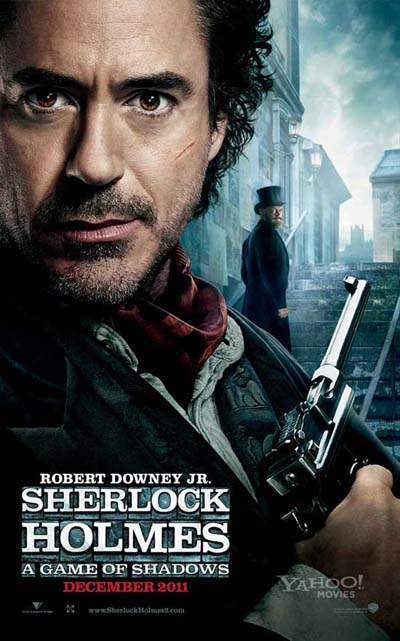
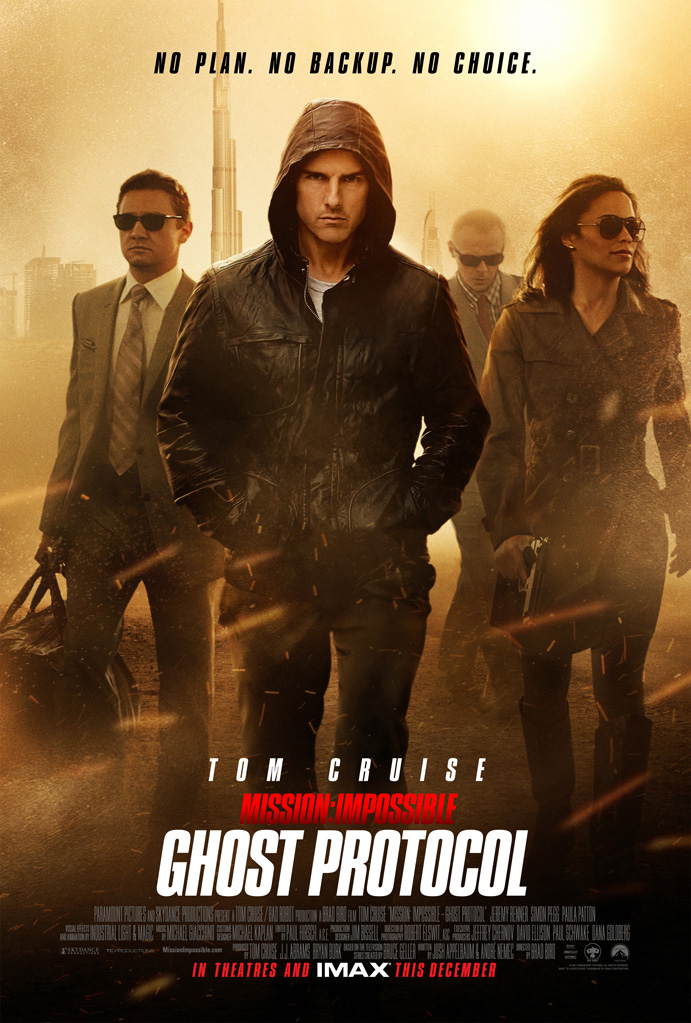
I have been looking forward to two movies this holiday season. One of them was as good as I’d hoped it would be. The other disappointed me because the story tellers forgot to make things clear. The two movies were Mission Impossible: Ghost Protocol and Sherlock Holmes: A Game of Shadows.
I loved the first Sherlock Holmes movie—the story was intriguing and plotted well, the atmosphere and music were amazing, and the characters and relationships were even better. In fact, the movie presented some of the most delightful characters I’ve enjoyed over the last few years. So it was a no-brainer to plan in a date to see this new episode.
Sherlock Holmes: A Game of Shadows provided the same great atmosphere and music as I enjoyed before. Holmes and Watson were as wonderful as they’d ever been. The film introduced a wonderful new character: Madam Simza Heron, a gutsy gypsy who you can’t help but want to know better. And it brought on Professor James Moriarty, the uber-villian. There was plenty of the wit that we enjoyed in the first one. It had all the elements to work.
However, the film fell down in its plotting. There were many times when I had no idea why the characters were doing what they were doing or how it fit into the overall threat. At other times, it appeared Sherlock could have taken out the villain but didn’t only because it would have ruined the plot.
The film makers also decided to kill off one of the characters, and therefore relationships, that had provided so much satisfaction in the first movie. And they did it without much fanfare. Who thinks it’s a good idea to kill off beloved characters like that? If you’re going to kill someone we love, you’d better make it meaningful and the core of the film. Alas, they didn’t.
In fact, it felt like there was too much stuffed into this film. Cool ideas that couldn’t be explored or have much impact including facial surgery for spies, a lost brother, European politics, resistance fighters, a henchman we hardly see. The wonderful Madam Simza Heron didn’t play the pivotal role she could have. So unlike Irene Adler in the first movie who becomes central to the story, she’s more of a bit of the setting.
If you loved the first film, you’ll have to see this. There’s a lot of good. But you must go knowing it’s a grade lower than the first film.
Now, I stopped liking the Mission Impossible movies about thirty minutes into the second in the series. But the previews for Mission Impossible: Ghost Protocol intrigued me. I like Tom Cruise as an actor. And so we decided to give it a try.
Mission Impossible: Ghost Protocol didn’t provide the atmosphere or super-delightful characters and relationships of Sherlock Holmes. But that’s not to say its characters were tepid. On the contrary, the cast was great with a lot of funny interplay. Furthermore, unlike some action films where everything seems to work for the hero, a lot of things go wrong for Tom Cruise’s character. These problems and his reactions are part of what make the movie.
The story also provided plenty of “action” but did it in a new way. This is the first time, for example, I’ve seen a car chase in a sandstorm. And it was a fab chase. It’s also the first time I’ve seen a final battle in an automated parking lot. The director and writers did a good job choosing new twists on common action elements.
But a story needs more than characters and new sights—the plot has to make sense. Especially when the plot takes center stage, which it does in action movies. And I’m happy to say that I never once wondered why our characters were doing something or how it affected the main threat. Furthermore, every one of the characters made a difference. The result was that I thoroughly enjoyed the film from start to finish. I can’t wait to watch it again. If you like action films, I think you’ll enjoy Ghost Protocol.
The Art of the Shaving
When I was on a mission in the Netherlands I was an idiot and did not take care of my face in the winter. I’d hop onto the bicycle with the temperature hovering around zero degrees (not counting the wind chill) and bike out with Fearless Companion to an area to meet with people or knock on doors. And I’d do it with hardly a thing covering my face and ears. As a result, I damaged my skin.
So now when I’m exposed to cold, my face flushes and stays that way for some time even when I’m in a warm house. I can’t wear cologne. And I’ve had a love/hate relationship with shaving. I can’t stand the prickle of a beard and so love to shave, but I hate the fact that when I shave, my face turns the color of a tomato for four to six hours. And this is when I use shaving cream specifically formulated for “sensitive skin.”
But then I walked into The Art of Shaving store in Fashion Place Mall and learned that those shaving creams designed for sensitive skins weren’t super gentle. They just numbed the skin so you didn’t feel the shave. The folks at The Art of Shaving suggested, of course, I use their product.
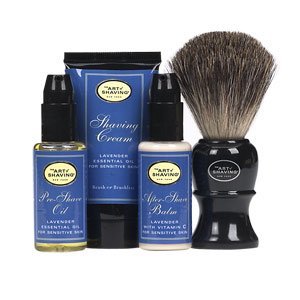
I bought a kit (I’m a sucker for good sales pitches even when I know I’m being suckered) which included: a badger hair brush (they say it is optional, but I love mine and wouldn’t do this without it), pre-shave oil, shaving cream, and after-shave balm. They had five types to choose from: unscented, lemon, sandalwood, ocean kelp, and lavender. I selected the lavender because it was formulated for sensitive skin. At first I was worried about being overpowered with the smell, but was pleasantly surprised to find the scent as light as a feather. I didn’t need a new razor; they said my Mach3 was just fine.
I came home with my bag expecting a huge dose of buyer’s remorse. Except after my first shave with their product, my face didn’t flush. Could this really be a product that worked? I wasn’t willing to make that conclusion at the time. But now, after about a month of shaving, I can honestly say that this is the best shave I’ve had in years. My face doesn’t flush. The after-shave balm does what a balm is supposed to do–soothe. There’s no alcohol burn. In fact, I use the after-shave balm on non-shave days. If your skin hates shaving, let me suggest you visit theartofshaving.com and order some product or go to one of their stores. I think you’ll also become a fan.
Info for Choosing a Career
There are many things I wished I’d done differently when choosing a career. I wish I’d broadened my horizon on the horde of different careers possible. I wish I’d really looked at what the various careers earned on average. Luckily for those looking to select a new career today, Utah’s Department of Workforce Services compiles data on more than 700 occupational wages and shows you the average and median annual wage as well as the average for inexperienced folks in that occupation.
Not only does looking through the list help you see options you might not have considered, it also helps you get a realistic expectation for what you might earn in that profession. Now, the list, although large, doesn’t show every possible occupation (FBI agent, Marine) or every permutation of the occupations shown. For example, there’s one line for accountants and auditors, but there are tax accountants, fraud accountants, security accountants, auditing accountants, etc. Nevertheless, this is an excellent list to begin a search.
To get the list, go to this state website: http://jobs.utah.gov/jsp/wi/utalmis/default.do. Click on “Utah Occupational Wages.” That will open a page with a map of Utah. Click on the link on the right “Utah Occupational Wages” to get the Excel spreadsheet of all 700+ occupations listed.
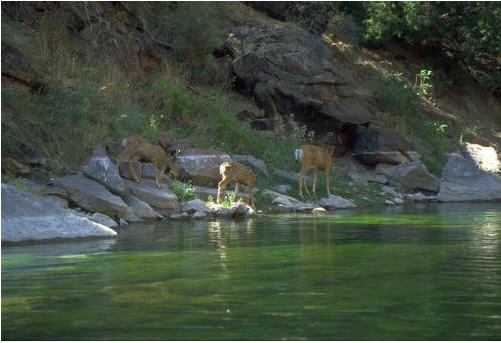
I want to tell you about a river that is emerald green, clear enough to see the rocks on the bottom sixteen feet below as well as the trout, and provides a wonderful family getaway. I’m talking about the Green River just below the Flaming Gorge dam in north-eastern Utah.
Yes, that picture’s of the Green River. Yes, it’s that beautiful and that clear in the calmer parts, of which there are many.
We just ran the seven mile stretch that starts just below the dam and goes down to the Little Hole campground with our four girls (ages 6 – 15) and had a ball. During our trip we saw otters swimming up the river not more than six feet from our raft, a herd of mountain sheep off the side of the road, fish and more fish, a snake a long as a man with a light silvery skin mottled with black rectangles, and two osprey (one that dove under the water to get a fish and a second flying about twelve feet over our raft with a fish in its clutches). We ran some class II rapids. This time of year they weren’t scary to me, but provided plenty of thrills and stress for the kids. The water was warm enough to swim in, but cold enough to give you a shock. And it was so CLEAR. Of course, there were spots too deep to see the bottom. But there were plenty where you could see the river plants, rocks, and aquatic life. And all of it in that emerald hue.
The girls were in the water inbetween every set of rapids. We packed a cooler and so stopped a number of times. Once to check out a waterfall, another time to snack, another to play on a sandbar, yet another to chase those otters, a bathroom break (outhouses provided by the park service), another time to swim.
The Flaming Gorge area features the beautiful landscape seen in Southern Utah–red rock, pines, junipers. People come from all over to run the river and fish. We didn’t fish this time, but there were plenty of anglers who had rented boats. Still, it didn’t feel crowded at all. There were long stretches where we had the gorge to ourselves. Next time I think I’m going to bring a book (in a waterproof ziplocok) and we’ll spend a little more time on one of our stops to sit and relax.
Some tips:
Bring a cooler. You’ll want to put in along the river and enjoy the gorge. There’s no hurry to finish.
Bring good water shoes that have a sole with traction and netting to keep gravel out. (I got a pair at Wal-Mart that made the whole ride wonderful.) Also bring a hat and sunscreen. If you wear a cotten tee-shirt and quick drying shorts you’ll enjoy the ride even more.
We stayed at the Flaming Gorge Resort the night before our run. It’s been around a while and the condos showed it, but it wasn’t bad. The condos had a kitchen. And the restaurant had large servings of good food.
You might also want to bring a way to transport the raft inflated. We put ours on top of the minivan and had no problem taking it to and from the rental shop. However, I wished I had learned the trucker’s knot. The knots I tied cinched up into nasty snags that proved very difficult to untie.
Bring two vehicles or a bicycle. The businesses there charge close to $50 to shuttle your car the 9+ miles between the launch below the dam and Little Hole. That was outrageous to me. Next time we’ll bring a bike, lock it up by Little Hole, and have one of us bike back for the car. Or you can park half way inbetween at Dutch John after you’ve launched your raft and make the hour walk down. Of course, if you’re an early riser, the rental shop in Dutch John offers a $20 shuttle from Little Hole to the Dam, but only at 8:30 AM and 9:30 AM.
*
While in Provo this year for the Freedom Festival I purchased Ticket to Ride (European version). I wanted to do more than walk around or swim at the pool with the family. It was an excellent purchase and recommendation from the folks at Games People Play in the Orem mall. Of course, the kid at the store had played everything in the store and knew just where to steer us. It only took a few minutes to figure out how to play and everyone from the 6 year old to both Nellie and I had fun. It’s so fun we’ve played it a number of times since we got back.
*
Both Nellie and I learned to love Indonesian food during the years we spent in the Netherlands. Alas, not many Indonesian restaurants around. In search of something similar while living the in the San Francisco area, we found Thai food.
Ah, that dream within a dream.
And now we found yet another Thai restaurant in Utah with excellent food. So good my two oldest daughters get cravings to go back. The first is Thai Evergreen in Orem, Utah. It looks like a family owned operation and is. And their food is delicious. Four family’s went while at this year’s Freedom Festival, which meant we ordered quite a variety of food. Everything I tasted was delicious.
The next is Kamin in Logan, UT. Again, wonderful. Nellie and I have eaten there a number of times and never leave unsatisfied.
2 Comments
I’ll be laughing on the Three Pigs rendition for a fortnight.



I’ll be laughing on the Three Pigs rendition for a fortnight.
BD, I know!