Good Stuff! How to Make Meetings Work

Do you regularly sit through meetings that seem to accomplish nothing?

Meetings where people drone on and on and on.

Meetings where people discuss and no decision is ever made.

Meetings that always slide off topic.

Meetings that should never have been held in the first place.

In many cases, the reason these meetings stink is because those organizing them are not aware there’s any other way to hold a meeting. But there is. I was fortunate enough to have been exposed to it just out of college while working for a business consulting firm in San Francisco. (And why they didn’t teach this in my business degree I will never know!)

After learning the simple and powerful principles, I was eventually paid to plan and facilitate meetings for clients. In some of these meetings they were making incredibly important decisions. I remember a client flying me and a colleague from San Francisco to Delaware for two days of meetings.

You might be groaning at the thought. But they paid thousands of dollars to have us come and facilitate. And when we were done, the energy in the room was palpable. A number of those that were involved were astounded and said they’d never been involved in such productive sessions. They’d accomplished more in the hours we were there than in months of other meetings. They were happy and grateful we’d come.

Think of that—happy and grateful for a meeting that went on for hours!

When meetings are done right, the collaboration and synergy can be amazing. Now, you may think that some secret handshake is required to learn how to do this. Or that it’s only for those with some special knack. Or that it’s only for high-powered jobs. If you do, you’d be wrong.

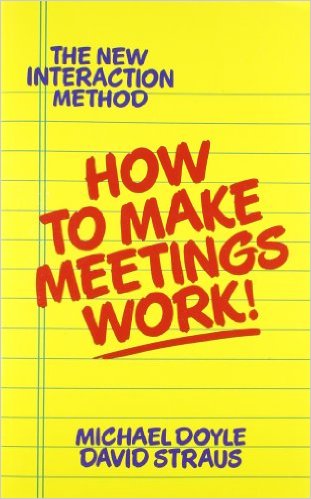
And that’s because you can learn the principles all for a few bucks. They’re laid out in perfect clarity in How to Make Meetings Work by Michael Doyle and David Straus. This is the book that was the source of our training sessions all those years ago. And I reread it every few years to brush up. The principles work in everything from a family council to a board meeting to class settings. I know because I’ve used the ideas in all of them. And when I fail to take just a few minutes to prepare, that’s when the meeting becomes, well, just another (yawn) meeting.

If you hold meetings of any kind and want to improve them, give this book a try. I think you’ll be happy you did.

Share

Similar Posts

  • Teacher power, crawdad fun, and lemon bars

    Teacher Power

    When we find great teachers, we prize them not only because what we learn improves our lives but also because good learning can be one of the most exhilarating things we experience. Unfortunately, a lot of teaching stinks. It’s boring, misguided, useless.

    I’ve made a study of teaching. I’ve had to. For almost 20 years I’ve taught and designed courses in the private sector. And for many of those years, my work has been in a revenue-generating department. That means that my classes had better be effective and interesting, otherwise nobody signs up, revenue falls, and a lot of folks will stand around and wonder if it might not be better to just replace me with a potted plant.

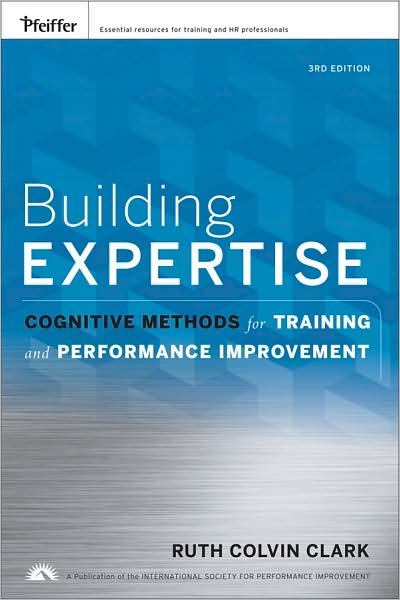
    I kind of like having a job. And so I’ve tried my best to find the most effective methods for instruction. In the last few decades, education researchers have put many teaching techniques and principles to the test. We know better now than ever before how to structure learning that is effective and interesting. And I have yet to find a better explanation of the proven techniques and principles than Ruth Colvin Clark’s Building Expertise: Cognitive Methods for Training and Performance Improvement, 3rd Edition. 

    Don’t let the “training” part fool you. We often associate “training” with learning procedures and simple tasks, e.g. the State pays for “sex education” in our schools, not “sex training.” But Clark isn’t using the term that way. Clark’s “training” includes all types of learning.

    Two things separate Clark from so many others who would offer advice on teaching. First, she bases everything on tested principles and techniques. I’m not talking about tested as in some teacher somewhere tried it and was impressed. I’m talking about scientifically valid testing that controls for variables and shows causation. The methods she describes are practical and proven. Second, she writes clearly enough and uses enough examples so that I can read about the principle and immediately see how I can apply it in my own class.

    Among other things, you’ll learn:

    • Why working memory is key to instruction and how to overcome its limits
    • How to motivate learners
    • How to structure learning
    • When to use lecture and when to put learners into action
    • When taking notes can actually be counterproductive

    You’ll even learn why assigning lots of practice is NOT always the best way to learn. In fact, sometimes your child will learn more if you do half of their homework questions for them. Sound ridiculous? It’s not. It’s science.

    You’ll find that there is no yellow brick road in teaching. Instead, you’ll see that the effectiveness of any method depends on whether it’s suited to the specific situation. And Clark will explain what the key factors in any situation are so you know which methods to apply and the trade-offs you’ll make when you do.

    If you’re a teacher in any setting–family, job, church, school, or recreation–or if you’re trying to teach yourself, this book (specifically the 3rd edition) will be a goldmine. I can’t recommend it highly enough.

    Crawdads & the Bear River Greenway in Evanston

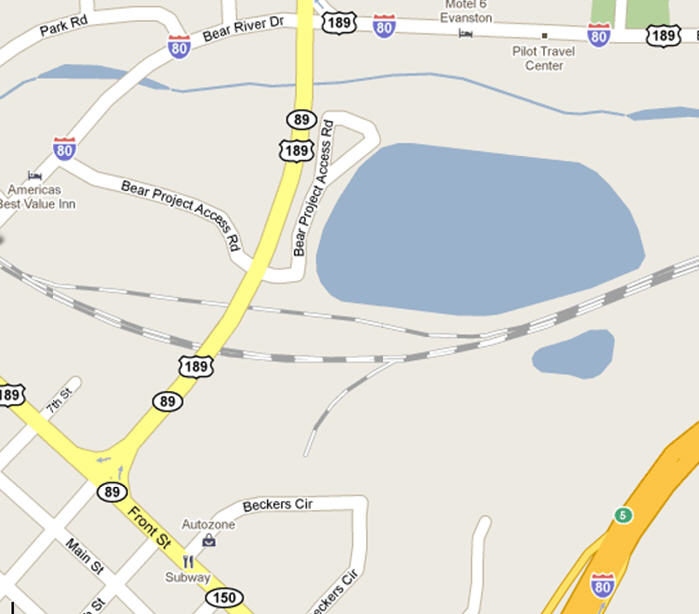
    Here’s a recipe for a whole lot of family or date fun. And it costs almost nothing. Drive to Evanston, Wyoming. Make sure you bring a bucket. Pick up a few pieces of fried chicken at Wal-Mart then picnic at the Bear River Pavilion park. It’s the one with the small lake west of Wal-Mart and east of the overpass on 89. Keep your chicken bones.

    When you finish eating, attach a length of about four feet of string or yarn to each chicken bone. Weight the bone down with some rocks or washers. You want it to sink deep. Tie a loop for your finger in the end of the string. Then go out to the pier or the cement box on the northwest side of the small lake and drop your bone in.

    Wait.

    Slowing bring your chicken bone up. You’ll find a crawdad clinging to it, thinking he’s gone to free lunch heaven. Use a net to snag the crawdad. A simple fish aquarium net will do. You can get them at Wal-Mart for a few bucks. Plop crawdad into the bucket. Ooh and aah appropriately. Make sure he’s got some water to swim around in.

    Drop your line in again and repeat until you and the kids or dates are bored. We had a bucketful in about twenty minutes. You might want to pick a few of the crustaceans up. Just grab them on the sides just behind the spot where the arms of their big pincers join the body. Wave the crawdad at a selected victim—wife, daughter, girlfriend–for special effects.

    When you’re done, dump the critters back into the water. But don’t go home yet. Take a stroll along the greenway that follows the river and enjoy the beautiful sights. If you walk east from the park, you might be able to be at the right spot at the right time to see a train up close as it thunders by.

    We just did this with family from Colorado and California and had a great time. Who would have thought Evanston had this gem?

    Crocker’s Luscious Lemon Bars

    I luv lemon in desserts. I especially love lemon pies, but they take too long to make. Plus you’ve got the meringue to whip up, and half the people hate that stuff anyway. I’ve found lemon bars taste just as good, probably better, and are far easier. Here’s a recipe I just tried and loved. It’s from our Betty Crocker cookbook. Please remember to include the sugar. My sister, bless her heart, attempted it without, and she can verify that, surprise surprise, it just doesn’t taste quite as good.

    STEP 1: Preheat oven to 350 degrees.

    STEP 2: Make pastry crust.

    1.   Combine: 2 C flour, ½ C powdered sugar, 2 T cornstarch, and ¼ t salt

    2.   Use pastry blender and cut in ¾ C butter until it mixture resembles coarse crumbs

    3.   Press mixture into bottom of greased 13x9x2 inch pan

    4.   Bake for 18-20 minutes or until edges are golden

    STEP 3: While crust is cooking, make filling by stirring together: 4 slightly beaten eggs, 1.5 C granulated sugar, 3 T flour, 1 t lemon peel (optional),  ¾ C lemon juice, ¼ C half-and-half (you can substitute with light cream or milk if needed)

    STEP 4: When crust finishes, pour filling over hot crust.

    STEP 5: Put it all back into oven and bake for 15-20 minutes or until center is set, i.e. it doesn’t jiggle and slosh.

    STEP 6: Cool on a wire rack for 20 minutes.

    STEP 7: Cut into bars, but DO NOT EAT IT YET! The lemon bars will taste 500% better if you totally chill them in fridge (the chill is the secret, folks). So put that pan in the fridge and wait! It will take a few hours.

    STEP 8: When TOTALLY chilled, take out of fridge, sift some powdered sugar over the top, and serve.

    Try to refrain from eating half of the pan.

    Share
  • |

    No Apology

    The Book

    Political TV ads can be fun. And annoying.

    Debates can be fun. And maddening.

    You can indeed learn things about the candidates from watching the ads and debates. But fifteen and thirty second snippets of information really don’t give you the full picture. And sometimes they actually hide the facts, producing nothing more than informational smog.

    Recently, I decided I wanted to really know what Mitt Romney thought.  What he was about.  What he hopes to accomplish if he wins the presidency. If Mitt was someone in my neighborhood, I’d go visit the man, and we’d have a chat.

    I’d ask him about his ideas and past. I’d ask him to give me examples. Because of the nature of the issues at stake and the number of them, I imagine our chat would probably last a few hours.  It might stretch over a number of evenings.

    Of course, I’d want time to consider our chat and determine where I did and didn’t agree with him. I’d want to hear what others thought. And I’d want to look into his history, his successes and failures.

    But the first step would be to go to the man himself and hear him out.

    I hate it when people put words in my mouth. I’m sure Romney, or anyone else running, hates that same thing. If I were running, I’d would hope folks would take the time to hear me out. They may ultimately disagree with me on many or a few things. But I’d hope, as they are gathering information, that they would take the time to actually go to the source and listen to what I myself had to say.

    Unfortunately, I can’t walk around the corner and knock on Mitt’s door. But he did write a book that was published in 2010, and it’s probably the next best thing to talking to Romney at his kitchen table. The book is called No Apology: The Case for American Greatness.

    I’ll admit I thought it was going to be a dry guide book explaining his position on every hot political issue. It’s not a guide book.  In fact, he leaves a number of topics out. Nor was it dry.

    I also suspected it might be a scathing attack piece on the Obama administration. It’s not that either.  Not even close. He does criticize some things where he and Obama differ, but he also commends him on a few things. Either way, Obama is a very small part of the book.

    So what IS this book?

    Romney states its purpose in the introduction: it’s “about what I believe should be our primary national objective: to keep America strong and to preserve its place as the world’s leading nation” and “the course I believe we must take to strengthen the nation in order to remain prosperous, secure, and free” (2). It’s about his ideas on how to make sure America does not falter as so many nations have, but remains wealthy, happy, and productive.

    I finished the book yesterday. I found it interesting, personable, sometimes surprising, and insightful.

    I found Mitt Romney to be a man self-deprecating humor.  He’s also a thinking man, one who likes to look at data to see what it shows. It’s clear he’s a man who does NOT think he knows everything or has a monopoly on every good idea, but he’s also a man who demands evidence.  I also saw a man who is kind.  He doesn’t talk much about his 14 years of service as a lay minister in his church in this book, but you can see how those years changed him as he discusses helping the unemployed, out-of-wedlock births, and single-parent families.  Finally, I saw a man who loves, LOVES, America and is convinced she can remain the hope of the earth, but only if we do things that foster our strength.

    This book outlines what he thinks those things are.

    The book is written in a conversational and easy style with many examples from his personal experience, studies, and history. Romney’s record of accomplishments demonstrates his skills and hard work ethic. This book explains to what end he would apply that skill and work.

    If you’re planning on voting this November for the president of the United States, I think you’ll find this book very useful.  You may end up agreeing with many things he says. You may end up disagreeing with him on many points. But before you can do either, you need to understand what Romney’s position actually is.  And the first step in doing so is to fully hear the man out, in his own words, from his own lips.

    As a result, whether you end up deciding he’s your candidate or not, you WILL come away with important insights into the issues discussed.

    What’s Next

    I want you to know that I do not worship George, Ben, Tom, Adam or any of the other guys who formed our constitution and started this nation.

    They put their lives and fortunes on the line for what they believed in. And I am immensely grateful for what they did.  I enjoy tremendous freedoms because of their courage, determination, and sacrifice. Those guys, by-and-large, rock!

    But I do NOT believe that their words are scripture nor that their ideas are sacrosanct—merely to be accepted and not to be considered and questioned and disagreed with.

    Even so, these guys were gutsy and brilliant. They attempted something everyone thought would fail.  Something that HAD failed every time it had been attempted in their recorded history. But they pulled it off and changed the world.

    These guys believed in the common man. They believed that the educated common man was the best person to hold the reins of government. Thomas Jefferson thought up a rhyme to make the idea easy to remember.  He said, “If a nation expects to be ignorant and free in a state of civilization, it expects what never was and never will be.”

    I can’t argue with that.

    Of course, we’re not going to become experts on every policy issue. But we certainly can become informed on the broad principles and issues. And we can certainly become informed about the candidates.

    Because I found No Apology so useful, over the next few days I’m going to summarize Romney’s main points, chapter by chapter, here. I’ll also point out interesting ideas and facts he shares as well as share any questions, quibbles, or disagreements I have.

    I hope you find it useful. More importantly, I hope you read the book and join in the conversation.

    Share
  • |

    Radiolab’s “Parasites”

    Radio and TV have incredible power. But until the last decade they were always constrained by time and signal power. You had to listen when the station broadcast it, and you had to listen where you could pick up the signal. 

    Living out in the boonies we don’t get good radio or TV reception (no I don’t subscribe to satellite). Which is why the internet is so wonderful.

    You can listen and watch almost anything when you want from almost any location–yes, even in Laketown, UT, Boonie Central. Millions listen to music, conservative talk, or libral talk (NPR) via the internet. I enjoy all three depending on my mood. But there’s so much more out there than music and blah blah blah, as much as I love it. For example, you can listen to the British BBC. You can listen to the Dutch. See what’s going on in Australia. Doesn’t matter that they are a number time zones away and all asleep when I’m working. I love the internet.  

    One of the best programs I’ve heard in the last six months is the three-part “Parasites” presented by Radiolab. In a fascinating hour they address the following questions:

    • Parasites: are they evil, or are they awesome?
    • Should you get infected with hookworms?
    • Can parasites exercise mind control over their hosts?

    Along the way they tell a number of amazing stories. Listen now. You won’t be able to stop.

    Get zinged, Baby!

    Share
  • My Most Favorite Movies of the Decade: 2000 – 2009

    I was bummed after seeing Clash of the Titans because the movie just didn’t work for me (although Medusa was cool). It was a total thumbs down. After expressing my disappointment, my wife said it seemed I never liked any movie we saw in a theater. To defend myself against this heinous accusation I shall list all my favorite movies of the last decade.  My only question is: where are all the love stories? I haven’t seen a great love story since Sabrina and Far and Away.

    Of course, I haven’t had time to see all the movies made in the last ten years. So if you have some favorites not listed here, post them.

    Top 10 Movies: 2000 – 2009

    10. A Beautiful Mind (2001, PG-13)

    John Forbes Nash, a mathematician, thinks he’s broken the code for a terrible Soviet conspiracy plot, but the real truth turns his world upside down. It’s full of mystery, suspense, and love.  Russell Crowe gives a brilliant performance as Nash. Furthermore, the film is based on the the true story of John Forbes Nash, Jr., a Nobel Laureate in Economics.

    9. Pirates of the Caribbean: The Curse of the Black Pearl (2003, PG-13)

    Swashbuckling adventure, a curse, and lots of humor. Probably the best pirate movie ever made. The next two movies fell flat for me, but this one was simply amazing.

    8. Gladiator (2000, R)

    Another Russell Crowe film. A corrupt prince betrays a Roman general and murders his family. They general is captured and made a slave to fight as a Gladiator. I was so drawn into the story that at one point in the movie theater I had to restrain myself from shouting out at a suspenseful moment.

    7. The Last Samurai (2003, R)

    Nathan Algren, a former US soldier in America’s west, drowns his regrets in alcohol. He becomes a military advisor in Japan, but is captured by the enemy. He learns from the enemy samurai, but does he become a new, better man? This one has Tom Cruise in it. I enjoyed it immensely.

    6. We Were Soldiers (2002, R)

    From the IMDB: “In a place soon to be known as The Valley of Death, in a small clearing called landing zone X-Ray, Lt. Colonel Hal Moore and 400 young fathers, husbands, brothers, and sons, all troopers from an elite American combat division, were surrounded by 2,000 North Vietnamese soldiers. The ensuing battle was one of the most savage in U.S. history. We Were Soldiers Once And Young is a tribute to the nobility of those men under fire, their common acts of uncommon valor, and their loyalty to and love for one another. The story of the first major battle of the American phase of the Vietnam War and the soldiers on both sides that fought it.” This is an incredible story. Mel Gibson and the others give an outstanding performance. I wept at their courage.

    5. Spiderman-2 (2004, PG-13)

    The first Spiderman stank. Sorry. It stank because the villain was too cartoonish. The third one stank as well. This one, however, oh baby. Peter Parker’s personal life is falling apart, he’s losing the one thing in life that would make him happy (yes, a girl). Furthermore, he begins to lose his powers just as he has to battle a brilliant scientist named Doctor Otto Octavius, who becomes Doctor Octopus (aka Doc Ock), after an accident causes him to bond psychically with mechanical tentacles that do his bidding. Loved this. Drama, gosh wow super-heroism, and a heart.

    4. Ice Age (2002, G)

    Another hilarious animated tale with heart. Set during the Ice Age, a saber tooth tiger, a sloth, and a wooly mammoth find a lost human infant and try to return him to his tribe. Of course, the saber tooth tiger was sent to lead the others into a trap. Sid the sloth is one of the best characters to come along in a long time. You’ll love this show. Again, another show I can watch over and over again.

    3. The Emperor’s New Groove (2000, G)

    I saw the previews to this and thought D-U-M-B. But it is one of the best films ever. Animated. Hilarious. Emperor Kuzco’s ex-administrator Yzma wants to kill him and rule. She turns him into a llama instead, and her not too bright side-kick doesn’t quite finish him off. Now the selfish emperor is on the run and needs to regain his throne. But the only person who can help him is the guy whose home he’s going to bulldoze. But that doesn’t capture the half of it. The characters are wonderful. Me and the kids watch this three or four times a year and still don’t tire of it.

    2. The Incredibles (2004, PG)

    A family of undercover superheroes tries to live a normal suburban life but is forced into action to save the world. This is Pixar’s best film. Every one of these characters is interesting. The family dynamics are real and often hilarious. There’s suspense, drama, and gosh-wow. Imagine James Bond as a family man. I LOVE this movie.

    1. The Lord of the Rings trilogy: Lord of the Rings (2001, PG-13), The Two Towers (2002, PG-13), The Return of the King (2003, PG-13)

    For those readers who aren’t familiar with this, J.R.R. Tolkien’s Lord of the Rings is one of the most popular series written in the last 50 years. His three books spawned a whole new genre. It is, in fact, the genre I currently write in. Peter Jackson and Fran Walsh did an amazing job bringing the beloved epic fantasy to the screen. There’s heroism, suspense, and wonder galore. These movies transport you to another world, immerse you in it, and leave you wanting more.

    Runners Up

    Casino Royale (2006, PG-13)

    I gave up on James Bond years ago. This is Bond like you’ve never seen him. Loved this. The next Bond, The Quantum of Solace, fell totally on its face. But Casino Royale is the real deal–action, spy, and poignant love story all wrapped up in one.

    Luther (2003, PG-13)

    The story of the early 16th century German monk Martin Luther who, sick of Church materialism, begins the Protestant Reformation. I knew very little about Luther. This movie was an eye-opener.

    Matchstick Men (2003, PG-13)

    Nicolas Cage is a phobic con man who learns he has a teenage daughter. He plans another con, but things start to fall apart. In the end, well, let’s just say it was a heart-breaking, then absolutely satisfying.

    Seabiscuit (2003, PG-13)

    Based on the true story of the undersized Depression-era racehorse whose victories lifted the spirits of the nation. This story is full of heartbreak and redemption. About not giving up on broken things. Loved it.

    Slumdog Millionaire (2008, R)

    A Mumbai teen who grew up in the slums, becomes a contestant on the Indian version of “Who Wants To Be A Millionaire?” He is arrested under suspicion of cheating, and while being interrogated, events from his life history are shown which explain why he knows the answers.

    Walk the Line (2005, PG-13)

    This tells the story of country music legend Johnny Cash. It starts from his early days on an Arkansas cotton farm to his rise to fame with Sun Records in Memphis. It shows how he fell to drugs, and how he climbed back out again. Marvelous performances and story.

    A Better Way to Rate Movies

    Life is too short to waste it on movies that offend instead of uplift.

    I have found over the years that the MPAA movie ratings are lousy at helping me avoid dreck. They’re okay as a rough guide, but they don’t give me enough information to make a good choice. Furthermore, the MPAA often rates a movie mature for elements I don’t find offensive and not for others I do. Luckily, there are other places that rate movies. The one that I’ve found most helpful is KidsInMind.com.

    The folks there give movies separate ratings on three things: sex/nudity, violence/gore, and profanity. But they don’t just present some mysterious number. They also list exactly what’s in the movie. What this does is give you the information you need to make a wise decision. By looking at movies that made me uncomfortable in each of those three areas and comparing scores, I soon pegged my acceptable KidsInMind levels.

    KidsInMind doesn’t tell me anything about the quality of the story or movie-making. But I can look at other reviews for that kind of stuff. What it does well is help me avoid movies with content I know I will find objectionable. Of course, I still look at the MPAA rating, but before I go see a movie or order it on Netflix, I check the KidsInMind ratings. It’s not perfect, but in almost every case it works like a charm. The only downside to the site is its five gazillion popup ads. But it’s a small price to pay for good information.
    Share
  • |

    Animals in Translation by Temple Grandin + Interview

    I have read few books more interesting than Temple Grandin’s Animals in Translation: Using the Mysteries of Autism to Decode Animal Behavior.

    In it she describes her world of autism and how it helped her a perspective into animals unlike any other expert in the field. She can literally see what we block out. It’s part of what helped her make a huge impact on the meat packing industry.

    And it’s had an impact on her. When she was visiting her grandparents once in Arizona, she saw a squeeze chute in operation on a ranch. She saw the cattle calm, for the most part, in the chute. “Watching those cattle calm down,” she says, “I knew I needed a squeeze chute of my own.” So when she got back home she built a human-sized one with the help of her teacher. “I got through my teenage years thanks to my squeeze machine and my horses.”

    Grandin is not a vegetarian activitst (she eats meat herself) or a brutal slayer. She has taken the middle ground between the fantatics that want to prevent the consumption of all meat, on one hand, or totally disregard the life of animals on the other. She writes, she says, “because I wish animals could have more than just a low-stress life and a quick, painless death. I wish animals could have a good life, too, with something useful to do. I think we owe them that.”

    Temple has dozens and dozens of insights into animals, which she shares here. You’ll learn about rapist roosters and the problem of one-trait breeding, whether prediators find it “fun to kill a groundhog” (yes, she says, they do), whether animals have true cognition, and so many other things it’s impossible to list them here. I was fascinated on every page. If you have anything to do with animals, you’re going to LOVE this book.

    Get the book. Read it. In the meantime, watch a 27 minute interview of Temple by Doug Fabrizio on Utah NOW. I caught this on TV flipping through the channels and couldn’t look away. This is a fascinating interview of a fascinating woman.

    Source:Temple Grandin on Utah NOW

    Share