Hey, I live in Washington and I’m an Idiot

I’m sick of politicians who are more worried about votes, Republican or Democrat, than actually doing what needs to be done. Sick of these fools buying votes with Federal programs for everything from farm subsidies to gelatin wrestling.

When someone runs for office, does an idiot switch get flipped? “Vote for me, I’ll spend like there’s no tomorrow. Cause look, honey, I got this magical piece of Uncle Sam plastic. It doesn’t cost anything. And when the bill comes, we’ll just tax all the rich folks to pay for it, and send government agents to put them in jail if they don’t. Or we’ll print money and make it all worth nothing. Or, better yet, we’ll just use the funds we set aside for social security.  It would be dumb to just save and invest that money we’re taking from people for their retirements. I mean, it’s just sitting there earning interest. Besides, we’ll set it all up like Amway with downlines and circles, and the rising generation will just be taxed out of their brains to pay for it.  And that will be someone else’s problem anyway. See the pretty money, honey. See it? Vote for me.”

They’re like that candy man in Chitty Chitty Bang Bang with the nose that should have scared the soup out of those kids. Of course, American voters aren’t kids hiding in Benny Hill’s basement. Maybe the switch is getting flipped on some of us as well.

Here’s what we need. It’s not rocket science.

1. A balanced budget ammendment to prevent our super smart and caring representatives in Washington from continually spending what they don’t have.

2. Real spending reductions. What does that mean? Dave Ramsey just shared some thoughts on what’s it’s going to take to get the nation out of debt. Go have a listen.

Edit 6/7/11: Besides, Paul Ryan, here’s Tim Pawlenty with some ideas on how to accomplish it.  I’m looking forward to seeing the ideas Romney and the other presidential candidates put forth.

Share

Similar Posts

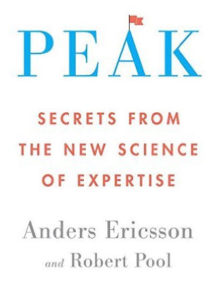
  • Peak

    peakbyandersericssonHow many pushups can you do in a row?

    10, 20? Could you do 100?

    And you’d have to be a freak if you could do 500 in a row, right?

    Well, no.

    You’d just be human.

    In 1980 Minoru Yoshida of Japan did 10,057 pushups nonstop.

    In 1993 Charles Servizio of the good old USA did 46,001 pushups in 21 hours and 21 minutes.

    In 2016 David Escojido of the USA did 2,298 pushup in 1 hour.

    You might think that these folks must be oddities. They must be gifted. They must have some weird thing in their DNA allowing them to do these things.

    But you’d be wrong.

    None of these people were born that way. In fact, what researchers are finding is that most of the folks that we think are prodigies—folks like Mozart, Tiger Woods, chess masters who can play 20 games at once without even looking at a board—the biggest thing that separates them from the rest of us isn’t DNA.

    Anders Ericsson, a researcher at Florida State University, has spent the last 30 years studying what gives experts their edge. And he reveals in Peak: The New Science of Expertise that he and other researchers have found that while there are some physical traits like height and size that definitely make a difference in some physical activities (notice how all the top gymnasts are short), what really sets people apart is how much of a certain type of practice they’ve done.

    Not just practice, but a certain type of practice.

    Practicing “hard” doesn’t do much for you. Putting in a lot of hours doesn’t do much either. Instead, you need to practice in a way that has been shown to lead people to actually improve their performance. You still have to put in a lot of time practicing—there is no shortcut—but only the type of practice he explains in the book seems to lead to the increase of performance.

    Is he saying that anyone can do anything?

    No. When I first looked into his research, one of my big issues was that it seemed he was claiming anyone could do anything with 10,000 hours of practice.
    But he’s not saying that.

    Is he saying genetics has no influence?

    It can, but what he’s found is that it doesn’t have the role we normally think of when we think of top performance. And, most importantly, we place artificial limits on ourselves by thinking people are born to this or that activity.

    There is far too much to post here. What you need to know is that what he shares in this book is fascinating, compelling, and surprising. I’ve been training people for over thirty years. And I found myself enlightened. If you’re at all interested in education, or getting better at some activity (from parenting to golf), or helping your kids get better, you’ll want to read this book. Highly recommended.

    Share
  • The Last Apprentice, Path Finder

    The Last Apprentice

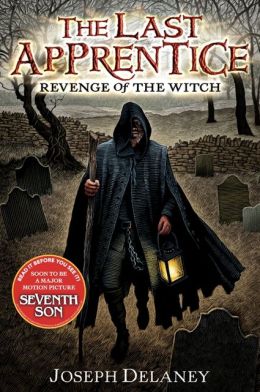
    Revenge of the Witch by Joseph DelaneyMy wife is always telling me I need to write a young adult or middle grade adventure series. One that’s directed at boys.

    Not because we have something against girls. We have four daughters, and my wife is adamantly pro-woman. But she finds very few books for her sixth-, seventh-, and eighth- grade male readers. I haven’t done a count, but I’m pretty sure that most YA is targeted at females. And this isn’t just me. I remember visiting a Barnes & Noble in Arizona with my voracious-reader nieces a few years ago and riding the escalator to the YA section. They told me that they called it the “girl-book section” because they figured that basically 90% of it was indeed for girls.

    Anyway, I think writing such an adventure would be a blast. I can already think of a number of near future or fantasy settings that would rock. But the time constraints I have right now just won’t allow me to start another series. Nevertheless, we sat down the other day and listed out all of the authors and books we knew that had a more male focus.

    For about the twentieth time she told me about Joseph Delaney’s The Last Apprentice series. It’s about a boy who apprenticed to the county Spook who is someone that takes care of witches, ghasts, ghosts, etc.  Her students love the stories. She loves them. She has bought the first ten volumes for her classroom. Why the heck wasn’t I reading them?

    Well, for starters, I just don’t like books about witches. And the first book in the series is called Revenge of the Witch. I don’t know what it is. Witches aren’t as bad a zombies–I am SO bored with zombies; I just don’t get the appeal. But even if they’re better than creatures that make no sense at all to me, I just don’t like spooky horror all that much. I loved to be scared, startled, and filled with dread. But not with witches.

    Witches? The gals with pointy hats?

    No.

    But this was, as I said, like the twentieth time she’d brought it up. We were driving over to Logan (that’s the big city for us), and stopped at the library, and we went over to the YA section. Unfortunately, they didn’t have volume one. But I did see many other volumes on the shelf and figured I needed to see what the competition was doing. So I perused. A few night later we went to her classroom, and there was volume one. The one about the witch.

    I sighed and opened it and began to read. And when I finished chapter one, I realized I kind of liked it. It was like the old Life cereal commercials—hey, Mikey!—and I wanted to read more. And so I took it home, read the whole book, and was delighted with the story. I liked it so much I promptly borrowed volume two, Curse of the Bane, from my wife’s classroom and read it as well. And I liked that one so much I checked out the third.

    The story is about Thomas Ward, the aforementioned apprentice. In book one, he is forced to face down some witches. But it’s Alice, the girl with pointy shoes, who made the story for me. Adding her as a character transformed it from a run-of-the-mill booger man story, into something special. No, I’m not going to give you a peek at the plot. Just know that this is the book where Thomas starts his apprentice, has to deal with that new life (and I thought Delaney captured that so well), and makes some apprentice mistakes that he then has to fix.

    In book two, we get to meet Alice and Thomas again, but this time they have to face down a different creature. And again, while the adventure is all cool, it’s the interactions with Alice that put it over the top.

    Having praised the books, I will say that I think Delaney has something against priests and religion in general because he paints it all with a negative broad brush. It’s too bad. Not only is such a view inaccurate, but showing the good and bad could add so many delicious dimensions to the tale. Maybe we’ll see that in later books. But even if we don’t, book two was still a great read.

    I’m looking forward to book three. If you’re in the mood to try something new, something about a young man and young girl that doesn’t revolve around romantic smoldering, something that a guy would like to read, let me recommend you join me in reading the volumes of The Last Apprentice.

    Pathfinder
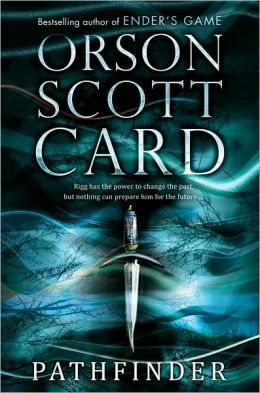
    Pathfinder by Orson Scott CardI was once in a discussion about religion with a friend who happens to be an atheist and fellow science fiction and fantasy writer. He’s a great guy. The blog posts he wrote about the passing of the woman he loved who was lost to cancer were poignant and wonderful–full of beauty. I read them and wanted to be a better man. Still, he and I disagree about God.

    I remember telling him that science fiction is the one genre that makes God more plausible than any other. At least, it makes my view of God more plausible.  Now, I do not want to talk religion in this essay. But it’s just hard for science fiction to leave the idea of creation and Adam and Eve alone. Witness the many stories over the years about these very things.

    Heck, even the recent movie Oblivion has references—are not Jack and Victoria much like Adam and Eve? Just think about it. Their paradise together as a team, the knowledge, the fall. The echoes are simply marvelous.

    Well, I just read another science fiction tale that provided a wonderful opportunity to think about these things. It’s Orson Scott Card’s novel Pathfinder. Now, the story isn’t about God. It’s not a biblical allegory. It’s not dressed-up doctrine. It’s a tale about a boy named Rigg with special abilities on a quest to find his real family and who he is. Along the way we meet some interesting people, especially one character named Loaf who leavened the whole tale. So there’s an interesting adventure and speculations about faster-than-light travel. But one of the chief delights for me was the questions and ideas this story raised in my mind about the creation of our own world—“Garden,” the name of the world, just begged for it.

    For example, a long-time staple of science fiction is the idea of terraforming—changing face of the flora, fauna, atmosphere, and climate of the planet to be hospitable to your species. If you believe in a God that is more a being of advanced technology than one of unknowable fantasy, doesn’t that present a new and interesting way of viewing the creation story? It does for me, and Pathfinder sparked ideas about this.

    The book also led me to think about life. First, Card has these characters called “Expendables.” They’re robots, but not really. They’re artificial intelligence. But not really. The way Card presents the expendables, you don’t think of silicon and steel and gears. You think of biology.

    You think of mosquitoes.

    You think about the fact that if we humans use intelligent machines, surely God must use intelligent machinery. So what kind of intelligent machinery does God employ? (Dude, that idea is just pregnant with stories!)

    Are viruses and bacteria machines? Are mosquitoes and beetles (please, let there be no mosquitoes in heaven)?

    The book prompts me to wonder. It prompts me to look at the life about me on our wonderful world with new eyes. It prompts me to think differently about some of my core definitions. In fact, there are some exchanges between a character and an expendable where they talk about the difference between humans and expendables and the definition of what it means to be human, especially given evolution.

    This is a book about an adventure, but also a book about ideas, which is as it should be. Science fiction is the one genre, more than any other, that marries character and plot with exploration of ideas. If you’re looking for an interesting tale that will make you think about our world differently, give Pathfinder a try.

    Share
  • Merry Halloween!

    Poetry is a species of literature that struggles to flourish in written and spoken environments.  We forward the occasional insightful, funny, or sentimental poem in our emails. Once in a while speakers will quote a few verses. But we don’t share that form of poetry like we do the poetry in songs. Music is the environment in which poetry thrives.  People say you can’t make money writing poetry—tell that to lyricists and song writers.  I have three poems (songs) that I think you’ll enjoy.

    First is “God Rest Ye Merry Gentlemen / We Three Kings” by Barenaked Ladies and Sarah McLachlan. This is one of the Brown family’s most favorite Christmas songs. It’s such a favorite that we can’t help but listen and sing along all year round. The Bare Naked Ladies put a mix of these two classics to a punchy beat with an acoustic guitar, but then they change the mood part way in by bringing in McLachlan’s haunting, beautiful voice. It is an upbeat, wonderful arrangement.

    The next song is another remake of a classic: “I Heard the Bells on Christmas Day” by Casting Crows.  While the song is updated with modern instruments (drums, piano, guitar), this isn’t a raucous arrangement. It starts with a simple lovely melody and a solo male voice. It moves into a swell with a sweet child chorus that repeats the most important refrain in the song: “peace on earth, good will to men.” There are no bells in the song, but it makes me wish I was back in Europe so that when the bells in the towns there did peal, I would think of the message of this song.

    Now, I know some of you are thinking, “Christmas. In October? Are you kidding me?” So to appease these strict seasonalists, I present “Calling All The Monsters” by China Anne McClain. The perfect groove Halloween song–upbeat and catchy. And you simply must watch the music video that goes with it. It’s good fun that hearkens back to the Michael Jackson “Thriller” music video but is much more playful.  

    All of these songs can be purchased on Amazon for less than a buck each. If you want to preview them, you can on YouTube. Links below. Merry Halloween!

    So what are some of your favorites?

    Share
  • Laff and Learn

    My daughters have introduced me to Studio C, a comedy program that started with The Divine Comedy troupe on the BYU campus who all growed up and were given a gig on TV. They do these  hilarious skits.

    Like “Drivers Ed”

    And “Blind Date“.

    And “Shoulder Devil”.

    I hope you enjoy them as much as I do.  BTW, Studio C airs weekly on BYUtv.

    My oldest daughter introduced me to Olan Rogers. Who is crazy.  Here’s “Ghost in the Stalls”

    If you loved that, I think you’ll enjoy “Midnight Claw”  

    Sock slouch . . .

    Next is John Branyan’s brilliant “Three Little Pigs”. My family and I have been enjoying this for months.

    Finally, here’s something to think about. You know I enjoyed Jonathan Haidt’s book The Righteous Mind. Matt Wolfe pointed it out his TED talk to me. The one that preceeded his book. If you’re conservative, like I am, this talk will, at times, annoy you.  But the ideas behind it are great.

    If you want to be equally enlightened but less annoyed, let me suggest you watch Bill Moyer’s interview of Haidt instead.


    Share
  • The Drowned Cities by Paolo Bacigalupi

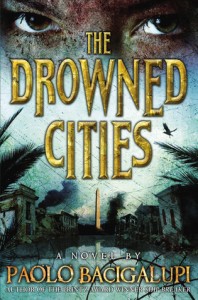
    The Drowned Cities by Paolo BacigalupiI just finished The Drowned Cities by Paolo Bacigalupi, and, holy cow, folks—this story rocked.

    It’s set in the future in the area around Washington D.C. which is the titular drowned cities. They’re drowned because the climate has gotten warmer, the seas have risen, and D.C. is half under water, permananetly flooded. It’s more like Georgia or Florida—gators, kudzu, the works. But this is not another dumb book about global warming. If it were, I wouldn’t be writing this.

    No, the United States has fallen apart. Up north there’s some alliance with money and power and the ability to keep those in the Drowned Cities out. South, who knows? West? Don’t know. But right around D.C. everything has gone to hell.

    It’s like Mogadishu, Somalia in the 1990’s (Blackhawk Down) with warlords fighting each other, tearing the place apart.

    It’s like Sierra Leone at the end of that decade with different factions butchering locals and forcing kids to fight as soldiers.

    Except instead of the U.S. or Europe or the U-freaking-N sending in peacekeepers to stabilize the situation, it’s China. And just like the U.S. in Somalia, the warlords send the Chinese peacekeepers packing. And so now it’s just chaos.

    Talk about a setting for a story. But Bacigalupi doesn’t stop there. He adds in genetically modified creatures. He starts the book with one named Tool. A creature that’s got the DNA of humans, mastiffs, tigers, reptiles and who knows what else all combined to make him smarter and stronger than humans ever could be—a monster that’s the ultimate killer, the ultimate soldier, the ultimate war machine. One that was bred to submit to a master, but something went wrong with Tool. And he was able to break free of that bond.

    Tool is trying to escape prison and death. But as mighty as he is, he’s weak and injured. And then two kids from a village run into him while in the jungle. He knows they’re going to reveal his whereabouts to the warlord searching for him. In his weakened state, Tool is only able to grab the small boy named Mouse.

    Mahlia, the girl, promises to bring medicine if Tool will only spare the boy. He knows she’s lying.

    And so starts a rich tale of the monster, the boy, and the girl: a tale that is filled with friendship, triumph, loss, heroism, cowardice, and earthy sci-fi coolness all set in the midst of a guerilla war. The beginning sucks you in. The ending leaves you breathless. Along the way you get to see into the character of all three plus some of the bad guys. In the end you get a story about sacrifice and love.

    If you liked A Long Way Gone, Ishmael Beah’s memoir of his time as a child solider in Africa; if you liked The Hunger Games, and not primarily for the romance; if you like person in jeopardy fiction or war flicks where a small group has to fight for its life, I think you will love this book.

    This is the second book set in the same world. The first was Ship Breaker. Tool, one of the most interesting characters I’ve come across, is in that one too. But you don’t need to read that to enjoy this. And I wouldn’t put this read off to do so. Go give The Drowned Cities a try. Three or four pages in, I suspect you’ll be completely lost in the wondrous tale.

    Share
  • Good Stuff! The Greatest Showman

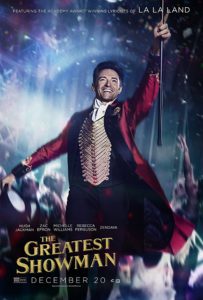
    I saw the previews of The Greatest Showman, the movie about the circus guy. I rolled my eyes. The circus? Come on.

    But my daughters, one by one, went to see it and came home raving.

    And then my wife went to see it and came home raving.

    And then my youngest was playing some music the other night, and I said, “Ooh, that’s nice. Good beat. Wow. What is that?”

    She said with much affection, “The Greatest Showman, loser.”

    I said to myself, maybe the previews simply stank. I said, I’ve seen movies where the previews were better than the full-length film. Maybe this was the reverse.

    I said, to my fine daughter and wife, “How about a movie night?”

    They were more than game to see it a second time. So we went and saw The Greatest Showman this week.

    Here’s the report.

    Oh. My. Holy. Freaking. Heck!

    This movie is one of the best movies I’ve seen in the last few years. And get this: it was released more than eleven weeks ago, back in December of last year. How many movies do you know that stay in the theaters for eleven weeks straight? When a movie keeps attracting crowds week after week, long after the release night hype has faded, they say it “has legs.”

    Let me tell you, this one has some legs. The music is awesome. The visuals are wonderful. And the story—the story is everything a story should be. I came out of the theater having wept and cheered and bitten my nails and been thrilled with a number of the scenes. I came out of the theater happy, positive, thinking about life, thinking about what really matters.

    Look, if you enjoy musicals, if you enjoy dramas, if you enjoy Hugh Jackman of Wolverine fame, you must drop everything you’re doing right now and run to see this before it leaves the theaters. You’ll be so happy you did.

    And now, I’m going to figure out how I can go see it again.

    Share

7 Comments

  1. John, I agree with you. I’m one of those people who’s going to be taxed heavily to pay for all these wasteful spending projects. To make matters worse, I live in Rhode Island, who has major spending problems of its own. So both my Federal and State taxes are going to be jacked up and it’s going to put a long term burden on my family.

    Dave Ramsey is a real bright guy. We all need to have some common sense about how we spend. I’m not saying we should stop funding all science programs but I think we can let private money take over more of the outlandish projects.

  2. Another voice of agreement here. I happen to be following the Dave Ramsey plan right now myself. There’s definitely some discomfort in our family these days. It would be hard for an entire nation to go through that much difficulty, but there’s no getting around it.

  3. I am no economist in any shape or form but I do find far to much “Less Spending Talk” to be going around. Frankly I never listen to it. For me it comes down to specific cuts(Don’t tell me we need to spend less tell me what we need to spend less on and why) and Raising taxes ON Everyone!! If you have a debt you pay it as quickly as possible. Sure it hurts the wallet but that’s what spending money does. I agree in general With everything that I heard at your link but its pointless and just more of the same crap everyone else is saying with an added dash of practicality.

    But I find the thought of not raising taxes when a country needs money plain stupid so I guess I’m in the minority and really dont fit in with either political party.

    -Rehcra

  4. Rehcra,

    It’s true, asking for less spending still doesn’t give you an action plan. But it does set the bar. And when you have politicians who won’t even take that first step, it’s a sign of a large problem. I think the only thing we have right now that gets into specifics is the Paul Ryan proposal.

    As for taxes, they act like prices. For example, you can charge a LOT for a car, 200,000, sell only a few of them, and try to increase total revenues that way. Or you can charge 4,000 for a car, sell millions more, and try to increase total revenue that way. Higher taxes for everyone may result in more revenue, or it may lag the economy and make for less revenue.

    However, I do think more people need a clear stake. Instead of super loading the rich, I think everyone but those under the poverty line should be contributing. And in a CLEAR way so everyone knows just how much Uncle Sam is taking.

  5. Well said. A balanced budget amendment is long overdue. It wouldn’t solve everything, but it would stop the bleeding which is the first step in any triage.

    I truly believe that beyond that we need real entitlement reform. Relying on Social Security and Medicare/Medicaid as they are now is a lot like riding a train along a rail, knowing eventually it ends abruptly over a ravine. They need to be restructured so they aren’t pyramid schemes. If we are going to have people paying into them, they should be able to have some confidence that someday there will be a return on their investment.

    I also don’t think that it would be completely out of line to ask for a little community service in return for receiving entitlements. If Wal-Mart can find jobs for all sorts of people with all sorts of disabilities, couldn’t the government find some things for people living off entitlements to do? Maybe things like spending time with the elderly, or being a crossing guard, or reading to kids? Everyone needs a little help sometimes, but giving back should be something that we encourage and promote as a society.

  6. That’s an interesting idea, although Social Security was actually taken from their paychecks. So technically, it was theirs to begin with. I know, I know, there’s monkey business with the payments. Still the idea was that they pay into the system when they’re working so they can take it out when they’re not. But the government’s screwed that up.

    Same with unemployment. A woman came to visit some friends of ours for a number of weeks last summer. This gal has no children. Is capable of finding work. But refuses to. Just goes through the motions to get her welfare check, which she has drawn for years. That’s just not right. Her reason for voting for Obama–he’d keep her checks coming.

Comments are closed.