Good Stuff! TruContain, Johnny Walker, Great British Baking Show

I love the sunny winters we get up at Bear Lake. I hate the snow that my car brings into the garage. Because the snow melts, and the water runs to the bottom corners of the garage and pools there, creating a huge mess until I get out there with my cement squeegee.

Who wants to continually be moving crap in and out of the garage so you can squeegee it? And in the winter when it’s freezing?

Not me.  

For years I’ve wanted to do something about it, but what can you do after the concrete of your garage is poured?

Well, this year, after the first big storm, I got sick and tired of traipsing through the water and mud and cleaning all that crap up. So I put my massive Google-fu skills to work. And, lo and behold, I discovered a product called TruContain.

It’s a car mat for your garage. It’s made of thick vinyl and has raised edges.

I bought one.

The UPS man delivered it not many days later.

The installation instructions were simple. Two steps. The perfect number for me to manage. Step one was to let it warm up in the house for twenty-four hours so it was easier to unroll. I did that. Step two was to unroll and position it in the garage where we park our car. That took about a minute. So far so good.

No soon after the mat was deployed, we had another snow storm. The van went out for daily driving and came back with an undercarriage covered in ice and snow. We parked the van on the mat. The ice and snow melted. And the mat caught it and contained it.

I was delighted.

The next day the van went out for another day’s use and came back all covered in snow and ice again. The snow and ice melted, along with a bunch of dirt. And the mat caught it again!

I was whooping for joy.

I’m still whooping for joy because my garage is dry!

If we get a lot of water on the mat, I’ll use the shop vac to suck it up. I took out five gallon of dirty, cold water the first time. Five gallons that would have flooded my garage! If there’s not too much water on the mat, I’ll drag the mat out with a helper and dump the water on the lawn.  

I love my TruContain garage mat.

If you have winter water mess in your garage, you’ll want to consider it. I got mine from the manufacturer garageflooringllc.com.  

One word of advice. If you get one, don’t get one bigger than you need. If it’s too big, then the mat will stick out from the sides of the car, and when you go to step out, you’ll be stepping out into your mini garage lake.

#

I enjoy books about Army Rangers, Navy SEALS, Special Forces soldiers, etc.  Almost all of them are written from the point of view of the operators. But I just found and enjoyed one, not about the operators, but about a guy who helped them in Iraq.

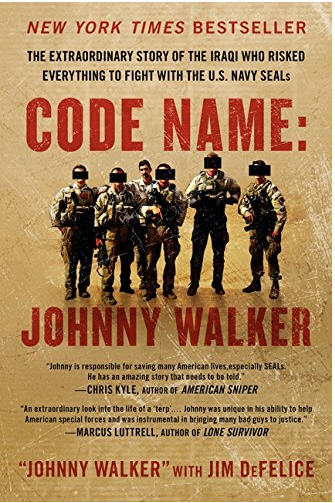
The book is called Code Name: Johnny Walker and was written by the guy the SEALs called Johnny Walker with the help of Jim DeFelice.

Who is Johnny Walker?

He was a resident of Mosul and was what they called a “terp”, an interpreter who went with the SEALs on their missions. He went on hundreds and hundreds of missions with them. And he offers a fascinating glimpse into what life was like in Iraq during the Iraq War for those Iraqis who helped the coalition forces.

The SEALs appreciated his service. I know this because a host of them have blurbed his book. Furthermore, they helped him eventually immigrate to America. That’s how grateful they were for his service.

If you like these types of books and would enjoy new insights, I think you’ll really enjoy the book. Johnny Walker does swear a bit. But I tend to take people as they are. And it was well worth time I spent listening to him.

#

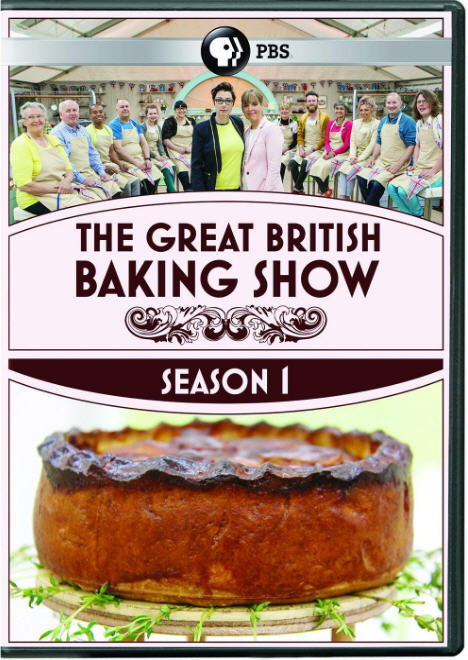
For Christmas my daughter received a number of seasons of The Great British Baking Show. It’s a competition baking show. I’d heard about it before, but I’d seen episodes of American competition cooking shows and didn’t enjoy them at all.

However, my daughter said this was nothing like the American shows, that it was awesome, and it was so awesome she wanted to the DVDs for Christmas so she could watch the episodes again. I needed to give it a try, she said. So I gave it a try.

I’m happy to report that I and my family have are enjoying the heck out of her DVDs.

The British folks that are competing in the challenges are down-to-earth and interesting. Some of them are funny. The tips about baking are interesting. And, best of all, the British show makers know how to create suspense.

They start each season with a group of twelve amateur bakers. Two professional bakers give them a baking challenge with a time limit and then judge the bakes. After a series of three challenges, the pros name a star baker for that series and then also announce who was at the bottom of the pack and will be leaving the show. If you like cooking or have ever found yourself watching a cooking program all the way through, I think you’ll really enjoy these fun, British bakers.

Share

Similar Posts

  • Good Stuff! Mike Loades on Swords and Bows

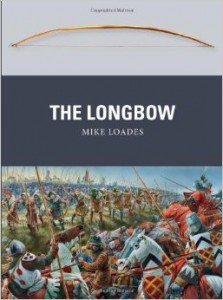
    Mike Loades is an expert on medieval fighting. He brings energy and, not just bookish learning, but insights from hands-on use. I loved the five-part Weapons That Made Britain television series for which he was the host and chief consultant. And so I looked to see if there was anything else he’d done. I found he’d written two books, which I am so happy to have read.

    The Longbow is not just a book about the longbow. It’s about its construction and how it impacted the development of armor, and types of armor, and the wood used for the bow, and how to make arrows, and what the various points were for, and how people trained, and then cared for the bows, and how it was used in war. And, again, the insights are not just bookish ones. He’s walked the battlefields. He’s used bows for years. He’s performed tests with them. It is a 80-page book that carries a monstrous bang for the buck and one of the best purchases I’ve made for my library. I loved it.

    MikeLoades_TheLongBow

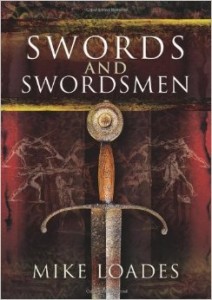
    Of course, after that experience, I had to get his Swords & Swordsmen. This book is almost 500 pages long, and I was rapt reading each page of it. Instead of focusing on one version of this weapon, Loades discusses exemplars of various types of swords through time, starting with the sword of Tutankhamun in Egypt all the way through the swords of J.E.B. Stuart and G.A. Custer in the American Civil War. There are 15 chapters all discussing different eras and swords that provide a mountain of insight. The love Loades has for and the practical experience he has with the topic shines through on every page. Just as with The Longbow, you’ll learn about use, construction, the interplay with armor, and much more. Heck, I got the ideas for at least three novels reading this book. I loved it as much as I loved the first.

    MikeLoades_SwordsAndSwordsmen

    If you enjoy military history and arms and armor, you will love these books. Guaranteed.

    While you’re waiting for them to arrive in the mail, treat yourself to five hours of fascinating video below.

    Weapons That Made Britain E01 – The Sword

    Weapons That Made Britain E02 – The Longbow

    Weapons That Made Britain E03 – The Lance

    Weapons That Made Britain E04 – The Shield

    Weapons That Made Britain E05 – Armour

    Share
  • Good Stuff! Lindybeige Rocks!

    I’ve been watching Lindybeige videos for a few years now. Lindybeige is the online name for Nikolas Lloyd, a smart, funny geek of the re-enactement, fencing, and RPG line. He’s got a youtube channel that is chock full of videos in which he makes witty and insightful points about ancient and medieval warfare, archaeology, dance, and anything else that takes his fancy.

    For example, have you ever seen folks pushing each other about with swords? Is that realistic?

    Interesting, what about pushing in a shieldwall?

    Food for thought, isn’t it? It makes me want to go read up on shieldwalls. Were they really as he concludes they were? But enough about history and conjecture. What about the truth? What about science? For example, if you believe in science, must you also believe in a certain approved list of theories?

    But surely that doesn’t apply to Global Warming Theory, which is now called Man-made Climate Change because the warming bit never panned out. No?

    Wow, and he even accepts the data on the warming. Okay, enough about the truth. Back to fantasy geekiness and weapons in fantasy worlds that make sense.

    I love this guy. If you’re a fantasy geek and haven’t yet begun to watch Lindybeige, you’ve got a lot of enjoyment ahead of you.

    Share
  • No, You Did Not Get a Mandate

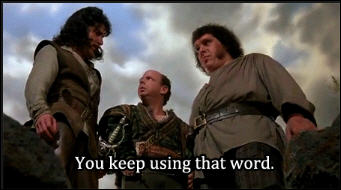
    “Mandate” is one of the stupidest words used in politics today.

    You keep using that word

    A mandate is an order, a command from the boss. A requirement.

    Some restaurant owners mandate their employees wash their hands after using the bathroom. I personally like restaurant owners who mandate that.

    States mandate that people who drive cars have car insurance. I like that mandate as well.

    But do political representatives receive mandates?

    When a politician wins an election, does he or she receive a mandate from the people?

    For example, when Obama spanked John McCain in 2008, and the Democrats swept into power, did they have a mandate from the American people to enact certain legislation?

    Obama had 52.9% of the voters behind him. McCain had 45.7% of them.

    Many Democrats at the time claimed a mandate from “the American people.” But if you know some elementary school maths, you’ll quickly recognize that 52.9% is nowhere close to 100%. Or 90%. Or even 70%.

    52.9% is close to, well, 50%. That’s half. As in half a pizza. Here’s a visual for the maths-impaired.

    Half a pizza

    Clearly, 52.9% is nowhere close to “the American people” or “voters.”

    But this was lost on politicians who had the brain capacities of gerbils. They thought the elections magically evaporated the will of 45.7% of the people. They though the other half had suddenly disappeared. They thought government by and for the people meant government by and for half the people.

    Hold on, John. In the Senate, Democrats won 57 seats, Republicans 41. In the House it was 257 to 178, or 59% to 41%.

    Yeah, like I said. About half.

    But such maths were beyond them. And so they began to push through legislation that only half the country wanted. Sometimes much less than half, as in the case of Obamacare.

    They weren’t governing America. They weren’t leading America. They were leading half and oppressing the other half because they had “won the election.”

    So, my fellow Americans, should winning an election give you the right to force something onto the other half of the populace they don’t want?

    Is this what America is all about? Is that the freedom from tyranny we celebrate every fourth of July?

    The Republicans won a great victory in this year’s election, taking back the Senate and expanding their seats in the House. In the Senate, it will probably be 53 to 45. In the House, 244 to 184.

    But does this mean the American people have clearly given them a mandate to enact certain legislation? Does it mean they’re supposed to ignore the other half of the country and ram legislation down their throats they don’t agree with?

    I’m a true blue conservative. Or true red, or whatever the color is. After the last six years, I never want to have legislation rammed down my throat again. And I’ve also come to the realization that I never want to do that to the other guy.

    America hasn’t given the Republicans a mandate. Nor, as President Obama recently claimed, have they given Washington a mandate to “get stuff done.”

    Getting stuff done is exactly the problem.

    We don’t want you to get stuff done.

    We want you to get stuff done that the vast majority of us agree on!

    But, John, does that mean you want us to compromise on our principles?

    No. I don’t want to compromise. I’m not interested in going along to get along. But I’m also not interested in a representative government that fails to represent HALF of us.

    Here’s my proposal. Let’s go back and start over.

    Let’s get rid of Obamacare and put something in its place that at least 60-65% of us can agree on. Maybe 70% of us. It won’t be a liberal weed dream. It won’t be a right wing vision of glory. But whatever gets enacted will be something all of us agree are good things.

    And it will force us to win others to our way of thinking if we want to get the rest of the stuff we think is so splendid.

    But, John, what if folks can’t agree?

    Then we don’t enact. This forces us to use persuasion. It forces is to think win-win. It forces us to behave like a nation that loves freedom.

    Immigration. Do we want an American where the president acts like a tyrant and forces something down half of our throats? Or do we want to enact something 65-70% of us can agree on?

    The budget. Let’s roll back all the nonsense and get a spending plan that 65-70% of us can agree on.

    What about the 30%? I don’t want to oppress them, but 100% ain’t never gonna happen. Let’s be practical. Besides, requiring a large majority means Washington will be at least by and for most of the people. And that’s better than what we have today.

    So, do we have a mandate? If anything, I would hope the mandate would be to do stuff that represents America, not one party.

    Edit 11/10/2014

    And today I find this–an explicit example of the gerbil-brain thinking I reference above. This fine fellow is one of the architects of Obamacare, explaining that the law was written in a way to bamboozle the American voter. What we need in Washington is honest debate and persuasion. Not duplicity and lies. I’m appalled. This is the get-stuff-done-I-have-a-mandate mentality. Not the get stuff done that most of us agree on approach. These folks have completely misunderstood the purpose of government.

    Share
  • |

    My First Year as an Indie Author

    On November 24th last year, a little over 13 months ago, I released my first indie title—Servant: The Dark God Book 1. That release was the official rise from the sideways swamp crash I had with Tor Books.

    BTW, sideways swamp crashes in publishing, which can be caused by all sorts of reasons, are not uncommon. Most writers will take a hit or three in their career. That’s just part of the writing business. The question is what happens after the swamp crash?

    In my case, I got to work. And, boy, was it a lot of work.

    The results have been positive. It was not a phoenixian rise from ashes to glory; it was more like a damp crew patching the ship in the jungle with whatever they had at hand and then launching with nothing but a few birds making any noise. We are by no means past the many perils and obstacles on the path–right now a solid hit from just about anything could knock us out of the sky.

    But we are airborne.

    We are flying.

    And by that I mean the business is delighting readers and generating income.

    I’ll probably hit close to 23,000 paid sales since that launch. The large majority of them were for Bad Penny. To give you some perspective, a single title will make the official Publishers Weekly bestsellers lists (of traditionally published authors) hardback and paperback categories when the title has sold around 100,000 copies in the year. The top dogs report sales of a few million.

    It’s clear the John D. Brown crew has got a ways to go.

    But we don’t have to reach that lofty level to be viable. It would be awesome. At the same time, it’s helpful to be realistic. There are somewhere between 300-400 titles on the adult hardback and paperback list combined. The same on the children’s lists. So I estimate there are around 700 traditionally published books, fiction and non-fiction, that sell at those bestseller levels. That’s out of the millions of trade titles available on Amazon.

    The good news is that the majority of writers making a living don’t appear there. The fact is that you don’t have to sell 100,000+ copies of a single title in a year to make a living. In the indie world, you can do just fine with what Russell Blake calls base hits and doubles.

    So are we making a living?

    Those sales have generated enough net profit to purchase us a nice used vehicle and a few other things. Better than a poke in the eye with a sharp stick (as my neighbor Mike Carr used to say), but making $10-20k can’t replace the day job. Not even close. Still, it’s a beginning.

    Will our crew make it?

    Can they survive the ferocious flying monkeys?

    Stay tuned.

    In the meantime, I want to summarize a few things I’ve learned about indie publishing and give a few shout-outs.

    First, I want to thank all the readers who decided to give one of my books a shot. From the reviews and sales, it appears the majority found just what they were looking for (and there was much rejoicing).

    Second, a big thanks goes to Larry Correia. Not only is he generous and enthusiastic, but his audience is as well. The Monster Hunter Nation made a definite difference for me this year.

    I want to thank LL Muir and Diane Darcy, two romance writers who have been incredibly generous in sharing their indie insights and support.

    Devon Dorrity and Dixon Leavitt spent hours, HOURS, of their time helping me with covers. I can’t thank them enough.

    I also need to thank the Codex Writers. There’s a small group of us indies there, and they’ve all be very helpful in sharing insights about what’s worked for them and what hasn’t.

    I’ve found other resources helpful as well. The Passive Voice kept me current on the industry. Russell Blake’s blogs gave me a clear-eyed opinion of what it takes to succeed. The Calibre ebook editor has saved me many times. And Anne-Marie Concepcion’s online course on using InDesign to publish ebooks was a very good introduction, as were Dean Wesley Smith’s online courses on interior and cover formatting.  I list other resources I found useful in my Resources for Indie Writers post.

    Okay, so what have I learned?

    1. Nothing happens without visibility

    This is retail. If your product is not somewhere that people can see it, they won’t buy it.

    I was in Wal-Mart the other day. My sister calls it the Evil Empire, but she’s a Tarzjay snob. I myself am a value shopper. I want what I want, and I want to pay as little for it as possible. At the same time, I’m not going to go out of my way to get it because searching around costs time and money. So if I’m looking for something in Wal-Mart and I don’t see it on the shelves, guess what? I buy something similar that will do the job.

    Wal-Mart used to stock Marzetti’s Ranch Dip. The best vegetable dip EVAR. But then sometime this year, they stopped stocking it.

    Why?! Why do they stop stocking stuff the moment I find it?!

    (Hey, maybe that’s why they’re the Evil Empire . . .)

    I mourned for a few seconds. And then I purchased the Lighthouse dip. It’s good. If they put Marzetti’s back on the shelves, I’ll switch back immediately. But the point is that if it’s not in front of my eyeballs when I go shopping, I ain’t gonna buy it.

    And I’m finding retail is the same with ebooks as it is with everything else. You can have the best product in the world, but you aren’t going anywhere with it until you are visible to your buyers.

    2. There are a couple of ways that I was able to make my stuff visible

    The way to make my stuff visible was not by publishing on Amazon, Nook, and the rest.

    Publishing means nothing.

    Think about it. There are, right now, 3,079,561 books in the Kindle bookstore.

    Yes, three million!

    If those were physical books, and we lined them up spine-out like we do on a bookshelf, and we assumed the spines average about an inch in width, they would make a line 48.6 miles long.

    For us Utahans, that’s a line of books that stretches from the Mormon temple in downtown Salt Lake City, past Provo, and ends in Springville! (Look up your own local distances to get an idea.)

    That’s the kind of visibility you get by publishing your book, which is nada.

    So if getting it in the store that’s 50 miles long didn’t help, what did?

    Getting on a bestseller list.

    I sold thousands of copies of Bad Penny on Nook when I was on the Nook’s top 100 list. I rose to #3, in the entire Nook store, then hung out around #50 for about a month. And when that burst of sales that made me #3 fell out of the algorithm (30 days later), I fell off the list. My sales dropped like a stone. Not to nothing. But they were a fraction of what they had been.

    How did I get that #3 slot to begin with? The same way I rose to #30 for a few hours in the Kindle store, then slowly dropped to the 1,200s for a few days. I got it by placing an ad with the king of book advertising services, aka BookBub.

    How did I get onto BookBub? Here’s their requirements and tips. Please note that the reviews of Bad Penny were part of what made the book appealing to BookBub.

    How did I get reviews? By using other ad services to make my book visible and getting mentions on blogs like Larry Correia’s and a few others. And by following recommendations in the book Let’s Get Visible and Your First 1,000 Copies and the suggestions of others who are selling well. And that’s a key thing too–looking to see what folks who are selling well are doing, not those who aren’t.

    Of course, readers also liked the books enough create word of mouth. And I can track some of my sales spikes to specific posts or people. The ultimate goal is to have so much word of mouth that everyone’s talking about you. But until that time, I ain’t going to rely on word of mouth alone.

    Why not?

    Because I’d like to increase my odds of success. I’d like to accelerate them. And thinking that word of mouth alone is going to do that flies in the face of everything I’ve learned about retail. Read what I had to say about books and lemonade and tending your garden for more. Consistent efforts with methods that actually have some track record of success seem to have helped a great deal.

    BTW, Bad Penny is currently in the top 10 of three of Amazon’s thriller lists. I guaran-dang-tee you that being on those lists is a big factor in me selling somewhere around 60 copies a day. I saw that with Nook. Being visible starts a virtuous cycle–more people give you a try; if they like the book, they spread the word, which leads to more sales, which keeps you visible, which prompts more new readers to give you a try. Yeah, you’ve got to be good. But you’ve got to be visible first.

    3. In most cases, books in a specific genre are substitutes

    When readers purchase a book, they are looking for a certain type of experience. And my book’s experience isn’t so singular that readers can’t get something roughly similar from another book.

    I love Lee Child. But Robert Crais provides an experience that’s basically inside the same ballpark. So does Nelson Demille and a whole host of others, including me.

    If Lee Child stops writing or slows down his production to one book every four years, I’m not going to stop reading thrillers. There are plenty of other authors that give me the general adrenaline, surprise, action experience I’m looking for. I’ll be sad, but there are a lot of good authors out there. And I’m sure a few will become my new Lee Child.

    Of course, we aren’t all exactly the same. I provide a noticeably different tale than Lee Child does even though we’re in the same Lone-Ranger-vigilante-justice action genre. And so, if I produce the best tale I can, I will find some readers will come to prefer me to Child because I line up more with their tastes than he does.

    In addition to continue to work on visibility and craft, this means I’ve got to up my production. I’m going to try for 2.5 brand new books in 2015. That’s nothing for some folks. But that’s a good stretch goal for me.

    4. There is no one sure-fire way to success

    Even though visibility and studying your craft helps, nobody I know who is doing well has a replicable step-by-step program that guarantees success. There are some activities that seem to make the odds better, but there is no guarantee.

    For example, from what I wrote above about BookBub, you’d think that’s the brass ring. Nope. I know other authors who have run promos with them and didn’t have near the success Bad Penny did.

    Russell Blake’s advice on this seems to square best with my experience. See the links to his blogs here to see what I’m talking about.

    5. Figuring out how to make a living with this has a lot in common with Lean Startup principles

    The basic concept behind lean startup is that when you’re in a market without a lot of info on what works, the company that wins is the one that learns what works the fastest. And you do that by conducting experiments.

    You experiment to see if you’re offering any value to the intended audience. You experiment to see if you’re promo methods are actually feeding your engine of growth. You experiment to see if your audience really is big enough.

    The experimental approach taught in the lean startup stuff has freed me from a lot of anxiety. Success or failure is not about me personally. It’s about my techniques. It’s about my craft and business skills. It’s about me learning how to learn quicker.

    I’m approaching my thriller and epic fantasy properties as experiments. I’m approaching various visibility methods as experiments. My current state of craft is an experiment. If what I’m doing with my current properties doesn’t work, I can pivot and experiment with something new.

    The question is whether I can learn what works–to find an opportunity to add value and provide that value–before I run out of runway.

    If you’re interested in these ideas, let me recommend The Lean Startup by Eric Ries, which explains the general principles, and Running Lean: Iterate From Plan A to a Plan That Works by Ash Mayura, which shows you how to start to implement them. These two books have changed how I approach the writing business.

    Bottom Line

    The bottom line is that I love developing stories and sharing them with readers.

    I knew this already, of course. But having the ship up and flying again made it hit home in a big way. I enjoy the process of developing a story. I love the research, the story generation, the surprises that come along the way. And I love the emails I get and the discussions I have with readers who have read my books and enjoyed the heck out of them.

    So that’s the big summary.

    Year two stands before us. Let’s hope John D. Brown and company can learn and produce at higher levels than we ever have before.

    Have a wonderful 2015!

    Edit 1/14/2015: Here’s John Ellsworth, another indie author, with a similar tale. Although I’m jealous of his seven books in a year. I need to get cracking!

    Share
  • Good Stuff! The future, Service Depot, Bear Lake ice cream shops

    Huge changes are coming to our world soon.

    They’re going to affect your health, wealth, and job. They’re going to take us back into space and make us live longer. They are changes that almost blow the mind. And they’ve already begun.

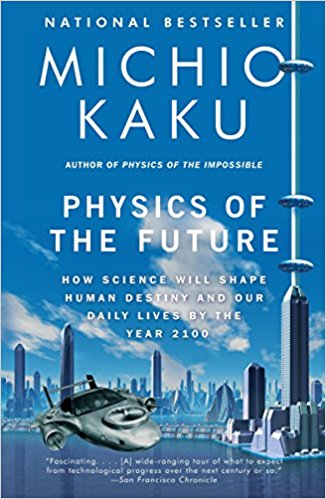
    Michio Kaku is a world-renowned physicist that has always been fascinated with all sorts of science. And in Physics of the Future, he looks at what’s currently happening in computing, robotics, biotechnology, medicine, energy, and engineering, and explains how it’s going to affect our daily life between now and 2030, 2030 to 2070, and 2070 to 2100.

    The insights are awesome. The book’s a feast. Page after page.

    Did you know, for example, that there are parts of our DNA that have genes for certain traits, but those genes are turned off? For example, humans have genes for growing fur all over our bodies, but they’re turned off. Snakes have genes for legs that have been turned off. Chickens, one of the distant progeny of the dinosaurs, have genes for growing tooth buds in their beaks (imagine the grandchildren being chased by one of those bad boys). There are many more such dormant genes, and in the not too distant future, we’ll be able to turn them on.

    Did you know that today we can regrow organs? So far scientists can grow skin, blood, blood vessels, heart valves, cartilage, bone, noses, and ears from your own cells. They’ve be able to grow windpipes and bladders. Imagine damaging your eye and being able to grow a new one that your body won’t reject.

    Did you know that we’ve already been able to hook people up so they can move objects with their minds?

    And what about computers and robots? Many futurists fear the robots will become smarter than us and take over the world. Will they? Kaku explains why this isn’t likely with the technology we currently have and what really makes up intelligence.

    These are just a couple of the dozens of thrilling topics Kaku explores. And he makes it all so easy to understand and entertaining.

    A new world is coming, full of perils and exciting opportunities. An Kaku gives us an intelligent sneak peek.

    If you wonder what our world will be like in the near future, if you enjoy science and technology, if you want to be informed, then you will love this book. When you finish it, you can then move onto his book The Future of Humanity, which delves deeper into what we can expect in the near future in space. You can then move to The Future of the Mind, in which he explores in more detail what we can expect in understanding, enhancing, and empowering our minds.

    *

    I’m not a handy man. I’d like to be one. I respect folks who know how to fix things immensely. But I have a million other things on my plate and don’t have the time to learn how to be one. And so when our oven and gas range started having problems, I was staring at spending around $2,000 to replace it.

    But then I found Service Depot in Logan, Utah. They do handyman, appliance, HVAC, and plumbing repairs. I called them. They send out someone all the way to Bear Lake to look at the issue and give me a bid. He was clean-cut and smiling. When I invited him in, he stopped to put booties on to make sure he didn’t track dirt into my house. We arranged an appointment, and a few days later another fellow who was equally clean-cut and pleasant to deal with showed up and fixed the range for about one-fourth of what it would have cost to replace it.

    These folks were prompt to respond, friendly, and bootied. If you need repairs done around your house, my experience with them was great.

    *

    If you enjoy ice cream and are in the Utah Bear Lake area, I have two recommendations. For soft-serve shakes and cones, you can’t do better than Zipz in Garden City. Some soft-serve is icy and thin. Not enjoyable at all. But Zips uses a soft-serve ice cream with a higher fat content, which makes it deliciously smooth and creamy. And when you add flavors—oh baby! We recently went there as a family and got shakes. They have a lot of different flavors, but I got the Nutella and pretzel mix and floated up a bit toward heaven. If you like chocolate at all, you have to try that shake.

    The other place is in Laketown. The Sinclair gas station turned their old car wash into a hard ice cream shop called, ta-dum, The Car Wash Ice Cream Shop. It’s bright and clean. The youth scooping the ice cream there are smiling and friendly. And they have a flavor called Coconut Castaway that’s scrumptious. Think of a Mounds chocolate bar, but in ice cream. More heavenly floating. What makes it even better are the reasonable prices.

    If you’re in the mood for ice cream, if you want to get a bit closer to heaven, then do yourself a favor and get yourself to one of these shops.

    Share

2 Comments

  1. BTW, a low-tech solution for snow melt in garages – if it is not properly sloped – is to get a can of expanding foam and build up a small berm around the usual parking spot. Don’t put it at the garage door end, just make it three sided. Not pretty, but it will work. And easy to scrape off come spring.

    For a low-tech squeegy – get a pool noodle from the Dollar store. Use your metal rake and jam it into the noodle. Presto! A quick water squeegy ! Just lay the noodle on the ground and find the best place to stab it with your metal rake. Easy, and cheep.

    Although the floor mat will work, the above tips are a bit cheaper. Not as pretty as your solution, though.

Comments are closed.