Every year the Alfred E. Smith Foundation hosts a millionaires-only fundraising dinner for Catholic charities. It’s a custom to have the two main candidates speak in election years. President Barack Obama and Governor Mitt Romney roasted themselves and each other this week, just two days after their brouhaha second debate.
Not only are both talks funny, but the fact that these two men came together for this purpose says a lot about both of them. Go Obama and Romney! It’s the perfect antidote to bitter political rancor.
Author Jim C. Hines recently posted a thoughtful blog about connections between Writers of the Future and Scientology. There are a number of folks who have issues with Hubbard’s metaphysical claims and the church he started. Some folks claim that supporting Writers of the Future (WOTF) in any way supports the Church of Scientology (CoS) and the abuse of the young, the innocent, those who are vulnerable, and the stupid.
I won a first prize in the Writers of the Future. I received $2,000 cash for the prize and subsequent publication. I also recieved a paid trip to Cocoa Beach, Florida to workshop with the other winners and pro writers. I tell new writers to submit to the contest all the time. I do not feel I’m supporting any wickedness. Let me walk you through this. You tell me if I’m killing any puppies.
A. What underlies the continued operation of WOTF?
Hubbard wanted it (I don’t know why, although he states it was to help new sff authors and illustrators).
The folks who run it have a very HIGH esteem of Hubbard and so have huge motivation to make it successful.
A trust was set aside, although without looking at the books we can’t know exactly if it’s an independent thing or if money is being funneled from other CoS holdings. You do not pay many to enter the contest, so all of the money to run the contest and pay prizes etc. comes from this trust, sales of the WOTF anthologies, and perhaps other CoS holdings.
It’s used for positsive PR for Hubbard’s brand name.
The judges, who don’t give a fig about CoS, want to help new writers.
B. What are the effects of the contest?
No documented writer conversions to CoS.
No documented WOTF anthology conversions of young skulls full of mush to CoS. Someone please show me some evidence of the WOTF antho being a gateway to anything, despite the rumored statements of some Scientologists someone’s uncle overheard.
No documented donations to CoS that I know of.
New writers get paid a whole bunch of money, get to network, and receive instruction from pros for a week.
The winners, on average, think better of Hubbard, as do their friends and family.
Most winners report it was a great experience and encourage other new writers to submit.
WOTF sells some anthologies and makes a little bit of cash to offset expenses. I can’t imagine they’re ever in the black, are they?
WOTF tracks winners and uses those who have done well as PR shiny for . . . WOTF and the Hubbard brand name.
I was a first place winner. I had a marvelous time. This was the one held in Cocoa Beach, Florida. One night I needed to go to a convenience store to get something (tooth paste?). One of the WOTF folks drove me there. A nice woman. It was raining. It was just the two of us in the SUV.
I’m a VERY CURIOUS guy. I’ve read most of DIANETICS. I stopped by a Scientology place in Seattle to chat. I like hearing people talk about their faiths, about their lives, about whatever. If you spend any amount of time with me, you will tell me your life story. You will. It just happens.
I tried my dangest to get something out of that woman, but she was as tight as a clam sealed in four feet of concrete.
Nobody talked Scientology. Everyone involved went out of their way to avoid it. End of story. I’ve talked to many other winners. They report the same.
On the other hand, they did have a PR guy there.
Mr. PR intereviewed us about the contest and Hubbard’s works and took footage. Our one-on-one interviews were on camera. We took still photos. He asked us in our acceptance speeches to thank Hubbard by name.
He was a PR guy.
It was very clear his job was to generate PR content for WOTF and Hubbard. How do I KNOW this? Because his questions all centered around WOTF and/or Hubbard. But never CoS.
Some of the winners did not like his solicitation for a mention of Hubbard’s name. There was some reality show behind the scenes grumbling and scheming, and they did not mention Hubbard in their thanks at the awards event.
That’s fine, although it didn’t make much sense to me. Maybe they felt gratitude needs to be spontaneous, not asked for. And I can agree with them on that. At the same time, why would I take $2,000 cash for the prize and publication, and the paid hotel, and workshop, and airfare and then slap the folks who gave it to me? I was indeed grateful. So I mentioned Hubbard in my thanks (oh, look at how noble I am; somebody should saint me).
What did the contest do for me?
Gave me some cash.
Validated that maybe I had some chops. No, I wasn’t competing against pros. But I was competing against all those wanting to break in. I talked to Wolverton, who was a coordinating judge for many years and was the first reader, about the numbers of submissions they received. Hundreds upon hundreds each quarter. Huge boxes full. Were some drek? Of course. Who cares? Others weren’t. I won.
Planted an idea in me that maybe I could do this.
Gave me great connections with some pros and other authors.
Allowed me to tell people I won a big international award for my writing. A little PR for my own brand. Who doesn’t want to engage in a bit of puffery now and then (and so you see, Fred, I am a little fabulous, aren’t I . . . )?
So the contest, as far as I’m concerned, is a GREAT contest for new writers.
But am I supporting CoS? And is that a bad thing?
Every time I purchase a Kraft Foods or Nabisco product, I directly fund Phillip Morris tobacco company and their efforts to hook children on smoking abroad. Some of the tomatoes I purchase in Walmart and other grocery stores are tainted by slavery that occurs today in Florida and California’s central valley with migrant workers. Some of those tomatoes end up in various restaurants like Pizza Hut or Papa Murphy’s. Every bite of chocolate you eat funds slavery in the Ivory Coast, where the vast majority of cocoa beans come from. Not a few slavers here and there, but widespread slavery and abuse. There are many situations like this.
What do you do when you like a product or service, but don’t necessarily want to lend aid to an affiliated cause?
In many situations, I don’t do much.
Alas, there goes my sainthood.
I admit that I should and should probably think more about this. At the same time, with regards to CoS, I don’t know that it is a wicked and exploitative organization.
I’ve seen nothing that suggests they’re into crime. Or systemic abuse. Or fraud. Or that they have a vendetta against dumb people. I don’t share one iota of their faith in Hubbard or his metaphysical teachings. But I do share other values and beliefs with them. Just as I do with Catholics, Muslims, Pagans, Athiests, Communists, and Realtors.
Besides, I never did PR for them. I’ve always said I DISAGREED with their theology, which is negative PR, if you think about it. Furthermore, I’m fairly confident the contest DOES NOT funnel large amounts of money to CoS.
What can they be making after taking out the expenses of the award week for all those authors, illustrators, judges, “luminaries,” etc. that they fly in and house, all in addition to the prize and publication monies? I’m confident they make nothing at all, but actually lose money each year.
So the net net is that they get some PR for WOTF in the SFF community and some for Hubbard’s name. That’s it. That’s what I’m giving them.
But I don’t see any documented stories of that leading to any donations or conversions to CoS. Or positive PR for CoS. Which, again, I’m still not convinced is a systemically exploitative and wicked organization.
But even if it were, am I really supporting CoS when I promote WOTF?
I don’t think so. I’m not giving them cash. I’m not giving them any positive PR. It seems to me purchasing one bag of Oreos or a Lindt chocolate bar does more harm than this ever could.
I feel so much better now. I am saving the puppies.
Of course, if you disagree, please post a comment. If you have reliable documentation, not hearsay and tabloid clamor, that can add to the discussion, feel free to share it. I’m all for good data. And if you see issues with my logic, share that as well. But no wild-eyed, Chicken Little, my mother was eaten by CoS aliens rants please.
As for that Twix I just ate. . .
(sigh)
EDIT 1: I just learned the Phillip Morris spun Nabisco and Kraft off in 2007. So that frees up my Oreo conscience, but the principle remains.
EDIT 2: Okay, so I just learned that the CoS planned and authorized crimes in Operation Snow White. What to make of that? Comments? Talk about your corporate espionage. I know there are governments and organizations around the world and in the US that engage in that all the time. But this is the first I’ve seen from a “church.”
EDIT 3: Read through the links on this post by Deirdre Saoirse Moen where she explains why she no longer supports the WOTF contest. Primarily, she just can’t stand some of the CoS practices.
Of note is the link to the court report by the Village Voice at the Debbie Cook hearing. One question I have is why all those leaders were in the Hole to begin with? Was it some routine church program? Yeah, it sounds awful, but the military puts the SEALs and Special Forces through awful things. So I’m not clear on all of that. And why haven’t more come out to complain? The unlawful detainment aspect of these allegations is disturbing. But are they really doing this? Are these isolated experiences, or SOP? I don’t know.
Looking at Operation Snow White, the Debbie Cook hearing, and the copyright violation stuff, it’s becoming fairly clear that the CoS has taken an extremely aggressive approach against some of those who speak out against them (maybe it’s over the top) and a similar approach with protecting their materials. Although I think they’ve lost the battle about their materials on the internet.
Instead of trying to win public opinion with the truth, it seems in some cases they’ve instead attempted through various methods to try to silence detractors.
Anyone have any more links to substantive material?
EDIT 4: Here’s a letter from Joni Labaqui, a Scientologist and the person who runs the whole WOTF shooting match, to Frank Wu, who was an illustrator winner, and had posted some stuff about WOTF and CoS here: http://www.frankwu.com/illo.html (I found the letter at the bottom).
Dear Frank,
Hi! It’s Joni Labaqui here. Haven’t seen you since you blew me off at LA Con a few years ago and now I know why. I didn’t understand why you didn’t want to talk to me for very long. I loved your write-up on your site about the contest until you got into talking about Scientology. I know what you mean about feeling hurt when people put down your church. I happen to think you are NOT stupid because you are a Christian. I have many Christian friends and I respect their beliefs and even fight for them. But then you get into my religion on your site and putting out falsehoods, then I realized you didn’t have all of the info. We don’t sue people for bad mouthing our religion. The Church sues when there is slander and liable of considerable magnitude involved. Lets use an analogy here – lets say someone accused you of raping the girl next door, but you didn’t do it. Would you be upset? Lets say the parents then sued you or had you put in jail or both. Would you be upset? Would you hire an attorney? Gee, you’d be involved in a legal suit wouldn’t you? What if the father of the girl made sure you were lied about in the newspapers and on TV and he tried or succeeded in ruining your reputation? How would you feel? On top of that, lets say what really happened is you simply talked to the girl and were trying to help her and she turned around and accused you. How would you feel? And how about all those people who love to gossip? (I personally hate people who gossip as all they are doing is hurting others and they are basically low-life losers – lots of people fit into this category, I’m afraid). How would you feel?
You were actually wrong in that Scientology pays for the writers and illustrators awards. The Hubbard estate (which is not the church) makes so much money on royalties from his hundreds of published fiction it would make your head spin. You were right about the fact that every one of us who works at Author Services is a Scientologist, but the judges of the contest are not. They share the same goal that Mr. Hubbard did in starting and paying for this contest – to help the new guy, just like yourself back then when you won. So I don’t understand, a nice person like you has to even bring up the subject in your write-up. You think we are interested in “converting” any of you winners just because we have you tour the Life Exhibition? The answer from the horses mouth is NO. We are simply showing you more about his life and works so that you have the facts about the other part of his life, not the bullshit and lies that has been put out by vested interests of multi-billion dollar drug companies and the psychs that can’t stand us. Have you received tons of unwanted, unsolicited mail? The answer is no. Trust me, if we wanted to convert you, you would sure know it. Believe it or not, Mr. Hubbard in founding this contest just wanted you guys to be seen and heard because he knew how hard it is to get started. Period. Its not about Scientology. That is the simplicity of this contest. Anyone reading anything else into it has their own issues and I feel sorry for them. I guess maybe you ran into someone bad mouthing us and you listened to them. If someone badmouthed you – to this day – I wouldn’t buy it. I’d tell them to take a hike. Do you know why? Because I know you are a good person. I met you, I shared some of that joy you experienced when you won, and I was truely happy for you because I like people being happy, winning in life and doing well and winning this contest. I still like you, but I’m a bit disappointed that you felt compeled to write what you did. I don’t get it. I personally put in hundreds of hours of work to help give you the event that you won your award at, so how do you think I feel?
Last week, I was booted out of Codex Writers, a private, online writer’s group that I’d been a member of for somewhere around fifteen years. I’m not broken up about it, but the reason for said booting is interesting, unexpected, and worth a post.
Over the years, writers moved in and out of the group, but there were usually somewhere around fifty to a hundred members active on the boards. We discussed the writing craft and business. We held writing contests. We provided critiques. People shared interesting things about their lives.
The group has moderators. And the moderators got together last week and decided John Brown had to go.
Why?
What, of all the sins one may commit online, triggered this?
Was it refusing to stop posting pictures of cats?
Using too many emoticons?
Infecting everyone’s pages with Russian spam bots?
Nope. Nope. Nope.
I know what you’re thinking. Surely, John, you must have
been posting in a belligerent, arrogant, and strident way. You must have been a
jerk.
That’s what you’d think.
I assumed that’s what the problem was too. I invited those
who were angry and hurt to come to my personal thread and explain what it was
that was making them so hurt and angry. A number took me up on the offer. And,
to my great surprise, one of their criticisms was that I was too polite.
One person posted that my politeness made her think I was sealioning (a new term to me). Other’s agreed.
Another person said that my polite manner surely indicated I wasn’t sincere. Other’s agreed.
In fact, one of the moderators stated that being polite was part of the insidious problem that was John Brown. She said that my politeness had suckered folks in to letting my awful behavior go on too long.
I was offensive, and I was too dang polite about it.
So what was I doing?
Well, I was asking for evidence.
Don’t ask for evidence
My sin was suggesting that some claims being made about a
certain topic seemed to be premature. My sin was in looking at the evidence
being offered to support some of these claims and firmly stating that I
couldn’t see how it supported the conclusions.
On every topic on the forum, we could question claims and
discuss evidence in an effort to figure things out. But there was one topic, as
I learned, for which a number of the active members and the moderators decided
that was forbidden.
The topic was systemic or “institutionalized” discrimination.
On the forum, most of the discussion was how it related to publishing.
They explained to me that it was offensive for me to want to
see if the evidence actually supported the claims. It was offensive to post when
I couldn’t see that it did.
You might wonder how in the world can that be offensive.
After all, evidence is one of the first things we ask for when people make
claims.
If Billy Joe comes up to you and says, “Son, aliens done landed in my yard last night. I swear it on a stack of Bibles.” Most of us would want some additional evidence.
We’d want to see the video he took and look at the burn mark
in his lawn and the broken branches he said were made when their ship landed.
And we’d want to see the report showing that the residue collected off the
swing set was a substance unknown to mankind.
But it isn’t just claims about aliens that we do this with.
Historians do it about history.
Scientists do it about science.
Courts require it for reaching verdicts.
Heck, we even do it when we look at movie reviews—we use
those reviews as evidence that the movie is going to probably be good or bad.
Evidence.
We’re always looking for evidence to see if our guesses are
right. But on this topic, wanting evidence was offensive. I was told it was
“hurtful” and “damaging.”
The logic of micro-aggressionism
How could folks get to the point where wanting and
challenging evidence for claims was a bad thing?
Well, quite easily. And they aren’t the first to do it.
And lest you think this unfortunate logic is found only in
obscure writers groups, you need to know it has spread to many American university campuses.
That means it’s eventually coming to an organization near you. And that means
chances are good that you or someone close to you will have to face, at some
time or another, online or elsewhere, an angry mob (or moblet, as the case may
be).
So let’s examine the logic so that when you do, you’ll be
able to see the response for what it is, name it, and bring its tenets out into
the light and show them for what they are.
Here’s their logic.
ONE, each of us
has our individual prejudices, biases, and beliefs about the world.
I’m sure you agree with this. It seems pretty obvious. One guy might think soccer is for wimps, and another might think football is for lumbering meatheads. Of course, it’s not just about sports. We also hold views about people from other groups. Depending on your experience, the media you’ve been exposed to, and the statements and behavior of those around you, you might have unconsciously picked up certain beliefs about Asians, Blacks, Hispanics, Germans, Swedes, Whites, engineers, clowns, etc.
TWO, it’s likely there are others out there with the same prejudices and biases. Some of those ideas will be held in common by smaller percentages of the population. Others will be held in common by larger percentages of the populations.
I’m sure you agree with this too. A lot of Americans like football, but some don’t. A lot of Europeans like soccer, but there are some who don’t. We can see this with our beliefs about various groups. For example, ask anyone in the USA what they think about Nazis, hippies, or hockey players, and you’ll find a handful of common responses.
THREE, various prejudices
and biases can get perpetuated in the society. This is what the
micro-aggressionists call systemic discrimination.
I’m sure you’re nodding along here as well. Americans have
loved football for generations. Europeans have loved soccer too. Views are passed
on from parents to children. They’re passed on via the media. There’s a
systemic introduction to and reinforcement of those likes, dislikes, and
beliefs.
I think we’ll all together here.
However, this is the point where the micro-aggressionists diverge.
When those who have bought into the micro-aggressionist
views see any disparity between groups they focus on (ethnic minorities, women,
and minority genders), they claim, FOUR,
that the disparity between the two groups MUST be because of systemic discrimination.
Nothing else could be the cause.
I was told it wasn’t up for question. Furthermore, I was told that you can’t prove such things anyway. It’s “like ecology.” And so I shouldn’t ask. I was also told that questioning simply proved that I was lazy and ignorant, because if I’d done any amount of thinking or study, I’d agree with them.
But it didn’t stop there. They claim, FIVE, that if you question their default answer, you’re not only an ignoramus, but you are also hurting others. Literally hurting them.
The very act of asking for evidence, they say, is a micro aggression,
a micro threat, a micro attack. It’s a tiny assault. And those tiny assaults
perpetuate the discrimination. So if you disagree, you’re bullying and hurting.
If you question, challenge, or want evidence, you’re damaging people’s lives.
And this all leads them to their final conclusion—SIX, if you won’t voluntarily stop, you
must be made to stop. You must be silenced. And if you can’t be silenced, then
you must be banished.
Did you see where they went off the rails?
Multiple factors
The fact is that there are a LOT of factors that could cause differences in the situations between two people. And commonly held prejudices or biases is ONLY ONE of them. And until you’ve really dug into it, there’s no way to tell how large a factor it is, or if it’s a factor at all.
Here are just a few of the factors that have been shown to
have significant effects on a person’s success:
Birth order
Beliefs about self-efficacy
Grit
Work ethic
Whether you were born and raised in a single-parent family
How wealthy your family was
Self-control
Whether you graduated from high school
Certain pollutants in the environment
Where you lived
Your height
Your level of attractiveness (and it’s different attributes for men versus women)
Your age
Learning disabilities
Reading ability
Level of activity in a religion
General health
Notice that none of them have anything to do with ethnicity,
skin color, or gender. To ignore these as contributing factors in any given
situation is not only simplistic and wrong-headed, it can be harmful.
For example, why do Blacks have such high murder rates in
some of our biggest cities?
Micro-aggressionism would ignore all the many factors above
and assume that it must be some form of systemic racism. It would demand you
accept that explanation. And tell you you’re ultimately contributing to a
perpetuation of high murder rates if you question it.
Luckily, there are others who are looking into that issue. One strong correlation is with high out-of-wedlock birthrates. Another, with the spike in the late ’70s, is with unleaded gasoline. Or was it simply the boom in males aged 15-24? Or is it possible that murder rates are caused by different mixtures of factors at different times? Look at the graphs here.
What if a major factor is out-of-wedlock births? That has nothing to do with discrimination. It has everything to do with a life choice. And if that is indeed one of the main causes, then we can help save thousands of lives by figuring out a way to help the kids in those cities make better life choices and avoid getting pregnant outside of marriage. What if a pollutant is a compounding factor? Working on fuzzy claims of racism isn’t going to take lead out of the air.
But those under the sway of micro-aggressionism gloss over all of that. They are like doctors who diagnose every symptom as a sign of a broken leg.
Your chest hurts?
It must be a broken leg.
You’re bleeding from the head?
It must be a broken leg.
Your belly is distended?
Dang, another broken leg.
Criminalizing disagreement
The second error the micro-aggressionist philosophy makes is
in thinking disagreement is bad.
Yes, it can be uncomfortable when people disagree with you.
Yes, disagreement, even when polite, can stress you, raise
your anxiety level, or make you lose sleep.
But if you forbid disagreement, then you lose all of the
good things disagreement and the challenging of ideas brings.
Things like science and the search for truth.
Things like votes for women.
Things like civil rights.
The progress of our society has only been possible because
we’ve been able to disagree. When we begin to think disagreement is bad, we
start down a road that ultimately leads to a tragic end. One we’ve seen over
and over.
It’s the road of the Taliban and ISIS. The road of the Inquisition.
The road of the KKK. It’s one of the main roads that leads to oppression.
In the last century, Joseph Stalin, the champion of
socialism, the champion of the common man, the one who wanted to wipe out
inequity, killed an estimated 9-20 million non-combatants. Compare that to the estimated
11-12 million Hitler and his Nazi regime killed. What was Stalin’s view on
disagreement? “Ideas are far more powerful than guns,” he said. “We don’t let
our people have guns. Why should we let them have ideas?”
Indeed.
To Stalin, disagreement with his socialist ideas was
hurtful. It was damaging. It perpetuated inequality. Those that expressed even
a whiff of it were either shot or shipped off to the Gulag, the wonderful
forced-labor prison camps where people died in droves.
Mao, Pol Pot, and others all felt the same way about their
programs.
But the micro-aggressionist philosophy blindly ignores that. It ignores they all started with the righteous cause of equality.
Sure, in the beginning, it might feel like the yellow brick
road, but that path doesn’t lead to Oz. It doesn’t even lead to the witch’s
place. That road leads to Mordor.
If you go there and raise that regime, you’d better hope two
little fellows show up who have the courage to disagree.
The truth is that disagreement is like the tension and stress you feel when you workout and build muscles. It leads to a healthy, vibrant, and strong society.
Banning disagreement is like banning exercise. The result is a dramatic loss of health. A society of couch potato, Ding Dong hunchbacks.
What now
The writer’s group I got kicked out of is filled with good and interesting people. I wish them no ill will. And, again, I’m not broken up about being thrown out. Oh sure, there were good conversations and helpful insights. But, ultimately, it means one less distraction. And that’s good for me getting books out the door.
However, the ideology that some there hold is simplistic, unhelpful, and wrong. It’s not going to take them where they want to go. We know because we’ve seen how that movie ends.
And it appears it hasn’t run its course yet in our society. Which means at some point in the future, you’re probably going to meet folks who have, out of the goodness of their hearts, fallen for this logical trap.
I hope you find opportunity to speak up.
When you do, I hope you treat them politely and with good humor.
And I hope you clearly and unfailingly disagree.
Extras
If you want to know more, here are some great reads and
interviews to get you started.
How we pick up unconscious biases
“The Hidden Brain”. This is a Radio West interview of Shankar Vedantam. Nobody conducts interviews better than Doug Fabrizio. In this one Vedantam shares fascinating insights about how we pick up our unconscious biases.
Thinking,
Fast and Slow by Daniel Khaneman. A good-humored and groundbreaking
tour of the two systems in the mind that drive the way we think and the
resulting cognitive biases.
“What
exactly is a microaggression?” By Jenee Desmond-Harris. Another article
from Vox that explains what microaggressions are from the point of view of
someone who agrees with that philosophy.
The First Amendment by the Cornell Law School. An overview of what speech is currently protected and what isn’t.
An example of civic dialogue between a classical liberal and someone who disagrees.
The best way to change someone’s mind: use the skills you learned writing fiction.
John Scalzi recently wrote a post about White Privilege. You know: the idea that Straight White Males (SWMs) have all the cards stacked in their favor. It’s called “Straight White Male: The Lowest Difficulty Setting There Is.” I assume he wrote it to help SWMs have more sympathy for those who aren’t SWM.
It’s a noble cause. Not as noble as true love, but that’s so rare–not one couple in a century has a chance at true love (at least when you live in Guilder).
The problem is that Scalzi’s post is a great 101 on how To NOT Win Friends and Influence People. Actually, that’s not right. He will win new friends and increase his influence among those who are like-minded. But if he was hoping to win over those who didn’t already see things his way, I don’t think he’s going to be very successful.
His posts generated hundreds of comments. When you look at the comments, you’ll see that the vast majority of them are folks arguing Scalzi’s side with smug condescension and other folks arguing points against Scalzi with an equal lack of tact.
In short, it’s a classic online bring-your-guns-to-the-party event.
Alas.
Except I must admit such events can be a lot of fun if you’re on the side with greater numbers. Furthermore, there is sometimes a tremendous pleasure to be had in being provocative. Sometimes we simply must publish something with teeth in it. And maybe that’s what Scalzi was trying to do.
But if not, here’s where Scalzi’s post went admirably wrong. And it has everything to do with principles that underlie influence as well as writing fiction. You see, when you’re writing fiction and you want someone to root for your character, you do not turn to the reader and insult him. Insults don’t bring readers into your world.
Equally as important, telling, or demanding someone feel a certain way towards someone else, will fail every time you try it. You cannot demand (or whine) that a reader must feel sympathy and admiration for the character. Why? Because emotions don’t respond to demands. They just don’t. It’s like trying to freeze water by seasoning it with pepper.
The advice “Show, don’t tell” works in real life as well as it works in fiction.
Emotions are automatic. If someone presents the right stimulus, we WILL feel the desired emotion in response. We don’t experience a sympathetic change of heart when someone gets in our face and demands we feel sympathy. We do feel that change when we see the antecedents which prompt the emotional response in us. Show me. Make me believe. And the response is automatic.
This is what happened with Uncle Tom’s Cabin and the movie Ghandi and the TV series Roots and the more recent movie Believe in Me and the novel Les Miserables and thousands of others. It’s what happens every day when someone in one group meets someone in another group they feel some distrust for and begins to build a friendship.
Show the antecedents, help folks identify, and you’ll move millions. Get up and rant at someone, and all you’ll get is the bird. And applause from the true believers.
Scalzi claims that if you feel offended by his post then you’re hypersensitive because all he was doing is pointing out the facts. Um, no. Jim Hines is trying to establish potential facts. You could try to verify those. You could try to separate out causation from correlation. But Scalzi is not doing that. He’s telling all SWM that they are playing on the kiddy version of the life video game. Your life is so easy. Everything is rigged for you. You’re playing the baby version. And because of that everyone else’s life is so much harder.
No, he didn’t say those words exactly. But there is this thing call connotation. There is this thing called tone. And no matter how hard you try, you’re can’t separate the non-verbal communication from the message.
Everyone knows that some people have it harder in life and some have it easier. Like, duh. I think we all learn that when we showed up to the first grade. So what’s the point of telling all the SWM’s reading his blog that they are playing the dweeb version of life, the one with training wheels?
Furthermore, instead of helping all of us pampered SWMs identify with our brothers and sisters, he tries to erect more boundaries that would push us apart by giving all of us another way to discriminate and another reason to be resentful.
Lowly, pampered SWMs at the bottom. Gays, people of color, and women farther up.
So now we’re going to go around with a My Life’s Harder Than Yours number? The opinions of those with low numbers will have less weight. How could they have anything as worthwhile to say when their life has been so easy? Those with higher numbers will have more weight.
A whole new group calculus will have to be developed and standardized. And it will have to go beyond which shade of brown your skin is (yes, White people really are just a lighter shade of brown), your gender, and sexual orientation. Because those who are handicapped, by birth or by accident have it really rough too. We’d have to figure out if they had it more or less rough that someone who was gay, and would that change if that gay person lived in San Francisco versus Laramie, Wyoming? A geographical element! And what about those with idiot parents who teach their kids to take meth and don’t get them to school or beat them in alcoholic rages or who are never around? I wonder what score that would bring. And what about the kids who grow up with grandpa molesting them? And what about the short, the fat, the plain? What about those with glasses? Those who are runty bully targets? Or those with a minority religion. What about those born with AIDS?
Are we sure it’s a good idea to start ranking ourselves, using color, gender, and sexual preference to tag our status?
Wait, haven’t we already tried that?
When someone comes up to you at a party and condescends, when they’re always one-upping you with a “you think you’ve got it hard you haven’t seen squat” line, what is your response? Even if it is legit. What about when they get in your face for someone else? Does that change your default response?
It’s the same at internet parties and gatherings.
So.
Lesson 1: If you want to influence someone, don’t start by insulting them and continue by talking down to them. If you want to have a good time with like-minded friends, then, by all means, skewer.
Lesson 2: Remember “show, don’t tell” to win someone’s affection. Present the person’s story, and the reader will feel respect, trust, sympathy, sorrow, regret, and admiration automatically (okay, you’re right, some of that depends on the reader). Tell or demand, and none of that will occur.
Lesson 3: Don’t raise barriers between two groups when you want members of one group to identify with members of another.
Here’s a better way.
Tell me a story about a real gay black woman. Make me love her. Make me care. Tell me a story about her I can sympathize with. Just show me the woman. Make it about her, not her group category. Or tell me a story about a Mexican man who is just trying to provide for his children in America. Or tell me about a sympathetic SWM who goes to Asia or Polynesia and finds the cards stacked against him. Stories like this abound.
In fact, why don’t you drop the whole “SWM” business. If you want me to identify, to experience-take (yes, that official jargon), it’s probably best not to slap SWM on me and set me in one corner and slap GBM on someone else and set them in another. Help me identify. Focus on how we are alike. When you do discuss the differences, magnify those things that are wonderful and unique, or eccentric and unique, or goofy and unique, or weird and unique, or whatever, but make it positive. And when you must talk about old or continuing grievances between two groups, do so with respect, with a desire to calm, not enflame.
Lest you think I don’t know what I’m talking about, I grew up working in a family business where employees were White, Black, Hispanic, Tongan, and Japanese. Male, female, homosexual, heterosexual. And we were a big family. My father and mother held out big welcoming arms. I have Whites and Blacks in my biological family. I hope my daughters find great men to be their husbands. And if they happen to also be Indian or Puerto Rican or Black or Asian or Maori or Scottish or Southern or whatever, I would think it was grand. It’s possible I might experience some of that mild “other group” anxiety that sometimes comes when you meet someone that’s not just like you. But I know it’s possible to get beyond that by seeing what’s common, building friendships, and celebrating and laughing at and with the differences.
My father, God rest his soul, liked to quote Edwin Markam. I thought it fitting.
He drew a circle to keep me out,
A thing of scorn, and a thing to flout.
But love and I had the wit to win:
We drew a circle that took him in.
You want to laugh with the like-minded? Draw the first kind of circle. You want to win hearts and minds? Draw the bigger one.
I think this was taken when someone stole the ILOH’s Cheetoes
Seven days.
San Diego, Phoenix, and a wild trip through Wyoming, around Denver, and back to Utah.
Seven days.
Five nights.
In Arizona, I was told by a wild-eyed denizen of the Barnes & Noble we were signing at that my epic fantasy book was true–we are ruled by lizard people!
Imagine how shocking it was to learn that. I mean it doesn’t have anything to do with my book, but lizard people? A hollow earth? Is the CIA in on it? I don’t think I’ve recovered yet.
In San Diego, we rode around with Dave Farland in his old four-door sedan. A Lincoln? All I remember is that it was big and floated like a dream. After some narrow misses, Dave asked me to drive. Two big guys up front. One older, rough-looking guy being chauffeured in the back. At one point we walked to a restaurant during the day like some made man and his two goons. The restaurant was empty except for three rough characters sitting around a table on the far side. They looked at us, sized us up, then looked away. We sat at a table on our side.
In Wyoming we drove in high winds that sent streams of snow across the highway like multitudes of slithering snakes. At one point we passed one semi that was on fire, winds howling about. About an hour later, we passed a truck driver out in the median, thigh-deep in snow, a huge knife in his hand. He was trying to saw off the frozen antlers of an elk that had been hit. I looked up at his rig as we passed and did not see anyone behind the wheel. I swear the thing was rolling slowly down the highway, unmanned.
On the way back from Denver, we rode along a wintery, icy highway with trucks and cars littering the sides. Larry white-knuckled the steering wheel, but we made it. Two big guys, one 6’4″ the other 6’2″, in a tiny Ford Focus.
Did the very road fear the Lord of Hate? I cannot tell.
On this trip, Larry, that man of hate, brought a bag of Walmart beef jerky that smelled like, well, a particular kind of flatulence. What kind of person does that to beef? But we ate it. Because you do such things on epic journeys.
Now, here’s the thing. If you spend any amount of time with me, you will eventually tell me your life story.
You will.
Not because I’m a prier. But because I’m simply and sincerely interested. In people. If you work for the sanitation department, I’m going to want to know about garbage trucks. If you bowl, I’m going to want to know about bowling. If you’re some kind of wackadoo, I’m going to want to hear your wackadooness. Sooner or later, you’re going to talk. And, yes, there will be things along the way that I just might put in my zing file. That’s not why I’m talking to you. But sometimes the slices of life are too good not to capture.
So you put Larry Correia, International Lord of Hate, into a car with me, and he’s going to spill his guts.
Let me tell you what I found. Oh yeah, wait until you hear this.
Larry loves Bridget, his wife. No, do not turn away in horror. You must hear the rest of the tale.
He doesn’t like taxes, which is outrageous. Simply beyond the pale.
He’s a strong advocate of the right to bear arms. He figures people are safer with guns than without. And he was loaded. I remember getting to the hotel in Denver and seeing he draw his guns and put them on the table. A Kimber/Bul Poly .45 from his waist and a little Kahr MK9 on the ankle. Frightening. Of course, I never worried about going anywhere with him, but the guns had nothing to do with that.
He doesn’t like the idea of a small group of people in Washington telling folks what they need to do. He’s not anti-government. He just likes a minimal amount of government. This too is outrageous. Government is the source of all good in the world.
He doesn’t like a lot of what Franklin Delano Roosevelt did. One of those things he doesn’t like is the rounding up of Japanese Americans and putting them in war camps. Another was Roosevelt’s attempt to pack the Supreme Court with justices who would rule his way, essentially eliminating that branch’s check on the presidency. Nor does he like Roosevelt for being the first president to explicitly embrace deficit spending. The list with Roosevelt could go on. Of course, we all know that wise people everywhere thought Roosevelt made the right choice on these things.
Larry honors the folks who serve in our military and law enforcement. Big time. Guys and gals who put their lives on the line or support those who do. I roll my eyes.
Larry’s a big believer in pulling yourself up by your boot straps and getting to work. He worked on his father’s dairy farm milking cows early in life. Busted his chops in school. Busted his chops at work. Busted his chops writing novel after novel. And now he lives on Yard Moose Mountain. A supposed example of can-do economic mobility, which all smart people know is a farce.
I mean, work? Come on. Do you see how unreasonable the man is?
He’s an accountant and pretty good with numbers. Ergo he doesn’t like a lot of bureaucratic waste. It stinks to his accountant soul. And he saw a lot of that as a military contractor. I’m really for a lot of waste of taxpayer dollars, but I let him have his say.
Larry was once a bouncer.
He’s a big guy, but got his trash kicked in some early amateur MMA. But he still loved it.
The International Lord of Hate in multiple colors
In a friendly wrestling match, he broke his roommate’s toe, and said roommate responded by breaking the International Lord of Hate’s nose. Yes, the nose, Ladies and Gentlemen.
Larry is funny.
Larry has a lot of friends because, shocker, he’s a friendly guy.
There’s more. But let me tell you what I never heard. I never heard him make a racist remark. Not even when he told me about growing up in California’s Central Valley, or when some idiot kids who had been tasked with beating someone up to to join a Hispanic gang targeted him. Never heard him make a misogynistic remark.
I did hear how he loved to argue with folks on the internets. And then saw that later when I started reading his blog. It’s clear Larry likes a good fight. He’s a barbarian with big boots. But, in truth, he’s a friendly barbarian.
That’s the expose. I know. Shocking, isn’t it.
Now he’s gone and done this Hugo thing and calls people names and uses four-letter words on his blog posts.
I’ve found that Larry in person is not quite the same as Larry online when you disagree with him. In person he’s usually very conversational when you disagree.
Some might say he needs to be more polite online. Use more class.
They might have a point. Sometimes I think he steps over the line. Then again, they might not. He does get people to listen. And some of the things he has to say are insightful and worthwhile. Others are just plain funny.
Whatever your opinion, all I know is that if you’re wanting Abraham Lincoln, you’re going to have to look elsewhere. If you come out swinging, he’s not going to regale you with Kumbaya.
The International Lord of Hate radiating fearsome hate
And because he fights the way he does as Internet Larry, his posts seem to push some folks buttons to the point that they actually miss his intent.
For example, when Larry responded to Alex MacFarlane’s call for “an end to the default of binary gender in science fiction stories,” he never once suggested that we should discriminate against the folks MacFarlane wants to read stories about. He never suggested there shouldn’t be any such stories. Nor did he ever suggest folks who are discriminated against never have a case. His point was that the best way to write an entertaining story was to put the entertainment first, not some political agenda. His point was also that he’s sick of folks trying to foist their interests on him and everyone else. If you want to write about certain types of characters, do it. But don’t tell everyone else they must.
That was lost on some people. All they saw was someone who disagreed “rudely,” and they saw red. I’d be seeing red too if I felt ruded upon. At the same time, they still missed his point. A lot have missed his point about the Hugos as well.
But whatever happens with this latest kerfluffle, I had to tell my tale. Because I spent seven days with Larry Correia, International Lord of Hate. It was nip and tuck the whole time, but I survived his horrible onslaught. And then we enjoyed some ice creams and tropical trail mix, which I can happily report smelled a lot better than the beef jerky.
Well, from what people have been posting, he seemed like the devil. But I know how the internet can be. Mitt Romney at one time was the devil. Now, I think he’s been degraded in those quarters to janitor of the hot place. Yeah, that one Romney who is out raising tons of money to help fix blindness among the poorest of the poor, that evil son-of-a-gun.
So when I saw there was a new head honcho in town, I decided to see what he was all about.
I did try reading various posts on the internet, but after a dozen or so of those, I realized it would just be easier to go to the source. And so I went to Vox Day’s website and clicked the contact link, which popped up an email.
I asked Day if he’d mind answering a few questions.
He agreed.
What you will read below is our conversation, arranged for easy reading.
Why am I doing this?
Well, who doesn’t want to scoop the devil? But beyond that, I agree with George R. R. Martin: internet conversations that are not moderated to maintain a tone of respectful disagreement are a bane upon us all. Actually, Martin said they were part of the devil’s alimentary canal, but I didn’t want to confuse the topic.
So I’d read a number of posts that Day had made and others folks had made about Day and saw all the bad juju going back and forth. And I wanted to know what this guy actually believed. Once I understood that, if I disagreed, then I could disagree in a way that I think is actually productive.
We talked about some of his views on two subjects—race and women. Are his ideas provocative? Well, you need to know what they are before you decide.
Conversation
Brown
Vox,
I’m following the conversation about the Hugos. Many of the conversations claim you are a racist and misogynist. Knowing how labels and slurs can magically become fact, I wanted to go to the source and understand what it is you truly believe. I’ve done some reading on your site. I’ve seen attack pieces such as this http://rationalwiki.org/wiki/Theodore_Beale#cite_note-real-ass-13.
But it’s all so scattershot and snippets out of context. I’m wondering if you might answer some questions. If so, my first questions are about your views on race.
Do you believe Black Africans have, in general, less genetic potential for intelligence than White Europeans?
Do you believe the same for the darker Asians like those from India or Indonesia?
Which genetic group has the highest genetic potential for intelligence at this time?
My response to those who claim I am racist or misogynist is simple: why do you reject science, history, and logic? It is not hateful to be scientifically literate, historically aware, and logically correct.
Pure Homo sapiens sapiens lack Homo neanderthalus and Homo denisova genes which appear to have modestly increased the base genetic potential for intelligence. These genetic differences may explain the observed IQ gap between various human population groups as well as various differences in average brain weights and skull sizes.
Yes, East Asians have been observed to have considerably higher IQs than Southeast Asians.
The Chinese. Their average IQ is higher than the Ashkenazi Jews, who are genetically a refined group of Semitic-Italian crosses. To be more specific, the highest average IQ is found in Singapore.
No, the genetic groups are the Homo sapiens sapiens/Homo neanderthalus crosses, the Homo sapiens sapiens/Homo neanderthalus/Homo denisova crosses, and the pure Homo sapiens sapiens. These broadly align with Europe, Asia, and Africa, but not exactly.
Let me see if I’ve captured your overall approach. You feel it’s important to examine and conduct science without regard to political correctness. For example, if Vanhanen and Lynn say IQ is genetic, you feel the most appropriate thing to do is not attack them for being racists, but simply examine their data and conclusions dispassionately. It’s important to question it. Argue with it. Try to falsify, as we do with any other scientific claim. But not dismiss it simply on the basis that it doesn’t agree with our what we feel is morally right. Correct?
Day
Yes. Science and history and logic exist regardless of whether we are happy about them or not. We have to take them into account.
Brown
It appears the Lynn & Vanhanen book suggests the genetic IQ differences were caused, not by Homo crosses, but by natural selection operating in colder climates over long periods of time. Can you provide another reference that discusses the DNA tracing and IQ correlation of the various crosses?
Day
There are many articles on the Internet about DNA and IQ, I suggest you simply search them out and read a few. The data is conclusive, the rationale explaining the data is not.
Brown
I’m not sure I understand what you mean when you said the rationale explaining the data is not conclusive. What do you mean by that?
Day
Regarding rationale, the data is beyond dispute. But we cannot explain why the data is the way that it is, we can only construct various explanatory hypotheses. Historical explanations are, for the most part, scientific fairy tales, literal science fiction.
Brown
I read your comment to Jemisin about African exposure to Greco-Roman culture. It seems you’re suggesting societies can’t make large change their culture (values and beliefs) over a few generations, or within one generation. Is that what you’re claiming? It doesn’t seem like you’re making a genetic-intelligence argument since 1,000-2,000 years seems too short for any type of significant evolution. Of course, if it’s a cultural argument, then I don’t see how it’s possible to say it’s impossible for a bunch of Jemisons to accomplish this since she was raised with the Western culture. Confused on your base point here.
Day
Yes, I am claiming that societies are incapable of moving from full primitivism to full civilization within the time frame that primitive African societies have been in contact with what we consider to be civilization. It is a genetic argument. It takes that long to kill off or otherwise suppress the breeding of the excessively violent and short-time preferenced. African-American men are 500 times more likely to possess a gene variant that is linked to violence and aggression than white American men.
Brown
Two more questions. It doesn’t sound like you’re against immigration per se. You just think that if a society wants to continue, they need to breed. Right?
Day
I am against large-scale immigration, particularly population-replacement immigration. Limited immigration, no problem.
Brown
I suspect someone is going to wonder if your ideas on race and IQ and violence mean you favor some type of eugenics program. So let me ask you: do you believe in selective breeding or sterilization? If so, would that be to promote the Homo crosses you think are better? Or just any trait from any group you think is superior?
Day
No, I am not a eugenicist. I oppose forced selective breeding and sterilization. However, I also oppose dysgenic and dyscivic social policies, which is presently what we have across most of the West.
Brown
As much as I want to ask more about what you consider dysgenic and dyscivic policies, I think it would just lead to another topic, which would lead to another. Let’s talk about your views on women. Here are my initial questions.
Do you believe a country is better off when women cannot vote?
Do you believe a country is better off when women are not afforded equal education opportunities as men?
What are the top topics of education do you think would be beneficial for women?
I’ve read this post http://voxday.blogspot.ca/2012/06/scientist-beats-up-pz.html. It sounds like you think the main objective of a country or culture with regards to women should be to reduce female promiscuity (not necessarily male promiscuity) and increase the number of children each female bears. Is that correct?
Referring to that same post, are you saying that genital mutilation and acid burnings are legitimate ways to treat women? Or are you saying that they are bad things, but that the societies that do such things have lower female promiscuity rates and higher fertility rates, and so it’s a small price to pay?
Day
Yes, in a representative democracy. However, note that I favor universal direct democracy and the jury is out there.
It depends. It increasingly appears that a society is improved by widespread female education through high school, and harmed by it beyond that level. If you look at the demographics, a society that sends its women to college stops breeding. How this is supposed to benefit a society, I do not understand.
Again, it depends. If a society is demographically dying, then yes, it had better do something to get its birth rate up or it will cease to exist. This isn’t rocket science. If a society is stable or growing demographically, it has no need to concern itself with such policies.
You appear to have misread the post. PZ Myers claimed that there was no rational case to be made for the Taliban’s activities. I responded by demonstrating that the Taliban’s behavior is entirely rational, it is merely the consequence of different objectives and ruthlessness in pursuing them. But the mere fact that I am capable of observing a logical syllogism does not mean I share the assumptions involved or advocate the conclusion. Considering that the Taliban defeated the Soviets and appear to have outlasted NATO, I think it is remarkably stupid to dismiss them as irrational simply because they are willing to defend their way of life.
Brown
Even though it appears I misread the exchange with PZ Myers, your answers to 2 and 3 suggest you prioritize fertility rates as the main goal a society should have towards women. As long as the population is stable or growing, you feel a society can examine other goals or objectives. But only if those goals or policies do not negatively impact the population rate. Correct?
Day
Yes. The NATIVE population rate. Immigration is used to cover up demographic decline, but it changes the nation.
Brown
Okay, what’s the reason you feel women shouldn’t vote in a representative democracy? And do you think only certain types of males should vote?
Day
The reason women shouldn’t vote in a representative democracy is they are significantly inclined to vote for whomever they would rather f***. Hence the studies about height and hair being relevant to US presidential politics. That’s why women’s suffrage was pushed by the Communists and why it is the first plank of the Fascist Manifesto.
In a representative system, yes, only certain types of males should vote. And before you leap to any silly conclusions, please keep in mind that I have lived most of my life in political systems where I am not allowed to vote. Voting does not equal maximizing freedom and liberty.
Brown
First, what types of males do you think should vote in a representative government and what’s the main reason why?
Second, do you believe large numbers of males will vote based on sexual attractiveness as well when females are running for office?
Day
Men who demonstrate sufficient long-term orientation and a willingness to put the national interest above self-interest.
No, men aren’t wired the same way.
Brown
How would you identify the types of men you mention? Military or law enforcement service? How would you determine who had a long-term view of things?
Day
I have never given any thought to how such men would be identified. Every method is bound to fail in time.
Personally, I’d like to see direct democracy tried. We now have the technology, and it would be MUCH harder to corrupt than representative democracy. At least we don’t know exactly HOW it would fail.
Brown
Vox,
This has been really helpful to me. I think it would be helpful to others wanting to understand you. Agreeing, of course, is a different matter. But that’s a different subject. Would you be okay with me posting this conversation on my site?
Day
Sure, do as you see fit. The usual suspects will have their own hissy fits, but that’s of no concern to me. I find it amusing when people tell me they disagree with some of these things. Do they not understand that it is not me with whom they are disagreeing, but reality? Why people can understand that if pandas don’t breed, they will go extinct, but fail to grasp the same thing is true of nations is beyond me.
Comments
You will notice I wasn’t trying to challenge his ideas. Does that mean I agree with them lock, stock, and barrel?
No. I’m very skeptical about a lot of them.
But as I stated above, before I agree or disagree with someone, I need to understand them. And the best way to understand someone is to ask questions, listen, and verify I’ve understood accurately. The worst way to understand is to start with an attack.
In this stage, the goal is not to trick someone. It’s not to convince them that they’ve contradicted themselves. It’s not to prove any point.
It’s to hear them out. And if there are things that don’t make sense, to ask questions of clarification.
But what do I think about his ideas?
Well, let’s look at them.
Scientific Inquiry
I have to agree with his idea that we should try to look at science dispassionately. I think it’s dumb to reject someone’s science simply because the results offend our sensibilities.
We reject science because there are issues with the data, or the experiments, or conclusions. We reject it because it doesn’t fit with the observations. Or because we can’t replicate the results, or because it fails to predict as it claimed it could. But we only hurt ourselves when we reject it because it doesn’t fit our current political beliefs.
Okay, fine. But what about his views on race and women?
The Rhetoric of Offense
Well, they’re bound to rile feathers. And Day sometimes seems to go out of his way to state them in a way he knows is offensive. I didn’t feel he did that with me. But if you read the links above, you can see he does employ it with others.
Here’s my take on this. The rhetoric of offense is different than the rhetoric of explication. The latter is meant to explain. The former’s goal is to cause injury. It has no interest in sharing ideas. It only has interest in injuring someone, either to try to gain relief from an attack or to beat someone into submission, or because seeing folks get all riled up provides amusement.
A good portion of Day’s posts that I’ve read, admitting it’s nowhere near exhaustive, seem to contain a lot of the rhetoric of offense. And I think this dramatically undermines his ability to get others to consider his ideas, let alone believe them.
Sure, the attacks might bring like-minded folks to his side. But, for the most part, it does not provide the ground in which insight grows. Offense closes both parties off to challenges, biases, and ideas. It closes them off to new information. And new information is such an integral part of learning.
Some people say that tone shouldn’t matter. For example, you may lace the fact that the earth revolves around the sun with expletives, or say it to me sweetly, but the fact remains that the earth revolves around the sun. So asking for a more respectful tone is an ad hominine attack, a logical fallacy. It has nothing to do with the argument.
But here’s where I believe the anti-tone folks go wrong. Offense changes the message. When you call me a jackass, you’ve selected to promote one message over another. It doesn’t matter if you’ve couched your attack in a well-reasoned point because you have decided to no longer communicate your point. You’ve decided to communicate the offense instead.
Can’t we do both?
Not really. It’s like playing a country western tune of reason softly in the background while shoving a 110 decibel speaker blasting an annoying alarm in my face.
It’s like taking the statement “the cow jumped over the moon” and saying “the the the the the the the the the the the the the the” followed by a barely audible statement of the rest. All the receiver hears is “the”. And that’s what they respond to.
This means there’s no fallacy at play because there is no argument being communicated. Instead, you’ve communicated an attack. And invited a response to precisely the same.
If the speaker wants someone to consider his ideas, then he needs to speak in a way that invites consideration. I know, you can do that, and the receiver may still go into what sometimes feels like “a hissy fit.” We see this all the time, don’t we? Communication is indeed a two-way street. However, if the guy who was trying to explain decides to switch and respond with an attack, that’s his choice. But don’t call it explication or reason or conversation.
Day was perfectly polite to me. And I know it’s incredibly difficult sometimes to not attack when being attacked. I know his ideas, even when stated reasonably, will rile some folks. But it’s also true that he sometimes loads his communications with things he knows will offend. Things meant to injure and ridicule. Things which show little regard for others. I find it counterproductive. I think it’s wrong. But I also condemn the same tactic from the other side. And, yes, there is probably a time to use the rhetoric of offense, but that’s for another post.
Okay, but what about his beliefs, John?
Votes for Women
Do you agree it would be better for our nation if women didn’t vote?
No.
I’m not convinced men aren’t affected by charisma. What? When males get in a group, all are equally popular? Or popular only because of their ideas, not their looks, money, power, physical prowess, etc? Nor am I convinced that women can’t be long-term thinkers. I haven’t seen any science that supports that idea. And my personal experience has been just the opposite. The women I know think a lot about the future. Furthermore, when I include women in councils, we usually come up with much better ideas.
Now Day might suggest there’s science to look at. That’s his prerogative. I’m incredibly skeptical. But I think the most productive thing to do in reaction to his claim is to gauge whether you think it merits serious consideration. If it does, or if you’re curious, examine the evidence and report your results. If it doesn’t, just say you haven’t seen anything to suggest its worth looking into further.
Education for Women
What about his idea that the most important thing for a society is to maintain the population, which means the most important thing for a woman is to have babies, and that education undermines this and therefore should be avoided?
In one way, he’s right. If you want to maintain a certain population, you do indeed have to breed.
But if that’s your goal, I don’t see education in general as the determining factor. Mormon women have, as a group, much more education than the average female in the United States AND they have more babies. Lots more. I don’t think it’s education per se. I think it’s the values and beliefs some education fosters.
There are some groups that are taller on average than others, some that are shorter. On the face of it, I don’t see why some groups might not have a genetic disposition to more of one kind of intelligence and other groups less. I haven’t looked into this much. I don’t know anything about Homo sapiens sapiens, Homo neanderthalus, Homo denisova, and the various crosses.
However, I do question if IQ isn’t more about nutrition and early learning. I wonder if IQ tests really measure intelligence or just one type of problem solving. And I’m skeptical that it’s really that big of a difference. Maybe it is. I admit my ignorance and curiosity on this topic openly.
Race and National Success
What about his claim that Homo sapiens sapiens, which he claims are what we find in Sub-Saharan Africa ancestry, have more genes for violence than we do up north and so can’t at the present time build as successful a society?
This one makes no sense to me. I don’t see a difference in violence levels. Like the Romans weren’t violent? Or the Germanic tribes? Hitler and all those that followed him didn’t do violence? Napoleon and his armies? I don’t see how we selected against violence and short-term thinking. I’m incredibly skeptical of these claims.
Now, it could be he needed more space to lay them out. After all, I wasn’t asking for evidence or a full treatise. Only what he believed. But as it stands right now, I’m betting the types of violence he’s looking at are driven more by culture than anything else. And I don’t believe people are genetically predisposed against democracy.
Frankly, the ideas laid out in Guns, Germs, and Steel seem more predictive to me about what makes peoples successful than Homo crosses. But of course I’m always open to new information. However, even if this claim is true, it’s a fallacy to peg each member of a group to the average. People lie along a bell curve for all sorts of things, and it might be that any one person or community or even nation might actually have less of this than another from a different group.
Bottom line
Vox Day wasn’t the devil, dang it.
He is someone who espouses a couple of ideas that I agree with and a number that seem flat out wrong to me. He appears to be someone who enjoys the rhetoric of offense. I may investigate some of his claims. I may not. I am new to the topic of genetics, and am curious. Whatever I do, I found it useful to try to see for myself what the man believes. One thing that he and I agree on is how we should react to claims made with the purpose, not to offend and injure, but to expand our knowledge.
Now, I have no idea what types of comments this post will bring. Please note that I did not ask Day for his sources, or to lay out all the evidence he feels backs up these beliefs. That’s much too big for this post. You can certainly share your ideas and the science you find compelling. But this is my site, and by golly I request that if you post and want to express disagreement, that you disagree respectfully. Name calling, high-octane expletives, etc. will not fly here. Any post that fails to avoid this will be deleted. You can certainly try again, but if any prove unwilling to abide by this rule, I’ll simply block you to save myself some time.
I am much more interested in a discussion here than attack and offense.
On November 24th last year, a little over 13 months ago, I released my first indie title—Servant: The Dark God Book 1. That release was the official rise from the sideways swamp crash I had with Tor Books.
BTW, sideways swamp crashes in publishing, which can be caused by all sorts of reasons, are not uncommon. Most writers will take a hit or three in their career. That’s just part of the writing business. The question is what happens after the swamp crash?
In my case, I got to work. And, boy, was it a lot of work.
The results have been positive. It was not a phoenixian rise from ashes to glory; it was more like a damp crew patching the ship in the jungle with whatever they had at hand and then launching with nothing but a few birds making any noise. We are by no means past the many perils and obstacles on the path–right now a solid hit from just about anything could knock us out of the sky.
But we are airborne.
We are flying.
And by that I mean the business is delighting readers and generating income.
I’ll probably hit close to 23,000 paid sales since that launch. The large majority of them were for Bad Penny. To give you some perspective, a single title will make the official Publishers Weekly bestsellers lists (of traditionally published authors) hardback and paperback categories when the title has sold around 100,000 copies in the year. The top dogs report sales of a few million.
It’s clear the John D. Brown crew has got a ways to go.
But we don’t have to reach that lofty level to be viable. It would be awesome. At the same time, it’s helpful to be realistic. There are somewhere between 300-400 titles on the adult hardback and paperback list combined. The same on the children’s lists. So I estimate there are around 700 traditionally published books, fiction and non-fiction, that sell at those bestseller levels. That’s out of the millions of trade titles available on Amazon.
The good news is that the majority of writers making a living don’t appear there. The fact is that you don’t have to sell 100,000+ copies of a single title in a year to make a living. In the indie world, you can do just fine with what Russell Blake calls base hits and doubles.
So are we making a living?
Those sales have generated enough net profit to purchase us a nice used vehicle and a few other things. Better than a poke in the eye with a sharp stick (as my neighbor Mike Carr used to say), but making $10-20k can’t replace the day job. Not even close. Still, it’s a beginning.
Will our crew make it?
Can they survive the ferocious flying monkeys?
Stay tuned.
In the meantime, I want to summarize a few things I’ve learned about indie publishing and give a few shout-outs.
First, I want to thank all the readers who decided to give one of my books a shot. From the reviews and sales, it appears the majority found just what they were looking for (and there was much rejoicing).
Second, a big thanks goes to Larry Correia. Not only is he generous and enthusiastic, but his audience is as well. The Monster Hunter Nation made a definite difference for me this year.
I want to thank LL Muir and Diane Darcy, two romance writers who have been incredibly generous in sharing their indie insights and support.
Devon Dorrity and Dixon Leavitt spent hours, HOURS, of their time helping me with covers. I can’t thank them enough.
I also need to thank the Codex Writers. There’s a small group of us indies there, and they’ve all be very helpful in sharing insights about what’s worked for them and what hasn’t.
This is retail. If your product is not somewhere that people can see it, they won’t buy it.
I was in Wal-Mart the other day. My sister calls it the Evil Empire, but she’s a Tarzjay snob. I myself am a value shopper. I want what I want, and I want to pay as little for it as possible. At the same time, I’m not going to go out of my way to get it because searching around costs time and money. So if I’m looking for something in Wal-Mart and I don’t see it on the shelves, guess what? I buy something similar that will do the job.
Wal-Mart used to stock Marzetti’s Ranch Dip. The best vegetable dip EVAR. But then sometime this year, they stopped stocking it.
Why?! Why do they stop stocking stuff the moment I find it?!
I mourned for a few seconds. And then I purchased the Lighthouse dip. It’s good. If they put Marzetti’s back on the shelves, I’ll switch back immediately. But the point is that if it’s not in front of my eyeballs when I go shopping, I ain’t gonna buy it.
And I’m finding retail is the same with ebooks as it is with everything else. You can have the best product in the world, but you aren’t going anywhere with it until you are visible to your buyers.
2. There are a couple of ways that I was able to make my stuff visible
The way to make my stuff visible was not by publishing on Amazon, Nook, and the rest.
Publishing means nothing.
Think about it. There are, right now, 3,079,561 books in the Kindle bookstore.
Yes, three million!
If those were physical books, and we lined them up spine-out like we do on a bookshelf, and we assumed the spines average about an inch in width, they would make a line 48.6 miles long.
For us Utahans, that’s a line of books that stretches from the Mormon temple in downtown Salt Lake City, past Provo, and ends in Springville! (Look up your own local distances to get an idea.)
That’s the kind of visibility you get by publishing your book, which is nada.
So if getting it in the store that’s 50 miles long didn’t help, what did?
Getting on a bestseller list.
I sold thousands of copies of Bad Penny on Nook when I was on the Nook’s top 100 list. I rose to #3, in the entire Nook store, then hung out around #50 for about a month. And when that burst of sales that made me #3 fell out of the algorithm (30 days later), I fell off the list. My sales dropped like a stone. Not to nothing. But they were a fraction of what they had been.
How did I get that #3 slot to begin with? The same way I rose to #30 for a few hours in the Kindle store, then slowly dropped to the 1,200s for a few days. I got it by placing an ad with the king of book advertising services, aka BookBub.
How did I get onto BookBub? Here’s their requirements and tips. Please note that the reviews of Bad Penny were part of what made the book appealing to BookBub.
How did I get reviews? By using other ad services to make my book visible and getting mentions on blogs like Larry Correia’s and a few others. And by following recommendations in the book Let’s Get Visible and Your First 1,000 Copies and the suggestions of others who are selling well. And that’s a key thing too–looking to see what folks who are selling well are doing, not those who aren’t.
Of course, readers also liked the books enough create word of mouth. And I can track some of my sales spikes to specific posts or people. The ultimate goal is to have so much word of mouth that everyone’s talking about you. But until that time, I ain’t going to rely on word of mouth alone.
Why not?
Because I’d like to increase my odds of success. I’d like to accelerate them. And thinking that word of mouth alone is going to do that flies in the face of everything I’ve learned about retail. Read what I had to say about books and lemonade and tending your garden for more. Consistent efforts with methods that actually have some track record of success seem to have helped a great deal.
BTW, Bad Penny is currently in the top 10 of three of Amazon’s thriller lists. I guaran-dang-tee you that being on those lists is a big factor in me selling somewhere around 60 copies a day. I saw that with Nook. Being visible starts a virtuous cycle–more people give you a try; if they like the book, they spread the word, which leads to more sales, which keeps you visible, which prompts more new readers to give you a try. Yeah, you’ve got to be good. But you’ve got to be visible first.
3. In most cases, books in a specific genre are substitutes
When readers purchase a book, they are looking for a certain type of experience. And my book’s experience isn’t so singular that readers can’t get something roughly similar from another book.
I love Lee Child. But Robert Crais provides an experience that’s basically inside the same ballpark. So does Nelson Demille and a whole host of others, including me.
If Lee Child stops writing or slows down his production to one book every four years, I’m not going to stop reading thrillers. There are plenty of other authors that give me the general adrenaline, surprise, action experience I’m looking for. I’ll be sad, but there are a lot of good authors out there. And I’m sure a few will become my new Lee Child.
Of course, we aren’t all exactly the same. I provide a noticeably different tale than Lee Child does even though we’re in the same Lone-Ranger-vigilante-justice action genre. And so, if I produce the best tale I can, I will find some readers will come to prefer me to Child because I line up more with their tastes than he does.
In addition to continue to work on visibility and craft, this means I’ve got to up my production. I’m going to try for 2.5 brand new books in 2015. That’s nothing for some folks. But that’s a good stretch goal for me.
4. There is no one sure-fire way to success
Even though visibility and studying your craft helps, nobody I know who is doing well has a replicable step-by-step program that guarantees success. There are some activities that seem to make the odds better, but there is no guarantee.
For example, from what I wrote above about BookBub, you’d think that’s the brass ring. Nope. I know other authors who have run promos with them and didn’t have near the success Bad Penny did.
Russell Blake’s advice on this seems to square best with my experience. See the links to his blogs here to see what I’m talking about.
5. Figuring out how to make a living with this has a lot in common with Lean Startup principles
The basic concept behind lean startup is that when you’re in a market without a lot of info on what works, the company that wins is the one that learns what works the fastest. And you do that by conducting experiments.
You experiment to see if you’re offering any value to the intended audience. You experiment to see if you’re promo methods are actually feeding your engine of growth. You experiment to see if your audience really is big enough.
The experimental approach taught in the lean startup stuff has freed me from a lot of anxiety. Success or failure is not about me personally. It’s about my techniques. It’s about my craft and business skills. It’s about me learning how to learn quicker.
I’m approaching my thriller and epic fantasy properties as experiments. I’m approaching various visibility methods as experiments. My current state of craft is an experiment. If what I’m doing with my current properties doesn’t work, I can pivot and experiment with something new.
The question is whether I can learn what works–to find an opportunity to add value and provide that value–before I run out of runway.
The bottom line is that I love developing stories and sharing them with readers.
I knew this already, of course. But having the ship up and flying again made it hit home in a big way. I enjoy the process of developing a story. I love the research, the story generation, the surprises that come along the way. And I love the emails I get and the discussions I have with readers who have read my books and enjoyed the heck out of them.
So that’s the big summary.
Year two stands before us. Let’s hope John D. Brown and company can learn and produce at higher levels than we ever have before.
Have a wonderful 2015!
Edit 1/14/2015: Here’s John Ellsworth, another indie author, with a similar tale. Although I’m jealous of his seven books in a year. I need to get cracking!
2 Comments
Thanks, I probably would not have seen this if you had not posted it. I enjoyed it thoroughly.

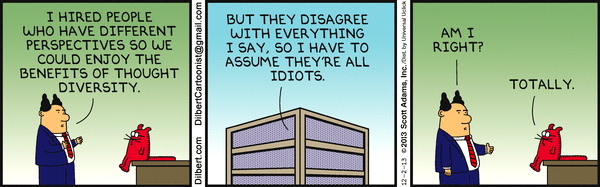



Thanks, I probably would not have seen this if you had not posted it. I enjoyed it thoroughly.