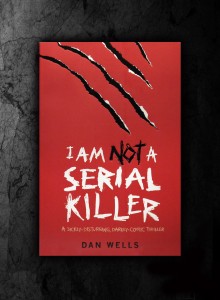
I Am Not A Serial Killer by Dan Wells

IAmNotASerialKillerYou can scare the crap out of me (Aracnaphobia), and I will love you forever. You can make me bite my nails in terrible suspense (Wait Until Dark, The Village) or throw supernatural at me (Poltergeist) and I will sing with praise. But the moment you do gruesome, the moment you start showing me entrails and organs, my discomfort level shoots through the roof.

And this is why I would not have finished  I Am Not A Serial Killer by Dan Well’s if I had just picked it up off a shelf–because the main character is the son of a woman who owns a mortuary. We get to see him help process a mutilated body very early in the book, pumping fluids in etc., and Wells knows his craft so I was THERE. I’m sure it’s not too gruesome for some, but I just have issues with organs. I don’t know why. I also have an issue with clowns.

Clowns are, by far, the scariest things around. And this is not because I read the book IT by Stephen King as a wee lad because I didn’t. It’s because they’re painted vessels of evil. End of story. They’re perfect examples of the freakazoids that lurk in the uncanny valley.

Anyway, I’d heard Wells read a portion of this book that had all of us in the room crying because we were laughing so hard. So I read on, telling myself I had to at least get to that part. And I am so very happy I did. 

I Am Not A Serial Killer is young adult story about a good-hearted teen named John Cleaver who is a sociopath with all the traits shared by serial killers. John’s in counseling, but more importantly, he is convinced he can prevent himself from becoming a serial killer by keeping rules he’s made for himself like not watching people for too long and complimenting someone when they make him angry. Such rules, he hopes, will keep him from feeding compulsions he won’t be able to resist.  The problem is a real serial killer has come to town (but unlike any you’ve seen before). And John may be the only one who can stop him. Will he let go of his rules to save the town? Or will he keep his monster asleep while others die around him?

It’s a fascinating situation (without a clown in sight, may the writing gods be praised). And Wells takes the reader on a journey through it that includes mystery, dread, and humor. In the hands of some other author, that would be enough. But Wells does more than entertain us. He gives us things to think about. He gives us great characters to boot–come on, when was the last time you read a book where the hero was a likeable sociopath? And most of the gruesome is up front anyway.

Read this book. Skim the body processing if you must. But you simply don’t want to miss the rest. It was a fabulous read and I recommend it highly.

The US version comes out in March of 2010. But you can get the UK version now on Amazon UK, Borders UK, etc. The links are all here on Well’s site.

Share

Similar Posts

  • |

    Superstars Writing Seminar DVDs

    Aspiring authors, I wasn’t able to attend, but heard from a few who were that the Superstars Writing Seminar in Pasadena with Eric Flint, Brandon Sanderson, Dave Wolverton, Rebecca Moesta, and Kevin J. Andersen was EXCELLENT. 

    See clips of parts of the videos here (still a lot of good info): http://www.youtube.com/view_play_list?p=2F211054CBD822A8

    Purchase the full recordings on DVD or MP3 here: www.writerscanon.com

    Topics include:

    • Econ 201 for Writers: Economics of Commercial Publishing
    • Inside Editors: How editors look at manuscripts, novels & short fiction
    • Dirty Secrets: What you need to know about being a Professional Author
    • From Slushpile to #1 New York Times Bestseller in 4 Years
    • Intellectual Property: How to Exploit Yours
    • Balancing Acts: Writing World & Real World
    • Agents: the A Word
    • Networking for Writers
    • Self-Promotion for Authors
    • Novel Contracts
    • Self-Publishing: Realities & Pitfalls
    • Pitching the Big Proposal
    • Two Heads Are Better than One: Collaborative Writing
    • New Media: Using It to Get an Edge
    • E-Publishing
    • Movies, TV and Authors
    • Anatomy of a Major Book Release
    • Myths of Publishing
    • Eleven Tips to Increase Your Writing Productivity
    Share
  • Last Word & Park City Peaks

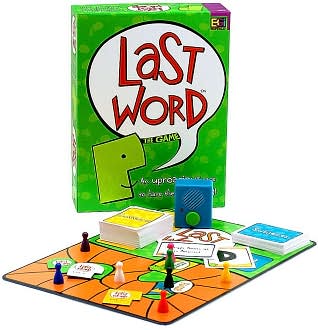
    LastWordGameMy youngest’s birthday fell on Thanksgiving this year. We asked her what she wanted to do. She said she wanted to go to a hotel to swim and then play a game as a family, so Nellie and I went to work. Nellie got the game. I got the hotel. Both were great.

    The game was Last Word by Buffalo Games Inc. It’s fairly simple. There are subject cards with categories on them like “vegetables,” “breeds of dogs,” or “places you find water.”  Then there are letter cards. Each player gets a subject card.

    The round starts when someone flips over a letter card. If you can think of a word that starts with that letter in your category, you shout it out, slam your subject card down, and then everyone else tries to come up with words that start with that letter and fit the category.  Or you try to think of words in someone else’s category if they beat you to it.  There’s no order to it–you just shout out the words as they come to your head.  The last one to come up with a word before the timer buzzes wins that round. The twist that makes it so fun, however, is that the timer is random.

    You can play individually, in teams, or some mix (our youngest and I teamed up). Because of the random timer, anyone who can think up a word can play, which means our daughter who is eight could compete with the one that was seventeen.

    We had a great time. One of the funniest things about it is that everyone is desperately trying to come up with words. Some fit, some don’t. Some don’t even exist. For example, when we did the category “male names,” number 3 shouted out “Mancake.” We couldn’t stop laughing. I think that one is going to enter the family vocabulary.

    ParkCityPeaksHotelWe also had a great time at the Park City Peaks hotel. As far as rooms go, they were good rooms. The bed was a bit too soft for me, but perfect for my wife. We got them for $65 a night, which isn’t bad at all. But it was the pool that made the experience. 

    The pool is an actual pool, not the big bathtubs some newer hotels offer. For example, the deep end is six feet deep. But the cool thing is that half of it is indoors and half of it is out. And the outdoor portion is heated. There’s also a large heated hot tub outside as well. In the picture it’s the thing producing the long row of steam in the back.

    It helped that we didn’t have much snow so the place wasn’t crawling with skiers. In fact, we had the pool mostly to ourselves. So imagine: there we were on a November night in this alpine setting, the steam rising off the water, swimming and horsing around underneath the winter stars. It was marvelous. You can be sure we’re going back.

    BTW, we had Thanksgiving dinner at a restaurant. Let me recommend this to you. It makes the day a breeze. You can still have your homemade turkey dinner, but picking up the turkey  a few days after the holiday allows you to get them for cheap, cheap, cheap.

    Share
  • | |

    One of Orson Card’s best essays

    Scott Card recently wrote “Marriage needs lots of humor.” It’s an awful title for one of the best articles of his that I’ve ever read.

    I’m not going to spoil it for you. But I will say that I’ve found that it’s the small things that seem to make the biggest difference in relationships. And this is one of those small things that packs a HUGE punch. But not until this article did I realize it.

    And for you writers who are wanting insights on what makes characters interesting and sympathetic–there’s a little treasure trove here for you as well.

    Enjoy!

    Share
  • Good Stuff: Why We Get Fat

    What if everything you know about fat, cholesterol, and diet is pretty much wrong?

    What if you found out that the science behind the good old food pyramid is, well, not really there?

    We’ve been told that a healthy diet consists of lots of grains, bagels, bread, pasta, cereals, rice, etc. and very little fat. What if it’s actually the reverse?

    If it is, then it might explain why the rates of diabetes and obesity began to skyrocket as the nation started to implement a low fat high carb diet.

    I remember having gained about fifteen pounds when I was first married. I decided I would go on a diet. I read up on the low fat high carb diet and followed it strictly. Two weeks later, I had gained ten more pounds. Did I, at the time, look at the diet and think that maybe there was something wrong with it?

    No. That would have been too intelligent.

    Instead, I figured something must be wrong with me and continued to try to “eat healthy.” What’s that definition of insanity—doing the same thing over and over again and expecting different results? Call me insane. Or slow. Or too trusting of authority.

    It appears that the science of nutrition got hijacked. Government policy then ran away with it. It’s a fascinating and cautionary tale. Let me recommend three books that explain what really causes us to deposit fat and how we got off track.

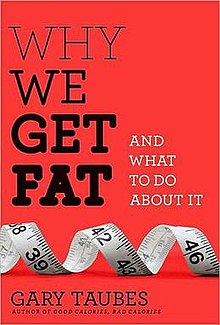
    The first is Why We Get Fat by science writer Gary Taubes. In it he reveals the bad nutritional science of the last century, why the good science was ignored, what really causes us to store fat, and what to do about it.

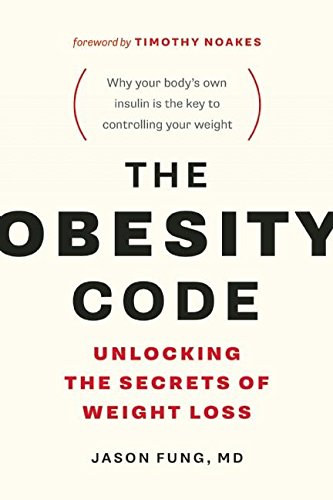
    The next is The Obesity Code by Dr. Jason Fung. Fung is a kidney specialist. Obesity and diabetes are the root of many kidney problems. And so he decided to help his patients by strop treating symptoms and get at the root cause. Fung’s gift is clarity. He explains how obesity and diabetes became an epidemic, the errors in how we think about calories and diet, and then he explains in great clarity the new model of what really causes obesity and how to reverse it.

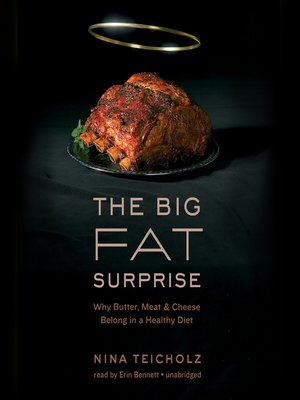
    The last is The Big Fat Surprise: Why Butter, Meat & Cheese Belong in a Healthy Diet by investigative journalist Nina Teicholz. She spent nine years investigating this, and the book reveals how the misinformation about saturated fats took hold in the scientific community, government, and the public and how recent findings overturn these beliefs. It’s a startling history, a cautionary tale showing how ego, bias, and premature institutional consensus allowed dangerous misrepresentations to become dietary dogma.

    If you’re dealing with obesity, heart disease, or diabetes, I think you’ll find these books very interesting.

    Share
  • Good Stuff! 3 Books to Introduce You to the Middle East

    ISIS, the Taliban, Al Qaeda, the Muslim Brotherhood, Iran.

    What drives these groups?

    What are they really about?

    Why is there so much religious strife in the Middle East?

    For that matter, what is Islam actually about? Is the religion really defined by these violent actors, or are they just the most visible because they’re what’s reported on in the media?

    I set out to find the answers to these questions, and what I have found so far surprised me. If you are interested in understanding what’s going on in the Middle East today, you have to understand Islam. And it’s a fascinating story. There are a lot of books on the subject, but you don’t have to sift through all those I did. I want to share with you three slim books that I found to be the most clear and engaging introductions I’ve come across.

    The first is Understanding Islam: An Introduction to the Muslim World by Thomas W. Lippman, an award-winning author and journalist who specializes in the Middle East and spent years living in Egypt, covering the events, and traveling from Tunisia to Pakistan. Again, this is a slim, easy-to-read volume, but it is packed with information. If you want to know the basic beliefs of Islam, who Muhammad was, what all this business about Sharia is, and who the major Islamic groups of the Middle East are today, this is the book to start with. One note, you want to make sure you get the third edition of this book.

    Understanding Islam by Thomas Lippman

    The next book is by Bernard Lewis, a man internationally recognized as one of our century’s greatest historians of the Middle East. The book is called The Crisis of Islam: Holy War and Unholy Terror. Again, another slim, engaging, but information-packed volume. In it, Lewis explains what it is in Islam that is breeding these extremist groups. And what is leading them to target America, which is especially interesting because for most of the 1900s the United States was seen as the good guy by the Islamic world. What changed? Read this book to find out.

    The Crisis of Islam by Bernard Lewis

    The last book, a lively, engaging read, is called After the Prophet: The Epic Story of the Sunni-Shia Split by Lesley Hazleton, another veteran Middle East journalist. When you finish this book, you will understand why Saudi Arabia supported ISIS before they so recently turned against it. You’ll understand why they recently joined Israel, of all nations, in condemning Iran’s nuclear program. You will also understand one main reason why the Iraqis can’t seem to get along. In this book, Hazelton goes back to the beginning of the religion and tells the story of the splitting of Islam–the split between the Shias and Sunnis. It’s as significant a split as that of the Protestants from the Catholics in the time of Luther. But unlike that split, which has lost almost all of its heat, the antagonism between Sunni and Shia still leads to war. You cannot understand the Middle East today without understanding this.

    After the Prophet by Lesley Hazleton

    So there you have it. If you’ve been wanting to learn more about Islam and the Middle East, you’ll find these the perfect introduction. And if you’re religious at all, you’ll find much to ponder. There isn’t one god-fearing Christian, Jew, Hindu, or what have you who doesn’t think that submitting our will to God’s won’t help us build a better families, communities, nations–a better world. Would it surprise to you to know that Muslims believe the same thing? That Islam means “to submit” to God?

    There are of course many differences between Islam and my own Christian beliefs, but there are also many striking similarities. And the experience I kept having reading these books was seeing over and over again echoes of my own faith and the history of Christianity. There are cautions, to be sure, but also things worthy of emulation. If nothing else, it felt like it did when I learned Dutch. Yes, it was all foreign, but I saw the ties and the differences and, surprisingly, understood my language better than I ever had before.

    Now there are three other equally fascinating books I want recommend that focus on Al Qaeda, fighting terrorism, and Saudi Arabia, but I’ll save those for another time. Go treat yourself and read these fine introductions.


    Share
  • Good Stuff! Mr. Holmes and 13 Hours, the book

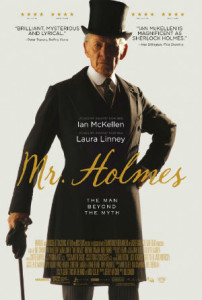
    Earlier this month I watched Mr. Holmes.

    Mr._Holmes_poster

    It left me with this fine peace. With this feeling of goodness and light, in spite of, or probably because of, a number of poignant moments. It also surprised me.

    To write a story like this, to give people this kind of gift…

    What a wonderful, powerful thing.

    Now, it was not a thriller. It’s not an episode of Sherlock or Elementary. It’s not a murder mystery. It reminds me of Saving Mr. Banks most, but also of Miss Potter, maybe even The King’s English. It has that kind of tempo.

    Basically, Sherlock Holmes is a much older man. He’s retired. And there’s a case he’s trying to solve. But, again, this isn’t a murder mystery. This story is about Sherlock himself and wisdom and the beauty of change whenever it occurs.

    The story lingered with me, and I avoided reading or watching anything else for a few days to savor it. Give yourselves a treat. Watch this wonderful story.

    *

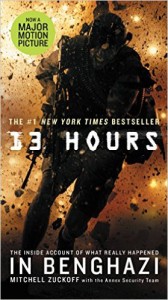
    The book 13 Hours: The Inside Account of What Really Happened in Benghazi was the answer to so many questions.

    13_Hours_ZuckhoffWant really happened in Benghazi?

    What we’re we doing there?

    Who are the brave men who tried to save the ambassador?

    It was also a thrilling read in the tradition of Marcus Luttrell’s Lone Survivor. As such, it purposely avoids the political aspect of the incident. It’s not about what the officials of the United States government did, said, or knew, or the political firestorm that ensued.

    It’s not a hit piece on Clinton and Obama, nor is it any kind of defense. Instead it simply documents the events on the ground in those last 13 hours, relying most heavily on what the five American security contractors who rushed to give aid said happened. Those men–two former Marines, two former SEALs, and a former Army Ranger—teamed up with Mitchell Zuckoff, the writer, to simply set the record straight.

    I couldn’t put the book down. Not only because the book’s well-written and the characters and situation are compelling, but also because of the insight it shared into some key dynamics within Libya itself. For example, it helps you understand why the revolt against Muammar Gaddafi centered in Benghazi, not Tripoli. It also touches on some of the currents inside these Muslim-majority countries close to the epicenter of Sunni extremism—Egypt and Saudi Arabia–so volatile. And it shares details, large and small, as only those who experience such things first hand can.

    If you want a fascinating account of really happened on the ground in Benghazi, get this book.


    Share

2 Comments

  1. I absolutely LOVED this book. Really a page turner. I remember sitting at the kitchen table in the middle of the night, kinda creeped out, turning page after page until it was 3 AM and I was finished. I actually did an interview with Dan on my blog not too long ago. He’s a really nice guy, and this is a planned trilogy, so it just keeps getting better.

    By the way, I’m loving your book right now. A very deep world you’ve got going for you, and Hunger and The Mother are just plain cool. Thanks again for the early copy, and when I’m finished I’ll make sure to get some questions to you for our interview.

Comments are closed.