Temple Grandin, Butternut Soup, & Five Guys

Must-See Movie
Time magazine has named her one of the 100 most influential people in the world. This summer, the National Cattlemen’s Beef Association’s honored her with the Lifetime Achievement Award. She serves as an animal-welfare consultant for international companies like McDonalds, Wendy’s International, and Burger King. Her work has transformed the design of cattle handling facilities worldwide. In fact, fifty percent of the cattle in the U.S. and Canada are handled in equipment she has designed for meat plants.

She is one of the most fascinating people I have read or listened to. Her name is Temple Grandin. And she’s autistic. When she was four years old she couldn’t speak a word. The doctors, at the time, wanted her mother to commit her to an institution. But her mother wouldn’t accept that. Temple learned to read. She was tormented in junior high and high school. But she persevered, got into college, was almost expelled, and ultimately earned a PhD in animal science.

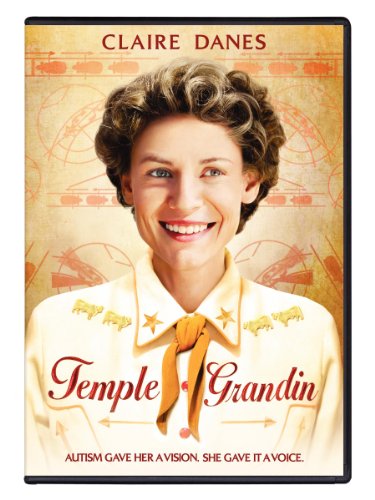
Recently, HBO produced a film about her called Temple Grandin. It is one of the best films I have seen in the last five years. It’s full of drama, heartache, triumph, and good humor. When you’re done, Temple Grandin will likely become one of your heroes.

Claire Danes does a fabulous job playing Temple. The movie also features Julie Ormond as Temple’s mother, Catherine O’Hara as her aunt, and David Strathairn as Dr. Carlock. Earlier this year, the film won seven Emmy Awards. But I didn’t need that to know how good it was. All I had to do was look at my wife and girls who sat rapt as the story unfolded. Get it on DVD. And if you want to know more about Grandin’s ideas, go to www.grandin.com.

Squash Devils

My wife was recently possessed by an evil squash spirit.

How do I know this?

Simple. Have any of you out there ever been sitting around and suddenly got a mighty hankering for pureed squash? Even when you were in the Gerber bottle stage?

No, didn’t think so.

So what else would explain her sudden need for a bowl of butternut bisque?

Alas, I did recall once having a tasty pumpkin soup in a fancy restaurant in California, and so I didn’t immediately call the Brethren in for an exorcism. Instead I went to allrecipes.com and looked up a recipe for her.

I found “Butternut Squash Soup II” by someone named Maplebird, which inspired tons of confidence since all the great chefs are named after tree-animal mixes.

Then Nellie made the soup. I partook. And the evil spirit must have jumped into me because I’m telling you right now that I could not get enough of it. The mouth feel, the taste—the TASTE. There wasn’t a thing squashy about it.

Folks, this is the real deal. And at least 494 other people out on allrecipes agree with me and have rated it an average of 4.5 starts out of 5.

Ingredients

  • 2 tablespoons butter
  • 1 small onion, chopped
  • 1 stalk celery, chopped
  • 1 medium carrot, chopped
  • 2 medium potatoes, cubed
  • 1 medium butternut squash – peeled, seeded, and cubed
  • 1 (32 fluid ounce) container chicken stock
  • Salt and freshly ground black pepper to taste

Directions

Melt the butter in a large pot, and cook the onion, celery, carrot, potatoes, and squash 5 minutes, or until lightly browned. Pour in enough of the chicken stock to cover vegetables. Bring to a boil. Reduce heat to low, cover pot, and simmer 40 minutes, or until all vegetables are tender.

Transfer the soup to a blender, and blend until smooth. Return to pot, and mix in any remaining stock to attain desired consistency. Season with salt and pepper. Say a prayer and call for a priest or someone with the Melchizedek priesthood to be on hand just in case.

Burger Salvation

Okay, I know some of you are rolling your eyes. Squash? Have you got to be kidding?

If that’s you, then let me recommend Five Guys burgers and fries. Burgers started to bore me years ago. But a buddy recently recommended Five Guys, and I’m so glad I went. They’re a national chain. In Utah, we have eight of their joints from Layton to Orem.

They don’t offer salads or wraps or yogurt. They make four kinds of burgers, three kinds of dogs, and two kinds of fries. That’s it. You order the toppings you want–the regular things like grilled onion, cheese, and pickle, but you can also get grilled mushrooms, bacon, jalapenos, and BBQ sauce. More importantly, your burger is cooked fresh, right before your eyes. No microwaved unmeat retrieved from a mystery bin. It comes to you hot and juicy. The fries, cooked in 100% peanut oil, are served up sizzling. And there are a lot of them. I ate mine with a Cherry Coke.

If you’re ever in the mood for burgers and fries, you’ve got to try Five Guys.

Share

Similar Posts

  • |

    American Idol Story Elements

    I don’t have time to watch, but I found myself getting sucked in this week. And here’s something I realized as I watched Simon, Paula, Randy, Ryan, & the contenstants–the show is using story principles.

    Idol

    Duh, I know: of course, it is. But it does it so well. It reminds me of a research article I read about sportscasters and audience enjoyment of sports competitions. They found that if they could inject story elements–suspense, rivalry, etc.–people enjoyed the games more. Next time you watch a college football game, notice what the color commentators say to make it a contest. It’s not just about reporting what #45 did out in the flat.

    Anyway, back to Idol. Look at these elements.

    What draws us to characters?

    Beauty, threats, quirkiness, larger-than-life situation or skills, source of viewer wish-fulfillment.

    Humm, let’s look at the cast of performers. Don’t we see all of that? How many of us wouldn’t love to be able to sing like they do? Have a shot at becoming a recording artist? Or just goggle at someone getting this chance?

    What factors generate suspense?

    Threats to characters we like or marvelous opportunities for them, turns in the situation, a prolonged resolution.

    Humm. Our sympathy is engaged because these folks are normal folks, many of them underdogs. Many viewers identify strongly with one or two because of the contestant’s various social groups and because, heck, the auditions are for people like you and me. It could be us up there in front of the world! You’ve got the threat of peformance fright, but also the overriding opportunity to make a dream real. You’ve got a wonderful career, if not millions of dollars, on the line. You’ve got Simon who is honest, but also plays his part. Isn’t that the moment of most suspense with each performance? You’ve even got a little subplot going on between Simon and Seacrest. There’s no villain here. But there are plenty of obstacles. Weekly threats.

    What does Idol give us that Survivor never could?

    It’s all REAL, even if the producers let their selection of performers be influenced by things other than vocal talent. And because it’s real, we believe it. Which means we can more easily feel sympathy and root for the various performers.

    It’s a simple but brilliant concept. And I just wasted 4 hours watching it. And I’m likely to do it again.

    Zing, Baby. Zing!

    Share
  • Blindingly white and female!

    MaryLeonhardt_KeepingKidsReadingThe Guardian just published a report of a survey taken of 34 American book publishers and found that 79% of staff are white and 78% female. Or as The Guardian put it “blindingly white and female” as if it’s some kind of horror show.  The rest of the article bemoans the lack of diversity in publishing and our society in general and quotes the author of the study suggesting that these percentages should be monitored.

    Is anyone up in arms about appropriate diversity percentages in the NBA or NFL?

    Some might roll their eyes and ask me not to trot out that old chestnut. But it’s not a chestnut. It’s a point–nobody cares, me included. So why care about this? Many industries will be skewed toward one gender or race than another. As long as everyone has free opportunity to compete, who gives a flip?

    Maybe that still doesn’t satisfy. Okay, how about this. According to Humanites Indicators, approximately 70% of degrees in English language and literature in America are awarded to…women. And about 82% are awarded to Whites. I’m assuming these percentages are probably pretty good indicators for the gender and race of folks interested in working at publishing companies.

    If so, the survey results don’t reflect some white woman conspiracy at these publishing houses. They simply reflect the choices people make in college.

    By the way, did you know the United States is still 72% White and European. So it’s not surprising to see roughly that many Whites in these jobs. The numbers might be a little high, but minorities seem to be pursuing other degrees in greater numbers (compare the overall percentages here versus those with ELL degrees).

    This is not to say that we don’t want to welcome authors from all different background. We do. But if you want more men and more minorities, then maybe instead of monitoring publishers, you ought to start by seeing if you can attract more men and minorities to ELL degrees.

    Or even better yet, how about reaching out to more boys and minorities at an earlier age and helping them learn the delights of reading and writing? Maybe if they like it, more of them will go into it as a career.

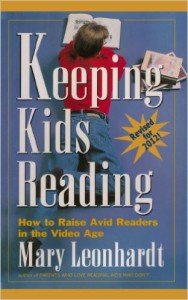
    The best program I’ve seen for helping kids learn to love reading is the one Mary Leonhardt outlines in Keeping Kids Reading: How to Raise Avid Readers in the Video Age. It’s the culmination of the insights she gained over her thirty-five years teaching high school English and focusing on helping kids learn to LOVE reading. What an excellent book!

    Oh, and one other idea. It might be effective to maybe just skip publishers altogether and help folks go directly to readers as indie writers. Amazon’s algorithms are pretty much race- and gender-blind.

    Share
  • Good Stuff: 8 Awesome Movies

    Summer is a great time to catch up on great movies you haven’t seen because sometimes the movies that are released to the theaters during this time are contenders for the dud award.

    I shall leave films such as Transformers: The Franchise Could Have Been So Cool or Pirates of the Caribbean: Johnny Depp Is Now Acting Really Weird nameless.

    Instead of watching duds, try a couple of these fantastic movies, all of which are based on true stories.

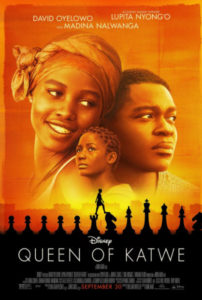
    Queen of Katwe. A tremendous film based on the true story of depicts Phiona Mutesi, a girl growing up in the slums of Katwe, a city in Uganda, who gets a chance to break out of that life with chess. You will come away having laughed and cheered and been touched in a poignant way. Highly recommended.

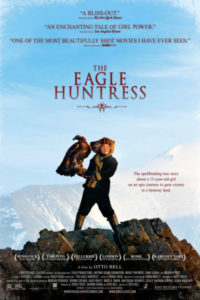
    The Eagle Huntress. A fascinating documentary about the first girl in Mongolia to compete as an eagle hunter—these are folks who capture and train golden eagles to hunt game like fox or rabbit. You’ll be introduced into a new and interesting culture that triggers you to think about your own.

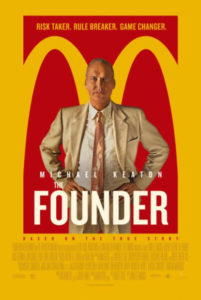
    The Founder. Ever wonder how McDonald’s got started? No, neither had I. Who cares, as long as the food is good, right? Well, if you’re like me, you’re in for an eye-opener. This tells the story of how Ray Kroc started McDonald’s, except, hint, he didn’t. Kroc is played by Michael Keaton. He’s one of my favorite actors, and I loved his performance. This story will fascinate you, and then make you think, and then make you really appreciate folks like Dave Thomas of Wendy’s.

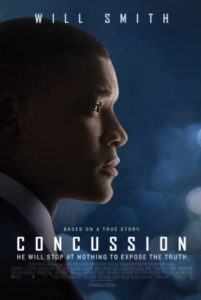
    Concussion. An engrossing, suspenseful film about the true story of Dr. Bennet Omalu and the tie between football and brain degeneration. Omalu was working as a forensic pathologist (one who figures out the cause of death) in Pittsburg, Pennsylvania. In 2002, Omalu performed an autopsy on Mike Webster, a former NFL star who played for the Pittsburg Steelers and is considered by some to be one of the best centers in NFL history. And his worked opened up a can of worms the NFL wanted to quash. I loved this film.

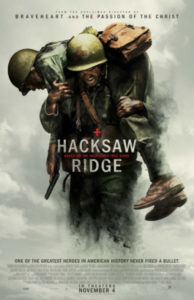
    Hacksaw Ridge. This one is based on the true story of Desmond Doss, a Seventh-day Adventist who did not believe in killing, but wanted to support his country and all those going to war. So he goes into World War 2 as a medic and is sent to the Pacific theater. His first engagement is the Battle of Okinawa. And, oh my holy heck, what he did during that battle is nothing short of amazing. There’s one part of the film in boot camp that seemed out of place. Really, some dude back in the 1940s was going to do pull ups in the barracks naked (nothing but a bum is shown in the film)? But then I recall that growing up in the 70s and 80s that we guys showered in communal showers. And that wasn’t a big deal. And earlier than that, swimming at the swimming hole often meant shucking your clothes and jumping in. So who knows? We have a similar funny scene in Mulan, but for some reason that one felt more organic. This one felt tacked on. It was a gag for humor and then, thankfully, Mel Gibson, who directed this, got on with the awesome story of Doss.

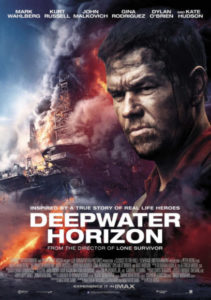
    Deepwater Horizon. This one is based on the true story of the Deepwater Horizon, an oil rig in the Gulf of Mexico that encounters a catastrophe. The details of how such rigs work and the issues involved are fascinating. But what will really get you is the heroism of the captain and crew.

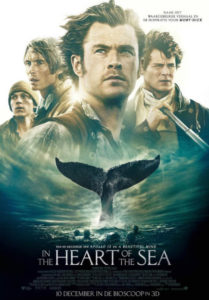
    In the Heart of the Sea. This is based on the true story of the whaleship Essex that was sunk in the Pacific in 1820 by a sperm whale and what the few that survived did to remain alive. Back in the 1700s and early 1800s, sperm whale oil, which was contained in the whale’s large head, was highly prized for lamps because it burned bright and odorless. It was also a great lubricant. Later the oil was replaced with kerosene and other and petroleum-based lubricants, but in those days there was a whole industry dedicated to harvesting it. I watched this with my teenage daughter, and we both found it a powerful tale.

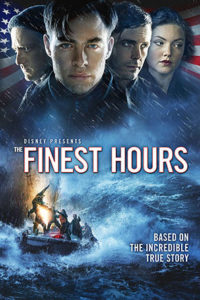
    The Finest Hours. This last one is based the book The Finest Hours: The True Story of the U.S. Coast Guard’s Most Daring Sea Rescue by Michael J. Tougias and Casey Sherman. It chronicles the 1952 United States Coast Guard rescue, in a dinky boat, of the crew of the SS Pendleton, a big tanker, after the ship split apart during a nor’easter off the New England coast. The movie was thrilling and heroic.

    And after you watch all of those, if you want some more great films based on true stories, well, you won’t go wrong with Tom Hanks in Sully or Captain Phillips or Bridge of Spies.

    Share
  • Top 200 YA Authors of 2010

    On Thursday I posted the top 200 YA  novels of 2010. Today I’m happy to share the top 200 authors. You might be wondering: if we already have a top 200, why post this? Because yesterday was about individual titles. Today’s post is about authors. Some authors might not have any books that are checked out in huge numbers. But because they have a lot of books available, the numbers of checkouts they do have add up. Yesterday’s list showed you the volume for individual books. Today’s list shows you the volume for each author. You’ll see it does result in a different ranking.

    This list is based on the same dataset as the previous list. And so while I can’t claim it represents the top YA authors for the whole United States, it does show who is being read in this neck of the woods. It’s a great list for those wanting to find YA authors to try.  Please be aware that these are YA books as defined by the library, which takes its cue from places like Booklist and School Library Journal. Other books like the first three Harry Potters, Brandon Mull’s Fablehaven series, and some of Dashner’s stuff are considered Middle Grade and so do not appear on this list. Later, I might do a combined list.

    There were 1,283 authors on the list. “Times Checked Out” is the sum of all the times any of the author’s books were checked out. “Number of Titles” is the number of different titles the author has that were checked out. “Avg Check Outs per Title” is the average number of times each title was checked out. “%” is percentage of total checkouts. Rank is rank. Another way to sort this would be by the Avg Check Outs per Title to see who’s getting the highest number of readers per book. But I’ll let you fiddle with that on your own. Again, I’m very happy to see a number of Utahans on the list. Kudos to the following (ranking in parentheses):

    • Stephenie Meyer (4)
    • Shannon Hale (5)
    • Jessica Day George (10)
    • Chris Heimerdinger (18)
    • Jack Weyland (38)
    • Lisa Mangum (55)
    • Mette Ivie Harrison (56)
    • Aprilynne Pike (71)
    • Brandon Sanderson (73)
    • Ally Condie (82)
    • James Dashner (94)
    • Bree Despain (110)

    EDIT: 1/15/2011 12:57 AM. Okay, okay here’s the list by average checkout: Top 200 YA Authors of 2010, Part 2. A number of people drop off, new names appear, and positions shuffle.

    EDIT: 1/16/2011 9:32 AM: Informed that Bree Despain is also a Utah author.

    The List

    Author Times Checked Out Number of Titles Avg Check Outs per Title % Rank
    Rick Riordan 989 8 124 2.68% 1
    Suzanne Collins 888 3 296 2.98% 2
    Tamora Pierce 634 26 24 1.60% 3
    Stephenie Meyer 529 5 106 1.56% 4
    Shannon Hale 517 6 86 0.96% 5
    John Flanagan 413 9 46 0.93% 6
    Meg Cabot 396 37 11 0.58% 7
    P.C. Cast and Kristin Cast 393 7 56 0.37% 8
    Scott Westerfeld 354 12 30 1.19% 9
    Jessica Day George 328 6 55 0.99% 10
    D.J. MacHale 328 15 22 0.32% 11
    L.J. Smith 326 22 15 0.15% 12
    J.K. Rowling 318 4 80 0.30% 13
    Darren Shan 313 24 13 0.14% 14
    Cassandra Clare 309 4 77 1.25% 15
    Lisi Harrison 304 23 13 0.40% 16
    Eoin Colfer 302 11 27 0.13% 17
    Chris Heimerdinger 280 16 18 0.50% 18
    Cameron Dokey 271 9 30 0.74% 19
    Anthony Horowitz 260 24 11 0.46% 20
    James Patterson 257 8 32 0.23% 21
    Angie Sage 246 6 41 0.11% 22
    Joseph Delaney 240 9 27 0.33% 23
    Richelle Mead 202 6 34 0.21% 24
    Christopher Paolini 191 3 64 0.10% 25
    Alyson Noel 188 9 21 0.10% 26
    Garth Nix 182 11 17 0.21% 27
    Sara Shepard 181 8 23 0.41% 28
    Hilari Bell 178 12 15 0.10% 29
    Michael Scott 165 4 41 0.61% 30
    Gary Paulsen 163 26 6 0.20% 31
    Ellen Schreiber 160 9 18 0.20% 32
    Patricia C. Wrede 158 9 18 0.78% 33
    Frewin Jones 155 8 19 0.19% 34
    Melissa de la Cruz 154 7 22 0.28% 35
    Maggie Stiefvater 153 4 38 0.09% 36
    Ally Carter 152 5 30 0.37% 37
    Jack Weyland 151 11 14 0.09% 38
    Suzanne Weyn 150 8 19 0.09% 39
    Sarah Dessen 150 9 17 0.37% 40
    Margaret Peterson Haddix 144 8 18 0.46% 41
    Libba Bray 136 4 34 0.82% 42
    Rachel Caine 134 9 15 0.09% 43
    R.L. Stine 132 43 3 0.09% 44
    Caroline B. Cooney 132 30 4 1.07% 45
    Kelley Armstrong 131 3 44 0.27% 46
    Gerald Morris 129 10 13 0.09% 47
    Diana Wynne Jones 128 6 21 0.26% 48
    Jean Ferris 127 13 10 0.17% 49
    Anna Godbersen 127 5 25 0.17% 50
    Cecily von Ziegesar 126 24 5 0.17% 51
    Janette Rallison 125 10 13 0.08% 52
    Markus Zusak 124 4 31 0.08% 53
    Lurlene McDaniel 124 47 3 0.17% 54
    Lisa Mangum 124 2 62 0.91% 55
    Mette Ivie Harrison 123 4 31 0.08% 56
    Ann Rinaldi 119 31 4 0.72% 57
    Kate Brian 118 21 6 0.08% 58
    Carolyn Meyer 115 12 10 0.08% 59
    Cinda Williams Chima 113 5 23 0.38% 60
    Amelia Atwater-Rhodes 112 11 10 0.08% 61
    Frank Beddor 110 3 37 0.08% 62
    Heather Brewer 108 5 22 0.08% 63
    Laurie Halse Anderson 108 8 14 0.30% 64
    Herbie Brennan 106 5 21 0.30% 65
    Kristin Cashore 105 2 53 1.91% 66
    Robin McKinley 105 6 18 0.07% 67
    R.D. Henham 104 7 15 0.21% 68
    Donna Jo Napoli 104 15 7 0.14% 69
    Catherine Jinks 101 10 10 0.21% 70
    Aprilynne Pike 101 2 51 0.21% 71
    Louise Rennison 101 10 10 0.55% 72
    Brandon Sanderson 100 4 25 0.34% 73
    Debbie Viguie 100 6 17 0.46% 74
    Melissa Marr 99 4 25 0.07% 75
    Catherine Fisher 98 8 12 0.13% 76
    Jonathan Stroud 97 6 16 0.99% 77
    Lauren Brooke 95 26 4 0.33% 78
    L.A. Meyer 95 8 12 0.13% 79
    Lisa McMann 94 3 31 0.13% 80
    Simone Elkeles 93 7 13 0.39% 81
    Ally Condie 93 6 16 0.32% 82
    Lynne Ewing 91 18 5 0.06% 83
    Donita K. Paul 90 6 15 0.06% 84
    Carrie Jones 88 3 29 0.06% 85
    Lois Lowry 86 3 29 0.06% 86
    Kenneth Oppel 80 4 20 0.19% 87
    Mary Hoffman 79 7 11 0.06% 88
    Philip Reeve 78 9 9 0.57% 89
    Jen Calonita 78 6 13 0.12% 90
    Holly Black 78 5 16 0.12% 91
    Laurie Faria Stolarz 76 7 11 0.06% 92
    Catherine Gilbert Murdock 76 4 19 0.24% 93
    James Dashner 75 2 38 0.06% 94
    Diane Duane 75 9 8 0.06% 95
    Philip Pullman 73 9 8 0.18% 96
    Gordon Korman 72 16 5 0.18% 97
    Neal Shusterman 72 9 8 0.47% 98
    Jerry Spinelli 72 8 9 0.17% 99
    Jane Yolen 71 14 5 0.06% 100
    N.D. Wilson 70 3 23 0.23% 101
    Ellen Hopkins 70 6 12 0.06% 102
    Carrie Ryan 69 2 35 0.45% 103
    Becca Fitzpatrick 68 2 34 0.05% 104
    Lesley Livingston 68 3 23 0.05% 105
    Esther Friesner 68 6 11 0.05% 106
    Megan Whalen Turner 68 4 17 0.43% 107
    Alex Flinn 68 3 23 0.48% 108
    Elizabeth Knox 67 2 34 0.48% 109
    Bree Despain 66 2 33 0.32% 110
    Bryan Davis 66 8 8 0.11% 111
    Patrick Carman 66 5 13 0.84% 112
    Nancy Werlin 65 6 11 0.05% 113
    Ann Brashares 64 4 16 0.05% 114
    K.A. Applegate 64 18 4 0.05% 115
    Rachel Cohn 64 9 7 0.05% 116
    Linda Buckley-Archer 63 3 21 0.05% 117
    Cornelia Funke 63 2 32 0.05% 118
    Ted Dekker 62 7 9 0.05% 119
    Vivian Vande Velde 62 13 5 0.21% 120
    Nancy Springer 62 7 9 0.05% 121
    Carolyn Keene 61 49 1 0.15% 122
    Kieran Scott 60 6 10 0.10% 123
    Robin Palmer 59 3 20 0.45% 124
    Claudia Gray 59 3 20 0.30% 125
    Victoria Hanley 58 4 15 0.55% 126
    Carl Hiaasen 58 3 19 0.15% 127
    Philip Pullman  57 2 29 0.15% 128
    Lauren Kate 57 2 29 0.29% 129
    Marilyn Kaye 57 29 2 0.05% 130
    Lili St. Crow 56 2 28 0.14% 131
    Sharon Shinn 56 5 11 0.05% 132
    T.A. Barron 55 6 9 0.05% 133
    Marissa Doyle 55 2 28 0.05% 134
    Celia Rees 54 6 9 0.05% 135
    Alane Ferguson 54 6 9 0.05% 136
    Ridley Pearson 54 4 14 0.05% 137
    Elizabeth Scott 54 4 14 0.05% 138
    Clare B. Dunkle 53 6 9 0.05% 139
    Jaclyn Moriarty 52 4 13 0.05% 140
    James A. Owen 52 4 13 0.05% 141
    Justin Somper 52 5 10 0.05% 142
    David Klass 52 11 5 0.19% 143
    E. Lockhart 51 6 9 0.24% 144
    Cornelia Funke  51 1 51 0.09% 145
    Rachel Vail 51 3 17 0.28% 146
    Susan Beth Pfeffer 49 4 12 0.09% 147
    Rachel Vincent 49 3 16 0.14% 148
    K.M. Grant 49 7 7 0.27% 149
    Michael Grant 49 3 16 0.14% 150
    Maureen Johnson 48 4 12 0.05% 151
    Terry Pratchett 48 5 10 0.05% 152
    Kay Lynn Mangum 48 3 16 0.05% 153
    Sarah Mlynowski 48 5 10 0.05% 154
    Judy Blundell 48 1 48 0.05% 155
    Wayne Thomas Batson 48 7 7 0.05% 156
    Christopher Pike 47 19 2 0.05% 157
    David Lubar 47 8 6 0.05% 158
    Janet Lee Carey 46 3 15 0.40% 159
    Kami Garcia & Margaret Stohl 46 2 23 0.31% 160
    Lene Kaaberbol 45 4 11 0.54% 161
    Alison Croggon 45 4 11 0.98% 162
    Tera Lynn Childs 45 3 15 0.13% 163
    Lois Duncan 45 13 3 0.13% 164
    Carol Lynch Williams 44 3 15 0.09% 165
    Louis Sachar 44 2 22 0.17% 166
    Laini Taylor 44 3 15 0.13% 167
    Martha Finley 44 14 3 0.08% 168
    Kimberly Pauley 43 2 22 0.04% 169
    John Grisham  43 1 43 0.04% 170
    Beth Fantaskey 43 2 22 0.04% 171
    Guillaume Prevost 43 3 14 0.08% 172
    Margaret Mahy 43 5 9 0.04% 173
    A.J. Butcher 42 5 8 0.04% 174
    Lauren Conrad 42 3 14 0.04% 175
    Justine Larbalestier 42 5 8 0.04% 176
    Deb Caletti 42 4 11 0.13% 177
    Joan Lowery Nixon 42 16 3 0.04% 178
    Aimee Friedman 42 3 14 0.04% 179
    Gloria Whelan 41 10 4 0.04% 180
    Anne Osterlund 41 2 21 0.04% 181
    Philip Caveney 41 3 14 0.04% 182
    Eva Ibbotson 41 2 21 0.04% 183
    Michael Carroll 41 3 14 0.04% 184
    Francine Pascal 40 14 3 0.04% 185
    Walter Dean Myers 40 11 4 0.13% 186
    Gillian Shields 40 3 13 0.08% 187
    Isobelle Carmody 40 7 6 0.46% 188
    Fuyumi Ono  40 4 10 0.12% 189
    Stuart Hill 39 3 13 0.12% 190
    William Sleator 39 14 3 0.08% 191
    Michael Cadnum 38 11 3 0.08% 192
    Timothy Zahn 38 6 6 0.16% 193
    Sharon M. Draper 38 9 4 0.16% 194
    Peter Abrahams 37 5 7 0.33% 195
    Madeline L’Engle 37 11 3 0.12% 196
    Jenny B. Jones 37 3 12 0.28% 197
    Kimberly Derting 37 1 37 0.92% 198
    William Nicholson 37 3 12 0.20% 199
    Susane Colasanti 36 3 12 0.94% 200
    Ben Mikaelsen 36 5 7 0.08% 201
    Jacquelyn Mitchard 36 5 7 0.08% 202
    Richard Peck 36 9 4 0.04% 203
    Tim Green 36 6 6 0.04% 204
    Marilyn Reynolds 36 8 5 0.04% 205
    Sarah Miller 36 3 12 0.04% 206
    Sara Zarr 36 3 12 0.04% 207
    Share
  • Which Way Home, Tangled, Cafe Zupas

    Child Migrants

    Each year, thousands of Latin Americans travel hundreds of miles, hoping to enter the United States illegally. About five percent of those attempting to make the journey are children traveling alone, often on the tops of freight trains. Some of these children are in their teens. Some are as young as eight or nine.

    Some of them have had relatives (in their home country or in the U.S.) pay smugglers to bring them in. Others try to make it on their own. Some do make it across. Others are caught and deported in the U.S. or by the Mexican authorities. Others simply vanish or perish along the way.

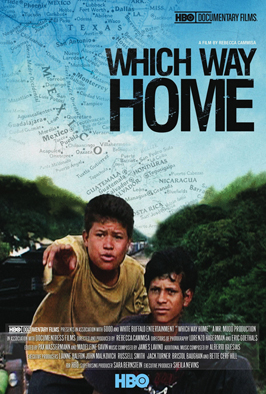
    The eye-opening documentary Which Way Home follows a number of these unaccompanied child migrants on their journey through Mexico as they try to reach the United States.

    There’s Olga and Freddy, nine-year old Hondurans. Olga is trying to reach her mother and sisters in Minnesota. Freddy wants to be reunited with his father.

    There’s fourteen-year old Jairo who was forced to live on the streets of Chiapas after his mother was killed. He wants an education but is too poor. So he thinks if he gets to Laredo, Texas, he can get a job, earn money, and come back to hire a tutor.

    There’s thirteen-year old Fito from Honduras whose mother abandoned him when he was very young. He lives with his impoverished grandmother, who has a job making cigars. He’s traveling to the U.S. to look for work and hopes to be adopted.

    Then there’s the thirteen-year old Eloy and his 16-year old cousin Rosario whose bodies were found in the desert.

    This film doesn’t propose any solutions or argue for or against immigration. It simply documents what’s happening. Anyone who has any interest at all in the issue will find this movie both fascinating and troubling. In fact, I think the whole family could watch this. For those who are concerned about language, there is one brief exchange where the one of the boys uses some high-grade curses. However, I wouldn’t let that hinder you. You can discuss it or easily fast forward those few seconds. These are just people. Don’t let a few foibles prevent you from learning about their plight.

    One of the best movies of 2010

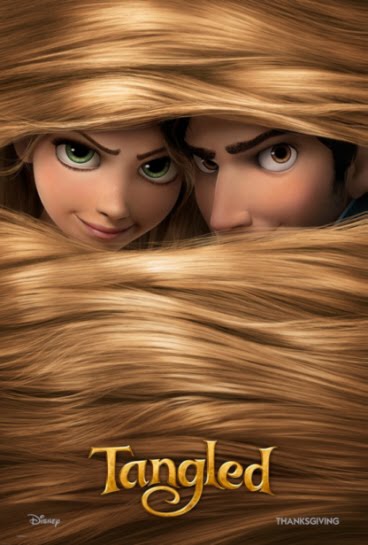
    Maybe you’re one of the few, like me, who didn’t see Tangled when it first came out. If so, you’re in for a treat. This is a great story about a girl whose mother, the queen, almost died giving birth to her. The magic used to save the mother and girl transferred into the child’s hair and gives her power to heal. Or to restore beauty and youth.

    And that’s too tempting for some. The princess is kidnapped by a woman who wants to maintain her youth. But this villainess doesn’t play the role of the bad guy. No, she plays the role of the loving mother, locking Rapunzel away in a tower to “protect her,” duping her into thinking she really is her mother and really cares. 

    It works for a number of years until Flynn Rider, a wanted thief running from the authorities, stumbles across Rapunzel’s tower. When he tries to take refuge, Rapunzel freaks, and then sees that Flynn just might be her ticket out. Of course, when the villainess returns and finds Rapunzel gone, she’s vows to lock Rapunzel up where nobody can find her. Unfortunately, poor Rapunzel has no clue what her “mother” really is—it’s hard to fight a villainess when you think she’s on your side.

    The animation is marvelous. The characters are fun. And the villainess is unlike any we’ve seen in a Disney film before. I recommend this film highly. I know I’ll be seeing it again. 

    Soup Heaven

    There’s nothing like an excellent soup and sandwich. And since my wife and a friend both raved about Cafe Zupas, I decided to give it a try.

    My first problem when I stood looking at the menu was that there were ten soups listed and they all sounded wonderful. There was Tomato Basil with Orzo Pasta, New England Clam Chowder, Thai Lobster Curry, Wild Mushroom Bisque, Yucatan Chicken Tortilla and five others. My second problem was that there were just as many delicious-sounding sandwiches to choose from, all grilled “panini style” on Italian Ciabatta bread. Should I get the Honey Bacon Club, Hawaiian Barbeque Chicken, Milano (ham, tomatoes, and pesto), or one of four others? And then there was a salad menu as well.

    Oye!

    I ended up ordering the turkey cranberry sandwich and a bowl of both the Thai Lobster Curry and the Tuscan White Bean and Vegetable. The staff was friendly. They served up my food quickly, and I sat down at a booth hoping I hadn’t just wasted my money.

    That fear was resolved with the first two sips. It was heaven. I oohed and aahed all the way through the meal until the last bite of the chocolate-dipped strawberry that comes with each sandwich. I cannot wait to go back and try another sandwich and bowl of soup. And the cool thing is that it appears even when I’ve tried all the menu items, I won’t run out of new options because Cafe Zupas rotates new soups into the menu. For example, right now they’re featuring a French Onion soup in addition to their normal menu items and have a Beef and Mushroom Goulash and Irish Stew “coming soon.”

    Cafe Zupas is a new chain that started in Utah. It currently has a total of nine locations from Layton to Provo. Next time you want to eat out, find the location nearest you at their website www.zupas.com and prepare yourself for a gustatory delight.

    Share
  • Good Stuff! Tiny Habits

    We’re told we can change.

    We’re told that a key is to write “SMART” goals. Make them specific, measurable, realistic, and focused on results. Give them a deadline. And, for heaven’s sake, put them to paper because “a goal that is not written down is just a wish.”

    We’re told a key is to dream, that “whatever the mind can believe, it can achieve.”

    We’re told that the key to changing our life is changing our habits, and that they way to change our habits is to stick with something for twenty-one days.

    Except, well, how many habits have you been successful in establishing?

    How many of those lofty goals have you achieved?

    How many New Year’s resolutions have you really followed through with?

    The problem is that all of the good advice on goals and habits seems to only work for other people. And I grant that there might be some AAA+++ personalities out there with megawatts of motivation who seem to be able to do whatever they set their mind to.

    But that triple A plus personality passed me by. It passed a lot of us by.

    So are we doomed?

    B.J. Fogg, a Stanford researcher, says no. There’s hope for all of us. Because the key is not in having megawatts of motivation.

    It’s not that we disregard the power of motivation. It’s just that motivation, Fogg has found, is never constant. It comes in waves. And while we certainly want to take advantage of it when it comes and do things that increase it, a much more effective way to grow habits and meet goals and change our lives is to focus on the other things that drive behavior.

    Fogg has spent his career studying persuasion and habit. He works with companies to help them create products that are habit-forming. Think about Facebook, Twitter, or Candy Crush, and the habits those products form. These and similar companies have implemented the principles of habit so well that their products have become, for some, something of an addiction.

    So what’s the secret?

    Fogg has identified three things that must be present if we’re going to do something:

    1. The motivation to do it
    2. The ability to do it
    3. A trigger to remind us to do it

    When those three things are present, we act. And we often do so without thinking. If one of those three elements is missing, we don’t act. So if we want to start a new habit, we need to focus on these three things.

    But if motivation goes up and down, then we don’t want to rely on that part of the equation. Fogg’s insight is that it’s much easier and more effective to focus on the ability and the trigger parts.

    When we focus on the ability, we make the habit we want to form so tiny and small that it’s super easy to do. Such tiny behaviors require only the smallest levels of motivation. And if we’ve planted them in good ground (at a time of day where they can expand and linked to a good trigger), those tiny habits eventually grow into the full blown big habit we wanted all along.

    Does this work?

    Well, I started Fogg’s Tiny Habits back at the beginning of December. And I’m happy to report that starting new habits using this approach has been easy.

    Like falling off a log easy.

    For example, because I work on the computer, I know that to increase my health, I need to get at least forty minutes of good, heart-pumping activity each day. But did I start there? No.

    Did I start at twenty minutes?

    No.

    Ten minutes?

    No.

    Five? Surely, I started at five minutes.

    No.

    The Tiny Habits approach suggests starting much smaller. I started with doing one push up after I used the restroom. And it was an incline pushup on the stairs, which my daughter found hilarious.

    Yes, that’s how tiny you start them. Something that takes less than 30 seconds.

    That tiny habit grew. And I am now doing 60 regular floor pushups each day, plus 75 curls, 75 flies, 75 squats, and 75 bicycle crunches. It’s about 25 minutes of good activity. And it’s only going to grow. Come April, I’m pretty sure I’ll be around 100 pushups every day.

    And there was no twenty-one day business. Fogg has found that’s not the secret. Habits can form in just a few days.

    I started the delicious habit of kissing my wife for at least five seconds each day. Along with a five-second hug. And then a little more kissing, and little more hugging, and a little more kissing (when I can steal it). Did I mention it was delicious? This is a highly-recommend habit.

    I started the habit of daily morning scripture reading. I have tried to be consistent for years and couldn’t do it. But with this new approach, I think I’ve missed three times in the last two months.

    I started the habit of beginning the day with a positive thought, the habit of turning off my wireless mouse when I’m done at my desk, and I’ve also made great headway against the mother of all habits for me—going to bed by 10 PM.

    I can easily stay up until one a.m. reading, “researching” on the internet, wasting time watching political videos, or Facebooking. Or a million other things. This bad habit is so ingrained it is almost like someone else is controlling me. All day long I say I’ll go to bed only to find myself, yet again well past dark, screwing up my life plans. It’s like some evil villain has me on remote. I can’t tell you how many times I’ve tried to “motivate” myself to change this. All to no avail.

    But with the tiny habits approach, I finally figured out the triggers that were driving it. Then I engineered other triggers and tiny habits to replace them. And now my computer is off and behind a closed door most of the time in the evenings. I’m actually getting to bed. It’s huge progress. There are still some kinks to work out, but it’s only going to grow.

    I found the Tiny Habits program through my insurance provider. They had an annual wellness check in November, and on their website they had a link to Tiny Habits. I clicked, signed up for their tiny program, and I’m so happy I did.

    I’m hooked on tiny habits.

    And the cool thing is that you can begin learning and developing your ability to plant and grow tiny habits too. For free.

    If you want to change your life, I think you will love their free five-day, three-habit program. It’s there to teach you how to create tiny habits, triggers, and celebrate.

    Let me also recommend a few videos. Here’s the best video I’ve found that explains Fogg’s model of behavior and why tiny habits work.

    And here’s the best video that explains the pitfalls of relying mostly on motivation instead of bringing in the other two Musketeers.

    Researchers say that between 40-70% of all we do each day is driven by habit and external triggers. We think we’re exercising our agency all day long, but it’s an illusion. We’re not. Most of the day we’re running on auto pilot and responding to triggers. But we can change those routines. That’s the promise of tiny habits. And so far, the results for me have been promising. Give it a try. I think you’ll be happy you did.

    Notes

    SMART stands for specific, measurable, achievable, results-focused, and time-bound. SMART goals are helpful. But the key, Fogg has found, is in not trying to eat the whole SMART whale in one bite. Instead, you start with the tiniest part of the very first step. And then watch as the habit grows.

    I reviewed The Power of Habit by Charles Duhigg back in 2012. It provided great insight about habits, but not a tested program to actually change them. In fact, the author states himself that his book doesn’t provide a program, just a way of thinking about habits. Duhigg isn’t a behavioral scientist; he’s a reporter, trying to share what he’s found. The book was great. However, I tried to apply his insights, and, as expected, wasn’t very successful in changing things. But Fogg and his Tiny Habits fills that gap in a spectacular way. Fogg is a behavioral scientist and has taught thousands how to form habits. So read Duhigg for great stories and insights about habits in general. But go to Fogg for a tested program that will guide you step by step.

    Share

5 Comments

  1. I guess I’m just out of luck this time…

    I would only go and see the Temple Grandin movie if she can swing a mean sword, shape shifts or if she can throw a ball of essence and kill the Evil Squash Spirit at fifty paces.

    Squash… You’re right, you have got to be kidding. Not gun point, not even if my head is under a Dark God’s foot and he’s about make me go squish.

    Five Guys burgers and fries, now that sounds interesting. I have read that they have been voted one of the best burger places around. Only problem, I live in Hole-in-the-wall Ohio and the closest Five Guys is an over hour drive, one way. Considering gas is $3.00 a gallon and my car is a 1995 POS with 268,600 miles. It would most likely be cheaper to get a plane ticket to Utah and eat at the one you go to. LOL.

    Still enjoying your book, and trying to complete my NaNoWriMo project on time…

  2. Hey, I just finished watching Temple Grandin. At first my wife and I were a little unsure, but by the end we were converted. Great movie. Thanks for the recommendation.

Comments are closed.