Awakening by Christy Dorrity

Art is a huge part of what draws me to science fiction and fantasy. I still have the Hildebrant LOTR calendars I got back in the early eighties.

On the web you can browse awesome work on DeviantArt.com and CGHub.com. But something that’s been around for much longer is Spectrum: The Best in Contemporary Fantastic Art. It’s an art annual released each year that highlights the best art produced that year in Fantasy, Science Fiction, Horror, and the Surreal.

This year will mark the 21st year of publication.  Spectrum has become the broadest distributed art annual in the world. Having art included in Spectrum is top honors for artists around the globe.

So why am I telling you this?

Well, Devon Dorrity, the guy who helped me pull together my covers,  not only had his sculpture “Queen of the Seas” included in a past annual, but he’s just won a spot in this year’s annual with the cover he created for his wife’s book, Awakening. It’s a big honor.

Here’s the description of how he put it together.

For the book cover for Awakening by Christy Dorrity, Devon Dorrity selected the cover model, Shelbilee Lee, from hundreds of local models.  Jason Morrison, a photographer friend, was hired to do the photoshoot.  Devon purchased the wig, fingernails, and props from Amazon. Then Dennis Dorrity, Devon’s brother, did an illustration of the photo selected from the photoshoot.  Devon then composited the illustration and the photo together blending the two to emphasize the best of both pieces.  After applying various effects and custom color, the piece was finished.

After the book’s publication, Devon submitted the cover to Spectrum with Dennis Dorrity listed as the Artist.  Dennis did the illustration that plays such a heavy role in the finished piece.  Devon was listed as the Art Director/Designer.  Spectrum announced in the end of March that the Awakening book cover was selected for inclusion in The annual.  Spectrum 21 will be released in November 2014.

Awakening: Book One of The Geis is itself a clean young adult fantasy filled with Celtic mythology, magic, romance, and mystery. And it’s been getting great reviews.

“Dorrity invites her readers to a céilí that will quicken the pulse of anyone with Ireland in their blood! AWAKENING will draw you deep into the mysteries of the Celtic worldview—and leave you wanting more of McKayla and her fascinating Aunt Avril!”
– KERSTEN HAMILTON, author of Tyger Tyger and the Goblin Wars books

“I thoroughly enjoyed AWAKENING, a captivating and unique debut novel that creatively integrates Irish dance.”
– CHRIS NAISH, Riverdance member and Creative Director of Fusion Fighters Irish dancers.

5 Stars! “AWAKENING is an exciting mashup of fantasy, action-adventure, and mystery, with a touch of romance thrown in for good measure.”
– KATE MCCURRY, top 100 Amazon reviewer

How many authors do you know who have unlocked the achievement of having someone from Riverdance plug your book? Awakening right now is free. If you like YA fantasy with a bit of romance, this is the perfect time to give this new author a go.

Share

Similar Posts

  • Toy Story 3, How to Train Your Dragon, Rumbi Island Grill

    Toy Story 3

    It’s interesting that two of the most enjoyable films this year are both animated. The first is Toy Story 3. We all know how awful sequels can be, and, in fact, I didn’t like Toy Story 2 all that much. But Pixar defied the sequel slump with this one.

    Andy has grown up and is going to college. From a toy’s point of view, that’s tantamount to death because Andy has to clean out his room, and what is he going to do with all that junk anyway? The last few remaining toys barely miss the garbage truck and get sent, by accident, to the local day care instead. Sounds great for a toy, right? They’ll get played with every day forever. But things are not as they seem at the day care, and our crew of toys is put on the fast track to an early death. Will they be able to escape when the other toys there are ruled mob-style by a big pink teddy bear that smells of strawberries?

    I laughed and cried and cheered in this movie. There are hilarious scenes featuring Barbie and a Ken who’s gone over to the dark side. More gut busters with Buzz Lightyear when he’s put into Spanish mode and Mr. Potato Head who has powers we never would have suspected.

    But the movie goes beyond toys and action. It’s not just a cartoon. It’s about loyalty and friendship and heroics and love and family. Because my oldest will be leaving the nest next year, the final scenes carried extra power for me. But I think they will be effective for almost anyone because Pixar does in this movie what all great art does—it reaches into themes we all share. And in that moment, we identify so strongly with the characters that their situation becomes our own.

    How to Train Your Dragon

    Dreamworks’ How to Train Your Dragon, based on the novel by Cressida Cowell, is the movie I should have seen for my birthday. Instead, we went to the mind-numbing Clash of Titans. I still cringe at some of the massive plot holes in that one, even though Medusa rocked. Which only proves, once again, that cool effects can’t save a bad story. How to Train Your Dragon, on the other hand, delivers cool monsters, but never once did the writers make the mistake of thinking that cool monsters is what the story was about.

    The movie is about a young Viking named Hiccup who wants to be accepted, wants to become one of the burly defenders of his city, like his dad, Stoik the Vast. But Hiccup isn’t brawny. However, he is resourceful. And during a dragon attack, he brings down a mysterious Night Fury dragon with his invention. However, when he finds the dragon, he can’t bring himself to kill it. Instead, Hiccup and the dragon begin a friendship. But will Hiccup be able to save the dragon that everyone wants to kill? Will the Vikings be able to see the truth about the dragons before they’re destroyed? Most importantly, will Stoik be able to accept his son?

    I enjoyed the superb animation in this story as well as the dragons. But it was the characters and humor that made this movie so good. There’s Stoik who just can’t relate to his son, but tries to bond with a very interesting use of his dead wife’s brassier, Hiccup, the son, with his dry wit, and Gobber, a peg-leg family friend who has some of the best lines in the movie.

    Go see this show. You’ll laugh, and then you’ll wish you had a dragon of your own.

    Rumbi Island Grill

    The Rumbi Island Grill is a restaurant chain that started in Salt Lake City in 2000. They serve fast, casual tropical food at incredibly good prices. My favorite is their rice bowl. It comes with your choice of sauce, rice, and meat with sautéed vegetables. In the Netherlands I learned to love Indonesian food and the spicy-sweet peanut sauce that often accompanied it, which is why I can’t get enough of the Bali Island bowl with brown rice and shrimp. You might find you love the sauce so much you ask for two servings to pour over your bowl (oh, and add a dash of the hot sauce). The food’s great, but they’ve paid attention to the Hawaiian atmosphere as well. So even though it’s fast food (you order and they bring it out to you), you feel like you’re sitting in a casual dining restaurant.

    I always look for a Rumbi when I travel down to Salt Lake City or Provo. Now I don’t have to go so far–a restaurant has opened up in Logan right across from the Wal-Mart on the south end of town! I took Nellie there recently. The staff was friendly and the food was delicious–just what I’d come to expect.

    Now all we need is a Cheesecake Factory!

    Share
  • Gandhi & Waiting for Superman

    Enthralling History

    The miracle of Netflix means that no movie or television show becomes unavailable. And there are so many produced over the last fifty years that are so very good. I recently re-watched the 1982 Gandhi with my family and have to say it is one of those fabulous movies that’s amazing every time I watch it. Not once did the production feel dated. And even though I’d already seen it, I found myself enthralled with the events and the character played so well by Ben Kingsley. No wonder it won eight Academy Awards.

    The movie portrays the last 50 years of Mahatma Gandhi’s life. It starts in 1893, when Gandhi, educated in the UK, is thrown off a South African train for being an Indian and traveling in a first class compartment. Gandhi decides to start a non-violent protest campaign for the rights of all Indians in South Africa. Quite an undertaking in those years. He’s arrested and finds himself in a number of dicey moments, but ultimately brings change.

    Gandhi is then invited back to India, where he is considered a national hero. Leaders there urge him to take up the fight for India’s independence from the British Empire. Gandhi agrees and mounts a non-violent campaign of unprecedented scale. Nothing of this magnitude has ever happened in the recorded history of the world. Which is why it’s a rough road all the way to the end.

    There’s suspense and humor and heartbreak in this movie. But it goes far beyond entertainment. This movie will move you. It has power to change. This movie is what history should be. If you haven’t seen Gandhi, or haven’t seen it in a while, let me recommend you get it this week and sit down with friends or family to enjoy a wonderful experience.

    Education and Teachers Unions

    I find it interesting that teachers in Utah, one of the most conservative states in the union, send almost three million dollars each year to the National Education Association. That’s the $165 in NEA dues for each of the roughly 18,000 union members in Utah. This is interesting because the NEA, the largest labor union in the United States, is one of the biggest supporters of the Democratic party.

    For example, the NEA spends roughly 85-90% of its direct candidate donations on Democrats. The NEA is quick to point out that those direct candidate donations do not come out of the three million Utah teachers send to them, but from additional donations to one of their political action committees. It’s illegal, in fact, to contribute directly to candidates with money received from union dues. However, there are a lot of other ways to support candidates and causes in addition to direct donations. 

    Mike Antonucci, a teacher’s union observer, explains just how that works in his article “How Much Does the NEA Spend on Politics”. The upshot is that the NEA can spend as much as they want on politics with their dues. And the lion’s share of that spending goes toward liberal causes. ACORN, for example, has been a beneficiary of NEA grants.

    Now, I don’t see anything wrong with that. People should be able to donate to whatever cause they think is important. The NEA has just as much right to make their voice heard as anyone else. I just think it’s interesting that so many conservatives have been led to donate their cash to these causes. And it’s not just in Utah. About 60% of NEA members identify themselves as conservative or independent. And yet they donate to these liberal causes via the union. What’s even more ironic is that most of them probably do not personally donate anything close to that to conservative candidates and causes. It’s not like teachers have tons of extra cash.

    It’s a neat trick to get conservatives to donate so much money to liberals. And perhaps some teachers feel it’s the price they have to pay for the services they want from the union. I would think it would be better to start another union, but that’s me. However, this is not the only kink teachers unions have introduced into the education system.

    I’m not going to argue that teachers unions are evil. These unions arose in a time when female teachers were heavily discriminated against. They do some good things. But mixed in with the good is, well, you’ll have decide for yourself if it smells.

    A great place to begin is with the documentary Waiting for Superman. You should know this movie came out of the gate with a huge strike against it in my mind–it’s produced by Davis Guggenheim, the same guy who did An Inconvenient Truth. Good grief, that’s all I wanted was another two hours of Chicken Little running around saying “sky is falling, the sky is falling!”

    But I didn’t find any of that in the film. For example, the film doesn’t say all American schools are awful. It doesn’t say teachers are terrible. Contrary to what the movie’s critics claim, including the NEA and its many state and local affiliates, the film doesn’t suggest charter schools or standardized testing are the silver bullet answers to our issues. I simply didn’t encounter the sensational propaganda others claimed would be there.

    No. What the film does is examine some of the issues in our current system, which put so many children at a disadvantage, and the role the teacher unions play. It does not, as some critics claim, go on to suggest any solutions. It presents a problem, experienced by real parents and children right now, then poses a question: what can be done?

    I found it eye-opening and thought-provoking. I think it’s a must-see. If you have children or grandchildren in school, if you’re one of our many fine teachers or school administrators, you’ll want to watch this movie and then ask yourself that same question. What can be done? What works? What’s best for the children? And does the current way our unions operate work in any way against those interests? For those who elect not to go into immediate union-attack or union-defense mode, I think this film will introduce some valuable points to the discussion about education.

    Share
  • Cinefour theaters & the goodreads.com pricer

    I think I could write a horror novel about some dollar movie theaters. The unsuspecting movie goers are lured in. They blindly walk into the theater and take a seat, but, no! When they sit down, they find they’re trapped, their feet glued to the sticky soda floor. The doors close behind them. Outside the theater a man walking by thinks he hears screams. He pauses, alarmed. Those sound like REAL screams, people dying? But no, he thinks, it’s just a movie theater, just a scary movie, and he walks away. Moments later blood begins to seep out from underneath the theater’s exit door.

    Too gruesome? Okay, how about this. You go in, swim through a sea of popcorn to your seat only to find that all the seats flop back and leave you staring at the ceiling. This means that while you could listen to the movie, you actually have to crane your neck forward for two hours to see it. By the time the ending credits roll, you can’t walk. Instead, you have to hobble out like a troll. When you finally reach the exit, you swear you can hear the theater owner cackling. A man in a doctor’s coat shows up and slips the owner a manila envelope full of cash. Suddenly, it all becomes clear—it’s not a theater but a medical scam perpetrated by those who sell orthopedic suits and chiropractics. Mwuhahahaha!

    So you can see why the dollar theater dread fell upon me when I went up to the ticket counter at Logan, Utah’s Cinefour theaters and found out the tickets were only $3 each. Sweat began to bead on my brow. I looked around for signs of monster cockroaches that might carry me and my family away to feed to their young, but, to my surprise, the theater was, well, clean. When we entered, we found no sea of trash. No sticky floor. And the seats didn’t flop back into the dentist chair position (unlike another theater on the other side of the street). They actually supported our backs nicely.

    We sat in the dimly lit theater like the old days when you didn’t watch a steady stream of commercials. We chatted. Then the previews started up, the film ran, and nobody came out to murder us. It was great.

    Cinefour. Cheap movies. Nice little theaters. You can take the whole family out and still have money left over to buy a sink at Angie’s.

    ***

    If you love books as much as I do, you can easily spend your mortgage on them. Which is why libraries are so very nice. But even though libraries are great, there are still some books I want to own. One of the fab things about the internet is that it allows lots of companies and individuals to sell new and previously read (but in great condition) books for cheap. The bad news is that it’s hard to do comparison shopping to find the deals. But no longer–www.goodreads.com has solved that problem by doing the searching for you.

    Simply go to the site and search for a book title. When the search results display, click on the book you’re interested in. When the book’s page comes up, you’ll see a little button below the cover that says “buy for” and lists a price. Click that button, and you’ll see a list of all the main vendors and prices. You can then link to one of the vendors and make your purchase.

    So how much can you save? Sometimes a lot. For example, I looked up my own book. Its hard cover list price is $25.99. However, by using the goodreads.com feature, I found a brand new copy for $4.89. I could get a good used copy for one buck. ONE BUCK! Holy schnitzel, that’s a 96% discount. If you want to buy a book, go to goodreads.com to find the deals.

    Share
  • Good Stuff! A great place to eat

    huhot-fb-defaultNellie and I recently celebrated our anniversary and enjoyed a delicious meal at HuHot Mongolian Grill in Logan, Utah.

    If you’ve never been to a Mongolian grill, here’s how it works. You take a plate, pile it with your desired selection of fresh meats and veggies, douse it with sauces, then hand the plate to the chef. He then spreads it on his gigantic, circular Mongolian grill and cooks it before your eyes, then hands your hot meal back to you. You take it to your table and enjoy a fine, fresh stir fry of your own making.

    If you want more, or want to try something different, when you’re finished, you go back because it’s an all-you-can-eat grill. I can happily report that Nellie and I did go back. We wanted to go back a third time but were stuffed.

    The food was excellent. The service was friendly. If you’re looking for something different, I think you’ll want to give HuHot a try.

    Share
  • Masters of Chaos, Chosen Soldier, and Teenage Boys

    US Army Special Forces

    Nobody can stand up to the US Military’s conventional fighting force using conventional tactics.  Yes, Russia and China have significant militaries and a fight with them would be bloody.  But it’s not likely we’re going to go to war with them.  Instead, as we’ve seen since the 1990’s, we’re likely to fight much smaller groups—Somali warlords, genocidal brutes in the Balkans, terrorist-supporting regimes like the Taliban, unstable dictators like Saddam Hussein, or Islamic extremists who aren’t associated with any nation. 

    Those who do try to fight us conventionally get wiped out.  We saw that very clearly with Saddam Hussein.  Which is why the fight went underground.  In this type of war, when the bad guys are hiding among the good, we can’t just rush in and bomb the place to the stone age.  If we do, the local population will soon come to hate our presence and work against us.  And when that happens, we set ourselves up for defeat.

    The best way to fight against insurgents is to ally ourselves with friendly portions of the populace who can identify who the insurgents are, which doors to kick in, and can actually kick those doors in themselves, if only they get some support and training. 

    Because of this, a strong argument can be made that the US Army’s Special Forces are the most effective tool we have in winning the types of wars we’re likely to fight in the near future.

    The US military has a number of special operations forces.  Those you’re probably most familiar with are the Navy SEALs, Delta Force, Rangers, Marine Force Recon, and the Army’s Special Forces (commonly known as Green Berets).  There are other groups like the Air Force’s Combat Control Team, the Army’s 4th Psychological Operations Group, and other black op units that the military doesn’t officially recognize. There is some overlap in the types of things these forces do.  However, each has its own focus, the thing it’s best suited for. The reason why the Army’s Special Forces are so valuable in our current environment is that one of their main missions, the thing they do better than anyone else, is conducting and fighting unconventional wars.
    Along with all the other cool stuff that goes along with special operations work, Special Forces troops have to learn how to build rapport and trust because unconventional war is conducted through and by the indigenous population.  Special Forces troops not only have to know how to conduct high-risk missions, they have to be able to train others to do the same, which is why they are all required to learn a second language.  All this people work requires a more mature soldier.  And it shows: the average age of the SF operators is thirty-two, while the average age of a US Marine is nineteen.

    I just read two fabulous books on the Army’s Special Forces.  The first is Masters of Chaos by Linda Robinson. Robinson was given unprecedented access.  She traveled with them to the front lines and was allowed to interview and report as no other had been allowed up to that point.  She starts with a brief history of the SF and their training; she then details missions the Special Forces carried out from 1989 – 2003, including their work in Panama, El Salvador, Kuwait, Somalia, the Balkans, Afghanistan, and the second gulf war.  My eyes were opened to the significant role they’ve played in all these conflicts.  It was absolutely fascinating.

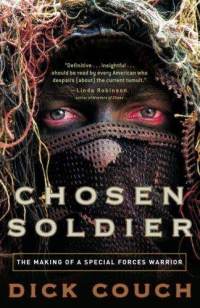
    The second book is Chosen Soldier by Dick Couch. Couch, a former Navy SEAL and CIA case officer, is the only writer ever given the privilege to attend the many months of Special Forces pre-selection, preparation, selection, and qualification training from start to finish.  He was given “full access to all training, venues, students, and training cadres.”  Couch did not merely interview.  He and his wife moved to one of the few residential structures on base at Camp Mackall in North Carolina.  Couch went out with the SF candidates to observe first hand exactly what they did, and, in a number of instances, do it with them.

    One of the things I loved about this book are the personal bios given about the backgrounds of the various candidates.  They are not at all what you’d expect—everything from bouncers to engineers to one fellow who had a degree in and a passion for Russian literature.  I also enjoyed the details he gave about the training.  There are about 1.2 million people in the US Army.  Only about 5,000 of them are in the Special Forces.  When you finish, you have a good feel for the types of things they learn and why about 80% of those who volunteer for training wash out.

    I couldn’t put either of these books down.  If you decide to read them, let me also recommend you download and read Army Field Manual 3-05.20 Army Special Forces Operations as well, which is the Army’s “keystone manual for Special Forces (SF) doctrine” that “describes SF roles, missions, capabilities, organization, command and control, employment, and sustainment operations across the operational continuum.”  You can find it here: http://tinyurl.com/3ryt3o3.  For those who just want an overview of these forces, the Army has provided a great site here: http://www.goarmy.com/special-forces.html. 

    The Boys of Laketown and Round Valley

    Every school morning my wife and two oldest girls hunt.  They eat their breakfast perched high on a hill and watch for the quarry.  When it appears, a shout is raised, and the trio races to the car.  They blast out of the garage, perform an expert three-point turn, then Monte Carlo down the winding hill road.  Next, they attempt to set a land speed record on the straight shot into town, all in an effort to catch the big yellow school bus. 

    Most days they make it.  The bus makes a few stops in town.  Sometimes they’re not so speedy and can only manage to catch the bus at its last stop.  Sometimes I join in on the hunt.  Most of the time I catch the bus at its last stop in town.  But this week I was quick enough to get them to the third stop in front of the middle school where most of the teens board the bus.  And I had the privilege to witness a class act.

    The first time I arrived with my payload, all but two teen boys had already boarded.  We raced up to the bus, my daughters flew out of the car, and the two teenage boys from Round Valley stopped.  They did not get on.  They waited for my girls to hustle the length of the bus.  My girls got on, and the boys followed them in.

    Odd.

    The next day we got there a little bit earlier.  This time I witnessed ALL of the boys from Laketown and Round Valley stand and wait for all the girls to get on first.

    What was this? 

    I asked my girls about it.  They confirmed—it wasn’t a fluke.  While first initiated by the bus driver, the boys have the class to show this courtesy every day. 

    Teenagers . . .

    Bravo, Gentlemen.  Bravo.

    Share
  • Miss Potter, Downton Abbey, Human Planet

    Miss Potter, a true romance

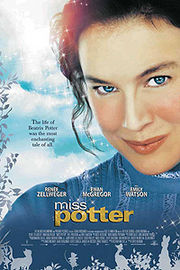
    How many shows are good enough that you can walk into them partway through and within a minute become completely engrossed? I found two this week. The first is the 2006 film Miss Potter, which tells the story of Beatrix Potter (1866-1943), who is the best selling children’s author of all time. You might know her by the most famous of her 23 illustrated children’s stories: The Tale of Peter Rabbit.

    As a side note, Potter spent a lot of time at her family’s country home in the Lake District. I was lucky enough to be able to vacation there once, but never knew until I saw this film that the gorgeous landscapes that had been preserved were partially due to her donation of 4,000 acres.  

    The movie opens with the fact that Potter, who is played so well by Renée Zellweger, has missed her early chances of marriage. She’s a young spinster, and, having a number of her illustrations purchased, is determined to make some money publishing her own illustrated stories. The movie follows her journey to publication, which met with opposition from both publishers and her family, but the real heart of the film is the story of her meeting and falling in love with Norman Warne, whom her parents, especially her mother, don’t approve of because he’s a tradesman. The film is full of wonderful drama, humor, tragedy, and solace. I can’t recommend it highly enough. In fact, I found myself watching it a second time two days later with my girls with just as much enjoyment.

    Downton Abbey, a period drama

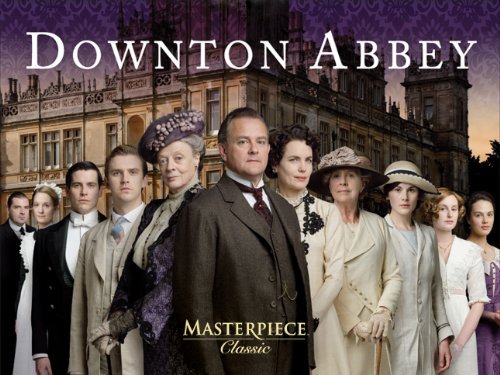
    The second show is the BBC miniseries Downton Abbey.  Its first season of seven episodes aired last year in the USA on PBS’s Masterpiece Theater.  The second season will air at the beginning of 2012.  

    The series is set in the fictional Downton Abbey and follows the lives of the aristocratic Crawley family and their servants. The stories take place over the time period that starts with the sinking of the Titanic in April 1912 to the outbreak of the First World War on 4 August 1914.

    The main story line running through the episodes is the fact that the Crawley family must give up the estate to a distant relation because they have no male heir. But what I find so refreshing is that the stories of various servants are included. Some are funny. Some pull at your heart strings.

    So far I’ve met and enjoyed some truly delightful characters as well as a couple of villains. If you enjoyed the BBC’s Pride & Prejudice or the Cranford series, I think you’ll enjoy this.

    Human Planet, an amazing documentary

    These last two weeks I’ve watched with fascination the eight episodes of the BBC and Discovery documentary series Human Planet. One species on our planet has adapted to every environment on earth—that’s us. The series looks at a number of remarkable ways humans have adapted to the various habitats.

    You’ll see people from all over the globe who do things you never would imagine. Here’s just a small sample:


    • -Folks in Churchill, Manitoba Canada who trick or treat on Halloween with hungry polar bears stalking the streets
    • -A man in Papua New Guinea practicing the ancient art of shark calling in a small canoe
    • -Dolphins that help humans fish in Brazil
    • -A wild honeyguide bird working with Maasai boys to steal honey from wild African bees
    • -Mongolians using tamed golden eagles to hunt fox
    • -People in the eastern Amazon who love their pet monkeys so much they breastfeed them
    • -Inuit Canadians who risk death going under the arctic ice during low tide to gather mussels
    • -Three Dorobo in Kenya stealing food from a lion pride of more than twenty lions


    Oh, and how could I not mention the three children who hunt tarantulas in Venezuela, roasting them up as tasty treats that taste a little like crab. I could go on and on. There are sixty-three of these stories in all, grouped into eight episodes that each focus on a certain habitat, including deserts, the Arctic, jungles, mountains, grasslands, rivers, and cities. Each episode also includes a behind-the-scenes story about the filming of one of the episodes. And some of these are as thrilling as the stories themselves.

    In fact, that’s one of the things I love about this series. In addition to showing me fascinating things I’ve never seen, a number of the stories also raise the adrenaline just a bit. And yet, that’s not all. Because while presenting “strange” cultures, the stories humanize these folks so that instead of presenting aliens, these people feel more like fascinating distant relations. This is storytelling at its finest. If you like nature shows at all, you’ll be totally delighted with Human Planet.

    Share