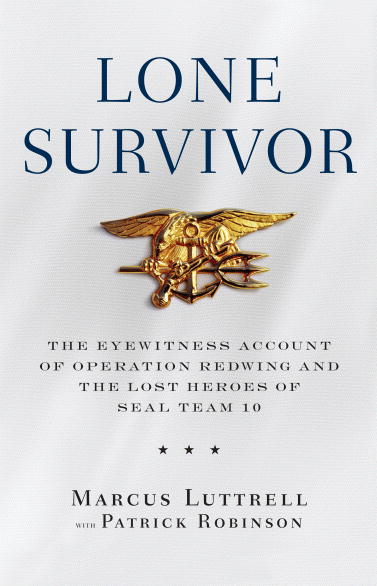
I’m a sucker for military stories. I wanted to be an ARMY Ranger was I was in my teens. Wanted to go commando. Still regret it to this day that I didn’t. And so when a friend told me about Lone Survivor by Marcus Luttrell with Patrick Robinson, I had to read it.
In June of 2005 four U.S. Navy SEALs took up a position on a godforsaken mountain in Afghanistan close to the Pakistan border. Their goal was to capture or kill a notorious Taliban/al Qaeda leader whose small army had been ambushing and killing Marines. The problem was: three goat herders stumbled upon the SEALs not very long after they got into position.
If the SEALs don’t kill the goat herders, they will almost assuredly alert the Taliban force. SEALs are the best. But four against two hundred doesn’t compute. If they do kill the goat herders, then they’re sure someone will find the bodies. The Taliban will claim US soldiers are killing innocent civilians. And the US media will pick it up. The SEALs were sure they will end up being tried for murder. It wouldn’t be the first time.
The SEALs let the goat herders go. Within hours the Taliban show up. Four SEALs. Two hundred plus Taliban armed with rifles and grenade launchers who have the high position on a mountain with plummeting slopes and very little cover.
Lone Survivor tells the story of Marcus Luttrell, the leader of that SEAL team, his training as a SEAL and then that desperate fight in the mountains. He and the other three SEALs fought ferociously. He was the only one to survive.
I had to force myself not to read this book in one sitting. Not only do you get a great story, but you also get insights into what makes a SEAL and their system of values. You’ll get to know a man who makes you want to stand up for God and country. And you’ll marvel at the courage of those who fight in our armed services.
I loved this book. May God bless the men and women who risk life and limb for all the rest of us. For the rest of us, we can see what they face in this excellent first-hand account.
We’re told that a key is to write “SMART” goals. Make them specific, measurable, realistic, and focused on results. Give them a deadline. And, for heaven’s sake, put them to paper because “a goal that is not written down is just a wish.”
We’re told a key is to dream, that “whatever the mind can believe, it can achieve.”
We’re told that the key to changing our life is changing our habits, and that they way to change our habits is to stick with something for twenty-one days.
Except, well, how many habits have you been successful in establishing?
How many of those lofty goals have you achieved?
How many New Year’s resolutions have you really followed through with?
The problem is that all of the good advice on goals and habits seems to only work for other people. And I grant that there might be some AAA+++ personalities out there with megawatts of motivation who seem to be able to do whatever they set their mind to.
But that triple A plus personality passed me by. It passed a lot of us by.
So are we doomed?
B.J. Fogg, a Stanford researcher, says no. There’s hope for all of us. Because the key is not in having megawatts of motivation.
It’s not that we disregard the power of motivation. It’s just that motivation, Fogg has found, is never constant. It comes in waves. And while we certainly want to take advantage of it when it comes and do things that increase it, a much more effective way to grow habits and meet goals and change our lives is to focus on the other things that drive behavior.
Fogg has spent his career studying persuasion and habit. He works with companies to help them create products that are habit-forming. Think about Facebook, Twitter, or Candy Crush, and the habits those products form. These and similar companies have implemented the principles of habit so well that their products have become, for some, something of an addiction.
So what’s the secret?
Fogg has identified three things that must be present if we’re going to do something:
The motivation to do it
The ability to do it
Atrigger to remind us to do it
When those three things are present, we act. And we often do so without thinking. If one of those three elements is missing, we don’t act. So if we want to start a new habit, we need to focus on these three things.
But if motivation goes up and down, then we don’t want to rely on that part of the equation. Fogg’s insight is that it’s much easier and more effective to focus on the ability and the trigger parts.
When we focus on the ability, we make the habit we want to form so tiny and small that it’s super easy to do. Such tiny behaviors require only the smallest levels of motivation. And if we’ve planted them in good ground (at a time of day where they can expand and linked to a good trigger), those tiny habits eventually grow into the full blown big habit we wanted all along.
Does this work?
Well, I started Fogg’s Tiny Habits back at the beginning of December. And I’m happy to report that starting new habits using this approach has been easy.
Like falling off a log easy.
For example, because I work on the computer, I know that to increase my health, I need to get at least forty minutes of good, heart-pumping activity each day. But did I start there? No.
Did I start at twenty minutes?
No.
Ten minutes?
No.
Five? Surely, I started at five minutes.
No.
The Tiny Habits approach suggests starting much smaller. I started with doing one push up after I used the restroom. And it was an incline pushup on the stairs, which my daughter found hilarious.
Yes, that’s how tiny you start them. Something that takes less than 30 seconds.
That tiny habit grew. And I am now doing 60 regular floor pushups each day, plus 75 curls, 75 flies, 75 squats, and 75 bicycle crunches. It’s about 25 minutes of good activity. And it’s only going to grow. Come April, I’m pretty sure I’ll be around 100 pushups every day.
And there was no twenty-one day business. Fogg has found that’s not the secret. Habits can form in just a few days.
I started the delicious habit of kissing my wife for at least five seconds each day. Along with a five-second hug. And then a little more kissing, and little more hugging, and a little more kissing (when I can steal it). Did I mention it was delicious? This is a highly-recommend habit.
I started the habit of daily morning scripture reading. I have tried to be consistent for years and couldn’t do it. But with this new approach, I think I’ve missed three times in the last two months.
I started the habit of beginning the day with a positive thought, the habit of turning off my wireless mouse when I’m done at my desk, and I’ve also made great headway against the mother of all habits for me—going to bed by 10 PM.
I can easily stay up until one a.m. reading, “researching” on the internet, wasting time watching political videos, or Facebooking. Or a million other things. This bad habit is so ingrained it is almost like someone else is controlling me. All day long I say I’ll go to bed only to find myself, yet again well past dark, screwing up my life plans. It’s like some evil villain has me on remote. I can’t tell you how many times I’ve tried to “motivate” myself to change this. All to no avail.
But with the tiny habits approach, I finally figured out the triggers that were driving it. Then I engineered other triggers and tiny habits to replace them. And now my computer is off and behind a closed door most of the time in the evenings. I’m actually getting to bed. It’s huge progress. There are still some kinks to work out, but it’s only going to grow.
I found the Tiny Habits program through my insurance provider. They had an annual wellness check in November, and on their website they had a link to Tiny Habits. I clicked, signed up for their tiny program, and I’m so happy I did.
I’m hooked on tiny habits.
And the cool thing is that you can begin learning and developing your ability to plant and grow tiny habits too. For free.
If you want to change your life, I think you will love their free five-day, three-habit program. It’s there to teach you how to create tiny habits, triggers, and celebrate.
Let me also recommend a few videos. Here’s the best video I’ve found that explains Fogg’s model of behavior and why tiny habits work.
And here’s the best video that explains the pitfalls of relying mostly on motivation instead of bringing in the other two Musketeers.
Researchers say that between 40-70% of all we do each day is driven by habit and external triggers. We think we’re exercising our agency all day long, but it’s an illusion. We’re not. Most of the day we’re running on auto pilot and responding to triggers. But we can change those routines. That’s the promise of tiny habits. And so far, the results for me have been promising. Give it a try. I think you’ll be happy you did.
Notes
SMART stands for specific, measurable, achievable, results-focused, and time-bound. SMART goals are helpful. But the key, Fogg has found, is in not trying to eat the whole SMART whale in one bite. Instead, you start with the tiniest part of the very first step. And then watch as the habit grows.
I reviewed The Power of Habit by Charles Duhigg back in 2012. It provided great insight about habits, but not a tested program to actually change them. In fact, the author states himself that his book doesn’t provide a program, just a way of thinking about habits. Duhigg isn’t a behavioral scientist; he’s a reporter, trying to share what he’s found. The book was great. However, I tried to apply his insights, and, as expected, wasn’t very successful in changing things. But Fogg and his Tiny Habits fills that gap in a spectacular way. Fogg is a behavioral scientist and has taught thousands how to form habits. So read Duhigg for great stories and insights about habits in general. But go to Fogg for a tested program that will guide you step by step.
An avid reader friend of mine began reading through the books in a list called “100 books you must read before you die.”
She got to Jack Kerouac’s On The Road and went to Facebook and posted the following: “I don’t get the appeal. It’s about a group of boys/men who are irresponsible, drunks, whoring around taking advantage of others and being enabled by their women. Why is this a classic and why should I have wasted my time on it? Can some of my literary friends explain? I hated a brave new world and the handmaid’s tale too.”
Is the book a classic?
Should she read it before she dies?
Is it really that important?
Let me share an edited version of my response and then provide my list of 30 books you should read before you die.
*
Annette, the unfortunate truth is that these lists of “classics” are a sham because there is no objective criteria for determining literary excellence.
Or maybe I should say that measuring quality in the arts isn’t like measuring the unambiguous, objective score of a baseball game. After books exhibit a certain level of proficiency, it becomes increasingly difficult to distinguish the quality of one book from another, especially because much of this depends on a reader’s interests and subjective experience of the story.
When it becomes hard to rank performances, people rely on other measures. One of the most powerful is social networks.
So if two readers find two different books that blow them away, one of the books might get all the attention because the one book gets picked up by a news service (The New York Times) or a platform (the Oprah Book Club effect) or some other social network of influence. A lot of the so-called literary classics only appear on various lists because they tapped into the academic network, which kept them alive far longer than they would have lasted otherwise.
On The Road is simply a book that made a stir among some circles in the 1950s. That’s it.
Was it more important or of higher quality than Exodus? The Chronicles of Narnia? Lord of the Rings? A Town Like Alice? All published in the 1950s as well.
It depends.
If you’re wanting to understand the 1950s beat culture, it would be an important book.
But if you’re wanting to understand fantasy writing of the time, it wouldn’t.
If you’re wanting to read a book that’s had a huge impact on popular culture, well, LOTR beats On The Road like a dog.
Some people have the feeling that the so-called classics have some inherent medicinal value because someone put them on a list and called them classics.
Nope. They’re just stories. Some of which can shed light on the issues and interests of a part of the culture in a given period. But if you’re not interested in that specific sub-culture, who cares?
And if you’re reading to be entertained, moved, uplifted, or educated—which ones do that best for Annette is for you to decide.
So all that to say I wouldn’t devalue your reaction to the book
*
I’m now going to give you my list.
But it’s not going to be a list of titles. Nor will it focus on a book’s impact on some sub-culture of a given period.
It’s going to be a real list. One that focuses on what so many of us go to stories for.
The one that makes you weep.
The one that makes you giggle and snort.
The one that reminds you of what it’s like to fall in love.
The one that gives you hope.
The one that you begin to read more and more slowly because you don’t want it to end.
The one that scares the soup out of you.
The one that you can’t put down, even though you need to wake up early in the morning.
The one that makes you wish you lived there.
The one that’s so good that when you close it, you immediately start to read it a second time.
The one that gives you and your child hours of pleasure together.
The one that gives you a sacred, spiritual experience.
The one that makes you reread some of the lines because the turns of phrase are just so delicious.
The one that gives you courage.
The one that takes you on an awesome adventure.
The one that makes you want to be a better person.
The one that bores you to tears (just so know you how good the others are).
The one that introduces you to a different culture that delights you.
The one that makes you think.
The one that lingers with you for days.
The one that gives you lovely insights.
The one that inspires you to love your spouse more.
The one that introduces you to the sorts of people you normally don’t like and makes you actually like them.
The one that delights you with its characters.
The one that whisks you away to a different historical period.
The one that inspires you to give your children a hug.
The one that gets your adrenaline pumping.
The one that sparks all sorts of ideas in your head.
The one that makes you wonder and start imagining what it would be like to be there.
The one that blows your freaking mind.
The one that makes you stand up in your living room and cheer.
We could do more than 30, couldn’t we?
Like the one that makes you think people from a different time period are just like us. And the one that makes you think people from that same period are completely alien.
But I think we’ll stop. That there above is a list.
Those are 30 books I think everyone will want to read before they die.
If you’ve read my article on the Teachers section, you know I think a good portion of what we do in our public schools is a waste of time because it’s not driven by any natural motivation. The result is that students are bored more than they need to be. They develop a distaste for many subjects that could provide them great joy. Finally, when they do learn, it’s for a test, not life. And so when the test is over the promptly forget what they’ve learned.
This is not to say that I’m against testing or teaching to a test. Far from it. A good test demonstrates that you’ve learned what you’re supposed to have learned. A good test focuses on the main things you want to learn. Good tests (and there are many types of tests) are critical. The problem is the objectives the tests are built on. If the objectives are idiotic then teaching to the test becomes idiotic.
Now Nellie just got a job (we’re so happy!) teaching 7th and 8th grade English. For some of you that will elicit groans. The memories of supreme boredom produced by endless grammar lessons and assigned readings with worksheets are still that strong. And Nellie and I had the same feelings. If her job was to teach grammar et al for nine months, she was going to shrivel and die.
Because grammar is bad? No, for heaven’s sake. Because grammar isn’t the point. Nor are assigned readings. Or iambic pentameter, rising action, theme, character, plot, induction, deduction, the six traits and all the rest of the usual suspects. The point is to enjoy writing and reading for the things writing and reading do.
So we’ve been working and disussin how she might still meet all the state requirements yet teach the practical joy. Becasue if she teaches the joy, then the students will become better readers and writers than they ever could be otherwise. Which means they’ll be able to do and enjoy the things that can be enjoyed and done when you know how to write and read. Case in point: our girls. Nellie’s done such a good job teaching the joy of reading that we have to ground them from books every once in a while.
So anyway, I came up with some ideas, a first draft of a curriculum. Of course, starting from scratch is a huge project. There were issues with it. More importantly, would it work? You don’t want to risk your first year on the job. Luckily, Nellie is smarter than I am and found someone who already discovered this wheel. Nellie handed me Nancie Atwell’s In the Middle.
I began to read, and I didn’t stop until almost 1 AM. Everything I’ve learned about teaching in the last 20 years, everything I’ve learned about learning how to write in the last 20 years–it’s all there. The key principles are all there. And the implementation of those principles is simple and proven (they actually test results).
What are the principles? What is the program?
Read the book. Heck, just read the first chapter.
I cannot tell you how excited I am for Nellie. We ordered these books and can’t wait to devour them.
In the Middle: New Understanding About Writing, Reading, and Learning
The Reading Zone: How to Help Kids Become Skilled, Passionate, Habitual, Critical Readers
Lessons That Change Writers
Naming the World: A Year of Poems and Lessons
Side by Side: Essays on Teaching to Learn
Nellie is also going to apply for a four-day intership at the Center for Teaching and Learning in Edgecomb, Maine. I hope she gets in. She’s also going to do a week-long writer’s workshop at BYU.
Stay tuned. I’m going to twist her arm and see if she won’t blog about her experience this first year.
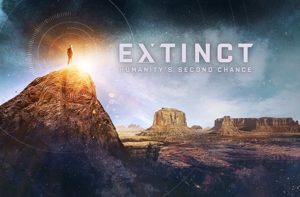
I’ve been looking forward to watching Extinct, a brand-new TV series. I watched the pilot with my wife and teenage daughter, and we enjoyed it. I watched the next episode, and then a few days later couldn’t help but binge-watch three more. And I’m happy to report it’s full of good stuff and interesting stories.
First of all, it starts with a killer concept. Aliens invade earth and wipe us out, but that’s been done to death. This story doesn’t start there. This story is set four hundred years in the future after the extinction of the human race, when a small group of humans is revived by an alien civilization.
But this isn’t Star Wars, Star Trek, Blade Runner, Battlestar Glactica or anything like that. It feels more like the TV series Lost or The Maze Runner. The heroes are three humans who have been brought back and are trying to figure out what’s happening and how to survive in a place that’s low tech and is the home to a dangerous band of other humans that were also brought back. They’re dangerous, by the way, because they have been taken over by spores that latch other their nervous system and use their bodies as a host.
This series transports you to a world of cool tech and alien stuff like the sparks that regenerate the humans in pools of water, two interesting drones, and alien ruins and glyphs. But the best part about this isn’t the spectacle of the technology. It’s the stories. There’s suspense and action, but also mystery and a lot of stuff that’s human and warm and, surprisingly enough, thought-provoking.
We try to hold a family night once a week to have fun together and discuss important topics. And I can see us easily watching one of these episodes and finding ourselves in a deep discussion about free will, or the creation, or whether Duncan, one of the skin riders, looks like someone right out of The Hobbit.
I liked episodes one and two, but it was episode three that kicked it into high gear for me. If you liked Lost or The Maze Runner or the series Once Upon a Time, I think you’ll really enjoy this. Right now you can stream the first eight episodes for free from byutv.org/extinct or extinct.tv.
EDIT: I just finished episode 8. I really like this series.
#
Do you like listening to interesting ideas? If so, you will love tuning into RadioWest. It’s a daily program from KUER in Salt Lake City that features hour-long interviews of folks who are experts on some of the most interesting things or have an interesting story to tell.
Doug Fabrizio is the host and has to be the best interviewer on the planet. I love his voice, but it’s his skill in drawing out the fascinating meat of the topic from his guests is what sets him apart. And unlike some interviewers who don’t even read the books they’re talking about, you can see that Fabrizio has done his homework. He’s really thought about what they have to say.
For example, just this last week, I got to listen to compelling interviews of (1) Tom Christofferson, the gay brother of Elder Todd Christofferson, a Mormon apostle, (2) Ben Shapiro, an orthodox Jew who is an up and coming voice on the Right and was recently protested at Berkeley and the University of Utah, and (3) science writer Ben Mezrich who has written a book about the scientists and researchers who are trying to bring back the wooly mammoth.
Week after week, Fabrizio brings amazing people and ideas into my car and home. You can listen to his interviews every morning at 11 a.m. and 8 p.m. on the radio at FM 90.1 (Salt Lake Area), FM 90.5 (Logan and Bear Lake), and FM 88.3 (Randolph and Woodruff). Or you can listen live online at radiowest.kuer.org, which is also where they keep all the recordings so you can catch up on any you miss.
#
New restaurants come and go all the time in Garden City, Utah. Most of them don’t last more than a few seasons. Often this is because they charge lots of money for food that’s really not worth it. So it’s with great delight that I tell you about Ruca’s, a little spot on the block between the city park and Bear Lake Pizza on the main drag.
Not only are the prices reasonable, but the food is delicious. They have sandwiches and other stuff, but we have gone back multiple times for their ebleskivers (AY-bill SKEE-vurs). These are Danish pancakes in the shape of a ball that can be filled with all sorts of stuff. My wife and daughter love the ones filled with peaches and the others filled with Nutella and strawberries. I like the savory ones filled with bacon and cheese with eggs on top.
They’re going to be closing up for the winter, so if you want some great food for a great price, get over there now and enjoy a new delight.
Edit: I wrote this like a month ago and thought I posted it. But there is was in my drafts. Somebody give me some Ginko extract.
The Avengers
The Avengers is Marvel’s latest installment of the films in the Avenger world—Iron Man (2008), The Incredible Hulk (2008), Iron Man 2 (2010), Thor (2011), and Captain America: The First Avenger (2011).
Iron Man is, by far, the BEST of all of them. I thought Captain America might be just as good, but the movie lost its way about half way through. The others are okay, not anything to jump up and down on the couch about. So while I was looking forward to seeing The Avengers, I wasn’t expecting anything special. I’m happy to tell you that The Avengers is good. Not as good as Iron Man, but much better than all the others. And certainly well-worth the price of admission.
The earth is in possession of an artifact of immense power called the Tesseract, which isn’t a made-up name. In geometry a tesseract is a cubic prism—some four-dimensional thing which boggles the mind. But in this movie and Captain America, the tesseract is a blue cube that can open portals to different parts of the universe or run Nazi war machines. The problem is that there are other beings in the universe. Some of these would like to be able to run their own Nazi machines and subjugate all species on every planet. So they get Loki, Thor’s adopted brother, to lead an army to raze the earth and retrieve the artifact.
Of course, earth’s forces aren’t strong enough to repel this alien force. That is, unless you call upon the Avengers—Iron Man, Thor, Hulk, and Captain America. As well as Avengers who haven’t had their own movies yet like Black Widow, Hawk, and Nick Fury.
It all sounds a bit much, and in the hands of a lesser writer it might have been. But Joss Whedon (Serenity, Firefly, Buffy the Vampire Slayer) wrote the script and directed the movie. And he did a fantastic job. Instead of thinking we came for a barrage of special effects, he takes time to build the characters and relationships so we care about the action when it arrives. He does use the idiot chaos cinema technique for some of the action, but not nearly as much as was in Hunger Games. More importantly, he makes up for the error of his ways with a number of laugh-out-loud moments. Hilarious moments. In fact, the humor is one of the main reasons why this movie was so good.
If you like super hero movies, you’ll love The Avengers. Maybe not as much as you like Iron Man or Spider Man 2 or the Nolan Batman series. But close enough to have a great night out.
The Paris Grill
The Paris (Idaho) Grill has opened another restaurant in what used to be the Bear Lake Motor Lodge Cafe. The cafe was okay. Nothing to write home about. So I didn’t know what to expect with the new grill. However, I took two of my daughters out last night for dinner.
The Paris Grill has four menus. I don’t know why they keep them separate, but they do. One for breakfast, lunch, dinner, and another for their pizzas. We opted for the “Burgers n Pastas n Salads” menu which I guess is the lunch menu, but was what we ordered our dinner off of.
Confused yet?
Luckily, the food’s good enough that the menu business doesn’t matter. The lunch menu features a number of regular sandwiches—BLT, chicken cordon bleu, French dip. But it also offers some signature sandwiches like a kielbasa and pepper sandwich, something called the Hobo Deli (which is tasty sounding combo of sour dough bread with pepper cheese, roasted turkey, bacon, grilled tomatoes, and cilantro dressing), as well as the Monster Grill—roast beef topped with caramelized onions and peppers, mushrooms, and provolone cheese. I opted for the Monster Grill. My girls skipped the salads and ordered a hamburger and the chicken cordon bleu with mashed potatoes.
The first words out of my daughters’ mouth when eating the mashed potatoes were “ooh” and “yum.” That was followed by another “ooh” and “yum.” The potatoes were good. And they were made from scratch. The sandwiches were tasty as well. Good enough that I’m going to go back to the grill to try their dinner menu with my wife.
We topped the dinner off by splitting one of the grill’s big, hot cinnamon rolls. The prices for the lunch items were reasonable—around seven or eight bucks—and they were big enough that the girls took half their meal home.
If you’re in Garden City, Utah and looking for something besides burgers and shakes, try the grill. I think you’ll be quite satisfied when you walk out the door.
I’m sick of politicians who are more worried about votes, Republican or Democrat, than actually doing what needs to be done. Sick of these fools buying votes with Federal programs for everything from farm subsidies to gelatin wrestling.
When someone runs for office, does an idiot switch get flipped? “Vote for me, I’ll spend like there’s no tomorrow. Cause look, honey, I got this magical piece of Uncle Sam plastic. It doesn’t cost anything. And when the bill comes, we’ll just tax all the rich folks to pay for it, and send government agents to put them in jail if they don’t. Or we’ll print money and make it all worth nothing. Or, better yet, we’ll just use the funds we set aside for social security. It would be dumb to just save and invest that money we’re taking from people for their retirements. I mean, it’s just sitting there earning interest. Besides, we’ll set it all up like Amway with downlines and circles, and the rising generation will just be taxed out of their brains to pay for it. And that will be someone else’s problem anyway. See the pretty money, honey. See it? Vote for me.”
They’re like that candy man in Chitty Chitty Bang Bang with the nose that should have scared the soup out of those kids. Of course, American voters aren’t kids hiding in Benny Hill’s basement. Maybe the switch is getting flipped on some of us as well.
Here’s what we need. It’s not rocket science.
1. A balanced budget ammendment to prevent our super smart and caring representatives in Washington from continually spending what they don’t have.
 I’m a sucker for military stories. I wanted to be an ARMY Ranger was I was in my teens. Wanted to go commando. Still regret it to this day that I didn’t. And so when a friend told me about Lone Survivor by Marcus Luttrell with Patrick Robinson, I had to read it.