Media and Teenage Sexuality

I don’t know how it’s possible to aruge that media does not influence our decisions. The evidience is simply overwhelming. Here’s another report of a study linking media sexuality to teenage decisions about sexuality.

“CHICAGO — Groundbreaking research suggests that pregnancy rates are much higher among teens who watch a lot of TV with sexual dialogue and behavior than among those who have tamer viewing tastes.” Full article here.

The study shows that while teenage pregnancies have dropped overall, those teens watching racey shows had, not just a small incremental risk, but TWICE the risk of getting pregnant.

Now, I know this article by the Guttmacher Institute focuses on the 1990’s, but it still is enlightening. It discusses the reasons for the dropping teenage pregnancy rates during those years. It’s conclusion is that both abstinence and usage of more effective contraception are the main factors for the drop in teenage pregnancies.

When I put the two articles together, it makes me wonder if the racey shows are encouraging more sex among the teens who watch them or the use of less-effective contraception or both. My guess is that the shows are influencing a decision for more sexuality.

Either way, what does this mean for a writer?

To me, it means that while I’m never responsible for someone’s actions nor in 100% control of what people take from my writing, I AM responsible for those things I know are highly likely to influence folks one way or another. I hope my works provide a wonderfully entertaining experience, but also avoid influencing people into decisions that will lead them down paths that will limit their happiness.

Share

Similar Posts

  • | |

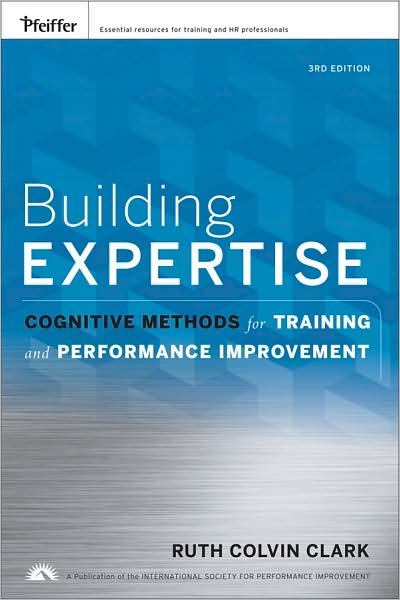
    Building Expertise by Ruth Colvin Clark

    When we find a great teacher, we prize them not only because what we learn improves our lives but also because good learning can be one of the most exhilirating things we experience. Unfortunately, a lot of teaching stinks. It’s boring, rambling, forgettable.

    I’ve made a study of teaching. I’ve had to. For almost 20 years I’ve taught and designed courses in the private sector. And for many of those years my work has been in a revenue generating department. What that means is that if my classes are ineffective and dull, nobody signs up, revenue falls, and a lot of folks will stand around and wonder if it might not be better to just replace me with a potted plant. At least a plant would be something pleasant to look at, plus it would also clean the air.

    Now not everything I do is stellar (I wish that were so). Sometimes in the quality, cost, speed triangle, quality is the thing that takes the hit. But the point is I have to be alert and try to miminize the schlock. But how do you do that? How do you develop and deliver effective and interesting education?

    Luckily, the field of instructional technology (I’m not talking about computers, but principles of instruction) has come a long way in identifying what works and what doesn’t. This is important because teaching theories of the past (many of which are still used today) often relied on rules of thumb and anecdotal evidence. Their precriptions were often ineffective and sometimes counterproductive. What’s exciting is that in the last few decades researchers in this area have put techniques and principles to the test. We know better now than ever before how to structure learning that is effective and interesting. And I have yet to find a better explanation of the proven techniques and principles than Ruth Colvin Clark’s Building Expertise: Cognitive Methods for Training and Performance Improvement, 3rd Edition.  

    Don’t let the “training” part fool you. We often associate “training” with learning procedures and simple tasks (which is what leads to the “we want to provide sex education, not sex training” obfuscation). But Clark isn’t using the term that way. Training here includes all types of learning.

    What Clark does is not only share the techniques that build expertise, but also the psychological reasons and research-based evidence for those techniques. This isn’t nonsense based on personality or political correctness. It’s practical and proven.

    Among other things, you’ll learn:

    • Why working memory is key to instruction and how to overcome its limits
    • How to motivate learners
    • How to structure learning
    • When to use lecture and when to put learners into action
    • What methods work best

    You’ll learn when taking notes can actually be counterproductive and what you can do about it. Or how making your delivery more personable (and what that means) can actually improve attention. You’ll see why lots of practice isn’t always the best answer–sometimes your child will learn more if you do half of their homework questions for them.

    You’ll find that there “Is no Yellow Brick road” in teaching. Instead, you’ll see that the effectiveness of any method depends on whether it’s suited to the specific situation. And Clark will explain what the key factors in any situation are so you know which methods to apply and the trade-offs you’ll make when you do.

    If you’re a teacher in any setting–family, job, church, school, or recreation–or if you’re trying to teach yourself, this book (specifically the 3rd edition) will be a goldmine for you. I can’t recommend it highly enough.

    Share
  • Can authors make a living?

    A lot of folks hear I’m going to be published and automatically classify me with J.K. Rowling, James Patterson, or Dan Brown. Heck, I at least ought to be categorized with Joe Schmo who was featured on Oprah.

    And why shouldn’t they think that? Those are the authors they see. That’s what it means to them to be published.

    For those of us who have actually gotten a peek behind the curtain, we realize it just ain’t so. Those are best-selling authors. See my post on best sellers to understand the quantities that have to move to make a best seller. Those are huge numbers, but very few authors sell that many books.

    So what do you need to sell to make a living?  Let’s do some math.

    Let’s say you want to make $50,000, the median household income in the US at this time. I know, I know, that’s nothing in some places, but if you’re a writer you don’t have to live in San Francisco. So you want to take home $50k after taxes. That means you’ll probably need to make $62,000 before taxes. That’s our goal.  

    So here are some numbers with conservative royalties.

    What authors make on a paperback
    8% royalty (authors usually make 8 – 12 % on paperbacks)
    15% agent fee
    6.8% net royalty rate

    To net $50k with only PAPERBACK sales would you need:
    $911,765 in sales required in the year
    $7.99 per book
    114,113 books sold

    What authors make on a hardback
    10% royalty (it’s common to make 10-15%)
    15% agent fee
    8.5% net royalty rate

    To net $50k with only HARDBACK sales would you need:
    $729,412 in sales in the year
    $25.00 per book
    29,176 books sold

    If you have previous books that are still selling, they all count. Make foreign sales, they count. Can produce two books per year, maybe one in a different genre, they count. Of course, this doesn’t factor in discounts and the corresponding reduced royalty rates. Nor does it factor in costs of being in business for yourself, including taxes, insurance, etc. But this is enough to get a rough idea of numbers.

    100,000 paperbacks is a BIG number. However, you usually mix and match.

    Let’s say you sell 5,000 hardbacks. 5,000 x $25.00 = $125,000. $125,000 x .085 net royalty = $10,625. $62,000 – $10,625 = $51,375 to be made by the paperbacks when they come out the next year. At a 6.8% net royalty rate you have to make $755,515 or sell about 94,558 paperback copies.

    Here it is in an easy to read list. Given the hardback sales shown below, you’d have to make up the rest of the $62,000 with the paperback sales on the right.

    5,000 HB: 94,558 PB
    10,000 HB: 75,002 PB
    15,000 HB: 55,446 PB
    20,000 HB: 35,890 PB

    I know those seem like small numbers compared to the Publisher’s Weekly 2007 numbers I link to above. But most authors don’t sell that many books. Most authors are happy to sell 5,000 hardbacks.

    But it’s not all bad news. I looked at a few authors on the PW list comparing hardback and paperback numbers. It seems any given author will sell twice the number of paperbacks that they do hardbacks.  So perhaps selling somewhere between 15,000 to 20,000 hardbacks is the magic number.

    20,000 hardbacks is a lot. But it seems doable for a writer who has been publishing for a few years. It’s not the 700,000 of  a James Patterson. But it just might be enough to make, hold your breath, what the average household in America makes in a year.

    Share
  • Some lessons from Tom Clancy’s first novel

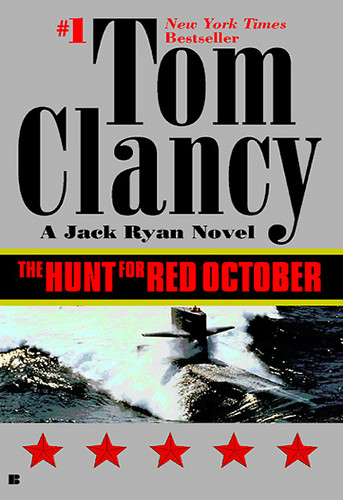
    tom-clancy-the-hunt-for-red-octoberTom Clancy is one of the biggest authors of our time. How did he break in? It’s an interesting story that Deborah Grosvenor, the editor who acquired The Hunt for Red October (Clancy’s first book), tells here.

    And this early interview provides more insights.

    So what conclusions can you draw from this? Here’s what I picked up.

    1. Writing a good book is one thing. That book finding success is quite another.

    2. Endorsements from the right people make a huge difference. More here in my blog Is Product Popularity Random?

    3. Know what you write. And if you don’t know it, do the research. And then invent what you have to.

    4. It’s not always a bad thing to start with a small press, especially if they’re going to put as much $$ into marketing and PR as this one did.

    5. To finish your novel, you’re going to have to set aside time and get it done.

    6. Finally, follow the zing. Clancy loved this stuff. Notice how his book was fed by the stories he heard and read.

    Share
  • | |

    One of Orson Card’s best essays

    Scott Card recently wrote “Marriage needs lots of humor.” It’s an awful title for one of the best articles of his that I’ve ever read.

    I’m not going to spoil it for you. But I will say that I’ve found that it’s the small things that seem to make the biggest difference in relationships. And this is one of those small things that packs a HUGE punch. But not until this article did I realize it.

    And for you writers who are wanting insights on what makes characters interesting and sympathetic–there’s a little treasure trove here for you as well.

    Enjoy!

    Share