|

The Little Secret that Propels So Many Blockbuster Plots

I was invited to present a master class at the 2022 StoryMakers conference in Provo, Utah.

We all want to develop plots that delight readers. Maybe we have ideas for the characters. Maybe we have ideas for the setting. Maybe we even have a couple of scenes.

But a novel needs 40, 50, 60 or more scenes.

How do you figure out what happens next, and do it in a way readers love?

There’s one tool that can help.

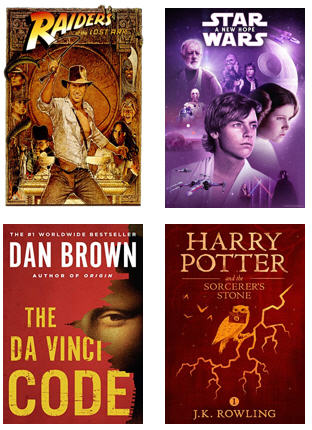
Harry Potter, Lord of the Rings, and The Da Vinci Code all had it. So did Star Wars, Raider of the Lost Ark (1, 2, and 3), Taken, James Bond, The Wheel of Time, and thousands of other stories, TV episodes, and films.

It’s what I call the wanted object, sometimes known as the MacGuffin.

A good MacGuffin will not only make your plotting easier, it can also inject a wow factor into your story that readers love.

In this session, the writers learned what a MacGuffin really is and how you can use it to propel the plot and keep readers turning the page.

Here’s a PDF of the presentation.

2022 john brown – the secret that propels so many blockbuster plots2

And here’s the PDF of the handout.

2022 john brown – the secret that propels so many blockbuster plots handout

Enjoy!

Share

Similar Posts

  • The Surprising Truth About Militias and the Second Amendment

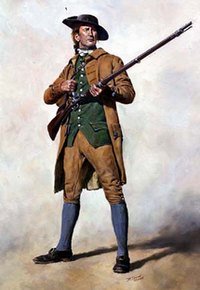
    When the founding fathers spoke of “militias,” they were not referring to a bunch of yahoos running around in the woods with paint on their faces outside of state control.

    They were referring to a citizen army under state control.

    So is “militia” just the old-time word for what our army is today?

    No.

    A standing or “regular” army is one made up of professional, full-time soldiers like the US Army, the Marines, the Navy, and the Air Force. And it’s permanent, meaning you don’t disband the army when the fighting is done.

    A militia back in those days was something completely different.

    The problem of a standing army

    The founding fathers knew they needed to provide for the common defense, but they saw standing armies controlled by a central government as an immediate threat to the liberty the new union sought to preserve.

    Why would they think that?

    Easy. History was littered with case after case where standing armies had become a law unto themselves and oppressed the populace. One glaring example is what happened to the Roman empire. It suffered centuries where this faction and then that faction of the army was in control, and it brought nothing but a continual procession of civil wars and bloodshed.

    History also showed that even if the military didn’t take over, kings and queens were happy to wield standing armies to impose their will and oppress the people. Remember: the world then was ruled by monarchies. The founders had never seen a standing army wielded by any other type of power.

    So the founders didn’t want to give a president or any other central authority that power. They feared doing so would only pave the way to the ruin of the new nation they sought to form.

    So if you don’t have a standing army, how do you defend your country?

    The fyrd

    The founding fathers thought they saw a solution in a tradition of duty that went back hundreds of years in England. In the days when the Saxons ruled England, the kings and dukes would muster and deploy the fyrd to help them fight their wars.

    The fyrd was made up of all able-bodied free males between certain ages, regardless of their vocation. It was their duty to provide their own arms and defend the land when called by their leaders. So this was an army made up of farmers, tanners, smiths, tailors, etc.

    But the fyrd wasn’t a standing army. Nor was it populated with full-time soldiers. This citizen army was to be called out when needed, and when the crisis was over, it was disbanded, and the men went back to their vocations.

    The militia scheme

    The founders took this idea and tweaked it. Back in the Saxon days, the king controlled the fyrd. In this new scheme, the United States would rely on a fyrd (which they called a militia), but the powers to control it would be split between the president, Congress, and the States.

    First, Congress, not the president, was the only authority that could declare war and summon the state militias. So the president would be the commander in chief when the militia was active. But the minute Congress decided to end a war and disband the militia, that army dissolved, leaving the president as commander in chief of only the tiny number of troops that had been authorized as the regular army (less than 1,000 at the time).

    Second, while the Federal government would provide the weapons the militia would use when it mustered them for war, the state governments would be the ones to appoint the officers and train the soldiers. You can’t run an army without officers. So this would prevent the Federal government from taking control by stacking the army leadership with those loyal to a despot president or Congress.

    So the militia was supposed to be the main force that fought our wars, and it was supposed to be temporary. It’s true that Congress did authorize a standing army, but it was tiny. And with this setup, the founders figured we’d have the army we’d need, but we’d avoid the problems standing armies had posed in the past.

    So militias, as thought of by the founders in the 1700s, were not groups outside the government’s control. They were temporary citizen armies. And power over them was broken up between the president, Congress, and the States so no one group or person could wield them tyrannically.

    1791 and The Bill of Rights

    Accordingly, the founders wrote the articles and sections of the Constitution in 1787 to set all of this up. However, many anti-federalists were concerned that the Constitution didn’t go far enough to protect the rights of individuals and limit the power of the Federal government. In fact, many of the founders were so concerned about the issue that they refused to ratify the Constitution as it was.

    The only way they’d sign on is with the promise of the Bill of Rights. When they knew that bill was forthcoming, delegates from nine of the original thirteen states ratified the Constitution. The delegates of two other states waited until the document was produced. The final two (North Carolina and Rhode Island) waited until 1791 when the Bill of Rights, which includes the second amendment, was passed.

    So let’s look at the language of the Second Amendment in light of what we know about the fear the founders had of standing armies.

    “A well regulated Militia being necessary to the security of a free State, the right of the people to keep and bear Arms shall not be infringed.”

    Why did they include this? It was not because they wanted the citizens to be able to hunt or protect themselves with guns. They figured that was a given. They included this amendment because they concluded that an armed citizenry would make it impossible for tyranny to arise.

    Noah Webster, a Federalist, stated the idea this way when trying to persuade Pennsylvania to ratify the Constitution:

    “Before a standing army can rule, the people must be disarmed; as they are in almost every kingdom of Europe. The supreme power in America cannot enforce unjust laws by the sword; because the whole body of the people are armed, and constitute a force superior to any bands of regular troops that can be, on any pretense, raised in the United States. A military force, at the command of Congress, can execute no laws, but such as the people perceive to be just and constitutional; for they will possess the power, and jealousy will instantly inspire the inclination, to resist the execution of a law which appears to them unjust and oppressive”

    So the second amendment was included in the Bill of Rights because enough of the founders feared that the Constitution could be read in a way that would allow the Federal government to disarm the populace. Disarming the populace would open the way to a standing army under Federal control. And that would open the way to tyranny.

    When all was said and done, the founders separated the power of the military in this way:

    • Only Congress could declare war and muster the militia
    • Only Congress could finance it
    • There would be no standing army to speak of
    • Only the states could appoint officers to the militia
    • The government was forbidden to infringe on the rights of individuals to keep and bear arms

    So what happened?

    Militias didn’t work

    The problem is the militia didn’t work well enough to actually provide for the common defense.

    It didn’t work during the Revolutionary War. The republic had to create the Continental Army. That army was supported by the militias, but the colonists found they couldn’t rely on the militias alone. They had to have the regular army to fight the British.

    After the war, the Continental Army was disbanded, but the militias simply weren’t good enough to face the threats the new nation faced, and George Washington himself openly lamented it. The troops took a licking in 1791 at the battle of St. Claire’s and then time and again during the War of 1812.

    Heck, militias didn’t even work in the days of the fyrd. In those days, the Saxon and Norman kings relied on their house warriors (their standing army) and mercenaries for most of the work. They only supplemented with the fyrd.

    1792

    After the defeat in 1791, the early leaders concluded they needed a regular army with the training and skill it possessed. So in 1792 Congress authorized the creation of the First Legion of the United States, a standing army of 5,190 men. The legion was renamed “The United States Army” in 1796.

    In 1792 Congress also passed the Militia Acts. The acts were written to expire in two years. But Congress wrote another in 1795 to replace them. These laws authorized the president to called out the militia “whenever the United States shall be invaded, or be in imminent danger of invasion” and “whenever the laws of the United States shall be opposed or the execution thereof obstructed, in any state, by combinations too powerful to be suppressed by the ordinary course of judicial proceedings, or by the powers vested in the marshals by this act.”

    So a mere five years after the Constitution was first ratified, and a year after the Bill of Rights, Congress dramatically increased the size of the nation’s standing army and gave the President the authority to call out the militia! It’s clear that right from the beginning the militia scheme started showing some cracks.

    Today

    The First Legion was small. But it grew again in 1808, and then again during the war of 1812. And it continued to grow slowly, then ballooned in the 1900s until we now have more than a million troops in the armed forces of the US.

    The National Guard is what the militias of the 1800s transformed into in the early 1900s, but, wouldn’t you know it, the National Guard is now mostly under the control of the Federal government too.

    What does this mean?

    It means we now have the most powerful standing army the world has ever known and almost no militia. It means our military is a complete 180 of what the founders envisioned.

    I’m not saying it’s bad. I love our military.

    I’m merely pointing out that militias back then meant a certain thing and the founders wanted them for a certain reason. And that we have completely replaced that arrangement with the exact opposite.

    As for tyranny, we still have armed citizens. Maybe this is enough to deter tyranny as Webster claimed. Although the disparity between what the citizens can arm themselves with now and what the regular army has is nothing like it was in the 1700s. So maybe there are other laws and aspects of our culture that have prevented it. Maybe it’s both.

    Either way, it’s important to understand what the original militias were, why the founders wanted them, and what the second amendment was all about.

    More

    Helpful articles

    US Constitution – Provisions for the military

    Here are all of the parts of the original seven articles of the Constitution that deal with the military.

    Article 1 – The Congress
    Section 8

    This section gives Congress seventeen powers. Six of these have to with the common defense. Those military powers granted are:

    • To declare War, grant Letters of Marque and Reprisal, and make Rules concerning Captures on Land and Water;
    • To raise and support Armies, but no Appropriation of Money to that Use shall be for a longer Term than two Years;
    • To provide and maintain a Navy;
    • To make Rules for the Government and Regulation of the land and naval Forces;
    • To provide for calling forth the Militia to execute the Laws of the Union, suppress Insurrections and repel Invasions; [notice there are only three cases that warrant the calling forth of the militia]
    • To provide for organizing, arming, and disciplining, the Militia, and for governing such Part of them as may be employed in the Service of the United States, reserving to the States respectively, the Appointment of the Officers, and the Authority of training the Militia according to the discipline prescribed by Congress;
    Section 10

    This section prevents the States from doing thirteen things. Three of these have to do with the military.

    “No State shall, without the Consent of Congress, lay any Duty of Tonnage, keep Troops, or Ships of War in time of Peace, enter into any Agreement or Compact with another State, or with a foreign Power, or engage in War, unless actually invaded, or in such imminent Danger as will not admit of delay.”

    Article 2 – The President
    Section 2

    “The President shall be Commander in Chief of the Army and Navy of the United States, and of the Militia of the several States, when called into the actual Service of the United States;”

    Article 4 – The States
    Section 4

    “The United States shall guarantee to every State in this Union a Republican Form of Government, and shall protect each of them against Invasion;”
    Share
  • |

    Story zing method: fiddling with knobs

    One of the most basic way of coming up with story ideas is to take a familiar story or thing, list out what’s commonly associated with it, then start changing some of those elements.

    For example, you list out all the normal things for vampires–the coffins, black, bats, sucking blood, etc.–then you begin to twist. What if the vampire wears, instead of black, some styling plaid? What if it isn’t a person but a rabbit (whoops, that one’s been done)? What if instead of gothic places like catherals you find him in a trailer park? What if instead of being dangerously suave, he’s a drunk?

    Do you see? You can do this with anything.

    In this interview, Matthew Sturges talks about how he did just that with the movie The Dirty Dozen and ended up with with Midwinter, a novel about prisoners given another chance. According to Sturges, “In the case of Midwinter, the beginning of the story was, ‘What is prison like in Faery?'”

    Read the whole interview. I think you’ll find it enlightening.

    Share
  • Generating Story 9: Creative Q&A with Author Ian Creasey

    So how do writers use questions in their story development? Let’s hear first from Ian Creasey, whose short fiction has appeared in magazines such as Asimov’s, Realms of Fantasy and Weird Tales, and has been reprinted in several Year’s Best SF anthologies.  His excellent collection Maps of the Edge was published last year. 

    Stories Are Made Of Scenes

     by Ian Creasey

    I’d like to begin by thanking John for the opportunity to write a guest post about the technique of using questions to help create stories.  This is not a “where do you get your ideas?” post.  Rather, it assumes that you already have a basic idea, which you want to develop into a complete story.

    I’ll use one of my own stories to illustrate how the question technique works in practice.  The questions themselves are sufficiently general that they can be applied across a whole range of stories.  What tends to change is the order in which they are asked.  I find that stories sometimes start from an idea for a specific detail, in which case the process involves working backwards to develop the appropriate context.  In other cases, the initial idea is rather abstract, and the task is to flesh out the premise with sufficient detail.

    My example story is “The Report of a Doubtful Creature”, which was published in Orson Scott Card’s InterGalactic Medicine Show (November 2009).  I mention the publication date, because this was actually the seed for the story.  The year 2009 marked the bicentenary of Charles Darwin’s birth, and also the 150th anniversary of the publication of Origin of Species.  I live near the Yorkshire town of Ilkley, which Charles Darwin visited just before the first edition of Origin was published.  I therefore decided to write a story about Darwin’s visit to Ilkley, with the aim of getting it published in November 2009, exactly 150 years after the first edition of Origin of Species in November 1859. 

    So I had a story I wanted to write, without any notion of what its plot might be.  The technique of asking questions helped me to shape the story, and I’ll list some of those questions here. 

    Who is the story about?

    For my particular story, the answer is already in the premise: it’s about Charles Darwin.  But other times, it’s not immediately obvious who a story might be about — for instance, if the initial idea is to explore a technological or social development, then there is a wide range of people who might be affected.  In this case the standard advice is to ask, “Who is the most hurt by this development?  Who has the most to lose?”  That person is often a suitable protagonist (or antagonist) for the story.

    What is the story about?

    In this example, it’s fairly obvious that the story has to be about evolution.  There’s not much point in writing a story targeted for the anniversary of the Origin of Species, if it’s not about evolution!

    What is the conflict?

    The Origin of Species is a famously controversial book, symbolising a clear conflict between science and faith.

    Wow… so far it looks easy, doesn’t it?  It may appear that I’ve cheated by starting with several questions to which I already know the answer.  But in fact I’m illustrating the point that if you have the germ of an idea for a story, then there are already some questions and answers implicit in your premise, no matter how vague it may initially seem to be.  It can be useful to state these answers explicitly, to help crystallise the starting position.

    What is the specific example?

    This is what John calls a “power question”, a key question that can be widely applied, and which cuts right through to the essentials.  The question “what is the specific example?” can be asked in many contexts (e.g. in considering how to show characterisation), but I find it particularly useful when framed as, “How does the conflict manifest itself?”

    This isn’t mathematics: there’s no right or wrong answer.  But you need some kind of answer.  It’s a classic beginner’s mistake to write a story entirely in abstract terms: telling the reader about the conflict, without showing it.  Stories are made of scenes.  There should be at least one scene which dramatises the overarching conflict by putting a specific example onstage.

    A short story will typically hinge upon a single scene that illustrates the core of the conflict.  A novella or novel may require more instances, e.g. a small-scale scene near the beginning, and a large-scale scene toward the end.  But the principle of needing specific examples still applies.

    If I say that I’m going to write a story about evolution, and the conflict between science and faith, I’m speaking in general terms.  I need a specific example.  The device I chose was to have Darwin encounter a strange creature, which might possibly be a fairy.

    What are the stakes?

    This is another “power question”.  It’s a way of saying, “Why does this story matter?  Why should the reader care?”

    There are different ways of addressing the question, depending on whether you develop the story on a top-down or bottom-up basis.  If you start from specific details, then you may need to establish that those details represent important issues.  Conversely, if you start from the big issues, then you need to establish that your illustrative details are sufficiently representative.

    For my story, the question of evolution (i.e. science vs. faith) is already a high-stakes issue.  So the crucial task was to establish that my specific example adequately represented the issue.  Basically, if fairies exist — so what?  Why would that affect evolution?

    Here is the answer from the story, in Darwin’s words:

    “My theory of natural selection requires that life proceeds by common descent.  All creatures are related, however distantly.  So any particular creature must possess living relatives, of some kind; and ancestral forms should be preserved as fossils.  Any beast, however unprecedented to man’s eyes, must fit somewhere within the Linnaean taxonomy.

    “If fairies exist as material creatures, what genus do they occupy?  Where are their fossils?  (The fossiliferous strata contain an imperfect sample of past organisms, yet surely we could hope for one example to be retained from the entire fairy lineage.)  If the traditional description be correct — like a small man with wings — it is clear that fairies cannot fit anywhere within the existing genera of Mammalia.  We could only accommodate them within Animalia by supposing an entirely separate line of descent, one which has left no close relatives, no intermediate forms, and no fossils.  The evidence does not support it.

    “It would be simpler, therefore, to suppose that fairies were a separate creation.  After all, why should we require all creatures to be related?

    “We indeed require it, for if we allow that any creature may be a separate creation, then we must allow the possibility to all creatures.  How could I argue that a wolf must have descended from canid predecessors, if I cannot argue likewise for a fairy?  Any opponent could simply say, ‘The wolf was independently created in its current form, just like a fairy.’  I would have no refutation for such a critique.  Even those who accepted the Wolf might balk at the descent of Man from simpler progenitors, if given the excuse of the Fairy.

    “My hypothesis must explain all creatures, or it explains none.  Everything, or nothing.  The thought burned in my mind: If this fairy truly exists, it will destroy my whole Theory.”

    What choice does the protagonist face?

    This is another “power question”.  A story tends to feel more meaningful if the protagonist faces a genuine choice — a difficult decision.  The nature of the choice obviously depends upon the overall conflict, but its onstage manifestation is determined by the specific example that illustrates the conflict.  So when deciding upon an example, it’s helpful to bear in mind the choice that the example implies.

    In my story, what choice did Darwin face when he encountered the fairy?

    “A thought struck me that it would be simple to let the creature escape, thus avoiding the revelation of what it might be, and what it might imply.  The temptation seemed to hang in the air before me, needing but a single step to reach out and grasp.”

    Where does the encounter happen?

    Once the specific example has been selected, and its importance has been established, our questions move to the realm of practicalities.  We must decide how the example is “staged”.

    Stories are made of scenes.  The scene begins when the protagonist encounters the situation, whatever the situation is.  So the author’s task is to decide where and when that encounter takes place.

    For my story, I needed Darwin to see a fairy.  How could that happen?  Maybe he goes out for a walk, and simply happens to see one.  But that feels rather coincidental: too obviously contrived by the author.  Also, at the time the story takes place, Darwin is ill: he’s in Ilkley to take the “water cure”.  So he’s not likely to be wandering very far.

    I decided to introduce a secondary character: a woman who had captured the fairy.  She knew that Darwin was a famous naturalist, so she asked him to come and see it.

    It’s important for a short story to remain focused, and not become cluttered with too many characters.  It’s dangerous to answer every question by introducing a new character.  But in this particular case, it was a useful solution.  I started off with only a protagonist, Darwin.  He didn’t have anyone to interact with.  By introducing a secondary character, I allowed myself scope for dialogue, interaction, and contrast.

    Conclusion

    I’ve deliberately ended this post on an anti-climactic note, because although stories conclude with a climax, this doesn’t mean that the climax is the last thing you work out when writing it.  Personally I find it easier to begin by shaping the overall structure of a story, including the ending, before I work out all the nitty-gritty staging details.

    The questions that I’ve listed here are, obviously, not exhaustive.  But I hope they give an indication of how an abstract idea can be turned into a detailed narrative.  In my opinion the most important thing to remember is this: Stories are made of scenes.  The most useful questions are those which help you envisage a particular scene.  Once you can imagine the scene in your head, half the task of writing it is already done.

    John sez . . .

    So are you curious about his story yet?  If so, “The Report of a Doubtful Creature” is available to IGMS subscribers at http://www.intergalacticmedicineshow.com/cgi-bin/mag.cgi?do=issue&vol=i15&article=_003 . You can also learn more about Ian and his work at www.iancreasey.com.

    I’d like to thank Ian for taking the time to write up his process on this story. I though he made a number of interesing points. Did you notice what he said about envisioning scenes? Did you see that at least one of his questions is particular to this story and might not be used on any other?

    Understand the core principles. Get a list of core questions. But then realize you’ll need to use creative Q&A as you go with all sorts of questions, large and small.

    For more in this series, see How to Get and Develop Story Ideas

    Share
  • |

    Learn plot, character, scene, and more this Saturday, Oct 9!

    All you Utah and mountain area writers & teachers, or those close enough to travel, I will be presenting and conducting workshops from 9:00 am until 4:30 pm this Saturday, Oct 9th as part of the Autumn Writers Conference sponsored by the American Fork Arts Council and the National Endowment for the Arts.

    The sessions I’ll conduct include:

    • Finding and Working With an Agent
    • How to Write a Story That Rocks: First Principles & Story Concept
    • Creating Characters that Rock
    • Plot
    • Writing Scenes: The Basic Units of a Novel

    There are four other tracks. Find all the details, including cost and contact info, on the organizer’s site: CalebWarnock.blogspot.com. I’m totally stoked for this. I’ll be sharing what I think are the Pareto factors in each of these areas — things I wish I would have known when I started and would have shaved years off my journey to publication.

    A number of other authors will be there including:

    • Annette Lyon (women’s fiction and a new cook book called Chocolate Never Faileth)
    • Josi Kilpack (mystery and suspense)
    • LeAnne Tolley (health and wellness)
    • Scott Livingston (poetry)
    • Caleb Warnock (self-sufficiency)
    • Loraine Scott (mystery)
    Share
  • 2015 LTUE presentation materials

    I promised the audiences that I would post the PowerPoints and handouts to the website. Well, here they are. For those wondering, we do not have any recordings of the events.

    How to Build an Action Plot

    How to build an action plot

    How to Build an Action Plot Handout

    How to Build A Romance Subplot

    How to build a romance plot

    How to Build a Romance Plot Handout

    How to build a romance plot lecture notes

    The Power of the Story Setup

    Using Story Setup

    Share