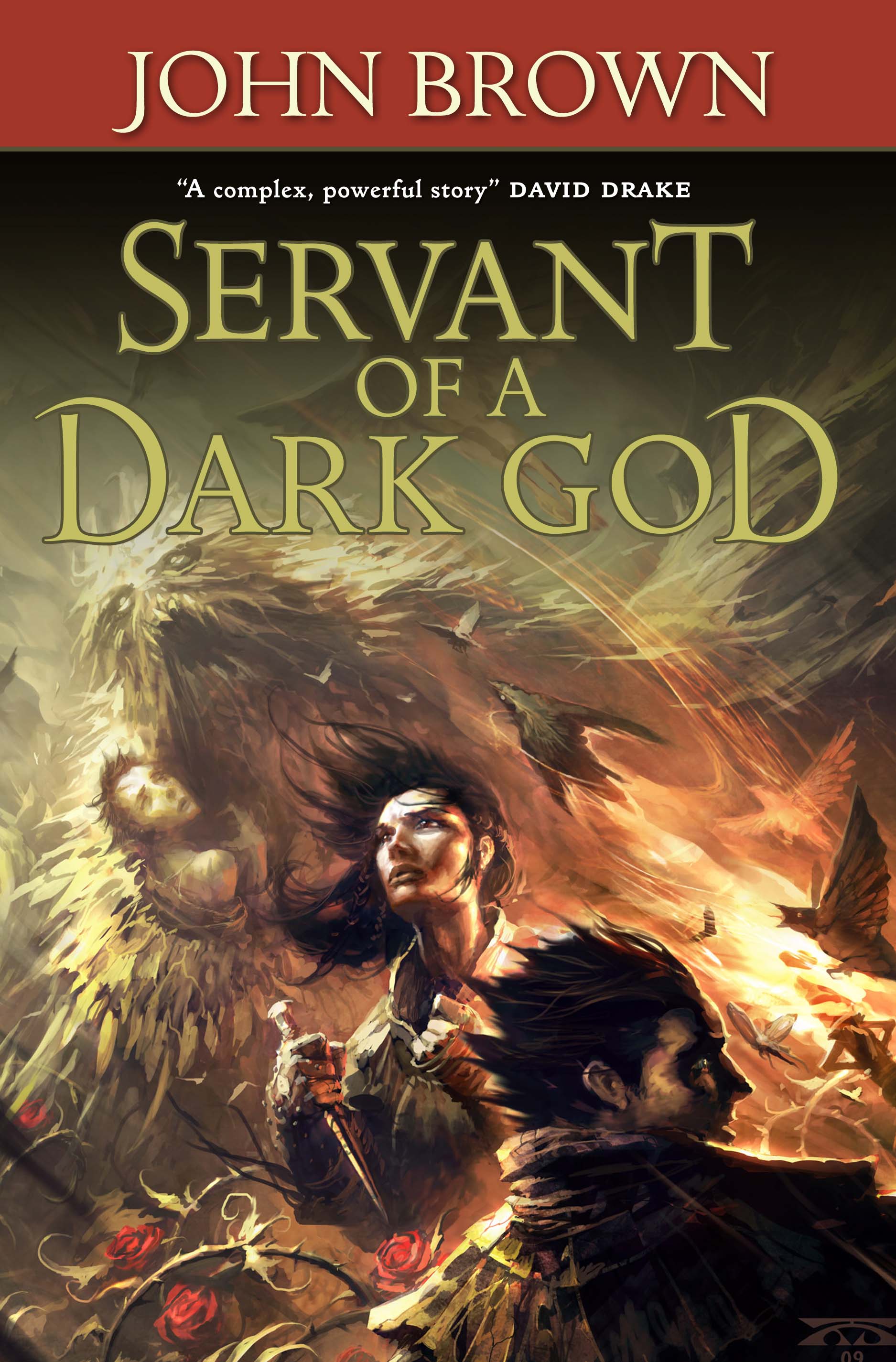
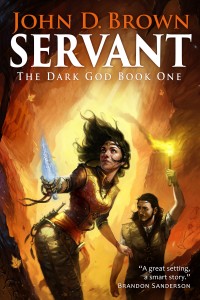
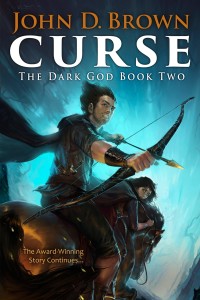
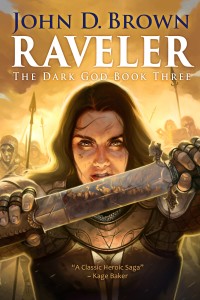
Cover art for Servant of a Dark God

servantdarkgod_comp

I just got this from my editor. My first reaction was what?–No bronze brassiers, naked thighs, or gravity defying breasts?! I’m ruined! Then I remembered I’d given up writing books about bimbos with swords (alas, I really had some terrific mosquito scenes). 

Folks, I think Swanland’s style is gorgeous, and I hope readers find this particular cover compelling. Click on it to see it full size. There are many things about this cover that I like, but one cool thing about the content of the illustration is that he worked in Sugar with the raveler. Those are, to date, my favorite weapons ever. In fact, Sugar herself looks, well, strong, beautiful, smart. Dang! Who wants to write about a bimbo when you’ve got a woman like that?

(Of course, a bimbo with a sword could make a very good Legally Blonde meets Lord of the Rings. Humm. I’m tempted…)


.

How readers select books

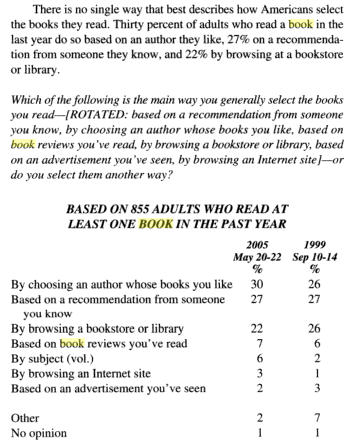
Gallup did a poll in 2005 asking readers how they selected the books they read. Here are the results.
gallup-poll-how-readers-select-books

What this says to me as an author is that the most important thing I can do to help my career is write the best dang story I can, seeing that almost 60% of what readers select is driven by the experience they or someone else had with the book.

The next most important factor has to do with helping my book stand out for browsers. This would include the cover, store placement, blurbs, flap text, and the opening pages. The only part of this an author can really focus on is the opening pages–again, writing the best dang story I can.

So it seems authors, especially debut authors, can’t do much to affect sales. But not being able to do much doesn’t mean they can’t do anything. Somewhere, somehow the first readers have to be enticed to give the book a go. Robert Sawyer talks about some of the methods to do that here.

EDIT: 4/8/2011

Kris Rusch adds more information that confirms the findings of the poll above in “The Business Rusch: Promotion”. READ HER WHOLE ARTICLE. Notice she does concede that publishers can get some notice for a book. So there ARE things that can be done to make the offer. But I agree with her advice that the best thing to do is get more product out the door. The studies she cites are:

2010 Survey of Book-buying Behavior by VERSO Advertising. The key conclusion on book-buying is that “Multiple factors impact consumer awareness of a particular title, but final purchase decision (online and offline) driven by author reputation, personal recommendations, and price.” If I were you, I’d read the whole presentation.

# Reason % Respondents
1 Author reputation 52%
2 Personal recommendation 49%
3 Price 45%
4 Book reviews 37%
5 Cover artwork/blurbs 22%
6 Advertising (including on-line) 14%

2007 Survey on what motivates readers to by a book by Spier Advertising, reported in Publishers Weekly

# Reason % of Respondents
1 Friend’s Recommendation 49%
2 Familiarity with Author 45%
3 Description on Jacket 32%
4 Reviews 22%
5 Advertisement 21%
6 Place on bestsellers list 17%
7 Reading group pick 16%
8 Cover design 12%

Ira Glass on Story and Surprise

I found this a fascinating talk. It’s Ira Glass who is the executive producer of the This American Life radio program from Chicago Public Radio. It’s a show that merges true stories (and some short fiction) of everyday people, surprise, humor, and meaning. There’s a structure to the types of stories that they produce. It’s not a new thing. It’s used all the time in a venue many of us are familiar with. Maybe you’ll identify that venue immediately. If not, it doesn’t matter. Watch and listen. This is a fascinating talk and it highlights just how much humor, curiosity, and insight depend on surprise.

Ira Glass at Gel 2007 from Gel Conference on Vimeo.

“Somewhere My Love” by Stephen Mark Rainey

The latest issue of Intergalactic Medicine Show just hit the net. Of course, I don’t have time to read. But how can I help myself when Mark Rainey’s “Somewhere My Love”  starts with this line: “She lived in our town’s one and only haunted house.”

What a hook!

And soon I found myself reading a wonderful story about a boy and a teacher, who happens to be a witch.

But the kind of witch Rainey writes about is not some gal with warts and a black hat. Nor is she some kind of Alice Hoffman Practical Magic type.

She’s a Rainey witch.

And this tale is about a boy caught in her class in school. I loved it. It evoked perfectly how some teachers affect us boys. I haven’t read any of the other stories in this issue yet. But I can still say the measley $2.50 subscription for issue 12 is worth it if only so you can read this one story. Besides, even if you don’t have time to read it, scroll down on the TOC and you’ll see you don’t have to–you can listen to Scott Card read the thing to you.

Story zing method: fiddling with knobs

One of the most basic way of coming up with story ideas is to take a familiar story or thing, list out what’s commonly associated with it, then start changing some of those elements.


For example, you list out all the normal things for vampires–the coffins, black, bats, sucking blood, etc.–then you begin to twist. What if the vampire wears, instead of black, some styling plaid? What if it isn’t a person but a rabbit (whoops, that one’s been done)? What if instead of gothic places like catherals you find him in a trailer park? What if instead of being dangerously suave, he’s a drunk?

Do you see? You can do this with anything.

In this interview, Matthew Sturges talks about how he did just that with the movie The Dirty Dozen and ended up with with Midwinter, a novel about prisoners given another chance. According to Sturges, “In the case of Midwinter, the beginning of the story was, ‘What is prison like in Faery?'”

Read the whole interview. I think you’ll find it enlightening.