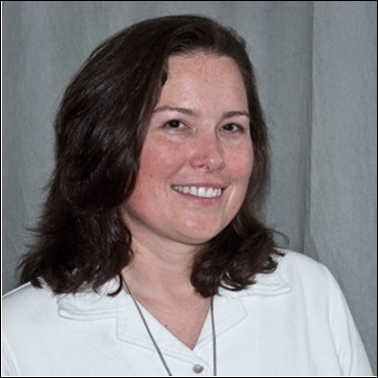
Laurel Amberdine was raised by cats in the suburbs of Chicago. She’s good at naps, begging for food, and turning ordinary objects into toys. Having escaped the terrible weather of Chicago, she is now delighted to call San Francisco home. For many years she read a novel every day, until she got married and realized that her new husband didn’t enjoy being completely ignored in favor of fictional people. She’s working on writing science fiction and young adult novels herself now, and hopes you get to read them soon.
I hope you get to read them soon as well. Until that glorious moment, Laurel has a fabulous tool to share with you writers. And I know it’s fab because I use it. If you look at the text tools section on the my Story Development Framework, you’ll see that The Scene Primer is one of the tools I’ve found useful in helping me bring enough of the scene to life in my mind that I can draft it. I’ve used various bare bones versions of this for a few years now, but then I was on a forum where Laurel explained her “Template.” And I immediately knew it would be a useful tool for me. Here’s what she had to say.
Laurel
 While working on a complicated science fiction novel a few years ago, I found myself stuck looking the blank page with each new scene. I had already outlined the story and knew generally what was supposed to happen, but the setting was alien and the characters were strange. There was so much specific detail to figure out simultaneously, I was paralyzed. I couldn’t start.
But I realized I did know some things, just not enough to write a new scene from the beginning. So I created a template, where I could fill in the bits I knew, and think about the bits I didn’t yet know in a simple, no-pressure way. After all, I wasn’t really writing yet, just making notes.
The template asks enough questions that if I fill it all in, I know exactly how to write the scene. But most of the time I don’t have to fill out the whole thing. I just work at it until I know what I want to write. It’s not a worksheet; it’s a tool to get started. Once I am ready to begin, I cut and paste the template and answers over to a notes section, and get writing. Most of the time I don’t even look back at it.
The template got me through that novel, and I continue to use it. I’ve refined the categories I use, and even discovered that I can improve my writing by adding template entries to cover aspects where I’d naturally slack off. Like, I often focus so tightly on plot that I skimp on showing a character’s emotions or unique behavors. Well, now I just put it in the template and make sure to figure that out too! Works great.
Here is the current version:
Summary:
Opening/transition:
Current Situation:
Theme song:
Setting, and significant details:
Time span/transitions:
Next big crisis or turning point:
Foreshadowing:
Background/worldbuilding details:
Desired effect in reader:
Events:
Sequence:
Emotions:
Character’s unique reactions:
Ending hook:
Other notes:
The colors encourage me to fill it out, because it’s pretty once it’s done. The “Summary” is what would go on a note card. In Scrivener, I just paste that onto the note card once I have it (or from the note card if it’s already filled out).
“Events” and “Sequence” almost always wind up being the same thing, but sometimes I don’t know what order things happen in, so I fill in “Events” first.
I listen to music while I write, and often a certain song seems to fit the scene. If I find one that does, I list it under “Theme Song.” This can be helpful when revising, because I can put the song on and get right back into the feel of the scene.
The hardest part for me is almost always the opening line.
John Sez
After reading Laurel’s post on that forum, I immediately tried applying the idea to the current novel I was drafting. I’d done sketches of the scene in my own way, but never with a list of questions to prime my thinking. That day I started a new chapter, but before I began to do my initial sketching, I took Laurel’s idea and tweaked it to my taste, coming up with my own “Template” that I call a “Scene Primer” or “Sketch Primer,” then let it direct my sketching. It worked like a charm. After answering five or six of the questions, I could see enough of the scene detail to begin to write. Here’s my current version. I’ve used it a number of times since that first day, and it’s always proved helpful.
When starting to write a new sequence or scene, start filling these out UNTIL it comes alive and you can write. (That is my note to self.)
WHERE ARE WE?
- Transport: general, dominant impression then specific
- Setting tags
- Sights, sounds, smells, textures, tastes? 3s2t
- Fun, cool, weird, odd, particular details
- Time, sun, weather, etc.
- Background or world building details?
- Fun & cool stuff?
- Surprises, different, twists?
WHO IS HERE?
- What’s the situation for each character?
- Goals
- Who is driving this scene?
- What is the concrete objective for him/her?
- What the concrete objective of other characters?
- Motives?
- Character transport: general, dominant impression then specific
- Thoughts?
- Tags?
- Fun & cool stuff?
- Surprises, different, twists?
WHAT STORY LINES WILL HAVE BEATS HERE?
- Progress or trouble?
- Points of conflict?
- Obstacles?
- Fun & cool stuff?
- Surprises, different, twists?
OTHER OBJECTIVES AND THOUGHTS?
A few things to note. First, like Laurel, my goal isn’t to fill in all the blanks. My goal is to bring the scene to life in my mind in enough detail that I can write. So I don’t fill out every blank. I use the tool to stimulate my imagination. It’s like using a match to light a candle on a birthday cake–you only use it until the candles are all burning, then you wave it out and set it aside because it has done its job. The goal isn’t to burn a match, but to light the candles.
Second, there’s no one right version of this. My version is different from Laurel’s because she and I have different work habits and think about stories in slightly different ways. For example, sometimes I listen to music when writing, but most of the time I don’t. Maybe some day I’ll start using theme songs. But I know a lot of other authors who DO find music helpful.
So who’s right?
No, stop asking that question. That’s the wrong question. Music is a tool. A tool can’t be write or wrong. It can only be helpful or not helpful. If you find theme songs helpful, then use them. If you don’t, then don’t.
Third, this is yet another example of the general creative principle of developing in iterations. Think of painters. They will usually start by sketching. The sketches are, by nature, rough and incomplete. They’ll sometimes create a number of sketches. Some of what they sketch might make it into the final painting. Some of it may not. At some point in time, they feel they have enough of the image (feel, composition, subject, etc.) in their minds to start applying paint to canvas. So they’ll rough in the subject on the canvas and then began to paint in the details.
It’s the same with writing. You start with a rough, incomplete idea. You sketch it out, inventing as you go. Maybe you sketch the whole thing or just parts. Then you go back and build up more detail, adding by degrees until you have enough character, setting, problem, and plot in your mind that you can form the story.
For example, I recently sat down to write chapter 22 of my current novel. Here’s what I had on the outline (which is simply one type of sketch) :
Recon
- Summarize wal-mart purchases etc.
- Recon their security, paint it all. It’s stiff security.
- Carmen or Pinto calls in—someone’s coming
- They’re dressed up as utility guys
- See her coming in the field. Not at the house. They wave her down or something
Can you see that scene well enough to write it?
No. Neither could I. I knew roughly what would happen, but I couldn’t write anything because I couldn’t see anything. Where was the house they were going to recon? What did it look like? What kind of security did they have? Was it in a neighborhood or out in the country? I only had the most general idea of character, setting, and plot. So I turned to my Scene Primer and started answering the questions.
800 words later, I’d sketched out the scene and had enough detail in my mind that it had come to life. I used a lot of what I developed in that sketch. But there was some, by the time I finished my draft, that I didn’t use. Why? The draft was another iteration of the story. And in that take, things changed and I didn’t need it. But it wasn’t wasted effort because it helped me get to the point where I could draft.
The Scene Primer is an excellent tool to help you build up the detail when you’re starting to draft. Give it a try to see if it’s useful to you.
BTW, Laurel and I aren’t the only ones using the primer. Author Maya Lassiter is also using it to good effect in her new writing experiment. See, Maya is a pantser who is “sick of the wretched groping around in the dark” that comes with a seat-of-the-pants writing method. She decided to try to see if she could learn to use some tools to help her invent some of her story before she begins to draft. You can read about her decision in “Can a Pantser Become a Plotter?” Then come back because Maya is going to share a post here in which she describes her new method and some very promising results.
For more in this series, see How to Get and Develop Story Ideas