Gandhi & Waiting for Superman

Enthralling History

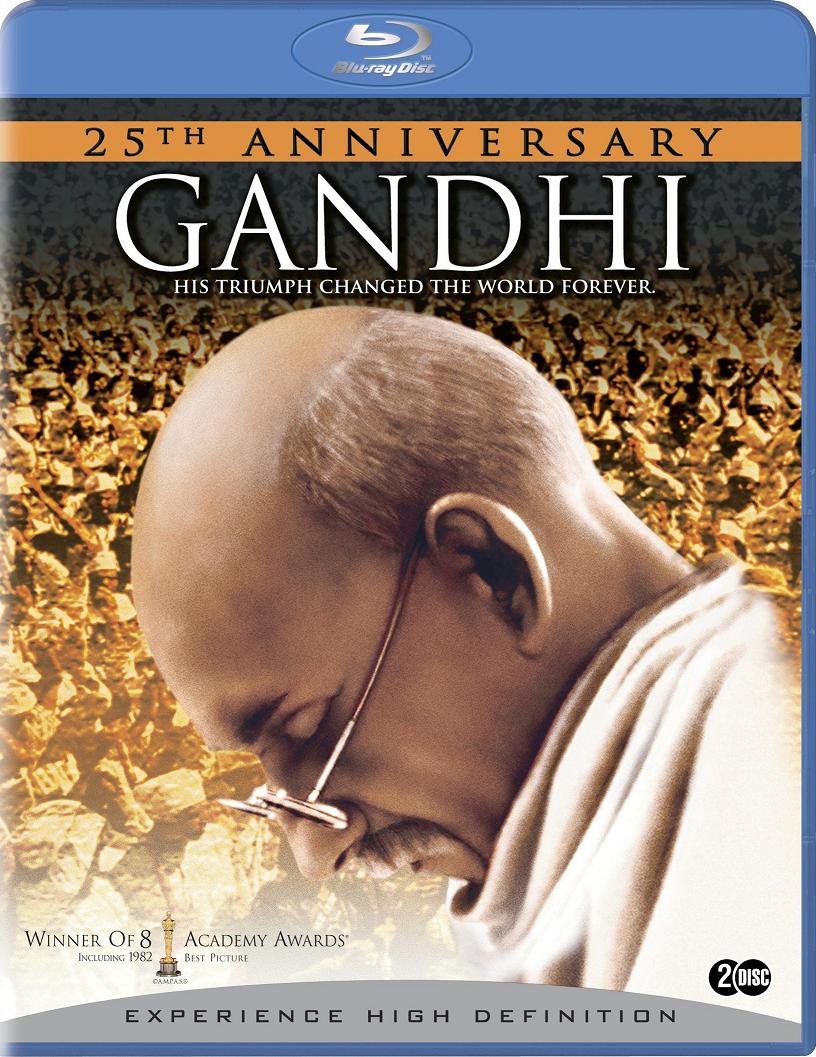
The miracle of Netflix means that no movie or television show becomes unavailable. And there are so many produced over the last fifty years that are so very good. I recently re-watched the 1982 Gandhi with my family and have to say it is one of those fabulous movies that’s amazing every time I watch it. Not once did the production feel dated. And even though I’d already seen it, I found myself enthralled with the events and the character played so well by Ben Kingsley. No wonder it won eight Academy Awards.

The movie portrays the last 50 years of Mahatma Gandhi’s life. It starts in 1893, when Gandhi, educated in the UK, is thrown off a South African train for being an Indian and traveling in a first class compartment. Gandhi decides to start a non-violent protest campaign for the rights of all Indians in South Africa. Quite an undertaking in those years. He’s arrested and finds himself in a number of dicey moments, but ultimately brings change.

Gandhi is then invited back to India, where he is considered a national hero. Leaders there urge him to take up the fight for India’s independence from the British Empire. Gandhi agrees and mounts a non-violent campaign of unprecedented scale. Nothing of this magnitude has ever happened in the recorded history of the world. Which is why it’s a rough road all the way to the end.

There’s suspense and humor and heartbreak in this movie. But it goes far beyond entertainment. This movie will move you. It has power to change. This movie is what history should be. If you haven’t seen Gandhi, or haven’t seen it in a while, let me recommend you get it this week and sit down with friends or family to enjoy a wonderful experience.

Education and Teachers Unions
I find it interesting that teachers in Utah, one of the most conservative states in the union, send almost three million dollars each year to the National Education Association. That’s the $165 in NEA dues for each of the roughly 18,000 union members in Utah. This is interesting because the NEA, the largest labor union in the United States, is one of the biggest supporters of the Democratic party.

For example, the NEA spends roughly 85-90% of its direct candidate donations on Democrats. The NEA is quick to point out that those direct candidate donations do not come out of the three million Utah teachers send to them, but from additional donations to one of their political action committees. It’s illegal, in fact, to contribute directly to candidates with money received from union dues. However, there are a lot of other ways to support candidates and causes in addition to direct donations. 

Mike Antonucci, a teacher’s union observer, explains just how that works in his article “How Much Does the NEA Spend on Politics”. The upshot is that the NEA can spend as much as they want on politics with their dues. And the lion’s share of that spending goes toward liberal causes. ACORN, for example, has been a beneficiary of NEA grants.

Now, I don’t see anything wrong with that. People should be able to donate to whatever cause they think is important. The NEA has just as much right to make their voice heard as anyone else. I just think it’s interesting that so many conservatives have been led to donate their cash to these causes. And it’s not just in Utah. About 60% of NEA members identify themselves as conservative or independent. And yet they donate to these liberal causes via the union. What’s even more ironic is that most of them probably do not personally donate anything close to that to conservative candidates and causes. It’s not like teachers have tons of extra cash.

It’s a neat trick to get conservatives to donate so much money to liberals. And perhaps some teachers feel it’s the price they have to pay for the services they want from the union. I would think it would be better to start another union, but that’s me. However, this is not the only kink teachers unions have introduced into the education system.

I’m not going to argue that teachers unions are evil. These unions arose in a time when female teachers were heavily discriminated against. They do some good things. But mixed in with the good is, well, you’ll have decide for yourself if it smells.

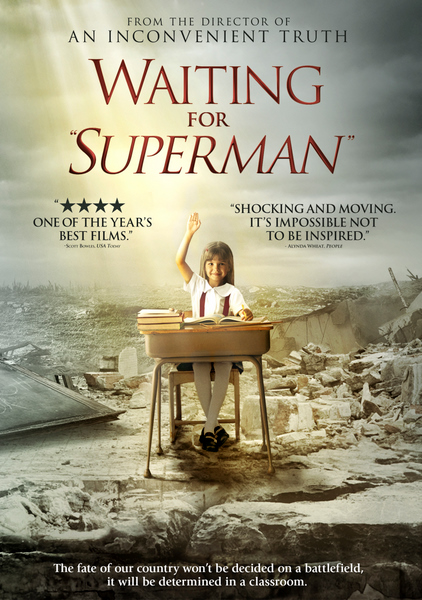
A great place to begin is with the documentary Waiting for Superman. You should know this movie came out of the gate with a huge strike against it in my mind–it’s produced by Davis Guggenheim, the same guy who did An Inconvenient Truth. Good grief, that’s all I wanted was another two hours of Chicken Little running around saying “sky is falling, the sky is falling!”

But I didn’t find any of that in the film. For example, the film doesn’t say all American schools are awful. It doesn’t say teachers are terrible. Contrary to what the movie’s critics claim, including the NEA and its many state and local affiliates, the film doesn’t suggest charter schools or standardized testing are the silver bullet answers to our issues. I simply didn’t encounter the sensational propaganda others claimed would be there.

No. What the film does is examine some of the issues in our current system, which put so many children at a disadvantage, and the role the teacher unions play. It does not, as some critics claim, go on to suggest any solutions. It presents a problem, experienced by real parents and children right now, then poses a question: what can be done?

I found it eye-opening and thought-provoking. I think it’s a must-see. If you have children or grandchildren in school, if you’re one of our many fine teachers or school administrators, you’ll want to watch this movie and then ask yourself that same question. What can be done? What works? What’s best for the children? And does the current way our unions operate work in any way against those interests? For those who elect not to go into immediate union-attack or union-defense mode, I think this film will introduce some valuable points to the discussion about education.
How to keep short stories short by Eric James Stone

Eric James Stone is a successful short story writer. You can read my review of his excellent “Like Diamond Tears From Emerald Eyes” here. Now, in Tips on Keeping Short Stories from Becoming Long Stories he shares excellent insights on how to keep those short stories from growing out of control. As someone whose stories always tend to go long, let me say that I know from experience that these tips work.

Interview with Edmund Schubert, editor of IGMS

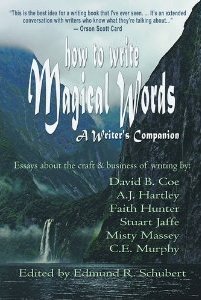
I recently had the wonderful opportunity to interview Edmund Schubert, the editor for Orson Scott Card’s Intergalactic Medicine Show, about How To Write Magical Works: A Writer’s Companiona collection of essays about the craft and the business of writing that he edited. Ed’s someone to listen to. But so are the authors whose essays fill the book: Faith Hunter, David Coe, C.E. Murphy, Misty Massey, A.J. Hartley, and Stuart Jaffe. Here’s what he had to say about this book.

John: Edmund, you recently edited How To Write Magical Words: A Writer’s Companion. It’s chock full of advice from some pretty successful fiction authors, and an editor who, having purchased one of my stories, has shown exceptional taste (grin). But there are a lot of how-to’s by successful authors out there. What makes this book different, do you think? What’s the special value this book brings to the table?

Edmund: I think the biggest thing that differentiates this book from others on the subject is its diversity of opinions. Most how-to books are written by one person, giving on perspective, but the truth is that there are many paths to success in this business. The Magical Words book was intentionally designed to replicate the give-and-take that exists on the MW blog. Sometime the MW writers agree, sometimes they don’t. The other thing that makes this book different is that it also includes some of the follow-up questions asked by readers of the blog, and the accompanying reply. That makes this book feel/read more like a writer’s conference than your basic info-dump book.

John: I think the concept is great. And the contributors have quite a bit of experience. I know you can’t comment on every essay in the collection, but are there one or two that stood out to you while editing?

Edmund: There were a few that stood out to me. One by Catie and one by David, both on the subject of money/advances. Those stood out to me because of how very blunt and honest they were about finances, and it’s information I think more people need to be aware of.

The other one that stood out for me did so for personal reason. Catie’s essay about Visualizing The Story made me feel so much better about myself as a writer and my chances of success, because for years I’ve been hearing all these other writers at conventions talk about how their stories are like movies in their heads and all they have to do is record the action and the dialogue, and I used to hear that really worry because at best I might see a slide show of of bits and pieces of the action, but I’m totally making the rest up. Hearing Catie say that she didn’t/couldn’t visualize the story that way either gave me hope.

John: I’m sure aspiring authors are going to be very interested in what Catie and David say about money. It’s also interesting that sometimes we writers hear other successful writers talk about how the invention process works for them, compare our process with theirs, and assume we’re lacking. In reality, the way we approach it might be just as effective. That’s one of the things I like about this book—it has multiple contributors. Let me ask one more question. You see a lot of stories as editor of Intergalactic Medicine Show. What are some of the topics addressed in this book that, based on the biggest issues you encounter in submissions, authors would be wise to carefully consider?

Edmund: Magical Words as a group have two mantras: the first is that there is no one right way to do this crazy thing called writing, and the second is the exception that proves the rule: the one and only true answer to everything is BIC. Butt In Chair. You put your butt in the chair and you write. You figure it out as you go along. And the more you write, the more the other advice you hear will make sense. You want to be a writer? Write. The rest is details.

***

John sez, amen to that. And amen to this book. I really enjoyed the format and the insights shared. I never tire talking about craft and business with other writers. With over 100 essays and 313 pages, this book has lots to share. If you want to hear what some very smart and a few very published authors have to say about writing, you’ll want to pick up your own copy.

Presentation this Saturday in Bountiful, UT

League of Utah Writers Northern Area Spring Conference

I’ll be presenting this Saturday at this conference that will be held at the Bountiful Art Center, 745 S. Main Street, Bountiful, UT 84010. I grew up in Bountiful, and so this is a special treat for me to go back.

COST: Free for League of Utah Writers Members.   $25 for non-members. More info at http://www.luwriters.org/.

  • 8:30     Registration-
  • 9:00     Jennifer Nielsen- Psychology of Characterization- understanding your characters psychologically
  • 10:00   John Brown-   Secrets of Story Structure
  • 11:00   John Brown-   How to Get and Develop Killer Ideas
  • 12:00   Lunch- El Matador
  • 1:00     Margot Hovley- The Nuts and Bolts of Writing
  • 2:00     Marion Jensen- Using Social Media in Every Step of the Writing Process

The MT Sandwich, To A Dying Girl, Bloody Jack

you-MOM-ee

I used to move along the salad bars, looking at the mushrooms, and think: they’re vegetable Styrofoam! Who ever thought eating mushrooms was a good idea? My answer, of course, was it must have been some starving dude lost in the woods who found they were easier to chew on than bark.

Such were the days of my ignorance. Because while raw mushrooms are fairly bland, sautéed or grilled mushrooms are worthy of a passionate, say it slowly, “oh my freaking heck” (hey, I live in Utah).

I now love mushrooms. And I’ve found they very easily replace tasty meats. Probably because they have loads of the fifth basic taste—umami (you-MOM-ee)—just as meats do. I know some of you are thinking, “hold on, didn’t I learn that the tongue can only taste four things?” That’s indeed what you learned. But you were wrong. In 1985 scientists discovered we have a fifth taste, popularly referred to as savoriness, that’s been sitting on the tongue with the sweet, sour, bitter, and salty all along. In fact, humans get their first experience with it in momma’s milk.

But cooked mushrooms not only taste good, they are also actually good for you. They help safeguard against cancer, boost the immune system, supply hard to get nutrients, and can help you cut calories and saturated fats by, as I said before, moving some of the meat off the plate.

With all this goodness it’s hard not to see new opportunities for consumption. And indeed I found one. I love a good BLT (bacon-lettuce-tomato sandwich, for any troglodytes who read this column), especially when the bacon is crispy and the tomatoes have some sass or a little feta cheese to accompany them. But one day while partaking of some of my fungus friends, my mind was expanded, and I thought: why not replace the bacon with some sautéed mushrooms? Why not, indeed?

I replaced. I partook. And rejoiced. Then I ate my MT (mushroom-tomato) for lunch three more days in a row (I also found if you must have crispiness, two Sun Chips added to the top of the sandwich do the trick nicely).

Do not disdain the fungus. Cook the little guys up and devour them with some well placed oohs and aahs on an open-faced MT.

“To A Dying Girl”

Clinton F. Larson was a poet who taught at BYU. I remember him coming in to read during one of my classes, but he soon retired, and I was never able to take any of his classes. How sad I am that I could not learn from him because he had much to teach, as evidenced by some of his poems. Here’s one of my favorites.

To a Dying Girl

How quickly must she go?

She calls dark swans from mirrors everywhere:

From halls and porticos, from pools of air.

How quickly must she know?

They wander through the fathoms of her eye,

Waning southerly until their cry

Is gone where she must go.

How quickly does the cloudfire streak the sky,

Tremble on the peaks, then cool and die?

She moves like evening into night,

Forgetful as swans forget their flight

Or spring the fragile snow,

So quickly she must go.

 -Clinton F. Larson

The first reading fills the mind with vivid images and a sense of beauty and sorrow. Subsequent readings deepen the feeling. Especially when we reflect a bit on the three images he evokes of passing from life into death. First, the black swans arise to fly south for winter: graceful, beautiful, and dark as death. They’re the girl’s own harbingers, maybe her guides, coming from mirrors, reflecting in the depths of her eye. The second image presents fleeting grandeur and beauty with the stunning cloudfire that often awes us as the sun sets. Isn’t death the time we most value life? The time when, like cloudfire, it burns in glory and beauty and then is gone? The last image presents another image of passing, but not one of loss. It’s not a transition to blackness or cold or bitter loneliness, but of winter passing to spring. Of a fecund beginning.

Of course, there are other things the lines and images evoke. This isn’t a poem to be wrapped up in a tidy bow. Poetry is meant to be felt, not dissected like a dead animal. In the end, that’s what Larson delivers: sorrow, loss, and hope all wraped in the music of his rhythm and words. Beautiful.

A Great Read

Sometimes a book’s beginning is so good you can’t not purchase it. Here’s one that forced my hand.

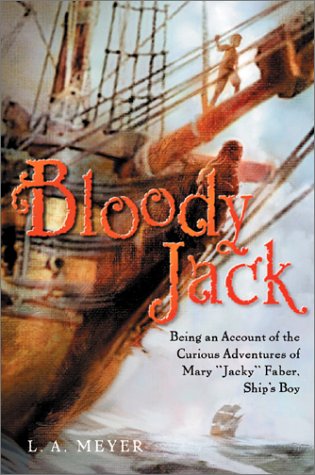
“My name is Jacky Faber and in London I was born, but, no, I wasn’t born with that name. Well, the faber part, yes, the Jacky part, no, but they call me Jacky now and it’s fine with me. They also call me Jack-0 and Jock and the Jackeroe, too, and, aye, it’s true I’ve been called Bloody Jack a few times, but that wasn’t all my fault. Mostly, though, they just call me Jacky.

“That wasn’t my name, though, back on That Dark Day when my poor dad died of the pestilence and the men dragged him out of our rooms and down the stairs, his poor head hanging between his shoulders and his poor feet bouncin’ on the stairs, and me all sobbin’ and blubberin’ and mum no help, she bein’ sick, too, and my little sister, as well.

“Back then my name was Mary.”

The book is a historical novel by L. A. Meyer called Bloody Jack. It tells the tale of Mary Faber, who is orphaned in London in the early 19th century and survives only by joining a street gang and then, posing as a boy, the crew of a ship. On board, she has to hide who she is and avoid the many perils of ship life.

The book is delightful, transporting the reader to the time and place with excellent details and a style that evokes the speech and times. There’s humor, danger, adventure, and an interesting cast of characters. I recommend it highly. If you end up loving it as I do, you’ll then be happy to know this is only Jack’s first adventure.