Similar Posts

  • |

    Slush I Read by Jim C. Hines

    Laughs are lovely. I just came across this wonderful parody by novelist Jim C. Hines which will give you a few for free. Enjoy!

    Slush I Read
    by Jim C. Hines

    (Apologies to Seuss)

    I read slush.
    Slush I read.

    That slush I read.
    That slush I read!
    I do not like that slush I read.

    Do you like fanfic with vamps?

    I do not like them Mary Sue.
    Why do these vamps all worship you?

    Here’s a tale from D & D!

    I do not want your D & D.
    I do not like your elf PC.
    I can not stand your purple prose.
    I want to punch you in the nose!

    Would you like a hot sex scene?
    I wrote it for my online ‘zine!

    Go to Hines’ site and read the rest right now

    Share
  • The Novel Writers Academy – Do you want it?

    Are you tired of being educated ABOUT writing?

    Do you just want someone who knows what they’re doing help you do it?  

    Specifically, do you want to develop a killer story idea, outline it, and write the first 3 chapters with the guidance of a pro?

    If so, then here’s your chance to vote to have me create a course that will do just that. 

    Read on for more information…

    Educating versus Training

    When you’re educated about something, you can talk about concepts and principles. You can recall facts. But most people I know don’t want to be educated about writing. They want more than another class, podcast, video, or book about the topic.

    They want to be trained.

    They want to develop a killer idea, sketch it out, and actually begin writing. Not just watch or read about it. But they want some help.

    I’ve been asked many times if I would teach an online class or workshop, but I’ve put it off for years because I know that I don’t want to offer just another set of videos about writing.

    Of course, I will offer just videos. That’s all some people want.

    But I know there are others out there who want to go beyond that. They want on-the-job training. They want to develop a fun story, but don’t know the process well enough, and want someone who knows it to guide them.

    They want training.

    But training takes time. More than the time it takes to create videos or posts.

    That’s what I do, by the way. When I’m not writing novels, I work in corporate America training people to actually do things. Over the last 20 years I’ve trained people to do everything from give compelling presentations and speak Dutch to plan and schedule manufacturing plants and close their accounting books at the end of a financial period.

    And so I know there’s a difference between being educated about something and being trained.

    Just think about it. Do you want a surgeon who has been educated about surgery or one that’s been trained to perform surgery at a mastery level? Do you want a plumber who has been educated about plumbing, or one that’s been trained to plumb? Do you want your airplane pilot to be educated about flying or trained to fly, in all sorts of weather?

    Going to school and being educated is cool, awesome, and necessary. But we all know we have to go beyond that. We need to be able to actually DO things. Training requires you know concepts and principles, but it also requires you take the next step and actually do something.

    Do You Want Training?

    I’m willing to provide this on-the-job training, but before I develop and conduct this course, I need to know enough people are interested in it for it to be worth my time (it would probably be more sensible for me to focus exclusively on getting the books I need to write out the door, but I love to teach too, and had to figure out a way to do it).

    So here’s the test. If you want to take the class described below, sign up to express your interest.

    This does not obligate you to anything. It simply says that you are almost 100% sure you want to take the class, barring earthquakes, plagues of demons, or crazy in-laws.

    When enough people signup, I know it will be worth my time, and the love of teaching part of me will be able to convince the sensible part of me to do it.

    And then I’ll do a Kickstarter to make it official. Or I may just develop and release. We shall see.

    So, here’s more on the course.

    Your Novel’s Core: Develop a Killer Idea, Outline it, and Write the First 3 Chapters

    The first order of business is to determine if this course is right for you.

    Do you want to write a novel, but feel like you have no idea what you’re doing?

    Do you often get ideas for a character or setting or snippets of scenes and dialogue, but find they just never go anywhere?

    Are you tired of learning about writing, and just want someone who knows what they’re doing help you to do it?

    If so, this class is for you.

    This is not a theory class. Oh, we’ll talk about theory. You’re going to learn a ton of theory. But this isn’t about theory because I don’t care about theory. And neither, I suspect, do you. I care about developing an awesome story experience and sharing it with readers who enjoy it as much as I do.

    So I’m not interested in talking about it. I’m interested in doing it. And having fun.

    Which means that in this course you’re going to:

    • Develop at least 10 story ideas that beg you to write them
    • Select one of those ideas and create an outline
    • Write the first three chapters of that novel

    In order to do that, you will need to learn the secrets to:

    • A story idea that works and how to come up with one
    • Interesting characters and how to develop one
    • Transporting your reader to the story so they feel like they are witnessing the whole thing
    • Keeping readers on the edge of their seats
    • What story and plot are really about
    • Writers block and why it’s a gift (no, really, it is)
    • Knowing what comes next
    • Getting feedback from beta readers that’s actually helpful (and if you don’t know this, much of what you’ll get will be worthless)

    These secrets and many more. But remember: this isn’t a course about secrets. It’s a course about you actually improving your ability to generate story ideas, develop them into ideas worthy of a novel, and then write them.

    This means you need to not only produce, but also have someone who has the ability look at your work and guide you along. It means getting feedback.

    So I will be there helping you every step of the way. And if you’re writing in a genre I don’t know as well, I will loop in working authors who are successful in that genre to add their two cents.

    Fumbling in the Dark

    I started my novel writing career when I received a three-book, $50,000 deal from a major publisher. I am now an indie author with books that sell thousands of copies each year to readers all over the world. I’ve had publishers purchase and produce my books in audio. I’ve sold story rights to foreign publishers. I love developing and telling stories. And I love teaching others how to do the same.

    But when I started, years before that novel contract, I had no idea what I was doing. I didn’t know where to start stories, how to develop them, or even where they were supposed to end. And I didn’t have anyone to really help me. In fact, I remember asking one of my creative writing professors after class how you knew where to end your story. He looked at me, shrugged, and said, “I don’t know. I just end them.”

    What the heck?

    It was all a vast mystery. I loved stories, but I was clueless about what they were, how they worked, and how someone went about developing and writing one. I had a lot of fun, enjoyed my writing teachers (they were all great people), but I was never able to write something that hung together and felt like something you’d see in a movie or read in a book.

    But that didn’t discourage me. I kept at it. And over the years, I made a number of breakthroughs.

    What I discovered was that there are three things you must learn to write killer stories. You must learn:

    • What stories do to the reader
    • How they do that
    • And effective techniques for both developing and telling the story

    In this class, you’re going to learn those three things and the key principles for each, saving yourself all the frustration and discouragement that comes from trying to discover these insights by stumbling around on your own in the dark. With this class, you can cut years off the time it takes to learn how to write.

    When you know these three things, you will be able to write stories on purpose, instead of by accident. You will have power over your craft.

    You will see that instead of trying to remember a list of hundreds of “writing rules” or use “writing formulas,” many of which are nonsense, you’ll write by focusing on the simple and fundamental heart of what storytelling is all about.

    Course Outline and Price

    Below is a more detailed view of the course. My lessons are called quests because I’m expecting you to actually do something, not just watch.

    Quest 1: Discover what stories do, then create your personal story profile

    • The three things you must learn to write killer stories
    • Your personal story type
    • The three main reader responses you must generate
    • The big secret: trigger and delay
    • Genre
    • Sensitizing yourself

    Quest 2: Discover what you need at the core of your story, then perform a craft analysis of 2 of your favorite novels and report your findings

    • The story engine (without this, your story goes nowhere)
    • What makes characters interesting
    • The vital THOMR
    • The desire to gain or retain something specific
    • Formidable obstacles
    • Uncertainty
    • Surprise
    • The same but different
    • The 3 grunts

    Quest 3: Discover the secret to developing ideas, then develop 10 fully-formed story ideas that beg to be written

    • The 4 main creative principles you must follow
    • 5 super productive techniques for generating ideas
    • Creating a schedule and goals
    • Using the story engine job aid
    • Using the setting job aid
    • Using the magic job aid
    • Using the world building job aid
    • Using the character job aid
    • Using the formidable obstacle job aid

    Quest 4: Discover how to figure out what comes next, then develop your story sketch (outline)

    • The number of scenes for your story
    • The story cycle
    • Story turns
    • Trigger and delay
    • Structure, and why structure models so often fail to help

    Quest 5: Discover how to transport your reader to the story, then write your first three chapters

    • Techniques for telling your story so it’s vivid and clear
    • Narrative summary versus narrative detail and when to use  each
    • Effective description
    • Writing point of view, hot and cold
    • Orienting the reader
    • Transitions

    Quest 6: Discover the three main effects you should read for, then deliver a reader report for the first chapters of seven different novels

    • The 3 grunts (the secret that allows you to learn from other novels)
    • Reader report rules
    • How to get feedback for the rest of your project

    Quest 7: Discover your next steps, then create a plan

    • Methods to write quickly
    • What you need to do to publish independently
    • What you need to do to publish with a traditional publisher

    As you can see, in this course you aren’t going to just hear someone go on about theory. You’re going to define your type of story, surprise yourself by developing at least 10 solid story ideas that beg to be written (by you). Then you’ll select one of those ideas, sketch an outline, and write the first three chapters, all under my guidance, using the same practical, simple methods I use.

    Most important of all, you’ll actually stop thinking about writing and be well on your way to finishing your novel with a clear path to the end.

    Instead of dreaming about someday, you’ll enjoy the excitement of writing a novel right now.

    The cost of the course depends on what you want:

    • Access to all of the videos: $199
    • Access to all of the videos and two rounds of coaching on your story idea, outline, and first three chapters $399

    Not for everyone

    Having said that, you need to know that this class is not for everyone. If you are not willing to actually make time to do the work I ask, you will find no benefit.

    How much time will you need to spend?

    With all of the videos, reading, and development you’ll do, you should expect to take 30-40 hours. You can move through it at your own pace, but I strongly suggest you spend at least five hours per week. Any less than that, and you’re going to find it very difficult to keep your creativity hot enough to make dinner.

    Also, if possible, I recommend you take the course with a friend. You will progress so much more quickly when you discuss the lessons and insights and bounce your ideas off of each other.

    If you want to just watch the videos, that’s perfectly fine. If you want to actually develop a story and learn on the job, then you have to make time to do this awesome thing, just as you would if you wanted to learn how to dance, quilt, race cars, rappel, or paraglide.

    So if you aren’t in a position to make the time, I understand. Please don’t sign up.

    But if you’re interested, then click below to raise your hand as someone who is definitely interested. Once I see there are enough people interested, you’ll get the class.

    Yes, I’m definitely interested!

    If you’re interested, let me know by filling out the form below.

    This does not obligate you to anything. It simply says that you are almost 100% sure you want to take the class, barring earthquakes, plagues of demons, or crazy in-laws.

    * indicates required


    Share
  • Indie Thoughts: Resources for Indie Writers

    About this time last year I got the last of my rights back to the Dark God properties. I thought it would take twenty or thirty hours to figure out the whole indie publishing thing. And then the awesome John Brown story machine would kick in gear.

    Reality promptly woke me up and slapped me around a bit. This last year has been quite the learning curve. Here’s what I’ve had to pick up:

    • Designing book covers
    • Finding artists
    • Working with artists in a way that actually works
    • Copy editing
    • Formatting book interiors
    • Fonts, fonts, fonts
    • Using ISBNs
    • Using InDesign to create files for both POD books and epubs
    • eBook structure
    • Editing ebooks (okay, just get Calibre ebook editor right now. We luvs it, Precious)
    • Validating ebooks (http://validator.idpf.org/)
    • Converting epubs to Amazon’s mobi format
    • Uploading ebooks to the various ebook retailers: Amazon, NookPress, Kobo, iTunes (I upload via Draft2Digital), Smashwords
    • The pros and cons of CreateSpace vs Lightning Source
    • Using CreateSpace to publish POD books
    • Registering books with the US Copyright Office
    • Writing better book descriptions
    • Using keywords and categories on Amazon
    • Setting prices in the indie market
    • Creating an email list (I love MailChimp. They make me happy every time I go to their site)
    • Advertising and promoting as an indie

    One of the things I love about this business is that there is always more to learn. But I’m happy to be over that curve. For folks just starting out, let me share some of the resources I found super helpful with a number of the things listed above.

    Posts by a mega indie-seller Russell Blake to give you the right perspective about indie publishing. I’ve read a lot of posts the last few years about being an indie author. These are the best I’ve come across.

    Online courses to help you on the publishing side.

    • Designing Book Covers and Designing Book Interiors with Dean Wesley Smith (look for “Online Workshops”). I don’t agree with Dean on all his ideas about pricing and promotion, but these two courses helped a great deal.
    • InDesign CS6 to EPUB, Kindle, and iPad with Anne-Marie Concepción at Lynda.com. Awesome.

    The most practical and clear-headed books about indie promotion I’ve read. For other clear-headed advice, see the Russell Blake posts above.

    The most helpful book on copyright.

    The most helpful book on copy editing as well as info to put into front and back matter.

    Helpful threads on Kindle boards

    Other great resources

    Good luck!

    Share
  • Is Amazon’s game totalitarianism?

    nazi_flagAmazatzi?

    Franklin Foer and Scott Turow recently made comments which suggest Amazon is in the process of ushering in a totalitarian book economy.

    Is Bezos, as Hitler was in the 1930s, biding his time, playing a long game, one that will lull the masses into a false sense of bookish security? Are we appeasing him, letting him take over the continent bit by bit? Is the blitzkrieg less than a decade away?

    If you listened to a recent Intelligence2 debate, you would have heard Foer-Turow claim that, yes, that’s exactly where we are headed. On the other side of the debate were Joe Konrath and Matthew Yglesais, arguing that Amazon is the reader’s friend.

    Konrath and Yglesais made some good points. But they left the central Foer-Turow argument standing like a citadel. It was left standing because much of what they had to say, as good as it was, frittered around the edges or went off into beer land.

    But the Foer-Turow argument is not a citadel. It’s a house of crackers.

    Here’s why: publishers, authors, readers, and entrepreneurs all have brains. And somehow, in their threat assessment, Foer-Turow forgot that.

    How could they forget something so fundamental?

    Well, their argument went like this.

    1. Amazon right now provides an amazing service that’s far and above anything any other bookseller currently provides. They have made more books more accessible to more readers than anyone else ever in history. Readers, of course, love this. But this is a bad thing.
    2. It’s bad because Amazon is becoming a monopoly–it already has 41% of all new book and 67% of all e-book sales, and in many divisions of those markets it has even more.
    3. If Amazon were an enlightened ruler like Aslan, okay. But Amazon is a business, and as a business it only cares about its profits. And the way to make profits is buy low and sell high. So when Amazon finishes consolidating its hold on the market, it will force publishers and authors to take less of the pie.
    4. In fact, Foer-Turow claim Amazon wants to not just reduce the share of the pie publishers get, it wants to kill off the publishers and take their share of the book pie completely. In addition to being very poor manners, this is bad for three other reasons.
    5. First, authors of non-fiction books that take a long time to research will never be able to get the money they need to do that research. Publishers are the only ones who can give them that money, which they do in the form of an advance.
    6. Second, few authors of fiction will be able to afford good editing, marketing, and book design, and so the many voices that could have been heard will be stifled, or never rise out of the crap to their true potential.
    7. Third, and this is the nefarious Nazi part, if Amazon is the only place you see books, they can control which books you see, which means they will exert enormous control over our culture because they will be able to suppress some books, and therefore the ideas in those books, and promote others. Foer-Turow claim Amazon has already done this.
    8. Finally, because it’s a business and has a goal of profit, when Amazon covers the land, it will probably eventually charge readers more. In fact, it may charge them a lot more. It can’t avoid it; it’s a business.

    So Amazon is taking over more and more book territory. When it’s taken over enough territory to be unassailable, it will then proceed to ruin our culture because its model of book selling will suppress quality non-fiction and fiction alike. And then it will gouge readers.

    Sounds depressing.

    Sounds like Orwell’s 1984 or global warming.

    The only problem is that there is a big honking flaw in all of that.

    Like BIG and HONKING.

    And I’m not talking about the issues like the idea that publisher advances are the only way non-fiction writers can be funded, or that publishers are the only way the vast majority of fiction writers can obtain quality book covers, marketing, and editing. Or that one internet site has the power to put a choke hold on ideas.

    No, it’s about something else.

    You need to know I’m not an Amazon groupie. Nor am I a hater of publishers. I am a businessman. I’m looking for good partners. And I recently wrote a post pointing out that it’s delusional for authors to think Amazon is their BFF with pinky rings. They are just, at the moment, a great indie partner. But their interests and mine are not perfectly aligned. Our love is definitely not written in the stars.

    So I’m not here to stand up for Amazon. I’m here to say that the scenario Foer-Turow paint is fantasy.

    Why?

    Because they’ve set up a chess board and assumed that Amazon is the only player.

    Monopoly

    How does a monopoly stay a monopoly?

    The government either legislates it. Or the company maintains their position by force. Or they own something that nobody else can get. Or the barriers to entering that market are so high nobody can get in to play. In all these scenarios, if people want the goods, they are forced to interact with the monopolies.

    But has the government given Amazon a legal monopoly?

    Um, nope. No charters here to be the only fur trappers in the West.

    Does Amazon have an army of thugs who are going to beat people up and make them join Amazon Prime?

    No. Well, maybe that’s what the drones are for, but they haven’t rolled them out yet.

    Do they own something nobody else can get, like a piece of land? Are they sitting on the world’s largest reserves of cheap book oil?

    Nope. They’ve got a great website and excellent logistics. But websites really aren’t that hard. And if we’re talking ebooks, you don’t need logistics.

    What about the barriers to entry?

    The big advantage Amazon has is that they usually have the lowest book prices around, the biggest selection (you can find almost any book you want there in any format it’s available in), and are incredibly convenient, providing samples, reviews, recommendations, and easy checkout. And they have the crowds.

    It’s hard to get crowds. It’s hard to get all that content. It’s hard to beat their prices. Those are some dang good barriers that keep new guys out.

    And Foer-Turow figured that’s all set. In stone.

    Human Beings

    But what happens if publishers have brains and are actually headed up by, like, real humans who aren’t just going to roll over and play dead? What would such folks do should Amazon keep killing off more and more of them and stealing their pie?

    Amazon doesn’t own the rights to their books. As soon as any contract ends, publishers could simply say, we’re done. Our books will no longer appear in your store. If you’re faced with extinction or something else, what do humans normally do?

    Amazon’s advantage is being the everything store. You can find every book imaginable there. So what happens when shoppers go there and can’t find the most popular books of our time? How long do they stick with Amazon when the shelves are empty? Anyone think about why Amazon kept selling Hachette books even when they were having contract disputes?

    What happens if indie authors have brains and are real humans who aren’t going to roll over and play dead either? What would such folks do should Amazon keep squeezing more and more profits out of them? Could such folks pull their books (like many bestselling indies have from Kindle Unlimited), form a co-op, and create their own site?

    What if everyone was talking about this awesome book that was all the rage, but it wasn’t stocked by Amazon? It was stocked on the indie site, and Apple, and all the others. How would that affect shoppers?

    What happens if there are real human entrepreneurs out there or real humans leading other businesses, and they were all wanting to make a buck, and they see Amazon charging readers a ton and swimming in easy dollars? What happens when they see those tempting profits?

    Do you think they might offer disgruntled publishers and authors better terms? Do you think they might give better deals to price-gouged readers?

    So is Amazon going to kill publishers? Only if the humans have left the building.

    Will they kill authors? Only if authors let them.

    Will they gouge readers? Not when other folks see there’s money to be made by undercutting them.

    Amazon is playing in a global market with the likes of Alibaba, Google, Apple, Walmart, etc. Amazon is playing in an internet economy where college students can come up with an idea and become billionaires. Equally important, Amazon owns nothing that somebody else can’t recreate. They have no legal monopoly. They have no army of thugs. What they have is a lot of content, a well-known URL, logistics for the hard copies, and good prices.

    But what they do not have is a marketplace where everyone else involved is absent a brain.

    Share
  • Meyer on the Brain

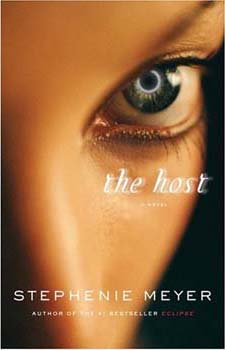
    Watch an interesting Borders interview with Meyer about Host and Twilight. The thing I keep seeing in her interviews is that this woman follows her passion. She follows the story that wows her. It’s nice, of course, that millions of fans want to share that wow with her. But I don’t know that a writer can be successful doing anything else.

    Here’s Orson Card’s blurb about Meyer in Time’s list of the 100 Most Influential People

    Nobody was looking for Twilight. A Mormon housewife writes a young-adult novel about a love affair between a teenage girl and a vampire?

    Is this Anne Rice lite? Not in the eyes of the teenagers—and their mothers—who have embraced the book.

    But Stephenie Meyer’s Twilight does raise some questions, and I’ve asked them. “You really want your teenage daughter to live inside the story of a girl who lies to her parents, invites a boy to sleep in her bed and trusts him not to take advantage of her?”

    These women look at me as if I’m insane. “But she can trust him. He really loves her. He’s…perfect.”

    In an era when much of the romance genre has been given over to soft porn, and dark fantasy is peopled with one-dimensional characters bent on grim violence, many readers have become hungry for pure romantic fantasy—lots of sexual tension, but as decorous as Jane Austen.

    Meyer, 34, did not calculatedly reach for that audience. Instead, she wrote the story she believed in and cared about. She writes with luminous clarity, never standing between the reader and the dream they share. She’s the real thing. Still, who’d have thought it? Today Mr. Darcy is a vampire.

    Card is author of Ender’s Game, Empire and Women of Genesis

    Share