Top 200 Juvenile Novels of 2010

Two weeks ago I published the top 200 novels and authors of YA fiction. As I stated then, looking at bestselling novels only gives one view into what readers are enjoying. Looking at library circulation gives another view that complements sales. These rankings are based on the circulation (number of times the book was checked out) at the Logan Utah Libarary which serves a community of over 100,000 residents. 

This week I present to you the top 200 Juvenile (these are mostly middle grade) novels of 2010. These are from the 5,377 different titles that were checked out. I can’t claim these lists show what’s most popular nationally. I’m confident the libraries in each region of the nation will have lists that vary a little or a lot from these. However, this does show what’s being read in this neck of the woods. Furthermore, all of these should be great reads for middle graders, teens, and adults.  

As before, the list features a lot of authors who live in Utah or have ties to Utah. The number of titles are in ( ).

  • Obert Skye (8)
  • Brandon Mull (6)
  • James Dashner (3)
  • J. Scott Savage (2)
  • Matthew Buckley (1)

I’m surprise at just how much these folks dominate this list. They’re rock stars! If I’ve missed anyone, let me know. For the previous lists, see these links:

And now, the top 200 Juvenile Novels of 2010.

The List

Title Total % Rank
Fablehaven book 5 : Keys to the Demon Prison / Brandon Mull* 319 0.98% 1
Diary of a wimpy kid : dog days/  Jeff Kinney 261 0.80% 2
Diary of a wimpy kid : Greg Heffley’s journal /  Jeff Kinney 239 0.74% 3
Fablehaven / Brandon Mull* 236 0.73% 4
Diary of a wimpy kid : Rodrick rules /  Jeff Kinney 235 0.72% 5
Fablehaven Book 4 : Secrets of the Dragon Sanctuary / Brandon Mull* 226 0.70% 6
Diary of a wimpy kid : the last straw /  Jeff Kinney 217 0.67% 7
Fablehaven Book 3 : Grip of the Shadow Plague / Brandon Mull* 215 0.66% 8
Fablehaven Book 2 : Rise of the Evening Star / Brandon Mull*  152 0.47% 9
The candy shop war / Brandon Mull* 139 0.43% 10
Leven Thumps and the ruins of Alder / Obert Skye* 110 0.34% 11
Leven Thumps and the gateway to Foo / Obert Skye* 110 0.34% 12
Harry Potter and the sorcerer’s stone /  J.K. Rowling  90 0.28% 13
Harry Potter and the Chamber of Secrets /  J.K. Rowling  86 0.26% 14
Harry Potter and the prisoner of Azkaban /  J.K. Rowling 85 0.26% 15
Fairest / Gail Carson Levine 78 0.24% 16
Charlie Bone and the Red Knight / Jenny Nimmo 78 0.24% 17
The journal of curious letters / James Dashner*  76 0.23% 18
Pillage / Obert Skye* 74 0.23% 19
Leven Thumps and the whispered secret / Obert Skye*  74 0.23% 20
The hunt for dark infinity / James Dashner* 69 0.21% 21
The Blade of Shattered Hope / James Dashner* 69 0.21% 22
The 39 clues. Viper’s nest /  Peter Lerangis 68 0.21% 23
The lion, the witch, and the wardrobe / C.S. Lewis  67 0.21% 24
Diary of a wimpy kid : the ugly truth /  Jeff Kinney 67 0.21% 25
The 39 clues. The maze of bones /  Rick Riordan 67 0.21% 26
The bad beginning /  Lemony Snicket  66 0.20% 27
The field guide / Tony DiTerlizzi and Holly Black 64 0.20% 28
How to train your dragon by Hiccup Horrendous Haddock III / Cressida Cowell 62 0.19% 29
The Society of Unrelenting Vigilance / Glenn Dakin  62 0.19% 30
The tales of Beedle the Bard / J.K. Rowling 61 0.19% 31
Dragon rider / Cornelia Funke 59 0.18% 32
Midnight for Charlie Bone / Jenny Nimmo 59 0.18% 33
Leven Thumps and the eyes of the Want / Obert Skye*  59 0.18% 34
The 39 clues. One false note / Gordon Korman 58 0.18% 35
The 39 clues. In too deep /  Jude Watson 58 0.18% 36
Peter and the Sword of Mercy /  Dave Barry and Ridley Pearson  57 0.18% 37
The 39 clues. The emperor’s code / Gordon Korman 56 0.17% 38
The reptile room /  Lemony Snicket  55 0.17% 39
The 39 clues. Storm warning / Linda Sue Park 55 0.17% 40
Choke / Obert Skye* 55 0.17% 41
Leven Thumps and the wrath of Ezra / Obert Skye* 54 0.17% 42
The wide window /  Lemony Snicket  53 0.16% 43
Gregor the Overlander / Suzanne Collins 53 0.16% 44
The miserable mill /  Lemony Snicket  52 0.16% 45
The 39 clues. The sword thief / Peter Lerangis 52 0.16% 46
Peter & the Starcatchers /  Dave Barry and Ridley Pearson 51 0.16% 47
The 39 clues. Beyond the grave / Jude Watson 51 0.16% 48
The 39 clues. The black circle / Patrick Carman 51 0.16% 49
Fantastic Mr. Fox / Roald Dahl  50 0.15% 50
Into the wild / Erin Hunter 49 0.15% 51
The city of Ember / Jeanne DuPrau 49 0.15% 52
The seeing stone / Tony DiTerlizzi and Holly Black 49 0.15% 53
The witches / Roald Dahl  48 0.15% 54
The end /  Lemony Snicket  47 0.14% 55
Charlie and the chocolate factory / Roald Dahl  46 0.14% 56
Gregor and the prophecy of Bane / Suzanne Collins 46 0.14% 57
Redwall / Brian Jacques  45 0.14% 58
Land keep / J. Scott Savage* 45 0.14% 59
Charlie Bone and the time twister / Jenny Nimmo 45 0.14% 60
Professor Winsnicker’s book of proper etiquette for well-mannered sycophants / Obert Skye* 45 0.14% 61
Found /  Sarah Prineas  45 0.14% 62
The people of Sparks / Jeanne DuPrau 43 0.13% 63
Beezus and Ramona / Beverly Cleary 42 0.13% 64
The austere academy /  Lemony Snicket  42 0.13% 65
39 clues. Into the gauntlet/  Margaret Peterson Haddix 42 0.13% 66
Lucinda’s secret /  Tony DiTerlizzi and Holly Black 42 0.13% 67
Ramona’s world / Beverly Cleary  41 0.13% 68
Midnight / Erin Hunter 41 0.13% 69
Captain Underpants and the attack of the talking toilets / Dave Pilky 40 0.12% 70
The penultimate peril /  Lemony Snicket  40 0.12% 71
The nixie’s song / Tony DiTerlizzi and Holly Black 40 0.12% 72
The magician’s nephew / C.S. Lewis  39 0.12% 73
Fading echoes / Erin Hunter 39 0.12% 74
Charlie Bone and the shadow / Jenny Nimmo 39 0.12% 75
The capture /  Kathryn Lasky 39 0.12% 76
The fairy-tale detectives / Michael Buckley 39 0.12% 77
The inside story / Michael Buckley  39 0.12% 78
Gregor and the curse of the warmbloods /  Suzanne Collins 39 0.12% 79
The mouse and the motorcycle / Beverly Cleary 38 0.12% 80
The wide-awake princess / E.D. Baker 38 0.12% 81
Ella enchanted / Gail Carson Levine 38 0.12% 82
Water keep / J. Scott Savage* 38 0.12% 83
Little house in the big woods / Laura Ingalls Wilder 38 0.12% 84
The vile village /  Lemony Snicket  38 0.12% 85
Prince Caspian : the return to Narnia / C.S. Lewis  37 0.11% 86
The fourth apprentice / Erin Hunter 37 0.11% 87
The prophet of Yonwood /  Jeanne DuPrau 37 0.11% 88
Among the hidden / Margaret Peterson Haddix 37 0.11% 89
The Wrath of Mulgarath / Tony DiTerlizzi and Holly Black 37 0.11% 90
The diamond of Darkhold / Jeanne DuPrau 36 0.11% 91
The ersatz elevator /  Lemony Snicket  36 0.11% 92
Rani in the Mermaid Lagoon /  36 0.11% 93
Gregor and the Code of Claw / Suzanne Collins 36 0.11% 94
The Ironwood tree / Tony DiTerlizzi and Holly Black 36 0.11% 95
The Sable Quean / Brian Jacques  35 0.11% 96
Fire star / Chris d’Lacey 35 0.11% 97
Bluestar’s prophecy / Erin Hunter 35 0.11% 98
Gregor and the marks of secret /  Suzanne Collins 35 0.11% 99
How to speak dragonese by Hiccup Horrendous Haddock III / Cressida Cowell 34 0.10% 100
Charlotte’s web /  E. B. White. Pictures by Garth Williams 34 0.10% 101
The grim grotto /  Lemony Snicket  34 0.10% 102
The Everafter War / Michael Buckley  34 0.10% 103
The Dark Hills divide / Patrick Carman 34 0.10% 104
Magic thief /  Sarah Prineas  34 0.10% 105
Forest of secrets / Erin Hunter 33 0.10% 106
Found / Margaret Peterson Haddix 33 0.10% 107
Chickens in the headlights ; a novel / Matthew Buckley* 33 0.10% 108
In the realm of the Never Fairies / Monique Peterson 33 0.10% 109
The Thief Lord / Cornelia Funke  32 0.10% 110
The last wilderness / Erin Hunter 32 0.10% 111
Charlie Bone and the invisible boy / Jenny Nimmo 32 0.10% 112
Tunnels / Roderick Gordon, Brian Williams 32 0.10% 113
Ramona the brave / Beverly Cleary 32 0.10% 114
How to be a pirate by Hiccup Horrendous Haddock III / Cressida Cowell 31 0.10% 115
Captain Underpants and the wrath of the wicked Wedgie Woman / Dave Pilky 31 0.10% 116
Fire in the sky /  Erin Hunter 31 0.10% 117
Charlie Bone and the castle of mirrors / Jenny Nimmo 31 0.10% 118
Little house on the prairie /  Laura Ingalls Wilder  31 0.10% 119
The slippery slope /  Lemony Snicket  31 0.10% 120
The wyrm king / Tony DiTerlizzi and Holly Black 31 0.10% 121
The fire within / Chris D’Lacey 30 0.09% 122
Captain Underpants and the perilous plot of Professor Poopypants / Dave Pilky 30 0.09% 123
Fire and ice / Erin Hunter 30 0.09% 124
The princess test / Gail Carson Levine  30 0.09% 125
A Giant Problem / Holly Black 30 0.09% 126
Charlie Bone and the beast / Jenny Nimmo 30 0.09% 127
Dealing with dragons /  Patricia C. Wrede 30 0.09% 128
Over sea, under stone / Susan Cooper 30 0.09% 129
How to twist a dragon’s tale / Cressida Cowell 29 0.09% 130
The adventures of Captain Underpants : an epic novel /  Dav Pilky 29 0.09% 131
Once upon a curse / E.D. Baker 29 0.09% 132
Cats of the Clans /  Erin Hunter  29 0.09% 133
The sight / Erin Hunter 29 0.09% 134
Moonrise / Erin Hunter 29 0.09% 135
Charlie Bone and the hidden king / Jenny Nimmo 29 0.09% 136
The carnivorous carnival /  Lemony Snicket  29 0.09% 137
The hostile hospital /  Lemony Snicket  29 0.09% 138
Matilda / Roald Dahl  29 0.09% 139
The frog princess / E.D. Baker 28 0.09% 140
Long shadows / Erin Hunter 28 0.09% 141
The darkest hour / Erin Hunter 28 0.09% 142
Lanie /  Jane Kurtz  28 0.09% 143
Wayside School gets a little stranger / Louis Sachar  28 0.09% 144
Atherton : the house of power /  Patrick Carman 28 0.09% 145
The dark is rising / Susan Cooper  28 0.09% 146
Icefire / Chris D’Lacey 27 0.08% 147
Sunset / Erin Hunter 27 0.08% 148
Sunrise / Erin Hunter 27 0.08% 149
Fawn and the mysterious trickster / Laura Driscoll 27 0.08% 150
The unusual suspects / Michael Buckley  27 0.08% 151
Charlie and the great glass elevator / Roald Dahl 27 0.08% 152
The Twits / Roald Dahl  27 0.08% 153
Ramona Quimby, age 8 / Beverly Cleary  26 0.08% 154
Peter & the shadow thieves /  Dave Barry and Ridley Pearson 26 0.08% 155
Peter & the secret of Rundoon /  Dave Barry and Ridley Pearson 26 0.08% 156
Twilight / Erin Hunter 26 0.08% 157
The quest begins / Erin Hunter 26 0.08% 158
Dawn / Erin Hunter 26 0.08% 159
Fairy Haven and the quest for the wand / Gail Carson Levine  26 0.08% 160
For Biddle’s sake / Gail Carson Levine  26 0.08% 161
Myka finds her way / Gail Herman 26 0.08% 162
The Boxcar children / Gertrude Chandler Warner  26 0.08% 163
Dear Dumb Diary #1: Let’s pretend this never happened / Jim Benton 26 0.08% 164
Tales of a fourth grade nothing / Judy Blume 26 0.08% 165
Rosetta’s daring day / Lisa Papademetriou 26 0.08% 166
Among the enemy / Margaret Peterson Haddix 26 0.08% 167
Beyond the Valley of Thorns / Patrick Carman 26 0.08% 168
Dork diaries : tales from a not-so-fabulous life / Rachel Renee  26 0.08% 169
Where the red fern grows / Wilson Rawls 26 0.08% 170
Ramona and her father / Beverly Cleary  25 0.08% 171
Captain Underpants and the big, bad battle of the Bionic Booger / Dave Pilky 25 0.08% 172
Dragon kiss /  E.D. Baker 25 0.08% 173
Code of the clans / Erin Hunter  25 0.08% 174
The two princesses of Bamarre /  Gail Carson Levine 25 0.08% 175
Silvermist and the ladybug curse / Gail Herman 25 0.08% 176
Iridessa, lost at sea / Lisa Papademetriou 25 0.08% 177
Sideways stories from Wayside School /  Louis Sachar  25 0.08% 178
A long way from Chicago : a novel in stories / Richard Peck 25 0.08% 179
Island of the giant Pokâemon / adapted by Tracey West 24 0.07% 180
How to cheat a dragon’s curse / Cressida Cowell 24 0.07% 181
Firestar’s quest / Erin Hunter 24 0.07% 182
Fira and the full moon / Gail Herman 24 0.07% 183
Savvy /  Ingrid Law 24 0.07% 184
Vidia and the fairy crown / Laura Driscoll 24 0.07% 185
Sent / Margaret Peterson Haddix 24 0.07% 186
NERDS : National Espionage, Rescue, and Defense Society /  Michael Buckley 24 0.07% 187
Beauty : a retelling of the story of Beauty & the beast /  Robin Mckinley 24 0.07% 188
The popularity papers / Amy Ignatow 23 0.07% 189
Ramona forever / Beverly Cleary  23 0.07% 190
Dark fire / Chris d’Lacey 23 0.07% 191
The salamander spell /  E.D. Baker 23 0.07% 192
Outcast / Erin Hunter 23 0.07% 193
Eclipse / Erin Hunter 23 0.07% 194
The hound of Rowan / Henry H. Neff 23 0.07% 195
Erec Rex : the dragon’s eye /  Kaza Kingsley  23 0.07% 196
Beck beyond the sea / Kimberly Morris 23 0.07% 197
Prilla and the butterfly lie / Kitty Richards 23 0.07% 198
Utterly me, Clarice Bean / Lauren Child 23 0.07% 199
Among the Barons / Margaret Peterson Haddix 23 0.07% 200
Into the mist / Patrick Carman 23 0.07% 201
This book is not good for you / Pseudonymous Bosch  23 0.07% 202
George’s marvelous medicine / Roald Dahl  23 0.07% 203
A hero’s guide to deadly dragons : the heroic misadventures of Hiccup Horrendous Haddock III / Cressida Cowell 23 0.07% 204
Share

Similar Posts

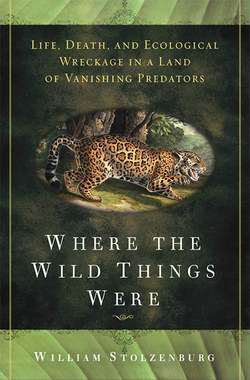
  • Where the Wild Things Were by William Stolzenburg

    I live among ranchers in northern Utah, people whose livelihood walks around on four legs. People who can lose thousands of dollars of future income if they lose one good cow or calf. People who think one of the dumbest things to happen in recent times in the West is the reintroduction of wolves to Yellowstone. Now, I don’t agree with them, but I do think they have good cause.

    Contrary to what people will tell you, wolves do not kill just for food. Wolves kill because they like killing. If you don’t believe me, then believe Temple Grandin, an expert on animals, who asks the question in her Animals in Translation: “Is it fun to kill a groundhog?” 

    She reviews a number of studies done on animals and answers with an unequivocal yes, predators love to kill. In fact:

    “Animals like having their predatory killing circuits turned on, and will turn them on themselves if you show them how. When you think about what predatory killing is all about, of course it ought to feel good, because predatory killing means dinner. Killing a mouse feels good to a cat the same way finding a luscious ripe banana feels good to a primate.” (p138)

    What this means is that when wolves come to kill sheep, they don’t just kill one old and decrepit ewe. No, they do what they did on a neighbor’s land a few miles from my home. They maim and kill five or six. Not because two wolves were that hungry, but because it was fun and they could.

    Sheep are like popcorn to wolves. Compare them to elk or other wild animals. The reason why wolves tend to indeed eliminate the young, weak, and old in the wild is that those poor specimens tend to run a bit slower than their brethren. In the wild, slow means dead. For the wolf, it’s hard work to run down an elk or buffalo. And if you’re a hungry son-of-a-gun, you’re not going to go chasing after another dinner while there’s fresh meat in front of you because the rest of the pack will eat it before you get back. And you ain’t going to catch one on your own anyway. But sheep aren’t elk. Cattle aren’t elk. They’re bred for meat, not sprinting. Sheep are easy meat. And the wolves can’t help themselves.

    But even if the wolves exercise restraint and eat just one, that’s cash. That’s clothes for the kids. That’s a mortgage. That’s heat. And it’s a danger for children as well (adults I don’t worry about: who cares about a few devoured adults?). My girls like to hike. And while I’m sure wolves will usually stay away, a sick or starving wolf will risk humans just as sick and starving mountain lions do. You get a different mindset about predators when you live up where I do. When they’re not something you see caged up in the zoo or on PBS.

    For all these reasons and others, I couldn’t wait to read Where The Wild Things Were by William Stolzenburg. Folks, the book is fabulous–well-written and interesting from page one to the very end. The key point is that predators play a huge role in maintaining a healthy diversity of both plant and animal life in any given ecosystem. Stolzenburg begins with starfish and moves through otters, killer whales, jaguars, mountain lions, and wolves. Along the way he reveals just how important killing is.

    Yes, killing is critical to life as we know it.

    Because without it, the most dominant herbivores will end up eating all the food. And this will end up killing off most of the other herbivores. It will kill off the great variety of flora in any given system. It can turn a paradise into a hell as Stolzenburg illustrates with the islands of Lago Guri in Venezuela. 

    Of course, some people think the answer is to bring back all the big predators. The rewilding supporters want to populate the West not only with wolves, but also lions (African), jaguars, cheetahs. Heck, they salivate at the idea of giant Pleistocene bears that can run faster than a horse (yeah, I want one of those up where the Boy Scouts camp).  I think it’s good the wolves are back in Yellowstone. But I don’t want packs of wolves eating my friend’s herds and daughters (of course, maybe a few Boy Scouts are okay). Still, I believe there has to be another alternative. What that is I don’t know. But we all need to think about it. We do. And great way to start is by reading Stolzenburg’s book.

    Share
  • Good Stuff! Mike Loades on Swords and Bows

    Mike Loades is an expert on medieval fighting. He brings energy and, not just bookish learning, but insights from hands-on use. I loved the five-part Weapons That Made Britain television series for which he was the host and chief consultant. And so I looked to see if there was anything else he’d done. I found he’d written two books, which I am so happy to have read.

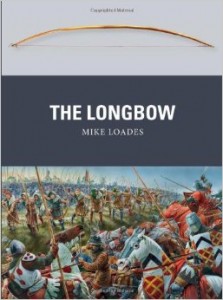
    The Longbow is not just a book about the longbow. It’s about its construction and how it impacted the development of armor, and types of armor, and the wood used for the bow, and how to make arrows, and what the various points were for, and how people trained, and then cared for the bows, and how it was used in war. And, again, the insights are not just bookish ones. He’s walked the battlefields. He’s used bows for years. He’s performed tests with them. It is a 80-page book that carries a monstrous bang for the buck and one of the best purchases I’ve made for my library. I loved it.

    MikeLoades_TheLongBow

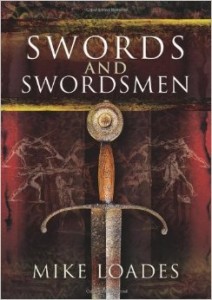
    Of course, after that experience, I had to get his Swords & Swordsmen. This book is almost 500 pages long, and I was rapt reading each page of it. Instead of focusing on one version of this weapon, Loades discusses exemplars of various types of swords through time, starting with the sword of Tutankhamun in Egypt all the way through the swords of J.E.B. Stuart and G.A. Custer in the American Civil War. There are 15 chapters all discussing different eras and swords that provide a mountain of insight. The love Loades has for and the practical experience he has with the topic shines through on every page. Just as with The Longbow, you’ll learn about use, construction, the interplay with armor, and much more. Heck, I got the ideas for at least three novels reading this book. I loved it as much as I loved the first.

    MikeLoades_SwordsAndSwordsmen

    If you enjoy military history and arms and armor, you will love these books. Guaranteed.

    While you’re waiting for them to arrive in the mail, treat yourself to five hours of fascinating video below.

    Weapons That Made Britain E01 – The Sword

    Weapons That Made Britain E02 – The Longbow

    Weapons That Made Britain E03 – The Lance

    Weapons That Made Britain E04 – The Shield

    Weapons That Made Britain E05 – Armour

    Share
  • Buck, America the Vulnerable

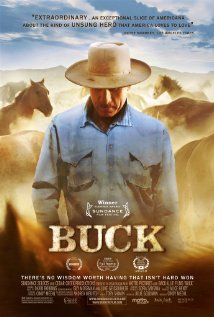
    Buck

    About two years ago I was walking out in Round Valley and saw a rider on a horse coming down a hill through the brush.  I got to him just as he moved onto the road. Right away, I noticed that there was something a bit off with the horse’s gear—the rider was not using a bridle. The rider, Wayne Batty, was using nothing more than a rope harness that went around the horse’s head. I was amazed; how did you steer the horse without a bit in its mouth?

    I asked Wayne if I might walk alongside as he rode. He agreed, and then began to talk about training and riding horses. I stuck with him for little over a mile before I had to turn back. I learned in that short period that Wayne was able to communicate with that horse with small nudges. The horse also communicated to him many things with its stance, ears, the cock of its head. Most importantly, I learned they both had built up a trust of each other. Wayne’s methods were not based on fear, it seemed, but something else.

    It reminded me a lot of the fascinating and compelling The Man Who Listens to Horses, the autobiography of Monty Roberts, that shares Roberts’ life and his development of natural horsemanship methods. Unlike many training approaches which seek to break a horse’s will through harsh punishment-based methods that often veer into abuse, natural horsemanship employs methods that are much gentler and seek to build trust in the handler. Roberts can join up with (he doesn’t “break” horses) a wild or un-ridden horse, be up on the saddle calmly riding the animal, in an incredibly short period of time.

    But Batty and Roberts aren’t the only ones practicing this. These methods have been around some time. One of the most famous practitioners and teachers is Buck Brannaman, who found his years of being severely physically abused by his father actually provided some insight into training horses.

    Says Brannaman: “I’ve started horses since I was twelve years old and have been bit, kicked, bucked off and run over. I’ve tried every physical means to contain my horse in an effort to keep from getting myself killed. I started to realize that things would come much easier for me once I learned why a horse does what he does. This method works well for me because of the kinship that develops between horse and rider.”

    Recently, a film was produced that looks at Brannaman’s life and methods. It’s called Buck and is worth every minute. If you love horses, you’ll love this movie. If you have a horse and think you might want to learn these methods, or just want to watch and listen, you might want to check out Brannaman’s teaching schedule at his site brannaman.com. He travels all over the country and is likely to hold a class within driving distance.

    America The Vulnerable

    A few years ago I received an email from my bank. At least, it looked legit to me. I opened it. It said it needed me to update some parts of my account and provided a link to the bank’s website. I clicked on the link, which took me to my bank’s website. At least, it looked exactly like my bank’s website. I entered my account number, login, and password. I made the requested changes and logged out.

    Two days later, somebody in Spain cleared every penny out of my account—thousands of dollars stolen.

    That email was a phishing (fishing) scam. The website had been a fake. I had willingly handed over my account number, login, and password to thieves.

    Luckily, the bank insures such thefts. But the problem of information security remains. Thieves living in Spain, or Russia, or LA, or China, can rob me blind from their bedrooms in their pajamas. They can do this because our information processing nowadays is increasingly tied to the internet.

    And they don’t just rob dopes like me, because it’s not just individual criminals who are in the business. Corporations and governments are in this business as well.

    They steal billions of dollars of trade secrets, engineering designs, and other intellectual property from American companies through computer hacking. They steal military secrets. For example, the US Navy spent years and about $5 billion dollars to develop a quiet electric motor for submarines that would make them incredibly hard to find and track. Chinese spies stole that technology. The Navy then spent billions more to develop a new radar for their top-of-the-line Aegis Cruiser. Chinese spies stole that, too.

    And they not only steal. Terrorists, crime organizations, and foreign governments can now insert malicious software into the computers that control, among other things, our electrical grid. They can use this in an attack, not just to shut the grid down for a while, but to destroy power generators. They can insert such software into our air traffic control system. Our train transportation systems. Our banks. They have already done this. They have already breached some of our most secure government systems.

    It sounds too far-fetched to be true, but it’s reality. Joel Brenner, who has served as the former senior counsel at the National Security Agency (NSA), the national counterintelligence executive in the office of the director of National Intelligence, and as the NSA’s inspector general writes about what he’s seen in America The Vulnerable: Inside the New Threat Matrix of Digial Espionage, Crime, and Warfare. In the book, he explains the cyber threats to individuals, corporations, and the country and what we can do about it. If you want a fascinating look into the next phase of crime, espionage, and warfare, and an introduction to some of the things you need to do to protect yourself and your company, and what we need to do as a nation, you’ll want to read this book.

    Share
  • Flaming Gorge, Ticket to Ride, Thai Evergreen

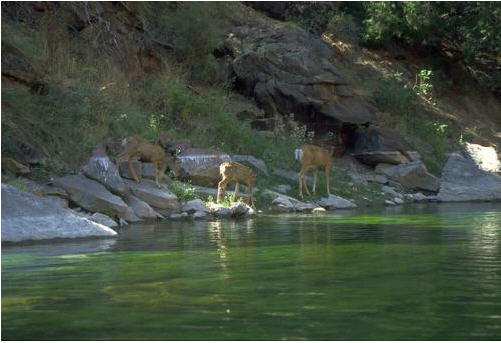
    I want to tell you about a river that is emerald green, clear enough to see the rocks on the bottom sixteen feet below as well as the trout, and provides a wonderful family getaway. I’m talking about the Green River just below the Flaming Gorge dam in north-eastern Utah. 

    Yes, that picture’s of the Green River. Yes, it’s that beautiful and that clear in the calmer parts, of which there are many.

    We just ran the seven mile stretch that starts just below the dam and goes down to the Little Hole campground with our four girls (ages 6 – 15) and had a ball. During our trip we saw otters swimming  up the river not more than six feet from our raft, a herd of mountain sheep off the side of the road, fish and more fish, a snake a long as a man with a light silvery skin mottled with black rectangles, and two osprey (one that dove under the water to get a fish and a second flying about twelve feet over our raft with a fish in its clutches). We ran some class II rapids. This time of year they weren’t scary to me, but provided plenty of thrills and stress for the kids. The water was warm enough to swim in, but cold enough to give you a shock. And it was so CLEAR.  Of course, there were spots too deep to see the bottom. But there were plenty where you could see the river plants, rocks, and aquatic life. And all of it in that emerald hue.

    The girls were in the water inbetween every set of rapids. We packed a cooler and so stopped a number of times. Once to check out a waterfall, another time to snack, another to play on a sandbar, yet another to chase those otters, a bathroom break (outhouses provided by the park service), another time to swim.  

    The Flaming Gorge area features the beautiful landscape seen in Southern Utah–red rock, pines, junipers. People come from all over to run the river and fish. We didn’t fish this time, but there were plenty of anglers who had rented boats. Still, it didn’t feel crowded at all. There were long stretches where we had the gorge to ourselves. Next time I think I’m going to bring a book (in a waterproof ziplocok) and we’ll spend a little more time on one of our stops to sit and relax.

    Some tips:

    • Bring a cooler. You’ll want to put in along the river and enjoy the gorge. There’s no hurry to finish.
    • Bring good water shoes that have a sole with traction and netting to keep gravel out. (I got a pair at Wal-Mart that made the whole ride wonderful.) Also bring a hat and sunscreen. If you wear a cotten tee-shirt and quick drying shorts you’ll enjoy the ride even more.
    • We stayed at the Flaming Gorge Resort the night before our run. It’s been around a while and the condos showed it, but it wasn’t bad. The condos had a kitchen. And the restaurant had large servings of good food.
    • You might also want to bring a way to transport the raft inflated. We put ours on top of the minivan and had no problem taking it to and from the rental shop. However, I wished I had learned the trucker’s knot. The knots I tied cinched up into nasty snags that proved very difficult to untie.
    • Bring two vehicles or a bicycle. The businesses there charge close to $50 to shuttle your car the 9+ miles between the launch below the dam and Little Hole. That was outrageous to me. Next time we’ll bring a bike, lock it up by Little Hole, and have one of us bike back for the car. Or you can park half way inbetween at Dutch John after you’ve launched your raft and make the hour walk down. Of course, if you’re an early riser, the rental shop in Dutch John offers a $20 shuttle from Little Hole to the Dam, but only at 8:30 AM and 9:30 AM.

    *

    While in Provo this year for the Freedom Festival I purchased Ticket to Ride (European version). I wanted to do more than walk around or swim at the pool with the family. It was an excellent purchase and recommendation from the folks at Games People Play in the Orem mall. Of course, the kid at the store had played everything in the store and knew just where to steer us. It only took a few minutes to figure out how to play and everyone from the 6 year old to both Nellie and I had fun. It’s so fun we’ve played it a number of times since we got back.

    *

    Both Nellie and I learned to love Indonesian food during the years we spent in the Netherlands. Alas, not many Indonesian restaurants around. In search of something similar while living the in the San Francisco area, we found Thai food.

    Ah, that dream within a dream.

    And now we found yet another Thai restaurant in Utah with excellent food. So good my two oldest daughters get cravings to go back. The first is Thai Evergreen in Orem, Utah. It looks like a family owned operation and is. And their food is delicious. Four family’s went while at this year’s Freedom Festival, which meant we ordered quite a variety of food. Everything I tasted was delicious.

    The next is Kamin in Logan, UT. Again, wonderful. Nellie and I have eaten there a number of times and never leave unsatisfied.

    Share
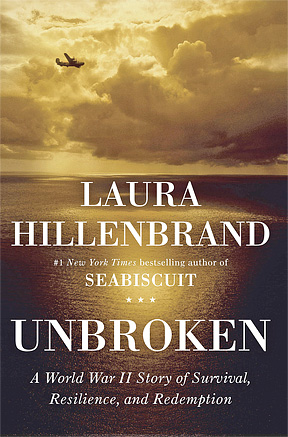
  • Good Stuff! Unbroken by Laura Hillenbrand

    hillenbrand-unbroken-4

    Unbroken by Laura Hillenbrand is the finest book I’ve read in some time.

    It’s tells an engrossing and true World War 2 story about Louis Zamperini, who started out in life as a steal-and-run trouble-maker. He was a kid who’d try the patience of Job. His mother tried to reform him to no avail. His father administered spankings, but physical punishment seemed to have no effect. Louis was constantly in trouble with neighbors, school mates, cops, teachers, store owners.

    Louis’s older brother thought Louis would succeed if he were to just receive some positive attention. He thought track, a very popular sport at the time, was just the ticket. Louis loved his brother. In 9th grade he tried running, but the workouts chafed, and then one day he had an altercation with his parents. Louis figured the train would take him away from all his problems. So he ran away, hopped a boxcar, and very quickly learned the freedom of the rails wasn’t freedom at all. It sucked.

    When he returned home, defeated, he decided to submit to his brother’s plan. This time it was just what the doctor ordered. Louis ran like mad. He broke records. He got a scholarship to USC and broke more. Louis ran in the 1936 Olympic Games. He didn’t win, but he would the next time they came around. However, the world was in turmoil back then, and Germany and Japan had their own plans which changed Louis’s life forever. He became a bombardier in the Pacific theater.

    And that’s where I’m going to stop. The story that awaits you is truly amazing. And Hillenbrand brings it to life with surprising and powerful details. From start to last, I was enthralled. And towards the end, just when I thought the story was over, it took a turn that lifted it from being just another WW2 story with plenty of action to a tale that goes right to the heart of what it means to live. I wept, not for Louis’s pain, as awful as that was, but for something far more vital.

    When I first saw the book, its sepia-washed cover turned me away from the tale. But with so many folks talking about it, I thought I’d give the first pages a go. I was delighted, but didn’t make it a priority. Not long after that, my 10th grade nephew told me how much he enjoyed it, and that prompted me to go back (and I’m so glad I did). It’s not that this is a kid’s book or that my nephew has the maturity of an older man. He’s definitely got some reading chops, but it’s not about an advanced writing style either. What is enthralling old and young alike is Zamperini’s story and Hillebrand’s skills in telling it.

    How much do I like this book? I’m reading it again, slowly this time, so I can savor every word. Let me recommend you do yourself a favor. If you read one book this year, make it Unbroken.

    Share
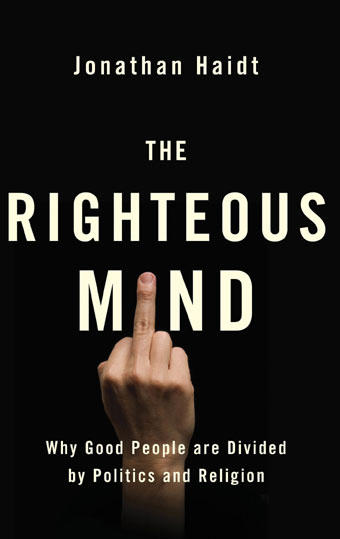
  • The Righteous Mind by Jonathan Haidt

    After this year’s presidential election I emailed my sister, a smart, super-competent, true-blue, bleeding-heart, save the weeds and snails liberal, who volunteered to do campaign work for Hilary Clinton in Colorado during the 2008 Democratic primaries and, of course, voted loudly for Obama in this last election.

    “Are you kidding me?” I asked. “How can anyone who doesn’t have a carrot for a brain want more of the same? I don’t get it. Obama? How can so many Americans be that gullible? I’m totally baffled.”  And that puzzlement wasn’t rhetorical. I was seriously baffled.

    “Are you kidding me?” she replied. “Mitt Romney? How could anyone vote for Mitt Romney?  Talk about baffled.”  She went on a rant listing all of Romney’s supposed deeds and positions of sooper evil and stupidity. Then she questioned how anyone could support that Hitler in his Mormon clothes.

    Okay, she didn’t say “Hitler,” but she did claim he was “evil” and “despicable.” And when I think of evil, my first thought is always of folks like Mitt Romney.

    Vicente Carrillo Fuentes, leader of the Juarez drug cartel, which is responsible for hundreds of gruesome murders each year and . . . Mitt Romney. Oh, yeah. They’re like brothers. In fact, wasn’t Romney’s dad born in Mexico? And, hey, one of Romney’s sons even knows Spanish. That boy wasn’t on a church mission there. No, he was making connections with the jefe!

    Sonia Montoya-Cadena, the one who ran a human trafficking ring in Denver exploiting young girls for sex and . . . Mitt Romney. Yeah, Romney’s just like that. If he could run slave brothels, he’d do it in a minute to make a buck. In fact, doesn’t Bain Capital own a couple of slave brothels in Greenland?

    I wanted to unload. I was prepared to destroy her with fiery analysis of the first order.

    Thundering analysis.

    Mountain crushing logic.

    She was so freaking blind.

    Except,

    She had never actually considered what I had to say in any of my previous emails. It never mattered how powerfully vast my brilliant logic was. She’d demonstrated wax ear time and again. All of my intellectual might never made a dent in her liberal force field. I brought blood and thunder, and it always seemed to bounce off her like bullets made of styrofoam.

    Nevertheless! Clinton? Obama? Save the gerbils?

    I made a comment that sent Smart Sister into DEFCON 5. Foolish me. Eventually, her liberal ire cooled and she decided to order comrade Putin to stand down and not push the big red button.

    Meanwhile, I started to think.

    I noted that if things didn’t change, the Republicans wouldn’t be winning the presidency any time soon. If they couldn’t beat Obama when the economy was in the tank, then there really was no hope. Which meant we are going to end up like Greece, with continuing inflation (which is not only an intentional, government-led annual pay cut on the disgustingly rich, filthy rich, and annoyingly rich, but also on the middle class, poor, destitute, and various and sundry hoboes everywhere), huge debt, stupid taxes, ridiculous health care, Soviet-style redistribution, blah, blah, blah.

    I asked myself, like all Republicans did, what could we conservatives do differently? Follow Obama’s example and improve our operations to get the vote out? Build up a conservative La Raza? Do the right thing with the children of illegals? Get someone willing to land more blows on the opposition (Romney could have decimated Obama in debates two and three, but he didn’t; he totally failed to define his opponent).

    Maybe it was in the messaging. Maybe what we needed to do was develop something that actually changed minds.

    At this point a faint ding sounded in the distance in my mind. A small light bulb suddenly flipped on and illuminated a dark cubby of my mind.

    Hadn’t I just read about studies showing how a soap opera in Mexico, a radio play in Tanzania, and sitcoms in America actually changed viewer attitudes and behaviors about literacy, HIV, and abortion? Didn’t I already know about the power of concrete and vivid storytelling? Not sermon-telling, but storytelling.

    Why, yes. Yes, I did.

    Had I not witnessed the use of storytelling on U.S. television for, what, fifteen years by those wanting to build sympathy for homosexuals? (A good thing, even if I disagree with some of the gay agenda.) And the cheapening of sex by others? (A bad thing.) And the clearly conscious promotion of many other attitudes and beliefs via various media programs?

    I determined there was something to this.

    If people were going to vote for fiscal responsibility in Washington, something like this was going to have to be done. It wasn’t going to happen in flame wars.

    About this same time I was browsing through the recent Radio West programs. I saw one called “The Righteous Mind.”  It was an interview of Jonathon Haidt about his new book The Righteous Mind: Why Good People Are Divided by Politics and Religion.

    Hey, wasn’t that addressing my question?

    The program blurb states: “Monday, our guest is the social psychologist Jonathan Haidt, whose latest book sets out to explain the root causes of the divisions in our society. At the heart of his argument is the idea that the human mind is designed to “do” morality. But when we separate into tribes – say political affiliations or religious denominations – we focus on different moral foundations. Haidt joins us to explain why he says we need the insights of liberals and conservatives to flourish as a nation.”

    I listened. And loved the program.

    Haidt shared a number of deliciously insightful things about how our mind works and how we choose our affiliations. He shared so many insights that I immediately requested his book at my library. The library ordered a copy for their collection. I, of course, was first in line to read it. I just finished the book.

    It’s one of the best books I’ve read all year.

    Haidt explains why my sister and I were both baffled by people who voted for the opposition candidate. He explains how human morality works. How our reason does not lead us to make the judgments we do, but instead more often acts like a lawyer to justify our positions to others.

    As soon as he explained that I saw how I had done that time and time again. For example, in this election cycle I blamed Obama for the economy. In the Bill Clinton re-election I vigorously argued that the President doesn’t have any effect on the economy and is lying if he takes credit for it. I’m not saying that Obama didn’t do things that might have hampered the recovery, but how did I know his actions exacerbated our problems? What evidence did I really have?

    Haidt explains that there are six basic moral bases then points out which ones drive liberals, conservatives, and libertarians, and how we can use that knowledge to disagree more constructively. He provides strong insights into how our reason and intuitions and judgments work, the evolutionary function of our morality, and how our wiring for group affiliation affects it.

    I didn’t agree with some of his conclusions. He sometimes takes his points too far. For example, he seems to suggest that people in cities are pre-disposed to be liberal. And that’s why they live there. Um, no. That’s not why they live there. They live in cities because that’s where the jobs are. The agricultural revolution made sure of that, remember? In his effort to explain the smaller biological basis of our beliefs, he also downplays the larger effect our families and groups have. But despite these excesses, he shares so many fresh and exciting ideas that they don’t matter. And he shares them all in such a fun and clear way that I couldn’t help but stay up late a number of nights reading this book.

    Do you know how much I wanted to trash Obama to my sister?  That Soviet-style central planner.  That drunken sailor spender.  That choom wagon pot head.

    And yet, you and I also know that will never work. I now know better why. Because of Haidt, I think I see a better way. I certainly see how I have done exactly what drives me mad about those who have drunk the opposition candidate’s Kool-aide. I see that I have my own conservative force field that deflects liberal bullets (and perhaps even blinds me to the truth sometimes). And why I need to watch my reason, that cunning lawyer part of my brain, as well as my intuition.

    Haidt, a liberal, has given me, a conservative, a great gift. I intend to use it. If you are interested in the two taboo topics of politics or religion, if you enjoyed Malcolm Gladwell’s book Blink or the Heath brother’s Made to Stick, if you want to find a better way to influence than flame wars (as fun as they can sometimes be), then I think you will enjoy the wonders Haidt shares in his fine book.

    Don’t just take my word for it. Listen to the Radio West program http://radiowest.kuer.org/post/righteous-mind for a taste of what awaits you.

    Share