Flaming Gorge, Ticket to Ride, Thai Evergreen

I want to tell you about a river that is emerald green, clear enough to see the rocks on the bottom sixteen feet below as well as the trout, and provides a wonderful family getaway. I’m talking about the Green River just below the Flaming Gorge dam in north-eastern Utah. 
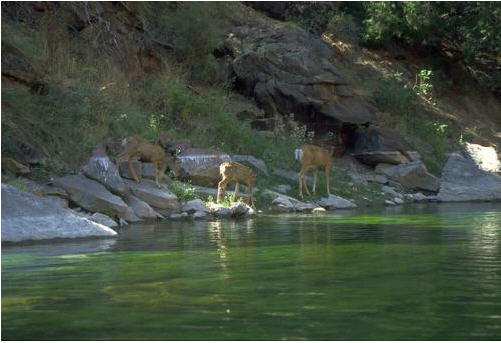
Yes, that picture’s of the Green River. Yes, it’s that beautiful and that clear in the calmer parts, of which there are many.

We just ran the seven mile stretch that starts just below the dam and goes down to the Little Hole campground with our four girls (ages 6 – 15) and had a ball. During our trip we saw otters swimming  up the river not more than six feet from our raft, a herd of mountain sheep off the side of the road, fish and more fish, a snake a long as a man with a light silvery skin mottled with black rectangles, and two osprey (one that dove under the water to get a fish and a second flying about twelve feet over our raft with a fish in its clutches). We ran some class II rapids. This time of year they weren’t scary to me, but provided plenty of thrills and stress for the kids. The water was warm enough to swim in, but cold enough to give you a shock. And it was so CLEAR.  Of course, there were spots too deep to see the bottom. But there were plenty where you could see the river plants, rocks, and aquatic life. And all of it in that emerald hue.

The girls were in the water inbetween every set of rapids. We packed a cooler and so stopped a number of times. Once to check out a waterfall, another time to snack, another to play on a sandbar, yet another to chase those otters, a bathroom break (outhouses provided by the park service), another time to swim.  

The Flaming Gorge area features the beautiful landscape seen in Southern Utah–red rock, pines, junipers. People come from all over to run the river and fish. We didn’t fish this time, but there were plenty of anglers who had rented boats. Still, it didn’t feel crowded at all. There were long stretches where we had the gorge to ourselves. Next time I think I’m going to bring a book (in a waterproof ziplocok) and we’ll spend a little more time on one of our stops to sit and relax.

Some tips:

  • Bring a cooler. You’ll want to put in along the river and enjoy the gorge. There’s no hurry to finish.
  • Bring good water shoes that have a sole with traction and netting to keep gravel out. (I got a pair at Wal-Mart that made the whole ride wonderful.) Also bring a hat and sunscreen. If you wear a cotten tee-shirt and quick drying shorts you’ll enjoy the ride even more.
  • We stayed at the Flaming Gorge Resort the night before our run. It’s been around a while and the condos showed it, but it wasn’t bad. The condos had a kitchen. And the restaurant had large servings of good food.
  • You might also want to bring a way to transport the raft inflated. We put ours on top of the minivan and had no problem taking it to and from the rental shop. However, I wished I had learned the trucker’s knot. The knots I tied cinched up into nasty snags that proved very difficult to untie.
  • Bring two vehicles or a bicycle. The businesses there charge close to $50 to shuttle your car the 9+ miles between the launch below the dam and Little Hole. That was outrageous to me. Next time we’ll bring a bike, lock it up by Little Hole, and have one of us bike back for the car. Or you can park half way inbetween at Dutch John after you’ve launched your raft and make the hour walk down. Of course, if you’re an early riser, the rental shop in Dutch John offers a $20 shuttle from Little Hole to the Dam, but only at 8:30 AM and 9:30 AM.

*

While in Provo this year for the Freedom Festival I purchased Ticket to Ride (European version). I wanted to do more than walk around or swim at the pool with the family. It was an excellent purchase and recommendation from the folks at Games People Play in the Orem mall. Of course, the kid at the store had played everything in the store and knew just where to steer us. It only took a few minutes to figure out how to play and everyone from the 6 year old to both Nellie and I had fun. It’s so fun we’ve played it a number of times since we got back.

*

Both Nellie and I learned to love Indonesian food during the years we spent in the Netherlands. Alas, not many Indonesian restaurants around. In search of something similar while living the in the San Francisco area, we found Thai food.

Ah, that dream within a dream.

And now we found yet another Thai restaurant in Utah with excellent food. So good my two oldest daughters get cravings to go back. The first is Thai Evergreen in Orem, Utah. It looks like a family owned operation and is. And their food is delicious. Four family’s went while at this year’s Freedom Festival, which meant we ordered quite a variety of food. Everything I tasted was delicious.

The next is Kamin in Logan, UT. Again, wonderful. Nellie and I have eaten there a number of times and never leave unsatisfied.

Share

Similar Posts

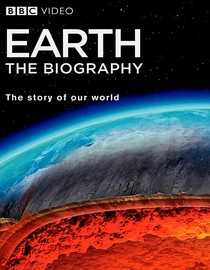
  • Earth: the biography, Planter’s Nuts at Sam’s, “The Professor of War”

    Earth: The Biography is one of the most interesting documentary series I’ve seen in a long time. It’s produced by National Geographic and the BCC. Dr. Ian Stewart, a Scotsman, hosts the program and tells the life story of our planet, how it works, and what makes it so special.

    There are five parts: “Volcano,” “Atmosphere,” “Ice,” “Oceans,” and “Rare Earth.” And while they were all good, the last two blew me away.

    For example, I always thought the polar ice caps were a big waste of water. What do they do besides torment penguins and Eskimos?

    But the program reveals that the ice caps are critical to all life everywhere on the planet because they power the great ocean conveyer. This conveyer is a slow current that carries surface water away from the equator up to the polar caps then down to the sea floor and back—transporting oxygen, nutrients, and warmth all around the globe.

    We can see how critical the ocean conveyer is when it stops. There was a time when this happened. With no replenishment of oxygen, the water turned to poison. The poison was picked up in the clouds and rained down upon the land. And almost every living thing on the planet died a toxic death.

    Sniff, sniff–we love you, Polar Ice Caps.

    “Oceans” was fascinating, but “Rare Earth” was the kicker. How common is our cozy little situation here on earth?

    Well, for life to exist as we know it, we needed to be a certain narrow distance from the center of the galaxy, orbit a certain, less common type of star, be within a certain range of that star, have a big old fat vacuum like Jupiter hanging out in the wings sucking up asteroids and comets so they don’t hit us instead, have an orbiting moon of a certain size, an earth core with just the right amount of iron, a tilt to the earth that would allow polar ice caps, water, an atmosphere to protect us from all sorts of celestial mayhem. Heck, we even had to have that nasty mass extinction caused by the broken ocean conveyer. And there’s more.

    So many rare events had to line up just right, that it’s bound to make the atheists among us celebrate their good fortune with illegal-Wyoming-firework abandon and the believers to rise up from their chairs and shout, “Hallelujah and Amen!”

    Nellie, the girls, and I all loved this show.

    ***

    I’m a nut man. Love nuts. Hazelnuts, walnuts, Brazil nuts, pistachio nuts, cashews, pecans. But nuts are expensive. And while peanuts are lovely, I like some variety and grow weary of the mixes where you get about five thousand peanuts and one burnt almond. So when I saw the forty ounce jars of Planter’s Deluxe Nuts (sea salt, NO peanuts) at Sam’s Club in Logan, Utah selling for a mere $10.98, I just about fainted away and died.

    Eleven bucks?!

    For comparison, please note that a little ten ounce jar of the exact same nuts costs six dollars in the grocery store. Four times the nuts for less than double the price!

    The nuts are good. More importantly, they’re a regular item at Sam’s. So with all the reports coming out about how good nuts are for you, reduce heart disease, reduce diabetes, blah, blah, blah, fight aliens, I can now afford to eat them and hopefully extend my stay as a carbon-based life form.

    ***

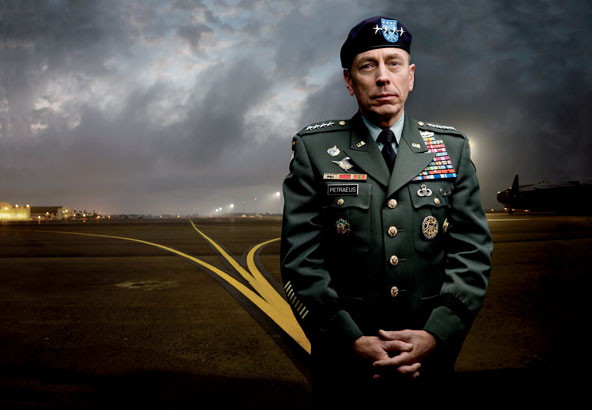
    General David Petraeus has revolutionized the way America wages war. It was his strategy that turned the war in Iraq around. It’s his strategy that’s being used in Afghanistan. And it will be his methods that will inform how our soldiers face enemies in years to come.

    The key to his thinking is realizing that there are two different terrains that must be won in the types of war we wage now—the geographic and the human. You know what geography is—take that hill, secure that town, remove the threats from that jungle. The human terrain, on the other hand, is made up of the hearts and minds of the people at the site of the struggle and has proven to be equally important.

    It’s important because the wars we’re most likely to engage in now are not ones where two big armies square off and blast away. Anyone who tries to stand up to the United States using that method is going to very quickly learn what it means to get stomped, shredded, and served to the dogs. So most of the battles are likely to be engagements in unconventional war, where the enemy hides, and where the local populace will make or break the effort.

    In May 2010, Vanity Fair magazine published a fascinating article called “The Professor of War” by Mark Bowden. It summarizes Petraeus’s history, the source of his thinking, and the kind of man he is. With so much at stake, I was grateful to get this well-written glimpse into the general and his approach to war.

    While you’re at the site, you might want to also read another Vanity Fair article titled “General McChrystal’s Three Biggest Strategic Errors in Dealing With Rolling Stone” by Bill Bradley, published June, 2010. McChrystal was Petraeus’s right hand man. The contrast between the two men is enlightening.

    Share
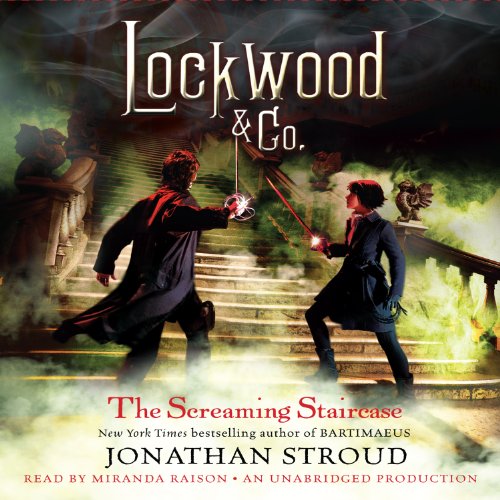
  • Good Stuff! The audio production of Lockwood & Co.

    I’m excited to share the Lockwood & Co. series by Jonathan Stroud. It’s a delightful audiobook experience for the whole family.

    Nellie introduced me to it on our road trip to Yosemite last October.

    And, oh my gosh, how we’ve enjoyed listening.

    They’re young adult paranormal thrillers with a good dose of humor and English charm.

    Yes, Netflix, launched a show based on the books, but Nellie and I tried it, and the Netflix productions don’t hold a candle to the audiobooks.

    It’s not even close.

    If you’re going to do this series, listen to the audiobooks or read them.

    The story is set in England in, I’d say, the 1980s, before cell phones and the internet became a thing. The problem is that ghosts, specters, tommy knockers, etc. are appearing all over the place and causing havoc. Because, in this world, when you’re touched by a visitor from the other side, you can easily become ghost locked, basically put in coma, or die.

    And while the ghosts can touch anyone, children and teens are the only ones who can see them. And so it’s children and teens who must fight them. Of course, large ghost protection agencies are formed, but our story is about Lucy Carlisle, who joins a tiny agency run by a daring young man named Anthony Lockwood.

    There are five books in the series, which translates to about fifty-nine hours of delightful listening. Perfect for the long road trips, cleaning, fixing dinner, walks, etc.

    Miranda Raison is the reader for the first book, Katie Lyons the second, and Emily Bevan for the final three. And they’ve all been a joy to listen to.

    I’m not normally a paranormal kind of guy, but this is making me reconsider. We loved Stroud’s Bartimaeus series. And he brings the same fast action, interesting characters, and wit to these. 

    If you enjoy delightful characters and derring-do leavened with some humor, give these a try. I think you’ll be glad you did.

    Share
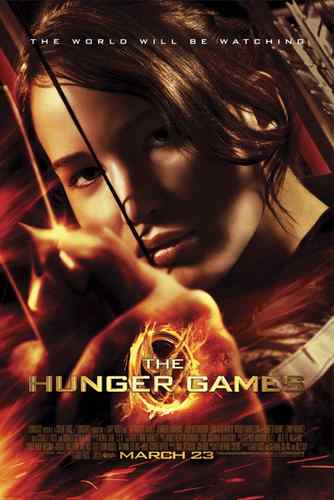
  • Hunger Games the Movie – Excellent, but marred . . .

    So is the movie as good as so many are saying?

    I liked the book a lot. You can see my review here: http://johndbrown.com/2010/09/amano-jasons-deli-and-the-hunger-games/

    Yes, but is the movie as good as the book?

    Let’s start with the beginning of the movie. During the first 10 or 15 minutes I was so annoyed and angry that I almost rose up out of my seat to shout “Stop it! Stop it! Stop it!” at the screen.

    Was this because the movie wasn’t faithful to the book?

    Because the actors sucked?

    Because the popcorn triggered a terrible case of restless leg syndrome?

    No, no, and no. 

    Then, why, John? Why?

    Because the director, Gary Ross, who wrote the wonderful Seabiscuit and Big, just couldn’t trust the material, the story, to work its magic. No, he thought that it would be a really good idea to MAKE ME SICK by overexaggerating and overusing HANDHELD CAMERA MOVEMENT. You know, the idea that if you confuse the viewer and make them uncomfortable, that will help them FEEL the wrongness, the stress, and the fear of the situation.

    A common technique for doing this is the tilted shot. Tilt the shot just a little and viewers subconsciously get the idea that something is wrong. You don’t notice it. The movie plays on, but you do feel that something is wrong, that trouble is brewing somewhere or someone is lying. A similar technique is used in action scenes. To help the viewer feel the “speed” of the action, they give us quick cuts. But the traditional tilted shot and quick cuts preserve understanding. They’re more of an unconscious effect. You still see the movie unfold and understand it. 

    However, some directors in the last few years, maybe with Spielberg’s use of this in the beginning of Saving Private Ryan (is there a movie history buff out there who can confirm?), decided that if a little was good, good golly, ten times that would be a LOT better.  So instead of realizing that action sequences like the one in the beginning of Casino Royale or the fights in Inception, ones you can easily follow, are the kinds audiences want, they figure they need to push the shots and cuts until audiences can’t make heads or tails of what’s happening.

    Instead of giving the audience tremendous thrills and suspense, they give them confusion.

    Wow, that’s a good trade off.

    And now, Gary Ross, who seems to have inexplicably bought into this, decides that what he needs to do is not only deliver confusion but nausea and annoyance as well.

    Stop, people. Stop. PLEASE! A little spice enhances a dish and takes it to the next level. But when you dump a cupful of thyme on my plate, all you do is make me want to gag.

    I’m not the only one who noticed. My 14 year old and my 19 year old noticed it as well and were bugged by it. It got so bad I told myself if it didn’t stop, I was going to walk out and ask for my money back.  Luckily, Ross toned his nonsense down and finally let the actors and story take center stage. 

    Which is what he should have done from the beginning because the acting was great. I loved Jennifer Lawrence (Winter’s Bone) as Katniss. Loved Willow Shields as Primrose and Josh Hutcherson as Peeta. Stanley Tucci playing Ceasar Flickerman, the blue-haired talk show host, was perfect. And the story was indeed a faithful translation of the book. I’m sure a huge part of that is due to the fact that Suzanne Collins, the author of the novel, helped write the screen play.  The other writers were Gary Ross and Billy Ray. 

    They did change a few minor things like Buttercup the cat is now black and white (I’m so utterly devastated I won’t be right for years), and Primrose gives the mockingjay pin to Katniss instead of Madge. They added scenes with the President of Panem.  They cut some scenes with minor characters and some twists in the plot. For those who read the book, even though the lost and changed parts added texture to the story, I think you’ll still be very pleased. For those who haven’t read the book, I think you’ll be wowed and sobered by the end. You’ll think about the Romans and their gladiators. You’ll wonder how we can we humans can do things like this. And I think you’ll feel a great indignation take root in your breast against the villains who control the world of the story.

    So, the move is a great experience that would have been over-the-top excellent if the director hadn’t marred it with way too much of something that should be used as spice instead of the main course.  Nevertheless, I recommend it. If you like action and drama, I think you’ll love the movie and the book. And hopefully my comments above will innoculate you to the opening scenes because you know to expect them going in.

    EDIT: Matthais Stork writes about “Chaos Cinema: The Decline and Fall of Action Filmmaking“. And his response to his critics. Anne Billson of The Guardian agrees that “Action sequences should stir, not just shake“.  But here’s a fellow trying to defend chaos cinema in a way that reminds me way too much of those I met in my English degree who assumed that the highest reading was one that focused on meaning, one that assumed the story was really not a story about people to be experienced, but a clever puzzle that needed to be decoded.

    EDIT: The issue with chaos cinema is that it replaces showing with telling.

    It presents “big fight” and “exciting chase” instead of showing the big fight and exciting chase. It’s similar to voice over narration: using the soundtrack to tell us about what’s happening instead of showing it to us. But it goes beyond even that because at least the narration told us what was happening. Chaos cinema at its most extreme doesn’t do even that. It replaces clarity with confusion. And this is its biggest downfall.

    For someone to react with emotion to a situation, they must (1) understand what’s going on AND (2)believe that the situation is real. The moment you deliver confusion, you take away one of the two necessary antecedents, and prevent the audience from responding emotionally. They now can only respond intellectually, e.g. Ah, I congnitively see that we are having a fight; I have no idea what’s happening and how that affects the guy I’m rooting for, but I see we’ve inserted the “fight” concept. (For those interested in the excellent discussion of emotion and stories, you’ll want to read Jenefer Robinson’s DEEPER THAN REASON: Emotions and it’s role in literature, music, and art.)

    Take it too far and you remove the second antecedent as well because now, instead of reacting to the story, you’re thinking about the camera man. Which is what happened with me when I just about came out of my chair to shout at the screen at the beginning of HUNGER GAMES. And what happened to half a dozen others I know who couldn’t look up because it would make them dizzy, and another half dozen who did look up and got sick.

    Chaos cinema trades in the super powers of cinematic storytelling for a bunch of rocks.

    Share
  • |

    “How It All Came Crashing Down” by Peter B. Gardner

    Everybody knows that we got into this recession because banks began lending money to people who had terrible credit ratings, right? People who didn’t have to prove they even had a job. I mean, how long are you going to stay in business when you keep handing out dough to people you never hear from again?
    But is that all there is to it? And was it really just the fault of congress because they told Freddie Mac and Fannie May (the organizations that purchased loans) that they had to start purchasing these highly risky things? Or was it all those greedy Wall Streeters?

    In this must-read article, “How it All Came Crashing Down,” BYU econ professors explain how we got into this mess—and what we can learn from it.

    But that’s not the end of the story. Ira Glass and the folks at This American Life uncover deeper causes of the problem in their must-listen show “The Watchmen” (no, not the movie). I mean, come on, we were told these high-risk loans were as dangerous as milkshakes. Shouldn’t SOMEBODY have seen it?

    President Obama keeps saying that the root of the problem was that there wasn’t enough government oversight. Sounds good, doesn’t it?  We’ll get disinterested Uncle Sam to protect us from all these investment bullies. But if we dig a bit deeper, it appears that Uncle Sam was one of the major players at the root of the mess.

    Ouch.

    Read. Listen. They are two fabulous pieces.

    Share
  • Donald Rumsfeld, The King’s Speech, Aquatic Ancestor Apes & Talking Bacteria

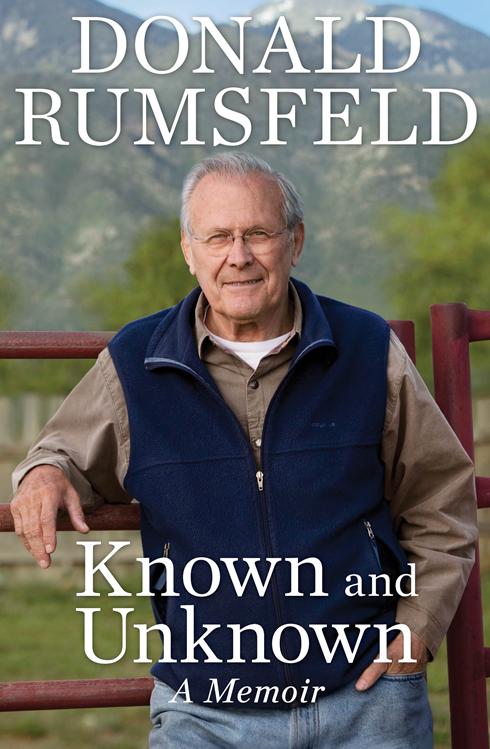
    Donald Rumsfeld

    I just finished Known and Unknown, a fat memoir by Donald Rumsfeld, and enjoyed every page.  Rumsfeld served as the Secretary of Defense under George W. Bush.  But Rumsfeld’s service didn’t start there. He was a Navy pilot, an assistant to a congressman during the Eisenhower days, and, in the early 60’s, a four-term congressman from Illinois.  He held various positions in the Nixon White House in the late 60’s and early 70’s, including ambassador to NATO.  He was Chief of Staff and Secretary of Defense when Ford took over from Nixon.  Reagan tapped him to be a special envoy to both the Middle East after the Beirut bombing and to the Law of the Sea treaty discussions.  He was the president of Searle, a pharmaceutical, as well as General Instrument, the company that pioneered HDTV.  Only after all that, did George W. Bush bring him on as Secretary of Defense.

    When writing novels, I try to create characters worth knowing, either because of their interesting personality or skills or because of the events they take part in. Donald Rumsfeld is just such a character, except he’s no fiction.

    In his memoir he shares insider information on everything from Watergate to 9/11 to the war in Iraq. What emerges is a fascinating look into many of the most important events in the last forty years.  You’ll get insight into some of the issues experienced in various White House administrations and see what really was going on with waterboarding, Guantanamo, Abu Ghraib, hurricane Katrina and many other of the hot button issues in the Bush years. There are some laugh out loud moments where his understated humor shines through. There are also parts where he reveals some of his differences with others that worked with him in the various administrations, including issues with Nelson Rockerfeller, Colin Powell and Andy Card. But in everything he writes he’s fair and restrained and attempts to present the facts accurately. This is no attempt to settle scores.  Just a wonderful read.

    If you are interested in politics at all, I think you’ll enjoy this book. Moreover, I think you’ll come out a little wiser, maybe a little better person, for having spent a few hours with Donald Rumsfeld.  

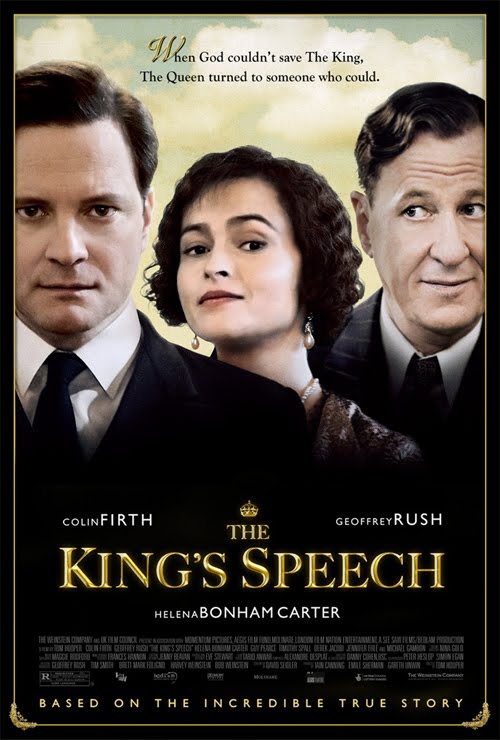
    The King’s Speech

    I do not watch many r-rated movies.  They are usually too vulgar or pornographic for my prissy tastes. However, I did my research on The King’s Speech, and having heard so many glowing reviews, Nellie and I rented it.

    It was wonderful.

    The movie tells the story of prince Albert Frederick Arthur George of Britain who did not ever expect to inherit the throne and did not want to, in part because of his stammer. Can you imagine having to be a public figure like a king and have to deal with something like that? Most of us dread the thought of public speaking. Can you imagine having to try with a stammer?

    But Albert’s lot was not to live the sheltered life. He became king when his brother abdicated the throne because of improprieties in his personal life. The day before the abdication, Albert went to London to see his mother, Queen Mary. He wrote in his diary, “When I told her what had happened, I broke down and sobbed like a child.” That is not the entry of a power-hungry man.

    He assumed the throne in 1936, when England ruled over almost a quarter of the world’s population. Three years later in 1939 WW2 broke out and Britain’s king needed to be able to address the people.

    In the movie, Colin Firth plays Price Albert. Geoffery Rush (Captain Barbossa in Pirates of the Caribbean) plays Lionel Logue, the unorthodox Australian speech therapist to whom Albert’s wife turns for help. The script is wonderful and the star-studded cast is spot on. There are moments of humor and poignancy and triumph. I was caught up in this movie as much as any I’ve seen.

    If you like English dramas, you’ll enjoy this one. And the profanity, the reason for the r-rating, is not there to depict casual vulgarity. It was part of a technique used by the therapist. In the end, you’ll overlook it and find yourself on pins and needles, rooting for this fine man.

    Aquatic Ancestor Apes & Talking Bacteria

    I’ve written about TED before. The annual TED (technology, entertainment, design) conferences, in Long Beach/Palm Springs and Edinburgh, bring together the world’s most fascinating thinkers and doers, who are challenged to give the talk of their lives (in 18 minutes or less). The folks at TED record these speeches and put them up for free on their site for the rest of us to watch. And I just watched two dandies.

    The first is by Elaine Morgan who says we evolved from aquatic apes (sigh, just when you think you’ve found grandpa Eddy hanging out in the trees, you learn he’s an imposter). Morgan is a Welsh writer for television and also the author of several books on evolutionary anthropology. In the speech she describes the reasons why it makes sense that humans had aquatic ancestors. Along the way, she illustrates key principles of science, including why science by consensus is no science at all. Her manner is so delightful and engaging I think I could listen to her for hours, preferably around the dinner table. Watch her right now. She just might convince you.

    The second speech was given by Bonnie Bassler, an American molecular biologist, who has been part of the team that discovered key insights into how bacteria talk. It appears that bacteria do not invade a host and start doing damage. No, they wait until their numbers are sufficient that they have a chance of surviving. They coordinate defense and mount attacks as a group. Who would have thought? Knowing how this works is not only interesting all by itself, but it has stunning implications for medicine and fighting infection. Bassler is a fascinating and enthusiastic presenter. Among other things, you’ll end up seeing that humans are more bacteria than you could imagine. Watch her.

    Share
  • Brown Family Christmas Fun — I Hope

    I like paintball.

    My wife and girls do not. Something about bruising and pain.

    We could get pantywaist nerf guns. We do have some PVC marshmellow shooters. But a man wants something with a bit more kick.

    I think I’ve found it. They’re called AirForce BlowGuns. Like PVC guns, you power them with your own breath. Unlike a lot of those guns, these seem to have some power.

    Watch the video here to see them in action: http://www.indiegogo.com/projects/airforce-blowguns-toy-foam-dart-gun

    We just ordered six. I really, really hope this one funds.

    If you’re looking for some family fun on Christmas morning, maybe this is it.

    Share