The First Thing You Must Learn to Write Killer Stories

This is the first “mystery.” It is the grand unifying theory that unlocks everything that follows.

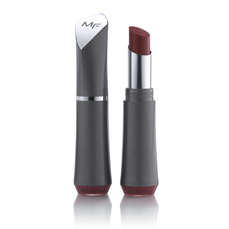
The key to this mystery can be discovered in the answer to this question: which of the two pictures below most accurately defines lipstick?

Picture A

Lipstick in tube

Picture B

Lipstick on glamour gal

Learn more in the writer’s section (okay, so the page is there, but where in the fricken ricken frack can you find it? I’m still learning this dang WordPress thing, so just go here)

Share

Similar Posts

  • |

    Indie Thoughts: Publishers know profit, but haven’t tapped best seller lists

    In The Business Rusch: Generational Divide Kris Rusch points out that the new on-demand and long-tail market for books has changed the duration of the opportunity a book has to be successful, but that it seems the industry still isn’t recognizing this in how they measure success.

    The problems come from the fact that those of us who run things—people in our forties, fifties, and sixties—use metrics that were developed by our parents for their world, that tightly controlled Mad Men world where everyone was expected to be the same, not just in what they wore or bought but in what they listened to or watched or read as well.

    The bestseller list?

    It measures velocity. (A good essay on this topic, “The Meaningless Metrics of Fame,”  came from Mike Briggs, husband of Patricia Briggs, earlier this week. I’ve also dealt with it.)

    Reviews?

    They only want new books, and then only at the time of release.

    Brick and mortar bookstores?

    They only have room for the latest releases, and then only the ones that are the most popular with their customers (whoever those folks might be).

    Books have come late to this fight. Books have been available on demand for only about four years now, in the U.S. In other countries, there’s been even less time.

    And we’re all still fighting over meaningless metrics, to use Mike Briggs’ term, because those metrics only measure things that were important around the water cooler, not things which are important now.

    What’s important now?

    She goes on to say:

    The publishing industry isn’t even talking about new metrics. That idea hasn’t occurred to traditional publishing, and indie (or self) published writers are constantly seeking validation from the old system—trying to figure out ways to game the bestseller lists or to get a fantastic review from somewhere that has old-world prestige . . . But at some point, traditional publishers are going to have to develop new ways to figure out which products sell well and which ones don’t. All of their systems—from sales figures (which measure books shipped not books sold) to bestseller lists to critical acclaim—are based on the old models.

    Kris is a very experienced with publishing, but her last point conflates internal accounting with marketing. Publishers DO know which products sell.

    The primary measure of success in a financial enterprise s not new. It’s been around for 100’s of years. And on demand and long-tail markets don’t change it.

    The measure is how much a product or service contributes in profit to the bottom line. You take revenues, minus expenses, and that’s the contribution that product (a book in this instance) makes to your total profit. Or to covering your fixed costs.

    Booksellers have measured the success of their books with actual or estimated profits for quite some time. Publishers already know which books sell well and which don’t. No accountant in the world is going to report books shipped as the measure of success. And they don’t. The very fact that publishers have a profit and loss statement and show returns on royalty statements demonstrate that. They look very closely at actual and estimated profits. And to they do this by channel, which is reflected in a small way when they break out ebooks on royalty reports. This is all basic accounting.

    Here’s an example. Until Ender’s Game the movie, Ender’s Game the book hadn’t appeared on any best seller list since it was first released. And its release was 30 years ago! Yet over the years Tom Doherty touted its sales numbers many times. Tom knew that book was gold. Of course, he did. Because he doesn’t use best seller lists to tell him what’s selling well. He knows those lists are marketing devices. He has the real data in house. Why would he need a list to tell him anything?

    And Tom isn’t going to use books shipped either. Tor may report those numbers to Publishers Weekly for marketing purposes, but he will always multiply that number by an expected return rate to estimate sales. He wants to do that. Because books shipped is meaningless to the bottom line and everyone knows it, including the auditors.

    Publishers are well aware of the long tail. They see it with books that have been rotated out of the brick and mortar channels but are still selling in the online ones. They report it in their annual statements. They know the online channels work differently from the brick & mortar ones.

    The measure of success is still the same as it ever was—how much profit is this property contributing to our bottom line?

    Marketing, however, is a whole other ball of wax.

    What the long tail and on-demand allow are marketing campaigns that are impossible in the brick & mortar channel. In brick & mortar you have a limited time to advertise (roughly 8-15 weeks). After that period, most books are rotated out of the store. This means that any marketing for those brick & mortar buyers MUST coincide with the period when the books are in the stores.

    But the online channels open up all sorts of other opportunities. You can market forever. And the contribution margin is always positive. The online and POD costs are easily recouped with each sale. (Publishers are well aware of this profit potential; this is why we have so many making grabs for backlists.)

    And I see publishers taking advantage of these new marketing methods. This last week I saw publisher books not currently stocked by brick & mortar retailers on BookBub, BargainBooksy, and Book Sends. And the industry isn’t totally focused on new books for reviews. I just had a large newspaper agree to look at my book that was published four months ago. Still, Rusch is right when she says that the publishers haven’t adapted one of their biggest marketing tools to take advantage of the new opportunities–they haven’t done anything with the best seller lists.

    Amazon has lead the way in creating new ways of marketing books to different types of readers with their best seller lists. These lists create the excitement of discovery.

    But every one else is still reporting weekly sales on the big lists.

    If I were a publisher, I’d be asking USA Today to provide more than just the weekly view of the top 150 books. And USA Today is THE list to watch because their numbers are not based on units shipped to a sample of stores, but actual sales. Here are some lists that readers would be interested in.

    1. Most anticipated this week: based on pre-order totals
    2. Most anticipated this month: based on pre-order totals
    3. Hot new releases: based on weekly numbers
    4. Hot new releases for the month: based on monthly numbers
    5. Books with legs: last 3 months; I know it needs a different name (grin)
    6. Best sellers of the last 12 months: annual total of units sold
    7. Best sellers of the last 18 months: total units
    8. Contenders: for each of the lists above show the next 150 books (I always want to see the next 100 books after the top 100 on Amazon’s lists; why not show readers the top 300?)
    9. Movers: for each of the lists above show those that have the biggest rise in percentage sales and meet some unit minimum (you don’t want to feature books with 2,000% increase because they went from selling 1 unit to 20), even if they don’t break the best seller lists
    10. Genre: allow all of this to be sliced by genre.

    Let the reader select the view they want to see!

    Avid readers will gravitate towards the shorter time periods. Those that read fewer books will gravitate towards the longer periods. Everyone who wants to discover something new will go to the contender and mover lists.

    This is about marketing. Not publishers measuring success.

    And then armed with those numbers guess what the publishers will do? They will go back to the brick & mortar venues and pitch to have some of these same books carried in the stores for the first time (some publisher books are printed digital first) or carried again.

    Share
  • I hate mission statements, but…

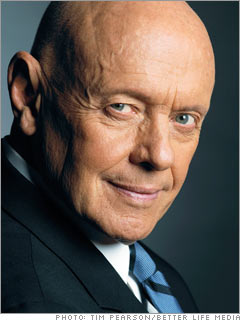
    Stephen R. Covey (or is it Lex Luthor?)
    Stephen R. Covey (or is it Lex Luthor?)

    First of all, if I could look like Stephen R. Covey does in that picture, I would shave my head and never look back. Holy moly, I love that picture. But that’s not why I’m writing.

    James Maxey is a writer who I respect and whose comments on the boards of Codex Writers often make me think or laugh. He recently started a thread about writing mission statements.

    Ack!

    I groaned when I first read the title of his topic. I know first-hand how useful goals are. I know how vital it is to identify what’s vital in any endeavor. Heck, I’m a Covey-lover through and through.

    But every mission statement I’ve seen has either been useless corporate toilet paper (because they’re printed on stuff that’s too stiff and rigid to be of any help in the bathroom) or it’s a personal artifact that has a six week half life, after which it turns into something like that singing fish you bought and can’t for the life of you figure out why or where to put it now that you realize you could have eaten a steak for just as much money and the pleasure would have lasted longer.

    And yet consciously thinking about how you want to live is so powerful. I think the corporate world ruined the term for me. I cannot bring myself to write a “mission statement.” I know what I want to do in my various roles in life. I know how I want to live. But I cannot use that label. Alas.

    So here’s my “what I want to do” as far as writing is concerned. It’s not crisp and clean. And if I had to write it again, it would come out differently. But it has the gist.

    —-

    I want to make people fall in love like I did when I first watched the Sound of Music–that sweet, pure yearning. And when they’re out of love, I want them to see a way back.

    Every once in a while I want the ground to shift under the feet of my readers like it shifted under mine when I first watched Les Miserables with Anthony Perkin.

    I want them to laugh.

    I want to give them the wonder and adventure that was given me when I read the Hobbit.

    I want them, at least once, to shout in triumph.

    I want to share my delight in people who are fascinating, flawed, salt-of-the-earth, odd, funny, strong or a hundred other wonderful things, but who show some courage, a little or a lot.

    I want readers to weep at the hope of redemption. I want them to despair at loss.

    I want the sun to shine. I want the world to crack.

    And when my readers are done, when the book’s closed and they sit back, I want the story and people to linger, I want my readers to want to go back. I want them to feel it was, not only a surge of living, but a good thing to have once been lost in the pages of my book.

    Share
  • Exposition, Character Description, Curiosity vs Suspense

    Another great podcast from the writing excuses team. This time with Patrick Rothfuss (I did love his book) on writing exposition.

    http://www.writingexcuses.com/2008/09/15/writing-excuses-episodes-32-talking-exposition-with-patrick-rothfuss/

    One comment that stood out was Brandon’s conscious choice to leave some explaining to chapter 6 of Mistborn. Not only did it make the beginning more accessible, but it actually created a sense of mystery about Kelsier. I wanted to know more.

    Although, I would caution new writers that when Rothfuss talks about withholding, he’s talking about setting. He’s not talking about keeping the story from the reader. You can’t build suspense if you hide what’s going on, the dangers, etc. You can build a bit of curiosity, but that only holds the reader’s attention for a short time. Give information for suspense. Withhold for curiosity. They are two different things.

    To get a sense of proportion on exposition or broad brushing a character, I recommend Bernard Cornwell’s writing advice: http://www.bernardcornwell.net/chapters/writingadvice.htm

    Take a book you love, get a colored pencil or crayon, then begin reading. When you find a passage of descrition/setting, draw a line along the side. After 30 or so pages of doing this you’ll begin to see how much setting the author puts in and how he goes about doing it. Do this with a few stories you love and you’ll begin to see patterns.

    You can do the same thing with character. In fact, I just finished FEAR NOTHING by Dean Koontz. Loved how he did his characters. So I’ve got a used copy and a copy of VELOCITY and am marking them up. I’ve gotten a number of very interesting insights.

    Share
  • Generating Story 8: Creative Q&A part 2

    I realized I needed to blather a bit more on this topic to warn you against something before I bring the other authors on.

    You’re going to be tempted.  You’re going to be tempted to seek for some Holy Grail list of magic development questions.  Some of you are going to be tempted to compile some big old honking list of “the questions that will produce a killer story every time and all I have to do is ask them.”

    That list doesn’t exist. If you seek for it, you’re going to waste a lot of time and end up having to fight killer rabbits and fetch shrubberies for weird knights.

    Don’t fall for it.

    But, John, didn’t you say there were core questions?

    I did.  You need answers for those.  But you need to also understand that a writer will ask a great number of development questions when writing a specific novel, some of which he might only ask once.

    Last year I was out on the forum at CodexWriters.com and one writer asked the rest of us how we approached developing our stories.  He was looking for some kind of development map, e.g. I have this piece of the story, now I need to develop the rest–how does one go about that? 

    That discussion led directly to this series on getting and developing story ideas. My thoughts then were that you need to define and understand the basic elements of story.  Knowing the key story principles behind each element leads us to a handful of core development objectives and questions.  But–

    I DO NOT think there’s a comprehensive must-do list. 

    Why?

    Because it’s been my experience that no two stories are exactly the same, and so no two stories require the exact same questions. And even if stories are similar, questions and techniques don’t always produce the same results each time. One question or technique might prove fruitful one time, but it might be unfruitful the next, or even unnecessary.  So the point of this is NOT to get a checklist of a hundred questions that will lead you to generate the whole story in your mind before you write.

    The goal is to develop the six parts. Use the questions you need to develop those parts.

    Look at the many setting and character profile question lists that float around. As I’ve used those, I always run out of steam because while some of those questions are interesting and helpful, quite a few of them just don’t apply to the project at hand. They bore me. Maybe I felt a spark of life with one question, but instead of following it as the way into the story, the whole checklist format suggests I need to move on to the next one and fill in the blanks.

    But my goal isn’t to fill in blanks. My goal is to make the story come alive in my mind, to make the character come alive, to develop someone sympathetic, deserving, and interesting (if he’s the hero).

    So while I think looking for productive questions is important, and I DO think there are some core questions that need to be answered every time, I think a person will be more productive if they step back and identify the key things they want in the story, the scene, the particular character.  This means we’ll have some standard questions and techniques based on how stories work, but it also means we’ll learn how to do the creative Q&A process on the fly, following the zing for the current project, coming up with questions that we could never predict we’d use. 

    And we’ll use the objectives for the six core parts as the guide then build upon them.

    For example, when finishing up my last draft of Curse of a Dark God, I wrote the opening to a big battle chapter. I know that for things to be clear to the reader, I need to set the stage, have a hook, give the what, why, where, etc. I need to transport them as best I can. Those are my objectives. The questions, while not formally stated, flowed from them–what are some options for a good hook, how do I want to set the scene, etc.

    These are fairly standard objectives/questions. They’re story fundamentals. And there weren’t a lot of them. You can get overwhelmed with too many niggling objectives and criteria. I’ve found it’s best to focus on KEY things. To ask myself–what are the Pareto factors, the handful of things that really have the biggest effect in story with character, plot, scene? Once I identify those factors I can easily turn them into questions.

    So I had those handful of objectives. But I had some others that were very specific to that scene that I probably won’t use in any other scene ever.  And I couldn’t have really even known about them until I got to the point where I was writing the scene.

    For example, one was how to introduce the Dogman of Toth and his pack of maulers in a way that makes the reader say “ho-lee crap those guys are screwed!” Another one was how to introduce the kitemen in a cool way. Another was based on a feeling I was getting from my Spidey-sense that the scene I was writing was going to undercut a later one if I made the hero’s objective to kill one certain character. So I had to ask, what is the right progression of these scenes? Who should the hero attack here so it feels right, like a progression?  Another objective was to make this whole battle scene awesome, thrilling. That’s certainly something I’ll want to do with other battle scenes. But not on all scenes.

    With the very next scene I was asking–how can I make this scene tender and heart-breaking? These ad hoc questions about the Dogman and kitemen and the story progression are all great questions flowing from objectives, but they were for that one particular scene.

    So I think there are some core objectives or principles of how character, setting, problem, plot, and text work. These are based on key story factors. I listed those out in the last post and in my series on suspense. You can make a “standard” list of objectives and questions out of these. For example, one of those key objectives is for the reader to care about the hero. Another is to find him interesting. I can indeed translate these core objectives into some standard POWER QUESTIONS that might be put on a list.  Along with some core questions, there are favorite techniques (tools) we each use to help us work up what we need and get into a story, scene, character, problem, etc.

    But I think a lot of writing is using the creative Q&A on the fly because it’s just impossible to think up all the objectives and questions you’ll encounter before you get into it. 

    Have I said that about twenty times now in this post?

    Let me suggest you not try to develop everything up front before you begin to draft.  Some development questions occur when you’re sketching or outlining. Others when you’re in details of draft mode. It’s a mistake to try to get it all up front in some list.

    The key, I think, is to have our handful of CORE development objectives/questions and ALSO expect to use the QA process along the way. This allows us to move forward in the creation without needing to develop everything up front, which is impossible (no, it really is impossible), and then step back and formulate questions when the need arises, based on our objectives of the moment, and use any number of methods to generate the answers until we have something that rocks.

    But John, how do you know when you’re ready to move forward?

    For me I need to have generated the story concept–the basics of the character, setting, and problem.  When I have that, I’m usually beginning to “see” things, although certainly not everything.  Often I’ve envisioned a couple of moments or scenes.  Maybe some dialogue, etc.  When I get to this point, I’m able to write a Story Setup statement.  And then I generate a sketch of the plot with a working outline.  I DON’T have all the details, but the story’s alive enough in my mind to proceed. 

    Sometimes I begin to draft what I sketched and find out it doesn’t work.  And sometimes I have to draft to get my story concept. Eloise McGraw (I love her book The Moorchild) usually found she had to draft seven chapters before she really knew what the story was about. That’s fine. The key isn’t to use a certain set of tools in a specific sequence. The key is to get to the point where you understand the story you’re telling. If I can do that with a bit of sketching and a little drafting, great.  If I need to do a bit more exploratory drafting to have the story come to life in my mind, that’s fine too.  The key is to know what I need to know about the story and work until I know it. This is writing that’s based on objectives, on principles, not on procedures.

    So there ARE core questions you’ll need to answer for every story.  But it’s also true that you will be hunting mythical rabbits if you look for a secret magic question procedure that lists all the questions you need to ask, EVAR!  Having said that, I’ll now let these other authors finally get a few words in edgewise.

    For more in this series, see How to Get and Develop Story Ideas
    Share
  • Indie Thoughts: The Kind of Competition Publishers Want

    David Gaughran puts it all into perspective.

    Since the huge shift to online purchasing and e-books, a common meme is that there is some kind of “discoverability” problem in publishing.

    The funny thing is readers don’t seem to have any problem finding books they love. Any readers I talk to have a time problem – reading lists a mile long and never enough hours in the day to read all the great books they are discovering.

    The real discoverability problem in publishing is that readers are discovering (and enjoying) books that don’t come from the large publishers. What these publishers have is a competition problem not a discoverability problem.

    They have reason to. I had a stab last year at estimating how much of the e-book market self-publishers have grabbed in the US, pegging it at around 25%. The much more rigorous Author Earnings reports have confirmed that estimate, showing that self-publishers had captured 30% of the unit sales on Amazon and Barnes & Noble.

    * * * *

    So when large publishers say that the discoverability puzzle hasn’t been solved online, they are really expressing despair at retailers recommending books not published by them.

    And when large publishers say that online retailers haven’t matched the experience of buying in physical stores, they mean that they wish there was some way to relegate all that stuff from small publishers and self-publishers to the warehouse, and have tables piled high with James Patterson and Snooki.

    * * * *

    The fear-mongers always forget Amazon’s core philosophy: recommend the product the customer is most likely to purchase. It’s interesting to note that this is the exact opposite of traditional co-op: recommending the book that the publisher wants purchased.

    While it’s revealing to look at sites like Bookish and consider what Big Publishing would do with retail or discovery, we already know what it does with self-publishing. Exploitative vanity press Author Solutions runs self-publishing companies for HarperCollins, Simon & Schuster, Harlequin, is owned by Penguin Random House, and is now recommended by Publishers Weekly.

    Large publishers want to decide what gets published, what gets distributed, what gets recommended, what gets discovered, and what gets sold.

    Amazon – and the digital revolution it instigated – has made that impossible.

    Anyone can publish. Distribution has been blown wide open. Large publishers have lost power over what books get recommended and discovered too, with the agnostic approach of sites like Amazon, Goodreads, and BookBub. And large publishers have definitely lost control of what is getting sold: self-publishers have grabbed a huge chunk of the market, and more and more writers are beginning to realize they don’t need a publisher to reach readers and make money.

    This is the real reason why Big Publishing hates Amazon. Large publishers face real competition for the first time and they don’t like it one bit.

    More at Let’s Get Visible.

    Publishers have lost the barriers to entry that used to keep most of the competition out. Amazon set up a totally new distribution channel that has grabbed at least 41% of the book market.

    Forty freaking one percent!

    And of that 41% percent, it appears self-publishers have about as much of that channel as traditional publishers do.

    Think about that for a second.

    Almost half of book distribution is now out of publisher control. With no barriers, the hordes are running in to sell their books, pushing publisher books out of the good spots. The number of competitors is growing. And the publishers can’t get Amazon to relegate the riffraff to the back rooms. Can’t get them to feature only their books.

    Worse still, it appears lots of readers don’t mind that at all.

    Share