The Handout for the Killer Story workshop at LTUE

I was expecting 30 people to attend the 3 Things You Must Learn to Write Killer Stories workshop. I mean, heck, who wants to listen to me when you could, on the very day designated for it, be pitching woo? But  about 60 brave souls came out. So here’s the handout for all of you who didn’t get one.

Killer Story Workshop Notes

Had a wonderful time at LTUE. I simply love Utah Valley–it’s full of so very many good memories for me. And this will simply add to that.

Capture the zing!

Share

Similar Posts

  • Can authors make a living?

    A lot of folks hear I’m going to be published and automatically classify me with J.K. Rowling, James Patterson, or Dan Brown. Heck, I at least ought to be categorized with Joe Schmo who was featured on Oprah.

    And why shouldn’t they think that? Those are the authors they see. That’s what it means to them to be published.

    For those of us who have actually gotten a peek behind the curtain, we realize it just ain’t so. Those are best-selling authors. See my post on best sellers to understand the quantities that have to move to make a best seller. Those are huge numbers, but very few authors sell that many books.

    So what do you need to sell to make a living?  Let’s do some math.

    Let’s say you want to make $50,000, the median household income in the US at this time. I know, I know, that’s nothing in some places, but if you’re a writer you don’t have to live in San Francisco. So you want to take home $50k after taxes. That means you’ll probably need to make $62,000 before taxes. That’s our goal.  

    So here are some numbers with conservative royalties.

    What authors make on a paperback
    8% royalty (authors usually make 8 – 12 % on paperbacks)
    15% agent fee
    6.8% net royalty rate

    To net $50k with only PAPERBACK sales would you need:
    $911,765 in sales required in the year
    $7.99 per book
    114,113 books sold

    What authors make on a hardback
    10% royalty (it’s common to make 10-15%)
    15% agent fee
    8.5% net royalty rate

    To net $50k with only HARDBACK sales would you need:
    $729,412 in sales in the year
    $25.00 per book
    29,176 books sold

    If you have previous books that are still selling, they all count. Make foreign sales, they count. Can produce two books per year, maybe one in a different genre, they count. Of course, this doesn’t factor in discounts and the corresponding reduced royalty rates. Nor does it factor in costs of being in business for yourself, including taxes, insurance, etc. But this is enough to get a rough idea of numbers.

    100,000 paperbacks is a BIG number. However, you usually mix and match.

    Let’s say you sell 5,000 hardbacks. 5,000 x $25.00 = $125,000. $125,000 x .085 net royalty = $10,625. $62,000 – $10,625 = $51,375 to be made by the paperbacks when they come out the next year. At a 6.8% net royalty rate you have to make $755,515 or sell about 94,558 paperback copies.

    Here it is in an easy to read list. Given the hardback sales shown below, you’d have to make up the rest of the $62,000 with the paperback sales on the right.

    5,000 HB: 94,558 PB
    10,000 HB: 75,002 PB
    15,000 HB: 55,446 PB
    20,000 HB: 35,890 PB

    I know those seem like small numbers compared to the Publisher’s Weekly 2007 numbers I link to above. But most authors don’t sell that many books. Most authors are happy to sell 5,000 hardbacks.

    But it’s not all bad news. I looked at a few authors on the PW list comparing hardback and paperback numbers. It seems any given author will sell twice the number of paperbacks that they do hardbacks.  So perhaps selling somewhere between 15,000 to 20,000 hardbacks is the magic number.

    20,000 hardbacks is a lot. But it seems doable for a writer who has been publishing for a few years. It’s not the 700,000 of  a James Patterson. But it just might be enough to make, hold your breath, what the average household in America makes in a year.

    Share
  • How to tell an author you don’t like their book

    Mette Harrison wrote a blog about how various authors respond when they read a book, don’t like it, and then the book’s author asks them directly what they thought of the book. 

    Here’s my response.

    As an author when I ask someone, especially another author, about their experience with my story, I’m looking for a data point to see how the book’s working or to get some insight. I realize others might be looking for validation. And, of course, I hope that everyone who reads my stuff finds nirvana even if I know that is not going to be the case. But I don’t ask unless I want data. And so I would hope they would report their experience accurately. I also hope they do it in friendly and helpful manner.

    So because that’s what I want, that’s what I try to do for others.  And the sandwich+ method has been one good way for me to do that.

    1. State something specific that works for me, e.g. “I love your character Bill because he’s so outrageous.”
     
    2. State the key thing that’s giving me trouble. For example, I might say, “I am having a hard time with the pacing.” But then I ALWAYS want to give the context of me as reader when it applies to my reaction, e.g. I’m a terribly impatient reader, I like to feel hope in what I read and know I don’t like as much despair as many other readers do, I can’t stand clowns (this is true: clowns are some of the scariest creatures out there, second only to crocodiles). The author should know these readerly things when they apply so the author can understand where the comments are coming from.

    If the book’s in pro shape and I think the issue is mostly my tastes, then it’s also useful to compare their work to another successful piece or author that had the same issue for me, e.g. “This reminds me of Twilight; I know people love it, but I just couldn’t get into that book either for the same reason.”

    I don’t think this is fluff. I think it’s part of being accurate. Our reality is what we focus on. And if I make a statement that leaves an author thinking I think the work is bad, then that’s not accurate because the truth is I think I’m not in the audience.

    If I think it’s a craft issue, then I highlight the main thing I think is causing the problem. A laundry list is usually useless. But thoughtful focus on the key issue can be very helpful. If I can’t tell whether it’s a taste issue or a craft issue, I admit it.

    3. State something else that’s working for me, e.g. “While I just couldn’t get past all those clowns freaking me out, I did think your chapter openers were compelling. I always wanted to read more, but then, alas, clowns.”

    4. The + is not just leaving statements hanging. Asking some sincere questions after demonstrates my genuine interest. And I am interested. If the book is unpublished, I might ask about their plans for the book, are they going to be doing another draft or shopping it, or if my reaction is common. If it’s published I might ask how it’s being received, what others are liking about it, and what’s next.  Maybe they tell me about another project they’re working on that sounds fascinating.

    This is what I’d want an author to do for me–be accurate, interested, and friendly. In such a context, someone having issues with a story is not such a big deal. It really isn’t.

    Share
  • Meyer on the Brain

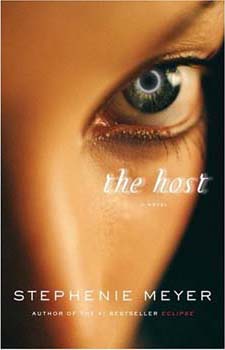
    Watch an interesting Borders interview with Meyer about Host and Twilight. The thing I keep seeing in her interviews is that this woman follows her passion. She follows the story that wows her. It’s nice, of course, that millions of fans want to share that wow with her. But I don’t know that a writer can be successful doing anything else.

    Here’s Orson Card’s blurb about Meyer in Time’s list of the 100 Most Influential People

    Nobody was looking for Twilight. A Mormon housewife writes a young-adult novel about a love affair between a teenage girl and a vampire?

    Is this Anne Rice lite? Not in the eyes of the teenagers—and their mothers—who have embraced the book.

    But Stephenie Meyer’s Twilight does raise some questions, and I’ve asked them. “You really want your teenage daughter to live inside the story of a girl who lies to her parents, invites a boy to sleep in her bed and trusts him not to take advantage of her?”

    These women look at me as if I’m insane. “But she can trust him. He really loves her. He’s…perfect.”

    In an era when much of the romance genre has been given over to soft porn, and dark fantasy is peopled with one-dimensional characters bent on grim violence, many readers have become hungry for pure romantic fantasy—lots of sexual tension, but as decorous as Jane Austen.

    Meyer, 34, did not calculatedly reach for that audience. Instead, she wrote the story she believed in and cared about. She writes with luminous clarity, never standing between the reader and the dream they share. She’s the real thing. Still, who’d have thought it? Today Mr. Darcy is a vampire.

    Card is author of Ender’s Game, Empire and Women of Genesis

    Share
  • |

    Lesson 8 finished

    If you write poopy-slow like me, you will finish 500-700 words of your draft in an hour. Let’s see what that means for various novel sizes.

    • 25,000 words: 50 hours
    • 50,000 words: 100 hours
    • 75,000 words: 150 hours
    • 100,000 words: 200 hours
    • 200,000 words: 400 hours

    And those requirements don’t count time you might need to spend re-imagining a piece or researching some gap in your knowledge or figuring out some knotty bit you couldn’t see was problematic when you first set out. A novel can be a big project and stretch over a few weeks, especially when you don’t have eight hours a day to write.

    In this lesson, you will learn that you need to treat the draft like what it is–a project–and use basic project management techniques to help you get the work done.

    Share
  • |

    Maya Lassiter interviews The Man

    Maya has one of the most quirky goat-loving blogs around. I dare you to read just one of her blogs. You can’t do it.  You’ll find yourself going back to read another. And another. Anyway, she’s been doing a series called “How Writers Do What They Do” where she interviews authors on the creative process. Mine’s the latest, but there are a lot of other interviews in the series you will want to read. Enjoy!

    http://mayalassiter.com/2011/05/how-writers-do-what-they-do-john-brown/

    Share

4 Comments

  1. John, Thanks for the great workshop at LTUE this year. I attended last year and caught your class, got the handout and was anxious to visit your website..but it was not on the handout. I see that this year you corrected that. Unfortunately, I was one of those who gave up his handout for the benefit of others. But you were kind enough to mention your site a couple of times. I appreciate the time energy and excitement that you put into your class. Hopefully it will help me get up of my rear and do more! Thanks again.

  2. Mark, I’m so happy you found it useful. Good luck with your writing. I’ll be posting writing lessons on a semi-regular basis to the site. I should have a good collection of stuff to help the new writer by the next LTUE.

  3. John,
    Attending your class made the drive down for the day worth it. I love practical and just enough structure to be fluid. You did it. You also had the audience connection thing going on. Sometimes people know how to write but are not so good at helping others or making them feel like they could try. I brought four of my novella class high school students and your class was also a fave with them. They were very clear about who had the big head and who wanted to help! P.S. You’re the latter.

  4. That’s wonderful to hear, Kathleen. I hope you guys write a million (words, that is). Thanks for posting.

Comments are closed.