Good Stuff! StoryBrand

Folks running for office, especially our wonderful citizens running for local county offices, business owners, and any of the rest of us who what to persuade people to listen, I’ve got something for you.

I will bet that most of you aren’t aware that you’re muddling your message and losing votes, sales, and converts to your causes.

Of course, maybe you’re way ahead of me. I thought I knew what I was doing. I have a master’s degree in business, spent a few years in business consulting, have created a few small startups, and currently am a product manager for large software company. Despite all of that, I had somehow missed something vital. Something simple and powerful. Something that has a dramatic effect on sales, votes, and converts. On getting people to even listen to what I had to say.

And I’m not alone. I saw another company struggling with it this weekend.

On Saturday I went and watched the latest Marvel movie at a theater in Logan. One of the pre-movie video ads was for a local company called Conservice. I don’t know how many thousands of dollars they spent on the ad they played. Or how much they spent on the many other ads we’ve seen over the years. But when it finished, I turned to Nellie and said, “I still don’t know what that company does or why I should care.”

“I know,” she said. “I know.”

We were both baffled. After years of seeing their ads, we still have no idea what they do, how it would make our lives better, or what action we should take to use their service.

They have wasted thousands and thousands of dollars on their marketing.

There’s another local company that advertises during those pre-movie slots. It’s called ARS. I saw one of their ads this weekend as well. But it only reminded me of what I already know. I know exactly what they do, how it would make my life better, and what action to take.

If you have a flood, fire, or plumbing backup—whatever—they clean it up. “Got a mess? Call ARS.” That’s their one-liner.

If I ever have a mess, I will call ARS. I will never call Conservice. I have no idea what they do.

What’s the difference here?

Clarity.

And what generates that clarity?

A complete focus on the customer. The ARS ads are all about the customer and their problems and needs.

The Conservice ads, on the other hand, are all about Conservice. We’ve been in business for x years. Here’s what our building looks like. Here’s a worker planting a bush. Blah, blah, blah.

The ARS ads are all about me, the guy in the theater seat, the thing I want and the problem I have. ARS features me as the hero in my own story. They present themselves as the helper—the Yoda or Gandalf or Haymitch who helps the hero get what they want. You got a mess? We’ll help you.

The difference in the power of the two ads is night and day.

Of course this means it’s been verified that I’m a dolt. After all the years in business and education, I should have known this. But the surprising truth is that I’m not alone.

I look at the marketing we do at the billion-dollar company I work for and see this same issue everywhere. Millions of dollars spent on muddles. I look at company websites on the internet and see more muddles. I recently listened to pitches by many of our local citizens running for office and saw the same thing. It seems this communication muddle afflicts a lot of us.

About five years ago, when I began investigating an idea for a new company, I came across the Lean Startup method pioneered by a guy at Stanford and began to see the light. But a few months ago, the curtains were completely pulled aside to let in the sunshine. And wow! What a revelation.

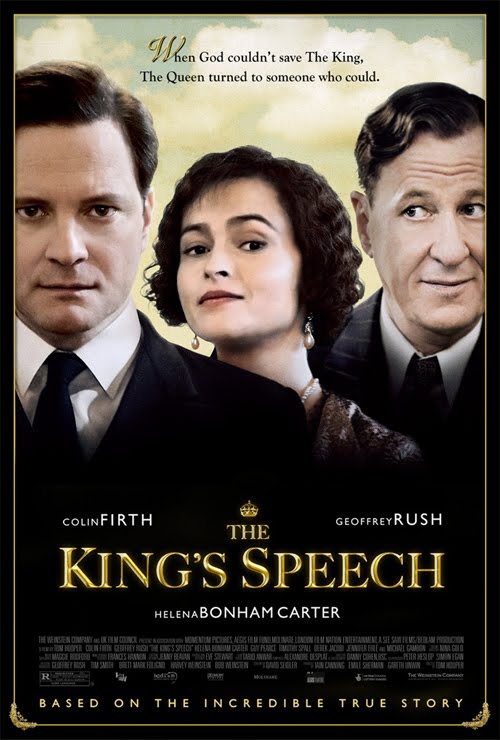
If you want to get people to listen, you have got to hear what Donald Miller has to say. He’s consulted with thousands of companies on how to clarify their message so people will listen. His framework and method make clarifying your message so easy.

He calls it the StoryBrand framework, and it’s brilliant. What it does is help you clarify your message so that a customer or voter or whoever will know within three seconds:

  1. What you offer
  2. How it will make their life better
  3. And what action they should take if they are interested

But it goes beyond that. It helps you actually define what you should be offering in the first place. It’s a powerful product development tool. I’ve started using this in all my business efforts. And in my training and presentations.

For example, I just used it to develop a presentation I delivered at a huge writer’s conference last week. The results were that after the presentation, I had a line of people wanting to thank me. I had people telling me I made them cry. Others wanted to give me a hug. They were grateful. I had people tell me it was the best presentation of the conference.

This was not because I’m brilliant. I’m a dolt, remember. It’s because I used the StoryBrand framework to focus on those people. Their needs. Their problems. Their aspirations.

If you’re running for office, if you have a business, if you want to persuade anyone to do anything, then let me recommend you listen to this guy and learn about this framework.

Get the revelation. Get out of the muddle. And get people to listen.

And when you’ve finished the Miller stuff above, read How to Write Copy That Sells by Ray Edwards, the guy who has partnered with Miller. It’s all about clarifying your message as well.

Share

Similar Posts

  • Tales From Earthsea

    Tales from Earthsea (The Earthsea Cycle, Book 5) 

    When I was in 7th grade I read Tolkien’s The Lord of the Rings trilogy. Of course, I wasn’t the sharpest literary tack back then, and so great sections of The Two Towers and The Return of the King went over my head and, therefore, bored me. But, with the help of the Hildenbrant calendars, enough came through to thrill. I wept at the events in the mines of Moria with Gandalf, geeked out over the elves, orcs, and Nazgul, was fascinated with the Ents and wizards, and generally wanted to stay in that world forever.

    When I finished the trilogy, I mourned–the dream was over. I read Smith of Wootton Major and Farmer Giles of Ham. Both were delightful, but neither was the same as LOTR. Then I saw The Silmarillion. It had a cool cover, a map.

    Oh, joy! I bought it and took it home.

    Alas, that book was about as much fun as reading a ten-pounder on the history of baroque cornices. I tried mightily to push through, but I don’t think I was able to finish more than 15 pages total from all the sections. So I mourned again, and then, still feeling the loss, went looking for something else that might whisk me away.

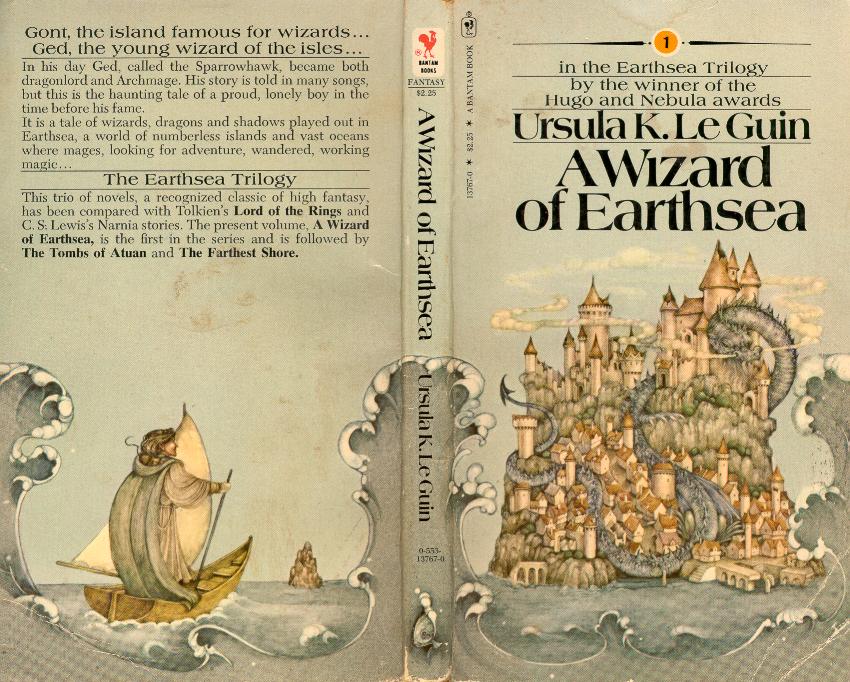
    One of those whisking stories was Ursula LeGuin’s A Wizard of Earthsea. Of course, the fact that there was a wizard in it was important, but as equally delightful to my then puny literary prowess, was that the story was a slim thing. As were its two companions The Tombs of Atuan and The Farthest Shore.

    Here’s the cover the drew me in so long ago.

    I relished all three and moved on to other stories.

    Time passed and I forgot about LeGuin. Almost 10 years later I was newly married. My wonderful new wife started reading to me as we’d drive. And on one of the three-hour drives to her parents, she pulled out this little book and began to read.

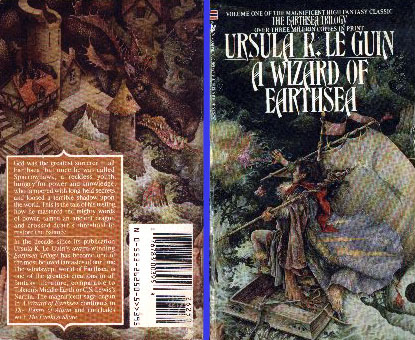
    It was A Wizard of Earthsea! And it was just as marvelous the second time with a bigger brain as it was the first time with a smaller one. In fact, Nellie’s reading to me was so enjoyable I slowed down to 40 mph so I could extend the 3-hour drive. Of course, she quickly caught on to my scheme, shut the book, and told me she wouldn’t read another word unless I drove 65 mph, at the very least.

    What can a guy do? I kept it at 65 (well, 60) and joyed in the wonderfulness of a new wife who would read aloud to me (you mean this model reads, too?!), the night and the stars spread above those lonely Utah and Wyoming roads, and the amazing story unfolding before me.

    And this is the cover of the one my wife read to me.

    We read all three to each other and moved onto other stories.

    More than 15 years passed and I’d mostly forgotten LeGuin (I really never could get into her Hainish stuff). I was in the library looking for some good audio. And there on the shelf stood Tales from Earthsea by Ursual LeGuin.

    Just a little slim container of cassettes. Why not? I thought.

    Holy heroes, Batman—it was gold. LeGuin’s a master of building that feel: the wonder of fantasy, the mystery of things long forgotten or rumored to exist, the pull of learning arcane powers. I loved every minute of it (well, except for the slogging first four pages of backstory, but get through that, which isn’t too bad with Karr’s reading, and you’re into the kingdom). The first story, “The Finder,” read by Amanda Karr was incredible. It takes us back to how Roke became was it was in the first trilogy. But the delights do not end there. Four more stories follow.

    I liked them all so much, I just checked the audiobook out again so I could listen a second time. And, it appears, LeGuin was busy in my absence because she has more Earthsea than this.

    • A Wizard of Earthsea, 1968
    • The Tombs of Atuan, 1971
    • The Farthest Shore, 1972 (Winner of the National Book Award)
    • Tehanu: The Last Book of Earthsea, 1990 (Winner of the Nebula Award)
    • Tales From Eathersea, 2001 (a collection of short stories)
    • The Other Wind, 2001

    I just got the last two from Amazon. I can’t wait to enter into LeGuin’s magic spell yet again.

    More cool Earthsea stuff.

    Share
  • Good Stuff! Simply Three

    The joy of music. Pure, unadulterated joy–this is what I recently stumbled across on YouTube.

    I was watching the The Piano Guys and thought I saw something new from them. I clicked, but it wasn’t The Piano Guys. It was Simply Three doing a cover version of the popular “Wake Me Up” by Avicii.

    For those unfamiliar with the term, a “cover” or “cover version” is a reworking, updating, or interpretation of an existing song. And this cover simply blew me away.

    SimplyThreeWakeMeUp

    Simply Three is an electrifying trio made up of cellist Zack Clark, bassist Nicholas Villalobos, and violinist Glen McDaniel, although they have switched in other violinists, including Alex Weill and Olivia Lemmelin. But don’t let the instruments fool you–this isn’t some stuffy classical music gig. And it’s not muzak in the elevator. Not even close.

    They are doing what Lindsey Stirling and The Piano Guys are doing: taking modern songs in wonderful new directions and, in the process, making these classical instruments cool again.

    I went on to watch a number of their other covers, and then I had to purchase the songs because I simply had to be able to listen to their great beats and interpretations on the road.

    Here’s their cover of “Wake Me Up.” The joy Zack Clark (the cellist) exhibits sells the whole thing for me.

    Here is their cover of “Demons” by Imagine Dragons.

    And finally their cover of “Counting Stars” by OneRepublic.

    If you like them, you can get each of these on Amazon for less than a buck with these links:

    Buying them not only supports the artists, but it lets them know there’s a demand for it and encourages them to make more. And I hope they make more.

    ***

    By the way, “Counting Stars” has some interesting lyrics. Ryan Tedder, the songwriter, is a professed Christian. He grew up in a Charismatic household and graduated from Oral Roberts University.

    However, you might look at some of the lyrics and think he’s given all that faith up.

    I feel something so right
    Doing the wrong thing
    I feel something so wrong
    Doing the right thing
    I could lie, could lie, could lie
    Everything that kills me makes me feel alive

    But you need to look at the lyrics in context of the rest of the song and the artist’s statements about the song to see he’s singing about something totally different.

    Some poets, and songwriters are poets (song is where poetry lives these days), think being obscure is cool. Tedder follows that more obscure approach in this song, which is unlike the immediate clarity he put into the lyrics of the fantastic “Halo,” performed by Beyonce, or his own OneRepublic’s “Apologize.”

    Sometimes the artist writing gnomic lyrics doesn’t want to pin down a message for the listener—they think it’s cool for each person to make up their own message (I prefer clarity). Other times they do have a message, but they want the listener to work for it, and so they try to be subtle. Or sometimes they simply goof and don’t realize their lyrics are being so vague.

    I have no idea which path Tedder was trying to take with these lyrics, but I do know that he’s made statements about the song. And these statements give us a guide.

    In an interview with 5280, the Denver magazine (Denver is where Tedder lives) we get the first glimpse.

    At 15, he began writing his own songs. “I obsessed over music and just loved it,” Tedder says. “But I never considered it as a career. Where I grew up you go to high school, you go to college, you find a wife in college, you get married, you have 2.3 kids, and if that hasn’t all happened by the time you’re 24, some people think there’s something wrong with you—or the assumption is that maybe you’re not into the opposite sex.”

    But he couldn’t keep away.

    Back in Oklahoma, at Oral Roberts University, the largest charismatic Christian university in the world, Tedder majored in public relations and advertising. At least that’s what his diploma says. Based on the time he put into sneaking into the Timko-Barton Performance Hall’s piano rooms, he probably could have been a double major. He spent hours on the piano and the guitar deconstructing his favorite albums—like Eric Clapton and B.B. King’s Riding with the King—figuring out the chords and then trying to write new songs using those same chords. He was skipping classes—even meals—to write songs.

    No one knew. Not friends. Not his roommate. He sang in secret. He was in the school choir, but his friends always thought it was odd that a person who didn’t seem overly musically inclined would be taking a singing class. When he was in one of the piano rooms he would tape a piece of notebook paper over the small window in the door so that no one could see him.

    Tedder says there were two reasons he hid his passion. The first was that he believed there were so many bad singers and bad songs in the world that he didn’t want to add to the noise. He wanted to be certain he would be successful before he revealed himself. The second reason was more deep-seated: Being raised in a religious home, Tedder had been taught that there was a purpose for his life, and that because God had ordained that purpose, he should live the life expected of him—one that was pious and humble. “Deciding you want to go into the music business is about the most narcissistic thing in the world,” Tedder says. “I had this constant battle—and to some degree I still do.”

    So Tedder felt “wrong” about songwriting. But he eventually began to see it as his gift to share.

    In an interview with Billboard magazine, we learn that he wants his OneRepublic to sing about different themes than the norm.

    Billboard: Given “Counting Stars”‘ uplifting, faith-based message, it must be gratifying to be connecting with such a meaningful song.

    Tedder: I think it’s our responsibility as a band, and what separates us from everyone else. I took that from being a fan of U2 for two decades now, since “Achtung Baby.” To this day, they might be the only band on that level who sings about things other than just boy-girl troubles or the kind of selfish, “I’m a badass” stuff. I’ve spoken with Bono about this when we toured with him, and he said the same thing. I felt a responsibility to actually write and sing about things that have a level of human gravity to them. If everybody else sings about sex and love and lust and money, then somebody’s gotta be singing about life and faith and hope and things of that nature.

    So if “Counting Stars” isn’t about sex, lust, and money, what’s it about?

    In another interview with Radio.com, he indicated that the whole counting stars bit was for anyone who loses sleep wondering how they’re going to be able to afford their rent or provide for their family. When he was first starting out, things were rough.

    “A lot of time I just lay in bed awake, stressing out,” Tedder said. “Everybody does it. And I just thought, I can’t wait until I’m counting stars and not counting dollars anymore. Things will be so much better.”

    To me, it’s clear that Tedder is singing about his story. And he’s singing for people like him who have a passion, but society says it’s not the practical thing to follow or dedicate your life to. Songwriting is what makes him feel alive. Furthermore, he had flashing signs indicating that if he sought, he would find—in other words, it was the thing God wanted him to do. And he just had to have hope, a four-letter word for those who are practical- and money-minded, and follow that passion.

    We can argue the merits of that follow-your-passion message, but I think we’re all happy Tedder followed his.

    ***

    And while we’re talking about the joy of music, how about this baritone saxophone and drum.

    Share
  • Peak

    peakbyandersericssonHow many pushups can you do in a row?

    10, 20? Could you do 100?

    And you’d have to be a freak if you could do 500 in a row, right?

    Well, no.

    You’d just be human.

    In 1980 Minoru Yoshida of Japan did 10,057 pushups nonstop.

    In 1993 Charles Servizio of the good old USA did 46,001 pushups in 21 hours and 21 minutes.

    In 2016 David Escojido of the USA did 2,298 pushup in 1 hour.

    You might think that these folks must be oddities. They must be gifted. They must have some weird thing in their DNA allowing them to do these things.

    But you’d be wrong.

    None of these people were born that way. In fact, what researchers are finding is that most of the folks that we think are prodigies—folks like Mozart, Tiger Woods, chess masters who can play 20 games at once without even looking at a board—the biggest thing that separates them from the rest of us isn’t DNA.

    Anders Ericsson, a researcher at Florida State University, has spent the last 30 years studying what gives experts their edge. And he reveals in Peak: The New Science of Expertise that he and other researchers have found that while there are some physical traits like height and size that definitely make a difference in some physical activities (notice how all the top gymnasts are short), what really sets people apart is how much of a certain type of practice they’ve done.

    Not just practice, but a certain type of practice.

    Practicing “hard” doesn’t do much for you. Putting in a lot of hours doesn’t do much either. Instead, you need to practice in a way that has been shown to lead people to actually improve their performance. You still have to put in a lot of time practicing—there is no shortcut—but only the type of practice he explains in the book seems to lead to the increase of performance.

    Is he saying that anyone can do anything?

    No. When I first looked into his research, one of my big issues was that it seemed he was claiming anyone could do anything with 10,000 hours of practice.
    But he’s not saying that.

    Is he saying genetics has no influence?

    It can, but what he’s found is that it doesn’t have the role we normally think of when we think of top performance. And, most importantly, we place artificial limits on ourselves by thinking people are born to this or that activity.

    There is far too much to post here. What you need to know is that what he shares in this book is fascinating, compelling, and surprising. I’ve been training people for over thirty years. And I found myself enlightened. If you’re at all interested in education, or getting better at some activity (from parenting to golf), or helping your kids get better, you’ll want to read this book. Highly recommended.

    Share
  • Donald Rumsfeld, The King’s Speech, Aquatic Ancestor Apes & Talking Bacteria

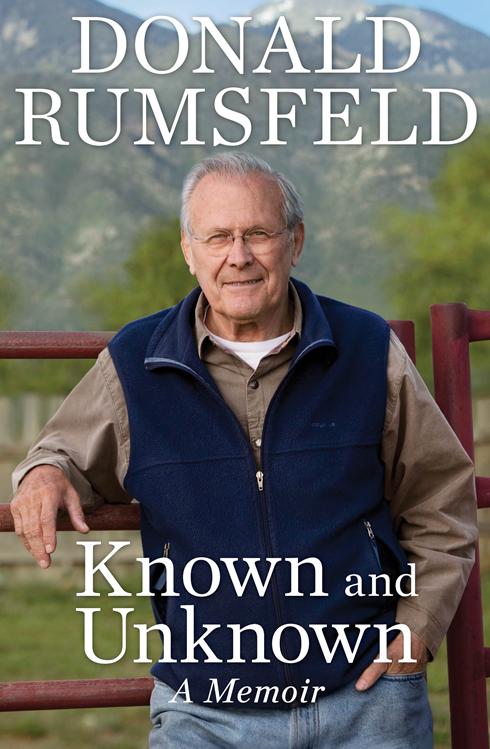
    Donald Rumsfeld

    I just finished Known and Unknown, a fat memoir by Donald Rumsfeld, and enjoyed every page.  Rumsfeld served as the Secretary of Defense under George W. Bush.  But Rumsfeld’s service didn’t start there. He was a Navy pilot, an assistant to a congressman during the Eisenhower days, and, in the early 60’s, a four-term congressman from Illinois.  He held various positions in the Nixon White House in the late 60’s and early 70’s, including ambassador to NATO.  He was Chief of Staff and Secretary of Defense when Ford took over from Nixon.  Reagan tapped him to be a special envoy to both the Middle East after the Beirut bombing and to the Law of the Sea treaty discussions.  He was the president of Searle, a pharmaceutical, as well as General Instrument, the company that pioneered HDTV.  Only after all that, did George W. Bush bring him on as Secretary of Defense.

    When writing novels, I try to create characters worth knowing, either because of their interesting personality or skills or because of the events they take part in. Donald Rumsfeld is just such a character, except he’s no fiction.

    In his memoir he shares insider information on everything from Watergate to 9/11 to the war in Iraq. What emerges is a fascinating look into many of the most important events in the last forty years.  You’ll get insight into some of the issues experienced in various White House administrations and see what really was going on with waterboarding, Guantanamo, Abu Ghraib, hurricane Katrina and many other of the hot button issues in the Bush years. There are some laugh out loud moments where his understated humor shines through. There are also parts where he reveals some of his differences with others that worked with him in the various administrations, including issues with Nelson Rockerfeller, Colin Powell and Andy Card. But in everything he writes he’s fair and restrained and attempts to present the facts accurately. This is no attempt to settle scores.  Just a wonderful read.

    If you are interested in politics at all, I think you’ll enjoy this book. Moreover, I think you’ll come out a little wiser, maybe a little better person, for having spent a few hours with Donald Rumsfeld.  

    The King’s Speech

    I do not watch many r-rated movies.  They are usually too vulgar or pornographic for my prissy tastes. However, I did my research on The King’s Speech, and having heard so many glowing reviews, Nellie and I rented it.

    It was wonderful.

    The movie tells the story of prince Albert Frederick Arthur George of Britain who did not ever expect to inherit the throne and did not want to, in part because of his stammer. Can you imagine having to be a public figure like a king and have to deal with something like that? Most of us dread the thought of public speaking. Can you imagine having to try with a stammer?

    But Albert’s lot was not to live the sheltered life. He became king when his brother abdicated the throne because of improprieties in his personal life. The day before the abdication, Albert went to London to see his mother, Queen Mary. He wrote in his diary, “When I told her what had happened, I broke down and sobbed like a child.” That is not the entry of a power-hungry man.

    He assumed the throne in 1936, when England ruled over almost a quarter of the world’s population. Three years later in 1939 WW2 broke out and Britain’s king needed to be able to address the people.

    In the movie, Colin Firth plays Price Albert. Geoffery Rush (Captain Barbossa in Pirates of the Caribbean) plays Lionel Logue, the unorthodox Australian speech therapist to whom Albert’s wife turns for help. The script is wonderful and the star-studded cast is spot on. There are moments of humor and poignancy and triumph. I was caught up in this movie as much as any I’ve seen.

    If you like English dramas, you’ll enjoy this one. And the profanity, the reason for the r-rating, is not there to depict casual vulgarity. It was part of a technique used by the therapist. In the end, you’ll overlook it and find yourself on pins and needles, rooting for this fine man.

    Aquatic Ancestor Apes & Talking Bacteria

    I’ve written about TED before. The annual TED (technology, entertainment, design) conferences, in Long Beach/Palm Springs and Edinburgh, bring together the world’s most fascinating thinkers and doers, who are challenged to give the talk of their lives (in 18 minutes or less). The folks at TED record these speeches and put them up for free on their site for the rest of us to watch. And I just watched two dandies.

    The first is by Elaine Morgan who says we evolved from aquatic apes (sigh, just when you think you’ve found grandpa Eddy hanging out in the trees, you learn he’s an imposter). Morgan is a Welsh writer for television and also the author of several books on evolutionary anthropology. In the speech she describes the reasons why it makes sense that humans had aquatic ancestors. Along the way, she illustrates key principles of science, including why science by consensus is no science at all. Her manner is so delightful and engaging I think I could listen to her for hours, preferably around the dinner table. Watch her right now. She just might convince you.

    The second speech was given by Bonnie Bassler, an American molecular biologist, who has been part of the team that discovered key insights into how bacteria talk. It appears that bacteria do not invade a host and start doing damage. No, they wait until their numbers are sufficient that they have a chance of surviving. They coordinate defense and mount attacks as a group. Who would have thought? Knowing how this works is not only interesting all by itself, but it has stunning implications for medicine and fighting infection. Bassler is a fascinating and enthusiastic presenter. Among other things, you’ll end up seeing that humans are more bacteria than you could imagine. Watch her.

    Share
  • Good Stuff! The winning Lady Rebels and Lady Tigers

    RichRebelsBB360x240Cody Lundgren, Jesse Calder, and Louie Stewart led our Lady Rebel basketball team to a 10- 10 record in the regular season and a 2-2 performance at the state tournament that earned our girls second place in our region and sixth at state.

    It’s interesting that the wins and losses were split right down the middle, which means it wasn’t a losing season, but it wasn’t a winning season either.

    Or was it?

    Now, I love it when our kids win. But I’ve never believed that winning should be the ultimate measurement or objective of high school sports. In fact, I will go so far as to say that it’s possible to win every game and become the state champion and utterly fail. Because, for me, high school sports are not about winning games. They are about the lessons that can only be learned by striving for excellence through competition.

    Lessons such as learning to:

    • Work hard
    • Work smart
    • Push yourself over a long period to obtain something you desire
    • Not give up in the face of adversity
    • Not give up even when you’re behind or the odds are against you
    • Play on a team, including supporting other team members in their roles, especially during the bad times
    • See mistakes and losses as feedback and triggers for learning instead of labels
    • Exert control over your future instead of feeling nothing you do makes a difference
    • Deal with both success and defeat
    • Deal with competitors who haven’t quite yet caught the vision

    I could list many more. The opportunities for learning key lessons about winning in life litter the ground in our gyms and on our fields and on our mats.

    The question is: did our coaches help our kids seize those opportunities? Did they help them learn what really matters and have a good time doing it?

    I’m pleased to report from what I and others observed that the three amigos listed above helped our girls do just that.

    They built positive and fun relationships.

    They asked the girls to meet high standards of performance and kept the girls busy in practice with useful drills that built skills.

    They taught them instead of yelled at them, and they praised them when they did well and when they attempted to do well but weren’t yet able to execute the skills right.

    They taught them to play with skill, not with cheap shots, as was displayed by one team at the state tournament that had learned to punch the opposing team’s stomachs when they went up for shots.

    They demonstrated, by example, how to deal with losses and mistakes.

    Coach Lundgren also worked in a demonstration of how tricky the lines on the court can be for old guys, tripping them and causing them to slide across the floor (grin).

    This was a winning season for me. Coaches are really just a certain type of teacher, and I’m sure they have things they want to improve in their curriculum. But this was a fabulous season full of opportunities to learn the things that really matter in life.

    TabionaTigersBB360x240And it wasn’t just the Lady Rebels learning these kinds of lessons. For those of you that didn’t go to the tournament, you should know about the Lady Tigers from Tabiona. They’re one of our region opponents. One that we beat both times we met them in the regular season.
    In our second game of the tournament, one of our girls, one of our top rebounders, a demon under the basket, broke her hand. She knew it hurt like heck, enough to bring tears to her eyes, but didn’t know she’d broken it, and so she played the last quarter and a half with a broken hand. (Is there a lesson there?) Well, Tabiona was our next game.

    Now stop and think about this. We beat Tabiona both times this season. I think we’ve probably beaten them a lot more than they’ve beaten us these last few years. You know what you feel when a team keeps beating you.

    So the Lady Tigers found out that one of our starters, one of the players that was supposed to have played them the next day, had broken her hand. And the girls, not their coaches, decided to get her . . . flowers.

    Flowers. For a player on their region opponent’s team.

    Who does that?

    Well, the Lady Tigers do. I talked to their coach, and he said it was all the girls’ idea.

    They’re learning things down in Tabiona that go far beyond basketball.

    And they’re learning things that go far beyond basketball here, thanks to Lundgren, Calder, and Stuart.

    That’s good stuff, baby. That’s excellent stuff.

    Share
  • Top 200 YA Authors of 2010

    On Thursday I posted the top 200 YA  novels of 2010. Today I’m happy to share the top 200 authors. You might be wondering: if we already have a top 200, why post this? Because yesterday was about individual titles. Today’s post is about authors. Some authors might not have any books that are checked out in huge numbers. But because they have a lot of books available, the numbers of checkouts they do have add up. Yesterday’s list showed you the volume for individual books. Today’s list shows you the volume for each author. You’ll see it does result in a different ranking.

    This list is based on the same dataset as the previous list. And so while I can’t claim it represents the top YA authors for the whole United States, it does show who is being read in this neck of the woods. It’s a great list for those wanting to find YA authors to try.  Please be aware that these are YA books as defined by the library, which takes its cue from places like Booklist and School Library Journal. Other books like the first three Harry Potters, Brandon Mull’s Fablehaven series, and some of Dashner’s stuff are considered Middle Grade and so do not appear on this list. Later, I might do a combined list.

    There were 1,283 authors on the list. “Times Checked Out” is the sum of all the times any of the author’s books were checked out. “Number of Titles” is the number of different titles the author has that were checked out. “Avg Check Outs per Title” is the average number of times each title was checked out. “%” is percentage of total checkouts. Rank is rank. Another way to sort this would be by the Avg Check Outs per Title to see who’s getting the highest number of readers per book. But I’ll let you fiddle with that on your own. Again, I’m very happy to see a number of Utahans on the list. Kudos to the following (ranking in parentheses):

    • Stephenie Meyer (4)
    • Shannon Hale (5)
    • Jessica Day George (10)
    • Chris Heimerdinger (18)
    • Jack Weyland (38)
    • Lisa Mangum (55)
    • Mette Ivie Harrison (56)
    • Aprilynne Pike (71)
    • Brandon Sanderson (73)
    • Ally Condie (82)
    • James Dashner (94)
    • Bree Despain (110)

    EDIT: 1/15/2011 12:57 AM. Okay, okay here’s the list by average checkout: Top 200 YA Authors of 2010, Part 2. A number of people drop off, new names appear, and positions shuffle.

    EDIT: 1/16/2011 9:32 AM: Informed that Bree Despain is also a Utah author.

    The List

    Author Times Checked Out Number of Titles Avg Check Outs per Title % Rank
    Rick Riordan 989 8 124 2.68% 1
    Suzanne Collins 888 3 296 2.98% 2
    Tamora Pierce 634 26 24 1.60% 3
    Stephenie Meyer 529 5 106 1.56% 4
    Shannon Hale 517 6 86 0.96% 5
    John Flanagan 413 9 46 0.93% 6
    Meg Cabot 396 37 11 0.58% 7
    P.C. Cast and Kristin Cast 393 7 56 0.37% 8
    Scott Westerfeld 354 12 30 1.19% 9
    Jessica Day George 328 6 55 0.99% 10
    D.J. MacHale 328 15 22 0.32% 11
    L.J. Smith 326 22 15 0.15% 12
    J.K. Rowling 318 4 80 0.30% 13
    Darren Shan 313 24 13 0.14% 14
    Cassandra Clare 309 4 77 1.25% 15
    Lisi Harrison 304 23 13 0.40% 16
    Eoin Colfer 302 11 27 0.13% 17
    Chris Heimerdinger 280 16 18 0.50% 18
    Cameron Dokey 271 9 30 0.74% 19
    Anthony Horowitz 260 24 11 0.46% 20
    James Patterson 257 8 32 0.23% 21
    Angie Sage 246 6 41 0.11% 22
    Joseph Delaney 240 9 27 0.33% 23
    Richelle Mead 202 6 34 0.21% 24
    Christopher Paolini 191 3 64 0.10% 25
    Alyson Noel 188 9 21 0.10% 26
    Garth Nix 182 11 17 0.21% 27
    Sara Shepard 181 8 23 0.41% 28
    Hilari Bell 178 12 15 0.10% 29
    Michael Scott 165 4 41 0.61% 30
    Gary Paulsen 163 26 6 0.20% 31
    Ellen Schreiber 160 9 18 0.20% 32
    Patricia C. Wrede 158 9 18 0.78% 33
    Frewin Jones 155 8 19 0.19% 34
    Melissa de la Cruz 154 7 22 0.28% 35
    Maggie Stiefvater 153 4 38 0.09% 36
    Ally Carter 152 5 30 0.37% 37
    Jack Weyland 151 11 14 0.09% 38
    Suzanne Weyn 150 8 19 0.09% 39
    Sarah Dessen 150 9 17 0.37% 40
    Margaret Peterson Haddix 144 8 18 0.46% 41
    Libba Bray 136 4 34 0.82% 42
    Rachel Caine 134 9 15 0.09% 43
    R.L. Stine 132 43 3 0.09% 44
    Caroline B. Cooney 132 30 4 1.07% 45
    Kelley Armstrong 131 3 44 0.27% 46
    Gerald Morris 129 10 13 0.09% 47
    Diana Wynne Jones 128 6 21 0.26% 48
    Jean Ferris 127 13 10 0.17% 49
    Anna Godbersen 127 5 25 0.17% 50
    Cecily von Ziegesar 126 24 5 0.17% 51
    Janette Rallison 125 10 13 0.08% 52
    Markus Zusak 124 4 31 0.08% 53
    Lurlene McDaniel 124 47 3 0.17% 54
    Lisa Mangum 124 2 62 0.91% 55
    Mette Ivie Harrison 123 4 31 0.08% 56
    Ann Rinaldi 119 31 4 0.72% 57
    Kate Brian 118 21 6 0.08% 58
    Carolyn Meyer 115 12 10 0.08% 59
    Cinda Williams Chima 113 5 23 0.38% 60
    Amelia Atwater-Rhodes 112 11 10 0.08% 61
    Frank Beddor 110 3 37 0.08% 62
    Heather Brewer 108 5 22 0.08% 63
    Laurie Halse Anderson 108 8 14 0.30% 64
    Herbie Brennan 106 5 21 0.30% 65
    Kristin Cashore 105 2 53 1.91% 66
    Robin McKinley 105 6 18 0.07% 67
    R.D. Henham 104 7 15 0.21% 68
    Donna Jo Napoli 104 15 7 0.14% 69
    Catherine Jinks 101 10 10 0.21% 70
    Aprilynne Pike 101 2 51 0.21% 71
    Louise Rennison 101 10 10 0.55% 72
    Brandon Sanderson 100 4 25 0.34% 73
    Debbie Viguie 100 6 17 0.46% 74
    Melissa Marr 99 4 25 0.07% 75
    Catherine Fisher 98 8 12 0.13% 76
    Jonathan Stroud 97 6 16 0.99% 77
    Lauren Brooke 95 26 4 0.33% 78
    L.A. Meyer 95 8 12 0.13% 79
    Lisa McMann 94 3 31 0.13% 80
    Simone Elkeles 93 7 13 0.39% 81
    Ally Condie 93 6 16 0.32% 82
    Lynne Ewing 91 18 5 0.06% 83
    Donita K. Paul 90 6 15 0.06% 84
    Carrie Jones 88 3 29 0.06% 85
    Lois Lowry 86 3 29 0.06% 86
    Kenneth Oppel 80 4 20 0.19% 87
    Mary Hoffman 79 7 11 0.06% 88
    Philip Reeve 78 9 9 0.57% 89
    Jen Calonita 78 6 13 0.12% 90
    Holly Black 78 5 16 0.12% 91
    Laurie Faria Stolarz 76 7 11 0.06% 92
    Catherine Gilbert Murdock 76 4 19 0.24% 93
    James Dashner 75 2 38 0.06% 94
    Diane Duane 75 9 8 0.06% 95
    Philip Pullman 73 9 8 0.18% 96
    Gordon Korman 72 16 5 0.18% 97
    Neal Shusterman 72 9 8 0.47% 98
    Jerry Spinelli 72 8 9 0.17% 99
    Jane Yolen 71 14 5 0.06% 100
    N.D. Wilson 70 3 23 0.23% 101
    Ellen Hopkins 70 6 12 0.06% 102
    Carrie Ryan 69 2 35 0.45% 103
    Becca Fitzpatrick 68 2 34 0.05% 104
    Lesley Livingston 68 3 23 0.05% 105
    Esther Friesner 68 6 11 0.05% 106
    Megan Whalen Turner 68 4 17 0.43% 107
    Alex Flinn 68 3 23 0.48% 108
    Elizabeth Knox 67 2 34 0.48% 109
    Bree Despain 66 2 33 0.32% 110
    Bryan Davis 66 8 8 0.11% 111
    Patrick Carman 66 5 13 0.84% 112
    Nancy Werlin 65 6 11 0.05% 113
    Ann Brashares 64 4 16 0.05% 114
    K.A. Applegate 64 18 4 0.05% 115
    Rachel Cohn 64 9 7 0.05% 116
    Linda Buckley-Archer 63 3 21 0.05% 117
    Cornelia Funke 63 2 32 0.05% 118
    Ted Dekker 62 7 9 0.05% 119
    Vivian Vande Velde 62 13 5 0.21% 120
    Nancy Springer 62 7 9 0.05% 121
    Carolyn Keene 61 49 1 0.15% 122
    Kieran Scott 60 6 10 0.10% 123
    Robin Palmer 59 3 20 0.45% 124
    Claudia Gray 59 3 20 0.30% 125
    Victoria Hanley 58 4 15 0.55% 126
    Carl Hiaasen 58 3 19 0.15% 127
    Philip Pullman  57 2 29 0.15% 128
    Lauren Kate 57 2 29 0.29% 129
    Marilyn Kaye 57 29 2 0.05% 130
    Lili St. Crow 56 2 28 0.14% 131
    Sharon Shinn 56 5 11 0.05% 132
    T.A. Barron 55 6 9 0.05% 133
    Marissa Doyle 55 2 28 0.05% 134
    Celia Rees 54 6 9 0.05% 135
    Alane Ferguson 54 6 9 0.05% 136
    Ridley Pearson 54 4 14 0.05% 137
    Elizabeth Scott 54 4 14 0.05% 138
    Clare B. Dunkle 53 6 9 0.05% 139
    Jaclyn Moriarty 52 4 13 0.05% 140
    James A. Owen 52 4 13 0.05% 141
    Justin Somper 52 5 10 0.05% 142
    David Klass 52 11 5 0.19% 143
    E. Lockhart 51 6 9 0.24% 144
    Cornelia Funke  51 1 51 0.09% 145
    Rachel Vail 51 3 17 0.28% 146
    Susan Beth Pfeffer 49 4 12 0.09% 147
    Rachel Vincent 49 3 16 0.14% 148
    K.M. Grant 49 7 7 0.27% 149
    Michael Grant 49 3 16 0.14% 150
    Maureen Johnson 48 4 12 0.05% 151
    Terry Pratchett 48 5 10 0.05% 152
    Kay Lynn Mangum 48 3 16 0.05% 153
    Sarah Mlynowski 48 5 10 0.05% 154
    Judy Blundell 48 1 48 0.05% 155
    Wayne Thomas Batson 48 7 7 0.05% 156
    Christopher Pike 47 19 2 0.05% 157
    David Lubar 47 8 6 0.05% 158
    Janet Lee Carey 46 3 15 0.40% 159
    Kami Garcia & Margaret Stohl 46 2 23 0.31% 160
    Lene Kaaberbol 45 4 11 0.54% 161
    Alison Croggon 45 4 11 0.98% 162
    Tera Lynn Childs 45 3 15 0.13% 163
    Lois Duncan 45 13 3 0.13% 164
    Carol Lynch Williams 44 3 15 0.09% 165
    Louis Sachar 44 2 22 0.17% 166
    Laini Taylor 44 3 15 0.13% 167
    Martha Finley 44 14 3 0.08% 168
    Kimberly Pauley 43 2 22 0.04% 169
    John Grisham  43 1 43 0.04% 170
    Beth Fantaskey 43 2 22 0.04% 171
    Guillaume Prevost 43 3 14 0.08% 172
    Margaret Mahy 43 5 9 0.04% 173
    A.J. Butcher 42 5 8 0.04% 174
    Lauren Conrad 42 3 14 0.04% 175
    Justine Larbalestier 42 5 8 0.04% 176
    Deb Caletti 42 4 11 0.13% 177
    Joan Lowery Nixon 42 16 3 0.04% 178
    Aimee Friedman 42 3 14 0.04% 179
    Gloria Whelan 41 10 4 0.04% 180
    Anne Osterlund 41 2 21 0.04% 181
    Philip Caveney 41 3 14 0.04% 182
    Eva Ibbotson 41 2 21 0.04% 183
    Michael Carroll 41 3 14 0.04% 184
    Francine Pascal 40 14 3 0.04% 185
    Walter Dean Myers 40 11 4 0.13% 186
    Gillian Shields 40 3 13 0.08% 187
    Isobelle Carmody 40 7 6 0.46% 188
    Fuyumi Ono  40 4 10 0.12% 189
    Stuart Hill 39 3 13 0.12% 190
    William Sleator 39 14 3 0.08% 191
    Michael Cadnum 38 11 3 0.08% 192
    Timothy Zahn 38 6 6 0.16% 193
    Sharon M. Draper 38 9 4 0.16% 194
    Peter Abrahams 37 5 7 0.33% 195
    Madeline L’Engle 37 11 3 0.12% 196
    Jenny B. Jones 37 3 12 0.28% 197
    Kimberly Derting 37 1 37 0.92% 198
    William Nicholson 37 3 12 0.20% 199
    Susane Colasanti 36 3 12 0.94% 200
    Ben Mikaelsen 36 5 7 0.08% 201
    Jacquelyn Mitchard 36 5 7 0.08% 202
    Richard Peck 36 9 4 0.04% 203
    Tim Green 36 6 6 0.04% 204
    Marilyn Reynolds 36 8 5 0.04% 205
    Sarah Miller 36 3 12 0.04% 206
    Sara Zarr 36 3 12 0.04% 207
    Share