Good Stuff! A clear-eyed view of the Founders
When it comes to politics, we frequently talk twice as much as we should and listen half as much as is deserved. With our mouths open so much of the time, we fail to get the facts. And this often leads us to paint things in hyperbolic black or white.

One area where we seem to do this regularly is with the Founding Fathers. Depending on our side, we label the Founders as devils or demigods and the constitution as a wicked document or holy writ.

Is it possible both sides are distorting the truth?

Joseph Ellis, one of the nation’s foremost scholars of American history, suggests that we are. He has written an excellent article for the online Encyclopedia Britannica called “Founding Fathers” that points out both the amazing things the Founders achieved with the birth of this nation and some of their most egregious failures.

I don’t know about you, but I find clarity a good thing. I think it helps us have more productive conversations. If you agree with me, I think you’ll enjoy the clarity Ellis brings to the Founders and the nation they set up. Read his article here.

For my part, I think the Founders set up an awesome system. Not because it was perfect at birth, but because it was a system that got enough right to allow us to get where we are today. Look at how far we’ve come on so many fronts! And it got enough right to allow us as a nation to get even better in the future.

Just consider what the Founders implemented that was in no government at that time. The ideals of individual liberty, the separation of powers, the ability for a huge swath of citizens to elect their leaders, the ability to change the constitution itself, the separation of church and state, and the engine of democratic capitalism that has lifted more people out of poverty than anything else the world has seen.

The Framers didn’t create the Constitution in a vacuum, but nowhere in the world had anyone set anything up that went so far. There was nothing like it, no real examples to follow. And many thought it would fail, just as France’s attempt in their revolution failed just a few years later.

As for things they got wrong. Well, they themselves soon recognized the way we elect the president and vice president didn’t work and adjusted it. Their idea that political parties wouldn’t form was wrong. Their idea of a militia for common defense didn’t work (see my writeup here). Their compromise on slavery was a festering sore that came to a head before the Union was 100 years old. Their treatment of the Indians was awful. Their reasons for excluding women and those not owning land was bone-headed.

So, yes, they got some things wrong. Some of them held some beliefs that we find appalling today. And the nation has not implemented their stated ideals as well as we might have hoped. However, the Founders got so many things right. And what’s more, they did it as men living in the times they lived, having grown up with the beliefs and values of that time, not those of 2019!

While we as a nation have progressed from some of their failures (thank heavens), in other ways the Founders may be are our betters. There are a great many lessons to learn from them, both from their successes and failures. One is their humility—they knew what they’d created wasn’t perfect. Let’s not imagine that we or our ideas are perfect either.

If you’re at all interested in politics, I recommend Ellis’s article and its view of the Founders. Read it article here.

Share

Similar Posts

  • |

    The book trade is a . . . trade

    James Dawson, YA author, feels it’s somehow wrong to hold back on cussing in his fiction. He wrote an article about this in the UK Guardian called “Why Teens in Books Can’t Swear.” He thinks it’s unrealistic. He thinks it’s about gate-keeper censorship. You know, parents wanting to steer their children towards certain experiences and away from others.  

    People.

    Dawson’s approach to the whole problem is wrong-headed. This isn’t about the virtues and vices of fiction. Or about gatekeepers, especially in today’s ebook world.  Or what experiences parents want to provide their children. And it’s not about art reflecting reality. Reality includes trips to the toilet, and yet we somehow fail to include realistic bum wiping in so many of our tales. Good heavens, have we betrayed our artistic integrity? No. We’ve just naturally chosen to include things that appeal to us and leave out others that don’t. Every book is an exercise in hundreds of such choices.

    The fact is that Dawson’s forgetting that a fundamental aspect of the book trade is the trade.  The buyer trades his or her money for a product (the book) that provides a service (the entertainment, thrills, chills, etc. of the reading experience) he or she values.  A customer preferring one kind of experience over another isn’t censorship (the horror, the horror).  It’s choice.  

    As an author, you make your offer. If folks like it, they buy it. If not, they don’t. Nobody owes you a purchase.

    This means that in any business, and selling fiction is a business, the most sensible way forward is to offer your intended buyers something they are likely to value.  Something they’re going to like.  Something they want.  If your buyer is thirsty and wants water, offer him a cold glass of water, not a waffle iron.  And if you can’t bear to develop anything but waffle irons, then, by all means, develop waffle irons.  Just make sure you offer them to the folks looking for . . . waffle irons. 

    This business of making offers also means that we package our products and services so that customers can easily tell what’s in the box. You don’t want someone to purchase your box thinking it contains breakfast cereal when in reality it’s a bunch of bolts.

    Yeah, writing is an art. But offering it in trade to others is also a basic economic act.

    Share
  • Gun Runner submitted!

    Gun Runner, the action-packed, science fiction novel Larry Correia and I have been working on, has been delivered to Toni Weisskopf at Baen Books.

    It was a blast to write.

    This song was played, as was appropriate, in celebration.

    The seed came from Larry’s eleven-year-old son. When we sat down to develop an idea for a sci-fi con presentation a number of years ago, Larry asked: “Joe, what’s cool?”

    The answer: “Giant robots, bandits, and murderers.”

    We looked at each other and said, “That IS cool.”

    And thus was a story born.

    The current description Baen has goes like this.

    “Once, Jackson Rook was a war hero. Raised from boyhood to pilot an exosuit mech, he’d fought gallantly for the rebellion against the Collectivists. But that was a long time ago, on a world very far away.

    Now, Jackson Rook is a criminal, a smuggler on board the Multipurpose Supply Vehicle Tar Heel. His latest mission: steal a top-of-the-line mech called the Citadel and deliver it to the far-flung planet Swindle, a world so hostile even the air will kill you. The client: a man known only as the Warlord. Rook has been in the smuggling business long enough to know that it’s best to take the money and not ask questions. But Rook cannot stand by and watch as the Warlord runs roughshod over the citizens of Swindle, the way the Collectivists did on his homeworld. For all his mercenary ways, Rook is not a pirate. And deep within the smuggler, the heart of a warrior still beats.”

    The book should be available February, 2021.

    Share
  • I’m done being Amazon’s fool

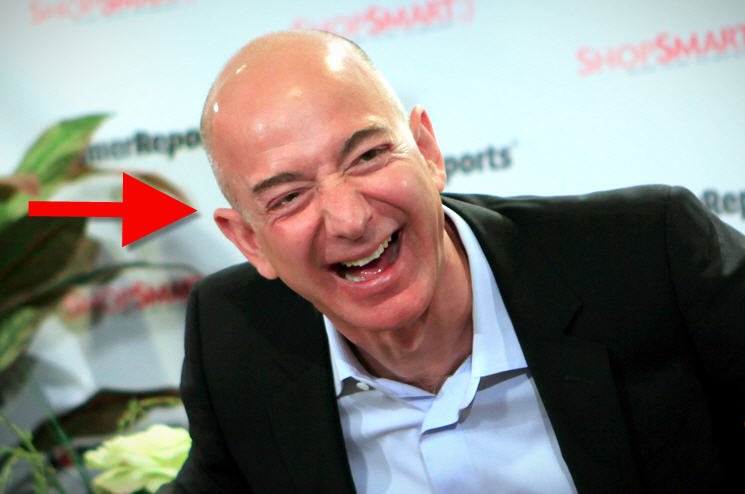
    Do you see this picture? This is Jeff Bezos laughing at John Brown. Because John Brown was a fool.

    Let me explain.

    When I sell my ebooks on Amazon for $2.99 to $9.99, Amazon charges me 30% of the price. I keep 70%. That’s a decent deal. I’m happy to do business with them as a partner with my ebooks.

    But Amazon’s got some alter ego going when dealing with folks selling used books. When I sell used books, Amazon somehow thinks it’s a swell deal for all of us little guys if they take a huge chunk of the pie. Look at the numbers below.

    Order date: 04/08/2017
    Price: $3.98
    Shipping: $3.99
    Amazon fees: -$3.99 (100% of sale price)
    Your earnings: $3.98

    Order date: 04/05/2017
    Price: $5.50
    Shipping: $3.99
    Amazon fees: -$4.21 (77% of sale price)
    Your earnings: $5.28

    Order date: 03/23/2017
    Price: $3.50
    Shipping: $3.99
    Amazon fees: -$3.91 (112% of sale price)
    Your earnings: $3.58

    Order date: 03/15/2017
    Price: $1.49
    Shipping: $3.99
    Amazon fees: -$3.61 (242% of sale price)
    Your earnings: $1.87

    You might think, hey, John, you’re making a few bucks on each. But no, what you see above is what I get from Amazon. I still have to ship the product. And if I purchased the book somewhere, I have to cover those costs as well.

    For example, look at the last one. Amazon feels that not only do they need to charge me the total sale price of the book, they also need more than half of the shipping costs. That book cost over three dollars to ship plus a little for a bubble mailer because I actually care that the book is in great shape when the buyer opens the package. So I lost money. But Amazon did just fine.

    And Bezos was laughing because John Brown, the fool, was paying Amazon for the pleasure of taking time to list the book, shelve the book at his house, package it, and then post it. It was as good as going to Disneyland!

    The fees used to be lower.

    Order date: 06/26/2014
    Price: $3.59
    Amazon fees: -$2.88 (a mere 80% of the sale price)
    Shipping: $3.99
    Your earnings: $4.70

    I hated the fees they were charging then, but after postage, we could still make a buck or so on books priced at this level. Not anymore.

    So adios Amazon. I’m done being your fool. And shame on me for taking so long to recognize it. I’m moving all my used book stock to Half.com because they actually have a good thing going. Look at what they charge for their services.

    $0.75 – $50.00: 25.0%
    $50.01 – $100.00: 22.5%
    $100.01 – $250.00: 20.0%
    $250.01 – $500.00: 17.5%
    > $500.00: 15.0%

    That means on that $1.49 book, they would have charged me a whopping 37 cents.

    Hey, profit for them AND me. And a great price for the buyer. Win-win-win.

    How nice.

    Share
  • The First Step to Being an Entertaining Storyteller

    What’s the first step to becoming an entertaining storyteller?

    In a recent ZOE Nutrition podcast, James Clear, author of Atomic Habits, suggests the key to starting a new behavior, like telling entertaining stories, is doing four things:

    • Make the cue to the behavior OBVIOUS.
    • Make the behavior more ATTRACTIVE.
    • Make the behavior EASY.
    • Make the behavior SATISFYING.

    But what’s the FIRST step?

    It’s mastering the art of showing up.

    That’s it.

    What does that look like?

    He shared an interesting story in the section where they were talking about making the behavior easy.

    START

    Let me give you two examples that’ll probably help clarify. So the first one this is just a really simple tactic, a very actionable thing, that you can use for building better habits. I call it the two-minute rule, and it just says take whatever habit you’re trying to build and you scale it down to something that takes 2 minutes or less to do.

    So read 30 books a year becomes read one page. Do yoga four days a week becomes take out my yoga mat.

    Now sometimes people resist that a little bit because they’re like, okay buddy, you know I know the real goal is not to just take my yoga mat out. I know I’m actually trying to do the workout, so this is some kind of trick, and if I know it’s a trick, then why would I fall for it?

    I have this reader his name is Mitch. I mentioned him in Atomic Habits. He lost over 100 pounds. So what is that? 40 or 50 kilos? And he kept it off for more than a decade. And he had this strange little rule for himself where he first started going to the gym, and for the first like 6 weeks he wasn’t allowed to stay for longer than 5 minutes.

    So he would get in the car, drive to the gym, get out, do half an exercise, get back in the car, and drive home, and it sounds ridiculous. You know? It sounds silly. It’s obviously not going to get the guy the results that he wants, but what you realize is that he was mastering the art of showing up.

    He was becoming the type of person that went to the gym four days a week even if it was only for 5 minutes, and this is a pretty deep truth about habits. Which is that a habit must be established before it can be improved. It has to become the standard in your life before you can scale it up and turn it into something more. You need to standardize before you optimize.

    And so the two-minute rule kind of helps push back against that perfectionist tendency that we have sometimes, or against that tendency to try to do too much, and encourages you to master the art of just showing up.

    END

    That’s the answer!

    If we want to be entertaining storytellers, the first, most powerful identity we can adopt is being the creative who shows up every day to work on his or her entertainment. Or maybe it’s five days a week. Or six days, four days, whatever your number is.

    The first identity is that I’m the kind of creative that shows up to work. This awesome work of entertainment.

    So what’s a two-minute behavior that might go along with that?

    Here’s mine. After I come back from weighing myself in the morning, I set my writing session timer, open my writing document, read a bit of what I wrote in the previous session, and identify the task for this session.

    That’s it. Nothing more.

    That’s showing up.

    If I show up and do that, I’ve shown up.

    If, for some reason, I miss showing up. I identify the next slot in that day to get it done.

    I can master all the other parts of writing entertainment later. But I must master the art of SHOWING UP first.

    So tell yourself you’re the kind of creative who shows up to write entertainment every day.

    Make that your identity. You can expand that identity later. But let’s start here.

    Write your two-minute behavior. Get specific on the time and action.

    Then be like Mitch. Show up and celebrate showing up.

    And if, like Mitch, it takes you six weeks to master the art of showing up, then it takes six weeks. Big whoop.

    Writing fiction is a long-haul game. That means the name of this game is playing the game until you win the game. And to do that you first have to master the art of showing up.

    This is the key. When you master this, everything else is possible.

    “I am the kind of creative who shows up every day to create.”

    Tell yourself that. Repeat it when brushing your teeth. Make that your identity. Be that guy.

    If you have a two-minute action for showing up, share it.

    If you don’t have one yet, identify one and share it. And if your action doesn’t work? No biggie. Act like a scientist and tweak it until it does.

    NOTES

    ZOE Nutrition podcast with James Clear. https://www.youtube.com/watch?v=mcdzK8BOfBY or https://zoe.com/learn/podcast-how-to-master-healthy-eating

    Share
  • Federal Spending 1972-2011: What The?!?

    Last week a chart made the rounds, ranking the Presidents since Reagan on spending.  Look at Reagan.  That happy man is a freaking profligate. Obama, on the other hand, heck, he’s doing better than Bill Clinton.

    Except there are a few problems.

    First, I can’t tie this data out to the official CBO numbers.

    Second, it does a bit of apples and oranges because the numbers are based on each president’s whole time in office.  What does it mean when Obama increases the debt by 35% over three years, but it takes Bill Clinton almost EIGHT YEARS to increase the debt that much?  A better measure would be an average per year.

    Third, some have suggested this chart monkeys with the numbers, allocating the first year of each president’s first term to the previous president.

    Fourth, the president isn’t the only one in Washington. Senators and Congressmen also have responsibility.

    Finally, while a % increase in debt is a helpful measure, it’s not the only story. And it can be misleading if viewed on its own. For example, if we have $1 of debt, and I increase that to $10, I’ve increased our debt by 1000%. Holy Schnitzel!  But if we have $500 million of debt and I increase it to $600 million, I’ve only increased it by 20%. Which is worse?

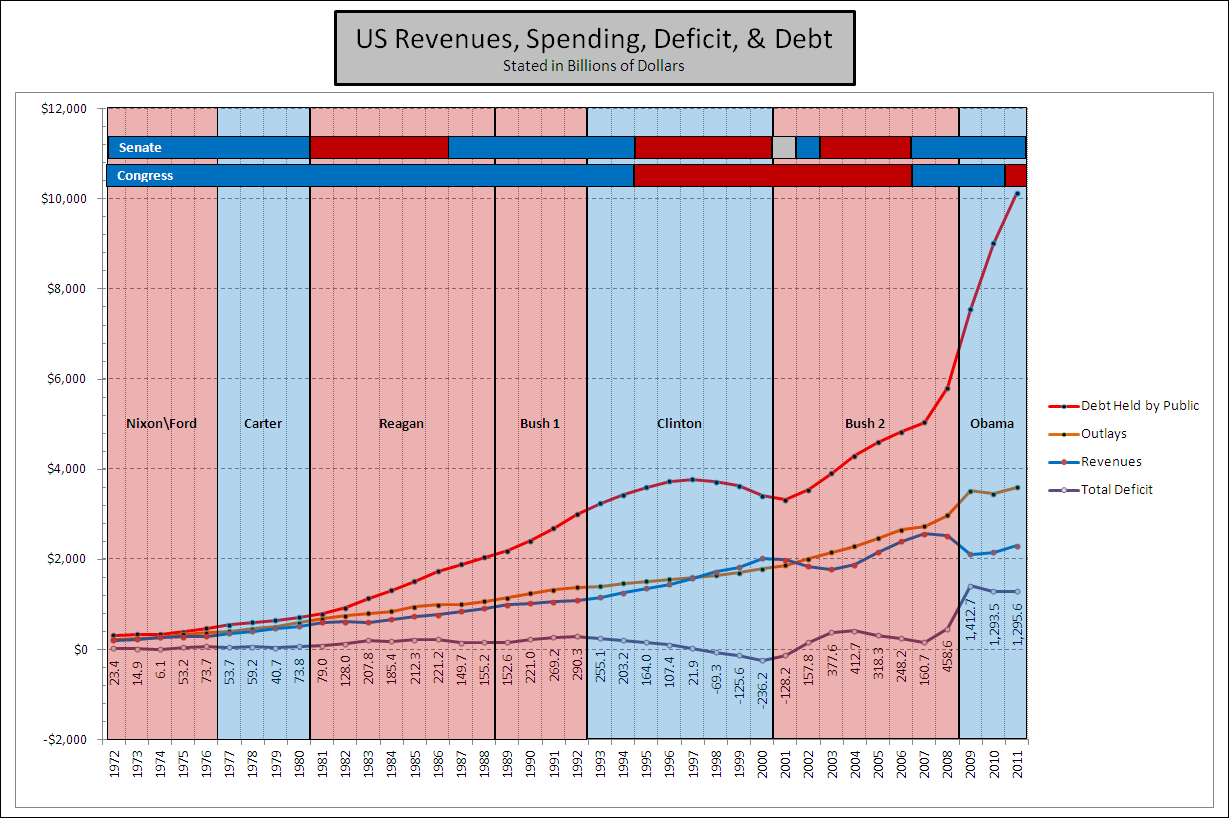
    So I went out to the CBO and took their numbers from 1972 – 2011.  You may get the XLS file yourself: http://www.cbo.gov/publication/42911. Then I made sure to identify who was in charge when and marked it with spiffy colors (Red is Republican, Blue is Democrat). Here are the results. Click on it to see it in its full size glory.


     What does this tell us?

    First, there was only ONE four-year stretch in the LAST FREAKING FORTY YEARS where the folks in Washington did not spend MORE than they took in. That was the four year period from 1998 – 2001.

    What the?!?

    Look at that chart again. There is a serious and systemic spending problem in Washington.

    What happened in 1998 to change what had been going on for almost three decades? That was when the citizens got fed up with Washington, threw out a great number of the Senators and Congressmen, and bought into the Contract with America.  This was when Newt Gingrich was Speaker of the House. This was when Clinton was getting pounded for all sorts of stuff and worked with those particular Republicans in Congress to balance the budget.

    Second, the deficit, the purple line at the bottom, tripled when Obama took office.  And stayed!  Who put that first chart together? Oh, yeah. It was Nancy Pelosi.

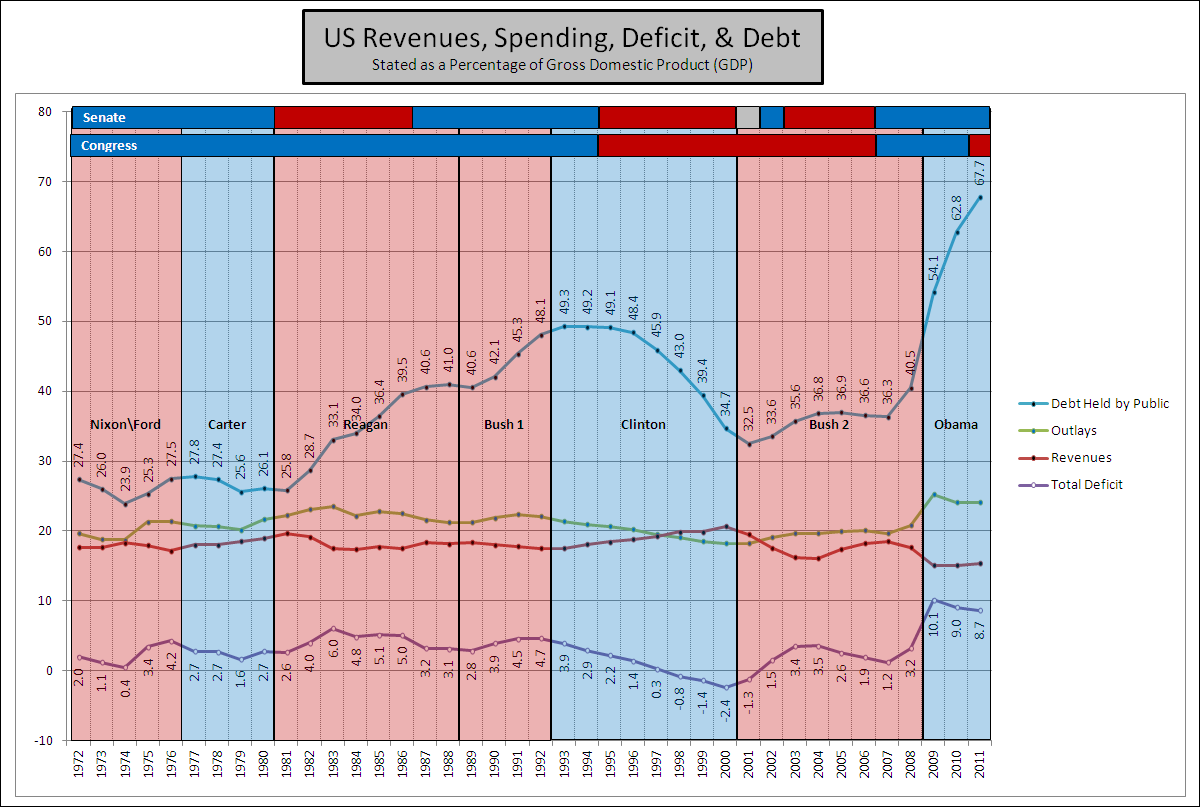
    You might say, well, raw dollars is good.  But what’s really important is how big a percentage that spending is of our nation’s GDP. If you’re spending 100 billion when the nation is producing 1 trillion, that sounds big, but it’s actually not as big a deal as when you’re spending 100 billion and the nation is only producing 200 billion. Okay, let’s look at these numbers as a % of GDP.

    Again, 1998-2001 were good years. On a % basis, the folks in Washington during that time did better than anyone else in not spending the nation’s wealth.  There’s no doubt that Reagan, Bush 1, Clinton during his fist 3 years and the Congress during those times were all happy to be big spenders.  Look at the debt burden during their years. But Obama and the Democratic majorities in Congress since 2007–drunken sailors compared to those guys. And then the Republicans come in and it doesn’t change. Gridlock?

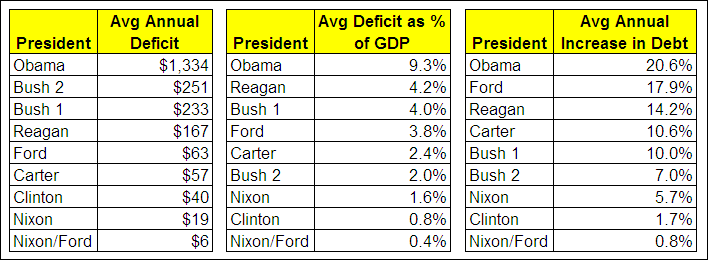
    Let’s look at our presidents since 1972 and see how well they do on an annual basis. Those numbers in the first list, BTW, are stated in billions.

    Seems to me the most fiscally responsible groups were those in charge during the latter part of the Clinton years, the Nixon years, and the year when Nixon resigned.  It appears that during that year the folks in Washinton were so busy with the Watergate scandal they forgot to feed their spending appetites.

    Bottom line: as I said before, Washington has a serious and systemic problem with over spending.

    And when I say “systemic” I mean it appears the whole thing is rigged to produce over spending. We don’t just need new people out there. We need a system that prevents the overspending. We need an ammendment that requires a balanced budget and caps the size of the government in relation to GDP.

    We also need to find a way to incentivize Congress to pass a budget each year.  No budget, no pay is a good idea. The current House has indeed passed a budget. But the Democratic Senate has not, preventing us from having a budget at all. Obama submits budgets, but not a soul in the Senate, Democrat or Republican, will vote for them. It’s only the Republican House who seems to want to actually do their job. How can that be? Read It’s Deja Vu All Over Again with National Fiscal Policy for more info.

    This November we need to get a bunch of folks like those in 1998 back in Washington. A President AND a Congress who will actually finally tame the nation’s out of control spending.  Let me suggest you look at your Congressman’s and Senators’ records.  How have they voted? As for President Obama, well, I’m looking at the numbers above.

    Related Links

    Share