Good Stuff! Jesus Revolution
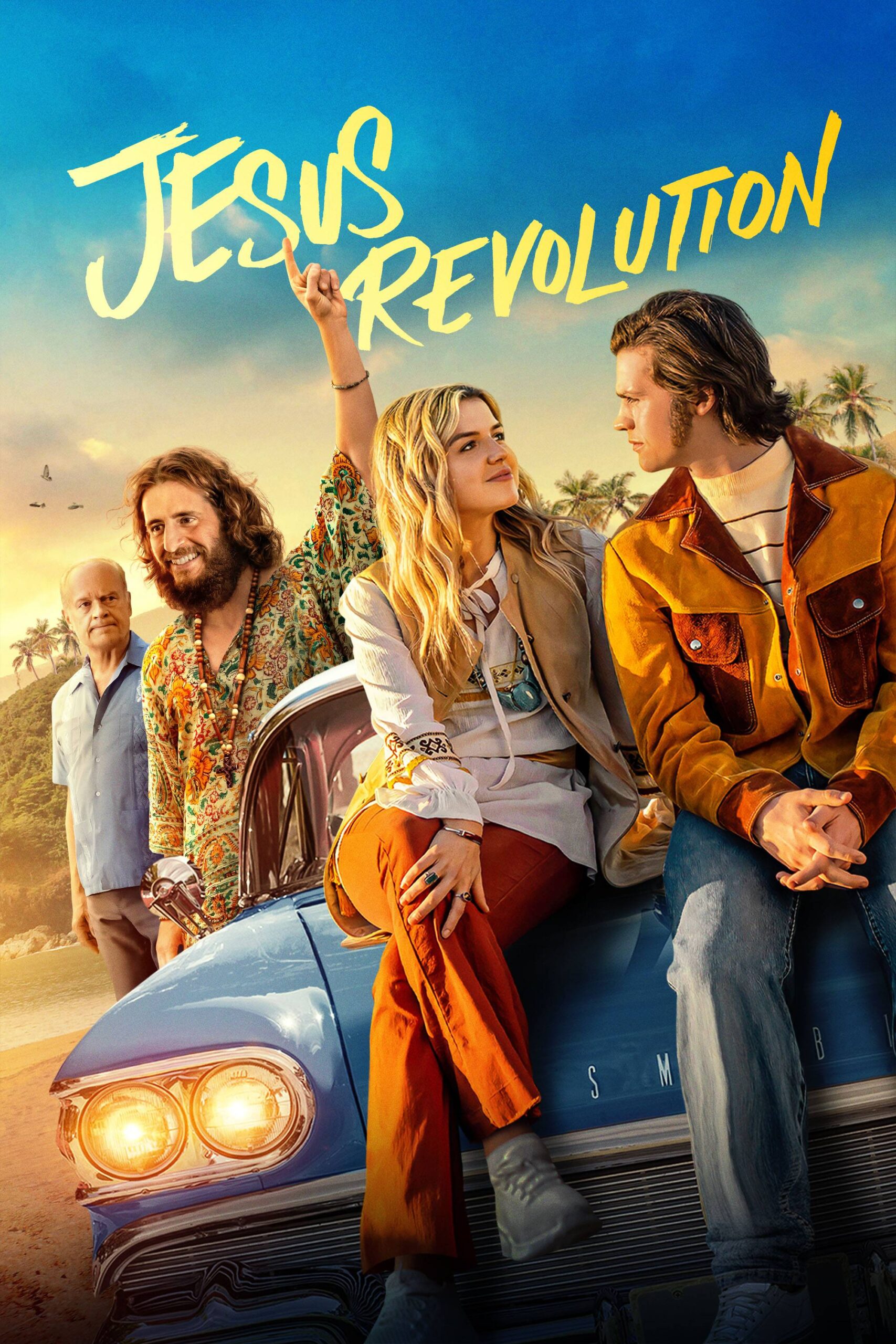
Jesus Revolution poster

In 1969, Greg Laurie, was seventeen and going to high school Newport Harbor High School in California. Fourteen miles from Disneyland. Just one mile from the beach.

Laurie was raised by a single mother who had seven marriages and struggled with alcoholism. They moved often, sometimes to very different locations such as New Jersey and Hawaii. He was not raised in the Christian faith or a church environment.

He began participating in the hippie movement, doing drugs, dropping out, because it was fun and because maybe this was the way.

The 1960s and early 1970s was the height of the hippie movement, which sought love, beauty, honesty, freedom, and fun. Hippies felt that “The Man” (the establishment, the authorities, those in charge, Big Brother) had caused huge problems. And they wanted to drop out of that society. Leave it utterly. Find a new way.

Why? What was the problem?

The 1960s was the decade of the Vietnam war. It was the decade when we came to the brink of a nuclear World War 3 with the USSR over the Cuban Missile Crisis. It was the decade when a huge portion of the United States strove for equal rights for minorities and women against a lot of opposition. There were riots. Protests. Beatings. This was the decade when Martin Luther King Jr. and John F. Kennedy were assassinated. There were problems galore.

Now the 1960s was also a terrific decade. We passed civil rights legislation, men landed on the moon, super nerds introduced BASIC computer code which opened the door to the computer revolution. It was a decade of many good things, including the year when Lovely Wife was born. Let’s not forget that.

But it was certainly a tumultuous decade. And the hippies offered a counterculture. A different path.

A lot of youth followed that path. For example, in 1969 half a million hippies showed up at the Woodstock festival to protest the war, capitalism, and convention, and celebrate peace, love, and individual freedom.

This is the world young Greg Laurie was living in. And he was heading down the drug-hippie path.

But then he met a man named Lonnie Frisbee who looked like a hippie, had been a hippie, right at the epicenter in San Francisco, but was now inviting fellow hippies and youth to a different path.

A path that featured Christ. But not in the way of many of the churches at the time.

How was this path different? Did Greg turn around?

There’s a new movie out that is based on these true events. You can watch it and find out.

It’s called Jesus Revolution.

Nellie and I enjoyed the heck out of it. We laughed. We were on the edge of our seats, moved, and inspired. In fact, I enjoyed it so much I want to watch it again.

It’s a great entertainment for the whole family.

If you’re looking for a terrific, feel-good show, I think you’ll love Jesus Revolution. Give it a try.

Share

Similar Posts

  • Good Stuff! Sergeant Nibley and Whole

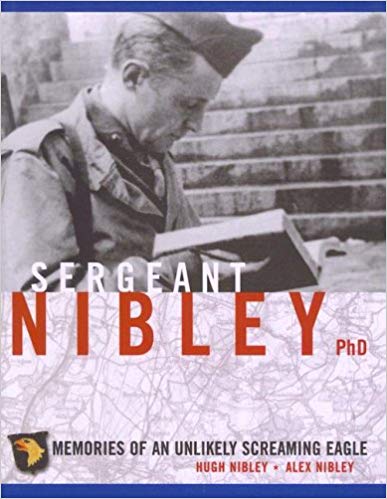
    There are many good accounts of soldiers in World War 2, but I just finished one that is unlike any others I’ve read. It’s the delightful Sergeant Nibley PhD: Memories of an Unlikely Screaming Eagle by Hugh Nibley and Alex Nibley.

    It details the experiences of Hugh Nibley, the famous BYU scholar of ancient history, as a soldier in the war, starting from when Nibley was on his mission for The Church of Jesus Christ of Latter-day Saints and met Hitler coming out of a bathroom in Germany.

    This book made me laugh and wonder and sorrow. It includes insights, surprises, and anecdotes that I haven’t found anywhere else. The authors also include many pictures that help the whole thing come alive. If you like history or biographies or are a fan of Nibley’s works, I think you’ll love this book.

    *

    Some of the wonderful residents of Rich County, Utah where I live are not going to like this next one. But I have to share it because if what’s detailed in this next book is accurate, it could help so many.

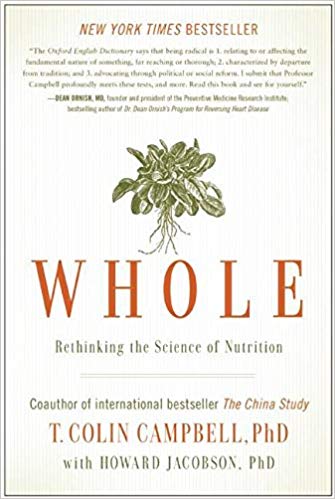
    The book is Whole: Rethinking the Science of Nutrition by T. Colin Campbell who has been one on the forefront of nutrition research for over forty years.

    Campbell’s legacy, the China Study, is the most comprehensive study of health and nutrition ever conducted. He’s a renowned researcher at Cornell University. He has worked as a senior science adviser to the American Institute for Cancer Research, and sits on the advisory board of the Physicians Committee for Responsible Medicine.

    I share all that to simply suggest that he might have a little bit of expertise that’s worth listening to.

    Campbell grew up the son of a dairy farmer and went into the field of nutrition, believing animal protein, specifically dairy, could help solve nutrition problems in countries with starving populations.

    What he found shocked and surprised him. And at first, he didn’t believe it. But he and others ran study after study, and the science led to one conclusion: a diet high in animal products and processed foods increases the risk of many cancers, heart disease, diabetes, and a host of other maladies just as surely as tobacco increases the risk of lung cancer. What he found is that the healthiest populations ate a whole-food, plant-based diet.

    Now that goes against a lot of what we’ve been told. Milk is supposed to do a body good. And surely there’s nothing more healthy than lean cuts of meat. And aren’t there studies that prove this?

    In this book Campbell explains the science behind the evidence for what he and other scientists are seeing, the ways our current scientific paradigm ignores the fascinating complexity of the human body, and why, if we have such overwhelming evidence that everything we think we know about nutrition is wrong, our eating habits haven’t changed.

    I know this may seem like yet another whiplash science report. You know the kind—one report says red wine is bad for you and the other says red wine is good. But in this book, Campbell explains why we get such goofy and contradictory claims.

    If you or someone you love is dealing with heart disease, cancer, including breast cancer, obesity, or diabetes, you will want to hear him out. Whether what he has to say persuades you and what you will do about it, is up to you. But I think you’ll benefit from listening. If you’re interested in science, this book will give you surprising insights about its practice that you probably haven’t considered. Listening to Campbell has been eye-opening. I highly recommend this book. If, after hearing it, you want more information, I recommend his previous book called The China Study.

    Share
  • Good Stuff! The political book for our times

    I just finished the most important book on politics I’ve read in years.

    Years.

    In fact, I’ll go so far as to say it is the book for our current political times.

    I say this because America isn’t facing the threat of Communism, Nazism, poverty, illiteracy, or disease. ISIS and the terrorists are on the run. We’re beginning to figure out a better way of treating our LGBT brother and sisters. And we’re not poisoning ourselves with the broad-based racism or sexism of the past. Yes, there are lots of areas where we can improve. But these are not the main problems of our current time.

    In my opinion, the main problem of our current time is a burgeoning contempt between left and right.

    Political scientists find our nation is more polarized than at any time since the Civil War. People in positions of power and influence on both sides of the spectrum, and everywhere in between, are setting us against each other. They tell us our neighbors who are on the other side are evil, corrupt, or stupid. And must be utterly vanquished. And many of us perpetuate the message, very frequently on social media.

    By some measures the divide between right and left in America is beginning to approach the size and feeling of the one between the Israelis and Palestinians.

    Is that really where we want to go?

    I think most people will agree with me that it is not. So what do we do about it?

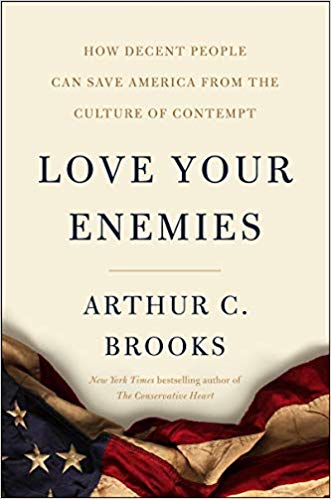
    May I suggest we start by reading this terrific book by Arthur C. Brooks called Love Your Enemies: How Decent People Can Save America from the Culture of Contempt.

    With that title you might think Brooks is suggesting that the solution to the divisions in our country is to start a national program for the singing of “Kum Ba Yah.” If so, you would be wrong.

    Brooks doesn’t claim we need less disagreement. He thinks we need more disagreement. Yes, you read that right. More. He’s calling for more, strong disagreement. It’s just that we need to disagree in a better way. A different way.

    At this point you might be wondering how it’s possible to disagree, and in greater amounts, and not run the nation off the cliff in flames.

    I was wondering that too. And Brooks provides the research, the thinking, and a number of practical methods in his book. Brooks will make you think about how we interact in a totally different way. And he does it with his trademark good humor. You’ll laugh, you’ll think, and you’ll come away seeing a better path.

    If a good portion of us disagree the way Brooks is suggesting, it will change our country. All we need is a core of us willing to try.

    If you’re interested in politics, if you are getting tired of the insults on social media and the news, if you’re tired of the way the parties are not working with each other in Washington, I think you’ll love this book.

    If you want a taste of what Brooks is talking about, watch his eleven-minute commencement speech at BYU this last April. Find it here. If you want another taste, watch his TED talk.

    Share
  • Gandhi & Waiting for Superman

    Enthralling History

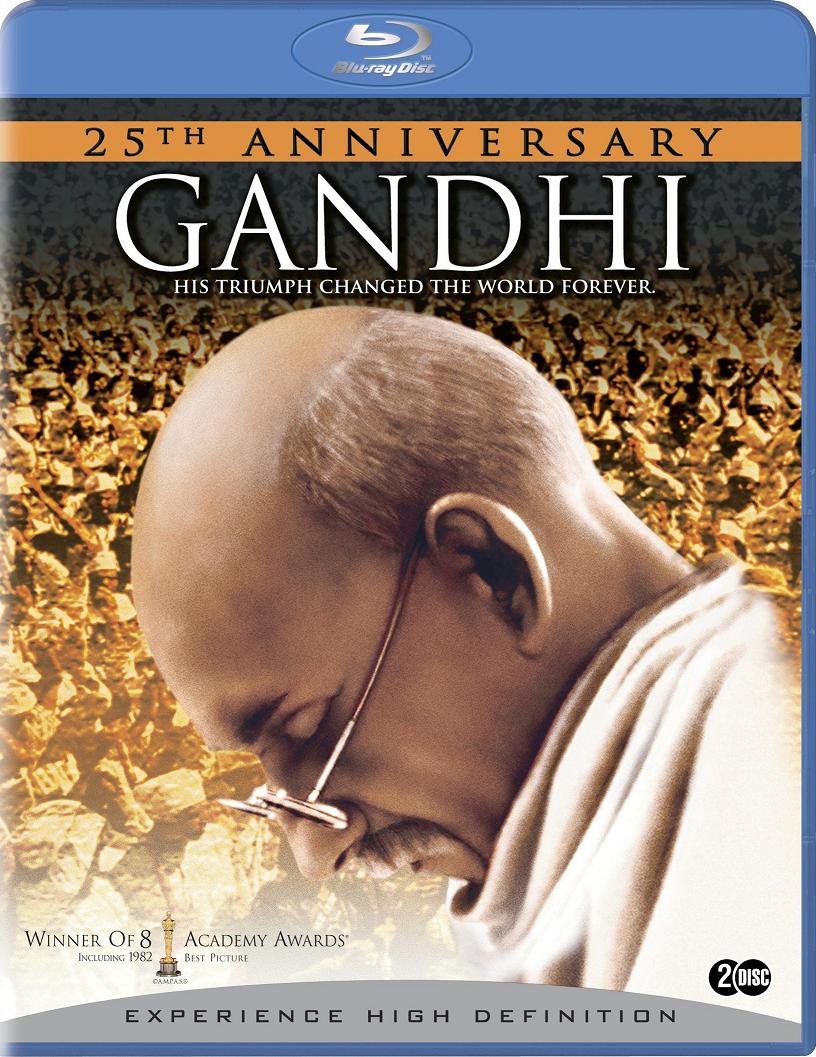
    The miracle of Netflix means that no movie or television show becomes unavailable. And there are so many produced over the last fifty years that are so very good. I recently re-watched the 1982 Gandhi with my family and have to say it is one of those fabulous movies that’s amazing every time I watch it. Not once did the production feel dated. And even though I’d already seen it, I found myself enthralled with the events and the character played so well by Ben Kingsley. No wonder it won eight Academy Awards.

    The movie portrays the last 50 years of Mahatma Gandhi’s life. It starts in 1893, when Gandhi, educated in the UK, is thrown off a South African train for being an Indian and traveling in a first class compartment. Gandhi decides to start a non-violent protest campaign for the rights of all Indians in South Africa. Quite an undertaking in those years. He’s arrested and finds himself in a number of dicey moments, but ultimately brings change.

    Gandhi is then invited back to India, where he is considered a national hero. Leaders there urge him to take up the fight for India’s independence from the British Empire. Gandhi agrees and mounts a non-violent campaign of unprecedented scale. Nothing of this magnitude has ever happened in the recorded history of the world. Which is why it’s a rough road all the way to the end.

    There’s suspense and humor and heartbreak in this movie. But it goes far beyond entertainment. This movie will move you. It has power to change. This movie is what history should be. If you haven’t seen Gandhi, or haven’t seen it in a while, let me recommend you get it this week and sit down with friends or family to enjoy a wonderful experience.

    Education and Teachers Unions

    I find it interesting that teachers in Utah, one of the most conservative states in the union, send almost three million dollars each year to the National Education Association. That’s the $165 in NEA dues for each of the roughly 18,000 union members in Utah. This is interesting because the NEA, the largest labor union in the United States, is one of the biggest supporters of the Democratic party.

    For example, the NEA spends roughly 85-90% of its direct candidate donations on Democrats. The NEA is quick to point out that those direct candidate donations do not come out of the three million Utah teachers send to them, but from additional donations to one of their political action committees. It’s illegal, in fact, to contribute directly to candidates with money received from union dues. However, there are a lot of other ways to support candidates and causes in addition to direct donations. 

    Mike Antonucci, a teacher’s union observer, explains just how that works in his article “How Much Does the NEA Spend on Politics”. The upshot is that the NEA can spend as much as they want on politics with their dues. And the lion’s share of that spending goes toward liberal causes. ACORN, for example, has been a beneficiary of NEA grants.

    Now, I don’t see anything wrong with that. People should be able to donate to whatever cause they think is important. The NEA has just as much right to make their voice heard as anyone else. I just think it’s interesting that so many conservatives have been led to donate their cash to these causes. And it’s not just in Utah. About 60% of NEA members identify themselves as conservative or independent. And yet they donate to these liberal causes via the union. What’s even more ironic is that most of them probably do not personally donate anything close to that to conservative candidates and causes. It’s not like teachers have tons of extra cash.

    It’s a neat trick to get conservatives to donate so much money to liberals. And perhaps some teachers feel it’s the price they have to pay for the services they want from the union. I would think it would be better to start another union, but that’s me. However, this is not the only kink teachers unions have introduced into the education system.

    I’m not going to argue that teachers unions are evil. These unions arose in a time when female teachers were heavily discriminated against. They do some good things. But mixed in with the good is, well, you’ll have decide for yourself if it smells.

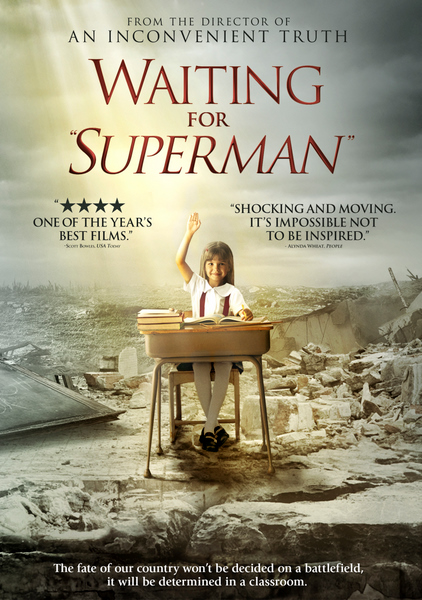
    A great place to begin is with the documentary Waiting for Superman. You should know this movie came out of the gate with a huge strike against it in my mind–it’s produced by Davis Guggenheim, the same guy who did An Inconvenient Truth. Good grief, that’s all I wanted was another two hours of Chicken Little running around saying “sky is falling, the sky is falling!”

    But I didn’t find any of that in the film. For example, the film doesn’t say all American schools are awful. It doesn’t say teachers are terrible. Contrary to what the movie’s critics claim, including the NEA and its many state and local affiliates, the film doesn’t suggest charter schools or standardized testing are the silver bullet answers to our issues. I simply didn’t encounter the sensational propaganda others claimed would be there.

    No. What the film does is examine some of the issues in our current system, which put so many children at a disadvantage, and the role the teacher unions play. It does not, as some critics claim, go on to suggest any solutions. It presents a problem, experienced by real parents and children right now, then poses a question: what can be done?

    I found it eye-opening and thought-provoking. I think it’s a must-see. If you have children or grandchildren in school, if you’re one of our many fine teachers or school administrators, you’ll want to watch this movie and then ask yourself that same question. What can be done? What works? What’s best for the children? And does the current way our unions operate work in any way against those interests? For those who elect not to go into immediate union-attack or union-defense mode, I think this film will introduce some valuable points to the discussion about education.

    Share
  • Good Stuff! Two fun family and party games

    There’s nothing quite like the laughter and fun a good family or party game creates. And we discovered two games this summer that have brought hours of pleasure.

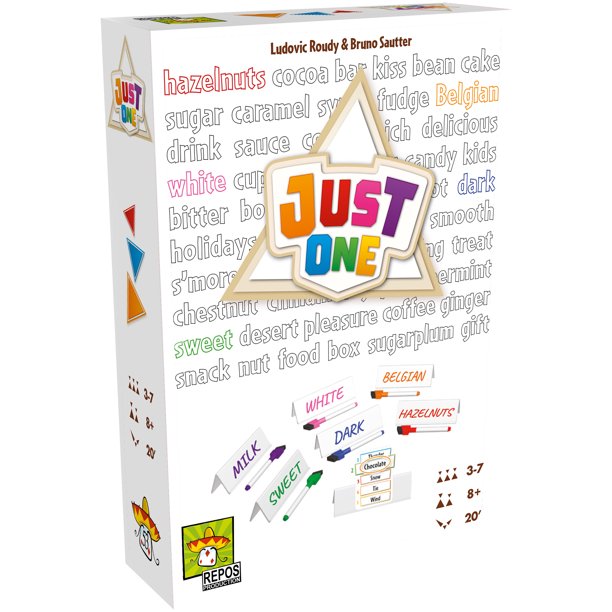
    The first is Just One. It’s for 3 to 7 players and takes about 20 minutes to finish.

    Now, I was skeptical of this game at first because it’s a cooperative party game.

    I mean, come on. Cooperation?

    No teams?

    No competition?

    What were we going to do—hold hands and sing Kumbaya?

    I was fully expecting to be bored out of my mind. Boy, was I wrong. There was suspense, laughter, and loads of fun.

    There are 13 rounds in each game. In each round, one player blindly selects the number of a word on one of the game cards. The other players each write a one word clue to help that player guess the word. However, if two or more players write down the same word, they have to remove that clue.

    So you’re trying to come up with one-word clues the others won’t that still help the guessing player. Some clues lead the guessing player off onto funny tangents. Others are just funny. And then there’s the suspense of whether someone else wrote your word and whether the player will be able to guess it from the clues that are left.

    Your goal is to guess all 13 words selected. And there’s a little score card that ranks what it means if you get 13, 12, 11, etc.

    As an aside, it’s crazy to me that the score card provided motivation. But it did. It was a delightful little brain hack.

    One Word is a quick, fun game. We’ve played it with a few as 3 and as many 8 players and had a ball each time. We are so happy to have it in the family game closet.

    The next is Fish Bowl. It’s for 4+ players. What this game does is take favorites like Taboo, One Word, and charades and mixes them together in a competitive game between two teams.

    Here’s how you play it. Each person writes up 5 to 7 different words or phrases on separate slips of paper, folds the papers, and puts them in a bowl. Then you do 3 rounds.

    Round 1 is like Taboo, where you can describe, but can’t say or act out the word or phrase on the paper. You select a team to go first. One person on the team selects the papers from the bowl and then tries to describe the word or phrase. The team has 30-45 seconds (you decide) to guess as many of the words as possible. When the time is up, it’s the other team’s turn. Back and forth you go, selecting a new team member each turn to give the clues, until there are no more slips of paper in the bowl. Then you count the number of slips each team got and move to round 2.

    In round two, you put all of the slips of paper back into the bowl. The team that went second in the first round starts this one. This time the person giving clues gets to share one word. That’s it. And the team has to guess it. Again, the team has 30-45 seconds to guess as many as they can.  Then it goes to the next team. And you switch back and forth just like you did in round 1, and when the slips of paper are gone, each team counts up their score.

    In round 3, you put all of the slips of paper back into the bowl. The time the person giving the clues has to act them out. No words allowed. You run this round just like you did the first two with  30-45  second turns, switching back and forth between the teams until all the papers are gone. At that point, the teams  total their scores for this round and then for all 3 rounds together to see which team won.

    If you don’t want to use paper, you can play a version online.

    Either way, it’s another fast, fun game. In fact, we played it last night. And laughed and laughed when one daughter was trying to get the other to guess “sling” and nailed her teammate in the head trying to act out a rock hitting Goliath.   Movies are great. But sometimes what you need is some delightful game fun. And I’m betting you’ll love these.

    Share
  • Spider-man, Dark Knight, Downton, and Brave

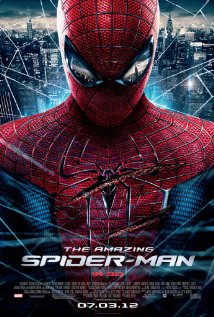
    The Amazing Spider-man

    The Amazing Spider-man is one of the most enjoyable superhero movies I’ve seen in the last ten, heck, fifteen years.  It rocks.

    Is it as good as any in Christopher Nolan’s Batman series? Yes, but it never becomes dark.  And in many ways I think it might be better.

    How about Iron Man? Oh, yeah.  Not as witty, but just as funny.

    Sherlock Holmes?  Spiderman 2?  Yes and yes. And I don’t care what you say, Sherlock Holmes is a superhero.  He can’t bend metal with his mind, but almost. He’s certainly as much a superhero as, say, Black Widow.

    What made this Spider-man so good?

    The story tells the story of how Peter Parker becomes Spider-man.  I know, we’ve seen it before, but unlike other superhero movies, this one, like Iron Man and Sherlock Holmes, actually chooses more realism and less cartoon.  There were so many unexpected real moments and details that I couldn’t help but believe.  There were Parker’s boxers hanging out when he gets beat up, his reactions when he’s trying to find his hero outfit, and the fact that he performs his derring-do while toting about a teen’s most trusted gear–a backpack and cell phone!  He fails at many things, just like a teen would in this situation, which is so refreshing–this is not yet another all-powerful superhero!  

    Like so many superhero movies, this one features another mad scientist with mad science.  It’s still the stuff of comic books after all. But what I really enjoyed were the moments of comedy, the delightful romance, and the fact that Spider-man is way more vulnerable than I’ve ever seen him portrayed.  The movie kept delivering pleasant surprise after pleasant surprise.  Towards the end, it all works together to honestly earn a swell of emotion in a scene which I won’t reveal here and spoil for you.  

    Just know that if you want to see a movie full of action, drama, and fun, you’ll want to watch this one.

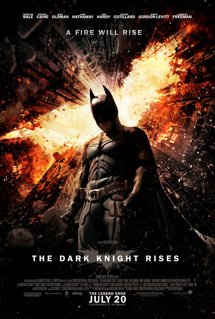
    The Dark Knight Rises

    I have been looking forward to the last Christopher Nolan Batman for quite some time, and The Dark Knight Rises delivers. 

    After taking the fall in the last movie for Harvey Dent, Batman/Bruce Wayne goes into reclusive retirement.  But we all know what happens when you stop minding the wheel.  A new villain shows up named Bane, and very soon Gotham is reeling.  Which means Batman needs to come back.  But Batman ain’t the Batman he used to be.

    This Batman and the recent Spider-man have taught me that I enjoy heroes that can be beaten soundly.  I like heroes that can and do lose.  They are so much more interesting than those who always seem to pull it out. 

    There’s a lot of cool action in this movie.  Batman has a cool new toy.  There are a number of well-executed plot twists.  And I think I enjoyed the slow reveal of Bane’s back story about as much or more than I have for any villain.  But I think my favorite part is at the end when Batman makes his sacrifice.  I know the movie had to end as it does, but I almost wish we didn’t have the last five minutes because it undermined that incredibly powerful note for me.  Yes, I’m being intentionally obscure to avoid spoilers.  Whether you agree with me or like the movie with the last five minutes added on (as my wife did), if you like big action flicks, you don’t want to miss this one.

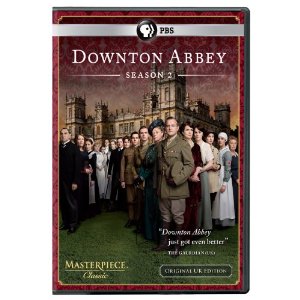
    Downton Abbey season 2

    About nine months ago I reviewed Downton Abbey, a BBC miniseries that aired on PBS. The first season is set in the fictional Downton Abbey and follows the lives of the aristocratic Crawley family and their servants. The stories take place over the time period that starts with the sinking of the Titanic in April 1912 to the outbreak of the First World War on 4 August 1914.

    The main story line running through those episodes is the fact that the Crawley family must give up the estate to a distant relation because they have no male heir.  But it wasn’t just about the aristocrats.  One of the most delightful aspects of the series is that it also featured the refreshing stories of various servants. Some were funny. Some pulled at your heart strings. Some were tragic.

    Well, Downton is back with a second season that you can get on Netflix if you missed it on PBS. The events span the first world war. Some of those we met in season one go to war; some stay at the estate.  Other new folks mix in.  What’s constant is that the wonderful storytelling continues.  As a family, we enjoyed all of the characters, but I must say that Maggie Smith (who played Professor McGonagall in the Harry Potter series) seems to get a majority of the best lines as the Dowager Countess.  We looked forward to every minute she was on the screen. 

    This is a fabulous series.  If you like Pride & Prejudice or Cranford, you will love watching the stories of Downton Abbey.

    Brave

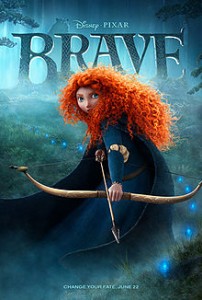
    I’m just about out of time, but let me just say that if you’re looking for an enjoyable family movie, you need to watch Brave.  It’s set in the highlands of Scotland in the 10th century and tells the story of Princess Merida who doesn’t want to marry, even if it means war with the other clans.  To change her mother’s mind, Merida turns to a witch for a potion.  Of course, potions never go well, do they, and the kingdom and lives of those Merida loves are soon put at stake.  The movie focuses on the mother and daughter, with the father providing comic relief.  There are plenty of laffs, some parts that will put younger viewers on the edge of their seats, and a wise message for parents and children alike.

    Share
  • |

    Slush I Read by Jim C. Hines

    Laughs are lovely. I just came across this wonderful parody by novelist Jim C. Hines which will give you a few for free. Enjoy!

    Slush I Read
    by Jim C. Hines

    (Apologies to Seuss)

    I read slush.
    Slush I read.

    That slush I read.
    That slush I read!
    I do not like that slush I read.

    Do you like fanfic with vamps?

    I do not like them Mary Sue.
    Why do these vamps all worship you?

    Here’s a tale from D & D!

    I do not want your D & D.
    I do not like your elf PC.
    I can not stand your purple prose.
    I want to punch you in the nose!

    Would you like a hot sex scene?
    I wrote it for my online ‘zine!

    Go to Hines’ site and read the rest right now

    Share