Warwick Castle

This last June, I stood outside Warwick Castle next to a longbowman and stared up at the massive structure. The curtain walls rose forty to fifty feet high. The great tower soared even higher—one hundred and twenty feet. But it wasn’t just the walls. 

The moat. Holy schnitzel, folks, the MOAT. 

On one side of the castle, the River Avon provided a barrier. On the other, a dry moat stretched forty to sixty feet wide and twenty to thirty feet deep. Standing at the bottom, you’d be staring up at seventy feet of turf and stone. That’s like staring up at a six-story building—with armed soldiers waiting at the top. 

My only thought was: good night, what kind of madman would assault these defenses? 

The answer, of course, is almost no one. Medieval sieges were usually about starving the defenders out, not storming the gates in a blaze of glory. Unless you had a trebuchet—which I also saw demonstrated that day. 

It was the kind of moment that makes a writer’s brain spark. Assassin, the fourth book in my Drovers series, is set in the capital city of Broniss, which bristles with towers and walls of its own. Standing there at Warwick, I realized: no sane army would attack such walls directly. Which is why the High King of Osson has other dark plans. 

Of course, Warwick had more than just military lessons. There was a falconry show where hawks, vultures, eagles, and even a condor soared just above our heads. Here’s a tip. If you go, sit on the benches, not under the tree. The benches are where you get the most flyovers.  

There was a dungeon tour that turned into a hilarious series of skits, complete with a plague doctor and a judge who convicted one of us.  

And afterward, we went into the city to a Thai place called The Giggling Squid (yes, that’s really its name). The food was amazing. 

It was a glorious day, and it reminded me that some of the best research often comes from first-hand experience. Although some things—like being pierced through with a sword—I’m happy to leave to my imagination. 

I’m back at the desk now, hard at work on Assassin. It’s turning into a terrific ride, and I can’t wait to share more soon. 

Here’s to Ferran, Sura, and Lagash—will they foil the traitor’s plot and stop the hashida’s creature, or will Ferran and the others fail and find all their dreams dashed to pieces?  

You’ll soon be able to find out.  

Sincerely, 

John 

Share

Similar Posts

  • Saturday Oct 10th: author panel & book signing at Barnes & Noble in Sugarhouse, UT

    Just wanted to give a heads up. I’ll be joining an author panel and book signing Saturday Oct 10th (tomorrow) at the Barnes & Noble in Sugarhouse from 12 PM – 3 PM.

    Barnes & Noble
    McIntyre Center (Sugarhouse)
    1104 East 2100 South
    Salt Lake City, UT 84106
    801-463-2610

    This is going to be fun. I’ll be there with authors Jessica Day George (Dragon Slippers trilogy), Larry Correia (Monster Hunter International), Mette Harrison (The Princess and the Hound, The Princess and the Bear), and Paul Genesse (The Dragon Hunters).

    We’re going to participate in a panel about writing SF/Fantasy, sign and chat about our books, and then demonstrate true magic by flying above the stacks in precision formation. I think Larry’s bringing a cannon for special effects.

    Okay, so my imagination got carried away. I’ll admit the panel was a bit over the top. 😉

    If you’re in the area, come on by. We’ll take a few photos and sign your books. If you’re really nice, I will shower you with free bookmarks.

    Share
  • Utah events this week

    Just a reminder. I’ll be meeting the public and chatting about my book in Utah this week. David Farland and Larry Correia will there as well. It’s a three-for-one deal.

    Thursday,
    October 22
    6 pm – 8 pm
     Book signing and release party Logan, UT Borders
    1050 N Main St.
    Suite B-2
    Logan, UT 84341
    435-787-0678
    Friday,
    October 23
    4 pm – 6 pm
    Book signing and release party Orem, UT Barnes & Noble
    330 East 1300 South
    Orem, UT 84058
    801-229-1611
    Saturday,
    October 24
    12 pm – 2 pm
    Book signing and release party Layton, UT Barnes & Noble
    Layton Market Center
    1780 North Woodland Park Drive
    Layton, UT 84041
    801-773-9973
    Saturday,
    October 24
    3 pm – 5 pm
    Book signing and release party West Jordan, UT Barnes & Noble
    Jordan Landing
    7157 Plaza Center Drive
    West Jordan, UT 84084
    801-282-1324
    Share
  • Press Release – SF/Fantasy Key to Teen Literacy

    FOR IMMEDIATE RELEASE

    IS SF/FANTASY KEY TO TEEN LITERACY?

    Findings presented at national American Library Association conference reveal science fiction & fantasy literal gateway drugs to youth literacy

    CHICAGO, ILLINOIS |  July 11, 2009 | Utah’s newest author, John Brown, summarized statistics and research at the 2009 national American Library Association (ALA) conference held in Chicago which suggest that science fiction and fantasy are two of the main gateway drugs to literacy for youth. Data provided by Nielsen BookScan, public libraries, and recent studies published by the National Endowment for the Arts (NEA), suggest that at least 1 in 3 youths read for the effect produced by Science Fiction and Fantasy. “However,” says Brown, “given library circulation statistics, that number may well be 2 out of 3. These are incredible numbers, and have important implications for youth reading programs.”

    According to Brown, “the latest research in emotion shows that reading fiction produces a physical response, as real and physical a response as when we take aspirin, alcohol, or crack. The good thing is that while stimulating pleasure centers, it doesn’t change the brain the way hard drugs do. Furthermore, it also carries the powerful and desirable side-effect of improving reading skills. The key is in finding the type of fiction which appeals to the given age group. And for youth it appears that drug of choice is science fiction and fantasy.”

    John Brown’s epic fantasy for teens and adults, Servant of a Dark God, will be released in October 2009 by Tor Books, the largest publisher of science fiction and fantasy in the world. For more information see the links below.

    Share
  • Where in the Sam Hill is Curse of a Dark God?!

    Because of so many reader requests, I think it’s time to explain.

    Alas, I must report that she ran off with a no-good tramp. I’m sure she’s realized her error. Either way, I’ve formed a posse. We’re hunting her down.

    That’s the true story. For those that want the boring press release that obscures the facts, you may read what follows.

    The first draft of Curse of a Dark God was delivered to the editor in August of 2009, two months before Servant of a Dark God was released. That draft had some issues with a few of the story lines. These issues crept (they did not run or slouch) into the text because the author, stressed about an aggressive deadline, decided to adopt the fix-it-when-you-finish-just-get-er-done-you’ve-got-a-freaking-deadline methodology of writing.

    But a book of 230,000 words is a big old momma. And if something in a beginning chapter is off, it wankers a whole heck of a lot of story that follows, much like a line of dominoes. But it’s not just one story line. This book had multiple interconnected story lines. So issues in one line rippled out into others. What this meant was that the changes that needed to be made weren’t wee things that could be dealt with in a few weeks. When the dust settled, it was clear the book required a substantial rewrite, even though the draft contained gobs of cool story.

    So much for that fix-it-later experiment. You can be sure the author won’t be using that on large books again.

    So the author wrote another draft of 245,000 words and delivered it in August of 2010. The story rocked. Unfortunately, there was a miscommunication on size (and there’s no use in having a drama about what was said and who was at fault and why fairies are always tiny hot chicks; despite our best efforts, life is full of bumps; the best thing to do is learn from them and move forward). The book actually needed to be in the 170,000 – 180,000 word range. Same as Servant of a Dark God.

    In a 10% edit, you’re tightening a story, cutting out the fluff. In an edit designed to reduce the book by 30% or more, you’re cutting off arms and legs and removing things like livers. The story can’t survive such cuts unless the thing was obese to begin with and just needed to go on a diet. Unfortunately, Curse of a Dark God draft 3 was fairly lean, given the amount of story it contained. It was NOT a candidate for Biggest Loser.

    The upshot is this third draft is going to be another major rewrite. Which means, given publishing lead times, that it’s going to take a number of months to get it on the shelves.

    (fricken, ricken, grumble, frag a friggen nack)

    Because I’m just starting on the outline, we don’t have a delivery date yet. As soon as we do, I’ll post it.

    I apologize to all of you expectantly looking forward to the next book. When I started this series, I promised myself that I would not leave my readers hanging. I was determined that my books would come out in a timely fashion. And I have been working like a devil to do just that, but sometimes things happen. What I can promise you is that this draft will go quickly. Furthermore, I already have book 3 outlined. It should go quickly as well.

    I know some of you are asking why? Why, the word limit? Aren’t there are plenty of monster books out there?

    There are. In fact, about half of Robert Jordan’s Wheel of Time books are roughly the length of draft 3. Publishers do sell fat books. However, the bigger the book, the harder it is to make it profitable.

    First, bigger books cost more. There’s the cost of the additional paper and editing, but there’s also the extra money to ship and store.

    Second, you can’t put as many copies out in the stores. You can’t because they take up more of the space that might be allotted to an individual book. So instead of being able to have stores stock four or five copies of a 120k novel, they can only stock two or three of a big old momma in that same space.

    Third, bigger books cost you, dear reader, more money. Sure, the publisher might eat some of the additional costs, but some of those costs will be passed onto you.

    So because of the increase in cost, the publisher needs to sell more copies; however, the limit on display space and the higher price make it harder to sell those additional copies and actually may lead to selling fewer copies.

    Do you see the bind?

    This doesn’t mean big books can’t be profitable. It just means that it’s not as easy. It’s a bigger risk. Part of me would want the publisher to take that risk. But the other part of me knows that slow and steady usually wins the race. Neither I nor the publisher want to gamble the long-term viability of the Dark God series. Now, if Tor was doing this all in paperback, this might not be such a big issue. But we’ve got the sweet hardback/paperback deal. And business projections have to be done in that world.

    So the short of it is that we’ve run into some business limitations, and it’s going to take me a bit more time to deliver.

    I wish I could announce a date at this time, but I can’t. I’ll finish up the outline for this draft and run that by the publisher around Christmas. Then it’s back to work. I promise that what you’ll get will be my best. And that’s what you want, anyway, even if it takes a bit longer to get it into your hands.

    Share
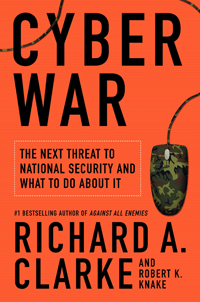
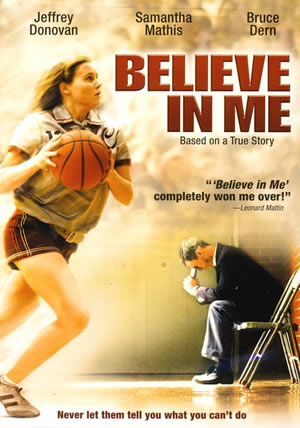
  • Believe In Me, Cyber War

    A Man and a Team of Girls

    Back in 1964, Jim Keith took a job at an Oklahoma high school to coach boy’s basketball.  But when he arrived, the administrators changed their minds and gave his job to someone else.  Keith’s contract didn’t specify which gender he’d coach, just that he’d coach.  So they switched him to the girls.  Keith was extremely disappointed.  Who wanted to coach girls when it was the boys who played real ball?  Especially when Keith was supposed to be head coach.  Keith tried to get the promised position back, except the girls he coached had other things in store for him.  Harold Keith, Jim’s brother, wrote a novel based on what happened.  That novel was made into a movie in 2006 called Believe In Me.  

    Now, we all know the plot line of sports movies: a losing underdog of a team rises up to win.  It’s predictable, right?  But we could say that of all crime shows as well—in this episode investigators discover a crime and figure out who did it!  Wow, what a shocker.  We could say it of all romantic comedies as well—in this movie a couple at odds gets together.  No way!  We could say it of lots of stories.  And yet we love these stories anyway.  Why?  

    Because the characters suck us in.  Because the story tellers do such a good job with the particular details we forget we’re watching a movie or reading a book.  We forget to think about the ending.  Furthermore, the stories are often about more than just winning games.  And so we worry about these people who have become real to us and focus on their immediate situation.  At least, that’s what happens when the story tellers do a good job.

    And Robert Collector, who both wrote and directed the film, did a great job with Believe In Me.  Now, I don’t know how accurate the film’s depiction of five-on-five play is; I believe the girl basketball teams of that era played six-on-six.  But that’s a niggling technical detail.  Besides, the movie isn’t about technique anyway.  It’s about a man and a group of country girls who have to face difficult obstacles, not so much on the court, but off it.  If you have girls or like sports at all, I think you’ll love this movie. 

    Cyber War

    I recently reviewed America The Vulnerable which explained how exposed we are as individuals, corporations, and a country to cyber crime, cyber espionage (both state and corporate), and cyber attacks.  Of all the cyber threats we face as individuals and a nation, the least likely is an all out cyber war.  But just because it’s less likely that doesn’t mean the threat isn’t real.  Especially since cyber warfare has been in use since the 1990’s.  We used cyber weapons openly in the gulf war in 2003, knocking out Iraqi air defenses.  Israel used them to own Syria’s air defenses when bombing their clandestine nuclear site in 2007.  Russia used them against Estonia in 2008 and Georgia in 2009 on a variety of targets, bringing many critical systems to a halt.  In 2010, somebody, most likely the US or Israel, developed the Stuxnet worm to sabotage the uranium enrichment facility at Natanz in Iran.  China has already conducted trial runs of cyber attacks on the US and has planted logic bombs and trap doors to activate in the future.

    In Cyber War, Richard Clarke shares his insights into what cyber war is, how cyber weapons work, and how vulnerable we are as a nation.  He discusses the cyber warriors (hackers) we now employ in the US military, and how a cyber war is like and unlike other wars.  In the second half of the book, he discusses the factors that have created our current vulnerability, how to set up a defense, and what we need to think about when conducting a cyber war. 

    And Clarke knows his stuff.  He worked for the State Department during the presidency of Ronald Reagan.  In 1992, President George H.W. Bush appointed him to chair the Counter-terrorism Security Group and to a seat on the United States National Security Council.  President Bill Clinton retained Clarke and in 1998 promoted him to be the national coordinator for security, infrastructure protection, and counterterrorism, the chief counterterrorism adviser on the National Security Council.  President George W. Bush kept him in the same position and later made him special adviser to the president on cyber security.    

    The thing I liked most about the book is that in addition to describing cool cyber war weapons, threats, and incidents, Clarke examines answers to many critical questions.  For example, how can we set up a defense without the government becoming a 1984 nightmare?  Would arms agreements work in cyber space?  (No.)  How do you prevent a cyber war from turning into a kinetic (guns and troops) war?  How do you attack your enemy when it’s sometimes hard to know who launched the attack in the first place?  He discusses these and many more questions.

    The book does have one fault.  Clarke has an obvious axe to grind with the Bush administration, and can’t help but make snide and irritating comments whenever he brings them up.  The good news is that those spots are few and far between.  If you want an excellent introduction into how cyber weapons are used and will likely be used in the future, you’ll want to read this book.

    Share