I’ll be presenting this Saturday, June 8, at the league’s summer writer symposium at USU. Here’s the description of my presentation.
Make ‘Em Beg For More! How do you keep your readers begging for one more page? The answer is probably not what you think. Come to this session to learn the surprising secret—along with plenty of examples and how-tos. When you’re done, you’ll know exactly what you need to do to write stories that are devilishly hard for readers to put down.
Check out the schedule below. Looks like there will be some great presentations. If you attend, please come and say hello.
T. Colin Campbell grew up on a dairy farm, loved milk, loved meat, and started his career as a nutrition scientist thinking the cornerstone of good nutrition was high-quality animal protein—meat, milk, and eggs.
One of his first projects was for MIT, trying to help the
chicken industry. Millions of chickens were dying each year from something
toxic in their feed. What was the mystery killer? Campbell was responsible for
isolating and determining the structure of the chemical. Through his work, he
helped discover dioxin, one of the most toxic chemicals ever found.
After helping with that, he began work helping malnourished
children in the Philippines. He wanted to find ways to help them get more
protein in their diets, because, again, protein was supposed to be the
cornerstone of health. Part of the project was remedying an unusually high
incidence of liver cancer in children, which is normally an adult disease. At
the time, they thought a lack of protein was leaving the children vulnerable to
aflatoxin in their diet.
But as they began their scientific investigation, Campbell discovered the kids who ate the most protein had the highest rates of liver cancer.
But that just couldn’t be right.
And then he came across a study of rats and aflatoxin. The
scientists in the study administered the cancer-causing aflatoxin to all of the
animals. Half of the animals were then fed a diet with 5% protein. The other
half were fed a diet with 20% protein. All of the animals fed a diet with 20%
protein developed liver cancer. None of the animals fed a diet with 5% protein
developed the cancer.
Again, that couldn’t be right. Protein was good for you. A respected colleague suggested surely the researchers must have mislabeled the animal cages. Campbell decided to run his own studies and find out. Back at Cornell, he and his research assistants ran the experiment multiple times and in various ways. And all of the experiments confirmed that protein promoted cancer growth. In fact, they could turn cancer growth on and off by the amount of protein they fed the animals.
But it wasn’t all protein. It was animal-based protein. The plant-based protein didn’t promote cancer growth.
Campbell was astounded. The findings rocked his world, but
he was determined to follow the facts wherever they led. This began decades of
research into diet and nutrition. The culmination was what’s called The China
Study. It is the most comprehensive study of nutrition ever conducted. And what
all of his decades of research demonstrated was that “People who ate the most
animal-based foods got the most chronic disease. Even relatively small intakes
of animal-based food were associated with adverse effects. People who ate the
most plant-based foods were the healthiest and tended to avoid chronic disease.”
Campbell didn’t rest there. He sought out the findings of
other researchers and clinicians. And what he found all demonstrates that “The
same diet that is good for the prevention of cancer is also good for the
prevention of heart disease, as well as obesity, diabetes, cataracts, macular
degeneration, Alzheimer’s, cognitive dysfunction, multiple sclerosis,
osteoporosis and other diseases.”
What was the diet that showed such important results? A whole
food plant-based diet. It’s a diet rich in legumes, whole grains, vegetables,
and fruits with little or no meat, milk, and eggs.
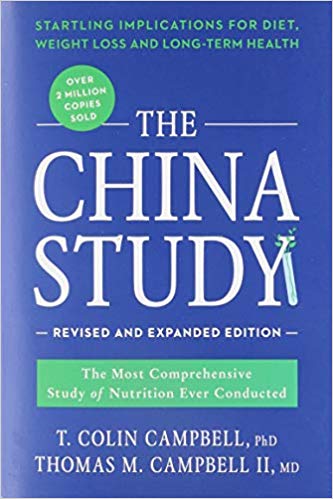
Campbell has written a book for lay people like you and me that explains the science and findings called The China Study: Revised and Expanded Edition.
The book is a fascinating masterwork of clarity. In it, he not only explains the research but also how and why various groups have tried to suppress and discredit the information.
Campbell is not some crazy quack. He isn’t someone selling
pills and supplement drinks on the internet. He has no financial interest in
you believing him. He is one of the foremost researchers on nutrition, a
renowned scientist at Cornell University, who has worked as a senior science
adviser to the American Institute for Cancer Research, sat on government nutrition
panels, and is on the advisory board of the Physicians Committee for Responsible
Medicine.
If you or someone you love are worried about any of the
following:
Heart disease
Cancer (breast, prostate, colon, liver, and
others)
Type 1 Diabetes
Type 2 Diabetes
Erectile dysfunction
Multiple sclerosis
Cataracts
Macular degeneration
Osteoporosis
Alzheimer’s
I think you will be interested in hearing what he has to report. Of course, you’ll have to make up your own mind about the evidence he provides. But I think you owe it to yourself to hear what he has to say.
If you want to understand the secret to Mormonism, something 99.9% of the world does not know, even though many think they do, read on.
This last Tuesday I was at dinner with a number of wonderful coworkers. We were talking about religion and listening to the guy who helps set up our training environments talk about the interesting hunting ministry he’s involved with (it’s very cool—12,000 acres of woodland in Alabama all dedicated to hunting, outdoor survival, and God).
At one point in the conversation, a delightful fellow trainer, who shared with us the night before the definition of diplomacy as being able to tell someone to go to hell and have them look forward to the trip, asked me, “Does your church believe in Christ. Or, no, is it some other fellow?”
It’s a great question, and I realized that many people are confused. And so I wanted to take time to clear it up.
So what the heck is a Mormon?
It’s not what you think.
And for those of you who think you know, nope, it’s not about that book.
Let me explain. You’ll come away knowing more about us than anyone in any of your circles, and you can lord your superior knowledge over them at dinner parties, when playing games that require vast stores of smarts, or at random moments, just because you can.
Here’s the deal. The first part of the name of the church is “The Church of Jesus Christ.” So, yes, we believe in Christ, that he died for us, was resurrected, is our Lord and god, etc.
The last part of the name is “of latter-day saints.” We don’t use “saint” to mean super-holy people like the Catholic church does, but more as followers or disciples. So you could translate the last part of the name of our church as “of latter-day followers.”
So the whole name would be The Church of Jesus Christ of Latter-day People who Follow Him.
Okay, then what’s the deal with the name “Mormon”?
Well, here’s where we get to the nub of it and the thing that 99.9% of the world doesn’t know. The key difference between the Mormon church and other Christian churches is that we believe that Jesus has called apostles again in our day, just like he did back in the good old days. And when I say apostles, I mean guys like Peter, James, John, Paul, etc.
You might be wondering what an apostle is. What made those guys special?
It wasn’t that they had great faith in Jesus. Lots of people had great faith. It was that they were called to bear special witness of him. And that special witness was not merely that they believed, but that they knew Jesus was the Messiah because they had seen and heard him after his resurrection.
Peter himself said it best when he wrote in his letter, “For we have not followed cunningly devised fables, when we made known unto you the power and coming of our Lord Jesus Christ, but were eyewitnesses of his majesty.”
When the apostles had to choose someone to replace Judas, Peter said, “Wherefore of these men which have accompanied us all the time that the Lord Jesus went in and out among us, beginning from the baptism of John unto that same day that he was taken up from us, one must be ordained to be a witness with us of his resurrection.”
These guys didn’t simply believe. They knew. They were eyewitnesses to the fact that Jesus wasn’t just some preacher—he was the son of God and was resurrected.
So Mormons believe that Jesus has called apostles again today who bear witness of an absolute certain knowledge of the reality of Jesus the Christ. We believe their purpose is also to be the Lord’s spokesmen when He wants to make general announcements or give general instructions. Finally, we also believe they’ve received the authority to offer the covenants the Lord wants to make with all of us.
We believe the first apostle called in these latter days was a fellow by the name of Joseph Smith. We don’t worship Smith. He was just an apostle. Just like Matthew or John of old were. But we do believe the Lord called him to be an apostle and restore some truths that had gotten lost or confused over the years.
We also believe the Lord asked him to bring forth other scriptures in addition to those in the Bible. One of these new scriptures was a translation of an ancient record called The Book of Mormon. It’s called that because Mormon is the name of the guy who wrote it. And Mormon was another apostle—one called by Jesus in ancient America.
And guess what the purpose of The Book of Mormon is? It’s to testify of Jesus Christ and explain his gospel.
So the name of the Mormon church is really The Church of Jesus Christ of Latter-day Saints. Mormons believe that Jesus has called and commissioned apostles in our times, right up to today, to bear special witness of him. And in addition to that, those apostles have brought forth additional scriptures that witness of the divinity and mission of Jesus Christ.
For Mormons, it’s all about Jesus Christ.
So when someone asks, what’s a Mormon? You can say, let me tell you the real answer. It’s not about an additional book of scripture. Yes, folks gave them the nickname of Mormons because of that book, but the key difference is that Mormons believe that Jesus has called apostles like Peter and Paul again in our day to be his spokesmen, and bear a certain witness of him and his good news, and help folks receive all the blessings the Lord wants to pour out on them.
And, O, what a wonderful message we Mormons believe that is.
Here’s the idea popularized by Malcolm Gladwell in Outliers and Geoff Colvin in Talent is Overrated: put in 10,000 hours of deliberate practice (as opposed to mindless practice) into the area of your choice, and you will succeed. 10,000 hours is more important than anything else.
10,000 hours.
The idea that deliberate practice makes perfect and leads to success seems to make a lot of sense.
Except I don’t think the data holds up.
First, there’s a huge survivorship bias in the 10,000 hour idea.
Both Gladwell and Colvin based their stuff on Anders Ericsson’s research. I contacted Mr. Ericsson and asked him if there were any studies that weren’t correlational. Any that took similar groups of schlubs and showed that deliberate practice is what took them to elite levels of performance.
He said no there weren’t, but graciously sent me some files to help. Here’s the money quote in those files:
“The main focus of deliberate practice was to explain individual differences among those individuals who had had access to all necessary training and practice opportunities. I proposed those factors which could explain the performance differences within groups of expert musicians who had accumulated over ten years of instruction and mentoring by skilled teachers.”
These were not studies designed to look at those who became elite and those that didn’t and figure out what made the difference. All he did was look at performance differences between experts. Which means there are huge issues using his research to make claims about what leads to expertise.
Big issue one: he has no idea what kind of practice any of these folks had before he met with them. It’s all self-reported. There were no controls to verify the amounts of “deliberate” practice the musicians had in the long years up to the time he studied them.
Big issue two (and just as important): he’s looking at experts. It’s all after-the-fact.
He took a bunch of successful people and looked at their current work habits and speculated about their reports of earlier practice. Hum, they’ve put in a lot of hours. And these guys doing better seem to be doing a specific type of practice. But he did NOT look at a cohort of people who all started out at the same time, track their progress, and then identify factors that made the difference between those who became elite, those who became so-so, and those who ended up in the mud pit.
But somehow his stuff got twisted into the idea that if you’re starting out and just put in 10,000 hours of deliberate practice, you’ll be successful just like those big guys!
Big issue three. Ericsson did not study, and Gladwell and Colvin do not address, the factor of early success. Especially in writing and other tournament-style endeavors where rejection plays a huge role.
So many people quit because the effort is not worth the reward. What you have left then are a bunch of people who persevered, but was it the hours they put in that led them to the top? Or did they have a lot of hours because they hung in there?
And did they hang in because they had early success?
And did they have early success because of luck or some natural aptitude or advantage like birthday that seems to factor so heavily in Canadian hockey (I think Gladwell talked about that in the same book–right birth date means you’re older compared to the other kids and therefore seem to have “talent” when it’s just a few months more physical development, which makes a big difference when you’re young) or some parent who had expertise and gave them a leg up against the other kids in their cohort?
You see the effect of success in reading. My wife works as a 7th and 8th grade language arts teacher. The studies have shown that kids, in general, need to have about 94% comprehension rate to stick with reading. Below that they start to feel failure, get frustrated, and quit. In most cases, reading a super hard book will decrease motivation. Which then leads to less practice. And less skill. They’ve found that kids will work down around an 89% comprehension rate, a struggling range, if they have support. Below that the failure rate leads them to self select out of reading.
Where in all these studies was self-selection included? Nowhere. Motivation, early success, quitting: disregarding those is a huge oversight.
And all of these issues are compounded, especially for artists buying into the 10,000 hour idea, by the fact that even if you do get some skillz, that’s a completely separate thing from being noticed.
Basically he took a bunch of songs with varying quality and wanted to see how social influence (download counts) affected which songs rose to the top. He put the same set of songs in 8 discrete and separate online environments to see which songs would be most popular. His finding:
“In all the social-influence worlds, the most popular songs were much more popular (and the least popular songs were less popular) than in the independent condition. At the same time, however, the particular songs that became hits were different in different worlds, just as cumulative-advantage theory would predict. Introducing social influence into human decision making, in other words, didn’t just make the hits bigger; it also made them more unpredictable. . .
. . . When we added up downloads across all eight social-influence worlds, “good” songs had higher market share, on average, than “bad” ones. But the impact of a listener’s own reactions is easily overwhelmed by his or her reactions to others.”
So even if your stuff is good, that does not mean it will be popular.
And when you meet failure after failure after failure . . .
You’ve got to practice well to get better, to offer more awesome gifts. But you’re not going to practice without the motivation. Motivation is the KEY to learning. And early success is a key part to motivation.
Another piece of data that seems to belie the 10,000 hour claim is that when you do some simple math and look at surveys of writers breaking in, 10,000 hours starts to look very odd indeed.
Let’s say you’re a poopy-slow writer and can only get 250 words in per hour. In 10,000 hours will you have written 2.5 million words or about twenty-five 100k novels.
25 novels?
Hey, you say, you can’t be typing the whole time.
Okay, let’s be super conservative with these numbers. What if you spend about half that 10,000 hours writing and the other editing and doing pre-draft work? That’s still 12.5 finished novels.
That sounds like Brandon Sanderson. Except it’s not. Remember, he sold number 5 or 6.
Furthermore, the problem is that from all the surveys I’ve seen, writers who break into the old traditional publishing system aren’t averaging 12.5 novels. They aren’t averaging 5 or 6. They’re averaging 3-4, with a lot selling their first or second.
Hello, Stephenie Meyer and JK Rowling. And a lot of indie authors.
Jim Hines reports from a survey of authors he conducted:
“I also asked how many books people had written before they sold one to a major publisher. The average was between three and four. Median was two. I was surprised, however, to see that the mode was zero. 58 authors sold the first novel they wrote.” More at: http://www.jimchines.com/2010/03/novel-survey-results-part-ii/
But this is precisely the message so many have taken from the studies. Just put in the time and you’ll become great because the practice is more important than any natural aptitude . . . or early success.
I don’t think it is.
John, what in the Sam Hill are you doing? Trying to depress everyone and tell them they can’t succeed?
No.
What I’m saying is that we must practice and improve our craft. That’s a given. But we cannot expect that alone to make us successful. Especially not as artists. We can’t expect that 10,000 alone will make our work super popular.
Working hard WILL increase the probability of success (what’s that saying?–the harder I work, the luckier I get). But as writers we’ve got to realize that there’s no guarantee of popularity. Or even expertise.
So what are we left with?
Nothing, and maybe everything. Because there is passion. There is sharing. And if you can tap into that and rejoice in the sharing that does occur, it might well be the best reward. Bricks of gold in the basement and your name on everyone’s lips must be awesome. But a memory of walking a number of afternoons with a daughter in the hills and telling (sharing) a fine tale to that audience of one might just be worth more than all the gold bricks in China.
(Yes China, not Fort Knox. You didn’t hear?–we had to ship everything over before we could get another loan.)
The bottom line is this: there’s no guarantee of success. Not even with 10,000 hours.
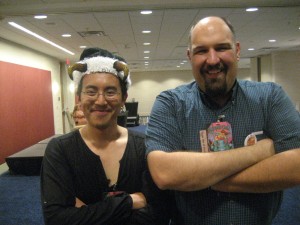
I think this was taken when someone stole the ILOH’s Cheetoes
Seven days.
San Diego, Phoenix, and a wild trip through Wyoming, around Denver, and back to Utah.
Seven days.
Five nights.
In Arizona, I was told by a wild-eyed denizen of the Barnes & Noble we were signing at that my epic fantasy book was true–we are ruled by lizard people!
Imagine how shocking it was to learn that. I mean it doesn’t have anything to do with my book, but lizard people? A hollow earth? Is the CIA in on it? I don’t think I’ve recovered yet.
In San Diego, we rode around with Dave Farland in his old four-door sedan. A Lincoln? All I remember is that it was big and floated like a dream. After some narrow misses, Dave asked me to drive. Two big guys up front. One older, rough-looking guy being chauffeured in the back. At one point we walked to a restaurant during the day like some made man and his two goons. The restaurant was empty except for three rough characters sitting around a table on the far side. They looked at us, sized us up, then looked away. We sat at a table on our side.
In Wyoming we drove in high winds that sent streams of snow across the highway like multitudes of slithering snakes. At one point we passed one semi that was on fire, winds howling about. About an hour later, we passed a truck driver out in the median, thigh-deep in snow, a huge knife in his hand. He was trying to saw off the frozen antlers of an elk that had been hit. I looked up at his rig as we passed and did not see anyone behind the wheel. I swear the thing was rolling slowly down the highway, unmanned.
On the way back from Denver, we rode along a wintery, icy highway with trucks and cars littering the sides. Larry white-knuckled the steering wheel, but we made it. Two big guys, one 6’4″ the other 6’2″, in a tiny Ford Focus.
Did the very road fear the Lord of Hate? I cannot tell.
On this trip, Larry, that man of hate, brought a bag of Walmart beef jerky that smelled like, well, a particular kind of flatulence. What kind of person does that to beef? But we ate it. Because you do such things on epic journeys.
Now, here’s the thing. If you spend any amount of time with me, you will eventually tell me your life story.
You will.
Not because I’m a prier. But because I’m simply and sincerely interested. In people. If you work for the sanitation department, I’m going to want to know about garbage trucks. If you bowl, I’m going to want to know about bowling. If you’re some kind of wackadoo, I’m going to want to hear your wackadooness. Sooner or later, you’re going to talk. And, yes, there will be things along the way that I just might put in my zing file. That’s not why I’m talking to you. But sometimes the slices of life are too good not to capture.
So you put Larry Correia, International Lord of Hate, into a car with me, and he’s going to spill his guts.
Let me tell you what I found. Oh yeah, wait until you hear this.
Larry loves Bridget, his wife. No, do not turn away in horror. You must hear the rest of the tale.
He doesn’t like taxes, which is outrageous. Simply beyond the pale.
He’s a strong advocate of the right to bear arms. He figures people are safer with guns than without. And he was loaded. I remember getting to the hotel in Denver and seeing he draw his guns and put them on the table. A Kimber/Bul Poly .45 from his waist and a little Kahr MK9 on the ankle. Frightening. Of course, I never worried about going anywhere with him, but the guns had nothing to do with that.
He doesn’t like the idea of a small group of people in Washington telling folks what they need to do. He’s not anti-government. He just likes a minimal amount of government. This too is outrageous. Government is the source of all good in the world.
He doesn’t like a lot of what Franklin Delano Roosevelt did. One of those things he doesn’t like is the rounding up of Japanese Americans and putting them in war camps. Another was Roosevelt’s attempt to pack the Supreme Court with justices who would rule his way, essentially eliminating that branch’s check on the presidency. Nor does he like Roosevelt for being the first president to explicitly embrace deficit spending. The list with Roosevelt could go on. Of course, we all know that wise people everywhere thought Roosevelt made the right choice on these things.
Larry honors the folks who serve in our military and law enforcement. Big time. Guys and gals who put their lives on the line or support those who do. I roll my eyes.
Larry’s a big believer in pulling yourself up by your boot straps and getting to work. He worked on his father’s dairy farm milking cows early in life. Busted his chops in school. Busted his chops at work. Busted his chops writing novel after novel. And now he lives on Yard Moose Mountain. A supposed example of can-do economic mobility, which all smart people know is a farce.
I mean, work? Come on. Do you see how unreasonable the man is?
He’s an accountant and pretty good with numbers. Ergo he doesn’t like a lot of bureaucratic waste. It stinks to his accountant soul. And he saw a lot of that as a military contractor. I’m really for a lot of waste of taxpayer dollars, but I let him have his say.
Larry was once a bouncer.
He’s a big guy, but got his trash kicked in some early amateur MMA. But he still loved it.
The International Lord of Hate in multiple colors
In a friendly wrestling match, he broke his roommate’s toe, and said roommate responded by breaking the International Lord of Hate’s nose. Yes, the nose, Ladies and Gentlemen.
Larry is funny.
Larry has a lot of friends because, shocker, he’s a friendly guy.
There’s more. But let me tell you what I never heard. I never heard him make a racist remark. Not even when he told me about growing up in California’s Central Valley, or when some idiot kids who had been tasked with beating someone up to to join a Hispanic gang targeted him. Never heard him make a misogynistic remark.
I did hear how he loved to argue with folks on the internets. And then saw that later when I started reading his blog. It’s clear Larry likes a good fight. He’s a barbarian with big boots. But, in truth, he’s a friendly barbarian.
That’s the expose. I know. Shocking, isn’t it.
Now he’s gone and done this Hugo thing and calls people names and uses four-letter words on his blog posts.
I’ve found that Larry in person is not quite the same as Larry online when you disagree with him. In person he’s usually very conversational when you disagree.
Some might say he needs to be more polite online. Use more class.
They might have a point. Sometimes I think he steps over the line. Then again, they might not. He does get people to listen. And some of the things he has to say are insightful and worthwhile. Others are just plain funny.
Whatever your opinion, all I know is that if you’re wanting Abraham Lincoln, you’re going to have to look elsewhere. If you come out swinging, he’s not going to regale you with Kumbaya.
The International Lord of Hate radiating fearsome hate
And because he fights the way he does as Internet Larry, his posts seem to push some folks buttons to the point that they actually miss his intent.
For example, when Larry responded to Alex MacFarlane’s call for “an end to the default of binary gender in science fiction stories,” he never once suggested that we should discriminate against the folks MacFarlane wants to read stories about. He never suggested there shouldn’t be any such stories. Nor did he ever suggest folks who are discriminated against never have a case. His point was that the best way to write an entertaining story was to put the entertainment first, not some political agenda. His point was also that he’s sick of folks trying to foist their interests on him and everyone else. If you want to write about certain types of characters, do it. But don’t tell everyone else they must.
That was lost on some people. All they saw was someone who disagreed “rudely,” and they saw red. I’d be seeing red too if I felt ruded upon. At the same time, they still missed his point. A lot have missed his point about the Hugos as well.
But whatever happens with this latest kerfluffle, I had to tell my tale. Because I spent seven days with Larry Correia, International Lord of Hate. It was nip and tuck the whole time, but I survived his horrible onslaught. And then we enjoyed some ice creams and tropical trail mix, which I can happily report smelled a lot better than the beef jerky.
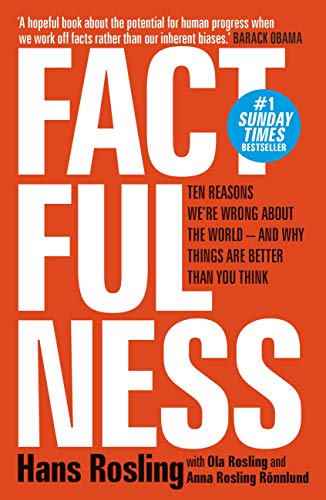
For example, Rosling wanted to see how well we understand the scientific projections of how our population will grow. After all, a lot of people think we’re headed for an overpopulation nightmare.
In 1950 there were fewer than one billion children (aged 0-14) in the world. By 2000 there were almost two billion. How many do UN experts think there will be in 2100?
4 billion
3 billion
2 billion
What do you think the right answer is?
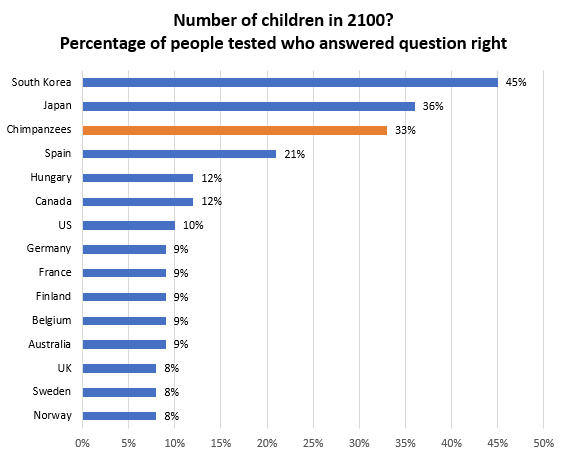
If a bunch of chimpanzees had to answer the question above, each would choose an answer randomly. And 33% of them would get it right.
But when you ask humans the question, most of them get it wrong. Most of them, in fact, do worse than the chimpanzees. It’s not even close.
Rosling asked 12,000 people in 14 countries were asked this question, among others. Here’s how many got it right in various countries.
To be clear, no chimps were tested. That bar is in there just for comparison. But if they were, that’s how they’d do.
So how is it possible that humans do so spectacularly worse than the chimpanzees?
It’s not because chimps are secretly studying world population stats and hatching schemes. It’s because we humans think we know something, but, in reality, what we think we know is wrong.
And in this case, we think they know that the population is going to keep growing and growing and growing.
But it’s not.
The right answer above is C—there are 2 billion children now, and there will be 2 billion in 2100.
The world has hit the peak number of children it will ever have at any time.
There are around 6 billion people on the earth today. As those 2 billion children get older, the UN experts project the total population to fill out and grow to 11 billion in 2100 and then level off.
That means there is no overpopulation nightmare on the horizon.
Can this be true?
Read Rosling’s book.
Well, what about literacy levels? Poverty? Racism? Wars?
And what about the news—don’t we see the world going to pieces every night?
If you want an eye-opening experience, read Rosling’s book. He delivers all the insights with clarity, expertise, and humor.
Best of all, when you’re done, you’ll have a set of tools to help you correct the picture.
And while you’re waiting for the book, why not watch Rosling in action in this TED talk where he shows the data on population.