“Wally” by Aslyn

My daughter was playing this song on her internet list. The tune and singer’s voice grabbed me. I downloaded it based on that. Then I really listened.

Oh, man.

I cannot tell you how much I love this song. I love the melody and phrasing, Aslyn’s voice. I love the lyrics. I love the true story behind them. Gracious Lord, this is what it’s all about.

This youtube is of a live performance. She gives a great into to the song. She tells how her grandfather Wally, who was in the Coast Guard when he young, met his wife Fae. They were married for 55 years. Then Aslyn tells how she found Wally, a few days after Grandma Fae died, sitting in his rocking chair holding a black and white picture of his wife, his eyes wet with tears. Fae had written on the picture: “to sweetest boy I’ve ever known.” You gotta listen to that intro. Then you have to get the Lemon Love album version of the song. It’s 99 cents on Amazon.

Here are the lyrics. I’ve added the little spoken part you get on the Lemon Love version that’s not in the live performance.

“Wally”

[Aslyn’s grandfather]

Hello, I’m Wally. I’m the man that had the good fortune of one day of finding a companion that would live with me for more than 55 years. No man could have ever asked for a better wife, or better friend, than the one I found across the dance floor at the USO.

[Song begins]  

Dear Wally, I’m writing this letter sincerely.
To tell you you’re the “sweetest boy I’ve ever known.”
Remember that USO when we met.
You almost didnt go.
Well, me and your two sons are very glad you did.
Cause when your eyes found me I could hardly breathe.
I wanted you.
Glad you wanted me.

I never stopped falling in love with you, Wally.
From the first day I saw you
I was sailor-bound, I just knew.
You had me, I was yours.
We danced out on the floor.
And with each passing day.
I only loved you more.

That night was pure magic.
Who would have imagined.
It would become 55 loving wonderful years.
Your job was not all easy.
Those last years I could hardly speak.
But when I looked at you I knew nothing had changed.
And when I was leaving.
I could feel you hurting.
But then I saw those angels and I knew your love would want this for me.

I never stopped falling in love with you, Wally.
From the first day I saw you
I was sailor-bound, I just knew.
You had me, I was yours.
We danced out on the floor.
And with each passing day.
I only loved you more…more… more…more… more

So while you’re waiting
Know that I’m saying I love you
I love you………

I never stopped falling in love with you, Wally.
From the first day I saw you
I was sailor-bound, I just knew.
You had me, I was yours.
We danced out on the floor.
And with each passing day.
I only loved you

You had me, I was yours.
We danced out on the floor.
And with each passing day.
I only loved you more..

Dear Wally…

Share

Similar Posts

  • |

    Orson Card’s Literary Boot Camp

    Just apply already!

    Orson Card has just announced the dates and location for this year’s literary boot camp. This one is in North Carolina. Card usually usually holds a session in the west every other year. But here’s the deal: east or west, if you are a new writer, this is THE workshop to attend. It is hands-down THE best workshop I have ever attended.

    If you want to learn how to write fiction from one of the masters, you will apply (the boot camp is limited to 12 people) and then do whatever it takes to attend if you’re selected.  The two day writing class is also great. I don’t know that I would spend hundreds of dollars to fly in for that, but I would and did spend hundreds to attend the boot camp (way back in ye year 2002).

    For more information, go here: http://www.hatrack.com/misc/bootcamp2014/

    Share
  • If you want to work with publishers, you need this. Right now.

    thenineworstprovisionsinyourpublishingcontract-by-vandagriffWriters who want to deal with publishers need this book: The Nine Worse Provisions in Your Publishing Contract by David P. Vandagriff. And it’s currently free!

    Vandagriff is a lawyer whose business involves high-stakes intellectual property litigation. He has negotiated major contracts with a wide range of opposing parties, some of which include Apple, Hewlett-Packard, Microsoft, Intel, Morgan Stanley, Merrill Lynch, Fidelity Investments, AOL, Disney, Hallmark, plus other large publishers, agents and etailers.

    He’s also publishes The Passive Voice, a news blog on the publishing business that includes many posts from his lawyer perspective.

    Don’t fall for contract terms that turn you into a slave.

    Share
  • Good Stuff! Two movies, a book, and a shovel

    We’re going to start with the shovel because it’s been dumping snow this year, and I know there are some folks out there who want a quicker way to clear the snow from their driveways and walks. And, boy, do I have something for them.

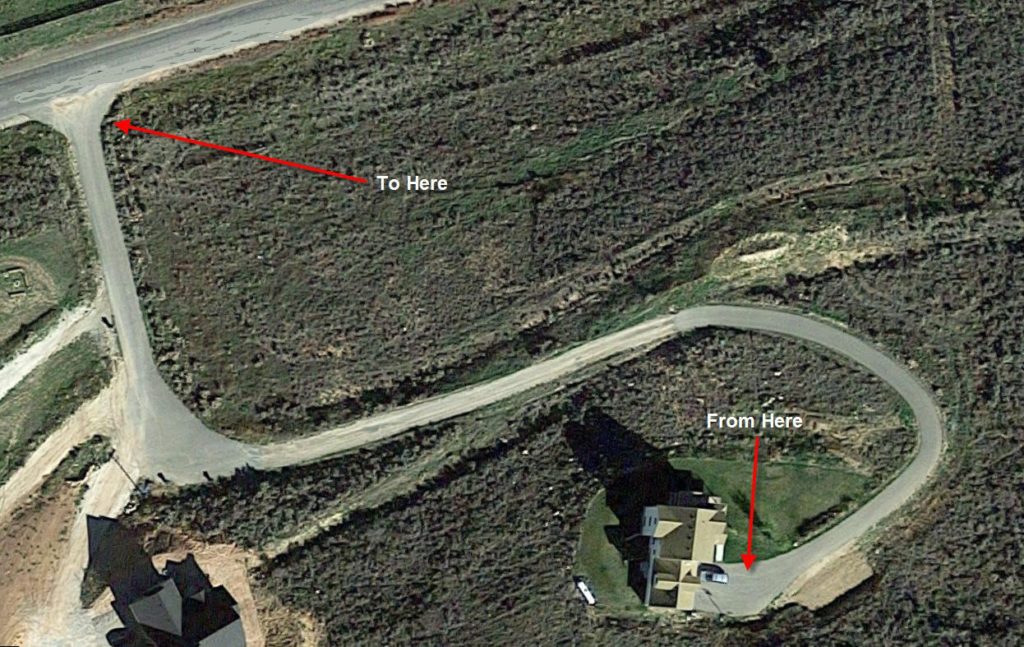
    I think it’s safe to say that the Brown family clears more snow by hand than the average American family. We have a driveway and street that together are a little over a tenth of a mile long. Here’s a picture.

    We clear that lovely stretch of road by hand with shovels. (Yes, we are crazy; more on that below.) Most of the time we have it cleared long before any city plow shows up. But we love our city plows because they can do the heavy work at the edges on the bottom two-thirds. And they do all the work on that bottom part when it gets really heavy and deep. We love our neighbors with tractors who’ve come to our rescue as well.

    Still, we do most of the clearing.

    We began our mad shoveling craze for one simple reason: we couldn’t get to our house when it snowed. And it was a pain in the neck to hike that tenth of a mile.

    Part of the problem is that we live on a hill, and there are a couple of steep stretches. Another part of the problem was that we had not availed ourselves of this higher technology called snow tires. We thought all-weather tires would do just as fine.

    Wrong. Big wrong. They don’t even come close.

    With all-weathers, on a hill, you have to keep the road clear. As in to the blacktop. Because once you build up even a small layer of snow, you’ll get slick patches, and then the all-weathers do nothing but spin.

    But we didn’t discover that until a few years into it. And by that time, we’d learned that shoveling such a long drive was not only good exercise, but it also was a great way to teach our four girls how to work hard and not fear projects that seemed daunting.

    I know some of you are thinking, dude, why not purchase a snow blower, or a pickup or four-wheeler with a plow?

    Because snow blowers at the time, much less four wheelers and pickups, were out of our budget. Because I’d much rather spend the money on a family trip somewhere fun. Because why spend the money when you can line up as a family and create your own Brown Family Snow Blade and give your kids stories to tell their kids about living in the Gulag?

    Anyway, it’s what we do. Fast forward now to this year. Three of our daughters have grown up and gone off to college. Nellie, my youngest daughter, and I can usually still get it done. But this year’s record snows kicked our butts. Royally.

    Now, we’ve tried all sorts of shovels. I can guarantee, if it was at a store for sale, we’ve tried it. We’ve used brooms. We’ve used all sorts of configurations of girl, woman, and dad power. After all that experimentation, we found a standard push shovel to be the best for general snow and a square garden shovel to be the ticket for ice. But this year our trusty tools weren’t cutting it.

    So, after one long day on the driveway, I went on line looking for a better shovel. And after looking at quite several contraptions, I found The Snowcaster.

    You can see it in action below. It’s basically a plow. One made for a human to push.

    When I saw it, I thought this thing had to be better than pushing shovels. So I ordered it and assembled it. The curved blade of incredibly hard plastic rises 9 inches above the ground and is three feet long. Its nifty design allows you to simply flip it to change the direction of the blade.

    After using it these last six weeks on multiple snows of everything from ten inches of powder to three inches of watery slush, I will simply say that it’s amazing. It’s so good, I ordered a second unit.

    The Snowcaster does have a limit—you’re not going to plow three-feet of snow with it. You’re not going to plow a build-up of two feet. If you’ve got a lot of wet snow over a large area, you will break a sweat. And sometimes you’ll still need a shovel to toss snow at the edges. But for moving large quantities of snow out of the way on asphalt or concrete, it’s the best thing I’ve found to date.

    If you are like me and don’t want to purchase a machine just yet, have snow to move, and want to dramatically reduce the time it takes to move it while providing some fun for the kids, I think you’ll love The Snowcaster. I ordered mine directly from the company here: https://thesnowcaster.com/. The model I chose was the 70SNC. I wouldn’t suggest the long model unless you rarely get snows above three inches. I say this because on some days with lots of snow the three-footer was about all I could push.

    Okay, onto the movies. I have two excellent ones to recommend. Both of which are based on true-life events.

    The first is Denial, a British-American historical drama, that tells the story of how Deborah Lipstadt, a holocaust scholar, was taken to court for libel in Britain by David Irving, a man who claims the Holocaust never happened. In America, you’re always innocent until proven guilty. However, in Britain, with libel, the burden of proof is upon the defendant. So how do you prove you weren’t slandering someone? The movie was thrilling and fascinating. And gave you something to think about afterwards. If you enjoyed Woman in Gold, you’ll enjoy this.

    The next is Hidden Figures, an American biographical drama, that tells the story of female African-American mathematicians at NASA. These women were employed as computers—that was their official job title. Of course, this was before electrical computers and calculators, and what they did amazes me. The story is about the USA struggling to catch up to the Russians in the space race, and how four of these women helped while dealing with deep-seated prejudice against Blacks and females. It is full of humor, poignant moments, and surprises. It’s one of the best films I’ve seen these last few years. I don’t know what to compare it to. All I know is that you will laugh, be amazed, become outraged, and cheer.

    Lt. General Michael T. Flynn. Flynn is a former director of the Defense Intelligence Agency and Assistant Director of National Intelligence and is now our National Security Advisor. If you want to understand how he is likely to advise the president about our war against radical Islam, let me recommend his book The Field of Fight. In the book, Flynn describes his background as an intelligence officer and how critical good intelligence is in this fight. He then describes his take on who the radical Islamist enemy is and how he thinks we can win the war against them. He shares several surprising insights that only someone with his experience can and reveals as well how good and smart leaders can disagree about strategy. One of his main points is that we will never win the war by killing bodies—this is an ideological war, much like the war we fought against communism. For those wanting to get past news blurbs and hear the man speak for himself at length, I think you’ll find this book interesting.

    And because, Dear Reader, you read all the way to the end, I will give you two more movie recommendations. Moana is a great, fun, family film. La La Land is an enjoyable musical romance that will probably break your heart. It did mine.

    Share
  • Good Stuff! A great place to eat

    huhot-fb-defaultNellie and I recently celebrated our anniversary and enjoyed a delicious meal at HuHot Mongolian Grill in Logan, Utah.

    If you’ve never been to a Mongolian grill, here’s how it works. You take a plate, pile it with your desired selection of fresh meats and veggies, douse it with sauces, then hand the plate to the chef. He then spreads it on his gigantic, circular Mongolian grill and cooks it before your eyes, then hands your hot meal back to you. You take it to your table and enjoy a fine, fresh stir fry of your own making.

    If you want more, or want to try something different, when you’re finished, you go back because it’s an all-you-can-eat grill. I can happily report that Nellie and I did go back. We wanted to go back a third time but were stuffed.

    The food was excellent. The service was friendly. If you’re looking for something different, I think you’ll want to give HuHot a try.

    Share
  • Interview with Author Leah Cypess

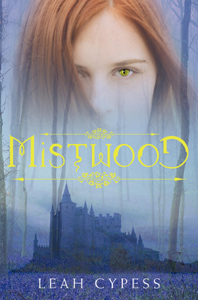
    Leah Cypess says, “After selling my first story (Temple of Stone) while in high school, I gave in to my mother’s importuning to be practical and majored in biology at Brooklyn College. I then went to Columbia Law School and practiced law for almost two years at Debevoise & Plimpton LLP, a large law firm in New York City. I kept writing and submitting in my spare time, and finally, a mere 15 years after my first short story acceptance, I sold my first novel, Mistwood, to Greenwillow Books (HarperCollins).”

    Leah lives in Brookline, Massachusetts (right outside of Boston) with her husband Aaron, a researcher and doctor at the Joslin Diabetes Center, and their two daughters. She majored in biology, minored in journalism, went to law school, worked as a lawyer, and has just started to learn about hawking and hunting. She’s published a number of short stories, which are all available for free on her website.

    I just had the opportunity to interview Leah about her writing process and books. Enjoy!

    *

    JB: MISTWOOD, published by HarperCollins in April, 2010, is your debut novel. But is it the first you’ve written?

    LC: Most definitely not. I wrote, revised, and submitted four manuscripts before Mistwood. (Technically, five; but I don’t count the first one, because it wasn’t very good, and I didn’t know what I was doing with the submissions process either. I was fifteen years old.)  In fact, after getting the offer from HarperCollins, I acquired an agent, who asked me to send him a list of my previous manuscripts and their submission histories.  The list was sixteen pages long.

    JB: Holy cow, five novels and 16 pages of submission history. That’s a lot of dedication. And faith in the face of rejection. I’m intrigued. How did the sale of this novel come about? Was it just another submission to yet another editor or did you have some connection? What was different with this book?

    LC: Both the faith and the sale were helped by the fact that I could see incremental improvements. My first novel received mostly form rejection letters, a couple of letters inviting me to submit further, and one revision request. My second received a lot of personal rejection letters, many more requests from various editors to submit future works, and one two-page revision request. The third made it to the acquisition committee at two houses. So I could tell I was getting closer, though it was still pretty dispiriting to think I might never make that final leap into publication. (After Novel #3 was turned down by both acquisition committees, even though it was being championed by senior editors in both cases, I had a couple of bad days.)

     In the end, I think what was different about Mistwood was mostly luck.

    It wasn’t my most perfect manuscript – there was a lot of revising to do after it was accepted! – but it was the one that resonated with the right editor at the right time. This was an editor who had asked me to submit future books after rejecting the query for Book #3, then requested Book #4 and written me a detailed and regretful email about why she didn’t feel it was right for her. By the time I sent her the query for Mistwood, she was obviously confident enough in my abilities to request that I email her the full manuscript, and to read it right away. After all those years, the acceptance for Mistwood came just a few months after I started submitting it.

    JB: I’m betting your persistence and work made some of that luck. Work seems to be a little bit of magic all by itself and has been used by a lot of other authors I know. Hum (grin). So let’s talk about the book. You should know you made The Top 200 YA Authors list I just published on my site. It ranks YA authors by average number of readers per book. And while the list can’t purport to be anything but a reflection of the tastes of the area’s library patrons, I think it’s probably representative of what’s going on in my region. So congrats! The book starts right off with a bang. It’s about a shape shifter. I know shape shifters have been around forever, but most fantasy these days seems to be about vampires and werewolves. Tell us a little bit about the core idea of the novel and its genesis.

    LC:  That’s awesome that I’m on the Top 200 YA Authors list – thanks for letting me know!

    I’ve been reading fantasy/science-fiction “forever” (I cut my teeth on the Edgar Rice Burroughs books my father had stored in our garage), so shapeshifters are just as familiar to me as vampires and werewolves.

    The core idea of the novel is that of an inhuman creature grappling with the fact that she seems to be turning human — while trying to figure out why, exactly, this has happened to her, and who and what she truly is. (And, of course, fending off assassins and dealing with palace intrigue.) That idea developed over the course of writing the novel – I started out with a scene of men riding into a misty forest in search of the magical creature who lived there, with no clear idea of what that creature was or why they wanted her. Then I kind of made the rest up as I went along. (This writing process is one of the reasons the novel was revised nine times before being published!)

    JB: I really liked the beginning. No wonder you felt compelled to follow the idea. And nine revisions! It sounds like you use drafts, as opposed to outlines or other tools, to help you discover your stories. Were these big revisions, almost complete rewrites?

    LC: Thanks! I’m glad you liked it

    I usually don’t rewrite scenes completely – most of my editing of already-written material consists more of snipping unnecessary parts and adding little bits and pieces. (Especially of description, which I tend to leave out entirely in the first draft.) But I do a lot of moving scenes around, deleting some scenes, and writing some new ones.

    Though I don’t use an outline when I first write, I usually create one during the revision process so I can keep track of the jigsaw-puzzle my manuscript has become.

    JB: That’s interesting. Well, I have just one more question for you. Tell us what’s coming next.

    LC: What’s next is NIGHTSPELL, a stand-alone companion novel to MISTWOOD, which will be published in May 2011. It’s about a country where an ancient spell allows murder victims to return as ghosts to seek vengeance on their killers… and if they don’t manage that, they remain ghosts forever. After a couple of hundreds of years of this, the kingdom – Ghostland – has evolved into a place where the living and the dead co-exist, albeit uneasily. My main character, Darri, is a foreigner to Ghostland; she is a barbarian princess who abhors the idea of ghosts and is only there to rescue her younger sister Callie, who was sent as a hostage four years ago. But Callie has changed in those four years, and now has secrets of her own.  In her quest to save her sister from herself, Darri will ultimately face a decision that will force her to reexamine beliefs she has never before questioned – and lead her into the heart of a conspiracy that threatens the balance of power between the living and the dead.

    JB: Oh my bleeping heck. That just gave me a case of massive author envy. I was thinking about writing a ghost story just yesterday and thought, “naw, ghosts are all played out.” Curse you, Cypess!

    Sheesh, talk about a parting shot. Well, I would ask about the next book, seeing NIGHTSPELL must be ready to go if it’s coming out in May, but I can only stand so much punishment. The good news, if I put my reader hat on, is that it looks like I get to put a tickler in my Outlook for this May. In the meantime, I going to suggest to my readers to give MISTWOOD a go. Thanks, Leah, for your time. I enjoyed the interview.

    LC: Thanks, John!

    *

    John sez: folks, I think I’m going to make interviews a regular feature. I just loved finding out more about Leah. It’s also interesting to see just how much work she’s put into this. I know that a good number of authors sell their first or second novel (see the Hines stats in the on writing section), but for a good number of others it’s later novels that sell. In either case, I think it’s clear that good old fashioned work makes up a big part of the secret sauce.

    Ah, that was fun. But, dang it, I should have asked her about her lawyer and biology background. Next time.

    LINKS

    Leah Cypess’s website

    The first three chapters of Mistwood

    Praise for Mistwood

    Codex Author Blog Tour 2011

    Share
  • Buck, America the Vulnerable

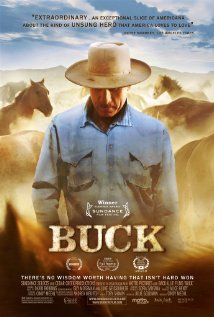
    Buck

    About two years ago I was walking out in Round Valley and saw a rider on a horse coming down a hill through the brush.  I got to him just as he moved onto the road. Right away, I noticed that there was something a bit off with the horse’s gear—the rider was not using a bridle. The rider, Wayne Batty, was using nothing more than a rope harness that went around the horse’s head. I was amazed; how did you steer the horse without a bit in its mouth?

    I asked Wayne if I might walk alongside as he rode. He agreed, and then began to talk about training and riding horses. I stuck with him for little over a mile before I had to turn back. I learned in that short period that Wayne was able to communicate with that horse with small nudges. The horse also communicated to him many things with its stance, ears, the cock of its head. Most importantly, I learned they both had built up a trust of each other. Wayne’s methods were not based on fear, it seemed, but something else.

    It reminded me a lot of the fascinating and compelling The Man Who Listens to Horses, the autobiography of Monty Roberts, that shares Roberts’ life and his development of natural horsemanship methods. Unlike many training approaches which seek to break a horse’s will through harsh punishment-based methods that often veer into abuse, natural horsemanship employs methods that are much gentler and seek to build trust in the handler. Roberts can join up with (he doesn’t “break” horses) a wild or un-ridden horse, be up on the saddle calmly riding the animal, in an incredibly short period of time.

    But Batty and Roberts aren’t the only ones practicing this. These methods have been around some time. One of the most famous practitioners and teachers is Buck Brannaman, who found his years of being severely physically abused by his father actually provided some insight into training horses.

    Says Brannaman: “I’ve started horses since I was twelve years old and have been bit, kicked, bucked off and run over. I’ve tried every physical means to contain my horse in an effort to keep from getting myself killed. I started to realize that things would come much easier for me once I learned why a horse does what he does. This method works well for me because of the kinship that develops between horse and rider.”

    Recently, a film was produced that looks at Brannaman’s life and methods. It’s called Buck and is worth every minute. If you love horses, you’ll love this movie. If you have a horse and think you might want to learn these methods, or just want to watch and listen, you might want to check out Brannaman’s teaching schedule at his site brannaman.com. He travels all over the country and is likely to hold a class within driving distance.

    America The Vulnerable

    A few years ago I received an email from my bank. At least, it looked legit to me. I opened it. It said it needed me to update some parts of my account and provided a link to the bank’s website. I clicked on the link, which took me to my bank’s website. At least, it looked exactly like my bank’s website. I entered my account number, login, and password. I made the requested changes and logged out.

    Two days later, somebody in Spain cleared every penny out of my account—thousands of dollars stolen.

    That email was a phishing (fishing) scam. The website had been a fake. I had willingly handed over my account number, login, and password to thieves.

    Luckily, the bank insures such thefts. But the problem of information security remains. Thieves living in Spain, or Russia, or LA, or China, can rob me blind from their bedrooms in their pajamas. They can do this because our information processing nowadays is increasingly tied to the internet.

    And they don’t just rob dopes like me, because it’s not just individual criminals who are in the business. Corporations and governments are in this business as well.

    They steal billions of dollars of trade secrets, engineering designs, and other intellectual property from American companies through computer hacking. They steal military secrets. For example, the US Navy spent years and about $5 billion dollars to develop a quiet electric motor for submarines that would make them incredibly hard to find and track. Chinese spies stole that technology. The Navy then spent billions more to develop a new radar for their top-of-the-line Aegis Cruiser. Chinese spies stole that, too.

    And they not only steal. Terrorists, crime organizations, and foreign governments can now insert malicious software into the computers that control, among other things, our electrical grid. They can use this in an attack, not just to shut the grid down for a while, but to destroy power generators. They can insert such software into our air traffic control system. Our train transportation systems. Our banks. They have already done this. They have already breached some of our most secure government systems.

    It sounds too far-fetched to be true, but it’s reality. Joel Brenner, who has served as the former senior counsel at the National Security Agency (NSA), the national counterintelligence executive in the office of the director of National Intelligence, and as the NSA’s inspector general writes about what he’s seen in America The Vulnerable: Inside the New Threat Matrix of Digial Espionage, Crime, and Warfare. In the book, he explains the cyber threats to individuals, corporations, and the country and what we can do about it. If you want a fascinating look into the next phase of crime, espionage, and warfare, and an introduction to some of the things you need to do to protect yourself and your company, and what we need to do as a nation, you’ll want to read this book.

    Share

4 Comments

  1. Hi John,

    Lots of happenings. Congratulations and wish you good health!

    I checked linked the other day, and waited for the song to start. I think I’d be a nervous wreck in her position, what with entertaining a crowd and what not.

    The lyric IS good….but the voice and probably the style didn’t captivate me. And it got me thinking.

    It’s impossible to please somebody, because everyone has different background. If I loved another singer with similar style, I think my reaction would’ve been different too.

    But the lyric is good.

  2. The voice in the youtube is not good. Nor is the recording. Try the official one from Amazon. I think you’ll like it.

  3. Dear Mr. John,
    I registered in your website especially to comment on this wonderful song
    I didn’t hear it, but the lyrics are very impressive & the story moved my heart
    Difficult in this practical time to find a sincere husband like Wally & a lover wife like Fae, they are a romantic couple disappeared unfortunately from the youth generation, except few young people.

  4. Zahra, you must purchase the 99 cent version from Amazon. 🙂 But the story is indeed touching.

Comments are closed.