If you want to work with publishers, you need this. Right now.

thenineworstprovisionsinyourpublishingcontract-by-vandagriffWriters who want to deal with publishers need this book: The Nine Worse Provisions in Your Publishing Contract by David P. Vandagriff. And it’s currently free!

Vandagriff is a lawyer whose business involves high-stakes intellectual property litigation. He has negotiated major contracts with a wide range of opposing parties, some of which include Apple, Hewlett-Packard, Microsoft, Intel, Morgan Stanley, Merrill Lynch, Fidelity Investments, AOL, Disney, Hallmark, plus other large publishers, agents and etailers.

He’s also publishes The Passive Voice, a news blog on the publishing business that includes many posts from his lawyer perspective.

Don’t fall for contract terms that turn you into a slave.

Share

Similar Posts

  • Good Stuff! 3 Books to Introduce You to the Middle East

    ISIS, the Taliban, Al Qaeda, the Muslim Brotherhood, Iran.

    What drives these groups?

    What are they really about?

    Why is there so much religious strife in the Middle East?

    For that matter, what is Islam actually about? Is the religion really defined by these violent actors, or are they just the most visible because they’re what’s reported on in the media?

    I set out to find the answers to these questions, and what I have found so far surprised me. If you are interested in understanding what’s going on in the Middle East today, you have to understand Islam. And it’s a fascinating story. There are a lot of books on the subject, but you don’t have to sift through all those I did. I want to share with you three slim books that I found to be the most clear and engaging introductions I’ve come across.

    The first is Understanding Islam: An Introduction to the Muslim World by Thomas W. Lippman, an award-winning author and journalist who specializes in the Middle East and spent years living in Egypt, covering the events, and traveling from Tunisia to Pakistan. Again, this is a slim, easy-to-read volume, but it is packed with information. If you want to know the basic beliefs of Islam, who Muhammad was, what all this business about Sharia is, and who the major Islamic groups of the Middle East are today, this is the book to start with. One note, you want to make sure you get the third edition of this book.

    Understanding Islam by Thomas Lippman

    The next book is by Bernard Lewis, a man internationally recognized as one of our century’s greatest historians of the Middle East. The book is called The Crisis of Islam: Holy War and Unholy Terror. Again, another slim, engaging, but information-packed volume. In it, Lewis explains what it is in Islam that is breeding these extremist groups. And what is leading them to target America, which is especially interesting because for most of the 1900s the United States was seen as the good guy by the Islamic world. What changed? Read this book to find out.

    The Crisis of Islam by Bernard Lewis

    The last book, a lively, engaging read, is called After the Prophet: The Epic Story of the Sunni-Shia Split by Lesley Hazleton, another veteran Middle East journalist. When you finish this book, you will understand why Saudi Arabia supported ISIS before they so recently turned against it. You’ll understand why they recently joined Israel, of all nations, in condemning Iran’s nuclear program. You will also understand one main reason why the Iraqis can’t seem to get along. In this book, Hazelton goes back to the beginning of the religion and tells the story of the splitting of Islam–the split between the Shias and Sunnis. It’s as significant a split as that of the Protestants from the Catholics in the time of Luther. But unlike that split, which has lost almost all of its heat, the antagonism between Sunni and Shia still leads to war. You cannot understand the Middle East today without understanding this.

    After the Prophet by Lesley Hazleton

    So there you have it. If you’ve been wanting to learn more about Islam and the Middle East, you’ll find these the perfect introduction. And if you’re religious at all, you’ll find much to ponder. There isn’t one god-fearing Christian, Jew, Hindu, or what have you who doesn’t think that submitting our will to God’s won’t help us build a better families, communities, nations–a better world. Would it surprise to you to know that Muslims believe the same thing? That Islam means “to submit” to God?

    There are of course many differences between Islam and my own Christian beliefs, but there are also many striking similarities. And the experience I kept having reading these books was seeing over and over again echoes of my own faith and the history of Christianity. There are cautions, to be sure, but also things worthy of emulation. If nothing else, it felt like it did when I learned Dutch. Yes, it was all foreign, but I saw the ties and the differences and, surprisingly, understood my language better than I ever had before.

    Now there are three other equally fascinating books I want recommend that focus on Al Qaeda, fighting terrorism, and Saudi Arabia, but I’ll save those for another time. Go treat yourself and read these fine introductions.


    Share
  • Blindingly white and female!

    MaryLeonhardt_KeepingKidsReadingThe Guardian just published a report of a survey taken of 34 American book publishers and found that 79% of staff are white and 78% female. Or as The Guardian put it “blindingly white and female” as if it’s some kind of horror show.  The rest of the article bemoans the lack of diversity in publishing and our society in general and quotes the author of the study suggesting that these percentages should be monitored.

    Is anyone up in arms about appropriate diversity percentages in the NBA or NFL?

    Some might roll their eyes and ask me not to trot out that old chestnut. But it’s not a chestnut. It’s a point–nobody cares, me included. So why care about this? Many industries will be skewed toward one gender or race than another. As long as everyone has free opportunity to compete, who gives a flip?

    Maybe that still doesn’t satisfy. Okay, how about this. According to Humanites Indicators, approximately 70% of degrees in English language and literature in America are awarded to…women. And about 82% are awarded to Whites. I’m assuming these percentages are probably pretty good indicators for the gender and race of folks interested in working at publishing companies.

    If so, the survey results don’t reflect some white woman conspiracy at these publishing houses. They simply reflect the choices people make in college.

    By the way, did you know the United States is still 72% White and European. So it’s not surprising to see roughly that many Whites in these jobs. The numbers might be a little high, but minorities seem to be pursuing other degrees in greater numbers (compare the overall percentages here versus those with ELL degrees).

    This is not to say that we don’t want to welcome authors from all different background. We do. But if you want more men and more minorities, then maybe instead of monitoring publishers, you ought to start by seeing if you can attract more men and minorities to ELL degrees.

    Or even better yet, how about reaching out to more boys and minorities at an earlier age and helping them learn the delights of reading and writing? Maybe if they like it, more of them will go into it as a career.

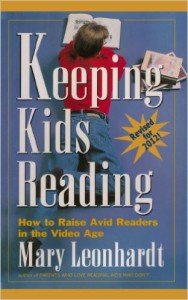
    The best program I’ve seen for helping kids learn to love reading is the one Mary Leonhardt outlines in Keeping Kids Reading: How to Raise Avid Readers in the Video Age. It’s the culmination of the insights she gained over her thirty-five years teaching high school English and focusing on helping kids learn to LOVE reading. What an excellent book!

    Oh, and one other idea. It might be effective to maybe just skip publishers altogether and help folks go directly to readers as indie writers. Amazon’s algorithms are pretty much race- and gender-blind.

    Share
  • Good Stuff! 4 Delightful Movies

    If you’ve been looking for some good movies to watch, I have four here that I think you’ll enjoy.
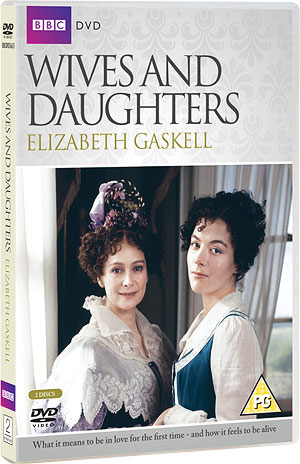
    Wives And Daughters CoverThe first is for fans of Downtown Abbey and Pride and Prejudice. It’s a four-episode, BBC TV miniseries called Wives and Daughters, and is based on the novel by Elizabeth Gaskell, who was a popular English novelist in the mid-1800s. Gaskell is the one who also brought us the delightful Cranford and North and South, which all my daughters love.

    Wives and Daughters is about Molly Gibson, the daughter of a country doctor, who suddenly has to deal with a new stepmother and a stepsister who becomes Molly’s good friend but brings a lot of baggage with her, mostly concerning men. It’s also about a man whom Molly falls in love with, but who only thinks of her as a sister.

    But it’s about even more than that. It’s about the enjoyable relationship Molly has with her father and the local Squire and his family, and the issues the Squire has with his own sons. It’s also about how the women in the town and the local gentry deal with Molly.

    Gaskell has a knack for showing both the good and bad about people and still making you love them. She also writes a fabulous ending. I don’t want to spoil anything, but the ending, for me, was just brilliant in so many ways. If you enjoy period romances, you’re going to love this.

    *

    The-Hundred-Foot-JourneyThe next movie is called The Hundred Foot Journey and is a humorous story about a contemporary Indian family down on its luck. The father leads them to England, but things don’t work out. So he takes them on a trip through France looking for the place to set up their restaurant. Except it’s a bit of a hare-brained idea because France doesn’t do Indian food.

    The family’s vehicle breaks down outside a little town, and the father decides this is the place where they will try to build their life again. The problem is the spot he’s chosen is right across the street, the titular hundred feet, from a posh French restaurant. And the battle between the two restaurant owners begins.

    You’ll laugh and fall in love with the characters in this story. And when it’s over, you’ll immediately want to go out and get some Indian food. It’s a great film.

    *

    The_Good_Lie_posterAnother wonderful fish-out-of-water story is The Good Lie, which is about three of The Lost Boys of Sudan, refugees who are resettled in America.

    In 1983-2005 there was a civil war in Sudan, which lies on the southern border of Egypt. During the war, government troops and rebels of the south systematically attacked villages in southern Sudan, killing 2.5 million and displacing a million others. The Lost Boys and The Lost Girls were children who escaped the attacks and traveled by foot in search of safe refuge. For many that was over 1,000 miles across three countries to refugee camps in Ethiopia and Kenya. Over half died along their epic journey, due to starvation, dehydration, sickness and disease and attack by wild animals and enemy soldiers.

    In 2001, as part of a program established by the United States Government and the United Nations, approximately 3,800 Lost Boys were given the chance to leave the camps and resettle in the United States. This film is inspired by their experience. In fact, a few of the actors are actually some of those who were resettled.

    The beginning of the film is about their journey. The rest is about what happens when they come to America. There are many poignant moments in this film, but there is also a good dose of humor and goodness. It’s a wonderful film to watch with the family.

    *

    McFarland,_USA_posterMy last, but certainly not least, recommendation is McFarland, USA, made by Disney and starring Kevin Costner. My family and I simply loved this movie. We loved it so much some of us ended up watching it three times because we couldn’t coordinate our schedules and so watched it again with the family members who weren’t there the first time.

    It’s based, with a little literary license, on a true story about Jim White, a teacher who re-starts a cross country running program in 1980 in McFarland, a small agricultural town at the south end of California’s Central Valley. It’s another fish-out-of-water film with this White coach being introduced to Hispanic culture.

    Now I know what you’re thinking—oh, jeez, another sports film. And, yes, it has many of the same story beats that you find in many sports stories. But this one seemed to make them all fresh again. All I can say is that we loved it. In fact, immediately after the third viewing, two of my daughters were so juiced about running, they went out on a run of their own.

    If you like sports at all, you’ll like this one. But even if you don’t love sports, you’ll like it because it’s not really about sports. It’s about the human spirit and seeing value in the things everyone else overlooks.


    Share
  • Lone Survivor by Marcus Luttrell

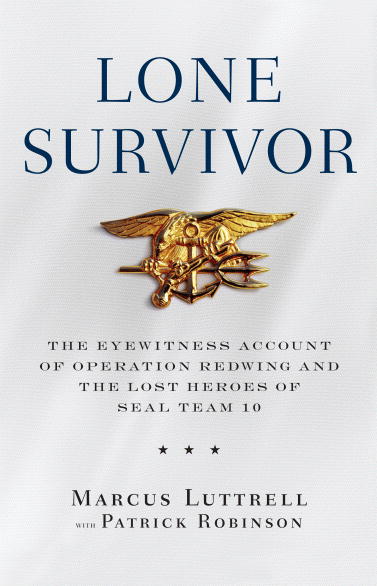
    I’m a sucker for military stories. I wanted to be an ARMY Ranger was I was in my teens. Wanted to go commando. Still regret it to this day that I didn’t. And so when a friend told me about Lone Survivor by Marcus Luttrell with Patrick Robinson, I had to read it.

    In June of 2005 four U.S. Navy SEALs took up a position on a godforsaken mountain in Afghanistan close to the Pakistan border. Their goal was to capture or kill a notorious Taliban/al Qaeda  leader whose small army had been ambushing and killing Marines. The problem was: three goat herders stumbled upon the SEALs not very long after they got into position.

    If the SEALs don’t kill the goat herders, they will almost assuredly alert the Taliban force. SEALs are the best. But four against two hundred doesn’t compute. If they do kill the goat herders, then they’re sure someone will find the bodies. The Taliban will claim US soldiers are killing innocent civilians.  And the US media will pick it up. The SEALs were sure they will end up being tried for murder. It wouldn’t be the first time.

    The SEALs let the goat herders go. Within hours the Taliban show up. Four SEALs. Two hundred plus Taliban armed with rifles and grenade launchers who have the high position on a mountain with plummeting slopes and very little cover.

    Lone Survivor tells the story of Marcus Luttrell, the leader of that SEAL team, his training as a SEAL and then that desperate fight in the mountains. He and the other three SEALs fought ferociously. He was the only one to survive.

    I had to force myself not to read this book in one sitting. Not only do you get a great story, but you also get insights into what makes a SEAL and their system of values. You’ll get to know a man who makes you want to stand up for God and country. And you’ll marvel at the courage of those who fight in our armed services.

    I loved this book. May God bless the men and women who risk life and limb for all the rest of us. For the rest of us, we can see what they face in this excellent first-hand account.

    Share
  • The Harry Potter Book of Mormon Hello

    For those who haven’t been tracking the Broadway scene, South Park creators Trey Parker and Matt Stone launched the production of The Book of Mormon musical last year in New York. It won 9 Tony Awards, including best muscial, delighted many critics, and is something I will never see, alas. It’s simply too vulgar for this Mo. However, the show’s cast album did something that hasn’t happened in over 40 years: It hit the top ten on Billboard’s pop charts. While I couldn’t listen to all the songs (yeah, I tried but was almost struck by lightning), “Hello,” the first, is great. But it doesn’t stop there. Oh, no. Tessa Netting, a 20-year-old Broadway actress, recently had the brilliant idea to combine the characters of Harry Potter with the song. I think you’ll be delighted with both.

    “Hello” from the musical

    “Hello – Harry Potter Book of Mormon Parody” which you can get on iTunes.

    You might want to listen to an interesting All Things Considered NRP interview where Stone and Parker talk about the music.

    Share
  • |

    Black Chokecherry Syrup

    When you live where we do, you cannot hope to landscape likes folks in a warm suburb. First of all, at 6,000 feet with a min temp of -30 Fahrenheit you can’t grow a lot of warmer climate plants. Second, the deer seem to eat everything else you do grow. So we’ve been looking and I think I’ve found a tree to add.

    I actually found it earlier when I was biking around the beautiful Round Valley and had to stop and go back to revel in the delicious fragrance. But I didn’t know what it was at the time. I do now. 

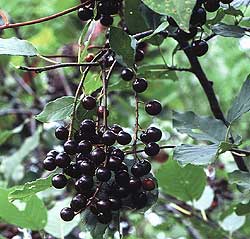
    It’s the black chokecherry.

    It grows naturally up here. Has beautiful fragrant blossoms in the spring. And it produces fruit that can be made into a delicious syrup. Oh, the raccoons like it as well.

    Now when you eat the raw berry, unless you eat it late in the fall, you’re in for an astringent, alum after-punch. But we picked the berries up a canyon behind our town after the first frosts. In fact, many of our berries were wrinkled. They just fine raw. Even Lilia, my pickiest eater, enjoyed them.

    We picked about 1.25 gallon ice cream buckets of the stuff. Then we followed this recepie and made about 4 quarts of syrup.

    • 3 cups chokecherry juice (see first step)
    • 3 cups apple juice (not from a store, but cooked from apples)
    • 6 1/2 cups sugar
    • (I’ve heard some folks add 1/4 teaspoon almond extract for a stronger cherry taste)
    1. Wash chokecherries, place in a large kettle, barely cover with water and cook, covered, for about 30 minutes till the cherries are soft. Mash gently and strain the chokecherry juice through a sieve or cheesecloth.
    2. Do the same with the apples.
    3. Pour the juice into a large kettle; stir in the sugar.
    4. Cook on high, stirring constantly.
    5. Boil hard for 1 minute.
    6. Remove from heat and skim foam.
    7. To can: Pour hot syrup into sterilized hot jars to within 1/8th inch from top.

    It’s absolutely delicious on pancakes. 


    Share