|

Orson Card’s Literary Boot Camp

Just apply already!

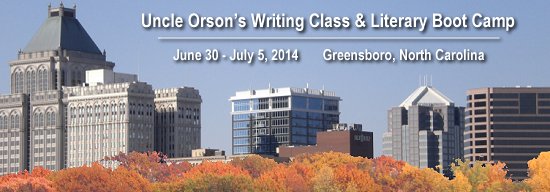
Orson Card has just announced the dates and location for this year’s literary boot camp. This one is in North Carolina. Card usually usually holds a session in the west every other year. But here’s the deal: east or west, if you are a new writer, this is THE workshop to attend. It is hands-down THE best workshop I have ever attended.

If you want to learn how to write fiction from one of the masters, you will apply (the boot camp is limited to 12 people) and then do whatever it takes to attend if you’re selected.  The two day writing class is also great. I don’t know that I would spend hundreds of dollars to fly in for that, but I would and did spend hundreds to attend the boot camp (way back in ye year 2002).

For more information, go here: http://www.hatrack.com/misc/bootcamp2014/

Share

Similar Posts

  • Good Stuff! 3 Books to Introduce You to the Middle East

    ISIS, the Taliban, Al Qaeda, the Muslim Brotherhood, Iran.

    What drives these groups?

    What are they really about?

    Why is there so much religious strife in the Middle East?

    For that matter, what is Islam actually about? Is the religion really defined by these violent actors, or are they just the most visible because they’re what’s reported on in the media?

    I set out to find the answers to these questions, and what I have found so far surprised me. If you are interested in understanding what’s going on in the Middle East today, you have to understand Islam. And it’s a fascinating story. There are a lot of books on the subject, but you don’t have to sift through all those I did. I want to share with you three slim books that I found to be the most clear and engaging introductions I’ve come across.

    The first is Understanding Islam: An Introduction to the Muslim World by Thomas W. Lippman, an award-winning author and journalist who specializes in the Middle East and spent years living in Egypt, covering the events, and traveling from Tunisia to Pakistan. Again, this is a slim, easy-to-read volume, but it is packed with information. If you want to know the basic beliefs of Islam, who Muhammad was, what all this business about Sharia is, and who the major Islamic groups of the Middle East are today, this is the book to start with. One note, you want to make sure you get the third edition of this book.

    Understanding Islam by Thomas Lippman

    The next book is by Bernard Lewis, a man internationally recognized as one of our century’s greatest historians of the Middle East. The book is called The Crisis of Islam: Holy War and Unholy Terror. Again, another slim, engaging, but information-packed volume. In it, Lewis explains what it is in Islam that is breeding these extremist groups. And what is leading them to target America, which is especially interesting because for most of the 1900s the United States was seen as the good guy by the Islamic world. What changed? Read this book to find out.

    The Crisis of Islam by Bernard Lewis

    The last book, a lively, engaging read, is called After the Prophet: The Epic Story of the Sunni-Shia Split by Lesley Hazleton, another veteran Middle East journalist. When you finish this book, you will understand why Saudi Arabia supported ISIS before they so recently turned against it. You’ll understand why they recently joined Israel, of all nations, in condemning Iran’s nuclear program. You will also understand one main reason why the Iraqis can’t seem to get along. In this book, Hazelton goes back to the beginning of the religion and tells the story of the splitting of Islam–the split between the Shias and Sunnis. It’s as significant a split as that of the Protestants from the Catholics in the time of Luther. But unlike that split, which has lost almost all of its heat, the antagonism between Sunni and Shia still leads to war. You cannot understand the Middle East today without understanding this.

    After the Prophet by Lesley Hazleton

    So there you have it. If you’ve been wanting to learn more about Islam and the Middle East, you’ll find these the perfect introduction. And if you’re religious at all, you’ll find much to ponder. There isn’t one god-fearing Christian, Jew, Hindu, or what have you who doesn’t think that submitting our will to God’s won’t help us build a better families, communities, nations–a better world. Would it surprise to you to know that Muslims believe the same thing? That Islam means “to submit” to God?

    There are of course many differences between Islam and my own Christian beliefs, but there are also many striking similarities. And the experience I kept having reading these books was seeing over and over again echoes of my own faith and the history of Christianity. There are cautions, to be sure, but also things worthy of emulation. If nothing else, it felt like it did when I learned Dutch. Yes, it was all foreign, but I saw the ties and the differences and, surprisingly, understood my language better than I ever had before.

    Now there are three other equally fascinating books I want recommend that focus on Al Qaeda, fighting terrorism, and Saudi Arabia, but I’ll save those for another time. Go treat yourself and read these fine introductions.


    Share
  • Good Stuff! Woman in Gold

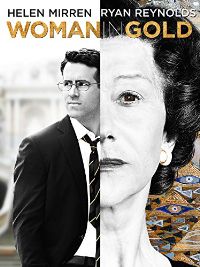
    Woman in GoldI recently watch Woman in Gold with my family, and we loved it. It has delightful characters, a suspenseful plot, and moments of both humor and deep poignancy.

    The movie is based on the true story of Maria Altmann, an elderly Jew living in Los Angeles. When she was a young woman, the Nazis took over Austria. She fled, narrowly escaping. In addition to all the horrors committed against her people and family that couldn’t get out, the Nazis stole artwork and other precious items. The problem is that after the war, many of these items were then appropriated by individuals or the countries of Europe and not returned to their original owners.

    The movie is about Maria and her young lawyer who fight the Austrian government to have a famous painting called Woman in Gold that was legally and rightfully hers returned. It’s a legal battle that went all the way to the Supreme Court of the United States in 2004. But this isn’t about someone wanting a painting. It’s about so much more.

    If you enjoyed Mr. Holmes, Saving Mr. Banks, or Bridge of Spies, I think you will love this movie. You will love the dynamic between the frank-speaking Maria and her lawyer. And you will be moved.

    Share
  • |

    I want to be Scott Westerfield

    Laura Miller at Salon.com has it all wrong when she says promoting books with movie-style trailers is a silly idea.

    Here, watch this book trailer for Scott Westerfield’s Leviathan.

    Yeah, I know you want to–go ahead, watch it again.

    Miller looks at book trailers, sees that the vast majority of them are lame, lame, lame (actually, this is the FIRST I’ve seen that’s any good). Sees that they reach no markets and then concludes that all trailers are silly. It’s true: lame trailers ARE a waste of time and money. But ANY advertisement (print, video, audio, whatever) that’s lame is a waste of time and money. Making killer trailers that nobody sees is an even bigger waste of time and money. But that’s true of ANY killer advertisement that nobody sees.  

    Look. I’ve never read Westerfield. Don’t know much about him or his books. But I saw that clip and now want to read that book. Hum, trailer worked for me. I AM a reptoid mutant, but I suspect there are others out there like me. I mean, come on. Good gravy, woman–“Do you oil your war machines? Or do you feed them?” Killer!

    Movie trailers, book trailers–any advertisement–isn’t about delivering what the person is going to experience on the spot. If that were the case, then you’d never show a print ad of a meal at Olive Garden because it doesn’t deliver the goods right there on page 10 of Woman’s Day. Nope, all you’d do is go around giving out samples in places with Italian mood.

    Miller’s error is not understanding the difference between making an offer and delivering on one. What an ad is supposed to do is make the offer. Let you know this thing is available. Because you’re not delivering the actual experience,  you can make the offer via all sorts of media. Now, if you can give them a taste, that’s great. But you don’t need to deliver the full deal right there.

    So what do you need in an offer? You need the offer to say, “Hey, I’ll deliver this type of experience.” It needs to call to some action, either directly or by implication–“buy this” or “be here.” You also need it to say, “You can trust this will be worth it” and make the consumer believe that’s likely to be true. It communicates this last bit by being a quality piece of work.

    Making an offer is exactly what book covers do–they make the offer and give the consumer a little taste. And book covers matter. This has been proven over and over. Just like most people, when I see a cool cover, I pick up the book and check it out. When I see a lame one, or one that offers something I’m not interested in, you’re going to have to threaten me to pick that book up. Or it better dang well have some righteous word of mouth. It’s that simple. We all judge books by their covers because the cover is making an offer. And lame offers don’t get very many takers.

    Book trailers are nothing more than deluxe book covers. The cool thing about them is the cool thing about movie trailers–you can make the offer by providing a little taste. You do that by giving the audience the story situation, the pitch. You do it by communicating the feel of the experience and raising curiosity. You do it by making it a pro job. The good  ones make you laugh, say cool!, or raise curiosity and expectation.

    And that Westerfield trailer does that.

    Dang, “Do you oil your machines? Or do you feed them?”

    Run that on TV. Run it on the radio. Put it up on sites where people are likely to see and click. Confirm it in print. Make the offer to real people. Get it infront of young readers. I’ll stake my eyebrows that ad can sell as many books as a good movie trailer can sell movie tickets.

    Crimeny, now I want to be Scott Westerfield.

    Edit, I lied

    I have seen another book trailer that’s as good as Westerfield’s. Do you remember this: http://thesecret.tv/movie/trailer.html ?

    Very effective advertising for the book. I think the content of the book is crap, but that trailer made me pick it up just to see what it was all about.

    Do you notice that this one and the Westerfield one combine extreme professionalism AND they make the pitch in a clear and grabbing way? The pitch for both was what the book was about. For fiction it’s the concept. For non-fiction how to it’s the promise.

    So many of the book trailers lack one or more of those things. For example, look at the book award finalist for THE FALLEN: http://www.youtube.com/watch?v=vsLE6bNaIrk. I don’t know what the heck the book is even about after a long 2 minutes. They’re trying to make a movie.

    Something else. On both of these you have a voice over PITCHING the book to you just as someone might do it in person or to an editor. It’s a powerful method, I think.

    Notice also how short the Westerfield one is. Just over a minute. Westerfield’s really is like a query pitch or cover copy–in just a few lines tell me what your story is about. We get genre, setting, character, and the story problem or concept.

    Share
  • Last Word & Park City Peaks

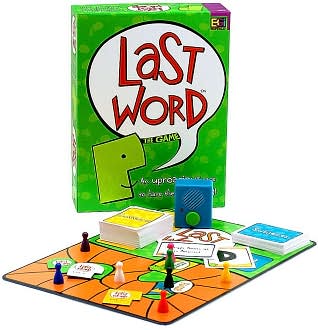
    LastWordGameMy youngest’s birthday fell on Thanksgiving this year. We asked her what she wanted to do. She said she wanted to go to a hotel to swim and then play a game as a family, so Nellie and I went to work. Nellie got the game. I got the hotel. Both were great.

    The game was Last Word by Buffalo Games Inc. It’s fairly simple. There are subject cards with categories on them like “vegetables,” “breeds of dogs,” or “places you find water.”  Then there are letter cards. Each player gets a subject card.

    The round starts when someone flips over a letter card. If you can think of a word that starts with that letter in your category, you shout it out, slam your subject card down, and then everyone else tries to come up with words that start with that letter and fit the category.  Or you try to think of words in someone else’s category if they beat you to it.  There’s no order to it–you just shout out the words as they come to your head.  The last one to come up with a word before the timer buzzes wins that round. The twist that makes it so fun, however, is that the timer is random.

    You can play individually, in teams, or some mix (our youngest and I teamed up). Because of the random timer, anyone who can think up a word can play, which means our daughter who is eight could compete with the one that was seventeen.

    We had a great time. One of the funniest things about it is that everyone is desperately trying to come up with words. Some fit, some don’t. Some don’t even exist. For example, when we did the category “male names,” number 3 shouted out “Mancake.” We couldn’t stop laughing. I think that one is going to enter the family vocabulary.

    ParkCityPeaksHotelWe also had a great time at the Park City Peaks hotel. As far as rooms go, they were good rooms. The bed was a bit too soft for me, but perfect for my wife. We got them for $65 a night, which isn’t bad at all. But it was the pool that made the experience. 

    The pool is an actual pool, not the big bathtubs some newer hotels offer. For example, the deep end is six feet deep. But the cool thing is that half of it is indoors and half of it is out. And the outdoor portion is heated. There’s also a large heated hot tub outside as well. In the picture it’s the thing producing the long row of steam in the back.

    It helped that we didn’t have much snow so the place wasn’t crawling with skiers. In fact, we had the pool mostly to ourselves. So imagine: there we were on a November night in this alpine setting, the steam rising off the water, swimming and horsing around underneath the winter stars. It was marvelous. You can be sure we’re going back.

    BTW, we had Thanksgiving dinner at a restaurant. Let me recommend this to you. It makes the day a breeze. You can still have your homemade turkey dinner, but picking up the turkey  a few days after the holiday allows you to get them for cheap, cheap, cheap.

    Share
  • Revised version of “Key Conditions for Reader Suspense”

    Last year I published four very long essays on my site in a series called “The Key Conditions for Reader Suspense.”  The folks at SFWA (Science Fiction and Fantasy Writers of America) liked them and wanted to reprint them on their site. Of course, as I went through those essays I found things to revise and add. We published the revised essays in a twenty-seven part series. Read those more recent versions here.

    Share
  • |

    Why you can’t popularize literary fiction

    T.C. Boyle is one of my favorite writers. He saved me in my undergraduate program. I was buying the The Best American Short Story, Pushcart, and O’Henry anthologies. I was reading for my coursework. And so much of it bored me to death. And then one day I began reading “The Ape Lady in Retirement” and my eyes hung out because finally the text was interesting. Finally someone wrote a story I could read start to finish.

    I immediately bought his anthologies–Greasy Lake, If The River Was Whiskey, Descent of Man. I was in heaven. Now, not all of his stories worked magic on me. But when I was having a hard time finding one story in a whole anthology, his books seemed like a treasure trove.

    He didn’t do as well in his novels. Oh, the writing was just as good. The characters and descriptions just as odd and stunning. But he didn’t keep my interest. The problems never built into anything. Nevertheless, I loved him.

    I’ve been having a brief conversation with him and the fan boy in me is delighted to finally talk to this guy. And after reading an interview with him, I realize why he probably spoke to me. While the other literary fiction authors were following the tastes of the fringe group, Boyle at least wanted to entertain.

    In his interview he says.

     Everybody has forgotten that literature, like all art, is, at root, entertainment. It is supposed to entertain you. It’s not supposed to be some conundrum to be resolved by some professors in the university. It’s not a game. It’s not masturbation. It’s art. And I think great art is great on all levels. But the first level on which it must be great is that it must be entertaining.

    Amen, brother Boyle. Amen!

    I’m in a top-20 MFA program in the West.  And I think it’s odd that many in these MFA writing programs, mine included, totally miss the boat on what readers want and bemoan it when nobody comes to buy their stuff. They don’t get it’s about entertainment. About being moved. About much, much more than the language.

    Here the full Boyle AWP interview.

    However, I still think he misses the mark. In it he says about bestsellers:

    But it’s mainly vampire books and Tom Clancy and all the rest of it. I don’t understand why we can’t make our books more available to everybody-not by compromising what we do, but by popularizing them, getting them out to the public.
    He also says about editors and MFA programs:
    I think that now we don’t have great editors. We have editors who are basically trying to hold on to their jobs and who publish good books once in a while. They’re basically cheerleaders for the books. They’re not editors, really. They’re incapable of being editors; they don’t need to be. Because editing is done-self-editing is done-through the apprenticeship in the writing programs. Nearly everyone from my generation on to your generation and beyond will have been through an MFA program. It’s just the way it is now. It’s a different world. It’s essential.

    I’d like to suggest that Boyle, despite his love of entertainment, still misses the mark in his interview because you cannot popularize something that only appeals to a small market. The reason why Stephenie Meyer, Patterson, et al sell exponential circles around folks like Don DeLillo or Louise Erdrich is because Meyer and gang are very good at delivering what the largest portions of the reading public want. They deliver types of entertainment that DeLillo and Erdrich do not. (And I mean “entertainment” in a very broad sense.)

    We could point at the Oprah effect (whether you like it or not, Mr. Cold Mountain) and say that’s not true. It’s all PR and marketing. But that assumes publisers are idiots. And while some of them may be, I think it’s an extreme assumption. Publishers are in it for the love AND money. And you can be sure that the board of directors is looking for smart, money people to lead the companies. You don’t make money, you’re fired.

    Which means that IF the publishers found literary fiction sold like hotcakes they’d promote it like hotcakes. But literary fiction too often fails to entertain anybody but a handful of fringe readers. And so trying to popularize it can only have a limited effect. When people are thirsty, not many are going to pass up tall glasses of ice water for the pickled jalapenos at the end of the line.

    Meyer, Clancy, Grisham, Roberts etc are masters of entertainment. And, like it or not, that’s the main reason the small portion of the public who actually read go to fiction.

    I think it’s fine to cater to the fringe audience if that’s your pleasure. But I think it’s ridiculous to think such fare is better than what most people enjoy. Or that it deserves any special veneration. The MFA programs I’m familiar with seem, by and large, to miss the point. Instead of teaching the meat of fiction (entertainment) they focus on teaching students to serve up the parsley with great pomp. And when the customers go elsewhere to get the meat they crave (or the salad for you vegans), they respond by saying the customers are simply too dumb to get it or have no taste.

    Now, I’m not saying the folks I work with in the MFA program are idiots. Or jerks. Almost everyone I’ve met has been extremely nice and smart. They have great insights. But there is a strong pressure in that culture, amost a moral pressure, to think about fiction this way. And it’s based on their tastes.

    I think we all do this. 90% of what’s out there is crap. But it isn’t, really. The truth is that 90% of what’s out there simply doesn’t appeal to us. And so because it doesn’t deliver the goods, it’s crap to us. The problem is when we don’t realize the difference and begin to think that because we don’t have the taste for something that it’s garbage.

    It’s not.

    And that’s one thing the gentle and smart people in my program have shown me. I’m just as liable to make this mistake as anyone.

    So what MFA programs need to do is teach fiction. The meat. As well as the parsley. They need to teach all the genres, not just one. Alas, for the meat you have to go to communications departments to even talk about it. And then hope you find someone like Dolf Zillman, Bryant Jennings, Jenefer Robinson, or Peter Vorderer.

    Which leads me to the next point. Boyle is wrong about editors and writers. The majority of the authors that actually sell never set foot in an MFA program. MFA’s teach students to write for a small fringe market. And so they’ll dominate that fringe market, but not the big markets. Not what most people actually read.

    Since I haven’t worked with any editors in that so-called golden age of editing, I cannot comment on the difference. But I do know that the editors I and other authors have worked with do many edits on the projects they oversee. They are thorough. They want it to be the best story it can be. It’s true they won’t take something that’s a complete mess and work on it. But why should they? There are so many better manuscripts out there it only makes sense.

    Anyway, I love Boyle. Probably becasue he loves plot and story as much as language. His shorts saved me in my undergrad program. They were one of the few interesting things I read. I just am dismayed that these writing programs are so far off in the weeds.
    Share

2 Comments

  1. Ah, but that’s where I firmly believe you would be wrong 🙂 From my interactions with Card and what I’ve observed with how he reacts with others, he’s a most welcoming guy. Even when folks disagree with his political ideas. But there will be no time for political tangents anyway. At least, there wasn’t during the one I attended. There was far too much to learn about writing.

Comments are closed.