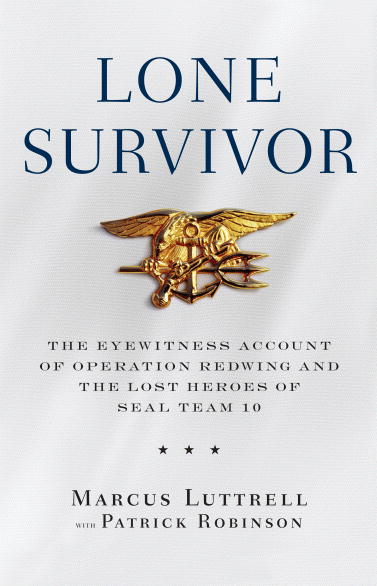
Lone Survivor by Marcus Luttrell

I’m a sucker for military stories. I wanted to be an ARMY Ranger was I was in my teens. Wanted to go commando. Still regret it to this day that I didn’t. And so when a friend told me about Lone Survivor by Marcus Luttrell with Patrick Robinson, I had to read it.

In June of 2005 four U.S. Navy SEALs took up a position on a godforsaken mountain in Afghanistan close to the Pakistan border. Their goal was to capture or kill a notorious Taliban/al Qaeda  leader whose small army had been ambushing and killing Marines. The problem was: three goat herders stumbled upon the SEALs not very long after they got into position.

If the SEALs don’t kill the goat herders, they will almost assuredly alert the Taliban force. SEALs are the best. But four against two hundred doesn’t compute. If they do kill the goat herders, then they’re sure someone will find the bodies. The Taliban will claim US soldiers are killing innocent civilians.  And the US media will pick it up. The SEALs were sure they will end up being tried for murder. It wouldn’t be the first time.

The SEALs let the goat herders go. Within hours the Taliban show up. Four SEALs. Two hundred plus Taliban armed with rifles and grenade launchers who have the high position on a mountain with plummeting slopes and very little cover.

Lone Survivor tells the story of Marcus Luttrell, the leader of that SEAL team, his training as a SEAL and then that desperate fight in the mountains. He and the other three SEALs fought ferociously. He was the only one to survive.

I had to force myself not to read this book in one sitting. Not only do you get a great story, but you also get insights into what makes a SEAL and their system of values. You’ll get to know a man who makes you want to stand up for God and country. And you’ll marvel at the courage of those who fight in our armed services.

I loved this book. May God bless the men and women who risk life and limb for all the rest of us. For the rest of us, we can see what they face in this excellent first-hand account.

Share

Similar Posts

  • The Good Guy by Dean Koontz

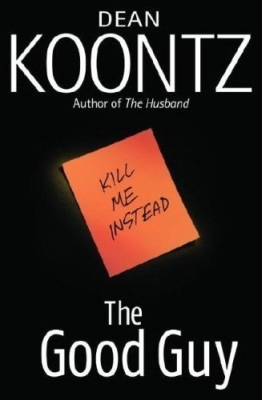
    Good_Guy_Dean_KoontzSo let’s say you’re in a bar and a guy shows up, mistakes you for someone he was meeting, and you play along. Just for fun. You’ll let him know his mistake sooner or later. But then he slides a manila envelope to you and says, “Half of it is there. Ten thousand. You’ll get the rest when she’s gone.”

    Would you say, “Sorry, dude. I’m not your hit man”? A woman’s life is on the line.

    In Dean Koontz’s The Good Guy, Tim Carrier is too astonished to react. The man leaves. Carrier opens the envelope. There’s ten thousand in cash and a 5×7 of the woman. She’s Linda Paquette who lives in Laguna Beach.

    A few minutes later the actual killer shows up. Makes the same mistake. What do you do?

    Carrier plays along, tells the man that he’s decided not to go through with it and to take the ten thousand as a “kill fee.” The man leaves. Carrier goes to alert the woman. But very soon the killer and those who hired him realize the mistake. And now they’re after both Carrier and the original target.

    The Good Guy was a wonderful story of action and suspense. It’s also a love story. Koontz portrays a deadly and frightening killer. But he also includes lots of banter between Carrier and Paquette. Both have secrets which are interesting to learn. And then at the end of the book, when you think it’s all about a kill, Koontz twists it. Then he twists it again. I loved this story and enjoyed the characters immensely. But the book went beyond mere entertainment. It’s a book that also makes you think about how you live.  

    I should be working hard on draft 3 of Curse of a Dark God. But every now and again I need a break. I’m glad I took this one with Koontz.

    Share
  • The Last Apprentice, Path Finder

    The Last Apprentice

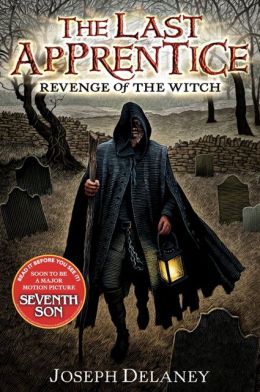
    Revenge of the Witch by Joseph DelaneyMy wife is always telling me I need to write a young adult or middle grade adventure series. One that’s directed at boys.

    Not because we have something against girls. We have four daughters, and my wife is adamantly pro-woman. But she finds very few books for her sixth-, seventh-, and eighth- grade male readers. I haven’t done a count, but I’m pretty sure that most YA is targeted at females. And this isn’t just me. I remember visiting a Barnes & Noble in Arizona with my voracious-reader nieces a few years ago and riding the escalator to the YA section. They told me that they called it the “girl-book section” because they figured that basically 90% of it was indeed for girls.

    Anyway, I think writing such an adventure would be a blast. I can already think of a number of near future or fantasy settings that would rock. But the time constraints I have right now just won’t allow me to start another series. Nevertheless, we sat down the other day and listed out all of the authors and books we knew that had a more male focus.

    For about the twentieth time she told me about Joseph Delaney’s The Last Apprentice series. It’s about a boy who apprenticed to the county Spook who is someone that takes care of witches, ghasts, ghosts, etc.  Her students love the stories. She loves them. She has bought the first ten volumes for her classroom. Why the heck wasn’t I reading them?

    Well, for starters, I just don’t like books about witches. And the first book in the series is called Revenge of the Witch. I don’t know what it is. Witches aren’t as bad a zombies–I am SO bored with zombies; I just don’t get the appeal. But even if they’re better than creatures that make no sense at all to me, I just don’t like spooky horror all that much. I loved to be scared, startled, and filled with dread. But not with witches.

    Witches? The gals with pointy hats?

    No.

    But this was, as I said, like the twentieth time she’d brought it up. We were driving over to Logan (that’s the big city for us), and stopped at the library, and we went over to the YA section. Unfortunately, they didn’t have volume one. But I did see many other volumes on the shelf and figured I needed to see what the competition was doing. So I perused. A few night later we went to her classroom, and there was volume one. The one about the witch.

    I sighed and opened it and began to read. And when I finished chapter one, I realized I kind of liked it. It was like the old Life cereal commercials—hey, Mikey!—and I wanted to read more. And so I took it home, read the whole book, and was delighted with the story. I liked it so much I promptly borrowed volume two, Curse of the Bane, from my wife’s classroom and read it as well. And I liked that one so much I checked out the third.

    The story is about Thomas Ward, the aforementioned apprentice. In book one, he is forced to face down some witches. But it’s Alice, the girl with pointy shoes, who made the story for me. Adding her as a character transformed it from a run-of-the-mill booger man story, into something special. No, I’m not going to give you a peek at the plot. Just know that this is the book where Thomas starts his apprentice, has to deal with that new life (and I thought Delaney captured that so well), and makes some apprentice mistakes that he then has to fix.

    In book two, we get to meet Alice and Thomas again, but this time they have to face down a different creature. And again, while the adventure is all cool, it’s the interactions with Alice that put it over the top.

    Having praised the books, I will say that I think Delaney has something against priests and religion in general because he paints it all with a negative broad brush. It’s too bad. Not only is such a view inaccurate, but showing the good and bad could add so many delicious dimensions to the tale. Maybe we’ll see that in later books. But even if we don’t, book two was still a great read.

    I’m looking forward to book three. If you’re in the mood to try something new, something about a young man and young girl that doesn’t revolve around romantic smoldering, something that a guy would like to read, let me recommend you join me in reading the volumes of The Last Apprentice.

    Pathfinder

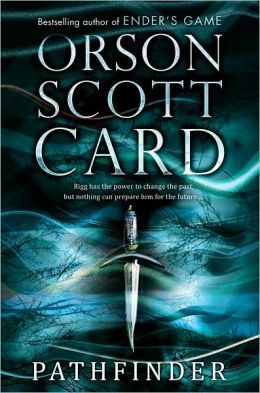
    Pathfinder by Orson Scott CardI was once in a discussion about religion with a friend who happens to be an atheist and fellow science fiction and fantasy writer. He’s a great guy. The blog posts he wrote about the passing of the woman he loved who was lost to cancer were poignant and wonderful–full of beauty. I read them and wanted to be a better man. Still, he and I disagree about God.

    I remember telling him that science fiction is the one genre that makes God more plausible than any other. At least, it makes my view of God more plausible.  Now, I do not want to talk religion in this essay. But it’s just hard for science fiction to leave the idea of creation and Adam and Eve alone. Witness the many stories over the years about these very things.

    Heck, even the recent movie Oblivion has references—are not Jack and Victoria much like Adam and Eve? Just think about it. Their paradise together as a team, the knowledge, the fall. The echoes are simply marvelous.

    Well, I just read another science fiction tale that provided a wonderful opportunity to think about these things. It’s Orson Scott Card’s novel Pathfinder. Now, the story isn’t about God. It’s not a biblical allegory. It’s not dressed-up doctrine. It’s a tale about a boy named Rigg with special abilities on a quest to find his real family and who he is. Along the way we meet some interesting people, especially one character named Loaf who leavened the whole tale. So there’s an interesting adventure and speculations about faster-than-light travel. But one of the chief delights for me was the questions and ideas this story raised in my mind about the creation of our own world—“Garden,” the name of the world, just begged for it.

    For example, a long-time staple of science fiction is the idea of terraforming—changing face of the flora, fauna, atmosphere, and climate of the planet to be hospitable to your species. If you believe in a God that is more a being of advanced technology than one of unknowable fantasy, doesn’t that present a new and interesting way of viewing the creation story? It does for me, and Pathfinder sparked ideas about this.

    The book also led me to think about life. First, Card has these characters called “Expendables.” They’re robots, but not really. They’re artificial intelligence. But not really. The way Card presents the expendables, you don’t think of silicon and steel and gears. You think of biology.

    You think of mosquitoes.

    You think about the fact that if we humans use intelligent machines, surely God must use intelligent machinery. So what kind of intelligent machinery does God employ? (Dude, that idea is just pregnant with stories!)

    Are viruses and bacteria machines? Are mosquitoes and beetles (please, let there be no mosquitoes in heaven)?

    The book prompts me to wonder. It prompts me to look at the life about me on our wonderful world with new eyes. It prompts me to think differently about some of my core definitions. In fact, there are some exchanges between a character and an expendable where they talk about the difference between humans and expendables and the definition of what it means to be human, especially given evolution.

    This is a book about an adventure, but also a book about ideas, which is as it should be. Science fiction is the one genre, more than any other, that marries character and plot with exploration of ideas. If you’re looking for an interesting tale that will make you think about our world differently, give Pathfinder a try.

    Share
  • “Somewhere My Love” by Stephen Mark Rainey

    The latest issue of Intergalactic Medicine Show just hit the net. Of course, I don’t have time to read. But how can I help myself when Mark Rainey’s “Somewhere My Love”  starts with this line: “She lived in our town’s one and only haunted house.”

    What a hook!

    And soon I found myself reading a wonderful story about a boy and a teacher, who happens to be a witch.

    But the kind of witch Rainey writes about is not some gal with warts and a black hat. Nor is she some kind of Alice Hoffman Practical Magic type.

    She’s a Rainey witch.

    And this tale is about a boy caught in her class in school. I loved it. It evoked perfectly how some teachers affect us boys. I haven’t read any of the other stories in this issue yet. But I can still say the measley $2.50 subscription for issue 12 is worth it if only so you can read this one story. Besides, even if you don’t have time to read it, scroll down on the TOC and you’ll see you don’t have to–you can listen to Scott Card read the thing to you.

    Share
  • Author Janci Patterson Goes Indie

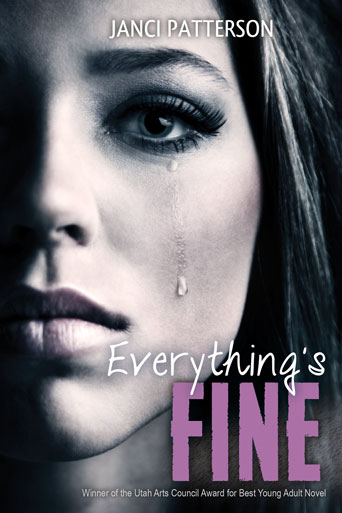
    Everythings Fine by Janci PattersonI met Janci Patterson a few years ago when she was shopping her book Chasing the Skip to NY publishers. It’s about a girl named Ricki. Her mother flakes and runs off,  and so Ricki goes to live with her estranged Dad who happens to be a bounty hunter. I was hooked right there. But it gets better. Ricki gets to ride along and help and, wouldn’t you know it, develops a crush on a guy the dad is chasing.

    I loved the premise. Traditional publisher Henry Holt loved it too and thought Janci had done a great job telling the tale, so they made her an offer that Janci accepted. It was published in 2012.

    Sounds like a match made in heaven, right?

    Well, Janci just released another book called Everything’s Fine, a mystery about a girl named Kira. Her best friend commits suicide immediately after her first date with her longtime crush, Bradley Johansen. Kira’s devastated and wondering why. She’s sure the answers are in her friend’s journal. As she searches for it she quickly learns she’s not the only one who wants that journal. Someone else is trying to keep the secrets the journal contains hidden.

    Another great premise. And this book won the Utah Art’s Council award for Best Young Adult Novel. Clearly, Janci can tell a story. But Janci didn’t take this one to NY.

    She’s publishing it as an indie.

    Here are her own words explaining what helped convince her going indie was doable.

    A Paradigm Shift

    For years I refused to think about self-publishing. This wasn’t because of the stigma, honestly, but because of all the work I watched my self-publisher friends put into creating, shipping, and marketing their books. I couldn’t do that! I told myself. I wanted to be a writer, not a publisher.

    When it became obvious to me that self-publishing was the next logical step in my career, I was terrified. Having published with a big publisher, I wasn’t willing to skip steps in the publishing process–it was my editor’s keen eye and the rounds of revision we did together that transformed CHASING THE SKIP from a messy dJanci Patterson - Chasing-the-Skip-webraft into a product I was proud of. I wanted to be just as proud of my independent work, and for that, I knew I’d need help.

    I knew just enough about book and cover design to know that I couldn’t slap them together on my own and expect them to be instantly good. But when I did the math on what I’d have to pay an editor and a book designer and a cover designer to put out even one book (let alone the several I have waiting), I knew that I couldn’t afford it. Self-publishing felt even more impossible than selling books in New York–I knew how I wanted to do it, but I didn’t have the resources.

    So it was with this trapped feeling that I attended the Precision Editing Group’s workshop on indie publishing last fall. The workshop was packed with great information, but the thing that impacted me the most was a presentation by Heather Horrocks. She was talking about the importance of editors, and as a side comment, said something to the effect of, “yes, all my books have now been edited, but when I first got started, I didn’t have an editor because I couldn’t afford it.”

    It’s not my intention to suggest that editing isn’t important, because it is. But that one sentence blew my mind. I’d been working with the New York publishing paradigm for fourteen years. And in that world, there are very few ways to be published. You query agents. You send books to publishers. You do your very best to follow all of the guidelines and to do everything perfectly right, hoping to minimize the barriers that stand between you and success as a writer.

    But this self-publishing thing was a whole different game. I sat in the audience at the workshop, stunned. That was the moment when I finally realized this truth: there are as many ways to publish as there are people who are publishing. There is no one right way to do it. There are so many things you can do that can help you succeed. It’s better to do something than nothing, because nothing is never the road to success. Even if that means you’re doing it wrong.

    So when I got home, I made a list of my assets. Forget about what I lacked. Forget about what I didn’t know. What did I know how to do? What resources did I have access to? And, most importantly, who could I ask for help?

    If you’re looking to self-publish, I’d suggest that you do the same. Because here’s the thing–your list of assets is going to be uniquely yours. You have a unique set of skills; you know a unique network of people. You don’t need to worry about who and what you don’t know. Instead, focus on what you do have, what you can do. If you’ve been writing for years, you probably have some book-related skills. If you’re part of a community of writers to which you regularly contribute, you probably have some friends who you’ve helped in the past, or can help in the present, who would be motivated to help you out in return. Start from there, and you can pick up the rest as you go along.

    In the end, I did have my book edited (repeatedly!) and my cover designed by a graphic designer. I was able to do that because I had friends who believe in me who were willing to enter into financial agreements that didn’t involve them getting paid in full upfront. I wouldn’t have thought to work out those arrangements when I was focused on doing things right–it was only when I opened my vision to look at what was possible that I began to envision what shape my own unique path might take.

    Each path to publication is different, not only for each writer, but also for each book. With all the options available to us, it’s not enough to focus on our feet, doing only the next “right” step. Opportunity is everywhere. Focus on what you have, and even if you don’t win the jackpot on the first try, at least you’ll be playing the game.


    Share
  • Interview with Author Leah Cypess

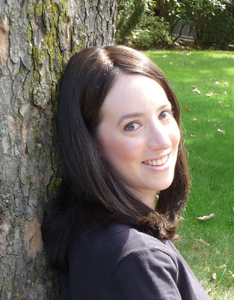
    Leah Cypess says, “After selling my first story (Temple of Stone) while in high school, I gave in to my mother’s importuning to be practical and majored in biology at Brooklyn College. I then went to Columbia Law School and practiced law for almost two years at Debevoise & Plimpton LLP, a large law firm in New York City. I kept writing and submitting in my spare time, and finally, a mere 15 years after my first short story acceptance, I sold my first novel, Mistwood, to Greenwillow Books (HarperCollins).”

    Leah lives in Brookline, Massachusetts (right outside of Boston) with her husband Aaron, a researcher and doctor at the Joslin Diabetes Center, and their two daughters. She majored in biology, minored in journalism, went to law school, worked as a lawyer, and has just started to learn about hawking and hunting. She’s published a number of short stories, which are all available for free on her website.

    I just had the opportunity to interview Leah about her writing process and books. Enjoy!

    *

    JB: MISTWOOD, published by HarperCollins in April, 2010, is your debut novel. But is it the first you’ve written?

    LC: Most definitely not. I wrote, revised, and submitted four manuscripts before Mistwood. (Technically, five; but I don’t count the first one, because it wasn’t very good, and I didn’t know what I was doing with the submissions process either. I was fifteen years old.)  In fact, after getting the offer from HarperCollins, I acquired an agent, who asked me to send him a list of my previous manuscripts and their submission histories.  The list was sixteen pages long.

    JB: Holy cow, five novels and 16 pages of submission history. That’s a lot of dedication. And faith in the face of rejection. I’m intrigued. How did the sale of this novel come about? Was it just another submission to yet another editor or did you have some connection? What was different with this book?
    LC: Both the faith and the sale were helped by the fact that I could see incremental improvements. My first novel received mostly form rejection letters, a couple of letters inviting me to submit further, and one revision request. My second received a lot of personal rejection letters, many more requests from various editors to submit future works, and one two-page revision request. The third made it to the acquisition committee at two houses. So I could tell I was getting closer, though it was still pretty dispiriting to think I might never make that final leap into publication. (After Novel #3 was turned down by both acquisition committees, even though it was being championed by senior editors in both cases, I had a couple of bad days.)

     In the end, I think what was different about Mistwood was mostly luck.

    It wasn’t my most perfect manuscript – there was a lot of revising to do after it was accepted! – but it was the one that resonated with the right editor at the right time. This was an editor who had asked me to submit future books after rejecting the query for Book #3, then requested Book #4 and written me a detailed and regretful email about why she didn’t feel it was right for her. By the time I sent her the query for Mistwood, she was obviously confident enough in my abilities to request that I email her the full manuscript, and to read it right away. After all those years, the acceptance for Mistwood came just a few months after I started submitting it.

    JB: I’m betting your persistence and work made some of that luck. Work seems to be a little bit of magic all by itself and has been used by a lot of other authors I know. Hum (grin). So let’s talk about the book. You should know you made The Top 200 YA Authors list I just published on my site. It ranks YA authors by average number of readers per book. And while the list can’t purport to be anything but a reflection of the tastes of the area’s library patrons, I think it’s probably representative of what’s going on in my region. So congrats! The book starts right off with a bang. It’s about a shape shifter. I know shape shifters have been around forever, but most fantasy these days seems to be about vampires and werewolves. Tell us a little bit about the core idea of the novel and its genesis.

    LC:  That’s awesome that I’m on the Top 200 YA Authors list – thanks for letting me know!

    I’ve been reading fantasy/science-fiction “forever” (I cut my teeth on the Edgar Rice Burroughs books my father had stored in our garage), so shapeshifters are just as familiar to me as vampires and werewolves.

    The core idea of the novel is that of an inhuman creature grappling with the fact that she seems to be turning human — while trying to figure out why, exactly, this has happened to her, and who and what she truly is. (And, of course, fending off assassins and dealing with palace intrigue.) That idea developed over the course of writing the novel – I started out with a scene of men riding into a misty forest in search of the magical creature who lived there, with no clear idea of what that creature was or why they wanted her. Then I kind of made the rest up as I went along. (This writing process is one of the reasons the novel was revised nine times before being published!)

    JB: I really liked the beginning. No wonder you felt compelled to follow the idea. And nine revisions! It sounds like you use drafts, as opposed to outlines or other tools, to help you discover your stories. Were these big revisions, almost complete rewrites?

    LC: Thanks! I’m glad you liked it

    I usually don’t rewrite scenes completely – most of my editing of already-written material consists more of snipping unnecessary parts and adding little bits and pieces. (Especially of description, which I tend to leave out entirely in the first draft.) But I do a lot of moving scenes around, deleting some scenes, and writing some new ones.

    Though I don’t use an outline when I first write, I usually create one during the revision process so I can keep track of the jigsaw-puzzle my manuscript has become.

    JB: That’s interesting. Well, I have just one more question for you. Tell us what’s coming next.

    LC: What’s next is NIGHTSPELL, a stand-alone companion novel to MISTWOOD, which will be published in May 2011. It’s about a country where an ancient spell allows murder victims to return as ghosts to seek vengeance on their killers… and if they don’t manage that, they remain ghosts forever. After a couple of hundreds of years of this, the kingdom – Ghostland – has evolved into a place where the living and the dead co-exist, albeit uneasily. My main character, Darri, is a foreigner to Ghostland; she is a barbarian princess who abhors the idea of ghosts and is only there to rescue her younger sister Callie, who was sent as a hostage four years ago. But Callie has changed in those four years, and now has secrets of her own.  In her quest to save her sister from herself, Darri will ultimately face a decision that will force her to reexamine beliefs she has never before questioned – and lead her into the heart of a conspiracy that threatens the balance of power between the living and the dead.

    JB: Oh my bleeping heck. That just gave me a case of massive author envy. I was thinking about writing a ghost story just yesterday and thought, “naw, ghosts are all played out.” Curse you, Cypess!

    Sheesh, talk about a parting shot. Well, I would ask about the next book, seeing NIGHTSPELL must be ready to go if it’s coming out in May, but I can only stand so much punishment. The good news, if I put my reader hat on, is that it looks like I get to put a tickler in my Outlook for this May. In the meantime, I going to suggest to my readers to give MISTWOOD a go. Thanks, Leah, for your time. I enjoyed the interview.

    LC: Thanks, John!

    *

    John sez: folks, I think I’m going to make interviews a regular feature. I just loved finding out more about Leah. It’s also interesting to see just how much work she’s put into this. I know that a good number of authors sell their first or second novel (see the Hines stats in the on writing section), but for a good number of others it’s later novels that sell. In either case, I think it’s clear that good old fashioned work makes up a big part of the secret sauce.

    Ah, that was fun. But, dang it, I should have asked her about her lawyer and biology background. Next time.

    LINKS

    Leah Cypess’s website

    The first three chapters of Mistwood

    Praise for Mistwood

    Codex Author Blog Tour 2011
    Share
  • Donald Rumsfeld, The King’s Speech, Aquatic Ancestor Apes & Talking Bacteria

    Donald Rumsfeld

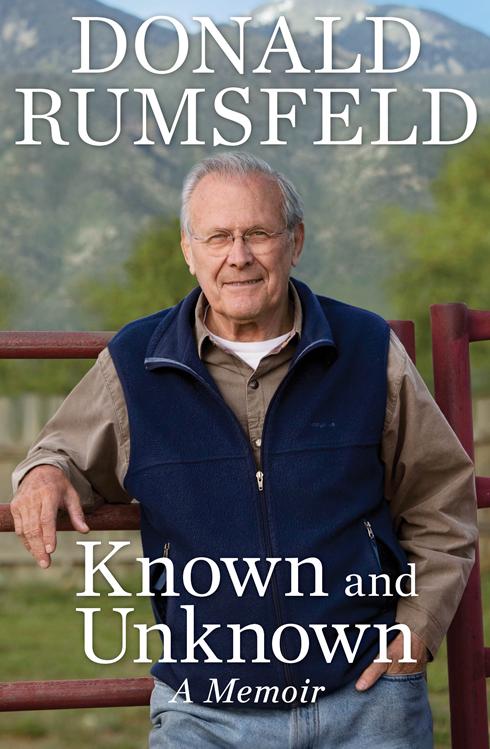
    I just finished Known and Unknown, a fat memoir by Donald Rumsfeld, and enjoyed every page.  Rumsfeld served as the Secretary of Defense under George W. Bush.  But Rumsfeld’s service didn’t start there. He was a Navy pilot, an assistant to a congressman during the Eisenhower days, and, in the early 60’s, a four-term congressman from Illinois.  He held various positions in the Nixon White House in the late 60’s and early 70’s, including ambassador to NATO.  He was Chief of Staff and Secretary of Defense when Ford took over from Nixon.  Reagan tapped him to be a special envoy to both the Middle East after the Beirut bombing and to the Law of the Sea treaty discussions.  He was the president of Searle, a pharmaceutical, as well as General Instrument, the company that pioneered HDTV.  Only after all that, did George W. Bush bring him on as Secretary of Defense.

    When writing novels, I try to create characters worth knowing, either because of their interesting personality or skills or because of the events they take part in. Donald Rumsfeld is just such a character, except he’s no fiction.

    In his memoir he shares insider information on everything from Watergate to 9/11 to the war in Iraq. What emerges is a fascinating look into many of the most important events in the last forty years.  You’ll get insight into some of the issues experienced in various White House administrations and see what really was going on with waterboarding, Guantanamo, Abu Ghraib, hurricane Katrina and many other of the hot button issues in the Bush years. There are some laugh out loud moments where his understated humor shines through. There are also parts where he reveals some of his differences with others that worked with him in the various administrations, including issues with Nelson Rockerfeller, Colin Powell and Andy Card. But in everything he writes he’s fair and restrained and attempts to present the facts accurately. This is no attempt to settle scores.  Just a wonderful read.

    If you are interested in politics at all, I think you’ll enjoy this book. Moreover, I think you’ll come out a little wiser, maybe a little better person, for having spent a few hours with Donald Rumsfeld.  

    The King’s Speech

    I do not watch many r-rated movies.  They are usually too vulgar or pornographic for my prissy tastes. However, I did my research on The King’s Speech, and having heard so many glowing reviews, Nellie and I rented it.

    It was wonderful.

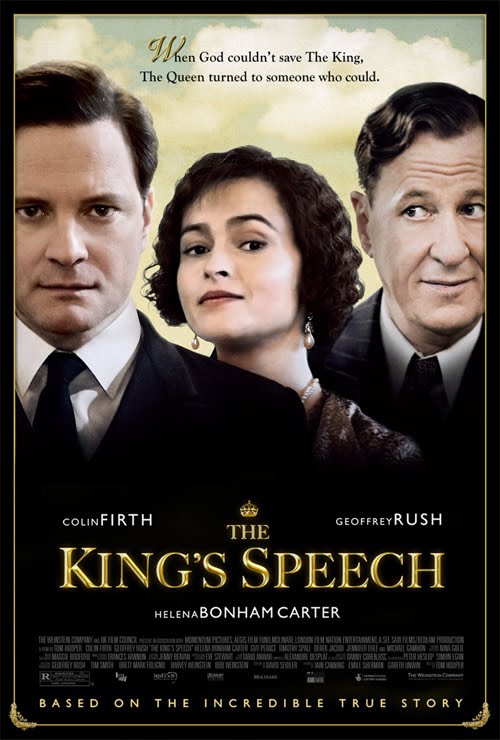
    The movie tells the story of prince Albert Frederick Arthur George of Britain who did not ever expect to inherit the throne and did not want to, in part because of his stammer. Can you imagine having to be a public figure like a king and have to deal with something like that? Most of us dread the thought of public speaking. Can you imagine having to try with a stammer?

    But Albert’s lot was not to live the sheltered life. He became king when his brother abdicated the throne because of improprieties in his personal life. The day before the abdication, Albert went to London to see his mother, Queen Mary. He wrote in his diary, “When I told her what had happened, I broke down and sobbed like a child.” That is not the entry of a power-hungry man.

    He assumed the throne in 1936, when England ruled over almost a quarter of the world’s population. Three years later in 1939 WW2 broke out and Britain’s king needed to be able to address the people.

    In the movie, Colin Firth plays Price Albert. Geoffery Rush (Captain Barbossa in Pirates of the Caribbean) plays Lionel Logue, the unorthodox Australian speech therapist to whom Albert’s wife turns for help. The script is wonderful and the star-studded cast is spot on. There are moments of humor and poignancy and triumph. I was caught up in this movie as much as any I’ve seen.

    If you like English dramas, you’ll enjoy this one. And the profanity, the reason for the r-rating, is not there to depict casual vulgarity. It was part of a technique used by the therapist. In the end, you’ll overlook it and find yourself on pins and needles, rooting for this fine man.

    Aquatic Ancestor Apes & Talking Bacteria

    I’ve written about TED before. The annual TED (technology, entertainment, design) conferences, in Long Beach/Palm Springs and Edinburgh, bring together the world’s most fascinating thinkers and doers, who are challenged to give the talk of their lives (in 18 minutes or less). The folks at TED record these speeches and put them up for free on their site for the rest of us to watch. And I just watched two dandies.

    The first is by Elaine Morgan who says we evolved from aquatic apes (sigh, just when you think you’ve found grandpa Eddy hanging out in the trees, you learn he’s an imposter). Morgan is a Welsh writer for television and also the author of several books on evolutionary anthropology. In the speech she describes the reasons why it makes sense that humans had aquatic ancestors. Along the way, she illustrates key principles of science, including why science by consensus is no science at all. Her manner is so delightful and engaging I think I could listen to her for hours, preferably around the dinner table. Watch her right now. She just might convince you.

    The second speech was given by Bonnie Bassler, an American molecular biologist, who has been part of the team that discovered key insights into how bacteria talk. It appears that bacteria do not invade a host and start doing damage. No, they wait until their numbers are sufficient that they have a chance of surviving. They coordinate defense and mount attacks as a group. Who would have thought? Knowing how this works is not only interesting all by itself, but it has stunning implications for medicine and fighting infection. Bassler is a fascinating and enthusiastic presenter. Among other things, you’ll end up seeing that humans are more bacteria than you could imagine. Watch her.

    Share