Author Janci Patterson Goes Indie
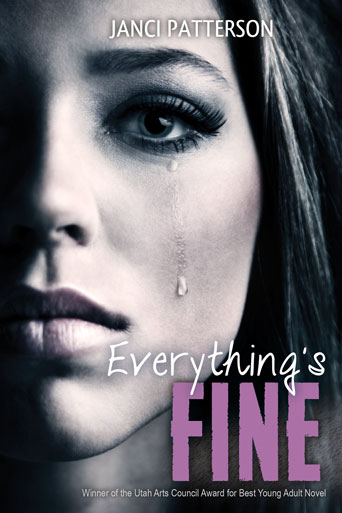
Everythings Fine by Janci PattersonI met Janci Patterson a few years ago when she was shopping her book Chasing the Skip to NY publishers. It’s about a girl named Ricki. Her mother flakes and runs off,  and so Ricki goes to live with her estranged Dad who happens to be a bounty hunter. I was hooked right there. But it gets better. Ricki gets to ride along and help and, wouldn’t you know it, develops a crush on a guy the dad is chasing.

I loved the premise. Traditional publisher Henry Holt loved it too and thought Janci had done a great job telling the tale, so they made her an offer that Janci accepted. It was published in 2012.

Sounds like a match made in heaven, right?

Well, Janci just released another book called Everything’s Fine, a mystery about a girl named Kira. Her best friend commits suicide immediately after her first date with her longtime crush, Bradley Johansen. Kira’s devastated and wondering why. She’s sure the answers are in her friend’s journal. As she searches for it she quickly learns she’s not the only one who wants that journal. Someone else is trying to keep the secrets the journal contains hidden.

Another great premise. And this book won the Utah Art’s Council award for Best Young Adult Novel. Clearly, Janci can tell a story. But Janci didn’t take this one to NY.

She’s publishing it as an indie.

Here are her own words explaining what helped convince her going indie was doable.

A Paradigm Shift

For years I refused to think about self-publishing. This wasn’t because of the stigma, honestly, but because of all the work I watched my self-publisher friends put into creating, shipping, and marketing their books. I couldn’t do that! I told myself. I wanted to be a writer, not a publisher.

When it became obvious to me that self-publishing was the next logical step in my career, I was terrified. Having published with a big publisher, I wasn’t willing to skip steps in the publishing process–it was my editor’s keen eye and the rounds of revision we did together that transformed CHASING THE SKIP from a messy dJanci Patterson - Chasing-the-Skip-webraft into a product I was proud of. I wanted to be just as proud of my independent work, and for that, I knew I’d need help.
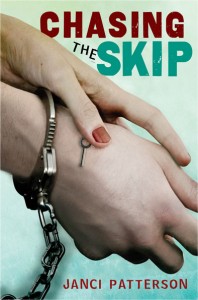
I knew just enough about book and cover design to know that I couldn’t slap them together on my own and expect them to be instantly good. But when I did the math on what I’d have to pay an editor and a book designer and a cover designer to put out even one book (let alone the several I have waiting), I knew that I couldn’t afford it. Self-publishing felt even more impossible than selling books in New York–I knew how I wanted to do it, but I didn’t have the resources.

So it was with this trapped feeling that I attended the Precision Editing Group’s workshop on indie publishing last fall. The workshop was packed with great information, but the thing that impacted me the most was a presentation by Heather Horrocks. She was talking about the importance of editors, and as a side comment, said something to the effect of, “yes, all my books have now been edited, but when I first got started, I didn’t have an editor because I couldn’t afford it.”

It’s not my intention to suggest that editing isn’t important, because it is. But that one sentence blew my mind. I’d been working with the New York publishing paradigm for fourteen years. And in that world, there are very few ways to be published. You query agents. You send books to publishers. You do your very best to follow all of the guidelines and to do everything perfectly right, hoping to minimize the barriers that stand between you and success as a writer.

But this self-publishing thing was a whole different game. I sat in the audience at the workshop, stunned. That was the moment when I finally realized this truth: there are as many ways to publish as there are people who are publishing. There is no one right way to do it. There are so many things you can do that can help you succeed. It’s better to do something than nothing, because nothing is never the road to success. Even if that means you’re doing it wrong.

So when I got home, I made a list of my assets. Forget about what I lacked. Forget about what I didn’t know. What did I know how to do? What resources did I have access to? And, most importantly, who could I ask for help?

If you’re looking to self-publish, I’d suggest that you do the same. Because here’s the thing–your list of assets is going to be uniquely yours. You have a unique set of skills; you know a unique network of people. You don’t need to worry about who and what you don’t know. Instead, focus on what you do have, what you can do. If you’ve been writing for years, you probably have some book-related skills. If you’re part of a community of writers to which you regularly contribute, you probably have some friends who you’ve helped in the past, or can help in the present, who would be motivated to help you out in return. Start from there, and you can pick up the rest as you go along.

In the end, I did have my book edited (repeatedly!) and my cover designed by a graphic designer. I was able to do that because I had friends who believe in me who were willing to enter into financial agreements that didn’t involve them getting paid in full upfront. I wouldn’t have thought to work out those arrangements when I was focused on doing things right–it was only when I opened my vision to look at what was possible that I began to envision what shape my own unique path might take.

Each path to publication is different, not only for each writer, but also for each book. With all the options available to us, it’s not enough to focus on our feet, doing only the next “right” step. Opportunity is everywhere. Focus on what you have, and even if you don’t win the jackpot on the first try, at least you’ll be playing the game.

 

Share

Similar Posts

  • Top 200 YA Authors of 2010

    On Thursday I posted the top 200 YA  novels of 2010. Today I’m happy to share the top 200 authors. You might be wondering: if we already have a top 200, why post this? Because yesterday was about individual titles. Today’s post is about authors. Some authors might not have any books that are checked out in huge numbers. But because they have a lot of books available, the numbers of checkouts they do have add up. Yesterday’s list showed you the volume for individual books. Today’s list shows you the volume for each author. You’ll see it does result in a different ranking.

    This list is based on the same dataset as the previous list. And so while I can’t claim it represents the top YA authors for the whole United States, it does show who is being read in this neck of the woods. It’s a great list for those wanting to find YA authors to try.  Please be aware that these are YA books as defined by the library, which takes its cue from places like Booklist and School Library Journal. Other books like the first three Harry Potters, Brandon Mull’s Fablehaven series, and some of Dashner’s stuff are considered Middle Grade and so do not appear on this list. Later, I might do a combined list.

    There were 1,283 authors on the list. “Times Checked Out” is the sum of all the times any of the author’s books were checked out. “Number of Titles” is the number of different titles the author has that were checked out. “Avg Check Outs per Title” is the average number of times each title was checked out. “%” is percentage of total checkouts. Rank is rank. Another way to sort this would be by the Avg Check Outs per Title to see who’s getting the highest number of readers per book. But I’ll let you fiddle with that on your own. Again, I’m very happy to see a number of Utahans on the list. Kudos to the following (ranking in parentheses):

    • Stephenie Meyer (4)
    • Shannon Hale (5)
    • Jessica Day George (10)
    • Chris Heimerdinger (18)
    • Jack Weyland (38)
    • Lisa Mangum (55)
    • Mette Ivie Harrison (56)
    • Aprilynne Pike (71)
    • Brandon Sanderson (73)
    • Ally Condie (82)
    • James Dashner (94)
    • Bree Despain (110)

    EDIT: 1/15/2011 12:57 AM. Okay, okay here’s the list by average checkout: Top 200 YA Authors of 2010, Part 2. A number of people drop off, new names appear, and positions shuffle.

    EDIT: 1/16/2011 9:32 AM: Informed that Bree Despain is also a Utah author.

    The List

    Author Times Checked Out Number of Titles Avg Check Outs per Title % Rank
    Rick Riordan 989 8 124 2.68% 1
    Suzanne Collins 888 3 296 2.98% 2
    Tamora Pierce 634 26 24 1.60% 3
    Stephenie Meyer 529 5 106 1.56% 4
    Shannon Hale 517 6 86 0.96% 5
    John Flanagan 413 9 46 0.93% 6
    Meg Cabot 396 37 11 0.58% 7
    P.C. Cast and Kristin Cast 393 7 56 0.37% 8
    Scott Westerfeld 354 12 30 1.19% 9
    Jessica Day George 328 6 55 0.99% 10
    D.J. MacHale 328 15 22 0.32% 11
    L.J. Smith 326 22 15 0.15% 12
    J.K. Rowling 318 4 80 0.30% 13
    Darren Shan 313 24 13 0.14% 14
    Cassandra Clare 309 4 77 1.25% 15
    Lisi Harrison 304 23 13 0.40% 16
    Eoin Colfer 302 11 27 0.13% 17
    Chris Heimerdinger 280 16 18 0.50% 18
    Cameron Dokey 271 9 30 0.74% 19
    Anthony Horowitz 260 24 11 0.46% 20
    James Patterson 257 8 32 0.23% 21
    Angie Sage 246 6 41 0.11% 22
    Joseph Delaney 240 9 27 0.33% 23
    Richelle Mead 202 6 34 0.21% 24
    Christopher Paolini 191 3 64 0.10% 25
    Alyson Noel 188 9 21 0.10% 26
    Garth Nix 182 11 17 0.21% 27
    Sara Shepard 181 8 23 0.41% 28
    Hilari Bell 178 12 15 0.10% 29
    Michael Scott 165 4 41 0.61% 30
    Gary Paulsen 163 26 6 0.20% 31
    Ellen Schreiber 160 9 18 0.20% 32
    Patricia C. Wrede 158 9 18 0.78% 33
    Frewin Jones 155 8 19 0.19% 34
    Melissa de la Cruz 154 7 22 0.28% 35
    Maggie Stiefvater 153 4 38 0.09% 36
    Ally Carter 152 5 30 0.37% 37
    Jack Weyland 151 11 14 0.09% 38
    Suzanne Weyn 150 8 19 0.09% 39
    Sarah Dessen 150 9 17 0.37% 40
    Margaret Peterson Haddix 144 8 18 0.46% 41
    Libba Bray 136 4 34 0.82% 42
    Rachel Caine 134 9 15 0.09% 43
    R.L. Stine 132 43 3 0.09% 44
    Caroline B. Cooney 132 30 4 1.07% 45
    Kelley Armstrong 131 3 44 0.27% 46
    Gerald Morris 129 10 13 0.09% 47
    Diana Wynne Jones 128 6 21 0.26% 48
    Jean Ferris 127 13 10 0.17% 49
    Anna Godbersen 127 5 25 0.17% 50
    Cecily von Ziegesar 126 24 5 0.17% 51
    Janette Rallison 125 10 13 0.08% 52
    Markus Zusak 124 4 31 0.08% 53
    Lurlene McDaniel 124 47 3 0.17% 54
    Lisa Mangum 124 2 62 0.91% 55
    Mette Ivie Harrison 123 4 31 0.08% 56
    Ann Rinaldi 119 31 4 0.72% 57
    Kate Brian 118 21 6 0.08% 58
    Carolyn Meyer 115 12 10 0.08% 59
    Cinda Williams Chima 113 5 23 0.38% 60
    Amelia Atwater-Rhodes 112 11 10 0.08% 61
    Frank Beddor 110 3 37 0.08% 62
    Heather Brewer 108 5 22 0.08% 63
    Laurie Halse Anderson 108 8 14 0.30% 64
    Herbie Brennan 106 5 21 0.30% 65
    Kristin Cashore 105 2 53 1.91% 66
    Robin McKinley 105 6 18 0.07% 67
    R.D. Henham 104 7 15 0.21% 68
    Donna Jo Napoli 104 15 7 0.14% 69
    Catherine Jinks 101 10 10 0.21% 70
    Aprilynne Pike 101 2 51 0.21% 71
    Louise Rennison 101 10 10 0.55% 72
    Brandon Sanderson 100 4 25 0.34% 73
    Debbie Viguie 100 6 17 0.46% 74
    Melissa Marr 99 4 25 0.07% 75
    Catherine Fisher 98 8 12 0.13% 76
    Jonathan Stroud 97 6 16 0.99% 77
    Lauren Brooke 95 26 4 0.33% 78
    L.A. Meyer 95 8 12 0.13% 79
    Lisa McMann 94 3 31 0.13% 80
    Simone Elkeles 93 7 13 0.39% 81
    Ally Condie 93 6 16 0.32% 82
    Lynne Ewing 91 18 5 0.06% 83
    Donita K. Paul 90 6 15 0.06% 84
    Carrie Jones 88 3 29 0.06% 85
    Lois Lowry 86 3 29 0.06% 86
    Kenneth Oppel 80 4 20 0.19% 87
    Mary Hoffman 79 7 11 0.06% 88
    Philip Reeve 78 9 9 0.57% 89
    Jen Calonita 78 6 13 0.12% 90
    Holly Black 78 5 16 0.12% 91
    Laurie Faria Stolarz 76 7 11 0.06% 92
    Catherine Gilbert Murdock 76 4 19 0.24% 93
    James Dashner 75 2 38 0.06% 94
    Diane Duane 75 9 8 0.06% 95
    Philip Pullman 73 9 8 0.18% 96
    Gordon Korman 72 16 5 0.18% 97
    Neal Shusterman 72 9 8 0.47% 98
    Jerry Spinelli 72 8 9 0.17% 99
    Jane Yolen 71 14 5 0.06% 100
    N.D. Wilson 70 3 23 0.23% 101
    Ellen Hopkins 70 6 12 0.06% 102
    Carrie Ryan 69 2 35 0.45% 103
    Becca Fitzpatrick 68 2 34 0.05% 104
    Lesley Livingston 68 3 23 0.05% 105
    Esther Friesner 68 6 11 0.05% 106
    Megan Whalen Turner 68 4 17 0.43% 107
    Alex Flinn 68 3 23 0.48% 108
    Elizabeth Knox 67 2 34 0.48% 109
    Bree Despain 66 2 33 0.32% 110
    Bryan Davis 66 8 8 0.11% 111
    Patrick Carman 66 5 13 0.84% 112
    Nancy Werlin 65 6 11 0.05% 113
    Ann Brashares 64 4 16 0.05% 114
    K.A. Applegate 64 18 4 0.05% 115
    Rachel Cohn 64 9 7 0.05% 116
    Linda Buckley-Archer 63 3 21 0.05% 117
    Cornelia Funke 63 2 32 0.05% 118
    Ted Dekker 62 7 9 0.05% 119
    Vivian Vande Velde 62 13 5 0.21% 120
    Nancy Springer 62 7 9 0.05% 121
    Carolyn Keene 61 49 1 0.15% 122
    Kieran Scott 60 6 10 0.10% 123
    Robin Palmer 59 3 20 0.45% 124
    Claudia Gray 59 3 20 0.30% 125
    Victoria Hanley 58 4 15 0.55% 126
    Carl Hiaasen 58 3 19 0.15% 127
    Philip Pullman  57 2 29 0.15% 128
    Lauren Kate 57 2 29 0.29% 129
    Marilyn Kaye 57 29 2 0.05% 130
    Lili St. Crow 56 2 28 0.14% 131
    Sharon Shinn 56 5 11 0.05% 132
    T.A. Barron 55 6 9 0.05% 133
    Marissa Doyle 55 2 28 0.05% 134
    Celia Rees 54 6 9 0.05% 135
    Alane Ferguson 54 6 9 0.05% 136
    Ridley Pearson 54 4 14 0.05% 137
    Elizabeth Scott 54 4 14 0.05% 138
    Clare B. Dunkle 53 6 9 0.05% 139
    Jaclyn Moriarty 52 4 13 0.05% 140
    James A. Owen 52 4 13 0.05% 141
    Justin Somper 52 5 10 0.05% 142
    David Klass 52 11 5 0.19% 143
    E. Lockhart 51 6 9 0.24% 144
    Cornelia Funke  51 1 51 0.09% 145
    Rachel Vail 51 3 17 0.28% 146
    Susan Beth Pfeffer 49 4 12 0.09% 147
    Rachel Vincent 49 3 16 0.14% 148
    K.M. Grant 49 7 7 0.27% 149
    Michael Grant 49 3 16 0.14% 150
    Maureen Johnson 48 4 12 0.05% 151
    Terry Pratchett 48 5 10 0.05% 152
    Kay Lynn Mangum 48 3 16 0.05% 153
    Sarah Mlynowski 48 5 10 0.05% 154
    Judy Blundell 48 1 48 0.05% 155
    Wayne Thomas Batson 48 7 7 0.05% 156
    Christopher Pike 47 19 2 0.05% 157
    David Lubar 47 8 6 0.05% 158
    Janet Lee Carey 46 3 15 0.40% 159
    Kami Garcia & Margaret Stohl 46 2 23 0.31% 160
    Lene Kaaberbol 45 4 11 0.54% 161
    Alison Croggon 45 4 11 0.98% 162
    Tera Lynn Childs 45 3 15 0.13% 163
    Lois Duncan 45 13 3 0.13% 164
    Carol Lynch Williams 44 3 15 0.09% 165
    Louis Sachar 44 2 22 0.17% 166
    Laini Taylor 44 3 15 0.13% 167
    Martha Finley 44 14 3 0.08% 168
    Kimberly Pauley 43 2 22 0.04% 169
    John Grisham  43 1 43 0.04% 170
    Beth Fantaskey 43 2 22 0.04% 171
    Guillaume Prevost 43 3 14 0.08% 172
    Margaret Mahy 43 5 9 0.04% 173
    A.J. Butcher 42 5 8 0.04% 174
    Lauren Conrad 42 3 14 0.04% 175
    Justine Larbalestier 42 5 8 0.04% 176
    Deb Caletti 42 4 11 0.13% 177
    Joan Lowery Nixon 42 16 3 0.04% 178
    Aimee Friedman 42 3 14 0.04% 179
    Gloria Whelan 41 10 4 0.04% 180
    Anne Osterlund 41 2 21 0.04% 181
    Philip Caveney 41 3 14 0.04% 182
    Eva Ibbotson 41 2 21 0.04% 183
    Michael Carroll 41 3 14 0.04% 184
    Francine Pascal 40 14 3 0.04% 185
    Walter Dean Myers 40 11 4 0.13% 186
    Gillian Shields 40 3 13 0.08% 187
    Isobelle Carmody 40 7 6 0.46% 188
    Fuyumi Ono  40 4 10 0.12% 189
    Stuart Hill 39 3 13 0.12% 190
    William Sleator 39 14 3 0.08% 191
    Michael Cadnum 38 11 3 0.08% 192
    Timothy Zahn 38 6 6 0.16% 193
    Sharon M. Draper 38 9 4 0.16% 194
    Peter Abrahams 37 5 7 0.33% 195
    Madeline L’Engle 37 11 3 0.12% 196
    Jenny B. Jones 37 3 12 0.28% 197
    Kimberly Derting 37 1 37 0.92% 198
    William Nicholson 37 3 12 0.20% 199
    Susane Colasanti 36 3 12 0.94% 200
    Ben Mikaelsen 36 5 7 0.08% 201
    Jacquelyn Mitchard 36 5 7 0.08% 202
    Richard Peck 36 9 4 0.04% 203
    Tim Green 36 6 6 0.04% 204
    Marilyn Reynolds 36 8 5 0.04% 205
    Sarah Miller 36 3 12 0.04% 206
    Sara Zarr 36 3 12 0.04% 207
    Share
  • |

    Superstars Writing Seminar DVDs

    Aspiring authors, I wasn’t able to attend, but heard from a few who were that the Superstars Writing Seminar in Pasadena with Eric Flint, Brandon Sanderson, Dave Wolverton, Rebecca Moesta, and Kevin J. Andersen was EXCELLENT. 

    See clips of parts of the videos here (still a lot of good info): http://www.youtube.com/view_play_list?p=2F211054CBD822A8

    Purchase the full recordings on DVD or MP3 here: www.writerscanon.com

    Topics include:

    • Econ 201 for Writers: Economics of Commercial Publishing
    • Inside Editors: How editors look at manuscripts, novels & short fiction
    • Dirty Secrets: What you need to know about being a Professional Author
    • From Slushpile to #1 New York Times Bestseller in 4 Years
    • Intellectual Property: How to Exploit Yours
    • Balancing Acts: Writing World & Real World
    • Agents: the A Word
    • Networking for Writers
    • Self-Promotion for Authors
    • Novel Contracts
    • Self-Publishing: Realities & Pitfalls
    • Pitching the Big Proposal
    • Two Heads Are Better than One: Collaborative Writing
    • New Media: Using It to Get an Edge
    • E-Publishing
    • Movies, TV and Authors
    • Anatomy of a Major Book Release
    • Myths of Publishing
    • Eleven Tips to Increase Your Writing Productivity
    Share
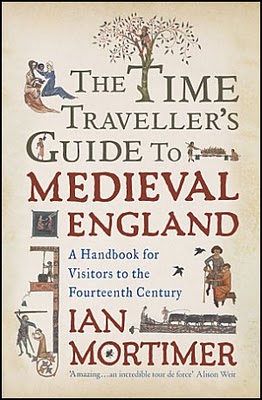
  • Bartimaeus & The Time Traveler’s Guide to Medieval England

    Pure Delight

    One of the most delightful literary characters to appear in the last decade is the cheeky Bartimaeus–a five-thousand-year-old djinni (“genie”) who plays the lead role in Jonathan Stroud’s trilogy The Amulet of Samarkand, The Golem’s Eye, and Ptolemy’s Gate.

    In Stroud’s world, magicians have no magic in themselves, but they do have the lore to summon and enslave demons, who can work magic. There are demons of various levels and powers. The lowest regularly summoned and enslaved are Imps, who can be crude and like to tell outright whoppers, but are good for standing watch and carrying messages. Next come Foliots, which Bartimaeus describes as “cut price djinn.” In the middle of the great chain of beings are the Djinn themselves, whose clever intelligence Bartimaeus extols, followed by Afrits, and finally Marids, who are rarely summoned because they are too strong for any but the most powerful magicians to control. Of Marids, Bartimaeus insightfully reveals that they are “dreadfully full of themselves.”

    In the trilogy, Bartimaeus is summoned and enslaved to do the bidding of a sometimes jerkish young magician who learns to be a better person, despite himself. Of course, along the way the magician sends Bartimaeus in great peril, which he eludes with cunning, sardonic wit, and many good one-liners. I read the first book, loved it, then listened to all three read by Simon Jones, who makes these stories even better. The sad news is that I finished them. I simply wasn’t ready to let Bartimaeus go.

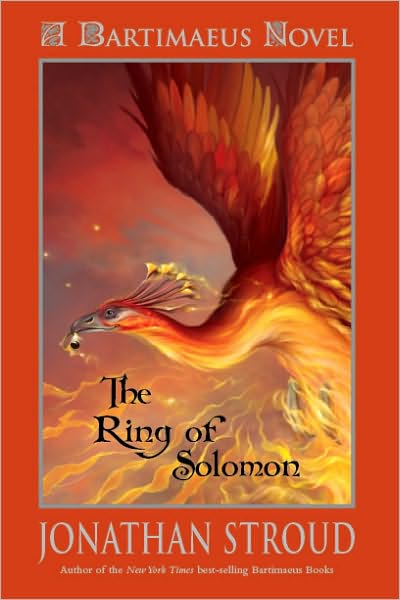
    Which is why I was so happy to find that Stroud recently released a fourth book: The Ring of Solomon, which is a stand-alone prequel to the trilogy. The family and I just finished listening to it, and it is every bit as good, if not better, than the first three.

    This story is set in biblical times where King Solomon has risen to uncontested power because of his possession of an all-powerful ring which allows him to summon hordes of powerful demons in a blink. Bartimaeus is enslaved to one of Solomon’s magicians.  A mean man, who Bartimaeus catches in a mistake and escapes, principally by devouring him. But Solomon doesn’t take kindly to that, and orders Khaba, a sinister and cruel magician, to summon him back to make an example for the other demons.

    Meanwhile, the Queen of Sheba, having denied Solomon’s marriage proposal three times, is sent an extortion threat.  Angry and frightened, she sends Asmira, a young woman and loyal captain of the guard, to Jerusalem to assassinate Solomon.

    Bartimaeus and Asmira hook up and find themselves in quite a pickle as they attempt to solve their problems. The story provides lots of humor, adventure, peril for both Bartimaeus and Asmira, and a number of surprising turnarounds. It also, in its own way, makes a comment on leadership, loyalty, and zealotry.

    You’ll find it in the middle-grade section of your bookstore, but don’t let the placement fool you into thinking it’s not for adults. Like the best stories, it offers something for everyone. It’s a perfect blend of insight and entertainment and had my whole family, oldest to youngest, spellbound for the duration as we listened to it riding in the car. This is one of my favorite books this year. And if you want to really indulge yourself, listen to the audio book read by Simon Jones.

    Travel to Medieval England

    I love learning new things about places and peoples, even if it’s a place I’ve “been” to before, which is why Ian Mortimer’s The Time Traveler’s Guide to Medieval England intrigued me. The first page convinced me to buy to book. And I’m so happy I did.

    I’ve read my fair share of interesting and well-written texts on this subject, including, among others, Life in a Medieval City and Life in a Medieval Village by Frances and Joseph Gies, Standards of Living in the later Middle Ages by Christopher Dyer, The Medieval Castle by Philip Warner, Daily Life in the Middle Ages by Paul B. Newman, and Power and Profit: The Merchant In Medieval Europe by Peter Spufford. All engrossing reads. What sets Mortimer’s book apart is that he not only approaches the topic as a travel guide that leads to you interesting sights and shares fascinating tidbits about the place, but he also helps you imagine how it would be, as a 21st century person, to actually travel there.

    For example, where would you go if you got sick? What happens if you’re robbed, where do you report the crime, and should you? Where might you get food and would it be something you’d find palatable? How will you get from place to place? Why kind of entertainment can you expect? And what can you wear without offending your hosts?

    Mortimer focuses on the fourteenth century England, since this period comes closest to the popular idea of the medieval times. He tackles the topics of the landscape, people, the Medieval character, basic essentials, what to wear, traveling, where to stay, what to eat and drink, health and hygiene, the law, and what to do. And he does it all in a chatty, clear, and informative manner, with a bit of humor thrown in for spice.

    Each page was a delight, and I found myself feeling like I was there. Furthermore, I learned a number of things that I hadn’t picked up in my previous readings. I’m tempted to quote all sorts of interesting tidbits he shares about the age, but I’ll refrain. If you are at all interested in the Middle Ages, I think you’ll love this book.

    Share
  • How to Get Rich: Spend

    No, really. It’s true. You just have to spend smartly. And in a special way.

    Over the course of your life, if you make what the average American does, more than a million dollars will flow through your hands.  And yet so many of us don’t feel rich.  That’s because money is like the Gingerbread Man.  Turn your back on it, and it’s out the door, rudely taunting everyone as it flies by.  And then it gets eaten by a fox. Such a waste.

    But it doesn’t have to be.

    Let me share with you THE best method I’ve found for managing my money.  It takes tons of anxiety out of spending and saving.  And, if you’re a Dave Ramsey fan, it is the one thing upon which everything else he teaches depends.  If you’re not a Ramsey fan, it doesn’t matter. After getting a job, this is the first thing you must do to get rich.

    Here’s the big secret. It has three parts:

    1)     Decide how much you’re going to spend on various things BEFORE you spend it

    2)     Make what you have left in each spending category EASY to track

    3)     Manage the things you can’t foresee

    To do the first two parts, you’re going to create a special kind of spending plan. We won’t use the term “budgeting” because “spending” is so much more fun, and because that’s what we’re going to do anyway. To understand how to do this, you need to watch three videos.

    Before you do, please know I earned a Masters degree in accounting.  I’ve used Quicken for more than twenty years.  Neither of those things has helped me manage my money like this simple method.  If you’re looking for a better way to manage your money, this is it.

    First, watch this video to get an overall idea of how this method works.

    Note: you can use actual envelopes and cash for everything if that makes you happy, but you really don’t need to.  The idea is to think of pre-allocating your monthly income to categories of expenses AND then having an easy way to track what’s left.

    Now, watch this bubba explain how he does it.

    But John, didn’t he say the same thing?

    Basically, but he has a fun accent. Besides, it’s good to see another example. And please note again: you don’t have to use actual envelopes and cash, although many swear by them.

    Finally, watch this one. No, it’s not just another repeat. There are some additional important ideas illustrated here.

    This video brings up the idea of why simply tracking an overall account balance isn’t very helpful. It also shows you WHY envelope categories are–they make it immediately apparent how much money you have to spend for a thing.  If you just use Quicken to track what you spent (looking in the past), you’ll run into troubles.  Let me tell you, I know this from experience. We use Quicken, and have for years, and plan use it for some time to come because it makes taxes and bank reconciliation a snap.  But Quicken only tracks what you spent.  Tracking, as important as it is, is not the key to success.  The key is pre-allocating BEFORE you spend.  And then tracking so you know what you have left in that category.  And making that tracking EASY.

    The final thing you have to do is manage the things you can’t foresee because things rarely go exactly to plan. Unexpected things ALWAYS come up. Your daughter will crash the car. Your husband will get appendicitis. You will forget that you had a $200 school sports expense.

    Okay, fine. Things happen. But how do you manage them if you can’t foresee them?

    If it’s really small, you simply adjust your plan. For example, if you need $30 more in food, you can transfer it from fuel if you have some extra there.

    You manage larger things by building up an emergency fund. Ramsey suggests starting with a $1,000 emergency fund and then trying to get two to three months of living expenses—about $10,000 to $15,000 for most people. Unexpected things WILL happen and cost your money. So build up some cushion to take care of them.

    Finally, you manage the really large things by getting proper insurance. This is what insurance is for. The types of insurance you need include (1) homeowner’s or renter’s, (2) auto, (3) medical, (4) long-term disability, (5) long-term care (for those 60 and older), and (6) life insurance. You may add true identity theft insurance as well.

    Okay, so that’s the overview.  If you want to try this, here’s how you do it.  It’s fairly easy. 

    STEP 1: get your head straight

    Resolve that you will NOT use credit for anything. You will not spend any money you don’t have.  You will not put another dime on a credit card, and this despite the fact that the plastic devil companies are begging you with offers almost every day to sign up for their cards. (Hum, I wonder how they afford all that junk mail.) If your monthly bills are greater than your income, then we have to fix that first.  But the new law of the land is zero new debt.

    Next, always remember to allocate your money to these categories first—shelter, food, adequate clothing, and adequate transportation.  This means if you have a crunch month, you would NOT pay credit card bills before food, even if you work for Visa.

    STEP 2: get your blank sheet & pencil

    Get out a piece of paper and pencil (not a pen) or open an Excel spreadsheet.  Whoa, that was an easy step.

    STEP 3: list your monthly income

    List your expected monthly income at the top from all sources.

    STEP 4: list your spending categories

    List your spending categories. You’re going to split them into two groups.

    The first group goes right below your income and includes all of your recurring monthly expense/spending categories. Not the amounts you spend. Just the categories. Things like mortgage, electricity, phone, groceries, dining, etc. Make sure you include some entertainment/fun money.

    The second group goes below your recurring monthly expenses and includes all of your major annual periodic expense/spending categories. Things like Christmas, vacation, clothing, kids back to school stuff, etc. And things you want to save for—a couch, iPhone, car, etc. Your emergency fund goes here as well.

    If you need help thinking up categories, use these Ramsey resources: Monthly cash flow plan forms and Monthly allocated spending plan form.

    STEP 5: Fund your categories

    Decide how much you will spend in each category this month.  You should have 0 dollars when you get to the bottom of the sheet.  Spend (allocate) every dime BEFORE you start the month.  You’re going to do this at the beginning of each month.  And you will probably have to adjust it a couple of times during the month.

    You will probably have categories that don’t get any money this month.

    You will also have categories that get money, but you won’t spend any of it this month.  These are your periodic expenses.  Your goal is to have the cash up front to pay for them, so you have to save for them.  Remember, you are NOT going to take on any new debt. 

    For example, if you’re saving up for Christmas, you allocate some money for that out of this month’s funds and TRANSFER it to savings.  Then it will be there when you need it.  You could draw the cash out and put it in an actual envelope, but you don’t have to.  Just as long as you keep a record of the total amount in savings and what it’s all supposed to be for, i.e. total savings in July = $1,000: $500 for back to school, $200 for Christmas, and $300 for my trip with kids to Six Flags in 2013.

    STEP 6: mark the “watch” categories

    Some of the categories you need to watch closely, and some you don’t. The ones you need to watch closely will be your “envelope watch” categories. 

    The categories you don’t need to watch as closely are those that are automatically taken out of your account each month.  And those you will write a check once a month for.  These things include mortgage, car payment, electricity, etc.  These are NOT categories you need to use actual envelopes for.  You can track it on paper or in the spreadsheet. Not much happens with these categories. 

    But there are other categories that you’re going to be spending throughout the month, and it’s easy to over spend if you don’t track them.  Groceries, dining, entertainment, gasoline, a specific vacation, etc. are all categories that you make multiple purchases with each month and are flexible/discretionary and need to be watched closely.  So while everything is tracked in a category/envelope on paper or on the computer, you’ll track these with either a real envelope and cash or a virtual one using that free software you saw in the third video or a piece of paper with a running category balance in your wallet.

    STEP 7: have fun and spend!

    Now go out and spend!

    Before spending, check your envelope.  Do you have enough money?  If you do, spend and be happy.  If not, save up for it or find a way to save money in another category and adjust so that you’re still spending the same total amount.  Never spend what you don’t have.

    If you feel you need something not planned for, well, you have to get it later OR transfer something out of another envelope.  I just make myself wait a day or three, and usually the urge to buy, Buy, BUY! goes away, and I see I don’t “need” it right now.  Or maybe a more affordable option presents itself.

    If the kids want something, and you feel guilty you can’t give it to them, just tell them what’s in the envelope/category, and tell them they can save for it or choose something else in that category that will fit with what you have left.

    If you’re tracking envelopes virtually or using the paper balance in your wallet, you MUST update your envelope AFTER every purchase so you don’t spend more than you have. If you find you just can’t seem to remember to do this, go to the cash method.

    That’s it! 

    Of course, that’s not quite it because even though it’s easy, if you haven’t done this before, it might take some adjustment.  Give yourself a month or three to get it down.  Because when you do, it WILL produce great results and peace. It’s doing that for us. 

    If you feel you need more info, I suggest you read Dave Ramsey’s Complete Guide to Money.  Here’s the first chapter to sample: Complete Guide To Money sample chapter.

    Happy spending.

    EDIT: here’s another video to watch: http://www.youneedabudget.com/.  Then read about the method: http://www.youneedabudget.com/method. This one highlights the idea that you need to make sure you realize that things will happen that you cannot foresee. No plan survives contact with the enemy.

    Share
  • Good Stuff! The Greatest Showman

    I saw the previews of The Greatest Showman, the movie about the circus guy. I rolled my eyes. The circus? Come on.

    But my daughters, one by one, went to see it and came home raving.

    And then my wife went to see it and came home raving.

    And then my youngest was playing some music the other night, and I said, “Ooh, that’s nice. Good beat. Wow. What is that?”

    She said with much affection, “The Greatest Showman, loser.”

    I said to myself, maybe the previews simply stank. I said, I’ve seen movies where the previews were better than the full-length film. Maybe this was the reverse.

    I said, to my fine daughter and wife, “How about a movie night?”

    They were more than game to see it a second time. So we went and saw The Greatest Showman this week.

    Here’s the report.

    Oh. My. Holy. Freaking. Heck!

    This movie is one of the best movies I’ve seen in the last few years. And get this: it was released more than eleven weeks ago, back in December of last year. How many movies do you know that stay in the theaters for eleven weeks straight? When a movie keeps attracting crowds week after week, long after the release night hype has faded, they say it “has legs.”

    Let me tell you, this one has some legs. The music is awesome. The visuals are wonderful. And the story—the story is everything a story should be. I came out of the theater having wept and cheered and bitten my nails and been thrilled with a number of the scenes. I came out of the theater happy, positive, thinking about life, thinking about what really matters.

    Look, if you enjoy musicals, if you enjoy dramas, if you enjoy Hugh Jackman of Wolverine fame, you must drop everything you’re doing right now and run to see this before it leaves the theaters. You’ll be so happy you did.

    And now, I’m going to figure out how I can go see it again.

    Share
  • Good Stuff: Poldark, Monk, and the cure for dragon feet

    For all of you longing for just one more season of Downton Abbey, I’ve found a new series from the BBC I think you’ll enjoy (thank you Duane Robinson for the recommendation).

    It’s called Poldark and is set in the late 1700s in Cornwall, that little southwestern leg of England that juts out into the Atlantic. The dark-haired and handsome Ross Poldark returns to England after having fought in the American War of Independence and finds that his father has died, and he’s inherited the estate. Except the estate is in ruins.

    The house, which is a long way from being anything grand, is a mess and being inhabited by the deceased father’s last two servants. A man and a wife who are equal parts louts and lushes. The land isn’t producing. The mine is closed. And Poldark has very little money.

    By the way, when we think of British aristocracy, we most often think of dances and fine clothing and large tracts of lands. We seldom think of mines. But Cornwall has been mining tin for a very long time, and so were its lords. In fact, Cornwall was known outside of the Isles anciently, and some historians suggest that Cornwall was probably selling tin to the seafaring Greeks and Phoenicians many hundreds of years B.C.

    So our young and handsome lord has come home to a mess and very little money. But he immediately sets about trying to repair things. And what unfolds is a wonderful story with love, action, humor, injustice, and villains plotting Poldark’s downfall.

    We loved Downton in part for the refinement and high society (and Lady Grantham’s hilarious one-liners). However, Poldark isn’t about the top of the aristocracy. It’s about a man almost at the bottom. And many of those of the lower class who are his friends. There’s a refreshing earthiness about it even while you still have scenes of the high society and all that goes with it.

    We just finished the first season and are hooked. In fact, I stood up and cheered at the end of the last episode we watched. So if you love English historicals, you’re going to enjoy Polkdark.

    *

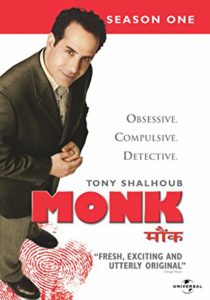
    The humorous detective series Monk debuted in 2002 and ran for eight seasons. It was a huge hit. But because I’m a cave dweller I didn’t get to it until now. But, boy, I’m happy I did.

    If you haven’t seen it yet, you’re in for a treat. Monk is one of those brilliant detectives like Patrick Jane in The Mentalist or Sherlock Holmes who sees all sorts of details that so many others miss. But unlike those guys, Monk has obsessive-compulsive disorder plus a number of phobias.

    And so he can’t just walk in and stun everyone with his brilliance because at any moment he might get sidetracked straightening pictures or moving lamps or trying to avoid germs. In one funny scene he’s being chased on foot by someone intent on killing him, and he can’t help but touch the poles as he runs by. However, he’s not all helpless because he’s hired a female nurse, Sharona Fleming, to help him. And the interaction between the two of them adds another enjoyable dimension.

    And so you get to experience all the awe of watching someone like Sherlock solve crimes plus laugh along the way. I couldn’t help but laugh out loud during a number of episodes.

    If you like The Mentalist, Elementary, or Psych, I think you’ll really enjoy Monk.

    *

    This last review is for all of you who have dragon feet.

    That’s what I had until two months ago. Dry dragon feet. So dry and with such sharp and jagged calluses that I regularly wore the area on my sheets around my feet to shreds. Nellie’s side of the sheets were nice and smooth. My side, after a year or two, looked like the dog had attacked it.

    The calluses were so bad I periodically sanded them off with 400 grit sandpaper.

    I also got stress cracks in the winter, which I tried to heal with band-aides and Neosporin. And that worked a decade ago. But the stress cracks were just getting more frequent and longer-lasting. This last winter I had three that stayed for weeks and weeks.

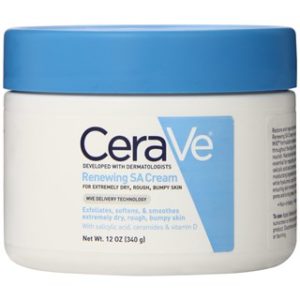
    And so when I went into my dermatologist for my annual skin cancer check, I asked him if there was anything to be done. He said, “Get CeraVe cream with SA, salicylic acid. It has to have SA.”


    After the appointment, I promptly drove to Walmart and walked down to the cosmetic aisle and purchased a little tub of CeraVe Renewing SA Cream. And I began to use it that night, putting socks on after I applied it. I applied it every morning and night.

    And, miracle of miracles, a few weeks later my feet were normal human feet again. The calluses were gone. The stress cracks gone. The pain gone. My sheets love me. My wife loves me. I’m saving money on sand paper.

    Folks, if you have dragon feet and want to be human again, let me suggest CeraVe with SA.

    Share

3 Comments

Comments are closed.