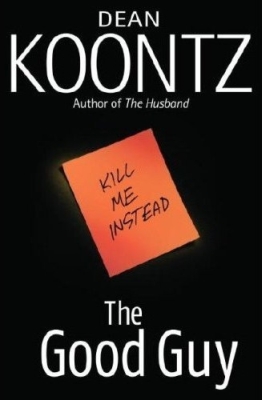
The Good Guy by Dean Koontz

Good_Guy_Dean_KoontzSo let’s say you’re in a bar and a guy shows up, mistakes you for someone he was meeting, and you play along. Just for fun. You’ll let him know his mistake sooner or later. But then he slides a manila envelope to you and says, “Half of it is there. Ten thousand. You’ll get the rest when she’s gone.”

Would you say, “Sorry, dude. I’m not your hit man”? A woman’s life is on the line.

In Dean Koontz’s The Good Guy, Tim Carrier is too astonished to react. The man leaves. Carrier opens the envelope. There’s ten thousand in cash and a 5×7 of the woman. She’s Linda Paquette who lives in Laguna Beach.

A few minutes later the actual killer shows up. Makes the same mistake. What do you do?

Carrier plays along, tells the man that he’s decided not to go through with it and to take the ten thousand as a “kill fee.” The man leaves. Carrier goes to alert the woman. But very soon the killer and those who hired him realize the mistake. And now they’re after both Carrier and the original target.

The Good Guy was a wonderful story of action and suspense. It’s also a love story. Koontz portrays a deadly and frightening killer. But he also includes lots of banter between Carrier and Paquette. Both have secrets which are interesting to learn. And then at the end of the book, when you think it’s all about a kill, Koontz twists it. Then he twists it again. I loved this story and enjoyed the characters immensely. But the book went beyond mere entertainment. It’s a book that also makes you think about how you live.  

I should be working hard on draft 3 of Curse of a Dark God. But every now and again I need a break. I’m glad I took this one with Koontz.

Share

Similar Posts

  • You thought Bad Penny was fiction?

    How about former CIA operatives and Navy Seals forming a private group to rescue child slaves?

    Last January, Ballard made a bold move and left his job to form his own team of former CIA operatives and Navy Seals who operate undercover to bust child slavery rings

    . . . . .

    Ballard’s organization is called Operation Underground Railroad, and members call themselves abolitionists. The references to 19th-century slave liberation are deliberate.

    There are currently 25 million people living in slavery, according to the 2014 Global Slavery Index research released by anti-trafficking organization Walk Free Foundation. The U.S. State Department puts the figure closer to 21 million, and about two million of those slaves are children.

    Ballard’s line of work has opened his eyes to a problem most people are blind to — the fact that there are more people living in slavery now than at the height of the trans-Atlantic slave trade.

    . . . . .

    Ballard knows better than anyone just how easy it is to buy a child. In an operation in Haiti earlier this year, he posed as a trafficker and visited an orphanage where two children — a brother and sister ages 2 and 3 — were sold to him for $15,000 apiece.

    That’s the going rate for a child, says Ballard, and over time, the owner can make millions of dollars by selling the child for sex or forced labor.

    Read the rest at Heroes of 2014. Become an abolitionist here.

    Then go on to read about another hero–the Iron Angel–who is helping folks out of another kind of slavery.

    Then a third called the Vicar of Bagdad, who has had over 1,000 of his flock killed for their beliefs.

    Here’s the full list of the six featured heroes.

    Share
  • |

    Radiolab’s “Parasites”

    Radio and TV have incredible power. But until the last decade they were always constrained by time and signal power. You had to listen when the station broadcast it, and you had to listen where you could pick up the signal. 

    Living out in the boonies we don’t get good radio or TV reception (no I don’t subscribe to satellite). Which is why the internet is so wonderful.

    You can listen and watch almost anything when you want from almost any location–yes, even in Laketown, UT, Boonie Central. Millions listen to music, conservative talk, or libral talk (NPR) via the internet. I enjoy all three depending on my mood. But there’s so much more out there than music and blah blah blah, as much as I love it. For example, you can listen to the British BBC. You can listen to the Dutch. See what’s going on in Australia. Doesn’t matter that they are a number time zones away and all asleep when I’m working. I love the internet.  

    One of the best programs I’ve heard in the last six months is the three-part “Parasites” presented by Radiolab. In a fascinating hour they address the following questions:

    • Parasites: are they evil, or are they awesome?
    • Should you get infected with hookworms?
    • Can parasites exercise mind control over their hosts?

    Along the way they tell a number of amazing stories. Listen now. You won’t be able to stop.

    Get zinged, Baby!

    Share
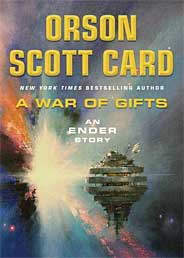
  • A War of Gifts by Orson Scott Card

    orson-card-war-of-giftsI think this has just become one of my favorite Card stories (note: like Stonefather, this is NOT a novel, but another novella). I’m sure part of the interest stemmed from the religious angle. Many people of many differing faiths will see their religion in it, but there were so many of my own beliefs twisted and made into frights that I felt Card was speaking directly to me. I’m sure another part was that I served my LDS mission in the Netherlands and the story revolves around a Dutch tradition. And it didn’t hurt that I listened to the audio version read by Scott Brick and Stefan Rudnicki. But there was more to it than that.  In the end, it was the saving of the main character, Zeck Morgan, that made me care.

    Because I should be working on my novel now, I’m going to simply quote the summary from Publisher’s Weekly review so you get an idea of what it’s about: “When Zeck Morgan, the young son of a puritanical minister, qualifies for admission into the International Fleet’s Battle School, he is brought to the school against his will. Citing his pacifist religious beliefs, Zeck refuses to participate in any simulated war games, but when he sees a Dutch student give a friend a small present in celebration of Sinterklaas Day, he [thinks he sees a way to be sent home].”

    Okay, so I shortened the PW summary. I did so because this isn’t about religious holidays, as their summary leads you to believe. It’s about something far more important, and Card does a great job writing about it.

    Share
  • Good Stuff! Operation Underground Railroad

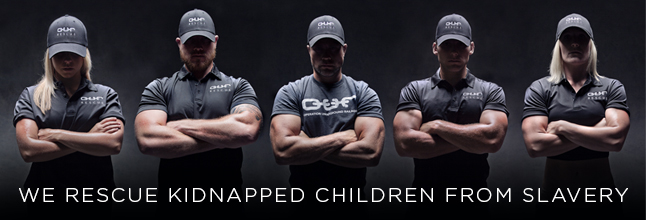
    WeSaveChildrenFromSlavery

    I blogged about this before.

    On February 28th, Operation Underground Railroad freed 20 kids from slavery and brought 5 slavers to justice. They are continually running operations.

    Oskar Schindler didn’t stop the killing of all Jews. But he did what he could. One of the most poignant moments of Schindler’s List was when he pulled out his pen and realized he could have saved someone with his pen. We all have a pen opportunity in front of us. Join me and my family. Become an abolitionist.

    We’ve set up a monthly amount, but even a one-time donation puts you on the team.

    I know you want more information. Here’s an awesome video where the founder explains what’s happening and what they’re doing.

    In this one, Glenn Beck interviews Cliff Graham about the organization. It’s a must-see interview.

    See how you can help.

    JumpTeamImage1-350x175

    Share
  • Best Buy, Samsung, and Sony

    I am not an early adopter. I do not rush out to buy the latest and greatest of anything. If I have something that works, then I keep using it until it absolutely won’t work anymore.

    For example, Nellie and I bought a Honda Accord when we were first married. Fourteen years later, we had put almost 300,000 miles on that car and would have tried to put on another 300,000. Unfortunately, it met an early demise when it encountered a herd of black Angus cattle on a very dark country road at one a.m. in the morning. So long, brave companion.

    We have a computer we purchased thirteen years ago which is still running Windows 98. Computers evolve about as quickly as fruit flies, which means that in human years our computer is like 450 years old. This is like going to war with first-generation muskets while everyone else is using Predator drones. And we’re okay with that, even though it appears we’re going to have to retire the old fellow this year.  Alas.

    I have these fine olive green dress pants that are fifteen years old. When the rise finally wore out, I had Nellie fix it.  She put in a bright Kermit-The-Frog green patch, which draws a lot of attention to an area that’s been down-played ever since the codpiece went out of fashion in the late 1500’s. Was this sweet revenge for eating her stash of chocolate? Or a cleverly planned source of constant enjoyment? I do not know. But as a result, I do not wear these pants to church and important business meetings. I wear them hiking. They protect me from bushes and mosquitoes, yet breathe with perfection. Why would I ever get rid of them?

    As you can see, I’m not a buy buy buy guy. Which means that when I get something it better darn well be a fine product because I know I’m likely to be using it for a very long time. And this brings me to our recent television and blu-ray player purchase. Two years ago some friends who had just purchased a big flat screen TV saw that we were still using our twenty-three year old 15″ RCA, took pity on us and gave us the 21″ TV they were replacing. It is one of those big suckers that weighs 475 pounds, but still a fine TV, and we watched it with joy.

    However, a few weeks ago our antenna converter box broke. Our church’s semi-annual worldwide conference was coming up, which is a feast we love to watch, and so we were faced with choice: buy another converter box or pay a few more dollars and move into the twenty-first century with a flat screen. Now, while it’s true I’m not a buy buy buy guy, it is also true that I have been longing for a manly TV lo these many years. This was my chance. When Nellie agreed we should look for a new TV, I went into immediate action.

    We started our search at Best Buy. The sales guys there were incredibly helpful. But we wanted to shop a bit more. So we went to a discount club, and thinking we’d save thirty bucks, purchased our TV there. We took it home, and I did not like it. I looked up the reviews on Consumer Reports and liked it even less. So I took it back. Sam’s has a great return policy, and gave us a full refund. Good bye, piece of crap.

    I went to Best Buy again. After talking with the floor guy there for some time, I purchased a 32″ Samsung LN32D Series 4. No, it’s not 60 inches of gorilla manliness, but a 32″ TV does have a bit of hair on its chest. And it was bigger than what we’d been using. And it was only a few hundred bucks. I found this TV’s picture much better. Excellent, in fact, with the TV stations. However, my DVDs didn’t play so well on it.

    I took it back to Best Buy. The folks there spent an hour testing other TVs and demonstrating that the issue was not the TV but my old Sony DVD player which could only use RCA cables. I needed a new player with the new HDMI cable, which is able to deliver much better quality. So I purchased one, a blu-ray player, brought it home, and found that the picture was indeed much better, but I hated the player’s remote controls. For example, I want to push one button to bring up the disc menu. I do not want to click options, over, down, down, down to do this each time.

    I took it back. The folks at Best Buy were as friendly and helpful as ever. There was no hassle returning it. We spent another thirty minutes test driving different players and their remotes. I finally settled on a Sony BDP-5390 which is fabulous, not only because the remote and on-screen controls were helpful and it remembers where I was with movies I don’t finish, but also because it has a number of apps that allow me to connect to my wi-fi and watch things like YouTube, listen to internet radio, and pipe music all through my house.  There are so many cool features that I’m going to be enjoying discovering them all for a number of weeks. In all of this, the folks at Best Buy were cheerful, helpful, knowledgeable, and willing to work with someone who was very particular in what he wanted. I am now a Best Buy believer. If you want excellent customer service and good prices, go to Best Buy. I’ll be going back there for my next TV . . . when this one has racked up two gajillion viewing hours and at last gives up the ghost.
    Share
  • The Power of Habit by Charles Duhigg

    Have you ever gotten into the car to go to destination A and a few turns later realized you’re going to destination B and have to turn around?

    If so, you’ve experienced the power of habit.

    Have you ever told yourself you will NOT eat the cookies sitting out on the counter and two minutes later pick one up and eat it?  Or perhaps it was the cigarette.  Or the drink.

    Habit.

    Did you know that the genius behind the methods of Tony Dungy–the only coach in the NFL history to reach the play-offs ten years in a row and the one who turned a troubled Colts team around and three years later took them to win the Super Bowl in 2007–was to teach his players to be faster than everyone else.  But they wouldn’t be faster because they would focus on increasing their physical speed. They would be faster because they would learn habits that would make their moves instinct.  When his strategy worked, Dungy’s players could move with a speed that was impossible to overcome.

    According to some research, more than 40% of the actions we perform each day are not actual decisions, but habits.  And habits that we didn’t always consciously choose to start.  We have sleeping habits, shopping habits, exercise habits, eating habits.  Habits at work, at home, at school.  Habits of the mind.

    Companies have a huge interest in changing our shopping habits.  Coaches have an interest in changing the habits we use when we play. Teachers have an interest in the habits of their classroom. Families and communities have habitual ways of interacting. We all have personal habits we’d like to adopt and others we’d like to give away.  But unless you know what you’re doing, habits can be extremely intransigent and slippery things.

    The good news is that a lot of research has been done in the last few decades, and we now know how habits work. When we arm ourselves with this knowledge, we’ll have a much better chance of changing. Luckily for us, we don’t have to track all that information down.  In The Power of Habit: Why We Do What We Do In Life and Business, Charles Duhigg draws on hundreds of academic studies, interviews with more than three hundred scientists and executives, and research conducted at dozens of companies in his book and distills all this knowledge to its essence.

    The title might sound boring, but Duhigg follows the style of Malcom Gladwell (Outliers, Blink, The Tipping Point), and the Heath brothers (Made to Stick), and has written a book that I couldn’t put down.  For example, I couldn’t stop reading about coach Tony Dungy, or Target as it predicts who is pregnant and how far along they are, or the scientists who couldn’t figure out why Alcoholics Anonymous works, or how bad organizational habits led to thirty-one people being burned alive in London’s King’s Cross subway stop.  I couldn’t stop reading about why Rosa Parks, not the first African American to refuse to give up her bus seat, could pivot the civil rights movement.  I couldn’t stop reading the stories of individuals losing bad habits, others picking up good ones, and others who lost their minds but not their habits. Duhigg uses these and many other examples and studies to illustrate the key principles underlying how habits work.  In the appendix, he gives us a guide for examining and forming our own habits.

    I personally know the power of changing habits of the mind (which I’ve already written about). And teeth. A few years ago, I flossed once a week. It was such a pain. Now it’s a habit that I almost crave each night. I look back at how I made those changes and see it all laid out in Duhigg’s book. Can I actually change my habit of going to bed late? Stay tuned.

    If you’re interested in forming the habits of a class, team, company, or family; if you want to change some of your own habits; if you’re interested in knowing why we do what we do and enjoy the style of Malcom Gladwell and Dan and Chip Heath, then I think you’ll love this book. Let me suggest you watch the video below.  Then go to http://charlesduhigg.com/the-power-of-habit/ and click on the “Additional Resources” to watch and read more. Then just get the dang book.

    Share