Other Movies I Enjoyed: 2000 – 2009

Other Movies I Enjoyed: 2000 – 2009

Don’t have time to provide the logline and comments for each. But those with an * are movies I especially enjoyed.

2009

  • Avatar: except for all the moments when I thought the characters were going to break out in Pocohantas songs–“haaave yooooou ever heard the wolf cryyyyyy to the bluuuuuue cooooorn mooooooon…”–I enjoyed it. When I came out I defintely wanted to be a blue dude.
  • Julie & Julia: funny, although did they really need to show the “coarse” Julia?
  • Monsters vs Aliens: I didn’t like the villain or the story, but BOB was hilarious and worth it.
  • Star Trek: Best Star Trek movie. Second is Wrath of Khan.
  • Up

2008

  • Henry Poole is Here
  • *Iron Man: Wow, I’ve wanted to fly since forever.  This movie was just cool.
  • Madagascar: Escape 2 Africa: The penguins and King Julian.
  • *Slumdog Millionaire (RU)
  • Taken: great concept. Ending fell flat, but I love the concept
  • The Dark Knight: first 30 minutes all I could say was “I want to be Batman, I want to be Batman.” The Joker was amazing. However, something didn’t work for me in this movie. I thought there was only one heroic moment (the convict on the boat). I didn’t feel Batman’s dilemma in the end. The end was poetic, but I didn’t feel the drama. It was still a fun ride.

2007

  • The Bourne Ultimatum
  • *The Jane Austen Book Club: this one should have been a runner up. I really liked this.

2006

  • Cars: Mater
  • *Casino Royale (RU)
  • Firewall: a good Harrison Ford film, excellent villain and situation
  • Happy Feet: I thought it was going to be dumb, but I really liked it. The characters were great.
  • Invincible: the story of Vince Papale, a 30-year-old bartender from South Philadelphia who overcame long odds to play for the NFL’s Philadelphia Eagles in 1976.
  • The Devil Wears Prada
  • The Lake House
  • The Pursuit of Happyness

2005

  • Batman Begins
  • Cinderella Man
  • Coach Carter: Loved the story and Samuel Jackon’s character
  • Hitch
  • *Hoodwinked: really loved the humor
  • Madagascar: Hate the lion and the story but the penguins and King Julian are hilarious. I laugh every time.
  • Serenity
  • *Sky High: fun with Kurt Russell and Bruce Campbell
  • *Walk The Line (RU)

2004

  • *Collateral: A cab driver finds himself the hostage of an engaging contract killer as he makes his rounds from hit to hit during one night in LA. He must find a way to save both himself and one last victim.
  • Ella Enchanted: goofy, but a lot of fun to watch with my girls
  • I, Robot
  • *Miracle: I hate hockey, but I liked this
  • Napoleon Dynamite: was in shock until Pedro shaved his head, then I couldn’t stop laughing.
  • *Spiderman 2 (#5)
  • The Bourne Supremacy
  • *The Incredibles (#2)
  • The Village: watched it with inlaws and it scared them for days–totally worth it

2003

  • Elf: syrup
  • Holes: we loved the book and the movie did it justice
  • *Last Samurai (#7)
  • *Luther (RU)
  • *Matchstick Men (RU)
  • *Open Range: best cowboy movie in a looong time–I just love Duvall
  • *Pirates of the Carribean: Curse of the Black Pearl (#9)
  • *Return of the King (#1)
  • Runaway Jury
  • *Saints and Soldiers
  • *Seabiscuit (RU)
  • Secondhand Lions
  • The Italian Job: Yes, I cheered for criminals

2002

  • About a Boy
  • Drumline
  • *Ice Age (#3)
  • Minority Report
  • Reign of Fire: best dragon movie to come along in a long time
  • Snow Dogs: goofy fun, enjoyable to watch with the kids
  • *The Bourne Identity: really liked the suspense and action
  • The Sum of All Fears
  • *The Two Towers (#1)
  • Treasure Planet: I didn’t think it could work, but it did. Enjoyed the relationship between Jim and Silver
  • Two Week’s Notice: a good romance
  • *We Were Soliders (#6)

2001

  • *A Beautiful Mind (#10)
  • Behind Enemy Lines
  • Legally Blonde: you didn’t like Witherspoon? Come on, tell the truth.
  • *Lord of the Rings (#1)
  • Monsters Inc
  • Oceans Eleven
  • Recess: School’s Out: I loved watching these on Saturday morning with the kids. The movie was just as good.
  • The Princess Diaries

2000

  • 28 Days
  • *Cast Away
  • Chicken Run: “Mrs Tweedy, the chickens are revolting…”
  • *Emperor’s New Groove (#4)
  • *Gladiator (#8)
  • *Miss Congeniality: this was excellent fun to watch with the wife
  • O Brother, Where Art Thou?: loved the soundtrack, characters, and story. Hated the abundant profanity
  • Space Cowboys
  • The Perfect Storm
  • The  Kid: Bruce Willis and the kid are great
  • *Unbreakable: really liked this one, great superhero movie
  • X-Men: didn’t like it as much as others, but it rocks for pure super-hero power
Share

Similar Posts

  • |

    Camille Paglia, Word Ninja

    I think I must disagree with half of everything Paglia says (I’m a Republican, she’s a Democrat). But when you can write like a kung fu master, you have to be read:
    Advanced whack-a-mole is clearly needed for that yammering smarty-pants Newt Gingrich, who is always so very, very pleased with himself but has yet to produce a single enduring thought.

    Holy schnitzel, that’s what words are for. I’m still laughing and nodding my head. Can I be Camille for a while?

    The fact is while Paglia is clearly liberal, she’s not a party lemming. This is one of the things that is so refreshing about her. She’s not afraid to call ’em as she sees them, even if that means roasting her own party or praising the other.

    More here: Too late for Obama to turn it around? Plus: The left’s visionaries lost their bearings on drugs — but the GOP is led by losers

    And here: Paglia page.

    Share
  • Hunger Games the Movie – Excellent, but marred . . .

    So is the movie as good as so many are saying?

    I liked the book a lot. You can see my review here: http://johndbrown.com/2010/09/amano-jasons-deli-and-the-hunger-games/

    Yes, but is the movie as good as the book?

    Let’s start with the beginning of the movie. During the first 10 or 15 minutes I was so annoyed and angry that I almost rose up out of my seat to shout “Stop it! Stop it! Stop it!” at the screen.

    Was this because the movie wasn’t faithful to the book?

    Because the actors sucked?

    Because the popcorn triggered a terrible case of restless leg syndrome?

    No, no, and no. 

    Then, why, John? Why?

    Because the director, Gary Ross, who wrote the wonderful Seabiscuit and Big, just couldn’t trust the material, the story, to work its magic. No, he thought that it would be a really good idea to MAKE ME SICK by overexaggerating and overusing HANDHELD CAMERA MOVEMENT. You know, the idea that if you confuse the viewer and make them uncomfortable, that will help them FEEL the wrongness, the stress, and the fear of the situation.

    A common technique for doing this is the tilted shot. Tilt the shot just a little and viewers subconsciously get the idea that something is wrong. You don’t notice it. The movie plays on, but you do feel that something is wrong, that trouble is brewing somewhere or someone is lying. A similar technique is used in action scenes. To help the viewer feel the “speed” of the action, they give us quick cuts. But the traditional tilted shot and quick cuts preserve understanding. They’re more of an unconscious effect. You still see the movie unfold and understand it. 

    However, some directors in the last few years, maybe with Spielberg’s use of this in the beginning of Saving Private Ryan (is there a movie history buff out there who can confirm?), decided that if a little was good, good golly, ten times that would be a LOT better.  So instead of realizing that action sequences like the one in the beginning of Casino Royale or the fights in Inception, ones you can easily follow, are the kinds audiences want, they figure they need to push the shots and cuts until audiences can’t make heads or tails of what’s happening.

    Instead of giving the audience tremendous thrills and suspense, they give them confusion.

    Wow, that’s a good trade off.

    And now, Gary Ross, who seems to have inexplicably bought into this, decides that what he needs to do is not only deliver confusion but nausea and annoyance as well.

    Stop, people. Stop. PLEASE! A little spice enhances a dish and takes it to the next level. But when you dump a cupful of thyme on my plate, all you do is make me want to gag.

    I’m not the only one who noticed. My 14 year old and my 19 year old noticed it as well and were bugged by it. It got so bad I told myself if it didn’t stop, I was going to walk out and ask for my money back.  Luckily, Ross toned his nonsense down and finally let the actors and story take center stage. 

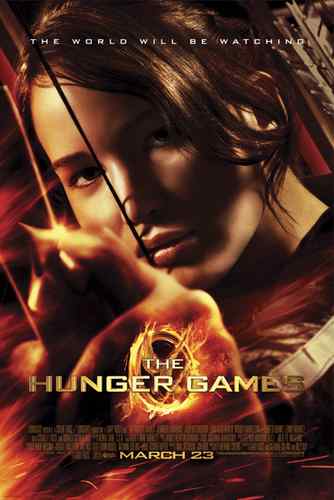
    Which is what he should have done from the beginning because the acting was great. I loved Jennifer Lawrence (Winter’s Bone) as Katniss. Loved Willow Shields as Primrose and Josh Hutcherson as Peeta. Stanley Tucci playing Ceasar Flickerman, the blue-haired talk show host, was perfect. And the story was indeed a faithful translation of the book. I’m sure a huge part of that is due to the fact that Suzanne Collins, the author of the novel, helped write the screen play.  The other writers were Gary Ross and Billy Ray. 

    They did change a few minor things like Buttercup the cat is now black and white (I’m so utterly devastated I won’t be right for years), and Primrose gives the mockingjay pin to Katniss instead of Madge. They added scenes with the President of Panem.  They cut some scenes with minor characters and some twists in the plot. For those who read the book, even though the lost and changed parts added texture to the story, I think you’ll still be very pleased. For those who haven’t read the book, I think you’ll be wowed and sobered by the end. You’ll think about the Romans and their gladiators. You’ll wonder how we can we humans can do things like this. And I think you’ll feel a great indignation take root in your breast against the villains who control the world of the story.

    So, the move is a great experience that would have been over-the-top excellent if the director hadn’t marred it with way too much of something that should be used as spice instead of the main course.  Nevertheless, I recommend it. If you like action and drama, I think you’ll love the movie and the book. And hopefully my comments above will innoculate you to the opening scenes because you know to expect them going in.

    EDIT: Matthais Stork writes about “Chaos Cinema: The Decline and Fall of Action Filmmaking“. And his response to his critics. Anne Billson of The Guardian agrees that “Action sequences should stir, not just shake“.  But here’s a fellow trying to defend chaos cinema in a way that reminds me way too much of those I met in my English degree who assumed that the highest reading was one that focused on meaning, one that assumed the story was really not a story about people to be experienced, but a clever puzzle that needed to be decoded.

    EDIT: The issue with chaos cinema is that it replaces showing with telling.

    It presents “big fight” and “exciting chase” instead of showing the big fight and exciting chase. It’s similar to voice over narration: using the soundtrack to tell us about what’s happening instead of showing it to us. But it goes beyond even that because at least the narration told us what was happening. Chaos cinema at its most extreme doesn’t do even that. It replaces clarity with confusion. And this is its biggest downfall.

    For someone to react with emotion to a situation, they must (1) understand what’s going on AND (2)believe that the situation is real. The moment you deliver confusion, you take away one of the two necessary antecedents, and prevent the audience from responding emotionally. They now can only respond intellectually, e.g. Ah, I congnitively see that we are having a fight; I have no idea what’s happening and how that affects the guy I’m rooting for, but I see we’ve inserted the “fight” concept. (For those interested in the excellent discussion of emotion and stories, you’ll want to read Jenefer Robinson’s DEEPER THAN REASON: Emotions and it’s role in literature, music, and art.)

    Take it too far and you remove the second antecedent as well because now, instead of reacting to the story, you’re thinking about the camera man. Which is what happened with me when I just about came out of my chair to shout at the screen at the beginning of HUNGER GAMES. And what happened to half a dozen others I know who couldn’t look up because it would make them dizzy, and another half dozen who did look up and got sick.

    Chaos cinema trades in the super powers of cinematic storytelling for a bunch of rocks.

    Share
  • Bartimaeus & The Time Traveler’s Guide to Medieval England

    Pure Delight

    One of the most delightful literary characters to appear in the last decade is the cheeky Bartimaeus–a five-thousand-year-old djinni (“genie”) who plays the lead role in Jonathan Stroud’s trilogy The Amulet of Samarkand, The Golem’s Eye, and Ptolemy’s Gate.

    In Stroud’s world, magicians have no magic in themselves, but they do have the lore to summon and enslave demons, who can work magic. There are demons of various levels and powers. The lowest regularly summoned and enslaved are Imps, who can be crude and like to tell outright whoppers, but are good for standing watch and carrying messages. Next come Foliots, which Bartimaeus describes as “cut price djinn.” In the middle of the great chain of beings are the Djinn themselves, whose clever intelligence Bartimaeus extols, followed by Afrits, and finally Marids, who are rarely summoned because they are too strong for any but the most powerful magicians to control. Of Marids, Bartimaeus insightfully reveals that they are “dreadfully full of themselves.”

    In the trilogy, Bartimaeus is summoned and enslaved to do the bidding of a sometimes jerkish young magician who learns to be a better person, despite himself. Of course, along the way the magician sends Bartimaeus in great peril, which he eludes with cunning, sardonic wit, and many good one-liners. I read the first book, loved it, then listened to all three read by Simon Jones, who makes these stories even better. The sad news is that I finished them. I simply wasn’t ready to let Bartimaeus go.

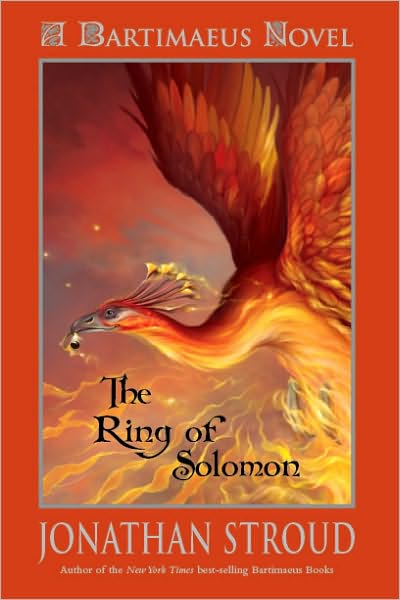
    Which is why I was so happy to find that Stroud recently released a fourth book: The Ring of Solomon, which is a stand-alone prequel to the trilogy. The family and I just finished listening to it, and it is every bit as good, if not better, than the first three.

    This story is set in biblical times where King Solomon has risen to uncontested power because of his possession of an all-powerful ring which allows him to summon hordes of powerful demons in a blink. Bartimaeus is enslaved to one of Solomon’s magicians.  A mean man, who Bartimaeus catches in a mistake and escapes, principally by devouring him. But Solomon doesn’t take kindly to that, and orders Khaba, a sinister and cruel magician, to summon him back to make an example for the other demons.

    Meanwhile, the Queen of Sheba, having denied Solomon’s marriage proposal three times, is sent an extortion threat.  Angry and frightened, she sends Asmira, a young woman and loyal captain of the guard, to Jerusalem to assassinate Solomon.

    Bartimaeus and Asmira hook up and find themselves in quite a pickle as they attempt to solve their problems. The story provides lots of humor, adventure, peril for both Bartimaeus and Asmira, and a number of surprising turnarounds. It also, in its own way, makes a comment on leadership, loyalty, and zealotry.

    You’ll find it in the middle-grade section of your bookstore, but don’t let the placement fool you into thinking it’s not for adults. Like the best stories, it offers something for everyone. It’s a perfect blend of insight and entertainment and had my whole family, oldest to youngest, spellbound for the duration as we listened to it riding in the car. This is one of my favorite books this year. And if you want to really indulge yourself, listen to the audio book read by Simon Jones.

    Travel to Medieval England

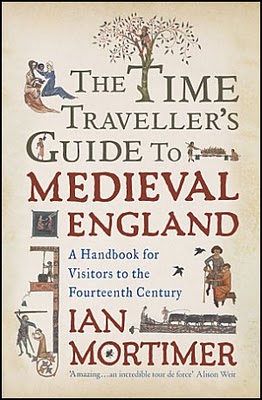
    I love learning new things about places and peoples, even if it’s a place I’ve “been” to before, which is why Ian Mortimer’s The Time Traveler’s Guide to Medieval England intrigued me. The first page convinced me to buy to book. And I’m so happy I did.

    I’ve read my fair share of interesting and well-written texts on this subject, including, among others, Life in a Medieval City and Life in a Medieval Village by Frances and Joseph Gies, Standards of Living in the later Middle Ages by Christopher Dyer, The Medieval Castle by Philip Warner, Daily Life in the Middle Ages by Paul B. Newman, and Power and Profit: The Merchant In Medieval Europe by Peter Spufford. All engrossing reads. What sets Mortimer’s book apart is that he not only approaches the topic as a travel guide that leads to you interesting sights and shares fascinating tidbits about the place, but he also helps you imagine how it would be, as a 21st century person, to actually travel there.

    For example, where would you go if you got sick? What happens if you’re robbed, where do you report the crime, and should you? Where might you get food and would it be something you’d find palatable? How will you get from place to place? Why kind of entertainment can you expect? And what can you wear without offending your hosts?

    Mortimer focuses on the fourteenth century England, since this period comes closest to the popular idea of the medieval times. He tackles the topics of the landscape, people, the Medieval character, basic essentials, what to wear, traveling, where to stay, what to eat and drink, health and hygiene, the law, and what to do. And he does it all in a chatty, clear, and informative manner, with a bit of humor thrown in for spice.

    Each page was a delight, and I found myself feeling like I was there. Furthermore, I learned a number of things that I hadn’t picked up in my previous readings. I’m tempted to quote all sorts of interesting tidbits he shares about the age, but I’ll refrain. If you are at all interested in the Middle Ages, I think you’ll love this book.

    Share
  • Good Stuff! 2 Sauces You Don’t Want to Miss

    What have the Dutch got that we ain’t got?

    Well, besides signs like this.

    geenhondenpoepopdestoep

    Which is frequently accompanied by the words “Geen Honden Poep Op De Stoep”(no dog poop on the sidewalk).

    I’ll tell you what they have—easy access to sambal oelek (SAHM-bal OO-lek). Sambal oelek is Indonesian for “dang good chili paste.”


    SambalOelek

    And why I started this post with the dog sign, I don’t know. Probably not the best lead in for food. But put that out of your mind now.

    You have avoided the dog, and are now sitting down to a delicious meal. And it’s been made even more delicious because you used sambal oelek. “Sambal” means something like “condiment” or “sauce.” There are a lot of different sambals, of course.  Oelek refers to a type of Indonesian stone mortar and pestle used to grind things. So a rough translation is ground sauce.

    And this sauce/paste is awesome. Now, I’m not a spicy foods guy. In fact, whenever we eat out, and I’m asked how spicy I want my food, I always choose mild. I hate super spicy food. But sometimes a little spice can transform a dish.

    You want to perk up your stir fry? Sambal oelek.

    You want to refresh your scrambled eggs? Sambal oelek.

    You want to try a new kind of PBJ? Sambal oelek.

    A spicy PBJ? Oh, baby.

    I was introduced to this BPJ when I was on my mission in the Netherlands. BTW, it’s not by accident I became of fan of Indonesian food while on my mission. Indonesia used to be a Dutch colony, and so there are tons of Indonesians there. For almost a year, I lived in rooms rented out of the houses of Indonesian landladies who cooked our lunches or dinners for us.

    So one day I watched one of my fellow missionaries spread sambal onto a piece of bread, then follow with peanut butter and a touch of jelly. At the time, I was grossed out. Then I tried it.

    Have you ever had satay? It’s the Thai and Indonesian version of BBQ. It usually comes with this marvelous spicy-sweet peanut butter sauce. If you have, you know you love it. And this, well, this is what you call the sambal PBJ variation of satay.

    If you like Thai, you’ll love this stuff.

    So where did I find it?

    World Market.

    And if you don’t have one close, you can get it on Amazon. Yeah.

    But, wait. There’s another mild hot sauce that you don’t want to miss.

    My two daughters just returned from their missions. One went to Kentucky. At the end of her mission, she was teamed up with one Sister Barajas from Mexico and assigned to work Spanish-speaking folks. And Sister Barajas introduced her to Cholula.

    Cholula

    Heavenly Cholula. Not too spicy. No weird taste like Tobasco.

    You want to perk up your stir fry? Cholula.

    You want to refresh your scrambled eggs? More Cholula.

    You want to try a new kind of PBJ? I don’t know. I haven’t tried that yet. But it’s good on steamed veggies. Good just about anywhere you want a fine little zing.

    Where can you find it?

    Walmart.

    How easy is that.

    If you like mild spice, the little bottle with a wooden top is going to become your friend.

    Okay, so what if you don’t like sauces?

    cafe_zupas

    How about a great soup and sandwich. Here’s the freebie recommendation. If you live close to a Cafe Zupas (Arizona, Idaho, Nevada, Utah), try to new Roasted Veggie and Quinoa soup along with a sandwich. I had the California Turkey. It was delicious. It comes with a little bit of French bread and a chocolate dipped strawberry.

    Life is good.

    Share
  • 1491, 1493, and Greek Gods

    New Revelations About America

    A common idea taught about the Indians (and, yes, it appears when you can’t simply refer to their tribe, most prefer that term to “American Indian,” especially those in South and Central America) is that they lived in such harmony with the land, that they trod so lightly upon it, that the landscape showed hardly any sign of their passing. This is, after all, what we were shown in Disney’s Pocahontas and James Cameron’s more recent Avatar, isn’t it?  

    Many of us were also brought up to believe that there really weren’t that many Indians around anyway.  They were subsistence societies. There certainly were no cities comparable to those in Europe at the time. And especially not in places like the Amazon or Boliva.

    We were taught that the Indians traveled here by walking to America across the Bering Strait land bridge that stretched from Russia to Alaska during the ice age around 10,000 BC. When they arrived, the proceeded to eat a tremendous amount of meat, killing off all the mega fauna like mammoths.

    We were taught other things. But it appears that many of these things have recently been shown to be false. Sometimes dramatically so.

    For example, the Indians transformed their landscapes, tens of thousands of square miles of it, very often through burning, but also through other ingenious ways.

    There were far more Indians in 1491 than most folks know. Recent research suggests that Central Mexico was the most densely populated place on earth at the time, “with more than twice as many people per square mile than China or India.” The total population of the Americas in 1491, by some estimates, was between 90-112 million people, meaning that MORE people lived in the Americas than in Europe.

    Finally, it appears that the Indians were here twenty to thirty thousand years ago. They were here when Europe north of Paris was still uninhabitable and mostly covered by glaciers!

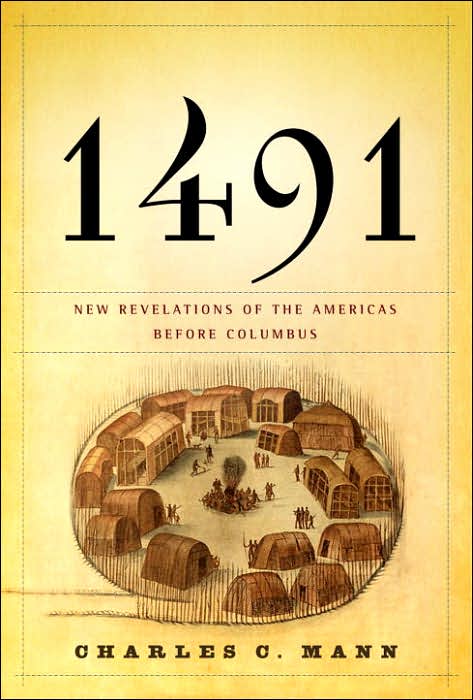
    Charles Mann describes these and a number of other fascinating findings in his book 1491: New Revelations of the Americas Before Columbus. He relays the information in such an engaging style that I found myself picking the book up at every chance. When I was finished, I wanted more.

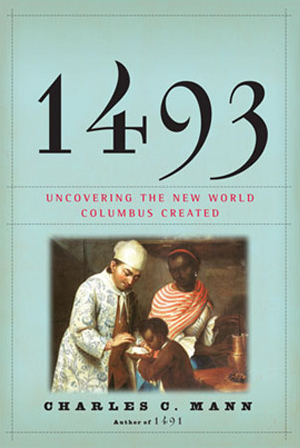
    Luckily, in 1493: Uncovering The New World Columbus Created Mann continues his history lesson. Except instead of focusing on the surprising things we’ve learned about the Indians in the last two decades, he focuses on the surprising impacts, both biological and financial, of linking the Western and Eastern hemispheres together. It’s the biggest event in the world, Mann suggests, since the dinosaurs died. Mann suggests that Columbus didn’t discover a new world–his voyage created one.

    The first part of the book examines the effect of the exchanges across the Atlantic (microbes  and tobacco). The next part focuses on the effect of the exchanges across the Pacific (silk, corn, and pirates). The third part shows the role of the exchange in the Agricultural and Industrial revolutions (potatoes, guano, and rubber).  The final part examines the consequences of the huge shift in populations caused by the Atlantic slave trade (Maroons, mixed-marriages, and freedom). As with 1492, the insights are both surprising and fascinating.

    If you like history, if you liked Guns, Germs, & Steel, then I think you will love these two books.

    EDIT: I just ran across a fabulous Doug Fabrizio Radio West interview with Charles Mann about 1493 called  The World Columbus Created.  Listen and enjoy!

    Divine Yogurt

    For years eating a serving of sweetened yogurt was like eating a box of Milk Duds (20 grams of sugar) or a Milky Way candy bar (35 grams of sugar). Yes, the sweetened yogurts have that much sugar. The only way to avoid eating literally like a kid in a candy store was to purchase plain yogurt and add some fruit or a squirt of honey. And, no, I will not consider eating yogurt sweetened with Splenda or Nutrasweet.  Artificial sweeteners make me gag. As far as I’m concerned, they are abominations that ruin the taste of everything they touch.

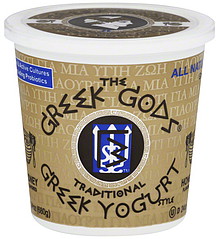
    So for many years I enjoyed my mix of plain yogurt and various add-ins. However, to my joy, I recently discovered a sweetened yogurt with only 15 grams of sugar (about as much as you find in a large banana) that tastes divine. It’s sweetened with real sugar and honey. And the mouth feel is sooooooo smooth. I’m sure this is because, unlike all the other yogurt manufacturers, these guys realized that, duh, fat actually makes things taste good and isn’t the  evil thing we’ve made it out to be. In just two bites it became my favorite sweetened yogurt. It’s called The Greek Gods Traditional Greek Yogurt. I’ve found another version—the vanilla honey—that only has 5 grams of sugar.

    Be aware that despite its name, this yogurt does NOT have the high protein content of other Greek style yogurts such as Brown Cow Greek Yogurt with 23 grams. Furthermore, not all the flavors have the low sugar content. Their blueberry and strawberry flavors, for example, have 35 grams. So check the labels first, and then treat yourself to yogurt that will have you savoring every bite.

    When I eat yogurt, it will still mostly be the plain Greek style with mixers. But when I want a special treat, you know I’ll be getting some from The Greek Gods.

    EDIT: 9/6/12 I now feel like Jerry Seinfeld in the episode when they found out the fat free frozen yogurt really wasn’t fat free. All the other yogurts I was looking at had serving sizes of 1 cup. The Greek Gods folks thought 1/2 a cup was the right size. That means that this super amazing low sugar yogurt had 30 grams of sugar per serving! It’s like eating a Snickers! I’m so disillusioned. Alas.

    Share
  • Good Stuff! News of the World and two for the Downton Abbey crowd

    I recently watched a move and two British TV mini-series that were just terrific.

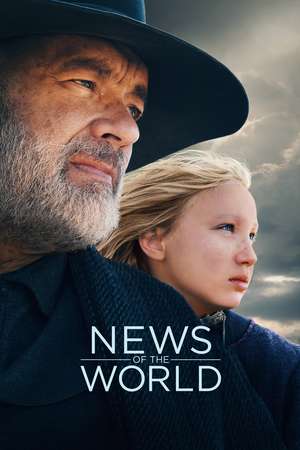
    The movie is News of the World. It’s a Western set in 1870, starring Tom Hanks as Captain Jefferson Kyle Kidd, a former Confederate officer who makes a living traveling from town to town in Texas and reading newspapers to local residents for an admission fee of ten cents.

    After departing Wichita Falls, Kidd comes across an overturned wagon on the road and finds the driver, a black freedman, had been lynched. He also finds the stray, young white girl who only speaks Kiowa (the language of an American Indian tribe), that the freedman has been transporting.

    Kidd learns from the girl’s paperwork that she is Johanna Leonberger, who had been kidnapped and by Kiowa six years earlier. She doesn’t speak English. Doesn’t want to go with Kidd. But Kidd is tasked with getting her to safety. Of course there are all sorts of perils and issues along the way that threaten that goal.

    There’s suspense, action, drama, bad guys, and some poignant moments that will move your heart strings. If you like westerns or Tom Hanks, I think you’ll love this movie. It’s the best western I’ve seen in a long time.

    ***

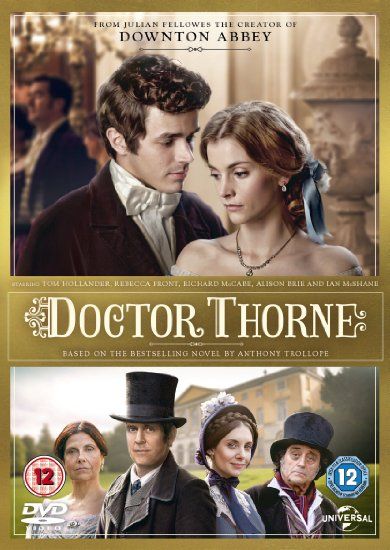
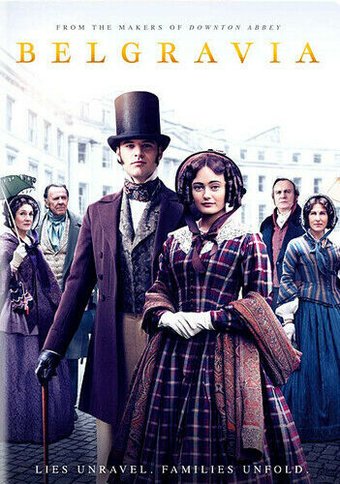
    Those of you enjoyed Downton Abbey will be very happy to hear that Julian Fellowes, who was the executive producer for that series and wrote many of the episodes, is back and has written two more historical dramas with that same type of feel.

    The first is Dr. Thorne,a three-episode miniseries based on the novel by Anthony Trollope.

    It’s set in the late 1800s. Mary Thorne and Frank Gresham, the only son and heir of the squire of Greshamsbury, fall in love. However, Frank’s parents want him to marry wealth because they have very little to leave their son. Mary is penniless and of suspicious birth. She’s not anything at all that would help Frank in the world. And so the drama begins. You get to enjoy the historical setting, the manners, and romantic suspense.

    The second is Belgravia, a six-episode miniseries set in the 1800s and based on the novel by Julian Fellowes himself.

    For you geography buffs, Belgravia is an actual place, an affluent district of London. And the story set there is about two couples. The first, the Richmonds, are part of the aristocracy. The other, the Trenchards, are from the business class.

    The Richmond’s had one child, a son. The Trenchards had one child, a daughter. The two fell in love. But the son was killed in the battle of Waterloo. And the daughter died in childbirth. However, it was an illegitimate childbirth that the Richmonds don’t know about. The Trenchards thought it best, to retain the reputation of their daughter, to have someone else raise him.

    Twenty-five years later, however, both couples still feel the hole those deaths left in their hearts. Mrs. Trenchard feels it’s time to reveal the truth to the Mrs. Richmond. But it does not go as planned. Especially not when the Richmond’s nephew wants the Richmond’s inheritance and is willing to remove all obstacles in his path.

    It’s a story full of manners, heartbreak, suspense, hope, and, well, I won’t tell you the ending. But I will say that if you like these types of historical dramas, you’ll probably love this.

    Share

4 Comments

  1. What? No, “The Dark Knight”?

    And from O Brother, Where Art Thou: Not the LIVESTOCK!!!

  2. How did I miss The Dark Knight? Correction made. But what is the LIVESTOCK? What the heck is that? And did you really love Dark Knight? be honest.

  3. I enjoyed the Dark Knight–like the music a lot. That said, I have only seen it once. I’ve thought of borrowing it from my sister a time or two, but for some reason always put it back on her shelf. But that may also be a function of I just don’t watch a movie more than once unless I absolutely love it; the only movies of the last ten years I’ve watched more than once are Serenity and the Lord of the Rings movies. Oh, and every Tinker Bell and Barbie movie there has been. But those ones aren’t necessarily by choice.

    How to Train Your Dragon . . . now there’s one I’m ready to pay to see in the theater again. Just really love that movie.

    There’s a scene in O Brother, Where Art Thou when the bi-polar bank robber aims his tommy gun at some cows they’re driving by, and shoots them. One of the other fellas gives that line. It always struck me as hilarious. Not sure why.

  4. Aaaah, I see. I don’t remember that line. But there were so many…

    Good to hear about Dragon. Please, let me enjoy it, oh ye gods of the screen

Comments are closed.