|

Dewitt Jones and Clear Vision

Not many people understand creativity. Dewitt Jones, a National Geographic photographer, does. And this video on the creative process, HOLY COW, it’s so good I had to buy it so I could watch it whenever the yearning took me.

Clear Vision

But this isn’t just for artists. The principles of creativity apply to any creative endeavor–from writing and drawing to building microchips and parenting. 

Go here. Watch the brief clip. Then watch the whole Clear Vision video. Tell me what  you think.  

Capture the zing!

Share

Similar Posts

  • Good Stuff: Books Worth Multiple Readings Part 1

    Would you like to improve your relationship with your spouse or children?

    Would you like to improve your experience with teachers, coaches, and administrators this coming year at school as you try to influence them and work with them for the benefit of your children?

    Would you like to simply have a better time with the people in your community?

    There are some books so full of practical wisdom about relationships that they deserve to be read every year or three. I want to recommend two such books to you. The first is How to Win Friends and Influence People by Dale Carnegie.
    This book has been in print for eighty years. And not only that, it has been, year after year, one of the bestselling books out there for almost each of those eighty years. For example, Amazon right now ranks it the #9 most read book. You’ll see other books come and go on that list. But books like this and Stephen R. Covey’s The Seven Habits of Highly Successful People stay.

    There are thousands of how-to books published each year on relationships in business and personal settings. Most are never seen again. But this one has stayed because people find it so useful they recommend it over and over again.

    And I wish to heck I’d not waited ten years to pick my copy up again.

    As I re-read the book this last month, I saw that if I’d been thinking about the practical guidelines Carnegie shares, I could have avoided a number of public and private arguments I’ve had over the last few years.

    I could have avoided subjecting those relationships to attack, coming to my senses, and then trying to clean up the mess, large or small.

    But even more important, I could have added a little more sweetness to my life and the life of others I encounter on my way. There are only so many days we have here on earth, and how much better it is to add additional drops of honey to them instead of vinegar.

    One of the wonderful things about his book is that Carnegie shares the wisdom in a down-to-earth way with lots of examples and stories. He shares wisdom on building relationships, being liked, winning people to your way of thinking, and how to make your requests for change known without giving offense or rousing resentment. And he does it simply and in a way that you feel like you’re sitting down with a good-humored grandfather. There are no dry, abstract parts. Just look at a sampling of the chapter titles.

    • “If You Want to Gather Honey, Don’t Kick Over the Beehive”
    • “He Who Can Do This Has the Whole World with Him. He Who Cannot Walks a Lonely Way”
    • “An Easy Way to Become a Good Conversationalist”
    • “If You Must Find Fault, This Is the Way to Begin”
    • “Give a Dog a Good Name”

    I can tell you that every time I try to approach things the way he proposes, they almost always seem to go better.

    If you have an issue you want to discuss with a school teacher, coach, or administrator this year, let me suggest you first listen to what Carnegie has to say. I can promise you you’ll get much farther. And you will probably end up enjoying the interaction.

    If you want to improve your time with your wife and kids, open this book and look for insights.

    If you want to have a better time with your co-workers or boss, I suggest reviewing the wisdom you’ll find here.

    Carnegie doesn’t possess all the wisdom there is to be had about relationships. There are many people out there with great insights. But, gee whiz, he provides a great start. If you want to add some sweetness to your life, I think you’ll find this book a great help.

    Let me illustrate this Carnegie stuff with an experience I had with one of our high school coaches two years ago. I have a vast background in basketball that includes, well, nothing. I basically know how to dribble a ball. Oh, yeah, I also played church ball two or three years in a row back in the 1980s. So, as you can see, my knowledge is vast.

    And not to toot my own horn, but this wasn’t just any church ball team. This was a team that improved the sport.

    How? You ask.

    Well, during one of those church ball years, me and the guys from my ward (“congregation” for those not familiar with the Mormon faith) thought it would be capital to make jeans and concert tee-shirts our uniforms. Back in those days concert tee-shirts looked like this.

    This meant we ran up and down the church courts with drugs, sex, and rock and roll on our chests (I’m sure that’s precisely what the brethren had in mind for the program).

    As you can see, we were way up there on the basketball ladder.

    So back to this coach. My daughter was playing on the high school team, and the team was having a consistently hard time with one type of defense. And I thought, “Self, there’s got to be a way to break that defense.” These are the big thoughts that basketball gurus like myself have.

    And so I researched and watched and talked to folks who had actually played basketball competitively (unfortunately, without concert tee shirts) and identified an offensive counter that looked like it might work.

    And I sent an email to the coach sharing my idea.

    Now, the coach could have reacted in many ways. Especially given the fact that (1) he had already thought of the idea I was proposing, (2) had already tried it in games that, yes, I had attended, and (3) probably knew just a teensy bit more about basketball and his team than I did even though my church ball team had vastly superior uniforms.

    But this coach, whether he knew it or not, was following a number of the principles found in Carnegie’s book, including the chapter titled “Let the Other Person Save Face”. This meant that instead of rolling his eyes or ridiculing or saying something like, “Brown, are you blind?”, he explained what he was doing and then expressed his appreciation. He was happy I was so invested. He thanked me.

    And here’s the thing: he meant it.

    I replied that if he ever wanted someone to suggest an idea he was already trying, to just call. I’d be happy to help.

    We laughed, but the important thing is that what could have been a wedge became a good experience for all. And, more than ever, I wanted to work with him to help my daughter in the program.

    I will give you one more example. There’s a mother who had four of her children go through my wife’s seventh and eighth grade language arts classes. Now, Nellie is a worker. She expects her students to work. She wants to have a good time, loves having great interactions with the kids, but she also wants them to improve and learn, and knows that’s going to take some work. Sometimes the assignments, despite her best efforts, aren’t clearly understood. Sometimes they’re a bit challenging. And this sometimes creates frustration.

    There are a lot of ways that parents deal with this. But this one mother took an approach that, whether she knew it or not, followed many of the principles in the book including those shared in “You Can’t Win an Argument” and “A Formula That Will Work Wonders For You”. This resulted in a fabulous working relationship. It helped the mother have less stress. Helped her kids. And helped Nellie improve her program.

    The issues the mother encountered could have become wedges, but instead, because of how she handled them, they became stepping stones. And this didn’t happen with this one individual. There are many mothers and fathers who have taken a similar approach with similar results. The principles work every time.

    I could go on with many more examples in other situations, but why listen to mine? Carnegie has a book full of them. If you want to improve your relationships or persuade others to your way of thinking, you’ll want to start by reading this book.

    The second book I want to recommend is I Don’t Have to Make Everything All Better by Gary and Joy Lundberg. But this post is full, so stay tuned, and next time I’ll explain what awaits you in its fabulous pages.

    Share
  • Cranford, Balsamic Vinaigrette, Nebo Grotto Falls

    Cranford

    For those of you who love stories like Pride and Prejudice, have I got a TV mini-series for you—the BBC’s five-part Cranford.

    The series is set in the 1840’s in England in the fictional village in North West England and focuses primarily on a handful of the town’s single middle-class ladies who are forced to deal with lace-eating cats, marriage prospects, and prank valentines, as well as death, loss, and a changing culture. There are also two stories about the male inhabitants woven in as well—one about a new doctor and another about a young boy of the lower class who has a chance for something better.

    I will confess that when I saw this arrive in the Netflix envelope, I wasn’t at all excited. The cover’s too cold–all blue with a bunch of sour-looking women. In fact, I decided not to watch it. But the laughter of my wife and daughters lured me back upstairs to the TV, where it took about seven seconds for me to revise my earlier decision. The characters are delightful. In fact, some of their lines are such a joy to listen to, we had to rewind many parts to watch them again and again.

    The series is based on three novels by Elizabeth Gaskell, a British novelist, which were published between 1849 and 1858. The sets made us feel as if we where there. For example, one of the things I noticed was the lighting. Incandescent bulbs weren’t invented until the late 1800’s and took many more years to find their way into most houses. So the directors, instead of making it feel all Hollywood, seemed to rely heavily on the light at hand, as those inhabitants would have. When a scene was in a house, it felt as if they were only using the natural light coming in the windows or the candles being burned. Of course, this is just one of the many details that made this series an excellent period piece.  

    The best news of all is that I just found out there’s more–a two-part special called Return to Cranford. I can’t wait until it comes in the mail. Don’t let the cover fool you. This is a wonderful mini-series. It has poignant and sad moments, but is also full of humor and wit.  And the ending is perfect.   

    Kroger’s Balsamic Vinaigrette Dressing

    I love balsamic vinegar and oil on bread. But I never think to make it. And I never thought of what else it might go with. That was until a relative left behind a bottle of Kroger brand Balsamic Vinaigrette Dressing.

    I just happened have a homemade bagel handy, squirted out a bit onto a plate and dipped.  Lovely.  So then I tried it on salad and even splashed some on tomato or turkey sandwiches. It’s delicious. Only 80 calories for a whole tablespoon. In fact, it was so good we bought four more bottles because I don’t want to run out.

    Kroger, of course, is a grocery conglomerate. In Utah, it owns the Smith’s, and that’s where you’ll find this delight.

    Nebo Grotto Falls

    The mountains and canyons of Utah are literally desert oases. That’s where our clear streams run, the forests grow, and the wildlife congregates. In the summer, the canyons are a refreshing source for cooling winds. All this meant that, as I grew up, “forest” and “refreshing” became intertwined in my mind. Only when we moved to Ohio did I learn that some forests can also be muggy and hot and not at all refreshing to a desert boy perishing in the humidity.

    Because I love Utah’s canyons so much, we hike and walk them all throughout the summer.  We recently went down to enjoy the Stadium of Fire and the heat (yes, I love dry heat) in Provo. However, we didn’t just hang out in the city. We made time to hike a few trails in the surrounding canyons.

    We love Rock Canyon (just above the Mormon temple in Provo), Hobble Creek Canyon (Springville), as well as Mapleton and Santaquin canyons.  However, there’s another special place that you’ll want to visit should you find yourself in the Provo area. It’s a short little hike just off of S Canyon Road (also known as Nebo Loop Road) which runs from Payson south through the Mt Nebo Wilderness area to Highway 132.

    The trail head is just a few miles into the canyon south of Payson and is marked with a simple sign that says “Grotto.” There’s a little bit of parking on the side of the road. The hike is 0.6 miles along a wooded stream.  The grotto itself is more than worth it.  You can find directions here: http://www.utah.com/thingtodo27245.htm

    Share
  • Toy Story 3, How to Train Your Dragon, Rumbi Island Grill

    Toy Story 3

    It’s interesting that two of the most enjoyable films this year are both animated. The first is Toy Story 3. We all know how awful sequels can be, and, in fact, I didn’t like Toy Story 2 all that much. But Pixar defied the sequel slump with this one.

    Andy has grown up and is going to college. From a toy’s point of view, that’s tantamount to death because Andy has to clean out his room, and what is he going to do with all that junk anyway? The last few remaining toys barely miss the garbage truck and get sent, by accident, to the local day care instead. Sounds great for a toy, right? They’ll get played with every day forever. But things are not as they seem at the day care, and our crew of toys is put on the fast track to an early death. Will they be able to escape when the other toys there are ruled mob-style by a big pink teddy bear that smells of strawberries?

    I laughed and cried and cheered in this movie. There are hilarious scenes featuring Barbie and a Ken who’s gone over to the dark side. More gut busters with Buzz Lightyear when he’s put into Spanish mode and Mr. Potato Head who has powers we never would have suspected.

    But the movie goes beyond toys and action. It’s not just a cartoon. It’s about loyalty and friendship and heroics and love and family. Because my oldest will be leaving the nest next year, the final scenes carried extra power for me. But I think they will be effective for almost anyone because Pixar does in this movie what all great art does—it reaches into themes we all share. And in that moment, we identify so strongly with the characters that their situation becomes our own.

    How to Train Your Dragon

    Dreamworks’ How to Train Your Dragon, based on the novel by Cressida Cowell, is the movie I should have seen for my birthday. Instead, we went to the mind-numbing Clash of Titans. I still cringe at some of the massive plot holes in that one, even though Medusa rocked. Which only proves, once again, that cool effects can’t save a bad story. How to Train Your Dragon, on the other hand, delivers cool monsters, but never once did the writers make the mistake of thinking that cool monsters is what the story was about.

    The movie is about a young Viking named Hiccup who wants to be accepted, wants to become one of the burly defenders of his city, like his dad, Stoik the Vast. But Hiccup isn’t brawny. However, he is resourceful. And during a dragon attack, he brings down a mysterious Night Fury dragon with his invention. However, when he finds the dragon, he can’t bring himself to kill it. Instead, Hiccup and the dragon begin a friendship. But will Hiccup be able to save the dragon that everyone wants to kill? Will the Vikings be able to see the truth about the dragons before they’re destroyed? Most importantly, will Stoik be able to accept his son?

    I enjoyed the superb animation in this story as well as the dragons. But it was the characters and humor that made this movie so good. There’s Stoik who just can’t relate to his son, but tries to bond with a very interesting use of his dead wife’s brassier, Hiccup, the son, with his dry wit, and Gobber, a peg-leg family friend who has some of the best lines in the movie.

    Go see this show. You’ll laugh, and then you’ll wish you had a dragon of your own.

    Rumbi Island Grill

    The Rumbi Island Grill is a restaurant chain that started in Salt Lake City in 2000. They serve fast, casual tropical food at incredibly good prices. My favorite is their rice bowl. It comes with your choice of sauce, rice, and meat with sautéed vegetables. In the Netherlands I learned to love Indonesian food and the spicy-sweet peanut sauce that often accompanied it, which is why I can’t get enough of the Bali Island bowl with brown rice and shrimp. You might find you love the sauce so much you ask for two servings to pour over your bowl (oh, and add a dash of the hot sauce). The food’s great, but they’ve paid attention to the Hawaiian atmosphere as well. So even though it’s fast food (you order and they bring it out to you), you feel like you’re sitting in a casual dining restaurant.

    I always look for a Rumbi when I travel down to Salt Lake City or Provo. Now I don’t have to go so far–a restaurant has opened up in Logan right across from the Wal-Mart on the south end of town! I took Nellie there recently. The staff was friendly and the food was delicious–just what I’d come to expect.

    Now all we need is a Cheesecake Factory!

    Share
  • Donald Rumsfeld, The King’s Speech, Aquatic Ancestor Apes & Talking Bacteria

    Donald Rumsfeld

    I just finished Known and Unknown, a fat memoir by Donald Rumsfeld, and enjoyed every page.  Rumsfeld served as the Secretary of Defense under George W. Bush.  But Rumsfeld’s service didn’t start there. He was a Navy pilot, an assistant to a congressman during the Eisenhower days, and, in the early 60’s, a four-term congressman from Illinois.  He held various positions in the Nixon White House in the late 60’s and early 70’s, including ambassador to NATO.  He was Chief of Staff and Secretary of Defense when Ford took over from Nixon.  Reagan tapped him to be a special envoy to both the Middle East after the Beirut bombing and to the Law of the Sea treaty discussions.  He was the president of Searle, a pharmaceutical, as well as General Instrument, the company that pioneered HDTV.  Only after all that, did George W. Bush bring him on as Secretary of Defense.

    When writing novels, I try to create characters worth knowing, either because of their interesting personality or skills or because of the events they take part in. Donald Rumsfeld is just such a character, except he’s no fiction.

    In his memoir he shares insider information on everything from Watergate to 9/11 to the war in Iraq. What emerges is a fascinating look into many of the most important events in the last forty years.  You’ll get insight into some of the issues experienced in various White House administrations and see what really was going on with waterboarding, Guantanamo, Abu Ghraib, hurricane Katrina and many other of the hot button issues in the Bush years. There are some laugh out loud moments where his understated humor shines through. There are also parts where he reveals some of his differences with others that worked with him in the various administrations, including issues with Nelson Rockerfeller, Colin Powell and Andy Card. But in everything he writes he’s fair and restrained and attempts to present the facts accurately. This is no attempt to settle scores.  Just a wonderful read.

    If you are interested in politics at all, I think you’ll enjoy this book. Moreover, I think you’ll come out a little wiser, maybe a little better person, for having spent a few hours with Donald Rumsfeld.  

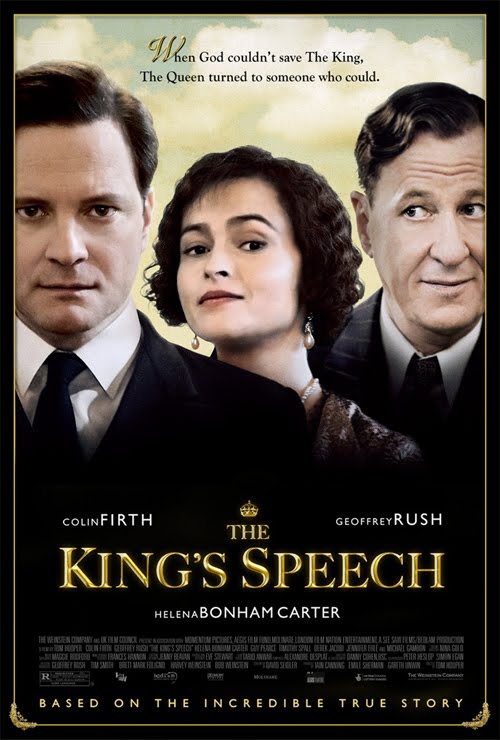
    The King’s Speech

    I do not watch many r-rated movies.  They are usually too vulgar or pornographic for my prissy tastes. However, I did my research on The King’s Speech, and having heard so many glowing reviews, Nellie and I rented it.

    It was wonderful.

    The movie tells the story of prince Albert Frederick Arthur George of Britain who did not ever expect to inherit the throne and did not want to, in part because of his stammer. Can you imagine having to be a public figure like a king and have to deal with something like that? Most of us dread the thought of public speaking. Can you imagine having to try with a stammer?

    But Albert’s lot was not to live the sheltered life. He became king when his brother abdicated the throne because of improprieties in his personal life. The day before the abdication, Albert went to London to see his mother, Queen Mary. He wrote in his diary, “When I told her what had happened, I broke down and sobbed like a child.” That is not the entry of a power-hungry man.

    He assumed the throne in 1936, when England ruled over almost a quarter of the world’s population. Three years later in 1939 WW2 broke out and Britain’s king needed to be able to address the people.

    In the movie, Colin Firth plays Price Albert. Geoffery Rush (Captain Barbossa in Pirates of the Caribbean) plays Lionel Logue, the unorthodox Australian speech therapist to whom Albert’s wife turns for help. The script is wonderful and the star-studded cast is spot on. There are moments of humor and poignancy and triumph. I was caught up in this movie as much as any I’ve seen.

    If you like English dramas, you’ll enjoy this one. And the profanity, the reason for the r-rating, is not there to depict casual vulgarity. It was part of a technique used by the therapist. In the end, you’ll overlook it and find yourself on pins and needles, rooting for this fine man.

    Aquatic Ancestor Apes & Talking Bacteria

    I’ve written about TED before. The annual TED (technology, entertainment, design) conferences, in Long Beach/Palm Springs and Edinburgh, bring together the world’s most fascinating thinkers and doers, who are challenged to give the talk of their lives (in 18 minutes or less). The folks at TED record these speeches and put them up for free on their site for the rest of us to watch. And I just watched two dandies.

    The first is by Elaine Morgan who says we evolved from aquatic apes (sigh, just when you think you’ve found grandpa Eddy hanging out in the trees, you learn he’s an imposter). Morgan is a Welsh writer for television and also the author of several books on evolutionary anthropology. In the speech she describes the reasons why it makes sense that humans had aquatic ancestors. Along the way, she illustrates key principles of science, including why science by consensus is no science at all. Her manner is so delightful and engaging I think I could listen to her for hours, preferably around the dinner table. Watch her right now. She just might convince you.

    The second speech was given by Bonnie Bassler, an American molecular biologist, who has been part of the team that discovered key insights into how bacteria talk. It appears that bacteria do not invade a host and start doing damage. No, they wait until their numbers are sufficient that they have a chance of surviving. They coordinate defense and mount attacks as a group. Who would have thought? Knowing how this works is not only interesting all by itself, but it has stunning implications for medicine and fighting infection. Bassler is a fascinating and enthusiastic presenter. Among other things, you’ll end up seeing that humans are more bacteria than you could imagine. Watch her.

    Share