|

Jolie, Salt, & trading suspsense for surprise
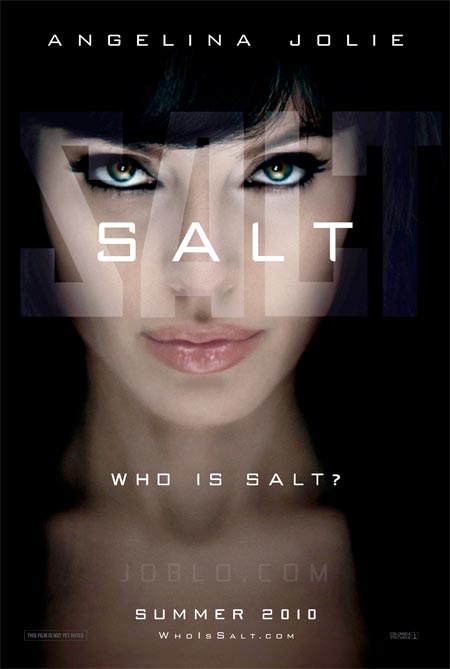
Last week I went and saw Salt. Wow. The movie started with a bang and was off to the races with lots of great action. Unlike many action films where the characters perform stunts which are simply too hokey for me to buy into, I found myself believing in all but two of Salt’s. So I was wowed most of the time instead of thinking about whether they were using wires or what or that it was all so wrong and geeze don’t these guys have consultants? They weren’t as stunning as the opening of Casino Royale, but what is? 

But it wasn’t just action. The premise and acting were all great as well (yes, I recant, I slammed Jolie a while back as an actress cast only for her face value; and while you know that’s one of the reasons why she was here, she still was convincing in her role). Furthermore, the story had a lot of great reversals and reveals. But this was also its ultimate downfall.

When I got to the ending, I did not feel a climax release. No catharsis. No afterglow. It just ended and left me feeling empty. It’s an awful feeling. Totally unsatisfactory. Such a maddening cut off. 

But why? It was all so good up to that point.

*** SPOILERS ***

As I was talking it over with Nellie I believe I indentified the answer: in their effort to be surprising, the director and writers removed everything that would have built suspense. So instead of getting a Sixth Sense ending where the surprise adds to the climax and gives it a wonderful texture, we got a slap of surpise and then nothing.

For me to feel relief, triumph, and the desire to stand up and cheer–all those great climax emotions–I have to be worried about a character. Stressed, thinking they’re going to fail. They need to fight courageously against insurmountable odds and actually come to a point where it appears all is lost. Where I groan inside. All this creates massive pent up worry and anxiety for them. And at that point, the character snatches victory from the jaws of defeat.

Boom! The climax floods me and it’s delight, relief, cheer, joy.

It’s just like a football game where we bite our nails until the very end. Where our non-ranked team is playing the #3 team in the nation. Maybe we jump ahead in the second quarter, but in the third we fall behind. We make some great plays but can’t catch up. And when we do put points on the board, the other team immediately responds. There are three seconds left. We’ve stalled at the twenty yard line. We have one more play. From the moment it starts it appears to be broken, our QB is going down, and then . . . he passes to a running back who has made some space. Who is standing open in the end zone! Yeeeeeaaaaaaahhhhhh!

In order to feel a release a climax, something has to build up. The thing that builds is worry, fret, desperate hope. This is what we mean when we talk about suspense. We know the team’s goal, see their predicament, see the overwhelming odds. See them about to lose it all. The dread of defeat and what will be lost rises.

But in Salt the director and writers went for the effect of surprise instead of suspense and triumph. The moment Salt starts in on the Russian president I thought she was the bad guy. Yes, there was the bit about the spider that had me wondering. Yes, I knew she felt anguish about her husband being killed (that smart little reveal in her expression). I knew all of that. But the movie kept me busy thinking she was the bad guy up until almost the very end. Everything in the film lead me to believe this. Not because I didn’t get it. I got it precisely. It’s exactly what the director wanted. It was the setup for the big surprise/reversal at the end.

But when they went for surprise by not letting the audience know what Salt was really up to, the immediately removed the possibility of suspense. So I didn’t feel any suspense at her infiltrating the old group of spies. No relief at her killing them–that was just her revenge. No suspsense when she went to the White House. Nothing when she chased the president down the elevator shaft. The whole time I was thinking, crap, they really did indoctrinate her. She’s bad.

More importantly, there was no rooting, no worry building to release proportions.

Not until the very end do we realize what she’s been trying to do. Oh, the role reversal with her and Ted Winter (btw, like Liev Schreiber who plays the part) was all a big surprise, as it was designed to be. But the surprise faded and there was . . . nothing to replace it. That’s how surprise works. It’s a relatively short effect. 

Yes, she kills Winter. Yes, he was a threat at the end with his scissors, but I didn’t care that much. I hadn’t been whipped into a fever pitch. Not like I was in Gladiator with the emperor and the lead in the coliseum. There was no pressurized worry ready to burst. There wasn’t any because we hadn’t had any time for it to build and because by that time nothing for Salt was really at stake. The one meaningful thing she stood to loose–her relationship with her husband–was taken away from us in an earlier scene when he was shot dead. So what was at stake? A big old nuclear war. Well, who cares about that? Nobody. It’s too generalized. We cared about Salt and her husband.

The result was that the director and writers traded climax for surprise. Alas.

So here’s my conclusion. Surprise is a relatively easy effect to create. You simply have something unexpected but logical occur. Relief, triumph, climax needs something much different. And surprise can be a part of it. But in our effort to build surprise we must not remove the conditions necessary for please-dear-mother suspense. Suspense requires we root for and worry about a character for a significant period, our unease growing until it’s drawn taut, straining. All the time something significant has to be at stake. Something we can sympathize with. Something personal to the person we care about. Only then can we feel the climactic release. Only then will we stand up and cheer in holy-crap-no-way relief and delight.

Share

Similar Posts

  • Donald Rumsfeld, The King’s Speech, Aquatic Ancestor Apes & Talking Bacteria

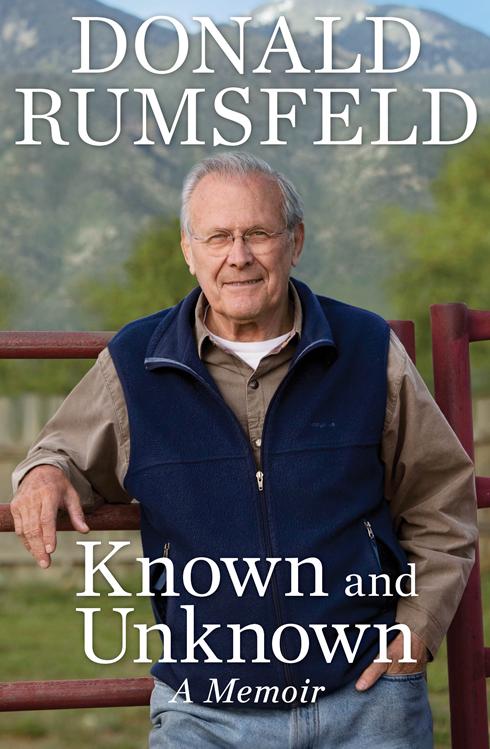
    Donald Rumsfeld

    I just finished Known and Unknown, a fat memoir by Donald Rumsfeld, and enjoyed every page.  Rumsfeld served as the Secretary of Defense under George W. Bush.  But Rumsfeld’s service didn’t start there. He was a Navy pilot, an assistant to a congressman during the Eisenhower days, and, in the early 60’s, a four-term congressman from Illinois.  He held various positions in the Nixon White House in the late 60’s and early 70’s, including ambassador to NATO.  He was Chief of Staff and Secretary of Defense when Ford took over from Nixon.  Reagan tapped him to be a special envoy to both the Middle East after the Beirut bombing and to the Law of the Sea treaty discussions.  He was the president of Searle, a pharmaceutical, as well as General Instrument, the company that pioneered HDTV.  Only after all that, did George W. Bush bring him on as Secretary of Defense.

    When writing novels, I try to create characters worth knowing, either because of their interesting personality or skills or because of the events they take part in. Donald Rumsfeld is just such a character, except he’s no fiction.

    In his memoir he shares insider information on everything from Watergate to 9/11 to the war in Iraq. What emerges is a fascinating look into many of the most important events in the last forty years.  You’ll get insight into some of the issues experienced in various White House administrations and see what really was going on with waterboarding, Guantanamo, Abu Ghraib, hurricane Katrina and many other of the hot button issues in the Bush years. There are some laugh out loud moments where his understated humor shines through. There are also parts where he reveals some of his differences with others that worked with him in the various administrations, including issues with Nelson Rockerfeller, Colin Powell and Andy Card. But in everything he writes he’s fair and restrained and attempts to present the facts accurately. This is no attempt to settle scores.  Just a wonderful read.

    If you are interested in politics at all, I think you’ll enjoy this book. Moreover, I think you’ll come out a little wiser, maybe a little better person, for having spent a few hours with Donald Rumsfeld.  

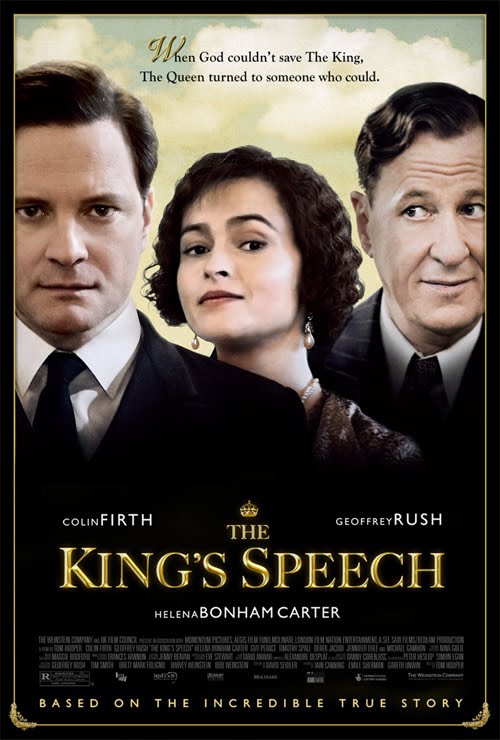
    The King’s Speech

    I do not watch many r-rated movies.  They are usually too vulgar or pornographic for my prissy tastes. However, I did my research on The King’s Speech, and having heard so many glowing reviews, Nellie and I rented it.

    It was wonderful.

    The movie tells the story of prince Albert Frederick Arthur George of Britain who did not ever expect to inherit the throne and did not want to, in part because of his stammer. Can you imagine having to be a public figure like a king and have to deal with something like that? Most of us dread the thought of public speaking. Can you imagine having to try with a stammer?

    But Albert’s lot was not to live the sheltered life. He became king when his brother abdicated the throne because of improprieties in his personal life. The day before the abdication, Albert went to London to see his mother, Queen Mary. He wrote in his diary, “When I told her what had happened, I broke down and sobbed like a child.” That is not the entry of a power-hungry man.

    He assumed the throne in 1936, when England ruled over almost a quarter of the world’s population. Three years later in 1939 WW2 broke out and Britain’s king needed to be able to address the people.

    In the movie, Colin Firth plays Price Albert. Geoffery Rush (Captain Barbossa in Pirates of the Caribbean) plays Lionel Logue, the unorthodox Australian speech therapist to whom Albert’s wife turns for help. The script is wonderful and the star-studded cast is spot on. There are moments of humor and poignancy and triumph. I was caught up in this movie as much as any I’ve seen.

    If you like English dramas, you’ll enjoy this one. And the profanity, the reason for the r-rating, is not there to depict casual vulgarity. It was part of a technique used by the therapist. In the end, you’ll overlook it and find yourself on pins and needles, rooting for this fine man.

    Aquatic Ancestor Apes & Talking Bacteria

    I’ve written about TED before. The annual TED (technology, entertainment, design) conferences, in Long Beach/Palm Springs and Edinburgh, bring together the world’s most fascinating thinkers and doers, who are challenged to give the talk of their lives (in 18 minutes or less). The folks at TED record these speeches and put them up for free on their site for the rest of us to watch. And I just watched two dandies.

    The first is by Elaine Morgan who says we evolved from aquatic apes (sigh, just when you think you’ve found grandpa Eddy hanging out in the trees, you learn he’s an imposter). Morgan is a Welsh writer for television and also the author of several books on evolutionary anthropology. In the speech she describes the reasons why it makes sense that humans had aquatic ancestors. Along the way, she illustrates key principles of science, including why science by consensus is no science at all. Her manner is so delightful and engaging I think I could listen to her for hours, preferably around the dinner table. Watch her right now. She just might convince you.

    The second speech was given by Bonnie Bassler, an American molecular biologist, who has been part of the team that discovered key insights into how bacteria talk. It appears that bacteria do not invade a host and start doing damage. No, they wait until their numbers are sufficient that they have a chance of surviving. They coordinate defense and mount attacks as a group. Who would have thought? Knowing how this works is not only interesting all by itself, but it has stunning implications for medicine and fighting infection. Bassler is a fascinating and enthusiastic presenter. Among other things, you’ll end up seeing that humans are more bacteria than you could imagine. Watch her.

    Share
  • Exposition, Character Description, Curiosity vs Suspense

    Another great podcast from the writing excuses team. This time with Patrick Rothfuss (I did love his book) on writing exposition.

    http://www.writingexcuses.com/2008/09/15/writing-excuses-episodes-32-talking-exposition-with-patrick-rothfuss/

    One comment that stood out was Brandon’s conscious choice to leave some explaining to chapter 6 of Mistborn. Not only did it make the beginning more accessible, but it actually created a sense of mystery about Kelsier. I wanted to know more.

    Although, I would caution new writers that when Rothfuss talks about withholding, he’s talking about setting. He’s not talking about keeping the story from the reader. You can’t build suspense if you hide what’s going on, the dangers, etc. You can build a bit of curiosity, but that only holds the reader’s attention for a short time. Give information for suspense. Withhold for curiosity. They are two different things.

    To get a sense of proportion on exposition or broad brushing a character, I recommend Bernard Cornwell’s writing advice: http://www.bernardcornwell.net/chapters/writingadvice.htm

    Take a book you love, get a colored pencil or crayon, then begin reading. When you find a passage of descrition/setting, draw a line along the side. After 30 or so pages of doing this you’ll begin to see how much setting the author puts in and how he goes about doing it. Do this with a few stories you love and you’ll begin to see patterns.

    You can do the same thing with character. In fact, I just finished FEAR NOTHING by Dean Koontz. Loved how he did his characters. So I’ve got a used copy and a copy of VELOCITY and am marking them up. I’ve gotten a number of very interesting insights.

    Share
  • |

    How to Write a Story that Rocks

    Folks, a huge thanks goes to Stephen Nelson for putting all this together. You may kiss his hand when you see him.

    This is a recording of “How to Write a Story that Rocks,” a two-hour seminar Larry Correia and I just put on at the annual BYU’s Life, The Universe, & Everything symposium. I think we had 130-140 people attend. This symposium is focused on writing fiction. And while the panels and presentations do include things specific to the science fiction, horror, and fantasy genres (both adult and young adult), a lot of time is also spent on story writing fundamentals that apply to ALL genres. So when I developed this workshop, I made sure I took the fundamental approach.

    The two-hour seminar has been broken down into 12 segments. To switch between the segments:

    • Hover your mouse pointer over the YouTube below
    • Click the forward and back arrows that appear on the right and left sides to move to the next or previous segment, OR 
    • Scroll through all 12 segments and select the one you want using the playlist control at the bottom

    If you prefer, you can watch all 12 on the How to Write a Story that Rocks YouTube playlist page.

    I’ve found whenever I develop any presentation or training that it takes a few iterations and revisions before it’s the best it can be. This is the first iteration of this seminar. And so below this video I’ve provided additional comments on each segment explaining key concepts, principles, and techniques that we might have failed to discuss or convey as clearly as we’d hoped. Enjoy!

    Handout

    How to Write a Story That Rocks – Handout

    Segment 1

    It’s documented–right-wing gun nut Larry Correia sang “Kumbaya.” What’s next? The hugging of small trees? Oh, Larry, the disilluion. The disillusion.

    The reason why I had Larry sing was not for his mellifluous performance, but to demonstrate the difference in reactions between him and our happy volunteer (“Country Road” by John Denver–this really was a love fest). The volunteer balked because he hadn’t taken any thought to know what to sing before he was commanded to do so. On the other hand, Larry and I had spoken before the seminar. So Larry had something to sing BEFORE he sang it. It’s a simple demonstration, but it illustrates a principle a lot of new writers forget. Writing is a performance. It helps to know what it is you’re going to perform before you perform it.

    It’s one thing for you to tell yourself to write. It’s much easier to tell yourself to write the scene where the rancher finds out one of his illegal ranch hands has been kidnapped.

    Now this doesn’t mean that you have to know everything. Or that you can’t write exploratory drafts to figure out what it is you want to write. But it does illustrate that whatever techniques you use, you’ll be a lot more effective in your writing when you have something to say first.

    But what do you develop? What are the things that bring the story to life? How do you go about getting those things to say? That’s precisely what I wanted to address in the seminar. In the segments that follow, I try to:

    1. Explain what I’ve found are the most important things to develop, the things that define the essence of story, that make the story come alive in the writer’s mind–the things that really matter
    2. Demonstrate techniques to develop those things so you have something to say

    Segment 2

    I think this segment went fairly well. What rocks will different from person to person, even though there will often be a huge overlap between people. So it’s important for authors to seek to develop the kinds of stories that rouse their passion. Watch this interview with best seller Debbie Macomber to see what I mean. So I can’t tell you what to write about. Or if whath you think rocks will resonate with a large number of people. However, what I can do is share the techniques I use that have been most productive in helping me develop initial ideas into something that has much more power.

    You can use the techniques to juice up any of the four parts of story. However, I will say that I find that the most productive, the most important parts, are character and problem. Plot and setting are important. I love them and work to juice them up. But when I get a good character and problem, that’s when the writing seems to flow the easiest.

    And no, I don’t list theme as a part of story. Everyone talks about theme, but when I read what they have to say or press them for examples, it seems that it always either boils down to (1) a story element or topic that’s repeated, (2) a story problem/issue stated in an abstract manner, or (3) some moral situation. Les Miserables is about the “theme” of mercy versus justice. But saying justice versus mercy is just an abstraction of the story problem and dilemmas the story deals with. So, no theme. 

    Segment 3

    Loved this bit about scenes from David Mamet: http://www.slashfilm.com/2010/03/23/a-letter-from-david-mamet-to-the-writers-of-the-unit/ 

    Segment 4

    I’ll be adding my comments to the rest of these segments over the next few days.

    Segment 5

    Segment 6

    Segment 7

    Segment 8

    Segment 9

    Segment 10

    Segment 11

    Segment 12

    Dan Wells on Story Structure

    Check it out: Dan Wells on How to Build a Story (story structure). I find Dan’s “start with the ending” technique helpful as well as thinking about a worst fears realized moment. Watch the videos and see if there isn’t something there that can help you develop your story idea.

    You can get the PowerPoint of How to Build a Story on Dan’s site.

    If you find this approach useful, you might want to check out what novelist Larry Brooks has written about the same material on StoryFix.com.

    Share
  • Indie Thoughts: Resources for Indie Writers

    About this time last year I got the last of my rights back to the Dark God properties. I thought it would take twenty or thirty hours to figure out the whole indie publishing thing. And then the awesome John Brown story machine would kick in gear.

    Reality promptly woke me up and slapped me around a bit. This last year has been quite the learning curve. Here’s what I’ve had to pick up:

    • Designing book covers
    • Finding artists
    • Working with artists in a way that actually works
    • Copy editing
    • Formatting book interiors
    • Fonts, fonts, fonts
    • Using ISBNs
    • Using InDesign to create files for both POD books and epubs
    • eBook structure
    • Editing ebooks (okay, just get Calibre ebook editor right now. We luvs it, Precious)
    • Validating ebooks (http://validator.idpf.org/)
    • Converting epubs to Amazon’s mobi format
    • Uploading ebooks to the various ebook retailers: Amazon, NookPress, Kobo, iTunes (I upload via Draft2Digital), Smashwords
    • The pros and cons of CreateSpace vs Lightning Source
    • Using CreateSpace to publish POD books
    • Registering books with the US Copyright Office
    • Writing better book descriptions
    • Using keywords and categories on Amazon
    • Setting prices in the indie market
    • Creating an email list (I love MailChimp. They make me happy every time I go to their site)
    • Advertising and promoting as an indie

    One of the things I love about this business is that there is always more to learn. But I’m happy to be over that curve. For folks just starting out, let me share some of the resources I found super helpful with a number of the things listed above.

    Posts by a mega indie-seller Russell Blake to give you the right perspective about indie publishing. I’ve read a lot of posts the last few years about being an indie author. These are the best I’ve come across.

    Online courses to help you on the publishing side.

    • Designing Book Covers and Designing Book Interiors with Dean Wesley Smith (look for “Online Workshops”). I don’t agree with Dean on all his ideas about pricing and promotion, but these two courses helped a great deal.
    • InDesign CS6 to EPUB, Kindle, and iPad with Anne-Marie Concepción at Lynda.com. Awesome.

    The most practical and clear-headed books about indie promotion I’ve read. For other clear-headed advice, see the Russell Blake posts above.

    The most helpful book on copyright.

    The most helpful book on copy editing as well as info to put into front and back matter.

    Helpful threads on Kindle boards

    Other great resources

    Good luck!

    Share
  • | |

    One of Orson Card’s best essays

    Scott Card recently wrote “Marriage needs lots of humor.” It’s an awful title for one of the best articles of his that I’ve ever read.

    I’m not going to spoil it for you. But I will say that I’ve found that it’s the small things that seem to make the biggest difference in relationships. And this is one of those small things that packs a HUGE punch. But not until this article did I realize it.

    And for you writers who are wanting insights on what makes characters interesting and sympathetic–there’s a little treasure trove here for you as well.

    Enjoy!

    Share
  • Rewriting the On Writing page

    I’m a teacher in the private sector. I’ve developed and taught courses on everything from accounting to how to small talk. Heck, my official title is education program manager (that sounds really official and, like, powerful, doesn’t it).

    For a long time, I’ve wanted to deliver a 12 week course on writing. But I ain’t got not time for 12 weeks and all that would require. However, that doesn’t mean I can’t turn my education brain on and get my stuff on writing into a format that will actually help.

    So that’s what I’m going to do.

    You want to learn how to write?

    I’ll share what I can. The first revision is up. In it, you should learn what the crap you’re doing. Enjoy.

    When I finish more, I’ll be sure to notify you with a post.

    Share