|

American Idol Story Elements

I don’t have time to watch, but I found myself getting sucked in this week. And here’s something I realized as I watched Simon, Paula, Randy, Ryan, & the contenstants–the show is using story principles.

Idol

Duh, I know: of course, it is. But it does it so well. It reminds me of a research article I read about sportscasters and audience enjoyment of sports competitions. They found that if they could inject story elements–suspense, rivalry, etc.–people enjoyed the games more. Next time you watch a college football game, notice what the color commentators say to make it a contest. It’s not just about reporting what #45 did out in the flat.

Anyway, back to Idol. Look at these elements.

What draws us to characters?

Beauty, threats, quirkiness, larger-than-life situation or skills, source of viewer wish-fulfillment.

Humm, let’s look at the cast of performers. Don’t we see all of that? How many of us wouldn’t love to be able to sing like they do? Have a shot at becoming a recording artist? Or just goggle at someone getting this chance?

What factors generate suspense?

Threats to characters we like or marvelous opportunities for them, turns in the situation, a prolonged resolution.

Humm. Our sympathy is engaged because these folks are normal folks, many of them underdogs. Many viewers identify strongly with one or two because of the contestant’s various social groups and because, heck, the auditions are for people like you and me. It could be us up there in front of the world! You’ve got the threat of peformance fright, but also the overriding opportunity to make a dream real. You’ve got a wonderful career, if not millions of dollars, on the line. You’ve got Simon who is honest, but also plays his part. Isn’t that the moment of most suspense with each performance? You’ve even got a little subplot going on between Simon and Seacrest. There’s no villain here. But there are plenty of obstacles. Weekly threats.

What does Idol give us that Survivor never could?

It’s all REAL, even if the producers let their selection of performers be influenced by things other than vocal talent. And because it’s real, we believe it. Which means we can more easily feel sympathy and root for the various performers.

It’s a simple but brilliant concept. And I just wasted 4 hours watching it. And I’m likely to do it again.

Zing, Baby. Zing!

Share

Similar Posts

  • 2015 LTUE presentation materials

    I promised the audiences that I would post the PowerPoints and handouts to the website. Well, here they are. For those wondering, we do not have any recordings of the events.

    How to Build an Action Plot

    How to build an action plot

    How to Build an Action Plot Handout

    How to Build A Romance Subplot

    How to build a romance plot

    How to Build a Romance Plot Handout

    How to build a romance plot lecture notes

    The Power of the Story Setup

    Using Story Setup

    Share
  • Hey, I live in Washington and I’m an Idiot

    I’m sick of politicians who are more worried about votes, Republican or Democrat, than actually doing what needs to be done. Sick of these fools buying votes with Federal programs for everything from farm subsidies to gelatin wrestling.

    When someone runs for office, does an idiot switch get flipped? “Vote for me, I’ll spend like there’s no tomorrow. Cause look, honey, I got this magical piece of Uncle Sam plastic. It doesn’t cost anything. And when the bill comes, we’ll just tax all the rich folks to pay for it, and send government agents to put them in jail if they don’t. Or we’ll print money and make it all worth nothing. Or, better yet, we’ll just use the funds we set aside for social security.  It would be dumb to just save and invest that money we’re taking from people for their retirements. I mean, it’s just sitting there earning interest. Besides, we’ll set it all up like Amway with downlines and circles, and the rising generation will just be taxed out of their brains to pay for it.  And that will be someone else’s problem anyway. See the pretty money, honey. See it? Vote for me.”

    They’re like that candy man in Chitty Chitty Bang Bang with the nose that should have scared the soup out of those kids. Of course, American voters aren’t kids hiding in Benny Hill’s basement. Maybe the switch is getting flipped on some of us as well.

    Here’s what we need. It’s not rocket science.

    1. A balanced budget ammendment to prevent our super smart and caring representatives in Washington from continually spending what they don’t have.

    2. Real spending reductions. What does that mean? Dave Ramsey just shared some thoughts on what’s it’s going to take to get the nation out of debt. Go have a listen.

    Edit 6/7/11: Besides, Paul Ryan, here’s Tim Pawlenty with some ideas on how to accomplish it.  I’m looking forward to seeing the ideas Romney and the other presidential candidates put forth.

    Share
  • Generating Story 7: Creative Q&A

    Filling up your mind with wonderful things by hunting zing is a writer’s bread and butter.  But guess what?  You can’t develop a killer story by waiting to stumble across great story ideas.  So while you must deploy your drag net and hunt with a purpose, you must also learn how to develop your own zing.  And I haven’t found anything more productive for helping me do that than the process of creative question and answer.

    If you refer back to the Story Development Framework download, you’ll see that Creative Q&A is one of the key tools used to develop every part of story.  So how does it work?

    Do you remember my first and second posts where I talked about Ed Smiley and the folks at NASA who helped save Apollo 13?  They used this technique.  Here’s how it went down.

    They had a problem: the astronauts were running out of oxygen because the CO2 scrubbers weren’t working in the module they were in.

    The problem led to an objective: figure out a way to get the CO2 scrubbers working.

    The objective led to a question: what are some options for getting those CO2 scrubbers working?

    Then they began to generate possible answers.  Two days later they had one that would work.  Ed and his team saved the three astronauts aboard.

    This same thing happens over and over again in any situation that requires some new solution.  Do you remember all those redneck solutions I shared in the first post?  They were practicing creative Q&A.

    You know all those accountants generating various ways to do your taxes?  They’re practicing creative Q&A.  Mine did that this year; he figured out one legal way do our taxes that saved us some money, then figured out another legal way to do our taxes that saved us more than $1,500.  I’m so glad he looked for that second, actually third, right answer.

    You see all those mothers and fathers generating ways to make ends meet?  They’re practicing creative Q&A.

    It happens all the time.  It’s a key tool when trying to develop a story, and I’ve found a couple of guidelines when using this technique that seem to help quite a bit:

    1. Clearly identify the objective.
    2. Turn the objective into a “what” question.  For example, “I need a more interesting character” becomes “What are some things that would make my character more interesting?”  Likewise, “This scene is stupid, nobody would do that” becomes  “What would make this scene more believable?” When I’m stuck with plot, “My character isn’t facing any real problems” becomes “What are some killer troubles the character can run into?”
    3. Generate a list of good, dumb, and wacky options.  It seems the more ideas I generate, the better chance I have to come up with something really good, especially if I cherish the dumb and wacky ones by writing them down.
    4. Don’t hesitate to steal other ideas I’ve seen and modify them to make them my own.  Or to go search for how others dealt with issue.
    5. Try to generate more than one good or right answer.


    I use creative Q&A to help me develop my key objectives all the time.  I state a question and use the principles to guide me in the options I generate.  For example, in the thriller I’m writing I started with a character, an ex-con trying to go straight.  I asked myself “What are some threats to his happiness?” and “What could go wrong?”  I started to generate options.  Some were mildly interesting; some were dumb.  One was that “some old associates come back, old prison buddies, and try to drag him back into the life he’s trying to escape.”  That one tingled my zing meter, and I started to generate more information about that.  “What would they drag him back into?”  “What kinds of crimes?”  “Who are they?” (Okay, not every objective can be turned into a “what” question.)

    There are also ad hoc objectives, i.e. objectives that arise only in a particular situation that I can’t plan for.  I can use this with them as well.  For example, in Servant of a Dark God I wanted a henchman to have a cool weapon, something that I hadn’t seen before.  My question for that was “what are some cool new weapons for this henchman?”  I listed out some that were stupid and had been done before like “a big knife” and others that were wacky like “a chain.”  I generated a big old list.  As I generated options I suddenly generated the idea of “spikes.”  And then “spikes that were alive.”  That tickled my zing meter, and I followed that path and came up with the Ravelers, which I think are just awesome.

    For more information about creative Q&A, I recommend you read Creative Problem Solving: An Introduction, Fourth Edition by Donald Treffinger.  It’s one of the most practical books on creativity around.

    While you’re waiting for that to come in the mail or to get it from your library, I want you to watch something.  Dewitt Jones, a photographer for National Geographic, uses creative Q&A.  He made an incredible twenty-minute video explaining the principles of generating options.  Please watch Everyday Creativity .  It says “Preview,” but it’s the whole wonderful video.  Then go here and watch that same last bit plus some material not on the other one.  These are two versions of the same presentation.  Everyday Creativity is the commercial version used for training.  Clear Vision is the personal use one that includes some extra material.  Let me recommend you purchase the Clear Vision version. You will not regret the $45 dollars.  I promise you.

    All of what he says applies to generating answers for our writing.

    GO WATCH IT NOW.

    Note what he says about these principles about generating options:

    1. Try different perspectives for stating a problem.
    2. Follow your zing, what you care about; figure out what’s exciting you about the thing.
    3. Look for more than one right answer.  Believe there IS more than one right answer.
    4. Don’t be afraid to make mistakes—you often must make them to get the good stuff!
    5. Try breaking a pattern, do something different.
    6. Train your technique.
    7. Put yourself in the place of most potential.
    8. Be patient, persevere.
    9. Relax and goof around.

    One last thought on creative Q&A.  There are certain questions that seem to be more productive than others.  I find that those focused on the key objectives are usually very productive for me.  So give those a try, but there are others.  Furthermore, what might work for me might not work so well for you.  Don’t get stuck on using a specific question because someone else does.  The goal is not to use a specific tool, which in this case is a specific question.  The goal is to make the different parts of the story come to life in your mind.  Whatever question helps YOU do that best is the one to use.

    Because creative Q&A is such a powerful tool, I want to make sure you see plenty of examples of authors using it in their writing.  To start, read chapter 2 of Orson Card’s Characters & Viewpoint and see what questions he finds useful and an example of  how he uses them.  Then come back here.  I’ve asked some other published authors to share how they use questions to help them generate story.  I’m going to start with Ian Creasey whose short fiction has appeared in magazines such as Asimov’s, Realms of Fantasy and Weird Tales, and has been reprinted in several Year’s Best SF anthologies.  He’s written a wonderful essay that I’ll use for the next post in the series.

    For more in this series, see How to Get and Develop Story Ideas

    Share
  • 2 Great Cook’s Country Recipes

    Yeah, I know–I should be writing. But I promised you two wonderful recipes from my experiments with the Cook’s Country June/July 2011 issue. There were a whole bunch of other recipes we tried that worked out well, but these were our favorites and good enough to get me to subscribe.

    By the way, I found these recipes were not only tasty, but they were great to do on a date (in this case, with my daughters). Why just eat when you can enjoy the time together as well?  Besides, two people working together make these recipes a breeze.

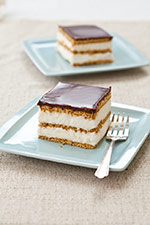
    Chocolate Eclair Cake

    Chocolate, vanilla pudding, whipped cream, and graham crackers–baby, is this good!  I found I liked the cake best with HALF of the pudding and whip cream mixture. You’ll see the half amounts in parentheses. That way I got a taste of the pudding, graham, and ganache in every bite. The directions make it look like there’s a lot of steps, but they all go quickly.

    INGREDIENTS

    Pudding Mixture

    • 1 ¼ C sugar (1/2 + 1/8 C)
    • 6 T cornstarch (3 T)
    • 1 tsp salt (1/2 tsp)
    • 5 C whole milk (2.5 C)
    • 4 T unsalted butter cut into chunks (2 T)
    • 5 tsp vanilla (2.5 tsp)

     Whip Cream Mixture

    • 2 T water (1 T)
    • 1 ¼  tsp unflavored gelatin (1/2 + 1/8 tsp)
    • 2 C heavy cream (1 + ¼ +1/8 C)

    Graham Crackers

    14 ounces of Nabisco Honey Maid graham crackers

    Ganache topping

    • ¾ C  heavy cream
    • 1 C semisweet chocolate chips
    • 5 T light corn syrup

     DIRECTIONS

     Make Pudding

    1. Combine sugar, cornstarch, and salt in large saucepan
    2. Wisk milk into sugar mixture and bring to boil over medium-high heat, scraping bottom with rubber spatula.
    3. Immediately reduce heat to medium-low and continue to cook and scrape until thick bubbles appear on surface, about 4-6 minutes
    4. Take off heat and wisk in butter and vanilla.
    5. Transfer hot pudding to large bowl and place plastic wrap directly on surface.
    6. Refrigerate for about 2 hours until cool.

     Make Whip Cream Mixture

    1. Stir water and gelatin together and let sit for 5 minutes.
    2. Microwave until gelatin dissolves and mixture gets bubbly around the edges, 15-30 seconds
    3. Whip 2 cups of cream on medium-low for about 1 minute, until foamy.
    4. Increase to high and whip for 2 minutes, until soft peaks form
    5. Add gelatin mixture and whip for 1 minute, until stiff peaks form

     Combine Pudding and Whip Cream Mixture

    1. Wisk one-third of whipped cream into chilled pudding.
    2. Fold remaining whipped cream into pudding.

     Layer Pudding Whip Cream Mixture with Graham Crackers

    1. Line bottom of 13 x 9 inch baking dish with a layer of graham crackers. Break and cut crackers if you have to.
    2. Top the bottom layer of crackers with ½ of the pudding whip cream mixture
    3. Place another layer of crackers over the pudding.
    4. Top that layer with the rest of the pudding whip cream mixture
    5. Place one last layer of crackers over the second layer of pudding whip cream mixture

     Make Ganache and Pour Over

    1. Microwave chocolate chips, ¾ C cream, and corn syrup in bowl 1-2 minutes, stirring occasionally.
    2. Cool for 10 minutes to room temperature
    3. Cover top layer of graham crackers with glaze
    4. Refrigerate cake for 6 – 24 hours. Then serve.


    Dill Potato Salad

    A potato salad with a perfect dill zing. Everybody in the Brown household loved this. Super wife especially loved it because she does not like eggs. Please note that there’s fresh dill used in all three parts. So when you shop, make sure you get enough for all three.

     INGREDIENTS

     Dill Vinegar

    • ¼ C white wine vinegar
    • 1 T minced fresh dill

     Boiling Mixture

    • 1 disposable coffee filter
    • ½ C coarsely chopped dill leaves and stems
    • 3 pounds Yukon Gold potatoes (don’t get any other type), peeled and cut into ¾ inch pieces
    • 1 T salt

     Dressing

    • ½ C mayonnaise
    • ¼ C sour cream
    • 1 T Dijon mustard
    • ½ tsp salt
    • ¼ tsp pepper
    • 2 T minced fresh dill
    • 3 scallions (green onions) green parts only sliced thin

     DIRECTIONS

     Make Dill Vinegar

    1. Combine vinegar and 1 T minced dill in bowl and microwave until steaming, 30-60 seconds
    2. Cool at room temperature for 15-20 minutes

     Boil Potatoes

    1. Place chopped dill inside disposable coffee filter and time with thread.
    2. Put potatoes, dill sachet, and salt into large pot with enough water to cover the potatoes by 1 inch.
    3. Bring to boil on high heat then reduce heat to medium and simmer until potatoes are tender, 10 minutes

     Cool and Soak Potatoes

    1. Drain potatoes thoroughly and throw away dill sachet
    2. Drizzle 2 T of the dill vinegar over hot potatoes and gently toss until evenly coated
    3. Refrigerate until cooled, 30 minutes. This allows the Yukon potatoes to suck up the dill vinegar.

     Make dressing and Combine with Potatoes

    1. Wisk mayonnaise, sour cream, remaining dill vinegar, mustard, salt, and pepper until smooth
    2. Add dressing to cooled potatoes
    3. Stir in scallions and 2 T minced dill.
    4. Cover and refrigerate to let flavors meld, 30 minutes.
    5. Serve with salt and pepper to taste.

     EDIT 9/7: Somehow I deleted four of the dressing ingredients when I posted. They’ve been added back 🙂

    Share
  • Good Stuff! 4 Delightful Movies

    If you’ve been looking for some good movies to watch, I have four here that I think you’ll enjoy.
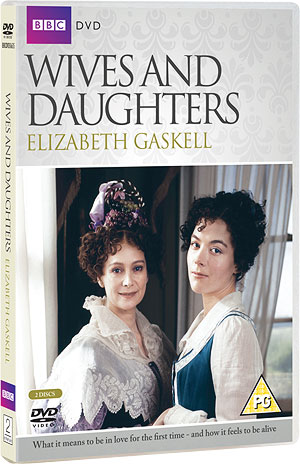
    Wives And Daughters CoverThe first is for fans of Downtown Abbey and Pride and Prejudice. It’s a four-episode, BBC TV miniseries called Wives and Daughters, and is based on the novel by Elizabeth Gaskell, who was a popular English novelist in the mid-1800s. Gaskell is the one who also brought us the delightful Cranford and North and South, which all my daughters love.

    Wives and Daughters is about Molly Gibson, the daughter of a country doctor, who suddenly has to deal with a new stepmother and a stepsister who becomes Molly’s good friend but brings a lot of baggage with her, mostly concerning men. It’s also about a man whom Molly falls in love with, but who only thinks of her as a sister.

    But it’s about even more than that. It’s about the enjoyable relationship Molly has with her father and the local Squire and his family, and the issues the Squire has with his own sons. It’s also about how the women in the town and the local gentry deal with Molly.

    Gaskell has a knack for showing both the good and bad about people and still making you love them. She also writes a fabulous ending. I don’t want to spoil anything, but the ending, for me, was just brilliant in so many ways. If you enjoy period romances, you’re going to love this.

    *

    The-Hundred-Foot-JourneyThe next movie is called The Hundred Foot Journey and is a humorous story about a contemporary Indian family down on its luck. The father leads them to England, but things don’t work out. So he takes them on a trip through France looking for the place to set up their restaurant. Except it’s a bit of a hare-brained idea because France doesn’t do Indian food.

    The family’s vehicle breaks down outside a little town, and the father decides this is the place where they will try to build their life again. The problem is the spot he’s chosen is right across the street, the titular hundred feet, from a posh French restaurant. And the battle between the two restaurant owners begins.

    You’ll laugh and fall in love with the characters in this story. And when it’s over, you’ll immediately want to go out and get some Indian food. It’s a great film.

    *

    The_Good_Lie_posterAnother wonderful fish-out-of-water story is The Good Lie, which is about three of The Lost Boys of Sudan, refugees who are resettled in America.

    In 1983-2005 there was a civil war in Sudan, which lies on the southern border of Egypt. During the war, government troops and rebels of the south systematically attacked villages in southern Sudan, killing 2.5 million and displacing a million others. The Lost Boys and The Lost Girls were children who escaped the attacks and traveled by foot in search of safe refuge. For many that was over 1,000 miles across three countries to refugee camps in Ethiopia and Kenya. Over half died along their epic journey, due to starvation, dehydration, sickness and disease and attack by wild animals and enemy soldiers.

    In 2001, as part of a program established by the United States Government and the United Nations, approximately 3,800 Lost Boys were given the chance to leave the camps and resettle in the United States. This film is inspired by their experience. In fact, a few of the actors are actually some of those who were resettled.

    The beginning of the film is about their journey. The rest is about what happens when they come to America. There are many poignant moments in this film, but there is also a good dose of humor and goodness. It’s a wonderful film to watch with the family.

    *

    McFarland,_USA_posterMy last, but certainly not least, recommendation is McFarland, USA, made by Disney and starring Kevin Costner. My family and I simply loved this movie. We loved it so much some of us ended up watching it three times because we couldn’t coordinate our schedules and so watched it again with the family members who weren’t there the first time.

    It’s based, with a little literary license, on a true story about Jim White, a teacher who re-starts a cross country running program in 1980 in McFarland, a small agricultural town at the south end of California’s Central Valley. It’s another fish-out-of-water film with this White coach being introduced to Hispanic culture.

    Now I know what you’re thinking—oh, jeez, another sports film. And, yes, it has many of the same story beats that you find in many sports stories. But this one seemed to make them all fresh again. All I can say is that we loved it. In fact, immediately after the third viewing, two of my daughters were so juiced about running, they went out on a run of their own.

    If you like sports at all, you’ll like this one. But even if you don’t love sports, you’ll like it because it’s not really about sports. It’s about the human spirit and seeing value in the things everyone else overlooks.

    Share
  • Ninja Master Prep, Bountiful Baskets, and Feeling Good

    Kung Fu Your Food

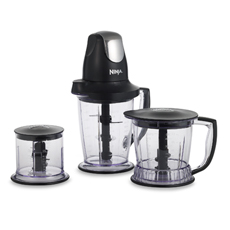
    It sounds like something off of a bad infomercial—black-clad ninjas, blenders, and, if you order now, a zirconium ruby that can withstand the pressure of a full elephant’s weight! But we didn’t get the Ninja Master Prep Professional—a six-cup pitcher and three two-cup prep bowls–from an infomercial. Santa’s up to his old tricks again. The dirty dog one-upped me and gave it to my wife for Christmas.

    Most blenders and food-processors use a single blade at the bottom of the container. When you make thicker smoothies, this means you have to stir and poke the chunks to the bottom. When you chop vegetables, it means that sometimes the stuff on the bottom turns to soup while larger chunks whirl around on top. And when it’s time to serve or remove the contents, you have to deal with the blades.

    But the Ninja Master Prep turns all that on its head. It uses multiple blades–one each at the bottom, middle, and top. You hold the motor in your hand. This configuration processes the food quickly and evenly. For example, we had 48 ounces of thick, perfectly-blended smoothies made from frozen strawberries in thirty seconds. And serving was a breeze because we simply set the motor aside, pulled the blade column out, and were left with a normal pitcher.   

    If you’re looking for a new blender or food processor, give the Ninja Master Prep Professional a try. You can find it at Sam’s Club, Target, Kohl’s, and many places online, including Amazon.com.

    Now, Grasshopper. You must learn respect–Hee-yah!

    Easy Eating

    One of the best changes we can make in our diets is to include more fruits and vegetables. I’ve found one of the easiest ways to do this is to order a weekly boxful from Bountiful Baskets (BountifulBaskets.org), a co-op which has hundreds of pickup locations in ten western states.

    The produce is cheap. And because you don’t choose what you’re going to get, you’re introduced to vegetables and fruits you might not otherwise try. Some might think that leads to eating less produce, but we’ve found it’s actually the reverse.

    One of the biggest headaches of cooking is planning the meals. In fact, I think having a menu is most of the battle. Bountiful Baskets eliminates a good portion of that planning and required shopping. Instead of trying to figure out what to cook, we know what we have to cook. It’s right there in the basket. All we need to do is build a number of the week’s meals around the produce. A few clicks on allrecipes.com and we’re ready to go.

    If you want to eat a more healthy and delicious diet, give Bountiful Baskets a go.  

    Be Happy

    It’s the holiday season and a joyous time for many people. But it’s also the worst time of year for others. We recently had another suicide in our little county. Some people might prefer we sweep such things under the rug. But it breaks my heart. Especially since such tragedy is avoidable. And I’m not talking about removing the problem with medication, although sometimes people do need to treat chemical imbalances. For many, much, if not all, of their depression is fueled by specific types of thoughts.

    These thoughts are not wacky, crazy things. In fact, they may seem innocuous or normal to some. But they are deadly all the same. Identifying and shining the truth on these thoughts takes some work, but the liberation is worth every ounce of effort.

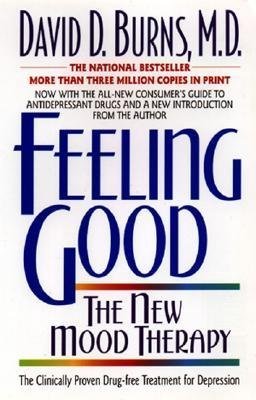
    It’s unrealistic to expect to be full of joy every minute of our lives. But it’s also not necessary, nor is it normal, to live a life dominated by feelings of worthlessness, hopelessness, pain, and self-loathing. If you or someone you know seems to feel these things on a regular basis, please, get a copy of Feeling Good by David Burns. Just read the first hundred pages and perform the techniques found there. And if you need some help being consistent, find a counselor to help you.

    Along with the jolts and pains, life provides an abundance of joys. Don’t let yourself, or those close to you, miss them.

    Share

2 Comments

  1. I’ve started to wonder of late how REAl it is. Do you think Simon could and Ryan could really come up with those metaphors on the fly like that?

  2. Hummm. I hadn’t thought about that. Geez, Mette, now I’ll be scrutinizing that as well (grin)

    The one thing that saves it for me; however, is that unlike SURVIVOR it’s about real stuff. A real career is on the line. There’s real audience voting even if people can vote multiple times. It’s not a dumb made-up contest.

Comments are closed.