Ninja Master Prep, Bountiful Baskets, and Feeling Good

Kung Fu Your Food

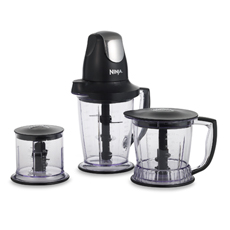
It sounds like something off of a bad infomercial—black-clad ninjas, blenders, and, if you order now, a zirconium ruby that can withstand the pressure of a full elephant’s weight! But we didn’t get the Ninja Master Prep Professional—a six-cup pitcher and three two-cup prep bowls–from an infomercial. Santa’s up to his old tricks again. The dirty dog one-upped me and gave it to my wife for Christmas.

Most blenders and food-processors use a single blade at the bottom of the container. When you make thicker smoothies, this means you have to stir and poke the chunks to the bottom. When you chop vegetables, it means that sometimes the stuff on the bottom turns to soup while larger chunks whirl around on top. And when it’s time to serve or remove the contents, you have to deal with the blades.

But the Ninja Master Prep turns all that on its head. It uses multiple blades–one each at the bottom, middle, and top. You hold the motor in your hand. This configuration processes the food quickly and evenly. For example, we had 48 ounces of thick, perfectly-blended smoothies made from frozen strawberries in thirty seconds. And serving was a breeze because we simply set the motor aside, pulled the blade column out, and were left with a normal pitcher.   

If you’re looking for a new blender or food processor, give the Ninja Master Prep Professional a try. You can find it at Sam’s Club, Target, Kohl’s, and many places online, including Amazon.com.

Now, Grasshopper. You must learn respect–Hee-yah!

Easy Eating

One of the best changes we can make in our diets is to include more fruits and vegetables. I’ve found one of the easiest ways to do this is to order a weekly boxful from Bountiful Baskets (BountifulBaskets.org), a co-op which has hundreds of pickup locations in ten western states.

The produce is cheap. And because you don’t choose what you’re going to get, you’re introduced to vegetables and fruits you might not otherwise try. Some might think that leads to eating less produce, but we’ve found it’s actually the reverse.

One of the biggest headaches of cooking is planning the meals. In fact, I think having a menu is most of the battle. Bountiful Baskets eliminates a good portion of that planning and required shopping. Instead of trying to figure out what to cook, we know what we have to cook. It’s right there in the basket. All we need to do is build a number of the week’s meals around the produce. A few clicks on allrecipes.com and we’re ready to go.

If you want to eat a more healthy and delicious diet, give Bountiful Baskets a go.  

Be Happy

It’s the holiday season and a joyous time for many people. But it’s also the worst time of year for others. We recently had another suicide in our little county. Some people might prefer we sweep such things under the rug. But it breaks my heart. Especially since such tragedy is avoidable. And I’m not talking about removing the problem with medication, although sometimes people do need to treat chemical imbalances. For many, much, if not all, of their depression is fueled by specific types of thoughts.

These thoughts are not wacky, crazy things. In fact, they may seem innocuous or normal to some. But they are deadly all the same. Identifying and shining the truth on these thoughts takes some work, but the liberation is worth every ounce of effort.

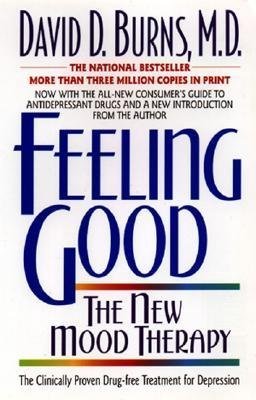
It’s unrealistic to expect to be full of joy every minute of our lives. But it’s also not necessary, nor is it normal, to live a life dominated by feelings of worthlessness, hopelessness, pain, and self-loathing. If you or someone you know seems to feel these things on a regular basis, please, get a copy of Feeling Good by David Burns. Just read the first hundred pages and perform the techniques found there. And if you need some help being consistent, find a counselor to help you.

Along with the jolts and pains, life provides an abundance of joys. Don’t let yourself, or those close to you, miss them.

Share

Similar Posts

  • Good Stuff! Those looking to seal their asphalt in Ogden, Logan, and Bear Lake areas

    AndersenAsphaltFolks with asphalt driveways and parking areas, I have something you’ll be interested in.

    I have a nice long driveway, about 5,500 square feet of asphalt. We hadn’t touched it since 2005 when it was installed. But asphalt doesn’t last forever. If it’s not periodically sealed, it weathers and cracks, and then the water gets in and undermines the whole structure, and soon you get pot holes and alligator cracks and the thing becomes a mess. Last year some small cracks began to show, and we knew we couldn’t put it off any longer.

    I called a number of places for quotes and availability. And the person who gave me the best quote and quickest turnaround was Caden Andersen of Andersen Asphalt. The name will sound familiar because that’s the Caden that grew up in Rich County. He and his brother took over his grandfather’s long-standing business.

    And I am happy to report that they did an excellent job at an excellent price. They came and cleaned the whole thing with wire brooms (although I power washed it before they came), filled the cracks with hot tar, then sealed everything with two coats. Their service was friendly and prompt. And they went the extra mile. There were some large cracks in the city’s road right before you turn off into our driveway. They filled those cracks with tar as well for no extra charge. The result is a beautiful driveway that’s going to last for quite some time.

    They have two locations right now, one in Cokeville, Wyoming and the second in South Ogden, Utah. If you live within an hour or two of either of those places and need to seal some asphalt, I highly recommend you give Andersen Asphalt a call.

    Share
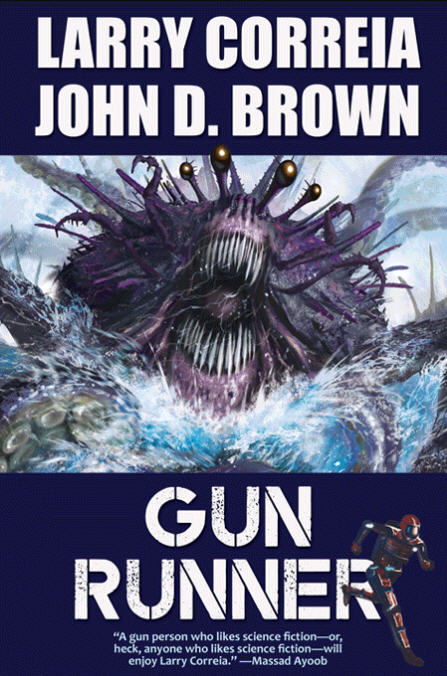
  • Gun Runner is out today!

    Gun Runner on Amazon! Order here!
    Autographed copies available from Uncle Hugo’s here!
    Podcast discussion with the authors here!

    The is 100% Brown and Correia, which means it’s action-packed, full of fun characters, and none of that navel gazing business.

    It’s about a guy named Jackson Rook who works on a crew that smuggles weapons. They’re active in a righteous cause, helping the oppressed peoples of various planets stand up for themselves against the whoresons with the money and power.

    But then Jackson learns something about the current job that turns his gut. And he begins to think they might just be working for the wrong team.

    Will he be able to set things right when just about everybody and everything on the godforsaken planet called Swindle wants to kill him or turn him back into the monster he once was?

    Read to find out.

    If you like action and science fiction, I think you’re going to love this book.

    Share
  • Sing-Off, Reliable Contractors, Cruise & Valkyrie

    The Best Vocal Show Currently Running

    We are now two weeks into the third season of NBC’s The Sing-Off, and it’s going to be just as good as last year’s or better.  It airs for the next few weeks on Mondays from 7-9 p.m. Mountain. But you can catch the performances on the site http://www.nbc.com/sing-off/ if you miss them.

    According to the site, “The show scours the country in search of the best a cappella groups, ranging in various sizes and ages. This year, the competition has expanded to the 16 very best groups, who will perform popular songs in weekly competitions, which will culminate with a live finale revealing the grand-prize winner. The groups will be competing for America’s vote and a chance to walk away with the ultimate prize – a Sony Music recording contract and $200,000.”

    There are a lot of great groups this year, including Vocal Point from BYU and the University of Rochester Yellow Jackets, who both nailed their second songs this week–“The Way You Look Tonight” by Fred Astaire and “Can’t Take My Eyes Off You” by Frankie Valli. These guys were sooooo good. Delilah, an all-girl group, wowed with their week one performance of “Grenade” by Bruno Marks. A number of the other 16 groups are spectacular, but there’s not enough time to list all the wonderful performances.

    This is the best vocal show on TV right now. The judges and host, who are all successful singers themselves, give interesting feedback, even if they sprinkle it with too many mild expletives for my taste. Tune in and enjoy.

    3 Reliable Men

    For almost a year now I’ve been trying to find somebody, ANYBODY, to come and fix some issues with my house. We had a leak in the roof, a leak through a window, and an exterior French door that was never hung right and gaped open at the top, especially when we had a strong north wind blowing at us in the winter. Lovely Wife had to take to stuffing the gap with a towel.

    So I called a number of local construction guys. I called folks in Evanston, Wyoming and Logan, Utah, and it boggled my mind how many promised to drop by but never showed up, or came by but never followed through. I was happy to pay good money. But contractor after contractor after contractor shined me.

    Then I ran onto three guys who made promises they could keep, showed up, followed through, did an excellent job, and did it quickly.

    Ryan Hoth of Hoth Boys Construction in Logan, UT, recommended to me by Burton Lumber in Logan, does framing, concrete, and general contracting. Ryan personally fixed the troublesome French door with a very creative and simple solution that I wouldn’t have come up with in a million years. Hoth’s number is 435-994-0169.

    Todd Bohman of Valley Trades in Logan, UT, which does siding and windows, came up and assessed, then sent one of his crew to fix our window/siding issue. The crewman not only worked expertly and quickly, but he fixed a piece of siding another contractor had broken without being prompted. Bohman’s number is 435-752-7642.

    Keith Homer of Homer Roofing in Logan, UT, not only assessed our issue, but steered us towards a fix that cut the amount of money we would have to pay him. He gave up revenue we were willing to pay because it was the right thing to do. Homer’s number is 435-787-0910.

    If I ever need any construction, siding, window, or roofing services, you can be sure I’ll be calling these guys first. 

    Valkyrie

    I love a number of movies Tom Cruise stars in. The stories are usually strong, and Cruise is a great actor. Nellie and I recently watched and enjoyed Knight and Day, a hilarious romantic action comedy with Cameron Diaz. We enjoyed him in Collateral, a thriller where a cab driver gets shanghaied to drive for a contract killer, and fights to save himself and the last victim. I loved him in Minority Report, Last Samurai, and Far & Away. In Valkyrie, Cruise stars as Claus von Stauffenberg, a colonel in the German army who attempts to assassinate Hitler.

    The movie is based on a true story, and dramatizes just one of many attempts those who disagreed with Hitler made to remove the despot from power. It shows just how close they came. The story is full of suspense and, ultimately, heartache.

    This is a movie to make you think. It’s also a great introduction to the history of WW2 Germany that’s often missed. According to a number of top WW2 historians, the film is accurate.

    If you’re in the mood for a suspenseful serious film, I think you’ll love this one. And when you’re done, you’ll ponder on the meaning of courage.

    Share
  • The Story Behind “Amazing Grace”

    John Newton writes the following about himself.

    “My father was a very sensible, and a moral man, as the world rates morality; but neither he, nor my step-mother, was under the impressions of religion: I was, therefore, much left to myself, to mingle with idle and wicked boys; and soon learnt their ways.”

    And learn them he did, and not just from wicked boys.  This is the John Newton who worked aboard a “respectable” slave ship and then became the captain of his own.  But this is also the John Newton who later wrote “Amazing Grace,” probably the most famous of all folk hymns.

    That song has been sung in countless arrangements and to different tunes. I love the version by The Five Blind Boys of Alabama sung to the music of “The House of the Rising Sun”.  Soulful.  Incredible.

    And the fabulous mash up of those two same songs performed by Jerry Lawson And The Talk Of The Town on NBC’s The Sing-Off season 2.

    And the more traditional version featured on the movie Amazing Grace sung by Chris Tomlin and titled “Amazing Grace (my chains are gone)”.

    There are simply too many wonderful versions to list.

    But what makes this song so wonderful is not only the words, but also the story behind the song.  This song isn’t a song of theology—it’s John Newton’s own heartfelt expression of gratitude to God, who helped him turn from his profane and wicked life and eventually fight against the ills he practiced.  Later in life, Newton became a supporter and inspiration to William Wilberforce who lead the fight to pass the British Slave Trade Act in 1807, which abolished the slave trade in that empire.

    Although the experience of Newton’s turning point is dramatic, and referred to in the song, his change didn’t occur over night.  In fact, it took him a number of years to fully come to himself.   It was 34 years AFTER he retired from slavery, which was years AFTER he turned toward a new life, that he published his forceful pamphlet Thoughts Upon the Slave Trade, in which he describes the horrific conditions of the slave ships and apologizes for a confession that “comes too late” and “will always be a subject of humiliating reflection to me, that I was once an active instrument in a business at which my heart now shudders.”

    My heart soars when seeing someone turn a life around (maybe because I’m in need of a turnaround).  It’s such a wonderful and instructive tale of hope.

    Recently, Asbury University Media Com students and an Asbury Art Dept student under the direction of Professor Greg Bandy produced a short 14 minute documentary called Amazing Grace: The Story Behind the Song on the fascinating story of how John Newton wrote the most famous hymn in the world . . . and helped bring about one of the most powerful social justice movements in the history of Western Civilization.  It’s a great tale.  Watch it below.

    Amazing Grace: The Story Behind the Song from Gregory Bandy on Vimeo.

    Share
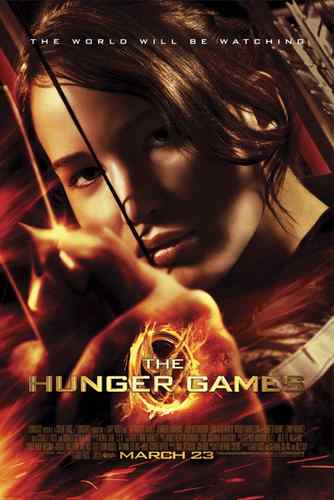
  • Hunger Games the Movie – Excellent, but marred . . .

    So is the movie as good as so many are saying?

    I liked the book a lot. You can see my review here: http://johndbrown.com/2010/09/amano-jasons-deli-and-the-hunger-games/

    Yes, but is the movie as good as the book?

    Let’s start with the beginning of the movie. During the first 10 or 15 minutes I was so annoyed and angry that I almost rose up out of my seat to shout “Stop it! Stop it! Stop it!” at the screen.

    Was this because the movie wasn’t faithful to the book?

    Because the actors sucked?

    Because the popcorn triggered a terrible case of restless leg syndrome?

    No, no, and no. 

    Then, why, John? Why?

    Because the director, Gary Ross, who wrote the wonderful Seabiscuit and Big, just couldn’t trust the material, the story, to work its magic. No, he thought that it would be a really good idea to MAKE ME SICK by overexaggerating and overusing HANDHELD CAMERA MOVEMENT. You know, the idea that if you confuse the viewer and make them uncomfortable, that will help them FEEL the wrongness, the stress, and the fear of the situation.

    A common technique for doing this is the tilted shot. Tilt the shot just a little and viewers subconsciously get the idea that something is wrong. You don’t notice it. The movie plays on, but you do feel that something is wrong, that trouble is brewing somewhere or someone is lying. A similar technique is used in action scenes. To help the viewer feel the “speed” of the action, they give us quick cuts. But the traditional tilted shot and quick cuts preserve understanding. They’re more of an unconscious effect. You still see the movie unfold and understand it. 

    However, some directors in the last few years, maybe with Spielberg’s use of this in the beginning of Saving Private Ryan (is there a movie history buff out there who can confirm?), decided that if a little was good, good golly, ten times that would be a LOT better.  So instead of realizing that action sequences like the one in the beginning of Casino Royale or the fights in Inception, ones you can easily follow, are the kinds audiences want, they figure they need to push the shots and cuts until audiences can’t make heads or tails of what’s happening.

    Instead of giving the audience tremendous thrills and suspense, they give them confusion.

    Wow, that’s a good trade off.

    And now, Gary Ross, who seems to have inexplicably bought into this, decides that what he needs to do is not only deliver confusion but nausea and annoyance as well.

    Stop, people. Stop. PLEASE! A little spice enhances a dish and takes it to the next level. But when you dump a cupful of thyme on my plate, all you do is make me want to gag.

    I’m not the only one who noticed. My 14 year old and my 19 year old noticed it as well and were bugged by it. It got so bad I told myself if it didn’t stop, I was going to walk out and ask for my money back.  Luckily, Ross toned his nonsense down and finally let the actors and story take center stage. 

    Which is what he should have done from the beginning because the acting was great. I loved Jennifer Lawrence (Winter’s Bone) as Katniss. Loved Willow Shields as Primrose and Josh Hutcherson as Peeta. Stanley Tucci playing Ceasar Flickerman, the blue-haired talk show host, was perfect. And the story was indeed a faithful translation of the book. I’m sure a huge part of that is due to the fact that Suzanne Collins, the author of the novel, helped write the screen play.  The other writers were Gary Ross and Billy Ray. 

    They did change a few minor things like Buttercup the cat is now black and white (I’m so utterly devastated I won’t be right for years), and Primrose gives the mockingjay pin to Katniss instead of Madge. They added scenes with the President of Panem.  They cut some scenes with minor characters and some twists in the plot. For those who read the book, even though the lost and changed parts added texture to the story, I think you’ll still be very pleased. For those who haven’t read the book, I think you’ll be wowed and sobered by the end. You’ll think about the Romans and their gladiators. You’ll wonder how we can we humans can do things like this. And I think you’ll feel a great indignation take root in your breast against the villains who control the world of the story.

    So, the move is a great experience that would have been over-the-top excellent if the director hadn’t marred it with way too much of something that should be used as spice instead of the main course.  Nevertheless, I recommend it. If you like action and drama, I think you’ll love the movie and the book. And hopefully my comments above will innoculate you to the opening scenes because you know to expect them going in.

    EDIT: Matthais Stork writes about “Chaos Cinema: The Decline and Fall of Action Filmmaking“. And his response to his critics. Anne Billson of The Guardian agrees that “Action sequences should stir, not just shake“.  But here’s a fellow trying to defend chaos cinema in a way that reminds me way too much of those I met in my English degree who assumed that the highest reading was one that focused on meaning, one that assumed the story was really not a story about people to be experienced, but a clever puzzle that needed to be decoded.

    EDIT: The issue with chaos cinema is that it replaces showing with telling.

    It presents “big fight” and “exciting chase” instead of showing the big fight and exciting chase. It’s similar to voice over narration: using the soundtrack to tell us about what’s happening instead of showing it to us. But it goes beyond even that because at least the narration told us what was happening. Chaos cinema at its most extreme doesn’t do even that. It replaces clarity with confusion. And this is its biggest downfall.

    For someone to react with emotion to a situation, they must (1) understand what’s going on AND (2)believe that the situation is real. The moment you deliver confusion, you take away one of the two necessary antecedents, and prevent the audience from responding emotionally. They now can only respond intellectually, e.g. Ah, I congnitively see that we are having a fight; I have no idea what’s happening and how that affects the guy I’m rooting for, but I see we’ve inserted the “fight” concept. (For those interested in the excellent discussion of emotion and stories, you’ll want to read Jenefer Robinson’s DEEPER THAN REASON: Emotions and it’s role in literature, music, and art.)

    Take it too far and you remove the second antecedent as well because now, instead of reacting to the story, you’re thinking about the camera man. Which is what happened with me when I just about came out of my chair to shout at the screen at the beginning of HUNGER GAMES. And what happened to half a dozen others I know who couldn’t look up because it would make them dizzy, and another half dozen who did look up and got sick.

    Chaos cinema trades in the super powers of cinematic storytelling for a bunch of rocks.

    Share
  • YA Books Ratings and Publisher Arrogance (shh, it’s about the $$)

    I’m a bit irked.

    I wish I could talk to a publisher about this. I should talk to a Barnes & Noble corporate book buyer. But since I don’t have one handy, I’ll discuss it with you folks. Maybe I’m up in the night? You tell me.

    Here’s the deal. My wife is 7th and 8th grade language arts teacher. My wife is also a mom who loves books and wants her girls to read until their eyes bong out of their heads.

    So we go to find books for her students and for our girls and, jeez, wouldn’t you know it, but this YA book features masturbation and that one features lots of fine words like F*** and S*** and this one is about giving the guys a blow job (tee, hee, hee).

    Yeah, I know about YA saves. This isn’t about banning this or that content.

    It’s about the fact that I’m a parent. And, geez, I have a certain way I want to raise my kids. My wife is a teacher who needs to provide books to her students that aren’t going to piss some parent off. Why? Because she’s providing a service to that parent. Because she wants to keep her job. And because it’s her job to help parents improve their kid’s reading ability not tell them how to raise a family.

    So why in the Sam Hill can’t publishers rate their books?

    There are millions of their customers who would find this useful.

    Well, here’s one answer I was given by a writer friend I respect.

    Everyone in the industry is really pushing back against the idea of a rating system. Let me see if I can explain why.

    A friend of mine, ZZ [name removed], is the nicest person in the world. Volunteered for years at a prison to help people learn to express themselves by writing. Her older brother was a closeted homosexual for years, contracted AIDS, died too young. She wrote a book recently called [title removed], about a family in the restaurant business (as hers was) who have a “late” baby and the problems it causes for the older teens, one of whom is coming out as gay. It’s a soft, quite, sad, moving book. And it would be part of the “rating” system and banned from a bunch of schools. ZZ also wrote a book a few years ago about teenage pregnancy. Also beautifully written, kind, compassionate. But it would get tagged by schools as “inappropriate.” ZZ feels strongly that there are kids out there who need books, kids in your wife’s school system who need to be told they are not alone.

    I don’t see any way to have a system that distinguishes between books that I see as anchors to kids who need help and those books which I see as genuinely offensive and encouraging bad teen behavior by glorifying it. The only system I know is me recommending the best books I see. And I’d much rather see librarians and school teachers go through books on a case by case basis, deciding whether they personally think it fits the values in their community than to have someone else not attached to the community do the same thing.

    Uh huh.

    If this is accurate, it shows the industry’s stunning lack of creativity AND arrogance. Because if publishers really were listening to parents, they could come up with a solution.

    No, really. They could.

    Why, there’s already one out there. They don’t even have to expend even one creative molecule to find it.  

    Look at the Kids-in-Mind rating system: http://www.kidsinmind.com/. It rates movies 1-10 on sex, violence, and profanity (SVP).

    There’s no age stipulation in their ratings.

    Unlike other rating systems, there’s no “children under 13 not admitted.” No “appropriate for teens.” No recommended range for this or that group or this book is good and that one’s bad.

    It just rates the content and gives it a number. You, as the user, determine what level you’re comfortable with and then find the movies that fit.

    I’m a 4-10-4 on sex, violence, and profanity. You might be a 5-2-9. That’s not good or bad. It’s just what it is. More importantly, the rating allows me as a consumer to EASILY FIND AND PURCHASE THE PRODUCT I WANT.

    I know some folks have never heard of it, but consumer choice is a really cool thing.

    And if I hear about a movie that’s amazingly good, but I see it doesn’t match my normal levels, then I can make an informed choice to watch or not watch. The King’s Speech, for example, is a bit above my normal profanity setting. But this didn’t prevent me from watching the film (it was a fabulous movie, btw). SVP just gave me a couple of pieces of simple data I find useful as I make my choices. Data I’m already looking for.

    If publishers were to use a similar rating system, every librarian could peg the levels they wanted in their school and be done with it. As well as consider special cases. Teachers could peg the level for their classroom. Parents could search and find and buy. And they could guide their kids in their purchases as well.  

    Make it easy for them to go case-by-case. And don’t imagine librarians and teachers and parents are going to read every YA book published to find those that fit with their values. They don’t, can’t, do that now. They won’t in some utopian future. If you give them SVP ratings, it will help them spend their time, case-by-case, on books that they’re likely to buy. Which probably means they’ll buy more.

    Write about homosexuality, rape, whatever. But make it easy on the consumer to see if it’s the kind of product they want to buy.

    Some might say, but themes of homosexuality and rape and child abuse etc. etc. are important and would be automatically excluded!

    No, they won’t.

    You can write a story about those themes that scores low on SVP. You can write about those themes and score high. Themes are outside the SVP scale.

    Some parents, librarians, and teachers may want to avoid some themes. Others would seek them out.

    So, good golly, here’s an idea only a rocket scientist could come up with. OR someone who took the issue a tiny bit seriously and wanted to serve their customer. How about a little box under the SVP rating that contained “sensitive” themes.

    They don’t have to do what Scholastic does with its school catalogs and label them “mature” themes, which might suggest “mature audiences only.” They’re not “mature” themes. They’re not “bad” themes. They’re not “good” themes. They’re just sensitive themes.

    SVP and Sensitive Themes: four little pieces of data consumers would find oh so incredibly helpful.

    But no. The industry can’t be bothered with that. And, consequently, reveals its arrogance and total lack of respect for a HUGE portion of their customers.

    I guess they think librarians are mindless idiots. Never in a million years, if a librarian is tuned into the needs of her community and thinks a book on homosexuality would be important, would she search on that sensitive theme and her SVP ratings. And parents would never do that for sure (do you know how many gun-clinging troglodyte parents there are out there!?)

    I guess the industry thinks because it sits in an office in NY City that it knows everything about raising kids. It knows so much it must dictate to parents how to do it right.

    Yeah.

    Or maybe what this really shows is that the publishers have got a book they want to sell. They want to make a buck. And, dang it, this might hurt sales. Because then people wouldn’t buy things they didn’t want.

    They really don’t seem to care about what many of their customers want. Because if they did, and they realio trulio cared about these sensitive topics and saving the world, then they’d publish books high on the SVP because they’re just sooooo goooood, but they’d also publish books on those topics that are equally as goooood with SVP ratings that the majority of parents and school districts would be comfortable with.

    And they’d let the customer choose what they wanted to purchase.

    Customer choice. Customer service.

    Wow, what revolutionary concepts.

    They even might find that if you delight the customer, they’ll come back for more.

    I know, I know. I’m living in fantasy land; delighted customers coming back for more . . . as if.

    Question is: will the publishers listen?

    We’ll see. I truly hope I’m wrong about their arrogance and disregard towards huge swaths of their customer base. In the meantime, you might want to think about talking to the manager of your favorite book store about this. Strangely enough, books stores have a lot of pull with publishers.

    You also might want to look at Kids-in-Mind. It seems to make a lot in advertising. Looks like there’s money to be made in a review site like that for YA books. I know a lot of people who have said they wished they could just read books for a living. Anyone feeling entrepreneurial? Anyone?

    EDIT

    Two more points.

    First, what’s sensitive for one person may not be for another. But that’s the beauty of this. This only identifies subjects that would be sensitive for reasonable sections of the market. For someone with your reading tastes, you’d say, eh, homosexuality, big deal. That’s not a sensitive subject. For others, they’d say, hum, have to think about it.

    It’s just giving data. A respect and recognition of different tastes. Not a prescription of what someone’s taste should be. Or what people should or shouldn’t feel is sensitive subject matter.

    For this reason, I don’t think publishers would want to use the word “controversial” because that implies controversy. Just sensitive (or some other similar label). Or even “Potentially Sensitive Themes.” This is just giving data about content areas SOME parents might want to know about.

    Second, the SVP is not going to be 100% perfect. But something is much better than nothing. And having some clear standard for rating, whatever it is, pegs things so you can figure out where you are. As long as the raters are fairly consistent, then you can tell if something is close to the type of product you’re interested in. There will be goofs. No doubt about it. Huge goofs would be probably very infrequent because a ten-point scale allows you to make gradual distinctions. But I’ll take some goofs now and again over nothing at all.

    Furthermore, because it’s NOT age-based like the MPAA and prescriptive in the target audience, it’s not telling parents what to do. There is no “good for your kids” and “bad for your kids” rating. Just the level you’re comfortable with.

    Finally, some people object to ratings because “how can you boil a book down to a few numbers?” I don’t think this boils a book down. It’s only a couple of pieces of data about a book. Data parents are already looking for. The cover, recommendations, word-of-mouth, flap, description, buzz–these are all pieces of data as well.

    In fact, you and I exclude many books based on genre labels alone. And yet we don’t worry about a genre labels much. They’re useful pieces of information. Are they always perfect? No. But they’re by-and-large very useful. I don’t see that this is much different. Just another piece of data to help consumers find what they want.
    Share

2 Comments

  1. We love Bountiful Baskets. They are fairly new to our area (Boise) but are growing fast. Some areas sell out in less than 30 min.

    I have enjoyed your posts for a while, and subscribe to this blog via google reader, but did not want to register in order to comment. You win.

Comments are closed.