Interview with Author Kelly Barnhill
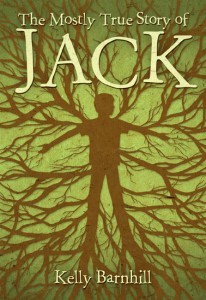
Kelly Barnhill is a writer, teacher and Mom from Minneapolis. Her fiction has appeared in Postscripts, Weird Tales, Clarkesworld and other publications. She’s also published a number of high-interest science books for children. They have wonderful titles like Sewers and the Rats That Love Them, Blood-Sucking, Man-Eating Monsters, Sick, Nasty Medical Practices, and The Wee Book of Pee.  She states that “I’ve had like nine million jobs before this, including being a janitor, a park ranger, a wildland firefighter and a bartender (among others).” Kelly’s first novel, The Mostly True Story of Jack, will be published this year. I had the opportunity to interview her about the book and writing, and have to say I had a delightful time. Enjoy!

* 

JB: I have to start by saying I love the title of your book. It raises all sorts of questions in my mind. Was that part of the inspiration of the story or was it something you had to arrive at after a lot of hard work?

KB: On the first question: Oh my. Titles. This title is the culmination of a whole lot of blood, sweat and tears. Okay, that’s not entirely true. Neither blood nor sweat, just tears – mine specifically. This book was originally called The Boy Without A Face, then Jack Be Quick, then The Curious Face in the Cornfield, then Uprooted, then the House at the Far Edge of Town, then the A Child of Earth and Magic, then…..oh lord, I can hardly remember. 

The thing is, I typically don’t have a problem naming pieces. The title usually comes when I’ve untangled the first knot of text and the beating heart of the story is just starting to assert itself. This time, not so much. I was stymied from the beginning. I asked my kids their opinions, my agent, my agent’s assistant, every editor I’ve ever heard of. I asked my students, my Sunday School kids, kids on the block, kids at the park. 

But that’s the thing when you have a title that doesn’t work – no amount of wanting it to be right will make it right. So I was bound to struggle and I was bound to hate – well, everything – because I just hadn’t hit on the right one yet. Until I did. And the fussing stopped (much to the great joy of everyone involved).

JB: (laughing) That’s hilarious. I can see the desperate author hounding some kid on a swing. Of course, it shows persistence. And I’m betting it isn’t just a title that’s defied you. Have you run into plot or character snags that have been especially troublesome? If so, what do you do as a writer, how do you approach that?

KB: Oh, clearly. I am one of those authors who does absolutely no planning before starting a project. Instead, I’ll get a little knot of text stuck in my head (usually when I’m out for a run) – something pleasing to the ear or gentle in the mind’s eye. And then I spend a whole lot of time figuring out the story behind it. What that means is that when I begin, I typically don’t know what exactly I’m writing. Is this a short story? A novel? A children’s book? A poem? It takes me a while to figure that out.

Insane, you might say. Absolutely barking mad, you might mutter.

Well, obviously, says I. But it’s fun.

Anyway, I did a lot of select-all-deletes over the course of this novel (sometimes, deletes to the tune of 300 pages), retaining the characters, retaining the little bright spots that I managed to scrawl onto some note cards, but recomposing largely from memory, and re-engaging with the story in a fresh, new place.

It’s a process I can’t really recommend. Except that I do. Whole-heartedly. There’s something thrilling about entering into a manuscript that doesn’t have any mistakes in it yet. Of course, it typically doesn’t have any words in it either at that point, but never mind.

Along the way I’ve had to remove some fairly major characters, which forced me to completely re-imagine and recompose the book (again), but as I did so, the story was better, the writing was better, and I learned a lot doing it. So, I don’t like to call them “snags”. I like to call them “learning opportunities”. (Okay, fine, I also call them “throw-my-computer-in-the-creek-while-shouting-obscenities moments” but that’s not very nice to talk about.)

JB: Kelly, I have to say, to find a simmering joy in the dreaded select-all-delete (folks, she’s wild, WILD!) Although I will say that starting a new project is always a thrill for me as well. So maybe we’re not too far apart, although I do enjoy my planning. So, what was the knot of text that started this story? Is it even there anymore? And how did it develop into the fantastic magic that’s at the heart of the tale? (Folks, as an aside, I have to tell you that the magic in this book is unlike anything I’ve read.)

KB: Okay, you asked for it. Here is the original page. I’ll make the letters green, just because:

Outside the house, a girl stood on the darkening street looking up. Her hands were shoved deep in the pockets of her ratty cut-offs, and her red-brown curls struggled out of the long braid that hung down the length of her back. Her bike lay on its side on the ground, the front wheel still slowly spinning around and around, until it finally stopped.

Two boys walked slowly down the quiet street, their sneakered feet scarcely whispering against the pavement. One boy wore a bright orange seed cap over his even brighter blonde hair. He smiled at the girl as they approached. The other boy was very tall and he walked with a limp. Half of his face was obscured in a red knot of scars that bloomed over his skin like roses. He kept his eyes on the ground and did not speak. He never spoke. Both boys stood next to the girl. The boy with the cap tilted his chin towards the attic.

“That kid get in today?” he asked, his eyes on the silhouette of the stranger in the window.

“Yep,” the girl said.

“Think he knows?” He turned to face the girl. His face, handsome and tan from so much time out of doors, shone in the last weak rays of the orange and pink sky.

“How could he?” she asked. She reached over to the boy on her left, who was taller than her, though his pronounced slouch made it difficult to tell. She put her arm around his shoulder, and he, in turn, laid his face, bad side down, good side up, on hers. Only when they stood like this, could people see that they were brother and sister. “But he will,” she said.

I wrote this while on a positively lovely run through Fort Snelling State Park in Minnesota. Well, that’s not exactly true. I thought it while I was running. I wrote it when I got home. But that’s how a lot of stories start for me – a bit of fluff twists into a thread and thickens to a cord and winds into a knot. And then I have a hell of a time figuring out where the thing leads.

Now, that actually wasn’t everything that led me to JACK. There was another bit that I can’t find anywhere that was a conversation between a kid and his mom as they drove in a rental car towards a farm house in Iowa, where the kid would be staying while his parents worked through the details of their divorce. I didn’t realize that the kids on the street would occupy the same story as the kid in the car. Indeed, I had no idea that the kids on the street were talking about the kid in the car. I also had no idea that I was writing a book with magic in it either. That was a surprise.

But to answer your earlier question, neither the conversation nor the bit about the kids looking at the house are in the book anymore, though little images and descriptions have drifted into the later drafts and taken root. That’s the magic of revisions – every cut is necessary, and every cut hurts, but something new always grows. And sometimes the bits of your novel that once were broken and wobbly and weak transform into some very pretty bits of fiction. It’s the transformation that gets us every time – or me, anyway. Honestly, it’s why I keep coming back to the page: I like change.

And as far as the magic at the heart of the story – I can’t really say. I think that the magic was simply there, waiting for me to find it. Everything I know about the strange history of that town, the terrible events that happened in the past and the necessity for Jack and his friends to set things right – I only discovered those things by accident. I discovered them because I cared about Jack, and cared about his loneliness and his lack of place, and I wanted to understand him. (And yes, I totally get it that he’s not real, but in the end that doesn’t really matter, does it? I’m a mother, and a child in need is a child in need.)

(Did I even answer your question? Why is it that every question sends me tumbling in all directions? I think I might be a dreadful interviewee. Maybe you should ask me easier questions. Like about darning socks.)

JB: (laughing) You’re a wonderful interviewee. I love these answers. And I think my readers will appreciate very much what you’ve shared. In fact, I’m betting they’d want me to keep asking questions for quite some time, but I’ll limit myself to two more. First, the prose of your book has a flow to it. I haven’t pinpointed what it’s doing yet (I have noticed some parallelisms), but the prose is compelling. Just picks you up and carries you along. Is that flow important to you? Do you labor over it, or is it just something you enjoy, maybe seek out in other authors, and, therefore, seems to come naturally? Tell us your thoughts on this.

KB: Oh, John, I am so glad you asked me this question! (Also, that you noticed, because I worked really hard on it!)

Let me back up before answering that, though, because I think it’s really hard to separate how a writer builds text and uses words from how they think. There are people on earth – lots of them – who are visual thinkers. I am not one of them. In fact, I am not a visual thinker at all. Even now, when my house is quiet and my kids are at school, it is difficult for me to call up a mental image of their faces – but the texture and timbre of their voices is with me all the time. And it’s always been like that for me as a reader – I’m much more attracted to books with a strong aural sensibility. I like prose that is rhythmic and rich. I think language works best when it is a sensual experience – not just in what it evokes (though that’s clearly important) but how it feels in the mouth, how it feels in the ear.

Now I think part of the reason for this is that, as a little girl, I was a delayed reader. And when I started reading, I was stuck in the bottom group (they never tell you you’re in the bottom group, but oh! As children we know. We know!). This is not to say I wasn’t experiencing and engaging with stories. Every night my dad read to us – first the Grimm stories, then Narnia, then Tolkein, then Dickens. I also had a little fisher-price record player (that I bought at a garage sale with my own money, so of course I thought it was awesome) and a bunch of dramatized books on records – Treasure Island, 20,000 Leagues Under the Sea, Watership Down, Call it Courage, Anne of Green Gables, and some others that I can’t remember.I would listen to those things so often that my siblings threatened to throw my record player out the window. So I’d lock myself in the closet and listen some more. And even now, I love stories out loud. My husband and I read to one another every night, I read to my kids, and I read my own work out loud as I revise, over and over and over again.

My book sounds the way it does because I’ve read that thing out loud, cover to cover, approximately nine million times. Actually, that might be a conservative estimate. I want my stories to feel like a whisper on the skin, an insistent voice that you can’t shake. Now, mind you, I’ll probably never actually reach that goal, but it’s good having a target, anyway.

JB: Wow. That’s lovely. You know, I’m not a style over substance guy, but I like sound. I’m attracted to prose that sings, even if it’s softly. This seems to be what you’re suggesting you look for. Not prose that necessarily stands up and shouts for people to look at it. But prose that, well, as you said, is a whisper on the skin. Oh, there’s a whole interview right there. In fact, I think, if you’ll agree, I’m going to have you back, maybe around the time Jack comes out to discuss that. In the meantime, I see you have a whole bunch of projects slated to come out. The Final Exile of the Insect King is another killer title. But Iron Hearted Violet is the one coming out next after Jack. Tells us about that one or anything else you think readers should know about. And since Jack is a ways off, tell us which of your published stories you’d suggest readers try while they’re waiting. I see a whole bunch you’ve linked to on your site.

KB: Thanks John! This has been really fun, and I’d love to pop back over to your corner of the internets around launch-time (August 2! Mark your calendars!).

Anyone who is interested in reading any of my fiction online can head over to my blog for a list of links (www.kellybarnhill.com). And any of you who are interested in buying some pretty cool collections could check out Sybil’s Garage #7, which has my story “The Dead Boy’s Last Poem” or Apex’s recent anthology Dark Faith, which has my story “Hush”. Another story that I feel pretty good about  is called “The Taxidermist’s Other Wife”, which appeared on Clarkesworld in December. That particular story came from an experience I had up in northern Minnesota (about ten miles south of the Canadian border), when I was teaching a fiction workshop to a bunch of hockey-playing high school seniors. One boy was telling me that it took him over an hour each way to get from home to school and back again. He said he’d been doing that for the last six years, ever since his town closed down the school. I asked him if all the kids in his town had to make the same kind of crazy commute, and he said, “Those of us who’re left, sure. There’s not many of us anymore. You kill the school, you kill the town. Everyone knows that.” The idea that the lifeblood of a town is bound up in its school  – and indeed, that a town can be killed, stuck with me, and transformed into an odd, mournful little piece. There is a deep love as well as a devastating sorrow that binds the people of my beautiful (and very cold) state to the land that surrounds them – and I feel that this story is the closest I’ve ever come to actually pinning those twin emotions down onto the page. 

As for Iron-Hearted Violet  – that has been a devilishly tricky book to write, but I’m pretty happy with it. How to describe it? Hmmm. It’s the story of a girl who unwittingly releases an imprisoned, wicked god, and must sacrifice all that she knows and all that she loves in order to stop it from enslaving her – and every – world. There are banned stories and dragons with missing hearts and a grieving girl and  friendship and a magic book and sleeping gods and a multitude of universes gathering in great foamy waves and crashing against the shore. Mostly, getting the language and tone just right was incredibly tricky, and I went through something like a million drafts, so for me to say that I’m feeling happy with it is a pretty big deal.

JB: Well, that gives us all some great things to try out. I’m personally looking forward to Jack.

*

John Sez: now there is someone who just loves to write. I love her sense of adventure in discovering the story and her willingness to generate a lot of stuff to get to the final story. And the sound of her prose. Not that all books have to have this, but it is nice. Furthermore, Kelly was just enjoyable to talk to. That fun voice comes out in her blog. She’s going to be someone to watch. In the meantime, for the rest of us, it’s back to work.  

LINKS

Kelly Barnhill’s website

Codex Author Blog Tour 2011

Share

Similar Posts

  • Good Stuff! Some Calm on the Climate

    Is the sky falling?

    When we politicize science it sure seems that way.

    For example, a while back I reviewed The Big Fat Surprise by Nina Teicholz. What she found in her research about fat and sugar was that we followed the exact wrong diet path over the last 40 years by (1) rushing to judgment on the science in a field that was tricky and (2) politicizing it. This, in turn, affected the science. And not in a good way. Here’s a quote from the book.

    “Once ideas about fat and cholesterol became adopted by official institutions, even prominent experts in the field found it nearly impossible to challenge them. One of the twentieth century’s most revered nutrition scientists, the organic chemist David Krivtchesky, discovered this thirty years ago when on a panel of the National Academy of Sciences, he suggested loosening the restriction on dietary fat. “We were jumped on!” he told me. “People would spit on us!…they were so angry that we were going against the suggestions of the American Heart Association and the National Institutes of Health”

    “This kind of reaction met all experts who criticized the prevailing view on dietary fat, effectively silencing any opposition. Researchers who persisted in their challenges found themselves cut off from grants, unable to rise in their professional societies, without invitations to serve on expert panels, and at a loss to find scientific journals that would publish their papers. As a result, for many years the public has been presented with the appearance of a uniform scientific consensus on the subject of fat, especially saturated fat, but this outward unanimity was only made possible because opposing views were pushed aside.”

    For the rest of us, the result has been the highest obesity and diabetes rates we’ve ever seen. And it seems to me that we’ve been doing this same thing with climate science.

    Instead of vigorous and spirited debate and research, we’re rushing to judgment and politicizing it. The media, non-climate scientists, activists, politicians, and others have turned it into a religious eco frenzy. And so we end up with people like Bill Nye the science guy (who was a mechanical engineer and then TV host for a children’s science program, not a climate scientist) suggesting that “climate deniers” go to prison.

    Prison?

    I think Bill had a bad dream about Nazi Germany, socialist Russia, or ISIS.

    We all want clean air and water. We all want awesome rivers and lakes. We all want good science. Is it possible to remove the politics and frenzy so we don’t go off into the weeds again? I don’t know. But I did find these short videos helpful. If you’re interested in the climate, I think you’ll enjoy them.

    In the first one, Richard Lindzen, an MIT atmospheric physicist, addresses the politicization.

    In the one, Will Happer, emeritus professor of physics at Princeton University,  addresses whether we can actually accurately predict the climate.

    This one by Patrick Moore, an ecologist and one of the founders of Greenpeace who subsequently left the organization because of its anti-science activism, explains why CO2 is actually awesome.

    In this one Moore gives more details and argues that maybe we need more CO2.

    In this one, Bjorn Lomborg argues against climate alarmism. Of course, Lomborg isn’t a climate scientist. However, if his facts are correct, then he asks an important question.

    The other thing to ask is so what? So let’s say the seas rise a bit and it gets a bit warmer. We might lose some beach front properties over a number of years. That’s not new. It might accelerate and reach farther inland. Okay. But nobody is going to die. They’ll just rebuilt somewhere else.

    So let’s avoid prison and climate pogroms and disastrous dashes off into public policy like we did with fat and sugar. Let’s simply support our scientists in doing what they do best. Let’s promote a vigorous search for more insight.

    Notes

    Share
  • Me and Santa, Woodyatt Cherry Jam, Despicable Me, Shameless Commerce

    Why I got me a beef with Santa

    Okay, men. I’m going to share a secret. Maybe help you avoid my situation. Women love flowers. They love diamonds and other expensive bits of gravel you can’t find out at the road pit. Some relish a backrub. Those are all good. But if your girlfriend, wife, mother, sister, or daughter likes to cook, well, you’d better watch out.

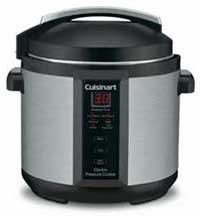
    About two years ago, Santa brought my wife a Cuisinart six-quart electric pressure cooker (item CPC-600). Every time she takes that thing out, she talks about what a great gift that was, and how wonderful it is to be able to cook foods in 30% of the time it normally would take, and how pressure cooking is more nutritious because vitamins and minerals can’t boil away. Foods stay moist and flavors stay true. Blah, blah, blah. Oh, how she loves Santa.

    I have to admit, Santa was a genius for getting her that gift. But you don’t mess with my girl. This year, if he comes around (you listening, Santa!), I’m going to be waiting with my gun.

    For the rest of you, I suggest you go out and find yourself one of these before Santa tries to muscle in. Him and his ho-ho-ho. If you google it, you’ll see it’s only $80 bucks online. A small price to pay, let me tell you. And it lasts a heck of a lot longer than flowers.

    Adventure Jam

    I’m one of those people who can’t go to a restaurant and order the dish that I know is good. Nope, just before the waitress comes to take my order, a compulsion to try something new takes hold of me. Alas, three out of four times, the dish I order will taste like somebody cooked it in a shoe. I’m thinking my plan from now on should be to lock myself in the car and wait until my wife calls me and tells me that she’s placed my order and the coast is clear.

    Of course, that doesn’t prevent me from buying things like kippers and kumquats at the grocery store. Nor does it prevent me from accepting strange gifts. For instance, this last week I was asked if I would like a six-sided bottle of Montmorency Tart Cherry Jam from Woodyatt Cherry Farms. I love cherries, but cherry jam, with big old cherries in it? And what’s with the weird name and bottle?

    But it was a gift from a fine friend, so how could I say no?

    The next day I made toast and buttered it, and as I reached for the sure-fire delicious creamed honey, I was overcome by that maddening spirit of wild culinary adventure. So I pulled the six-sided bottle from the pantry instead, twisted off the white lid, and looked at the cherries crowded within. I drew back for a moment. What was I thinking?! The answer came: “Tart cherry jam, you wimp.”

    So I manned up and spread the jammed cherries on my toast. I took a bite, waited to be disappointed, but it was good. I took another bite.

    Dang. It was real good.

    That jar of zingy jam is now almost empty. But I can tell you I plan on getting some more.

    If you’re a bit adventurous and every now and again want something different but excellent, let me recommend this cherry jam to you. I couldn’t find a website for Woodyatt Cherry Frams, but you can drop by at 7630 S. Highway 89, Willard, UT 84340 or call them at (435) 720-7366  and place an order.

    Funny Family Movie

    My wife and I took the kids out to the Cinefour theaters this last week. That’s the three-dollar theater that’s nice and clean in Logan, UT. We watched the animated Despicable Me. I know, it came out back in July, but who said I had to review things the minute they hit the market?

    Gru, super villain, has his secret hideout in a happy suburban neighborhood. He’s got everything a villain could want: a wicked jet-powered vehicle, freeze rays, and minions. But another villain has just upstaged him with a major heist in Egypt. So Gru decides make a bigger heist, the biggest in the history of the world—he’s going to steal the moon. Sounds impossible, doesn’t it? Ah, but he’s going to use a shrink ray first. Then he can put the moon in his pocket. The problem is the upstaging villain takes the shrink ray. And the only way Gru can steal it back is with the help of three little orphan girls.

    The movie is full of humor (I laughed so hard at one point that I missed a full minute of the movie) and fun action. The orphans and minions are wonderful. Toward the end there was one moment where a sob caught in my throat. (The things cartoons will do to you these days!) The movie is not going to win an Academy Award. But I can guarantee you it will give you and your kids two hours of excellent entertainment and a few funny lines that will enter your family vocabulary.

    Brown’s Shameless Commerce Section

    I know some of you are at a loss for what to get your teen or adult friend who likes fantasy stuff—dragons, magic, etc. It’s not like you can just go buy them a pet monster or suit of armor. And there are soooo many books in the science fiction and fantasy section of the bookstore. So let me help you.

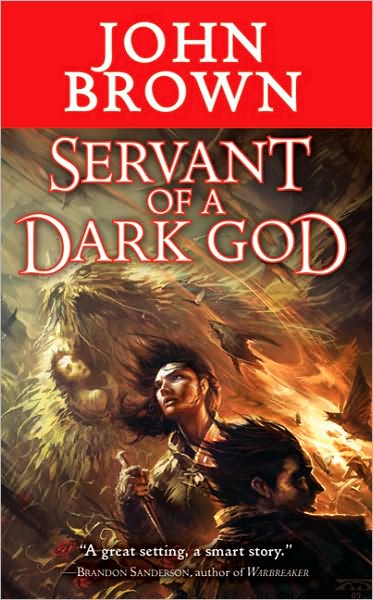
    Servant of a Dark God was recently released in paperback (think inexpensive) and is the perfect stocking stuffer for readers who liked Lord of the Rings. Don’t let the title scare you; the book won the Whitney Awards Best Novel of the Year in speculative fiction and has been getting excellent national reviews. And it just so happens that your humble reviewer is the author.

    If you want to read the first chapters or find out more about the book, click on the Fiction part of the site. There are copies in Smith’s, Macey’s, Fresh Market, Raley’s, and other grocery stores. Or you can order it from Barnes&Noble.com and Amazon.com and have it delivered to your door. Whoever receives it will thank you for the epic fantasy thrills.

    Share
  • Good Stuff! Tiny Habits

    We’re told we can change.

    We’re told that a key is to write “SMART” goals. Make them specific, measurable, realistic, and focused on results. Give them a deadline. And, for heaven’s sake, put them to paper because “a goal that is not written down is just a wish.”

    We’re told a key is to dream, that “whatever the mind can believe, it can achieve.”

    We’re told that the key to changing our life is changing our habits, and that they way to change our habits is to stick with something for twenty-one days.

    Except, well, how many habits have you been successful in establishing?

    How many of those lofty goals have you achieved?

    How many New Year’s resolutions have you really followed through with?

    The problem is that all of the good advice on goals and habits seems to only work for other people. And I grant that there might be some AAA+++ personalities out there with megawatts of motivation who seem to be able to do whatever they set their mind to.

    But that triple A plus personality passed me by. It passed a lot of us by.

    So are we doomed?

    B.J. Fogg, a Stanford researcher, says no. There’s hope for all of us. Because the key is not in having megawatts of motivation.

    It’s not that we disregard the power of motivation. It’s just that motivation, Fogg has found, is never constant. It comes in waves. And while we certainly want to take advantage of it when it comes and do things that increase it, a much more effective way to grow habits and meet goals and change our lives is to focus on the other things that drive behavior.

    Fogg has spent his career studying persuasion and habit. He works with companies to help them create products that are habit-forming. Think about Facebook, Twitter, or Candy Crush, and the habits those products form. These and similar companies have implemented the principles of habit so well that their products have become, for some, something of an addiction.

    So what’s the secret?

    Fogg has identified three things that must be present if we’re going to do something:

    1. The motivation to do it
    2. The ability to do it
    3. A trigger to remind us to do it

    When those three things are present, we act. And we often do so without thinking. If one of those three elements is missing, we don’t act. So if we want to start a new habit, we need to focus on these three things.

    But if motivation goes up and down, then we don’t want to rely on that part of the equation. Fogg’s insight is that it’s much easier and more effective to focus on the ability and the trigger parts.

    When we focus on the ability, we make the habit we want to form so tiny and small that it’s super easy to do. Such tiny behaviors require only the smallest levels of motivation. And if we’ve planted them in good ground (at a time of day where they can expand and linked to a good trigger), those tiny habits eventually grow into the full blown big habit we wanted all along.

    Does this work?

    Well, I started Fogg’s Tiny Habits back at the beginning of December. And I’m happy to report that starting new habits using this approach has been easy.

    Like falling off a log easy.

    For example, because I work on the computer, I know that to increase my health, I need to get at least forty minutes of good, heart-pumping activity each day. But did I start there? No.

    Did I start at twenty minutes?

    No.

    Ten minutes?

    No.

    Five? Surely, I started at five minutes.

    No.

    The Tiny Habits approach suggests starting much smaller. I started with doing one push up after I used the restroom. And it was an incline pushup on the stairs, which my daughter found hilarious.

    Yes, that’s how tiny you start them. Something that takes less than 30 seconds.

    That tiny habit grew. And I am now doing 60 regular floor pushups each day, plus 75 curls, 75 flies, 75 squats, and 75 bicycle crunches. It’s about 25 minutes of good activity. And it’s only going to grow. Come April, I’m pretty sure I’ll be around 100 pushups every day.

    And there was no twenty-one day business. Fogg has found that’s not the secret. Habits can form in just a few days.

    I started the delicious habit of kissing my wife for at least five seconds each day. Along with a five-second hug. And then a little more kissing, and little more hugging, and a little more kissing (when I can steal it). Did I mention it was delicious? This is a highly-recommend habit.

    I started the habit of daily morning scripture reading. I have tried to be consistent for years and couldn’t do it. But with this new approach, I think I’ve missed three times in the last two months.

    I started the habit of beginning the day with a positive thought, the habit of turning off my wireless mouse when I’m done at my desk, and I’ve also made great headway against the mother of all habits for me—going to bed by 10 PM.

    I can easily stay up until one a.m. reading, “researching” on the internet, wasting time watching political videos, or Facebooking. Or a million other things. This bad habit is so ingrained it is almost like someone else is controlling me. All day long I say I’ll go to bed only to find myself, yet again well past dark, screwing up my life plans. It’s like some evil villain has me on remote. I can’t tell you how many times I’ve tried to “motivate” myself to change this. All to no avail.

    But with the tiny habits approach, I finally figured out the triggers that were driving it. Then I engineered other triggers and tiny habits to replace them. And now my computer is off and behind a closed door most of the time in the evenings. I’m actually getting to bed. It’s huge progress. There are still some kinks to work out, but it’s only going to grow.

    I found the Tiny Habits program through my insurance provider. They had an annual wellness check in November, and on their website they had a link to Tiny Habits. I clicked, signed up for their tiny program, and I’m so happy I did.

    I’m hooked on tiny habits.

    And the cool thing is that you can begin learning and developing your ability to plant and grow tiny habits too. For free.

    If you want to change your life, I think you will love their free five-day, three-habit program. It’s there to teach you how to create tiny habits, triggers, and celebrate.

    Let me also recommend a few videos. Here’s the best video I’ve found that explains Fogg’s model of behavior and why tiny habits work.

    And here’s the best video that explains the pitfalls of relying mostly on motivation instead of bringing in the other two Musketeers.

    Researchers say that between 40-70% of all we do each day is driven by habit and external triggers. We think we’re exercising our agency all day long, but it’s an illusion. We’re not. Most of the day we’re running on auto pilot and responding to triggers. But we can change those routines. That’s the promise of tiny habits. And so far, the results for me have been promising. Give it a try. I think you’ll be happy you did.

    Notes

    SMART stands for specific, measurable, achievable, results-focused, and time-bound. SMART goals are helpful. But the key, Fogg has found, is in not trying to eat the whole SMART whale in one bite. Instead, you start with the tiniest part of the very first step. And then watch as the habit grows.

    I reviewed The Power of Habit by Charles Duhigg back in 2012. It provided great insight about habits, but not a tested program to actually change them. In fact, the author states himself that his book doesn’t provide a program, just a way of thinking about habits. Duhigg isn’t a behavioral scientist; he’s a reporter, trying to share what he’s found. The book was great. However, I tried to apply his insights, and, as expected, wasn’t very successful in changing things. But Fogg and his Tiny Habits fills that gap in a spectacular way. Fogg is a behavioral scientist and has taught thousands how to form habits. So read Duhigg for great stories and insights about habits in general. But go to Fogg for a tested program that will guide you step by step.

    Share
  • 2 Great Cook’s Country Recipes

    Yeah, I know–I should be writing. But I promised you two wonderful recipes from my experiments with the Cook’s Country June/July 2011 issue. There were a whole bunch of other recipes we tried that worked out well, but these were our favorites and good enough to get me to subscribe.

    By the way, I found these recipes were not only tasty, but they were great to do on a date (in this case, with my daughters). Why just eat when you can enjoy the time together as well?  Besides, two people working together make these recipes a breeze.

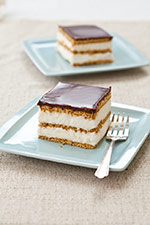
    Chocolate Eclair Cake

    Chocolate, vanilla pudding, whipped cream, and graham crackers–baby, is this good!  I found I liked the cake best with HALF of the pudding and whip cream mixture. You’ll see the half amounts in parentheses. That way I got a taste of the pudding, graham, and ganache in every bite. The directions make it look like there’s a lot of steps, but they all go quickly.

    INGREDIENTS

    Pudding Mixture

    • 1 ¼ C sugar (1/2 + 1/8 C)
    • 6 T cornstarch (3 T)
    • 1 tsp salt (1/2 tsp)
    • 5 C whole milk (2.5 C)
    • 4 T unsalted butter cut into chunks (2 T)
    • 5 tsp vanilla (2.5 tsp)

     Whip Cream Mixture

    • 2 T water (1 T)
    • 1 ¼  tsp unflavored gelatin (1/2 + 1/8 tsp)
    • 2 C heavy cream (1 + ¼ +1/8 C)

    Graham Crackers

    14 ounces of Nabisco Honey Maid graham crackers

    Ganache topping

    • ¾ C  heavy cream
    • 1 C semisweet chocolate chips
    • 5 T light corn syrup

     DIRECTIONS

     Make Pudding

    1. Combine sugar, cornstarch, and salt in large saucepan
    2. Wisk milk into sugar mixture and bring to boil over medium-high heat, scraping bottom with rubber spatula.
    3. Immediately reduce heat to medium-low and continue to cook and scrape until thick bubbles appear on surface, about 4-6 minutes
    4. Take off heat and wisk in butter and vanilla.
    5. Transfer hot pudding to large bowl and place plastic wrap directly on surface.
    6. Refrigerate for about 2 hours until cool.

     Make Whip Cream Mixture

    1. Stir water and gelatin together and let sit for 5 minutes.
    2. Microwave until gelatin dissolves and mixture gets bubbly around the edges, 15-30 seconds
    3. Whip 2 cups of cream on medium-low for about 1 minute, until foamy.
    4. Increase to high and whip for 2 minutes, until soft peaks form
    5. Add gelatin mixture and whip for 1 minute, until stiff peaks form

     Combine Pudding and Whip Cream Mixture

    1. Wisk one-third of whipped cream into chilled pudding.
    2. Fold remaining whipped cream into pudding.

     Layer Pudding Whip Cream Mixture with Graham Crackers

    1. Line bottom of 13 x 9 inch baking dish with a layer of graham crackers. Break and cut crackers if you have to.
    2. Top the bottom layer of crackers with ½ of the pudding whip cream mixture
    3. Place another layer of crackers over the pudding.
    4. Top that layer with the rest of the pudding whip cream mixture
    5. Place one last layer of crackers over the second layer of pudding whip cream mixture

     Make Ganache and Pour Over

    1. Microwave chocolate chips, ¾ C cream, and corn syrup in bowl 1-2 minutes, stirring occasionally.
    2. Cool for 10 minutes to room temperature
    3. Cover top layer of graham crackers with glaze
    4. Refrigerate cake for 6 – 24 hours. Then serve.


    Dill Potato Salad

    A potato salad with a perfect dill zing. Everybody in the Brown household loved this. Super wife especially loved it because she does not like eggs. Please note that there’s fresh dill used in all three parts. So when you shop, make sure you get enough for all three.

     INGREDIENTS

     Dill Vinegar

    • ¼ C white wine vinegar
    • 1 T minced fresh dill

     Boiling Mixture

    • 1 disposable coffee filter
    • ½ C coarsely chopped dill leaves and stems
    • 3 pounds Yukon Gold potatoes (don’t get any other type), peeled and cut into ¾ inch pieces
    • 1 T salt

     Dressing

    • ½ C mayonnaise
    • ¼ C sour cream
    • 1 T Dijon mustard
    • ½ tsp salt
    • ¼ tsp pepper
    • 2 T minced fresh dill
    • 3 scallions (green onions) green parts only sliced thin

     DIRECTIONS

     Make Dill Vinegar

    1. Combine vinegar and 1 T minced dill in bowl and microwave until steaming, 30-60 seconds
    2. Cool at room temperature for 15-20 minutes

     Boil Potatoes

    1. Place chopped dill inside disposable coffee filter and time with thread.
    2. Put potatoes, dill sachet, and salt into large pot with enough water to cover the potatoes by 1 inch.
    3. Bring to boil on high heat then reduce heat to medium and simmer until potatoes are tender, 10 minutes

     Cool and Soak Potatoes

    1. Drain potatoes thoroughly and throw away dill sachet
    2. Drizzle 2 T of the dill vinegar over hot potatoes and gently toss until evenly coated
    3. Refrigerate until cooled, 30 minutes. This allows the Yukon potatoes to suck up the dill vinegar.

     Make dressing and Combine with Potatoes

    1. Wisk mayonnaise, sour cream, remaining dill vinegar, mustard, salt, and pepper until smooth
    2. Add dressing to cooled potatoes
    3. Stir in scallions and 2 T minced dill.
    4. Cover and refrigerate to let flavors meld, 30 minutes.
    5. Serve with salt and pepper to taste.

     EDIT 9/7: Somehow I deleted four of the dressing ingredients when I posted. They’ve been added back 🙂

    Share
  • Cinefour theaters & the goodreads.com pricer

    I think I could write a horror novel about some dollar movie theaters. The unsuspecting movie goers are lured in. They blindly walk into the theater and take a seat, but, no! When they sit down, they find they’re trapped, their feet glued to the sticky soda floor. The doors close behind them. Outside the theater a man walking by thinks he hears screams. He pauses, alarmed. Those sound like REAL screams, people dying? But no, he thinks, it’s just a movie theater, just a scary movie, and he walks away. Moments later blood begins to seep out from underneath the theater’s exit door.

    Too gruesome? Okay, how about this. You go in, swim through a sea of popcorn to your seat only to find that all the seats flop back and leave you staring at the ceiling. This means that while you could listen to the movie, you actually have to crane your neck forward for two hours to see it. By the time the ending credits roll, you can’t walk. Instead, you have to hobble out like a troll. When you finally reach the exit, you swear you can hear the theater owner cackling. A man in a doctor’s coat shows up and slips the owner a manila envelope full of cash. Suddenly, it all becomes clear—it’s not a theater but a medical scam perpetrated by those who sell orthopedic suits and chiropractics. Mwuhahahaha!

    So you can see why the dollar theater dread fell upon me when I went up to the ticket counter at Logan, Utah’s Cinefour theaters and found out the tickets were only $3 each. Sweat began to bead on my brow. I looked around for signs of monster cockroaches that might carry me and my family away to feed to their young, but, to my surprise, the theater was, well, clean. When we entered, we found no sea of trash. No sticky floor. And the seats didn’t flop back into the dentist chair position (unlike another theater on the other side of the street). They actually supported our backs nicely.

    We sat in the dimly lit theater like the old days when you didn’t watch a steady stream of commercials. We chatted. Then the previews started up, the film ran, and nobody came out to murder us. It was great.

    Cinefour. Cheap movies. Nice little theaters. You can take the whole family out and still have money left over to buy a sink at Angie’s.

    ***

    If you love books as much as I do, you can easily spend your mortgage on them. Which is why libraries are so very nice. But even though libraries are great, there are still some books I want to own. One of the fab things about the internet is that it allows lots of companies and individuals to sell new and previously read (but in great condition) books for cheap. The bad news is that it’s hard to do comparison shopping to find the deals. But no longer–www.goodreads.com has solved that problem by doing the searching for you.

    Simply go to the site and search for a book title. When the search results display, click on the book you’re interested in. When the book’s page comes up, you’ll see a little button below the cover that says “buy for” and lists a price. Click that button, and you’ll see a list of all the main vendors and prices. You can then link to one of the vendors and make your purchase.

    So how much can you save? Sometimes a lot. For example, I looked up my own book. Its hard cover list price is $25.99. However, by using the goodreads.com feature, I found a brand new copy for $4.89. I could get a good used copy for one buck. ONE BUCK! Holy schnitzel, that’s a 96% discount. If you want to buy a book, go to goodreads.com to find the deals.

    Share
  • Good Stuff! Mike Loades on Swords and Bows

    Mike Loades is an expert on medieval fighting. He brings energy and, not just bookish learning, but insights from hands-on use. I loved the five-part Weapons That Made Britain television series for which he was the host and chief consultant. And so I looked to see if there was anything else he’d done. I found he’d written two books, which I am so happy to have read.

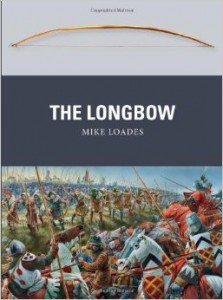
    The Longbow is not just a book about the longbow. It’s about its construction and how it impacted the development of armor, and types of armor, and the wood used for the bow, and how to make arrows, and what the various points were for, and how people trained, and then cared for the bows, and how it was used in war. And, again, the insights are not just bookish ones. He’s walked the battlefields. He’s used bows for years. He’s performed tests with them. It is a 80-page book that carries a monstrous bang for the buck and one of the best purchases I’ve made for my library. I loved it.

    MikeLoades_TheLongBow

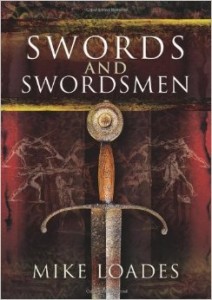
    Of course, after that experience, I had to get his Swords & Swordsmen. This book is almost 500 pages long, and I was rapt reading each page of it. Instead of focusing on one version of this weapon, Loades discusses exemplars of various types of swords through time, starting with the sword of Tutankhamun in Egypt all the way through the swords of J.E.B. Stuart and G.A. Custer in the American Civil War. There are 15 chapters all discussing different eras and swords that provide a mountain of insight. The love Loades has for and the practical experience he has with the topic shines through on every page. Just as with The Longbow, you’ll learn about use, construction, the interplay with armor, and much more. Heck, I got the ideas for at least three novels reading this book. I loved it as much as I loved the first.

    MikeLoades_SwordsAndSwordsmen

    If you enjoy military history and arms and armor, you will love these books. Guaranteed.

    While you’re waiting for them to arrive in the mail, treat yourself to five hours of fascinating video below.

    Weapons That Made Britain E01 – The Sword

    Weapons That Made Britain E02 – The Longbow

    Weapons That Made Britain E03 – The Lance

    Weapons That Made Britain E04 – The Shield

    Weapons That Made Britain E05 – Armour

    Share