Good Stuff! Tiny Habits

We’re told we can change.

We’re told that a key is to write “SMART” goals. Make them specific, measurable, realistic, and focused on results. Give them a deadline. And, for heaven’s sake, put them to paper because “a goal that is not written down is just a wish.”

We’re told a key is to dream, that “whatever the mind can believe, it can achieve.”

We’re told that the key to changing our life is changing our habits, and that they way to change our habits is to stick with something for twenty-one days.

Except, well, how many habits have you been successful in establishing?

How many of those lofty goals have you achieved?

How many New Year’s resolutions have you really followed through with?

The problem is that all of the good advice on goals and habits seems to only work for other people. And I grant that there might be some AAA+++ personalities out there with megawatts of motivation who seem to be able to do whatever they set their mind to.

But that triple A plus personality passed me by. It passed a lot of us by.

So are we doomed?

B.J. Fogg, a Stanford researcher, says no. There’s hope for all of us. Because the key is not in having megawatts of motivation.

It’s not that we disregard the power of motivation. It’s just that motivation, Fogg has found, is never constant. It comes in waves. And while we certainly want to take advantage of it when it comes and do things that increase it, a much more effective way to grow habits and meet goals and change our lives is to focus on the other things that drive behavior.

Fogg has spent his career studying persuasion and habit. He works with companies to help them create products that are habit-forming. Think about Facebook, Twitter, or Candy Crush, and the habits those products form. These and similar companies have implemented the principles of habit so well that their products have become, for some, something of an addiction.

So what’s the secret?

Fogg has identified three things that must be present if we’re going to do something:

  1. The motivation to do it
  2. The ability to do it
  3. A trigger to remind us to do it

When those three things are present, we act. And we often do so without thinking. If one of those three elements is missing, we don’t act. So if we want to start a new habit, we need to focus on these three things.

But if motivation goes up and down, then we don’t want to rely on that part of the equation. Fogg’s insight is that it’s much easier and more effective to focus on the ability and the trigger parts.

When we focus on the ability, we make the habit we want to form so tiny and small that it’s super easy to do. Such tiny behaviors require only the smallest levels of motivation. And if we’ve planted them in good ground (at a time of day where they can expand and linked to a good trigger), those tiny habits eventually grow into the full blown big habit we wanted all along.

Does this work?

Well, I started Fogg’s Tiny Habits back at the beginning of December. And I’m happy to report that starting new habits using this approach has been easy.

Like falling off a log easy.

For example, because I work on the computer, I know that to increase my health, I need to get at least forty minutes of good, heart-pumping activity each day. But did I start there? No.

Did I start at twenty minutes?

No.

Ten minutes?

No.

Five? Surely, I started at five minutes.

No.

The Tiny Habits approach suggests starting much smaller. I started with doing one push up after I used the restroom. And it was an incline pushup on the stairs, which my daughter found hilarious.

Yes, that’s how tiny you start them. Something that takes less than 30 seconds.

That tiny habit grew. And I am now doing 60 regular floor pushups each day, plus 75 curls, 75 flies, 75 squats, and 75 bicycle crunches. It’s about 25 minutes of good activity. And it’s only going to grow. Come April, I’m pretty sure I’ll be around 100 pushups every day.

And there was no twenty-one day business. Fogg has found that’s not the secret. Habits can form in just a few days.

I started the delicious habit of kissing my wife for at least five seconds each day. Along with a five-second hug. And then a little more kissing, and little more hugging, and a little more kissing (when I can steal it). Did I mention it was delicious? This is a highly-recommend habit.

I started the habit of daily morning scripture reading. I have tried to be consistent for years and couldn’t do it. But with this new approach, I think I’ve missed three times in the last two months.

I started the habit of beginning the day with a positive thought, the habit of turning off my wireless mouse when I’m done at my desk, and I’ve also made great headway against the mother of all habits for me—going to bed by 10 PM.

I can easily stay up until one a.m. reading, “researching” on the internet, wasting time watching political videos, or Facebooking. Or a million other things. This bad habit is so ingrained it is almost like someone else is controlling me. All day long I say I’ll go to bed only to find myself, yet again well past dark, screwing up my life plans. It’s like some evil villain has me on remote. I can’t tell you how many times I’ve tried to “motivate” myself to change this. All to no avail.

But with the tiny habits approach, I finally figured out the triggers that were driving it. Then I engineered other triggers and tiny habits to replace them. And now my computer is off and behind a closed door most of the time in the evenings. I’m actually getting to bed. It’s huge progress. There are still some kinks to work out, but it’s only going to grow.

I found the Tiny Habits program through my insurance provider. They had an annual wellness check in November, and on their website they had a link to Tiny Habits. I clicked, signed up for their tiny program, and I’m so happy I did.

I’m hooked on tiny habits.

And the cool thing is that you can begin learning and developing your ability to plant and grow tiny habits too. For free.

If you want to change your life, I think you will love their free five-day, three-habit program. It’s there to teach you how to create tiny habits, triggers, and celebrate.

Let me also recommend a few videos. Here’s the best video I’ve found that explains Fogg’s model of behavior and why tiny habits work.

And here’s the best video that explains the pitfalls of relying mostly on motivation instead of bringing in the other two Musketeers.

Researchers say that between 40-70% of all we do each day is driven by habit and external triggers. We think we’re exercising our agency all day long, but it’s an illusion. We’re not. Most of the day we’re running on auto pilot and responding to triggers. But we can change those routines. That’s the promise of tiny habits. And so far, the results for me have been promising. Give it a try. I think you’ll be happy you did.

Notes

SMART stands for specific, measurable, achievable, results-focused, and time-bound. SMART goals are helpful. But the key, Fogg has found, is in not trying to eat the whole SMART whale in one bite. Instead, you start with the tiniest part of the very first step. And then watch as the habit grows.

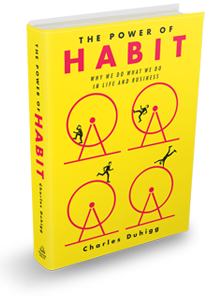
I reviewed The Power of Habit by Charles Duhigg back in 2012. It provided great insight about habits, but not a tested program to actually change them. In fact, the author states himself that his book doesn’t provide a program, just a way of thinking about habits. Duhigg isn’t a behavioral scientist; he’s a reporter, trying to share what he’s found. The book was great. However, I tried to apply his insights, and, as expected, wasn’t very successful in changing things. But Fogg and his Tiny Habits fills that gap in a spectacular way. Fogg is a behavioral scientist and has taught thousands how to form habits. So read Duhigg for great stories and insights about habits in general. But go to Fogg for a tested program that will guide you step by step.


Share

Similar Posts

  • Good Stuff! 3 Books to Introduce You to the Middle East

    ISIS, the Taliban, Al Qaeda, the Muslim Brotherhood, Iran.

    What drives these groups?

    What are they really about?

    Why is there so much religious strife in the Middle East?

    For that matter, what is Islam actually about? Is the religion really defined by these violent actors, or are they just the most visible because they’re what’s reported on in the media?

    I set out to find the answers to these questions, and what I have found so far surprised me. If you are interested in understanding what’s going on in the Middle East today, you have to understand Islam. And it’s a fascinating story. There are a lot of books on the subject, but you don’t have to sift through all those I did. I want to share with you three slim books that I found to be the most clear and engaging introductions I’ve come across.

    The first is Understanding Islam: An Introduction to the Muslim World by Thomas W. Lippman, an award-winning author and journalist who specializes in the Middle East and spent years living in Egypt, covering the events, and traveling from Tunisia to Pakistan. Again, this is a slim, easy-to-read volume, but it is packed with information. If you want to know the basic beliefs of Islam, who Muhammad was, what all this business about Sharia is, and who the major Islamic groups of the Middle East are today, this is the book to start with. One note, you want to make sure you get the third edition of this book.

    Understanding Islam by Thomas Lippman

    The next book is by Bernard Lewis, a man internationally recognized as one of our century’s greatest historians of the Middle East. The book is called The Crisis of Islam: Holy War and Unholy Terror. Again, another slim, engaging, but information-packed volume. In it, Lewis explains what it is in Islam that is breeding these extremist groups. And what is leading them to target America, which is especially interesting because for most of the 1900s the United States was seen as the good guy by the Islamic world. What changed? Read this book to find out.

    The Crisis of Islam by Bernard Lewis

    The last book, a lively, engaging read, is called After the Prophet: The Epic Story of the Sunni-Shia Split by Lesley Hazleton, another veteran Middle East journalist. When you finish this book, you will understand why Saudi Arabia supported ISIS before they so recently turned against it. You’ll understand why they recently joined Israel, of all nations, in condemning Iran’s nuclear program. You will also understand one main reason why the Iraqis can’t seem to get along. In this book, Hazelton goes back to the beginning of the religion and tells the story of the splitting of Islam–the split between the Shias and Sunnis. It’s as significant a split as that of the Protestants from the Catholics in the time of Luther. But unlike that split, which has lost almost all of its heat, the antagonism between Sunni and Shia still leads to war. You cannot understand the Middle East today without understanding this.

    After the Prophet by Lesley Hazleton

    So there you have it. If you’ve been wanting to learn more about Islam and the Middle East, you’ll find these the perfect introduction. And if you’re religious at all, you’ll find much to ponder. There isn’t one god-fearing Christian, Jew, Hindu, or what have you who doesn’t think that submitting our will to God’s won’t help us build a better families, communities, nations–a better world. Would it surprise to you to know that Muslims believe the same thing? That Islam means “to submit” to God?

    There are of course many differences between Islam and my own Christian beliefs, but there are also many striking similarities. And the experience I kept having reading these books was seeing over and over again echoes of my own faith and the history of Christianity. There are cautions, to be sure, but also things worthy of emulation. If nothing else, it felt like it did when I learned Dutch. Yes, it was all foreign, but I saw the ties and the differences and, surprisingly, understood my language better than I ever had before.

    Now there are three other equally fascinating books I want recommend that focus on Al Qaeda, fighting terrorism, and Saudi Arabia, but I’ll save those for another time. Go treat yourself and read these fine introductions.


    Share
  • Teacher power, crawdad fun, and lemon bars

    Teacher Power

    When we find great teachers, we prize them not only because what we learn improves our lives but also because good learning can be one of the most exhilarating things we experience. Unfortunately, a lot of teaching stinks. It’s boring, misguided, useless.

    I’ve made a study of teaching. I’ve had to. For almost 20 years I’ve taught and designed courses in the private sector. And for many of those years, my work has been in a revenue-generating department. That means that my classes had better be effective and interesting, otherwise nobody signs up, revenue falls, and a lot of folks will stand around and wonder if it might not be better to just replace me with a potted plant.

    I kind of like having a job. And so I’ve tried my best to find the most effective methods for instruction. In the last few decades, education researchers have put many teaching techniques and principles to the test. We know better now than ever before how to structure learning that is effective and interesting. And I have yet to find a better explanation of the proven techniques and principles than Ruth Colvin Clark’s Building Expertise: Cognitive Methods for Training and Performance Improvement, 3rd Edition. 

    Don’t let the “training” part fool you. We often associate “training” with learning procedures and simple tasks, e.g. the State pays for “sex education” in our schools, not “sex training.” But Clark isn’t using the term that way. Clark’s “training” includes all types of learning.

    Two things separate Clark from so many others who would offer advice on teaching. First, she bases everything on tested principles and techniques. I’m not talking about tested as in some teacher somewhere tried it and was impressed. I’m talking about scientifically valid testing that controls for variables and shows causation. The methods she describes are practical and proven. Second, she writes clearly enough and uses enough examples so that I can read about the principle and immediately see how I can apply it in my own class.

    Among other things, you’ll learn:

    • Why working memory is key to instruction and how to overcome its limits
    • How to motivate learners
    • How to structure learning
    • When to use lecture and when to put learners into action
    • When taking notes can actually be counterproductive

    You’ll even learn why assigning lots of practice is NOT always the best way to learn. In fact, sometimes your child will learn more if you do half of their homework questions for them. Sound ridiculous? It’s not. It’s science.

    You’ll find that there is no yellow brick road in teaching. Instead, you’ll see that the effectiveness of any method depends on whether it’s suited to the specific situation. And Clark will explain what the key factors in any situation are so you know which methods to apply and the trade-offs you’ll make when you do.

    If you’re a teacher in any setting–family, job, church, school, or recreation–or if you’re trying to teach yourself, this book (specifically the 3rd edition) will be a goldmine. I can’t recommend it highly enough.

    Crawdads & the Bear River Greenway in Evanston

    Here’s a recipe for a whole lot of family or date fun. And it costs almost nothing. Drive to Evanston, Wyoming. Make sure you bring a bucket. Pick up a few pieces of fried chicken at Wal-Mart then picnic at the Bear River Pavilion park. It’s the one with the small lake west of Wal-Mart and east of the overpass on 89. Keep your chicken bones.

    When you finish eating, attach a length of about four feet of string or yarn to each chicken bone. Weight the bone down with some rocks or washers. You want it to sink deep. Tie a loop for your finger in the end of the string. Then go out to the pier or the cement box on the northwest side of the small lake and drop your bone in.

    Wait.

    Slowing bring your chicken bone up. You’ll find a crawdad clinging to it, thinking he’s gone to free lunch heaven. Use a net to snag the crawdad. A simple fish aquarium net will do. You can get them at Wal-Mart for a few bucks. Plop crawdad into the bucket. Ooh and aah appropriately. Make sure he’s got some water to swim around in.

    Drop your line in again and repeat until you and the kids or dates are bored. We had a bucketful in about twenty minutes. You might want to pick a few of the crustaceans up. Just grab them on the sides just behind the spot where the arms of their big pincers join the body. Wave the crawdad at a selected victim—wife, daughter, girlfriend–for special effects.

    When you’re done, dump the critters back into the water. But don’t go home yet. Take a stroll along the greenway that follows the river and enjoy the beautiful sights. If you walk east from the park, you might be able to be at the right spot at the right time to see a train up close as it thunders by.

    We just did this with family from Colorado and California and had a great time. Who would have thought Evanston had this gem?

    Crocker’s Luscious Lemon Bars

    I luv lemon in desserts. I especially love lemon pies, but they take too long to make. Plus you’ve got the meringue to whip up, and half the people hate that stuff anyway. I’ve found lemon bars taste just as good, probably better, and are far easier. Here’s a recipe I just tried and loved. It’s from our Betty Crocker cookbook. Please remember to include the sugar. My sister, bless her heart, attempted it without, and she can verify that, surprise surprise, it just doesn’t taste quite as good.

    STEP 1: Preheat oven to 350 degrees.

    STEP 2: Make pastry crust.

    1.   Combine: 2 C flour, ½ C powdered sugar, 2 T cornstarch, and ¼ t salt

    2.   Use pastry blender and cut in ¾ C butter until it mixture resembles coarse crumbs

    3.   Press mixture into bottom of greased 13x9x2 inch pan

    4.   Bake for 18-20 minutes or until edges are golden

    STEP 3: While crust is cooking, make filling by stirring together: 4 slightly beaten eggs, 1.5 C granulated sugar, 3 T flour, 1 t lemon peel (optional),  ¾ C lemon juice, ¼ C half-and-half (you can substitute with light cream or milk if needed)

    STEP 4: When crust finishes, pour filling over hot crust.

    STEP 5: Put it all back into oven and bake for 15-20 minutes or until center is set, i.e. it doesn’t jiggle and slosh.

    STEP 6: Cool on a wire rack for 20 minutes.

    STEP 7: Cut into bars, but DO NOT EAT IT YET! The lemon bars will taste 500% better if you totally chill them in fridge (the chill is the secret, folks). So put that pan in the fridge and wait! It will take a few hours.

    STEP 8: When TOTALLY chilled, take out of fridge, sift some powdered sugar over the top, and serve.

    Try to refrain from eating half of the pan.

    Share
  • |

    American Idol Story Elements

    I don’t have time to watch, but I found myself getting sucked in this week. And here’s something I realized as I watched Simon, Paula, Randy, Ryan, & the contenstants–the show is using story principles.

    Idol

    Duh, I know: of course, it is. But it does it so well. It reminds me of a research article I read about sportscasters and audience enjoyment of sports competitions. They found that if they could inject story elements–suspense, rivalry, etc.–people enjoyed the games more. Next time you watch a college football game, notice what the color commentators say to make it a contest. It’s not just about reporting what #45 did out in the flat.

    Anyway, back to Idol. Look at these elements.

    What draws us to characters?

    Beauty, threats, quirkiness, larger-than-life situation or skills, source of viewer wish-fulfillment.

    Humm, let’s look at the cast of performers. Don’t we see all of that? How many of us wouldn’t love to be able to sing like they do? Have a shot at becoming a recording artist? Or just goggle at someone getting this chance?

    What factors generate suspense?

    Threats to characters we like or marvelous opportunities for them, turns in the situation, a prolonged resolution.

    Humm. Our sympathy is engaged because these folks are normal folks, many of them underdogs. Many viewers identify strongly with one or two because of the contestant’s various social groups and because, heck, the auditions are for people like you and me. It could be us up there in front of the world! You’ve got the threat of peformance fright, but also the overriding opportunity to make a dream real. You’ve got a wonderful career, if not millions of dollars, on the line. You’ve got Simon who is honest, but also plays his part. Isn’t that the moment of most suspense with each performance? You’ve even got a little subplot going on between Simon and Seacrest. There’s no villain here. But there are plenty of obstacles. Weekly threats.

    What does Idol give us that Survivor never could?

    It’s all REAL, even if the producers let their selection of performers be influenced by things other than vocal talent. And because it’s real, we believe it. Which means we can more easily feel sympathy and root for the various performers.

    It’s a simple but brilliant concept. And I just wasted 4 hours watching it. And I’m likely to do it again.

    Zing, Baby. Zing!

    Share
  • Correia’s Son of the Black Sword

    I just finished reading Larry Correia’s Son of the Black Sword, and enjoyed it immensely.

    It takes memes from King Arthur’s sword, Moses, the Shaolin monks, special operations forces, ancient India, prophets, and freedom and mixes them into an epic fantasy that’s simply tremendous.

    It has all the action and entertainment you expect from a Correia production. There are monsters. There are battles and wonderful scenes of sword fighting. There are magic and wizards, but it’s not the magic and wizards you’ve seen before (magic from demon body parts?!) And unlike many fantasies, which revolve around the magic—discovering how it works and some chosen person growing in its power—this story revolves around matters of justice and mercy and law and truth.

    This isn’t a story about magic. It’s a story about a man in terrible conflict.

    The main character, Ashok, is not just a Lord Protector, one trained in battle to kill demons and administer death to those who break the law, he’s the most fearsome of them all. And the most pure in his devotion to the law. There’s just one problem—he finds out that he himself is a terrible affront to the law.

    Discovering why that is and how it occurred is part of the enjoyment, so I won’t give it away. But along with that and all the action, you’ll be transported to a new world based on the old Indian caste system with a number of twists. You’ll encounter the court intrigue found in so many fantasies. But probably what was most delicious to me was a central mystery shrouded in the ancient past and a whole cast of wonderful characters. There’s Ashok, but we also get a courageous librarian/legal assistant, a tough female boat captain, a funny black market smuggler, and a veteran soldier who wants to restore the honor that was unjustly taken from him.

    As a reader, I was delighted. As an author, I found many things to admire (and some to be envious of), including the fact that when you’re in the point of view of a character, you’re with that character, caring about what they care about and seeing the world through their eyes.

    Son of the Black Sword is a book chock-full of delights. If you like fantasy and action, I think you’ll love it. As for me, I can’t wait for the second in the series.

    Share
  • No. I’m Fine by Howard and Sandra Tayler

    Robison_Wells____Green_Hills_Photography_0-201x300Sometimes it’s the small things that make the most difference.

    Like sharing an issue you might be dealing with.

    I was once at a writer’s retreat at a home above the Sundance ski resort. I’d be asked to present to some of the other writers there. Robison Wells, who writes awesome YA,  was also presenting. He talked about marketing and plot, but the presentation that was probably most memorable was the one he gave on the obsessive compulsive disorder he deals with.

    He started off by telling us folks really didn’t know what they were talking about when they talked about obsessive compulsive disorder. He described it this way. He said he and his wife were sitting on the couch watching TV one evening. She said she was craving some ice cream, orangesicles, I think. He replied that he was craving banging his head into the wall. She anticipated some delicious ice cream. He anticipated some delicious head whacking. He then pointed at the wall behind all of us and said that it would feel so good to bang his head on the corner of the wall behind us. Needless to say, he had our attention.

    He went on to explain more about this condition and mental illness in general and urged us, when we wrote about it, to get it right. To be accurate. To not turn such conditions into happy-happy super powers, nor to make them into things to be feared.

    By the way, Robison had a fine little dog with him. Not some yapper to carry about in a purse, but a nice little companion. I keep wanting to call her Abby, but I know that’s not its name. We learned that his dog was trained to watch him and remind him to take his meds. It appeared that Robison would sometimes rationalize away doing that.

    Robison isn’t crazy. We didn’t have a dangerous wild man among us. He’s just a guy who has to deal with some kinks in his hoses.

    HowardTayler2So what happened next? Well, nothing. We had a great retreat and went home. But the story doesn’t end there. See, if an issue is taboo, it becomes very difficult to deal with it. As an individual, a couple, a family, a community. In fact, hiding something like this only creates more problems. For example, if Robison ever says he’s going out to pick up some hammers, we  now know that we probably ought to have someone go with him (grin). So Robison not only wanted to educate us, he also wanted to help bring mental illness out of the dark. And he’s talked about this issue in a number of different places.

    Howard Tayler, the cartoonist, heard him talk about the self-harm once. He saw the good being open did and decided to write a bit about some things he has to deal with. Howard’s got a tricky bit of depression he has to manage. Sandra, Howard’s wife, decided to add to it what it was like being married to someone with such an issue.

    Now, I didn’t know the Taylers had written anything up until last week at Comic Con. During the event a woman talked to me. In our conversation she indicated that she’d been wrangling with some mental crap, but that Howard’s comments about his had helped her. We continued with our discussion, and she left. On Friday evening after the expo for the Salt Lake City Comic Con had closed, I walked around the event floor, chatting with some folks I hadn’t had time to visit during the event. I stopped at Howard’s booth and said hello to him and Sandra. They were busy, and I didn’t stay long, but as I went to walk away, I thought I should pass on what the woman had said. So I did. I didn’t know what comments she was talking about. All I knew was that Howard had helped her. And I wanted to make sure he knew it.

    SandraTaylerWe talked some more as they tried to clean up their booth before Howard had to run off to a panel. Then Howard handed me “No. I’m Fine”.  It’s a little 15-page booklet that contains the title story, written by Howard, plus the essay “Married to Depression” by Sandra, his wife.

    The story is an excellent short that gives you the feeling of what’s it like to be dealing with one form of the bugger. The essay reveals a bit of what it’s like as the spouse and recommends some action. But the thing I found so wonderful about both the story and the essay was the example of tender love in the midst of adversity.

    I’m a writer. I can’t help but be drawn to potential characters and stories. The view we get of these two in this booklet is good stuff to build some characters on. Of course, that’s not the reason to read the booklet. The reason is because what they share is fascinating and tender—it’s good drama—and, if you or someone you know is dealing with these issues, it just might help.

    Go read “No. I’m Fine” and “Married to Depression”. You’ll be glad you did.

    While we’re talking about this, those of you who have been following this blog know that I’ve had a few dust-ups with depression myself. I wrote about it and the tools I used to deal with it then and when it tries to come back to town. After reading the Tayler’s stuff, you’ll want to look at it as well.

    Edit 9/14: Addeded links to “Married to Depression”

    Share
  • “26 Monkeys, Also The Abyss” by Kij Johnson

    Why is Kij smiling?

    Because she knows how the blasted monkeys do it!

    And she’s not telling, neither. Neener-neener.

    I just read Johnson’s story and enjoyed it. I enjoyed the inexplicable trick, the narrator, the transport to this odd and wonderful traveling troupe, and dang it, even the ending. Furthermore, there are moments in the story that capture the wonderousness of these fellow animals so well that they shine like jewels.

    I always wanted a monkey friend. You can read about someone who has 26 of them.

     It’s on her website, free, just waiting to be enjoyed. Kind of like a delicous mango or bananna.
    .
    .
    .
    .

    Share

2 Comments

  1. Another terrific post, John. Thank you.

    I am up well past your 10 pm bedtime -a problem I indeed need to work on. So a lot to digest in detail right now; bookmarked and I’ll be back later.

    2018 is all about me trying new adventures -so I’ll be checking this out. Among additional concepts, Fogg seems -at first glance- to incorporate some ideas I found in the following books/programs that have helped me a little (again, I am a work-in-progress):

    = StrengthFinders v2.0 (Tom Rath)
    = Getting Things Done (David Allen)
    = Habit Stacking (S. J. Scott)

    None of these actually have a program, per se. But they are good reads anyway, IMHO.

    While making some progress myself in fighting some of the demons you are slaying, I still have work to do. So I’ll be checking out Mr Fogg’s program.

    Again, as always, thanks for the “good stuff”, John.
    Regards,

Comments are closed.