La Brea Bakery Breads Cookbook, Very Young Girls

Divine Nature
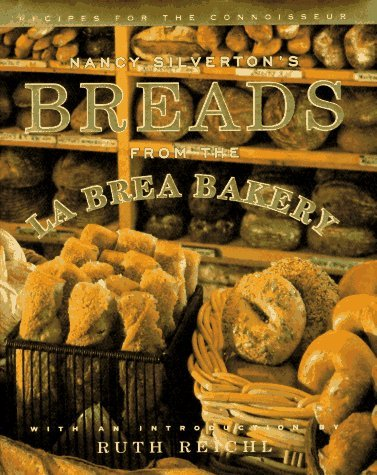
I became a fan of bread when I lived in Europe. But not just any bread. I’m talking about the kind of bread with a crust that crackles and is chewy. With an inside that’s soft. Bread that doesn’t need anything on it, but makes you sing when you eat it with soup or a thin smear of butter. Alas, I came home and could not find such bread. It was all Wonder Bread nonsense and its many sandwich bread relatives.

Luckily, I married a gal who had lived in Europe as well. And who, for a few years, actually had some time to bake. It took some time to find a cookbook with recipes that worked. It took some practice. But she was finally able to recreate that crackle, chewy, soft (not the shattering, roof-of-mouth cutting stuff either). And we enjoyed great bread for a few years. Then she took a job outside the home and we’ve been relegated to American sandwich bread again.

Enter four daughters. Three of whom are working through a church program like the Boy Scouts that’s meant to help them develop key virtues. Each of the virtues requires they complete a number of tasks to educate them about that virtue. When they’ve completed the tasks for a virtue, they are to devise and undertake a ten hour project to help them practice what they’ve learned.

Recently, I sat down with my oldest to see where she was and found to my surprise that she still had a number of things to complete. As I reviewed the requirements with her, I pointed out that she’d fulfilled the requirements for all of these virtues many times over. But she refused to count her activities that might apply because she didn’t perform them at the time with the intent to fulfill the requirements. She wanted her accomplishment to be purposeful. She’s focused on the intent of the program, not the award for the award’s sake. (Where do such children come from?) I saw her point, applauded it, and went back to work trying to help her brainstorm what she could do.

We came to the virtue called Divine Nature, which states: “Be partakers of the divine nature. Giving all diligence, add to your faith virtue; and to virtue knowledge; and to knowledge temperance; and to temperance patience; and to patience godliness; and to godliness brotherly kindness; and to brotherly kindness charity.” Many of the activities revolve around womanhood and family. But it was the big project she needed to complete, one that “will help you practice what you have learned. This should be a significant effort that will take at least ten hours to complete.”

Some of the suggested projects had to do with service in the community, others with talents. Then I read: “Develop a skill you could use in your future home, such as cooking, sewing, making repairs, organizing, or designing.”

Cooking?

My bread soul stirred.

Cooking?! Baking is cooking.

Memories of crackling crust and soft centers filled the mind of my bread beast. “Bread!” I declared.

Luckily, Daughter Number 1 had also eaten her mother’s bread and missed it. “Bread,” she agreed. And we pulled the book out that my wife had found so useful, and began.

The book is Nancy Silverton’s Breads From The La Brea Bakery. Silverton is a master chef.  She owns and operates the Campanile restaurant and the La Brea Bakery in Los Angeles. Her bread is sought for all over the nation. Her breads and the breads she shares in this book are all made with a sourdough starter that she teaches you to make from scratch with grapes. Actually, you don’t make it, but feed it. Because it’s a living thing. And after a while it becomes almost like a strange family pet growing on the counter and in the fridge.

Some might hear “sour” and turn away, but Silverton explains how to keep the starter from becoming too sour. The result is a crackling, chewy, soft bread with a light tang that’s delicious. In fact, Daughter Number 1 just made bagels from the recipe in the book. There’s no tang at all. They’re the best bagels I’ve had. She’s also made the regular loaf, pancakes, and waffles from this same starter. They’re all delicious.

The book starts off with a lesson in bread making then shares about 60 recipes, everything from baguettes to whole-wheat sandwich bread to sourdough onion rings. The only downside to the book is that I wish it had more pictures. An illustration, for example, in the section on rolling bagels would have been helpful. But we found one on youtube, and it sufficed. And I will confess that I didn’t think once about pictures when eating the bread.

BTW, we’ve stopped calling this bread. Now, when it’s time, one of us will say, “I think it’s time to make some divine nature.”

Our Young Girls

I was recently reading about organized crime and their main activities.  In the section about what ties such groups have to prostitution, the authors reported that it’s estimated that 20% of all prostitutes are street walkers. Another 15% are call girls or escort service workers, and the remaining number, 65%, work in an establishment of some kind—massage parlors, brothers, bars, and hotels.  

The authors reported that most street walkers have a lover or companion relationship with their pimp. This didn’t make sense to me at the time. But after watching Showtime’s Very Young Girls, I now understand what they’re talking about.

This film is a documentary about teenage girl prostitutes in New York City and the GEMS (Girls Education and Mentoring Services) that helps them to find a new direction, which is not always easy.

One of the awful statistics the film reveals is that the average age of entry into street walker prostitution in the United States is just thirteen.

No, that’s not a typo. It’s thirteen. THIR-TEEN.

The film introduces us to Rachel Lloyd who dropped out of school and became a teenage stripper and hooker. But she got out. She changed her life and then started the GEMS program to help young girls who found themselves in situations like the one from which she escaped. Lloyd began the program in her apartment and eventually got funding to open a recovery center where girls can seek shelter while they’re trying to redirect their lives.

The film profiles a number of the girls working through the program. Some of these kids are kidnapped off the street and forced into the “life” as they call it. Some are lured away by pimps who initially act as if they want them to be their girlfriends, flattering them and showing them a good time, and only after they’ve been sleeping together for a while do the pimps then explain that they need to make some money.

Many of these girls come from broken homes. Many have grown up believing the sexual messages portrayed by the media. The girls are beaten and given drugs.

Some have been so psychologically manipulated by their pimps that they feel compelled to return. Others have successfully broken with their pasts.

And all of them are just kids. KIDS!

This is a movie that’s hard to watch. It’s not graphic in any way. It’s simply the subject matter. It’s also eye-opening and, while the problem is huge, does provide some hope. Thank the Lord for people like Rachel Lloyd. And for people everywhere who live upstanding lives and by kindness and good teaching save their children and others in their communities from this terrible waste. Rent this movie on Netflix. I think you’ll find it’s well worth the time.

Share

Similar Posts

  • |

    Camille Paglia, Word Ninja

    I think I must disagree with half of everything Paglia says (I’m a Republican, she’s a Democrat). But when you can write like a kung fu master, you have to be read:
    Advanced whack-a-mole is clearly needed for that yammering smarty-pants Newt Gingrich, who is always so very, very pleased with himself but has yet to produce a single enduring thought.

    Holy schnitzel, that’s what words are for. I’m still laughing and nodding my head. Can I be Camille for a while?

    The fact is while Paglia is clearly liberal, she’s not a party lemming. This is one of the things that is so refreshing about her. She’s not afraid to call ’em as she sees them, even if that means roasting her own party or praising the other.

    More here: Too late for Obama to turn it around? Plus: The left’s visionaries lost their bearings on drugs — but the GOP is led by losers

    And here: Paglia page.

    Share
  • Flaming Gorge, Ticket to Ride, Thai Evergreen

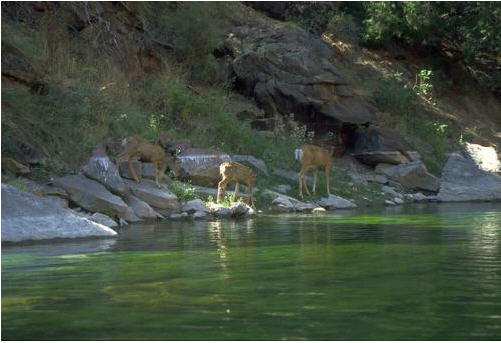
    I want to tell you about a river that is emerald green, clear enough to see the rocks on the bottom sixteen feet below as well as the trout, and provides a wonderful family getaway. I’m talking about the Green River just below the Flaming Gorge dam in north-eastern Utah. 

    Yes, that picture’s of the Green River. Yes, it’s that beautiful and that clear in the calmer parts, of which there are many.

    We just ran the seven mile stretch that starts just below the dam and goes down to the Little Hole campground with our four girls (ages 6 – 15) and had a ball. During our trip we saw otters swimming  up the river not more than six feet from our raft, a herd of mountain sheep off the side of the road, fish and more fish, a snake a long as a man with a light silvery skin mottled with black rectangles, and two osprey (one that dove under the water to get a fish and a second flying about twelve feet over our raft with a fish in its clutches). We ran some class II rapids. This time of year they weren’t scary to me, but provided plenty of thrills and stress for the kids. The water was warm enough to swim in, but cold enough to give you a shock. And it was so CLEAR.  Of course, there were spots too deep to see the bottom. But there were plenty where you could see the river plants, rocks, and aquatic life. And all of it in that emerald hue.

    The girls were in the water inbetween every set of rapids. We packed a cooler and so stopped a number of times. Once to check out a waterfall, another time to snack, another to play on a sandbar, yet another to chase those otters, a bathroom break (outhouses provided by the park service), another time to swim.  

    The Flaming Gorge area features the beautiful landscape seen in Southern Utah–red rock, pines, junipers. People come from all over to run the river and fish. We didn’t fish this time, but there were plenty of anglers who had rented boats. Still, it didn’t feel crowded at all. There were long stretches where we had the gorge to ourselves. Next time I think I’m going to bring a book (in a waterproof ziplocok) and we’ll spend a little more time on one of our stops to sit and relax.

    Some tips:

    • Bring a cooler. You’ll want to put in along the river and enjoy the gorge. There’s no hurry to finish.
    • Bring good water shoes that have a sole with traction and netting to keep gravel out. (I got a pair at Wal-Mart that made the whole ride wonderful.) Also bring a hat and sunscreen. If you wear a cotten tee-shirt and quick drying shorts you’ll enjoy the ride even more.
    • We stayed at the Flaming Gorge Resort the night before our run. It’s been around a while and the condos showed it, but it wasn’t bad. The condos had a kitchen. And the restaurant had large servings of good food.
    • You might also want to bring a way to transport the raft inflated. We put ours on top of the minivan and had no problem taking it to and from the rental shop. However, I wished I had learned the trucker’s knot. The knots I tied cinched up into nasty snags that proved very difficult to untie.
    • Bring two vehicles or a bicycle. The businesses there charge close to $50 to shuttle your car the 9+ miles between the launch below the dam and Little Hole. That was outrageous to me. Next time we’ll bring a bike, lock it up by Little Hole, and have one of us bike back for the car. Or you can park half way inbetween at Dutch John after you’ve launched your raft and make the hour walk down. Of course, if you’re an early riser, the rental shop in Dutch John offers a $20 shuttle from Little Hole to the Dam, but only at 8:30 AM and 9:30 AM.

    *

    While in Provo this year for the Freedom Festival I purchased Ticket to Ride (European version). I wanted to do more than walk around or swim at the pool with the family. It was an excellent purchase and recommendation from the folks at Games People Play in the Orem mall. Of course, the kid at the store had played everything in the store and knew just where to steer us. It only took a few minutes to figure out how to play and everyone from the 6 year old to both Nellie and I had fun. It’s so fun we’ve played it a number of times since we got back.

    *

    Both Nellie and I learned to love Indonesian food during the years we spent in the Netherlands. Alas, not many Indonesian restaurants around. In search of something similar while living the in the San Francisco area, we found Thai food.

    Ah, that dream within a dream.

    And now we found yet another Thai restaurant in Utah with excellent food. So good my two oldest daughters get cravings to go back. The first is Thai Evergreen in Orem, Utah. It looks like a family owned operation and is. And their food is delicious. Four family’s went while at this year’s Freedom Festival, which meant we ordered quite a variety of food. Everything I tasted was delicious.

    The next is Kamin in Logan, UT. Again, wonderful. Nellie and I have eaten there a number of times and never leave unsatisfied.

    Share
  • Sticky Ideas, Cook’s Country Magazine

    They stole his kidney . . .

    A friend of a friend of mine is a frequent business traveler.  To keep his identity safe, I’ll call him Bill.  Bill was recently in Atlantic City for an important meeting with some new clients.  Afterward, he went to a local bar to kill some time before his flight and took a seat at a table. 

    He’d just finished one drink when an attractive woman approached and asked if she could buy him another.  He was surprised, but flattered (Bill isn’t exactly a Brad Pitt).  He accepted the drink.  The woman walked to the bar and brought back two more drinks—one for her and one for him.  He thanked her and took a sip. And that was the last thing he remembered . . . before he woke up, disoriented, lying in a hotel bathtub, his body submerged in ice.

    He looked around frantically, trying to figure out where he was and how he got there.  Then he spotted the note:

    DON’T MOVE. CALL 911.

    A cell phone rested on a small table beside the bathtub. He picked it up and called 911, his fingers numb and clumsy from the ice. The operator seemed oddly familiar with his situation. She said, “Sir, I want you to reach behind you, slowly and carefully. Is there a tube protruding from your lower back?”

    Anxious, he felt around behind him. Sure enough, there was a tube.

    The operator said, “Sir, don’t panic, but one of your kidneys has been harvested. There’s a ring of organ thieves operating in this city, and they got to you. Paramedics are on their way. Don’t move until they arrive.”

    Incredible, isn’t it?

    More importantly, do you think you could remember enough of that, without review, to tell it to someone tomorrow?

    My guess is that you could. And if you did, you’d be spreading one of the most successful urban legends of the past fifteen years.  

    But I didn’t tell you the story to focus on urban legends. There are a lot of stories people tell one another that don’t go viral.  What makes this one different?  In fact, what makes any idea stick effortlessly, like this one does, in someone’s brain?

    Are you a teacher? In school, at home, or at your business? Do you give presentations?  Do you ever need to advertise something—a product, service, or yourself? If so then you’ve had this question.

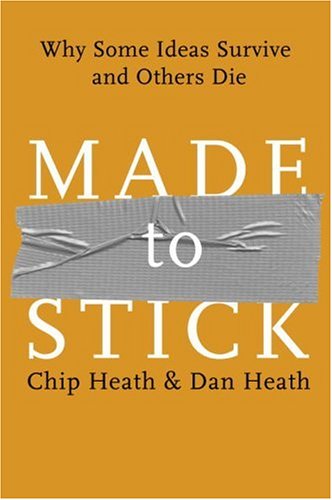
    Maybe you’ve uncovered some of the secrets. Maybe you haven’t.  But there’s no reason to despair: Chip and Dan Heath have written the book on it. It’s called Made to Stick: Why Some Ideas Survive and Others Die and is one of the most fascinating and practical reads I’ve come across in the last few years.

    The brothers Heath spent hundreds of hours researching sticky ideas: urban legends, advertising campaigns, wartime rumors, proverbs, conspiracy theories, jokes, some of the nation’s best teachers—you name it; if it was sticky, they looked at it. They asked questions like what makes some urban legends so compelling? Why do some chemistry lessons work better than others? Why do some political ideas circulate widely and others fall short? What they found was that sticky ideas exhibit six traits. And it was relatively easy for someone, once they understood those traits, to make almost any idea stickier.

    I can see the traits in some of the things that I’ve done that have been sticky. I can see other ways to improve. The cool thing is that I’m not going to be guessing as much. If you need to make your ideas stick, let me recommend you get this book.  If you want a preview, go to madetostick.com.

    Recipes that actually work?

    I was once induced, through insidious mind control, to purchase a cookbook that included all sorts of tempting dishes. I prepared a number of the recipes, and every one of them was a bust, especially the cinnamon flank steak with eggplant, which I think Nellie and I chewed for about six hours until our jaws dropped off.

    Not satisfied to learn my lesson once, I soon purchased another book on making bread the Old World way. Despite our best efforts and many valiant attempts, all we could produce were loaves that were so bitter and sour they could have been used at Guantanamo Bay to threaten captured Talibanists to talk.

    Let’s just say that after a few more of these, I finally beat back the mind control. I’ve been gun-shy of cookbooks ever since. We’ve been very selective over the years, and this has saved me some money. Unfortunately, I think all of those lessons learned are going to go out the window.

    I was recently watching the Create channel and saw an episode of Cook’s Country where they showed how to make coleslaw that wouldn’t get all watery and a grilled chicken with traditional Southern white BBQ sauce that had me slavering in my seat. During the show they talked about testing these recipes and their failures.

    I learned that the folks there had just finished an eleven-season series called America’s Test Kitchen (where was I all that time?). In the series, they tested hundreds of recipes five ways to Sunday to come up with ones that really worked.

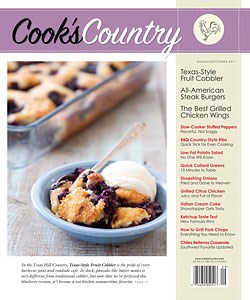
    When the episode of Cook’s Country finished, the old cookbook mind control had risen to full force. This time, though, I was able to exercise some restraint. Instead of buying fifty cookbooks, I started a 14-day trial to Cook’s Country magazine, a thirty-four page, oversized, bi-monthly that’s full of recipes that have been tested. 

    One of the neat features is that they don’t simply present the recipes, they also include the stories behind the testing so a reader can learn from their failures and successes right along with them. In fact, the stories of the tests were so interesting I made Nellie sit down while I read them to her. The magazine also includes cooking tips and product ratings. In the issue I received, I learned, for example, which egg wash proved, through testing, the most successful on pies and which graham cracker tasted best in recipes. One of the best things about the magazine is that, unlike many magazines that have three sentences of content and forty pages of advertisements, Cook’s Country has zero advertisements. Zero! It’s nothing but cooking.

    We’ve tried five recipes so far. Three of them have been clear winners for all the tasters in this family. There other two were good, but not spectacularly so. Still, there weren’t any cinnamon flank steaks! 

    In the next set of reviews, I’ll share their potato salad recipe that had us all oohing and aahing. And maybe the chocolate éclair cake we adjusted to perfection. I’m going to continue the subscription and give their family cookbook a try.  I’ll report my results. In the meantime, I suggest you look at Cook’s Country magazine online at cookscountry.com or watch the show on Create.

    Share
  • Thai Crystal, Rothfuss, Daily Life in the Middle Ages, Perot Charts

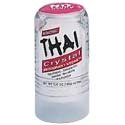
    Thai Crystal Stick - Large, 4.2 ozI don’t like anti-perspirants because they gob up in the underarms of my undershirts. Which means I eventually go walking about with pebbles in my pits. And, yes, we do have a washing machine and use it regularly. There’s something in there that defies anything less than hydro-chloric acid.

    I don’t like deodorants because they wimp out on me. I’ll put on my bracing Speedstick in the morning and be sniffing myself by lunch. And if I put some industrial perfume on it only leads to rashes.

    Someone might be saying that I should just be a real man and smell like a real man smells. But how about I be a real, smart man. See, if you’ve got dog poo in your carpet, you wouldn’t spray it with cologne, hoping to deal with the smell. No, you go to the source. Clean up the stuff and forego all the scents. In fact, if you keep the dog from pooping in the first place, you’re ahead of the game. So why not do the same with underarm odors? Just get rid of the stinkers.

    Well, that’s what I did. Many years ago I found out that natural mineral salts kill underarm bacteria. If the underarm bacteria can’t exist, let alone breed and excrete, then you don’t get underarm odor. What’s more, you can get those mineral salts in “rock” form. Just wet and wipe under your arms and you’re done. It works just like regular anti-perspirant and deodorant, it’s just that you’re delivery bacteria killers instead of perfumes.

    Another good thing about mineral salt deodrant rocks is that they last a LONG time. And I mean looooong. My last rock took about 4 years to use up (heads up all you one-year’s supply people). The problem with them is that you can’t find the rocks in the grocery store next to the big brands. But you CAN find them in health stories. I got my latest from Shangri-lah in Logan. The brand is Thai Crystal (named after the location where the US companies discovered this method of deodorizing).

    Folks, it’s 3:09 PM. I just did the sniff test–aah, the sweet smell of nothing!

    *

    The Name of the Wind (The Kingkiller Chronicle, Day 1)I heard all the hype about Rothfuss and picked up his The Name of the Wind  in a Hastings book shop. The first few pages didn’t grab me and so I put it back. But then I kept hearing the hype. I finally decided, okay, okay, I’ll give it a go.

    By “go” I mean something like five pages. See, I’m impatient with books. If you can’t grab me by the bottom of page one, I’m outta there. I read too many stories in my undergrad program that bored me to the very last page. Sometime after I graduated (why did I wait so long?) I realized that I could increase the odds of reading something interesting me if I only read things that interested me. (You only arrive at this level of brilliance after many years in college.)

    I’m not going to overview the plot here. Just know it’s a fabulous read. For you writers, note that what drives the reader’s suspense is not an overarching plot, but his situation of being alone and destitute. So while there are villains, that really isn’t what keeps the reader going. It’s the wonder of a new place and our hope for this kid.

    *

    Daily Life in the Middle AgesI read more non-fiction than I do fiction each year. I need to so that I have something to say in my writing. And I will tell you that I haven’t found a finer source of cool ideas to huck into stories than Paul Newman’s (no, not the actor cum cookie man) Daily Life in the Middle Ages.

    He breaks up medieval life into topics like Eating and Cooking, Building and Housing, Clothing and Dressing, etc. It’s full of wonderful stuff.

    Did you know that they played football back in old England? Not sissy European style, but hog style, like rugby or American football. Except it was often between two towns and the playing field was miles long.

    Did you know that respectable women wore hats? Those who let their hair go free were young girls and prostitutes. And that if a man knocked a woman’s headdress off it was tantamount to accusing her of prostitution and might result in the woman’s husband or family taking the man to court to exhonorate her. 

    Did you know that the word “curfew” came from the old French “covre feu,” meaning “cover the fire.” Since open flames were such a fire hazard in the old cities, many towns had regulations that required people to douse their lights and carefully bank their fires at a certain time in the evening which was often marked by the tolling of bells.

    I pulled these beauties out just randomly flipping through the pages. The book is full of such delights and you can be sure many of these will be finding their way into my stories.

    *

    I didn’t vote for Ross Perot the first time. I certainly wouldn’t vote for him now. But James Maxey just pointed me to an excellent on-line explanation of the current government budget. It’s worth your time to check this out to be able to understand what folks are talking about when it comes to our money and how Congress spends it. The charts are narrated, compelling, non-partisan, and incredibly easy to follow. Here are more Perot Chart presentations.  

    Share
  • |

    Radiolab’s “Parasites”

    Radio and TV have incredible power. But until the last decade they were always constrained by time and signal power. You had to listen when the station broadcast it, and you had to listen where you could pick up the signal. 

    Living out in the boonies we don’t get good radio or TV reception (no I don’t subscribe to satellite). Which is why the internet is so wonderful.

    You can listen and watch almost anything when you want from almost any location–yes, even in Laketown, UT, Boonie Central. Millions listen to music, conservative talk, or libral talk (NPR) via the internet. I enjoy all three depending on my mood. But there’s so much more out there than music and blah blah blah, as much as I love it. For example, you can listen to the British BBC. You can listen to the Dutch. See what’s going on in Australia. Doesn’t matter that they are a number time zones away and all asleep when I’m working. I love the internet.  

    One of the best programs I’ve heard in the last six months is the three-part “Parasites” presented by Radiolab. In a fascinating hour they address the following questions:

    • Parasites: are they evil, or are they awesome?
    • Should you get infected with hookworms?
    • Can parasites exercise mind control over their hosts?

    Along the way they tell a number of amazing stories. Listen now. You won’t be able to stop.

    Get zinged, Baby!

    Share
  • Good Stuff: Poldark, Monk, and the cure for dragon feet

    For all of you longing for just one more season of Downton Abbey, I’ve found a new series from the BBC I think you’ll enjoy (thank you Duane Robinson for the recommendation).

    It’s called Poldark and is set in the late 1700s in Cornwall, that little southwestern leg of England that juts out into the Atlantic. The dark-haired and handsome Ross Poldark returns to England after having fought in the American War of Independence and finds that his father has died, and he’s inherited the estate. Except the estate is in ruins.

    The house, which is a long way from being anything grand, is a mess and being inhabited by the deceased father’s last two servants. A man and a wife who are equal parts louts and lushes. The land isn’t producing. The mine is closed. And Poldark has very little money.

    By the way, when we think of British aristocracy, we most often think of dances and fine clothing and large tracts of lands. We seldom think of mines. But Cornwall has been mining tin for a very long time, and so were its lords. In fact, Cornwall was known outside of the Isles anciently, and some historians suggest that Cornwall was probably selling tin to the seafaring Greeks and Phoenicians many hundreds of years B.C.

    So our young and handsome lord has come home to a mess and very little money. But he immediately sets about trying to repair things. And what unfolds is a wonderful story with love, action, humor, injustice, and villains plotting Poldark’s downfall.

    We loved Downton in part for the refinement and high society (and Lady Grantham’s hilarious one-liners). However, Poldark isn’t about the top of the aristocracy. It’s about a man almost at the bottom. And many of those of the lower class who are his friends. There’s a refreshing earthiness about it even while you still have scenes of the high society and all that goes with it.

    We just finished the first season and are hooked. In fact, I stood up and cheered at the end of the last episode we watched. So if you love English historicals, you’re going to enjoy Polkdark.

    *

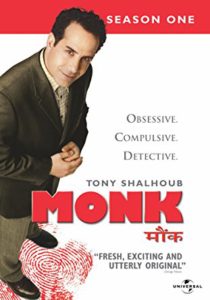
    The humorous detective series Monk debuted in 2002 and ran for eight seasons. It was a huge hit. But because I’m a cave dweller I didn’t get to it until now. But, boy, I’m happy I did.

    If you haven’t seen it yet, you’re in for a treat. Monk is one of those brilliant detectives like Patrick Jane in The Mentalist or Sherlock Holmes who sees all sorts of details that so many others miss. But unlike those guys, Monk has obsessive-compulsive disorder plus a number of phobias.

    And so he can’t just walk in and stun everyone with his brilliance because at any moment he might get sidetracked straightening pictures or moving lamps or trying to avoid germs. In one funny scene he’s being chased on foot by someone intent on killing him, and he can’t help but touch the poles as he runs by. However, he’s not all helpless because he’s hired a female nurse, Sharona Fleming, to help him. And the interaction between the two of them adds another enjoyable dimension.

    And so you get to experience all the awe of watching someone like Sherlock solve crimes plus laugh along the way. I couldn’t help but laugh out loud during a number of episodes.

    If you like The Mentalist, Elementary, or Psych, I think you’ll really enjoy Monk.

    *

    This last review is for all of you who have dragon feet.

    That’s what I had until two months ago. Dry dragon feet. So dry and with such sharp and jagged calluses that I regularly wore the area on my sheets around my feet to shreds. Nellie’s side of the sheets were nice and smooth. My side, after a year or two, looked like the dog had attacked it.

    The calluses were so bad I periodically sanded them off with 400 grit sandpaper.

    I also got stress cracks in the winter, which I tried to heal with band-aides and Neosporin. And that worked a decade ago. But the stress cracks were just getting more frequent and longer-lasting. This last winter I had three that stayed for weeks and weeks.

    And so when I went into my dermatologist for my annual skin cancer check, I asked him if there was anything to be done. He said, “Get CeraVe cream with SA, salicylic acid. It has to have SA.”


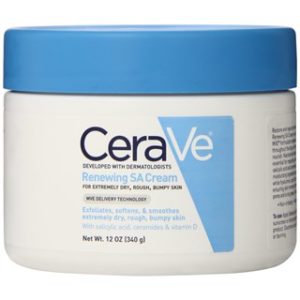
    After the appointment, I promptly drove to Walmart and walked down to the cosmetic aisle and purchased a little tub of CeraVe Renewing SA Cream. And I began to use it that night, putting socks on after I applied it. I applied it every morning and night.

    And, miracle of miracles, a few weeks later my feet were normal human feet again. The calluses were gone. The stress cracks gone. The pain gone. My sheets love me. My wife loves me. I’m saving money on sand paper.

    Folks, if you have dragon feet and want to be human again, let me suggest CeraVe with SA.

    Share

One Comment

  1. I highly recommend a good quality breadmaker once your daughter no longer wants to invest the time. I have a Panasonic and it’s plain awesome. Stuff the ingredients in (takes 10mins at most), do something else for 2-4 hours and voila, real bread.

Comments are closed.