|

Writing update: 5/16/11 – outlines & writing vividly

Finished chapter 5 of CURSE last Saturday. Huzzah!

The writing is a blast, even though it still requires work. Along those lines, I’ve been meaning for some time to write up the techniques and principles I use when drafting.  So I think I’m going to do a semi-regular post on a weekly basis where I share these tidbits as I run into them. It will be kind of like director commentary, although I’ll have to be careful not to toss out any spoilers.

This week I’ll talk about using chapter outlines and writing vividly. 

Bullet Outlines & Chapter Outlines

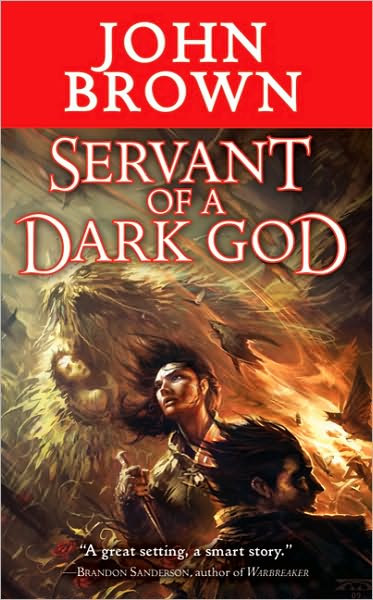
Up to this draft, what I’ve done is work from a bullet outline.  Each bullet is a short statement of what needs to occur.  Sometimes it’s very general about the story arc–presentation of the problem, struggle, and resolution.  Sometimes it’s a very specific step.  Sometimes it includes cryptic notes.  For example, here are some bullets for SERVANT:

  1. Talen goes to village, they suspect him
  2. Talen runs, sabin catches him by his hair and pulls him back, field stone size of liver. Plant idea of him catching Hatchlings
  3. Woods back home, freaked
  4. Father is not as concerned, strange, sends him out to field–Talen starts to think about catching the Hatchlings himself

As you can see, it gives me a roadmap (which often changes) so I’m not starting from nothing when I open up my chapter document.  But it’s very general.  When using this, I often have to use a number of takes to get the scene written because those first takes are me imagining the scene. In fact, my first take is usually a sketch of the scene with me blocking out my goals for the scene and how I expect the events to occur. However, in this last go at CURSE I wrote a chapter outline.  It took me about 25 hours, and the outline for CURSE ran 32 pages. I’ve pasted the first two chapters below.  You can see they’re still mostly in summary, but they represent the initial sketch of what’s going to happen.   

1.               The Village of Plum – TALEN

It’s past midnight, behind enemy lines. A thin moon hangs in the sky. Talen, Sugar, River, and five of Shim’s best soldiers crouch in the black shadows of the tree line running along the road to the village of Plum (Sugar’s former village), watching for soldiers or a village guard.

Talen jokes with Sugar, telling her he wanted a dance tonight, not a sneak behind enemy lines, even if it was in the dark. He’s more than half serious. As they’ve worked together over the last three months since the battle in the cave, he’s become attracted to her.

Also during those three months, the clans of the New Lands split into two factions. Five clans, led by the Fir-Noy, believed Shim, the leader of the Shoka clan, was being controlled by sleth. The remaining four clans followed Shim. The Fir-Noy faction immediately took up arms, initially to protect themselves, but they soon began talking about ridding the land of the sleth curse. Tensions rose, and in a series of altercations a number of people on both sides were killed. Now both factions have mobilized forces to establish pickets and patrols along a border between them.

A few days ago, Argoth received word from his spies that something was afoot in the Fir-Noy clan, as if they were preparing for a strike. Futhermore, they’ve decided to excavate the grounds about Sugar’s old house. Argoth knows Purity had her own cache of weaves under the hearth of her old home, the location of which she revealed to Sugar just before she died. Argoth has begun to train up an army of dreadmen for Shim. But he’s stretched thin. He needs all the lore he can get. So he’s sent Sugar and the others to retrieve the items before they’re lost. They’ve come on the evening of the annual apple dance festival, hoping the Fir-Noy would be less vigilant. So far, they’ve been right. In fact, Talen begins to feel like it’s been a little too easy.

As Talen and the others prepare to move forward, Sugar puts her hand on Talen’s arm. He can feel Sugar’s Fire and soul, and her touch only enflames his desire for both. He’s alarmed by this intensity, and finds it hard to focus, so he moves his arm away.

“You’re going to give me a boost up,” she says.

Up ahead in front of the Fir-Noy village stands a thick timber pole probably 11 feet high. Fastened to the top of that pole is what looks to be a skull.

“You brought us round the wrong side,” Talen says. Their objective was the ash ruins of Sugar’s burned out house, not this pole. 

“You can’t think we’d come all this way, and I’d leave without it.”

It’s her father’s skull. The only thing of his that remains. Talen, not wanting contact, motions at one of the taller soldiers with them. “He’d be taller.”

“Come on,” Sugar says and moves forward in a crouch. They move out of the shadows and into the moonlight, watching the village. Sugar climbs up on Talen’s shoulders and cuts loose the bonds holding her father’s skull. The whole time Talen’s desires make the experience uncomfortable.

Once Sugar has the skull safely in her sack, the group keeps to the deeper night shadows of the tree line and moves around the edges of the village fields until they come to a ditch. Along the way, one of the soldiers touches Talen, and he feels that same overpowering desire. Something is not right inside of him. He knows it. But there’s nothing to do about it now as they follow the ditch to the ash ruins of Sugar’s house.

Sugar and Talen sneak over to the hearth of the burned out home. River and the five Shoka soldiers take up watch. Soon Sugar finds the secret cache, but as she’s removing the items, they hear a sound come from one of the surrounding houses. Talen and the others stop and listen. Suddenly Fir-Noy soldiers burst out of the door. They overwhelm one of Shim’s soldiers and rush straight for the others.

Talen and the others turn to run, but Fir-Noy soldiers begin to pour out of four other houses. Then a Fir-Noy dreadman emerges and shouts it’s the boy that’s wanted. They can slaughter all the rest. It’s clear these soldiers were waiting for them, but there’s no way they could have know Talen and the others were coming, unless they were betrayed. 

2.               Hue & Cry – SUGAR

Sugar stuffs the last item in the secret cache into her sack and rises. The Fir-Noy are shouting, but River charges a gap in the quickly forming mob. She fights ferociously. The others race after her, Sugar and another soldier bringing up the rear. Sugar and the others are multiplied, but they’re not fast enough to avoid the soldiers completely, and Sugar is forced to fight and kick to break her way through. When she finally does break past the men, she finds she and the last soldier have been separated from the others and there’s no way to immediately join back up.

Sugar and the soldier run, but he’s wounded. He tells Sugar to run on without him. She refuses, then a company of Fir-Noy round the corner of a house. The soldier turns to face them and tells her once again to run. In her mind’s eye, Sugar sees the same situation unfolding before her as when the mob came after her mother and da. She ran then and regretted watching her father get butchered. She isn’t going to run now. Besides, she’s multiplied. So instead of running, she rushes over to the soldier and, with lore-given strength, picks him up, puts him over her shoulders, and, despite his protests, speeds away.

Sugar knows she won’t be able to outdistance her pursuers like this, but she also knows the villager Stout keeps a horse in the barn just ahead. She turns the corner on the barn, puts the soldier down, and tells him to get the horse. Then she darts back out into view of the soldiers following and leads them away. She glances back and sees the soldier slip into the barn. It’s the best she could do for him. If he can get on Stout’s horse, he’ll have a chance to escape.

Sugar looks to see how she might join back up with Talen and the others, but it’s impossible now. And while most of the Fir-Noy soldiers chased after Talen and the others, a good number are chasing her. Furthermore, others in the village are coming out of their homes. She speeds past them. All over the village dogs begin to bark, but she hears one cluster that sends fear down her spine. The villager Solem keeps a pack of prize-winning sight hounds. He emerges from a barn with his pack on a leash.

“There!” a man shouts. The barking of Solem’s dogs rises in pitch.

Sugar increases her speed then hears Solem. “Stu, boys! Take her. Get the wretch!”

The dogs shoot out after her.

So how has it worked?

So far it’s worked very well. Having that initial sketch done means I take a lot less time finishing each chapter.  However, it doesn’t change the general drafting process for me:

  1. The chapters still change as I write. I find cooler ways to accomplish what I need. I also run into things I haven’t imagined yet and have to invent them. For example, on chapter 2 when Sugar is having issues, I realized I didn’t know exactly where the houses lay in the village, so I had to sketch that. It presented opportunities and images.  For example, I thought about the Fir-Noy bowmen being on the roofs. I hadn’t imagined that before, but it was so cool to me, I had to put it in.  Then I felt I wanted Talen and her to huddle together at first. I had to run through a few options about how that played out before I found one that felt right.  
  2. I still find I need to sketch out my goals for the chapters and an initial blocking of what happens. This is much shorter than it’s been on previous drafts, but I still find it helpful. Blocking scenes helps.  This is me just figuring out where everyone is and how they move. Sketching this first helps me write faster.
  3. I still have to do takes, although I move through them more quickly.  

 As you can see, I find the sketch/draft method incredibly helpful.  Just like a painter, I sketch out what I’m thinking of painting. That might require a few sketches where I add in more details.  Then I switch over and begin to paint.


Writing Vividly

On another note, I read “Stories are made out of scenes; Scenes are made out of nouns” by author James Maxey again. I really like this essay. Everyone is always talking about verbs, but nouns are such powerhouses.

Speaking of which, here is the opening to Maxey’s “To The East, A Bright Star” which was published in Asimov’s.  It has one of my favorite beginnings. And part of the reason is what Maxey talks about with nouns.

TO THE EAST, A BRIGHT STAR

There was a shark in the kitchen. The shark wasn’t huge, maybe four feet long, gliding across the linoleum toward the refrigerator. Tony stood motionless in the knee-deep water of the dining room. The Wolfman said that the only sharks that came in this far were bull sharks, which were highly aggressive. Tony leaned forward cautiously and shut the door to the kitchen. He’d known the exact time and date of his death for most of his adult life. With only hours to go, he wasn’t about to let the shark do something ironic.  

Tony waded back to the living room. Here in the coolest part of the house, always shaded, he kept his most valuable possession in an ice-chest stashed beneath the stairs. He pulled away the wooden panel and retrieved the red plastic cooler. Inside was his cigar box, wrapped in plastic bags. He took the box, grabbed one of the jugs of rainwater cooling in the corner, and headed up the stairs to the bathroom. He climbed out the window above the tub onto the low sloping roof over the back porch.

This all reminds me of Swain’s thoughts on bringing the material to life, which I thought Maxey did so well in those paragraphs.

Few of us read voluntarily about the primer-level doings of Dick and Jane.  Simplicity is a virtue in writing, true; but never the primary virtue.

What is?

Vividness.

How about brevity?

It’s important too.  Within reason.

Within reason?

Who, just learning this business, knows where or when or how to be brief? In the wrong place, brevity can destroy you.

So?

As in the case of simplicity, brevity is never the heart of the issue. Vividness is.

How do you write vividly?

You present the story in terms of things that can be verified by sensory perception. Sight, hearing, smell, taste, touch–these are the common denominators of human experience; these are the evidence that men believe.

Describe them precisely, put them forth in terms of action and of movement, and you’re in business.

Your two key tools are nouns and verbs.

(p25 Techniques of the Selling Writer)

Of course, there’s more–the telling detail, metaphor, working memory overload, details from the point of view. But it all plays into being vivid.

Share

Similar Posts

  • |

    What Separates the Gifted from the Schlubs and How Praise Can Backfire

    What makes someone gifted?

    Raw talent?

    Sure. An apptitutde for something always helps. But it appears it’s not enough. True expertise takes work. And those trying to help (i.e. parents, teachers, coaches) can hinder if they give the wrong kind of praise.

    I wanted to share three articles reporting the results of a number of interesing studies on expertise which often appears as a skill level that seems unobtainable by normal, motivated individuals.

    The Meadow Mount School of Music

    This music school in the Adirondacks has “trained such luminaries as Pinchas Zukerman, Itzhak Perlman, Joshua Bell, Lynn Harrell, and Yo-Yo Ma.” A number of researchers wanted to see what the difference was between the students who seemed most skilled and those who weren’t. They divided students “into three skill levels, including one the faculty had identified as having the best chance of becoming world-class soloists.” Then they looked at the differences.

    According to the report, “the results were clear-cut, with little room for any sort of inscrutable God-given talent. The elite musicians had simply practiced far more than the others…Psychologists found a second attribute in elite players that is less obvious than sheer hours of practice. While most of us think of practice as the repetition of tough spots (and this is how many young people do practice), elite musicians, they found, took a different approach.”  Read full article.

    The majority of childhood prodigies never fulfill their early promise

    Why? According to these researchers it’s because so many early-bloomers get warped by their experience and fail to develop perseverance. More here.

    Praise that Undermines Achievement

    It appears that how we praise achievement affects performance. Sometimes in large and startling ways.

    You may think that it’s good to praise your child for being “smart” or “good” in some subject. But there’s growing evidence that giving kids such labels doesn’t improve or motivate performance, but actually reduces it.

    Psychologist Carol Dweck and her team have studied the effect of praise on students in a variety of settings. “Repeating her experiments, Dweck found this effect of praise on performance held true for students of every socioeconomic class. It hit both boys and girls—the very brightest girls especially (they collapsed the most following failure). Even preschoolers weren’t immune to the inverse power of praise.” So what type of praise actually works? Read here.

    When does genius bloom?

    We often think genius must be tied to being precocity. After all, Motzart was doing musical flips when he was still a kid.  For writers, however, it appears this isn’t the case. More here.

    Share
  • The Key Conditions for Reader Suspense Part 2: Character

    In the last part in this series we discussed the idea that readers don’t want your characters to be happy. They want them to hunted, stressed, threatened, freaked, and nigh unto some horrible fate for 90% of the novel. At that point, after all that trouble, readers want the characters to pull victory out of the jaws of defeat, exhale a big sigh of relief, and enjoy a Slurpee . . . until the next book in the series.

    All through the big worry, readers don’t want to know what WILL happen. They want to know or suspect what MIGHT happen and HOPE and FEAR about those possibilities. And then they want a cathartic resolution of all that hope and fear, all that dramatic tension they have felt.

    But our readers won’t hope and fear for just anyone. They will only hope and fear for those characters who evoke sympathy and interest. And so the second set of Pareto factors focus on the things, the conditions, that do this. 

    Pareto Factor 1: Troubles

    Sympathy starts when we see someone in trouble. That’s not the only thing that’s required. Some people who are in terrible trouble only evoke pity or even antipathy. So there’s more to this than trouble, but trouble is where sympathy starts. So what kind of trouble are we talking about? I like the categories James Scott Bell uses. We feel sympathy for people who are:

    • In jeopardy or experiencing hardship
    • Are underdogs
    • Are vulnerable

    When someone is in jeopardy, it means some significant aspect of their happiness is being threatened. Hum, sounds suspiciously like the first type of story problem I discussed in the last post, doesn’t it? That’s because it is. We have sympathy for people who are being threatened with death, slavery, drudgery, etc. We’re just wired for it. Likewise, we feel for someone experiencing a hardship. And a “hardship” is simply someone having to deal with a lack, the second type of problem we discussed. So we begin to evoke reader sympathy by just giving our characters significant problems to deal with.

    And you can pile the problems on so that not only does our hero have to deal with the central problem of the story, but maybe he’s also broke and has nothing but one box of macaroni and cheese in the cupboard, or his car just got repossessed, or he’s just been dumped by his girlfriend, or he and his daughter are estranged because his ex-wife is pouring poison in her ear, or he breaks his arm, or he works in an awful job.

    Do you remember Peter Parker in Spiderman 2? He gets fired from his pizza job, has no money, is losing his girl. Lots of hardship. And lots of reader sympathy.

    But giving characters problems is not quite enough. Because if you recall, the readers want to fear for our characters. Nobody fears too much for someone else if we know that they can easily resolve any threat or hardship that comes their way. And so we need to stack the odds against the character. They need to be underdogs.

    This means that the opposition starts off two steps ahead. It means they have more power, more resources, or more information. This is why strong antagonists make strong stories—they help the reader to fear for our protagonists.

    Who worries about a Superman who is a hunk of burning love? Nobody. Unless he’s actually Clark Kent in other matters and stands to lose something like Lois. Or, when he is Superman, someone hangs kryptonite around his neck and turns him into a dweeb.

    In this same vein, our characters need to be vulnerable. This means they can be squashed at any time. They can be shot, killed, ruined. Until the very end, the reader must know the characters can lose big. In the previous post, I said that problems have to be hard to solve, otherwise readers don’t worry. The things that make problems hard to solve are character limitations, ongoing and increasing troubles, conflicts, and surprises. All of those factors make characters vulnerable as well.

    So, threaten your characters will all sorts of things, give them hardships, make them vulnerable underdogs, and we’ll feel sympathy for them.

    Or will we?

    There are some characters with problems who we don’t want to root for. Instead, we hope they fail. Villains, for example, have problems, but we root against them with vigor. In our minds, these folks deserve to fail. So you can’t rely on problem alone. There’s another quality that your characters must evoke if we’re going to hope and fear for them.

    That other quality is deservingness.

    Pareto Factor 2: Deservingness (likeability)

    All of us have an automatic scale of justice inside of us. We can’t turn it off. Nor can we ignore it. It’s very simple. If someone’s bad outweighs their good, then we think they don’t deserve good things. Conversely, if someone’s good outweighs their bad, we think they should be happy.

    Don’t believe me? Fine, let’s test it.

    A boy breaks his arm and he whines, whines, whines about it all day long. Tells his teachers he can’t do his school work because of it. Mopes at home in front of the TV. Steals his sister’s money to buy candy because he has this awful injury and he deserves it. Maybe he makes all his friends listen to him talk about how hard it is, and he just goes on and on and on.

    You know exactly what you’re thinking. You know exactly how much sympathy you have for him, which is none.

    Another boy has a broken arm. But this one doesn’t whine. In fact, when his dad falls ill, he goes out and with the one good arm, and in pain, mucks out the horse stalls. He does this because his dad was going to lose his job if he didn’t. Then the boy comes back in and cleans himself up and doesn’t say a thing.

    You like that second boy? You want good things for him?

    Of course, you do.

    Problems aren’t enough. They’re only half the equation. For us to root for someone, we have to feel they’re deserving. Or if you like the term better, you can say they need to be “likeable.”

    So what makes someone deserving or likeable?

    That’s going to be slightly different for each person because our moral codes are all slightly different. If you feel it’s a sin to kill animals, you might feel conflicted reading a story about a rancher who needs to get his cattle to slaughter. If you feel unions do nothing but harm, you might throw down a book that’s about a union boss trying to force a corporation into compliance. Nevertheless, there are many virtues and vices that people hold in common. Usually, we feel people are deserving if they weigh more on the one side of the table below than they do the other. 

    Deserving / Likeable Not Deserving / Unlikeable
    • Unselfish, do nice things for others
    • Stand up for little guy
    • Funny
    • Sacrifice for someone else
    • Good-humored, don’t take themselves too seriously
    • Courageous
    • Hard-working
    • Actively trying to fix their own problems
    • Hopeful
    • Etc.
    • Selfish
    • Bully others
    • Dull
    • Whining
    • Cowardly
    • Take themselves too seriously
    • Sanctimonious and self-righteous
    • Lazy, only want to snivel or groan about their problems
    • Sad sacks
    • Etc.

    We tend to like people more who show the characteristics on the left side. We tend to dislike people who show the characteristics on the right side.

    Notice, a lot of this has to do with motive. In many instances it isn’t just the act that decides us for or against someone. It’s the act + the reason why they did it. Let’s go back to that example of the kid with the broken arm that mucked out the horse stall. We’ll love him if he made that sacrifice out of selflessness. We’ll feel something different if he does it only because it allows him to hide his and his father’s crime (maybe they killed someone and have temporarily stashed the body in the barn under the muck in a stall).

    Furthermore, while we need to make the characters we want our readers to root for deserving, this doesn’t mean they have to be paragons of virtue. Remember that deservingness is weighed on a scale. Just as long as the characters tip the scales one way, we will feel they’re deserving. On the other hand, if they cross the line the other way, we’ll turn against them.

    For example, let’s say your lead character is a thief who steals money from retired folks. But in your story she’s trying to save a kid from being kidnapped and sold into the sex slave trade. Yeah, our character may be a thief, but what she’s doing outweighs the bad, and we’re going to root for her.

    Now let’s make our lead a child molester. He’s trying to capture a brutal drug cartel murderer who has just escaped prison. Along the way he has his way with a few children.

    Who are you rooting for this time?

    Yeah, me too. I hope the murderer finds the child molester and offs him. Or at least alerts the authorities to his crime and ties him up in a neat package for them to pick up.

    So you don’t have to have perfect people as your leads. In fact, it’s sometimes more interesting to have someone with foibles just like the rest of us. But when those foibles turn into things we find despicable, we’ll turn against those characters.

    And vice versa. For those of you who have read or watched Pride & Prejudice, did you notice how you rooted against Mr. Darcy when we interpreted his actions as smug condescension? The moment he changed, and we learned of it, we cheered for him. It was all a matter of deservingness.  

    If we want to hope and fear for our characters, they need troubles. But they also need to weigh in on the deserving side of our scale of justice. When they do, they become admirable, likeable, heroic.

    In fact, heroes, the ones that make us stand up and cheer, are those people that put their own happiness at risk to do the “right” thing. They’re the very embodiment of deservingness.

    So make your characters admirable in some way, if only just a little bit.

    For more on the topic of deservingness, read How Inequity and Deservingness Propel Readers Through Story.

    Still, we’re not done yet. We might have characters who are completely deserving, but they are so boring we can’t muster any interest in them. And that brings us to the third Pareto factor.

    Pareto Factor 3: Interest

    We want to hope and fear for a character for 90% of the novel. But will you stick around if the characters are utterly boring? Probably not. So you want to make your characters interesting. Heck, sometimes we don’t need much of a problem, but will read about someone just because they’re so dang interesting. Character interest is a key factor in a reader’s enjoyment of your story. It one of the things that produces the biggest bang for the buck.

    The question is: what makes a character interesting? The answer: the same things that make real people interesting.

    You’ll want to make your own list of things that make people interestings because what rocks you might not rock me, but I’ll share the types of things that spark my interest in other people below.

    Your characters don’t have to exhibit all of the traits listed, but you might want to think of giving them at least one or three of them.

    Power

    People who have power draw our interest. That power may be one of many varieties:

    • Wealth. They might be super rich like Bill Gates or Warren Buffett or the Queen. They may drive the coolest cars and have the most luxurious houses or clothing.
    • Position. Someone in a powerful position like the CEO of a big company, the general of an army, or the leader of some gang. But it doesn’t have to be huge. A single cop draws attention. As does an IRS agent on your doorstep. The foreman of a crew has some power. The character might not even be the one to hold the reins of power but be a spouse or counselor of someone else who does.
    • Physical strength. They may be fast or strong or just huge individuals. Maybe they have been trained to be deadly weapons or at least use them.

    Ability

    People with extraordinary skills or talents draw our interest. It’s why, in fantasies, we’re so interested in those that can actually practice magic. In fact, ability is a type of power. And just like those with the other types of power, these folks evoke wonder, respect, and sometimes awe.

    The skills and abilities you’re interested in may differ from mine, but we are fascinated by those who can do things well or have some gift. Maybe they are expert at selling, or making money, or framing a house, or painting, or doing gymnastics, or reading, or hacking into computers, or skydiving, or firing weapons, or riding horses, or hunting, or getting people to like them, or making pancakes, or a thousand other things. Maybe, like Edna Mode in The Incredibles, they have the ability to design amazing super-hero outfits.

    Even though your characters have limitations that prevent them from immediately solving the problem they face, you can still give them some kind of an ability that makes them admirable to us. Some gift or talent. And maybe it helps them solve the problem in the end.

    Extraordinariness

    People who are uncommon in some way draw our interest. In fact, if you think about those with power and ability, you see that they possess this quality as well. However, you don’t always need power and ability to be extraordinary.

    Maybe you’re a normal guy in an extraordinary job. You’re a CIA officer, a smuggler, or a spy. Maybe you raise wolves or are a bounty hunter. Or you hunt bears with a pack of dogs and a horse. Or maybe you have some other uncommon hobby.

    You might argue that these are special skills. They are. But who says my categories can’t overlap? Still they don’t have to be extraordinary in that way. Maybe you simply have extraordinary experience. You fought in a war, escaped prison, were a bank robber at one time. Or maybe you’re just outrageous, bizarre, eccentric, odd, or have some exaggerated quirk.

    Maybe you’re a loud-talker, a mumbler, a guy who takes his three parrots with him where ever he goes, a farmer who loves pies. Maybe you’re super thin. Or a cab driver with glasses so thick his passengers immediately wonder if they’ll arrive alive. Maybe you have squeaky shoes. Or are always dressed to the nines and smell of lemons. Maybe you’re one of these people that walk around in their sleep or hold loud conversations with ghosts. Or you’re a coffee freak and drink a pint of black mud each day. Maybe you just have an uncommon name like the folks in the Netherlands who surname is, no lie, Born Naked.

    Sometimes these extraordinary things affect the plot. Sometimes they don’t. The point is that the extraordinary captures our attention. When you’re inventing your characters, add something extraordinary. You’ll be surprised at how much more interesting they are to you.  

    Beauty

    People who are beautiful capture our attention. In movies we see a million bits of information at once. We can see the beauty and respond. But we can’t do that in text. And so we have to evoke the image of beauty in the reader’s mind. A few key details and the way others react to them should be enough.

    Now you might think beauty is a superficial method for generating interest, but I think it’s a manifestation of something else more fundamental. If you think about a lot of the interest factors we’ve discussed so far–having special power, wealth, ability, or beauty–they all have a common element running through them. That element is wish-fulfillment.

    Wish-fulfillment

    We cannot help but be interested in characters who are, do, or have things we want. In fact, this is one of the main draws of fiction–experiencing something wonderful or cool, even if it’s vicariously. Phyllis Pianka states this so well in How to Write Romances: 

    “You cannot write an engrossing romance novel until you create a heroine the reader wants to identify with and a hero the reader can fall in love with . . . they are idealized; the heroine is someone women would like to emulate: nicer, prettier, thinner, more intelligent, though not necessarily all of those things. She will have a flaw but it will be a minor one . . . the hero is the ideal lover and husband and father . . . Above all, he must be the man with whom every woman would like to fall in love [bold font added for emphasis]” (30).

    A lead you’d like to be like in some way. A hero you could fall in love with. Or at least feel attracted to. Remember, readers are hoping and fearing for the characters. How can readers hope for a woman to enter a committed relationship if the readers feel the man is completely unattractive, physically or emotionally? How can we males root for the man if we feel the same about the female character? It doesn’t mean they have to be perfect. Wish-fulfillment, like many things in writing, slides along a scale. But we’ll be more interested as readers the more we can participate in the same attraction and desire.

    Someone might be thinking this is just for love stories, but that couldn’t be farther from the truth. What’s one of the reasons why James Bond and all the other action heroes are so popular? Among other things, it’s because so many of us would love to live the adventures those heroes do. We would love to be the types of guys who know how to fight like Jack Reacher and get to use all the high-tech the gizmos and drive the deluxe cars. How many YA stories are about characters finding fairies or dragons or aliens? How much of fantasy is about having the powers magic grants? Wouldn’t it be cool! Of course. That’s wish-fulfillment.

    So when developing a character, we can think of things we’d like to be, do, or have and give those things, or the opportunity for them, to our characters. Make them admirable or desireable in some way. Of course, this doesn’t mean you can’t give your characters flaws, or that you can’t write about someone we wouldn’t want to be like. Our readers don’t have to want to be like our characters in every way, but a little bit of wish-fulfillment helps. It’s something to consider.

    Also, as with anything, what’s desireable to you might not be what’s desireable to me. Maybe I’m interested in anyone who has served in the armed forces or lives with some kind of risk and adventure. Maybe you can’t stand that and are enthralled instead with horses. Maybe you’d like to fly airplanes, but I’d love to fly dragons. One guy is drawn to those with happy marriages full of laughter. Another is drawn to the freedom of single life. You write your stories, and I’ll write mine. But we can both make our characters more interesting by adding, when it fits, some element of wish-fulfillment.

    Humor

    We love humor. Love to laugh. And so anytime you can create a character that does this to the audience, they will be interested in them. It might be our characters have witty lines or comments. Maybe they’re humorous types or find themselves in humorous situations. 

    One note. Don’t make the mistake of thinking that making a character interesting will make them deserving or admirable. Humor, just like beauty, can be given to characters we root against. Maybe the character is funny, but it’s a cruel funny. Maybe the character is mind-stealing beautiful, but they use their beauty for terrible purposes. Sympathy and interest are different things.

    Danger

    Anyone who poses a threat demands our interest. This is one of the reasons why Darth Vader is so interesting. Criminals present threats of all sorts, which is why we’re always interested in them. Recall, however, that many aspects of happiness can be threatened. It doesn’t have to be a threat to life, limb, or property. For example, someone may threaten my relationship to my wife or my belonging to a group or community.

    We’re also interested in those who are in danger. This ties back to the first story element of problem. In fact, the problem might be so interesting and threatening that we could cast anyone in the role and readers would go along with them. Do you really remember the leads in Jurassic Park, for instance? There’s nothing fundamentally wrong with a plain vanilla character. In fact, that might be exactly what your story needs. However, I would still see if it doesn’t improve things to make your character interesting outside the context of the story problem. If you do, you just might end up with an Indiana Jones.

    Secrets

    We love mysteries. And so sometimes it’s wonderful to give characters secrets. It might be they present a bit of danger or have something to hide as Aragorn does when we first meet him in The Lord of the Rings. Or maybe they have a past they don’t like to talk about. Either way, we love to wonder about them and then have our questions answered in surprising ways. We like it even better when these secrets affect the deservingness of the character or our understanding of the situation the character faces.

    Surprise

    We are intrigued by characters who play against type, if only a little. So maybe you have a plumber who quotes Shakespeare or William Blake to his customers. Maybe you have a mixed martial arts fighter who is a woman with three kids. Maybe the hero has a fear of spiders. Or the villain is a magnificent artist or tends lovingly to his bees or his daughter. Maybe the super rich businessman secretly goes to poor neighborhoods to find folks to help. Maybe the bearded and tattooed biker carries around a Book of Mormon and reads it during quiet moments. Maybe, like Michael in the series Burn Notice, the super spy loves yogurt. Anything that runs against, or just doesn’t fit, our expectations of the type. This includes motives  as well as external character tags.

    Cast Variety

    Finally, because we almost always deal with a cast of people in our stories, we need to make sure they’re interesting as a group. You will increase reader interest if you give each character some memorable and interesting trait, but you’ll get the most bang for the buck if you make those traits different.

    For example, let’s say you have a team of characters who need to go behind enemy lines to find and dismantle a radar station. If every one of those team members is exactly the same–all wise-cracking blond farm boys from Oklahoma–we might find it funny and odd at first, but it will soon lose its appeal as they all say and do the same things. Compare this to a group where one is a silent-but-deadly farmer, another is a metaphysical mechanic, a third is a short woman’s man, the fourth is a wise-cracking American Indian. Maybe one joined the ARMY because he’s got first person shooter games dancing in his eyes, another because his father was a military man, another is there to conduct some kind of criminal heist, the fourth because he’s poor and needed help getting through college and supporting his wife and kid.

    I know, I know, you women are probably saying the tall blond farm boys might not be all that bad. But after you finish oogling them, think of this: your readers might not all be into farm boys. Did you ever wonder why boy bands have a variety of types–the serious one, the good one, the bad one, the cutie? It’s because it broadens the appeal to a wider audience.

    But it goes beyond that. Variety also avoids the problem of diminishing marginal utility. This is simply the idea that the more you experience something, the less power each experience provides. For example, the first time you hear a great joke it may be gut-busting funny. By the time you’ve heard it ten times the joke has probably lost its appeal. Imagine eating a meal that’s nothing but salmon or broccoli or fried okra or ice cream. Eventually, after twenty dishes of cheese, you will go blind. The same thing occurs with characters. This is why it’s always more powerful to have one villain instead of a hundred of them. One wise-cracking American Indian is awesome. Fifteen of them only water down the effect so that none of them are as powerful as the one could be all by herself.

    And it doesn’t end there. There’s an even more important reason for giving your cast variety: it opens up possiblity for more conflict, surprise, and story. Maybe one of the lead’s team members turns traitor. Maybe one of the bad guys is thinking about doing his boss in. With some variety, you can not only write about the main problem, but you also add in subplots–a love story or a redemption plot. And both can complicate the central problem.

    Vareity adds interest. Develop your characters–the major, minor, and bit roles, folks that help our lead and others who hinder or oppose them–but also develop them with an eye towards the effect of the cast as a whole.

    Characters you want to hope and fear for

    Our readers want to hope and fear for our characters. They want to feel sympathy. But they also want to be delighted and awed by them. They want to feel admiration for them. They want to laugh at and with them. These are some of the key joys of the experience they come to us for.

    The way we deliver this is by giving our characters troubles, letting them demonstrate they deserve to be rooted for, and making them interesting.

    But we’re not done yet. Right now we’ve only talked about the problem and the character. That’s just the beginning. Remember, readers want to hope and fear and then feel a cathartic release. But you can’t feel catharsis if your worries don’t build up to a certain point, if they aren’t extended.

    Form follows function.

    Think about the itch deep down in your cast that builds and builds and builds over days. It’s amazing when you finally scratch it. Think about the time you couldn’t drink or eat for a day or two and how hungry or thirsty you were. Think about how good it felt to finally satisfy that tension. The experience of eating after a fast is so different from the one when you eat when you’re still mostly full.

    You need to make your readers hungry for a release. They want to be hungry. And that takes time. So while a six-hundred word piece of flash fiction can evoke some emotion, it’s nothing compared to the emotion and experience a 100,000 word novel can deliver. Because 100,000 word novels allow you to build the reader’s hunger, their tension, their hope and fear, to a sharp point.

    You build this tension with plot. And that will be the next post in the series.

    In the meantime, if you think of other things that make characters interesting or sympathetic, specific examples of the factors I’ve talked about, or have questions, please post them in the comments.

    More great reading

    A lot of the factors listed above that make characters interesting have to do with them being larger than life. If you want to read more on this, Orson Scott Card devotes a whole chapter to it in his wonderful book Characters & Viewpoint.

    For those interested in exploring the factors that lead to sympathy, let me recommend Adam Smith’s The Theory of Moral Sentiments. That link will take you the wiki about the book. At the bottom of that wiki are links to the actual text.

    Parts in the The Key Conditions for Reader Suspense Series

    1. Scene  (coming soon)
    2. Development Tips
    Share
  • CONduit, Salt Lake City, Science Fiction and Fantasy

    Just a reminder. The CONduit convention begins on Friday. I’ll be holding a 2-hour workshop on Saturday titled “The 3 Things You Must Learn to Write Killer Stories” from 2 PM – 4 PM.

    The rest of the day on Saturday is loaded with a number of great panels featuring authors such as:

    • Michael Stackpole
    • Brandon Sanderson
    • L.E. Modesitt Jr.
    • Mette Harrison
    • Eric James Stone
    • James Dashner
    • Julie Wright
    • Dan Wells
    • Ann Chamberlin
    • And many more 

    If you look at the schedule, you’ll see sessions on

    • making your own chain mail
    • iron-age celts
    • drawing monsters
    • writing
    • jewelry making
    • filking, which is just live music, which you can join in on 
    • Ice cream social
    • A masquerade
    • And, for those of you who have been dying to learn, belly dancing (I don’t need to go to that one: my belly dances all by itself already, alas)  

    You authors, remember there’s a writers/publishers/editors social Friday night at 10 PM at the hotel bar.

    Hope to see you there!

    Share
  • Servant of a Dark God audio?

    I’ve recently received a number of emails from people asking if there is an audio version of Servant of a Dark God in the works and how can they get it. At this point, the audio rights have not yet sold. But that doesn’t mean those of you who would like audio have no recourse. The best thing to do is to make a request to Audible. It’s quite easy. Here’s what they say on their Contact Us page:

    Content Requests: If you’re interested in a particular author or title, please let us know about it by sending an email to:content-requests@audible.com.

    Share
  • What Comes Next?

    At the UAA conference in Springville, Utah this Saturday, I’m going to be sharing two tools I use that help me figure out where to start my stories and what comes next.

    The first is simply a quick and dirty method for figuring out a ballpark estimate of how long my story will be. But the length is not stated in words or pages for the simple reason that stories aren’t made up of words or pages.

    The second is what I call The Story Cycle.

    WhatComesNextbyJohnDBrown

    Everyone always wants a copy of the presentation. So here’s the PDF of “What Comes Next?”: WhatComesNextbyJohnDBrown_Print

    Enjoy!

    Share

4 Comments

  1. “…the telling detail, metaphor, working memory overload, details from the point of view.”

    Ah, it took me a few moments to parse this at first, then, WHAM! This is my zing for the evening. So much insight in one sentence.

  2. I’d like to see the sketch of “goals and blocking.” Is it an actual picture for the blocking? And do you put in a goal for every named character who appears in the scene, or just the POV one?

    I’m intrigued by the process. It sounds a little like Ken Follett, which you linked to way back.

  3. Jared, I’ll see if I can’t add an explanation to this week’s update.

Comments are closed.