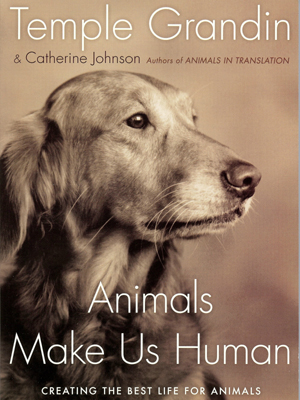
Animals Make Us Human by Temple Grandin
Which animals do you think have a better life: family dogs or cattle on ranches?

Think about it. Cattle get branded and tagged and slaughtered. Some live only a year or two. Meanwhile, Fido gets the run of the house, a spot in front of the couch, and chew toys.

You might be surprised to know that many cattle have it better than pampered family pets. That’s the claim Temple Grandin makes in her fascinating and practical book Animals Make Us Human: Creating the Best Life for Animals.

Grandin is not a beef industry lobbyist working smoke and mirrors PR to make ranchers look good. She’s a practical, down-to-earth, get-your-hands-dirty animal scientist who has revolutionized the beef industry and had an impact on many others. She isn’t a vegetarian, and has no intention to become one. But she does love animals. And her insight and research has made the lives of millions of animals better.

When people ask her how she can work in the beef industry instead of being an activist against it, she says that all things die. It’s the cycle of life. She has no problem eating animals. In fact, she believes that our relationship with the animals we use for food is symbiotic–mutually beneficial. But she also believes that if we’re going to raise them, or keep them as pets, we need to give these animals a quality life.

So what do animals need for a quality life? Should we give our cattle rubdowns? Let our dogs roam through city streets? What do our cats and pigs and horses need? Is it freedom?

Her answer, surprisingly, is that focusing on freedom really isn’t a good guide for trying to give animals a good life. Not because freedom is a bad thing, but because it’s too confusing. Instead, she believes that we should be basing animal welfare on the core, or what she calls the “blue ribbon,” emotion systems in the brain. The key systems are SEEKING, RAGE, FEAR, PANIC, and PLAY.

The rule is simple: avoid stimulating the negative emotions; do stimulate the positive ones. In the book she shares what she knows about how to do that for dogs, cats, horses, cows, pigs, chickens and other poultry, wildlife, and animals in zoos.

Grandin is always fascinating, and with her trademark style of stories and practical insights, she shares what the research and her more than 30 years of practical hands-on experience working with animals has taught her. You’ll learn why your chickens need a place to hide, even if you’ve fenced out every fox and skunk with thirty feet of concrete; what makes pigs happy; why clicker training is so successful with horses; why you might want to consider the color of your cat’s fur; why leaving your dog locked in the house with food and plenty of toys may actually be very stressing. You’ll even learn to look at zoo habitats differently. Each chapter focuses on a different animal and how to avoid the negative and stimulate the positive blue ribbon emotions. This is not touchy-feely fluff. It’s not the ranting and raging of someone who thinks the planet would be better of without humans. It’s the insights of someone who is rigorously scientific, down-to-earth practical, and passionate about animals.  

In her own words: “Everyone who is responsible for animals needs a set of simple, reliable guidelines for creating good mental welfare that can be applied to any animal in any situation.” Read her book to find out what she suggests these should be. If you own pets or raise animals, I think you’ll love this read. If you’d like to sample the first chapter, you can at Grandin’s website:  http://www.grandin.com/

Share

Similar Posts

  • What you need as a storyteller

    Brand-StorytellerOne of the most important things I ever learned about telling stories was in Orson Card’s weeklong boot camp where we “workshopped” stories by doing zero workshopping. Zero critiques. In fact, critiques were verboten.

    Instead, Card asked us to simply provide a report of what he called the three grunts a reader makes when things aren’t working–where it was boring, unclear, or didn’t ring true.

    We were to provide a report of our reader reaction, including parts that really entertained or interested us. NOTHING more.

    He compared it to going to the doctor. We were to report our “symptoms.” The writer’s job was to diagnose if it was an issue and prescribe a remedy, if any.

    Doing that with 19 stories over three days was amazing. It totally opened up what story was about. And taught me what beta reading was all about. One of the most insightful writing experiences I’ve ever had.

    Nowadays when I read, I try my best to simply report. And that’s it. If, afterwards, the writer wants to brainstorm ideas together, that’s fine. But I don’t ever want to diagnose and prescribe because there have been too many books that didn’t work for me that delighted tons of readers. My critique or advice would have been exactly the wrong thing.

    All I can do is report my reaction. And then think about what would have fixed it for me.

    Kristine Rusch recently wrote a great article about this and other things called “Writing by Committee” in which she suggests a list of things authors need to be successful. Give it a read. I think she makes a lot of good points.

    And a few I disagree with. She is quite forceful about writers not acting as first readers. I think that’s bunk. And she says as much in the comments. If a writer can give a reader response instead of a critique, that’s as helpful as a non-writer giving a reader response. I also disagree that you have to toss something and start over if it doesn’t work. If it’s fundamentally broken, sure. But many times a small adjustment gets you back on track.  Finally, yes, a story has to be surprising. At the same time, you had better deliver the type of experience you promise your reader. And that’s all defined by genre. You can’t promise your readers a thriller and deliver a romance. That only leads to irritated readers. I believe you have to consider your audience. But these are all quibbles. The article is great.

    BTW, please note I used “storyteller” in the title. I did that on purpose. More and more, I find I’m not interested in writing. “Writing” doesn’t seem to convey what I’m after. However, I am interested in telling cracking stories.

    Share
  • Top 200 YA Authors of 2010, Part 2

    Okay, I’ve really got to get some writing done. But since I posted the idea of seeing which authors have the highest average checkouts per book, I now feel obligated to share it because some of those on the top 200 authors list drop off while others appear. So this one shows the authors getting the most readers per book. For more information on the lists and source of the data, please see the previous two posts.

    BTW, a number of Utahans made this list that we hadn’t seen on the others.

    1. Stephenie Meyer (3)
    2. Shannon Hale (4)
    3. Lisa Mangum (8)
    4. Jessica Day George (10)
    5. Aprilynne Pike (13)
    6. James Dashner (21)
    7. Bree Despain (32)
    8. Mette Ivie Harrison (40)
    9. M.L. Forman (52)
    10. Brandon Sanderson (64)
    11. Chris Heimerdinger (112)
    12. Julie Wright (145)
    13. Ally Condie (146)
    14. Kiersten White (151)
    15. Jack Weyland (188)

    If I’ve missed any Utah (or former Utah) authors, please let me know. Holy schnitzel, look at them all.

    EDIT: 1/16/2011 9:32 AM: Informed that Bree Despain is also a Utah author.

    EDIT: 1/18/2011 6:21 PM: Turns out Kiersten White grew up in Utah, but moved to San Diego after she married. I’m still claiming her, although I often wish I could trade subzero land for beaches and 70 degrees

    EDIT: 1/18/2011 10:20 PM: just informed that M.L. Forman is a Utah author.

    The List

    Author Times Checked Out Number of Titles Avg Check Outs per Title % Rank
    Suzanne Collins 888 3 296 2.68% 1
    Rick Riordan 989 8 124 2.98% 2
    Stephenie Meyer 529 5 106 1.60% 3
    Shannon Hale 517 6 86 1.56% 4
    J.K. Rowling 318 4 80 0.96% 5
    Cassandra Clare 309 4 77 0.93% 6
    Christopher Paolini 191 3 64 0.58% 7
    Lisa Mangum 124 2 62 0.37% 8
    P.C. Cast and Kristin Cast 393 7 56 1.19% 9
    Jessica Day George 328 6 55 0.99% 10
    Kristin Cashore 105 2 53 0.32% 11
    Cornelia Funke  51 1 51 0.15% 12
    Aprilynne Pike 101 2 51 0.30% 13
    Judy Blundell 48 1 48 0.14% 14
    John Flanagan 413 9 46 1.25% 15
    Kelley Armstrong 131 3 44 0.40% 16
    John Grisham  43 1 43 0.13% 17
    Michael Scott 165 4 41 0.50% 18
    Angie Sage 246 6 41 0.74% 19
    Maggie Stiefvater 153 4 38 0.46% 20
    James Dashner 75 2 38 0.23% 21
    Kimberly Derting 37 1 37 0.11% 22
    Frank Beddor 110 3 37 0.33% 23
    Carrie Ryan 69 2 35 0.21% 24
    Gail Carson Levine 34 1 34 0.10% 25
    Jay Asher 34 1 34 0.10% 26
    Becca Fitzpatrick 68 2 34 0.21% 27
    Libba Bray 136 4 34 0.41% 28
    Julie Berry 34 1 34 0.10% 29
    Richelle Mead 202 6 34 0.61% 30
    Elizabeth Knox 67 2 34 0.20% 31
    Bree Despain 66 2 33 0.20% 32
    James Patterson 257 8 32 0.78% 33
    Cornelia Funke 63 2 32 0.19% 34
    Lisa McMann 94 3 31 0.28% 35
    Carolyn MacCullough 31 1 31 0.09% 36
    Markus Zusak 124 4 31 0.37% 37
    Lauren Oliver 31 1 31 0.09% 38
    Emily Whitman 31 1 31 0.09% 39
    Mette Ivie Harrison 123 4 31 0.37% 40
    Ally Carter 152 5 30 0.46% 41
    Cameron Dokey 271 9 30 0.82% 42
    Jason Henderson 30 1 30 0.09% 43
    Caragh M. O’Brien 30 1 30 0.09% 44
    Scott Westerfeld 354 12 30 1.07% 45
    Carrie Jones 88 3 29 0.27% 46
    Lindsey Leavitt 29 1 29 0.09% 47
    Lois Lowry 86 3 29 0.26% 48
    Philip Pullman  57 2 29 0.17% 49
    Lauren Kate 57 2 29 0.17% 50
    Lili St. Crow 56 2 28 0.17% 51
    M.L. Forman 28 1 28 0.08% 52
    Alison Goodman 28 1 28 0.08% 53
    Marissa Doyle 55 2 28 0.17% 54
    Eoin Colfer 302 11 27 0.91% 55
    Rachel Hawkins 27 1 27 0.08% 56
    Joseph Delaney 240 9 27 0.72% 57
    Cyn Balog 26 1 26 0.08% 58
    Christine Johnson 26 1 26 0.08% 59
    Anna Godbersen 127 5 25 0.38% 60
    Shauna Cross 25 1 25 0.08% 61
    Veronica Bennett 25 1 25 0.08% 62
    Betty Smith 25 1 25 0.08% 63
    Brandon Sanderson 100 4 25 0.30% 64
    Melissa Marr 99 4 25 0.30% 65
    Tamora Pierce 634 26 24 1.91% 66
    Aubrey Mace 24 1 24 0.07% 67
    N.D. Wilson 70 3 23 0.21% 68
    Kami Garcia & Margaret Stohl 46 2 23 0.14% 69
    Lesley Livingston 68 3 23 0.21% 70
    Alex Flinn 68 3 23 0.21% 71
    Sara Shepard 181 8 23 0.55% 72
    Cinda Williams Chima 113 5 23 0.34% 73
    Melissa de la Cruz 154 7 22 0.46% 74
    Kay Cassidy 22 1 22 0.07% 75
    Louis Sachar 44 2 22 0.13% 76
    D.J. MacHale 328 15 22 0.99% 77
    Heather Brewer 108 5 22 0.33% 78
    Beth Fantaskey 43 2 22 0.13% 79
    Kimberly Pauley 43 2 22 0.13% 80
    Diana Wynne Jones 128 6 21 0.39% 81
    Herbie Brennan 106 5 21 0.32% 82
    Dia Reeves 21 1 21 0.06% 83
    Heather Hepler 21 1 21 0.06% 84
    Susanne Dunlap 21 1 21 0.06% 85
    Erica S. Perl 21 1 21 0.06% 86
    Linda Buckley-Archer 63 3 21 0.19% 87
    Lise Haines 21 1 21 0.06% 88
    Alyson Noel 188 9 21 0.57% 89
    Eva Ibbotson 41 2 21 0.12% 90
    Anne Osterlund 41 2 21 0.12% 91
    Sherrilyn Kenyon 20 1 20 0.06% 92
    Kenneth Oppel 80 4 20 0.24% 93
    story by Tohru Kai  20 1 20 0.06% 94
    M.R. Bunderson 20 1 20 0.06% 95
    Robin Palmer 59 3 20 0.18% 96
    Claudia Gray 59 3 20 0.18% 97
    Frewin Jones 155 8 19 0.47% 98
    Carl Hiaasen 58 3 19 0.17% 99
    Lisa Greenwald 19 1 19 0.06% 100
    Catherine Gilbert Murdock 76 4 19 0.23% 101
    Suzanne Harper 19 1 19 0.06% 102
    Suzanne Weyn 150 8 19 0.45% 103
    Rosalind Wiseman 18 1 18 0.05% 104
    Jen Nadol 18 1 18 0.05% 105
    Thomas W harton 18 1 18 0.05% 106
    Margaret Peterson Haddix 144 8 18 0.43% 107
    Ellen Schreiber 160 9 18 0.48% 108
    Patricia C. Wrede 158 9 18 0.48% 109
    Robin McKinley 105 6 18 0.32% 110
    Zoèe Marriott 35 2 18 0.11% 111
    Chris Heimerdinger 280 16 18 0.84% 112
    Amy Huntley 17 1 17 0.05% 113
    Rachel Ward 17 1 17 0.05% 114
    Sarwat Chadda 17 1 17 0.05% 115
    Nina Malkin 17 1 17 0.05% 116
    Chris Heimerd 17 1 17 0.05% 117
    Elizabeth Eulberg 17 1 17 0.05% 118
    Kathi Oram Peterson 17 1 17 0.05% 119
    Megan Whalen Turner 68 4 17 0.21% 120
    Chelsea M. Campbell 17 1 17 0.05% 121
    Rachel Vail 51 3 17 0.15% 122
    Becca Wilhite 34 2 17 0.10% 123
    Sarah Dessen 150 9 17 0.45% 124
    Debbie Viguie 100 6 17 0.30% 125
    Garth Nix 182 11 17 0.55% 126
    Michael Grant 49 3 16 0.15% 127
    Rachel Vincent 49 3 16 0.15% 128
    Jonathan Stroud 97 6 16 0.29% 129
    Lucy Christopher 16 1 16 0.05% 130
    Kay Lynn Mangum 48 3 16 0.14% 131
    Anna Jarzab 16 1 16 0.05% 132
    Sarah MacLean 16 1 16 0.05% 133
    Josh Berk 16 1 16 0.05% 134
    Lisa Klein 16 1 16 0.05% 135
    Jackson Pearce 16 1 16 0.05% 136
    Jacqueline Kelly 16 1 16 0.05% 137
    Caroline Goode 16 1 16 0.05% 138
    Kirby Larson 16 1 16 0.05% 139
    Lisa Shanahan 16 1 16 0.05% 140
    Katherine Applegate 16 1 16 0.05% 141
    Marthe Jocelyn 16 1 16 0.05% 142
    Ann Brashares 64 4 16 0.19% 143
    Holly Black 78 5 16 0.24% 144
    Julie Wright 31 2 16 0.09% 145
    Ally Condie 93 6 16 0.28% 146
    Juliet Marillier 31 2 16 0.09% 147
    Janet Lee Carey 46 3 15 0.14% 148
    Donita K. Paul 90 6 15 0.27% 149
    Tera Lynn Childs 45 3 15 0.14% 150
    Kiersten White 15 1 15 0.05% 151
    Jane Eagland 15 1 15 0.05% 152
    Sophie Jordan 15 1 15 0.05% 153
    Maureen Daly 15 1 15 0.05% 154
    Debbie Vguie 15 1 15 0.05% 155
    Leah Cypess 15 1 15 0.05% 156
    Jessica Brody 15 1 15 0.05% 157
    Rosie Rushton 15 1 15 0.05% 158
    Rachel Caine 134 9 15 0.40% 159
    R.D. Henham 104 7 15 0.31% 160
    Hilari Bell 178 12 15 0.54% 161
    L.J. Smith 326 22 15 0.98% 162
    Carol Lynch Williams 44 3 15 0.13% 163
    Laini Taylor 44 3 15 0.13% 164
    John Boyne 29 2 15 0.09% 165
    Victoria Hanley 58 4 15 0.17% 166
    Guillaume Prevost 43 3 14 0.13% 167
    Michelle Zink 28 2 14 0.08% 168
    Andrea R. Cremer 14 1 14 0.04% 169
    Lynn Weingarten 14 1 14 0.04% 170
    Kristopher Reisz 14 1 14 0.04% 171
    Andrew Klavan 28 2 14 0.08% 172
    Jessica Verday 14 1 14 0.04% 173
    Kim Harrison 14 1 14 0.04% 174
    L.K. Madigan 14 1 14 0.04% 175
    Heather Davis 14 1 14 0.04% 176
    Lauren Conrad 42 3 14 0.13% 177
    Sherman Ale 14 1 14 0.04% 178
    Alexandra Adornetto 14 1 14 0.04% 179
    Martine Leavitt 14 1 14 0.04% 180
    Morris Gleitzman 14 1 14 0.04% 181
    Charmian Hussey  14 1 14 0.04% 182
    Douglas Rees 14 1 14 0.04% 183
    Stephanie Hem 14 1 14 0.04% 184
    C.J. Omololu 14 1 14 0.04% 185
    Aimee Friedman 42 3 14 0.13% 186
    Kate Coombs 28 2 14 0.08% 187
    Jack Weyland 151 11 14 0.46% 188
    Michael Carroll 41 3 14 0.12% 189
    Philip Caveney 41 3 14 0.12% 190
    Pamela Wells 27 2 14 0.08% 191
    Grace Cavendish 27 2 14 0.08% 192
    Elizabeth Scott 54 4 14 0.16% 193
    Ridley Pearson 54 4 14 0.16% 194
    Laurie Halse Anderson 108 8 14 0.33% 195
    Gillian Shields 40 3 13 0.12% 196
    Simone Elkeles 93 7 13 0.28% 197
    Lisi Harrison 304 23 13 0.92% 198
    Patrick Carman 66 5 13 0.20% 199
    Darren Shan 313 24 13 0.94% 200
    Gary D. Schmidt 26 2 13 0.08% 201
    Gena Showalter 26 2 13 0.08% 202
    Michael Young 13 1 13 0.04% 203
    Miyuki Miyabe  13 1 13 0.04% 204
    J.V. Hart  13 1 13 0.04% 205
    Dandi Daley Mackall 13 1 13 0.04% 206
    Beatrice Gormley 13 1 13 0.04% 207
    Dodie Smith 13 1 13 0.04% 208
    Jaclyn Moriarty 52 4 13 0.16% 209
    Angela Morrison 26 2 13 0.08% 210
    James A. Owen 52 4 13 0.16% 211
    Nick Lake 13 1 13 0.04% 212
    E.E. Richardson 13 1 13 0.04% 213
    Fern Schumer Chapman 13 1 13 0.04% 214
    Priscilla Cummings 13 1 13 0.04% 215
    Stuart Hill 39 3 13 0.12% 216
    Jen Calonita 78 6 13 0.24% 217
    Valerie O. Patterson 13 1 13 0.04% 218
    Julie Kagawa 26 2 13 0.08% 219
    William golding 13 1 13 0.04% 220
    Lisa M. Klein 13 1 13 0.04% 221
    Lisa Mantchev 26 2 13 0.08% 222
    Gerald Morris 129 10 13 0.39% 223
    Cory Doctorow 25 2 13 0.08% 224
    Janette Rallison 125 10 13 0.38% 225
    Share
  • Good Stuff! 3 Books to Introduce You to the Middle East

    ISIS, the Taliban, Al Qaeda, the Muslim Brotherhood, Iran.

    What drives these groups?

    What are they really about?

    Why is there so much religious strife in the Middle East?

    For that matter, what is Islam actually about? Is the religion really defined by these violent actors, or are they just the most visible because they’re what’s reported on in the media?

    I set out to find the answers to these questions, and what I have found so far surprised me. If you are interested in understanding what’s going on in the Middle East today, you have to understand Islam. And it’s a fascinating story. There are a lot of books on the subject, but you don’t have to sift through all those I did. I want to share with you three slim books that I found to be the most clear and engaging introductions I’ve come across.

    The first is Understanding Islam: An Introduction to the Muslim World by Thomas W. Lippman, an award-winning author and journalist who specializes in the Middle East and spent years living in Egypt, covering the events, and traveling from Tunisia to Pakistan. Again, this is a slim, easy-to-read volume, but it is packed with information. If you want to know the basic beliefs of Islam, who Muhammad was, what all this business about Sharia is, and who the major Islamic groups of the Middle East are today, this is the book to start with. One note, you want to make sure you get the third edition of this book.

    Understanding Islam by Thomas Lippman

    The next book is by Bernard Lewis, a man internationally recognized as one of our century’s greatest historians of the Middle East. The book is called The Crisis of Islam: Holy War and Unholy Terror. Again, another slim, engaging, but information-packed volume. In it, Lewis explains what it is in Islam that is breeding these extremist groups. And what is leading them to target America, which is especially interesting because for most of the 1900s the United States was seen as the good guy by the Islamic world. What changed? Read this book to find out.

    The Crisis of Islam by Bernard Lewis

    The last book, a lively, engaging read, is called After the Prophet: The Epic Story of the Sunni-Shia Split by Lesley Hazleton, another veteran Middle East journalist. When you finish this book, you will understand why Saudi Arabia supported ISIS before they so recently turned against it. You’ll understand why they recently joined Israel, of all nations, in condemning Iran’s nuclear program. You will also understand one main reason why the Iraqis can’t seem to get along. In this book, Hazelton goes back to the beginning of the religion and tells the story of the splitting of Islam–the split between the Shias and Sunnis. It’s as significant a split as that of the Protestants from the Catholics in the time of Luther. But unlike that split, which has lost almost all of its heat, the antagonism between Sunni and Shia still leads to war. You cannot understand the Middle East today without understanding this.

    After the Prophet by Lesley Hazleton

    So there you have it. If you’ve been wanting to learn more about Islam and the Middle East, you’ll find these the perfect introduction. And if you’re religious at all, you’ll find much to ponder. There isn’t one god-fearing Christian, Jew, Hindu, or what have you who doesn’t think that submitting our will to God’s won’t help us build a better families, communities, nations–a better world. Would it surprise to you to know that Muslims believe the same thing? That Islam means “to submit” to God?

    There are of course many differences between Islam and my own Christian beliefs, but there are also many striking similarities. And the experience I kept having reading these books was seeing over and over again echoes of my own faith and the history of Christianity. There are cautions, to be sure, but also things worthy of emulation. If nothing else, it felt like it did when I learned Dutch. Yes, it was all foreign, but I saw the ties and the differences and, surprisingly, understood my language better than I ever had before.

    Now there are three other equally fascinating books I want recommend that focus on Al Qaeda, fighting terrorism, and Saudi Arabia, but I’ll save those for another time. Go treat yourself and read these fine introductions.


    Share
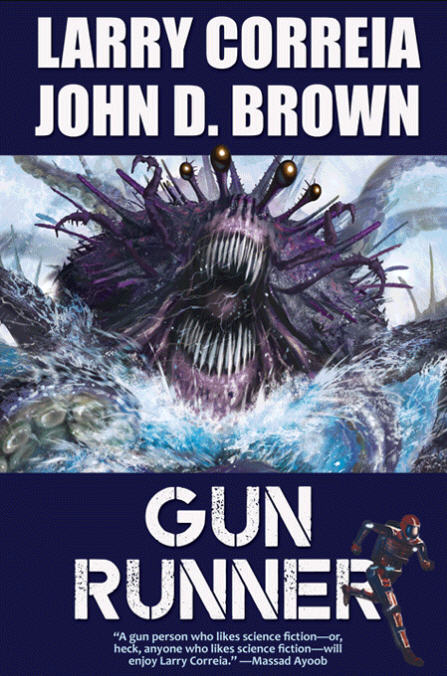
  • Gun Runner is out today!

    Gun Runner on Amazon! Order here!
    Autographed copies available from Uncle Hugo’s here!
    Podcast discussion with the authors here!

    The is 100% Brown and Correia, which means it’s action-packed, full of fun characters, and none of that navel gazing business.

    It’s about a guy named Jackson Rook who works on a crew that smuggles weapons. They’re active in a righteous cause, helping the oppressed peoples of various planets stand up for themselves against the whoresons with the money and power.

    But then Jackson learns something about the current job that turns his gut. And he begins to think they might just be working for the wrong team.

    Will he be able to set things right when just about everybody and everything on the godforsaken planet called Swindle wants to kill him or turn him back into the monster he once was?

    Read to find out.

    If you like action and science fiction, I think you’re going to love this book.

    Share
  • |

    Jon Ronson, mild-mannered pal of extremists

    Take a guy who does humorous journalism, but not in the sneering sort of way, and send him out to find out more about extremists (KKK, Islamicists, etc.) and conspiracy theories (he didn’t really believe in the Bildeburgers…until he was followed), and what do you get?
    Well, you get British journalist Jon Ronson.

    I just listened to a wonderful interview with him on Radio West.

    Don’t miss it.

    Share
  • Good Stuff! Mike Loades on Swords and Bows

    Mike Loades is an expert on medieval fighting. He brings energy and, not just bookish learning, but insights from hands-on use. I loved the five-part Weapons That Made Britain television series for which he was the host and chief consultant. And so I looked to see if there was anything else he’d done. I found he’d written two books, which I am so happy to have read.

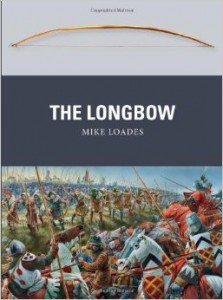
    The Longbow is not just a book about the longbow. It’s about its construction and how it impacted the development of armor, and types of armor, and the wood used for the bow, and how to make arrows, and what the various points were for, and how people trained, and then cared for the bows, and how it was used in war. And, again, the insights are not just bookish ones. He’s walked the battlefields. He’s used bows for years. He’s performed tests with them. It is a 80-page book that carries a monstrous bang for the buck and one of the best purchases I’ve made for my library. I loved it.

    MikeLoades_TheLongBow

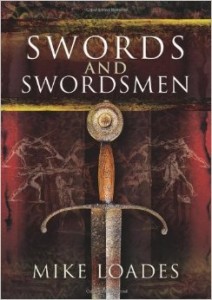
    Of course, after that experience, I had to get his Swords & Swordsmen. This book is almost 500 pages long, and I was rapt reading each page of it. Instead of focusing on one version of this weapon, Loades discusses exemplars of various types of swords through time, starting with the sword of Tutankhamun in Egypt all the way through the swords of J.E.B. Stuart and G.A. Custer in the American Civil War. There are 15 chapters all discussing different eras and swords that provide a mountain of insight. The love Loades has for and the practical experience he has with the topic shines through on every page. Just as with The Longbow, you’ll learn about use, construction, the interplay with armor, and much more. Heck, I got the ideas for at least three novels reading this book. I loved it as much as I loved the first.

    MikeLoades_SwordsAndSwordsmen

    If you enjoy military history and arms and armor, you will love these books. Guaranteed.

    While you’re waiting for them to arrive in the mail, treat yourself to five hours of fascinating video below.

    Weapons That Made Britain E01 – The Sword

    Weapons That Made Britain E02 – The Longbow

    Weapons That Made Britain E03 – The Lance

    Weapons That Made Britain E04 – The Shield

    Weapons That Made Britain E05 – Armour

    Share

2 Comments

  1. Thanks for highlighting this book. My family is planning to get a cat in the next week or two so I put it on hold at the library. Temple Grandin is an inspiration. I’ve seen the movie made about her and read some of her thoughts on anxiety. She is someone living with no excuses and I love that.

Comments are closed.