Top 200 YA Authors of 2010, Part 2

Okay, I’ve really got to get some writing done. But since I posted the idea of seeing which authors have the highest average checkouts per book, I now feel obligated to share it because some of those on the top 200 authors list drop off while others appear. So this one shows the authors getting the most readers per book. For more information on the lists and source of the data, please see the previous two posts.

BTW, a number of Utahans made this list that we hadn’t seen on the others.

  1. Stephenie Meyer (3)
  2. Shannon Hale (4)
  3. Lisa Mangum (8)
  4. Jessica Day George (10)
  5. Aprilynne Pike (13)
  6. James Dashner (21)
  7. Bree Despain (32)
  8. Mette Ivie Harrison (40)
  9. M.L. Forman (52)
  10. Brandon Sanderson (64)
  11. Chris Heimerdinger (112)
  12. Julie Wright (145)
  13. Ally Condie (146)
  14. Kiersten White (151)
  15. Jack Weyland (188)

If I’ve missed any Utah (or former Utah) authors, please let me know. Holy schnitzel, look at them all.

EDIT: 1/16/2011 9:32 AM: Informed that Bree Despain is also a Utah author.

EDIT: 1/18/2011 6:21 PM: Turns out Kiersten White grew up in Utah, but moved to San Diego after she married. I’m still claiming her, although I often wish I could trade subzero land for beaches and 70 degrees

EDIT: 1/18/2011 10:20 PM: just informed that M.L. Forman is a Utah author.

The List

Author Times Checked Out Number of Titles Avg Check Outs per Title % Rank
Suzanne Collins 888 3 296 2.68% 1
Rick Riordan 989 8 124 2.98% 2
Stephenie Meyer 529 5 106 1.60% 3
Shannon Hale 517 6 86 1.56% 4
J.K. Rowling 318 4 80 0.96% 5
Cassandra Clare 309 4 77 0.93% 6
Christopher Paolini 191 3 64 0.58% 7
Lisa Mangum 124 2 62 0.37% 8
P.C. Cast and Kristin Cast 393 7 56 1.19% 9
Jessica Day George 328 6 55 0.99% 10
Kristin Cashore 105 2 53 0.32% 11
Cornelia Funke  51 1 51 0.15% 12
Aprilynne Pike 101 2 51 0.30% 13
Judy Blundell 48 1 48 0.14% 14
John Flanagan 413 9 46 1.25% 15
Kelley Armstrong 131 3 44 0.40% 16
John Grisham  43 1 43 0.13% 17
Michael Scott 165 4 41 0.50% 18
Angie Sage 246 6 41 0.74% 19
Maggie Stiefvater 153 4 38 0.46% 20
James Dashner 75 2 38 0.23% 21
Kimberly Derting 37 1 37 0.11% 22
Frank Beddor 110 3 37 0.33% 23
Carrie Ryan 69 2 35 0.21% 24
Gail Carson Levine 34 1 34 0.10% 25
Jay Asher 34 1 34 0.10% 26
Becca Fitzpatrick 68 2 34 0.21% 27
Libba Bray 136 4 34 0.41% 28
Julie Berry 34 1 34 0.10% 29
Richelle Mead 202 6 34 0.61% 30
Elizabeth Knox 67 2 34 0.20% 31
Bree Despain 66 2 33 0.20% 32
James Patterson 257 8 32 0.78% 33
Cornelia Funke 63 2 32 0.19% 34
Lisa McMann 94 3 31 0.28% 35
Carolyn MacCullough 31 1 31 0.09% 36
Markus Zusak 124 4 31 0.37% 37
Lauren Oliver 31 1 31 0.09% 38
Emily Whitman 31 1 31 0.09% 39
Mette Ivie Harrison 123 4 31 0.37% 40
Ally Carter 152 5 30 0.46% 41
Cameron Dokey 271 9 30 0.82% 42
Jason Henderson 30 1 30 0.09% 43
Caragh M. O’Brien 30 1 30 0.09% 44
Scott Westerfeld 354 12 30 1.07% 45
Carrie Jones 88 3 29 0.27% 46
Lindsey Leavitt 29 1 29 0.09% 47
Lois Lowry 86 3 29 0.26% 48
Philip Pullman  57 2 29 0.17% 49
Lauren Kate 57 2 29 0.17% 50
Lili St. Crow 56 2 28 0.17% 51
M.L. Forman 28 1 28 0.08% 52
Alison Goodman 28 1 28 0.08% 53
Marissa Doyle 55 2 28 0.17% 54
Eoin Colfer 302 11 27 0.91% 55
Rachel Hawkins 27 1 27 0.08% 56
Joseph Delaney 240 9 27 0.72% 57
Cyn Balog 26 1 26 0.08% 58
Christine Johnson 26 1 26 0.08% 59
Anna Godbersen 127 5 25 0.38% 60
Shauna Cross 25 1 25 0.08% 61
Veronica Bennett 25 1 25 0.08% 62
Betty Smith 25 1 25 0.08% 63
Brandon Sanderson 100 4 25 0.30% 64
Melissa Marr 99 4 25 0.30% 65
Tamora Pierce 634 26 24 1.91% 66
Aubrey Mace 24 1 24 0.07% 67
N.D. Wilson 70 3 23 0.21% 68
Kami Garcia & Margaret Stohl 46 2 23 0.14% 69
Lesley Livingston 68 3 23 0.21% 70
Alex Flinn 68 3 23 0.21% 71
Sara Shepard 181 8 23 0.55% 72
Cinda Williams Chima 113 5 23 0.34% 73
Melissa de la Cruz 154 7 22 0.46% 74
Kay Cassidy 22 1 22 0.07% 75
Louis Sachar 44 2 22 0.13% 76
D.J. MacHale 328 15 22 0.99% 77
Heather Brewer 108 5 22 0.33% 78
Beth Fantaskey 43 2 22 0.13% 79
Kimberly Pauley 43 2 22 0.13% 80
Diana Wynne Jones 128 6 21 0.39% 81
Herbie Brennan 106 5 21 0.32% 82
Dia Reeves 21 1 21 0.06% 83
Heather Hepler 21 1 21 0.06% 84
Susanne Dunlap 21 1 21 0.06% 85
Erica S. Perl 21 1 21 0.06% 86
Linda Buckley-Archer 63 3 21 0.19% 87
Lise Haines 21 1 21 0.06% 88
Alyson Noel 188 9 21 0.57% 89
Eva Ibbotson 41 2 21 0.12% 90
Anne Osterlund 41 2 21 0.12% 91
Sherrilyn Kenyon 20 1 20 0.06% 92
Kenneth Oppel 80 4 20 0.24% 93
story by Tohru Kai  20 1 20 0.06% 94
M.R. Bunderson 20 1 20 0.06% 95
Robin Palmer 59 3 20 0.18% 96
Claudia Gray 59 3 20 0.18% 97
Frewin Jones 155 8 19 0.47% 98
Carl Hiaasen 58 3 19 0.17% 99
Lisa Greenwald 19 1 19 0.06% 100
Catherine Gilbert Murdock 76 4 19 0.23% 101
Suzanne Harper 19 1 19 0.06% 102
Suzanne Weyn 150 8 19 0.45% 103
Rosalind Wiseman 18 1 18 0.05% 104
Jen Nadol 18 1 18 0.05% 105
Thomas W harton 18 1 18 0.05% 106
Margaret Peterson Haddix 144 8 18 0.43% 107
Ellen Schreiber 160 9 18 0.48% 108
Patricia C. Wrede 158 9 18 0.48% 109
Robin McKinley 105 6 18 0.32% 110
Zoèe Marriott 35 2 18 0.11% 111
Chris Heimerdinger 280 16 18 0.84% 112
Amy Huntley 17 1 17 0.05% 113
Rachel Ward 17 1 17 0.05% 114
Sarwat Chadda 17 1 17 0.05% 115
Nina Malkin 17 1 17 0.05% 116
Chris Heimerd 17 1 17 0.05% 117
Elizabeth Eulberg 17 1 17 0.05% 118
Kathi Oram Peterson 17 1 17 0.05% 119
Megan Whalen Turner 68 4 17 0.21% 120
Chelsea M. Campbell 17 1 17 0.05% 121
Rachel Vail 51 3 17 0.15% 122
Becca Wilhite 34 2 17 0.10% 123
Sarah Dessen 150 9 17 0.45% 124
Debbie Viguie 100 6 17 0.30% 125
Garth Nix 182 11 17 0.55% 126
Michael Grant 49 3 16 0.15% 127
Rachel Vincent 49 3 16 0.15% 128
Jonathan Stroud 97 6 16 0.29% 129
Lucy Christopher 16 1 16 0.05% 130
Kay Lynn Mangum 48 3 16 0.14% 131
Anna Jarzab 16 1 16 0.05% 132
Sarah MacLean 16 1 16 0.05% 133
Josh Berk 16 1 16 0.05% 134
Lisa Klein 16 1 16 0.05% 135
Jackson Pearce 16 1 16 0.05% 136
Jacqueline Kelly 16 1 16 0.05% 137
Caroline Goode 16 1 16 0.05% 138
Kirby Larson 16 1 16 0.05% 139
Lisa Shanahan 16 1 16 0.05% 140
Katherine Applegate 16 1 16 0.05% 141
Marthe Jocelyn 16 1 16 0.05% 142
Ann Brashares 64 4 16 0.19% 143
Holly Black 78 5 16 0.24% 144
Julie Wright 31 2 16 0.09% 145
Ally Condie 93 6 16 0.28% 146
Juliet Marillier 31 2 16 0.09% 147
Janet Lee Carey 46 3 15 0.14% 148
Donita K. Paul 90 6 15 0.27% 149
Tera Lynn Childs 45 3 15 0.14% 150
Kiersten White 15 1 15 0.05% 151
Jane Eagland 15 1 15 0.05% 152
Sophie Jordan 15 1 15 0.05% 153
Maureen Daly 15 1 15 0.05% 154
Debbie Vguie 15 1 15 0.05% 155
Leah Cypess 15 1 15 0.05% 156
Jessica Brody 15 1 15 0.05% 157
Rosie Rushton 15 1 15 0.05% 158
Rachel Caine 134 9 15 0.40% 159
R.D. Henham 104 7 15 0.31% 160
Hilari Bell 178 12 15 0.54% 161
L.J. Smith 326 22 15 0.98% 162
Carol Lynch Williams 44 3 15 0.13% 163
Laini Taylor 44 3 15 0.13% 164
John Boyne 29 2 15 0.09% 165
Victoria Hanley 58 4 15 0.17% 166
Guillaume Prevost 43 3 14 0.13% 167
Michelle Zink 28 2 14 0.08% 168
Andrea R. Cremer 14 1 14 0.04% 169
Lynn Weingarten 14 1 14 0.04% 170
Kristopher Reisz 14 1 14 0.04% 171
Andrew Klavan 28 2 14 0.08% 172
Jessica Verday 14 1 14 0.04% 173
Kim Harrison 14 1 14 0.04% 174
L.K. Madigan 14 1 14 0.04% 175
Heather Davis 14 1 14 0.04% 176
Lauren Conrad 42 3 14 0.13% 177
Sherman Ale 14 1 14 0.04% 178
Alexandra Adornetto 14 1 14 0.04% 179
Martine Leavitt 14 1 14 0.04% 180
Morris Gleitzman 14 1 14 0.04% 181
Charmian Hussey  14 1 14 0.04% 182
Douglas Rees 14 1 14 0.04% 183
Stephanie Hem 14 1 14 0.04% 184
C.J. Omololu 14 1 14 0.04% 185
Aimee Friedman 42 3 14 0.13% 186
Kate Coombs 28 2 14 0.08% 187
Jack Weyland 151 11 14 0.46% 188
Michael Carroll 41 3 14 0.12% 189
Philip Caveney 41 3 14 0.12% 190
Pamela Wells 27 2 14 0.08% 191
Grace Cavendish 27 2 14 0.08% 192
Elizabeth Scott 54 4 14 0.16% 193
Ridley Pearson 54 4 14 0.16% 194
Laurie Halse Anderson 108 8 14 0.33% 195
Gillian Shields 40 3 13 0.12% 196
Simone Elkeles 93 7 13 0.28% 197
Lisi Harrison 304 23 13 0.92% 198
Patrick Carman 66 5 13 0.20% 199
Darren Shan 313 24 13 0.94% 200
Gary D. Schmidt 26 2 13 0.08% 201
Gena Showalter 26 2 13 0.08% 202
Michael Young 13 1 13 0.04% 203
Miyuki Miyabe  13 1 13 0.04% 204
J.V. Hart  13 1 13 0.04% 205
Dandi Daley Mackall 13 1 13 0.04% 206
Beatrice Gormley 13 1 13 0.04% 207
Dodie Smith 13 1 13 0.04% 208
Jaclyn Moriarty 52 4 13 0.16% 209
Angela Morrison 26 2 13 0.08% 210
James A. Owen 52 4 13 0.16% 211
Nick Lake 13 1 13 0.04% 212
E.E. Richardson 13 1 13 0.04% 213
Fern Schumer Chapman 13 1 13 0.04% 214
Priscilla Cummings 13 1 13 0.04% 215
Stuart Hill 39 3 13 0.12% 216
Jen Calonita 78 6 13 0.24% 217
Valerie O. Patterson 13 1 13 0.04% 218
Julie Kagawa 26 2 13 0.08% 219
William golding 13 1 13 0.04% 220
Lisa M. Klein 13 1 13 0.04% 221
Lisa Mantchev 26 2 13 0.08% 222
Gerald Morris 129 10 13 0.39% 223
Cory Doctorow 25 2 13 0.08% 224
Janette Rallison 125 10 13 0.38% 225
Share

Similar Posts

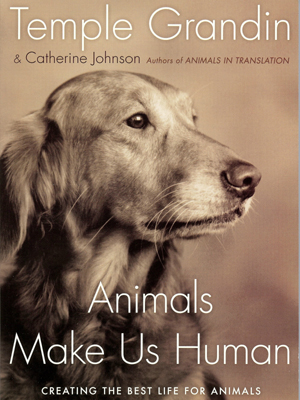
  • Animals Make Us Human by Temple Grandin

    Which animals do you think have a better life: family dogs or cattle on ranches?

    Think about it. Cattle get branded and tagged and slaughtered. Some live only a year or two. Meanwhile, Fido gets the run of the house, a spot in front of the couch, and chew toys.

    You might be surprised to know that many cattle have it better than pampered family pets. That’s the claim Temple Grandin makes in her fascinating and practical book Animals Make Us Human: Creating the Best Life for Animals.

    Grandin is not a beef industry lobbyist working smoke and mirrors PR to make ranchers look good. She’s a practical, down-to-earth, get-your-hands-dirty animal scientist who has revolutionized the beef industry and had an impact on many others. She isn’t a vegetarian, and has no intention to become one. But she does love animals. And her insight and research has made the lives of millions of animals better.

    When people ask her how she can work in the beef industry instead of being an activist against it, she says that all things die. It’s the cycle of life. She has no problem eating animals. In fact, she believes that our relationship with the animals we use for food is symbiotic–mutually beneficial. But she also believes that if we’re going to raise them, or keep them as pets, we need to give these animals a quality life.

    So what do animals need for a quality life? Should we give our cattle rubdowns? Let our dogs roam through city streets? What do our cats and pigs and horses need? Is it freedom?

    Her answer, surprisingly, is that focusing on freedom really isn’t a good guide for trying to give animals a good life. Not because freedom is a bad thing, but because it’s too confusing. Instead, she believes that we should be basing animal welfare on the core, or what she calls the “blue ribbon,” emotion systems in the brain. The key systems are SEEKING, RAGE, FEAR, PANIC, and PLAY.

    The rule is simple: avoid stimulating the negative emotions; do stimulate the positive ones. In the book she shares what she knows about how to do that for dogs, cats, horses, cows, pigs, chickens and other poultry, wildlife, and animals in zoos.

    Grandin is always fascinating, and with her trademark style of stories and practical insights, she shares what the research and her more than 30 years of practical hands-on experience working with animals has taught her. You’ll learn why your chickens need a place to hide, even if you’ve fenced out every fox and skunk with thirty feet of concrete; what makes pigs happy; why clicker training is so successful with horses; why you might want to consider the color of your cat’s fur; why leaving your dog locked in the house with food and plenty of toys may actually be very stressing. You’ll even learn to look at zoo habitats differently. Each chapter focuses on a different animal and how to avoid the negative and stimulate the positive blue ribbon emotions. This is not touchy-feely fluff. It’s not the ranting and raging of someone who thinks the planet would be better of without humans. It’s the insights of someone who is rigorously scientific, down-to-earth practical, and passionate about animals.  

    In her own words: “Everyone who is responsible for animals needs a set of simple, reliable guidelines for creating good mental welfare that can be applied to any animal in any situation.” Read her book to find out what she suggests these should be. If you own pets or raise animals, I think you’ll love this read. If you’d like to sample the first chapter, you can at Grandin’s website:  http://www.grandin.com/

    Share
  • The Profiler, Almond Milk, and Uncle Sam

    Real crime 

    It’s 1990. You’re a housewife, homeschooling your children, and renting a room upstairs to a young man to make ends meet. There are a few odd things about the young man, but you overlook them. Then one day a woman is strangled on a jogging path near your home, and your first thought is that the young man living in your house has something to do with it.

    What do you do?

    Pat Brown found herself in this exact situation. She voiced her suspicions to her husband, but it was all too farfetched. However, the nagging thought wouldn’t let her go, and she soon uncovered evidence that made the young man a strong suspect.

    She took the evidence to the police, but they dismissed her as a bored housewife with an overactive imagination. She evicted the young man, but it would be six years before the authorities would finally bring him in for questioning.

    Dismayed and frustrated, Brown started down a path that would lead to her become a professional criminal profiler, assisting police departments and victims’ families by analyzing both physical and behavioral evidence to make the most scientific determination possible about who committed a crime.

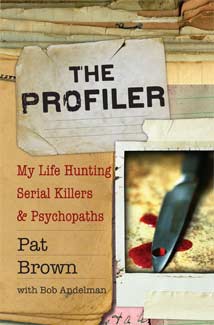
    In The Profiler: My Life Hunting Serial Killers and Psychopaths Brown tells about what happened with that young man and her journey to becoming a profiler, then she opens a number of other cases she’s worked on, giving the reader a behind-the-scenes look at how profilers work, and how their methods bring new investigative avenues to light. She also brings home very clearly just how many murders go unsolved. It’s an absolutely fascinating read.

    Milk that doesn’t moo

    I used to think soy milk was either for the lactose intolerant or hippies. And so I always avoided that milk section of the grocery store. But, having embarked on a new way of eating that I’ll explain in another column, I was induced to approach the alternative milk shelves. I purchased a carton of soy milk, but then I saw cartons of something even more strange: almond milk.

    Puzzling. I knew, of course, that almonds did not have udders. So nobody was out there hooking them up to tiny milking machines. And they were nuts, so it’s not like you can squeeze them to make them release their tasty juices. Instead, I learned that almond milk is made by finely grinding almonds together with water. I thought this was something new, invented perhaps by a Californian who’d had too much weed, but it appears many Medieval European recipes called for almond milk, and it has always been a popular beverage in the Middle East. So almond milk has been around for some time.

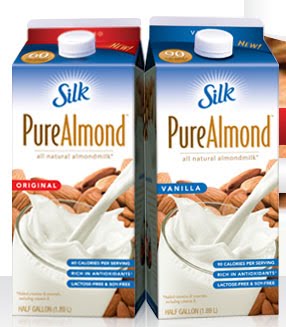
    But I didn’t know any of this. I just knew I loved almonds and that they provide all sorts of goodies for the human body. Besides, I have a hard time resisting adventures. So along with the soy, I picked up a carton of Silk’s PureAlmond regular, vanilla, and chocolate milk.

    The soy was okay, but it left a weird zingy taste in my mouth. Furthermore, soy contains estrogen. I’m sure it’s a fine product, but I live with four daughters and don’t need any more estrogen. And I certainly don’t need it mutating me in any, um, feminine ways. So I put the soy aside and gave the almond milk a go.

    It was delicious. I love the vanilla and regular flavors the best. In fact, I like it so much I only drink cow’s milk when the last drop of almond milk is gone, and I try to make sure that never happens. Some might worry that I’ll deplete my calcium stores, but not so. Almond milk actually has MORE calcium than cow’s milk along with vitamin D that allows the body to absorb the mineral. It also has 50% of the RDA of vitamin E, of which cow’s milk has none. But that’s all technical vitaminy stuff. It wouldn’t matter if the milk itself didn’t taste so dang good.

    The American breakfast

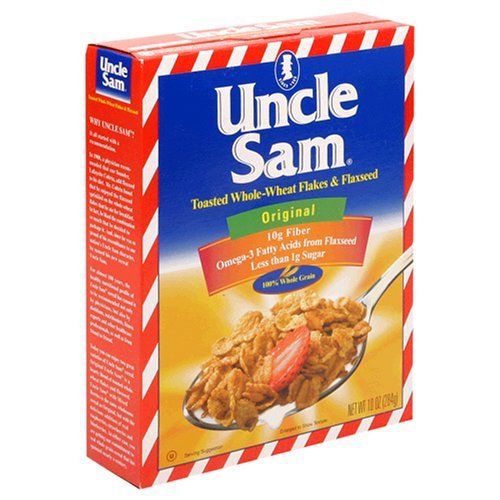
    I love cereal. We have our standard favorites as a family, but I also like to get a box of something new when we shop. I recently saw, perched up on the top shelf at Wal-Mart, boxes of  Uncle Sam.

    What the heck? Was this a Tea Party product? I know Utah is conservative, but come on. And what kind of nut sings “The Stars and Stripes” for breakfast?

    Well, I might.

    So I promptly snagged a box and read that it’s been around since 1908, thus making it politically neutral. Then I read the ingredients. It’s a simple cereal made of wheat berries that are steamed, rolled, and toasted to provide killer whole grain nutrition. Those wheat flakes are then mixed with flax seeds (omega 3’s anyone?). That’s it.

    I purchased a box, felt patriotic, and then gave it a try when we got home. I’ve been buying it regularly ever since. It’s slammed with 10 grams of fiber and 7 grams of protein, and goes great with Silk’s vanilla almond milk and a piece of fruit.

    Share
  • | |

    30 books you should read before you die

    An avid reader friend of mine began reading through the books in a list called “100 books you must read before you die.”

    She got to Jack Kerouac’s On The Road and went to Facebook and posted the following: “I don’t get the appeal. It’s about a group of boys/men who are irresponsible, drunks, whoring around taking advantage of others and being enabled by their women. Why is this a classic and why should I have wasted my time on it? Can some of my literary friends explain? I hated a brave new world and the handmaid’s tale too.”

    Is the book a classic?

    Should she read it before she dies?

    Is it really that important?

    Let me share an edited version of my response and then provide my list of 30 books you should read before you die.

    *

    Annette, the unfortunate truth is that these lists of “classics” are a sham because there is no objective criteria for determining literary excellence.

    Or maybe I should say that measuring quality in the arts isn’t like measuring the unambiguous, objective score of a baseball game. After books exhibit a certain level of proficiency, it becomes increasingly difficult to distinguish the quality of one book from another, especially because much of this depends on a reader’s interests and subjective experience of the story.

    When it becomes hard to rank performances, people rely on other measures. One of the most powerful is social networks.

    So if two readers find two different books that blow them away, one of the books might get all the attention because the one book gets picked up by a news service (The New York Times) or a platform (the Oprah Book Club effect) or some other social network of influence. A lot of the so-called literary classics only appear on various lists because they tapped into the academic network, which kept them alive far longer than they would have lasted otherwise.

    On The Road is simply a book that made a stir among some circles in the 1950s. That’s it.

    Was it more important or of higher quality than Exodus? The Chronicles of Narnia? Lord of the Rings? A Town Like Alice? All published in the 1950s as well.

    It depends.

    If you’re wanting to understand the 1950s beat culture, it would be an important book.

    But if you’re wanting to understand fantasy writing of the time, it wouldn’t.

    If you’re wanting to read a book that’s had a huge impact on popular culture, well, LOTR beats On The Road like a dog.

    Some people have the feeling that the so-called classics have some inherent medicinal value because someone put them on a list and called them classics.

    Nope. They’re just stories. Some of which can shed light on the issues and interests of a part of the culture in a given period. But if you’re not interested in that specific sub-culture, who cares?

    And if you’re reading to be entertained, moved, uplifted, or educated—which ones do that best for Annette is for you to decide.

    So all that to say I wouldn’t devalue your reaction to the book ?

    *

    I’m now going to give you my list.

    But it’s not going to be a list of titles. Nor will it focus on a book’s impact on some sub-culture of a given period.

    It’s going to be a real list. One that focuses on what so many of us go to stories for.

    1. The one that makes you weep.
    2. The one that makes you giggle and snort.
    3. The one that reminds you of what it’s like to fall in love.
    4. The one that gives you hope.
    5. The one that you begin to read more and more slowly because you don’t want it to end.
    6. The one that scares the soup out of you.
    7. The one that you can’t put down, even though you need to wake up early in the morning.
    8. The one that makes you wish you lived there.
    9. The one that’s so good that when you close it, you immediately start to read it a second time.
    10. The one that gives you and your child hours of pleasure together.
    11. The one that gives you a sacred, spiritual experience.
    12. The one that makes you reread some of the lines because the turns of phrase are just so delicious.
    13. The one that gives you courage.
    14. The one that takes you on an awesome adventure.
    15. The one that makes you want to be a better person.
    16. The one that bores you to tears (just so know you how good the others are).
    17. The one that introduces you to a different culture that delights you.
    18. The one that makes you think.
    19. The one that lingers with you for days.
    20. The one that gives you lovely insights.
    21. The one that inspires you to love your spouse more.
    22. The one that introduces you to the sorts of people you normally don’t like and makes you actually like them.
    23. The one that delights you with its characters.
    24. The one that whisks you away to a different historical period.
    25. The one that inspires you to give your children a hug.
    26. The one that gets your adrenaline pumping.
    27. The one that sparks all sorts of ideas in your head.
    28. The one that makes you wonder and start imagining what it would be like to be there.
    29. The one that blows your freaking mind.
    30. The one that makes you stand up in your living room and cheer.

    We could do more than 30, couldn’t we?

    Like the one that makes you think people from a different time period are just like us. And the one that makes you think people from that same period are completely alien.

    But I think we’ll stop. That there above is a list.

    Those are 30 books I think everyone will want to read before they die.

    Share
  • Good Stuff! Some Calm on the Climate

    Is the sky falling?

    When we politicize science it sure seems that way.

    For example, a while back I reviewed The Big Fat Surprise by Nina Teicholz. What she found in her research about fat and sugar was that we followed the exact wrong diet path over the last 40 years by (1) rushing to judgment on the science in a field that was tricky and (2) politicizing it. This, in turn, affected the science. And not in a good way. Here’s a quote from the book.

    “Once ideas about fat and cholesterol became adopted by official institutions, even prominent experts in the field found it nearly impossible to challenge them. One of the twentieth century’s most revered nutrition scientists, the organic chemist David Krivtchesky, discovered this thirty years ago when on a panel of the National Academy of Sciences, he suggested loosening the restriction on dietary fat. “We were jumped on!” he told me. “People would spit on us!…they were so angry that we were going against the suggestions of the American Heart Association and the National Institutes of Health”

    “This kind of reaction met all experts who criticized the prevailing view on dietary fat, effectively silencing any opposition. Researchers who persisted in their challenges found themselves cut off from grants, unable to rise in their professional societies, without invitations to serve on expert panels, and at a loss to find scientific journals that would publish their papers. As a result, for many years the public has been presented with the appearance of a uniform scientific consensus on the subject of fat, especially saturated fat, but this outward unanimity was only made possible because opposing views were pushed aside.”

    For the rest of us, the result has been the highest obesity and diabetes rates we’ve ever seen. And it seems to me that we’ve been doing this same thing with climate science.

    Instead of vigorous and spirited debate and research, we’re rushing to judgment and politicizing it. The media, non-climate scientists, activists, politicians, and others have turned it into a religious eco frenzy. And so we end up with people like Bill Nye the science guy (who was a mechanical engineer and then TV host for a children’s science program, not a climate scientist) suggesting that “climate deniers” go to prison.

    Prison?

    I think Bill had a bad dream about Nazi Germany, socialist Russia, or ISIS.

    We all want clean air and water. We all want awesome rivers and lakes. We all want good science. Is it possible to remove the politics and frenzy so we don’t go off into the weeds again? I don’t know. But I did find these short videos helpful. If you’re interested in the climate, I think you’ll enjoy them.

    In the first one, Richard Lindzen, an MIT atmospheric physicist, addresses the politicization.

    In the one, Will Happer, emeritus professor of physics at Princeton University,  addresses whether we can actually accurately predict the climate.

    This one by Patrick Moore, an ecologist and one of the founders of Greenpeace who subsequently left the organization because of its anti-science activism, explains why CO2 is actually awesome.

    In this one Moore gives more details and argues that maybe we need more CO2.

    In this one, Bjorn Lomborg argues against climate alarmism. Of course, Lomborg isn’t a climate scientist. However, if his facts are correct, then he asks an important question.

    The other thing to ask is so what? So let’s say the seas rise a bit and it gets a bit warmer. We might lose some beach front properties over a number of years. That’s not new. It might accelerate and reach farther inland. Okay. But nobody is going to die. They’ll just rebuilt somewhere else.

    So let’s avoid prison and climate pogroms and disastrous dashes off into public policy like we did with fat and sugar. Let’s simply support our scientists in doing what they do best. Let’s promote a vigorous search for more insight.

    Notes

    Share
  • Good Stuff! The Highwayman by Alfred Noyes

    Alfred Noyes (1880-1958) wrote poetry that thundered and sang. It’s the kind of stuff that begs to be read aloud. And I want to share with you one of my favorites–“The Highwayman.” I love it for the sound, the story, and the awesome images (note all the color).

    All you need to know is that back in the 1600s and 1700s, a highwayman was a robber, often on horseback, who held up travelers. And that when it mentions “priming,” it’s talking about the charge of powder used to ignite a musket.

    For maximum pleasure, let me suggest you start Loreena McKennitt’s killer ballad version I’ve embedded at the end, then scroll back up and read along as she sings.

    THE HIGHWAYMAN
    By Alfred Noyes

    The wind was a torrent of darkness among the gusty trees.
    The moon was a ghostly galleon tossed upon cloudy seas.
    The road was a ribbon of moonlight over the purple moor,
    And the highwayman came riding—
    Riding—riding—
    The highwayman came riding, up to the old inn-door.

    He’d a French cocked-hat on his forehead, a bunch of lace at his chin,
    A coat of the claret velvet, and breeches of brown doe-skin.
    They fitted with never a wrinkle. His boots were up to the thigh.
    And he rode with a jewelled twinkle,
    His pistol butts a-twinkle,
    His rapier hilt a-twinkle, under the jewelled sky.

    Over the cobbles he clattered and clashed in the dark inn-yard.
    He tapped with his whip on the shutters, but all was locked and barred.
    He whistled a tune to the window, and who should be waiting there
    But the landlord’s black-eyed daughter,
    Bess, the landlord’s daughter,
    Plaiting a dark red love-knot into her long black hair.

    And dark in the dark old inn-yard a stable-wicket creaked
    Where Tim the ostler listened. His face was white and peaked.
    His eyes were hollows of madness, his hair like mouldy hay,
    But he loved the landlord’s daughter,
    The landlord’s red-lipped daughter.
    Dumb as a dog he listened, and he heard the robber say—

    “One kiss, my bonny sweetheart, I’m after a prize to-night,
    But I shall be back with the yellow gold before the morning light;
    Yet, if they press me sharply, and harry me through the day,
    Then look for me by moonlight,
    Watch for me by moonlight,
    I’ll come to thee by moonlight, though hell should bar the way.”

    He rose upright in the stirrups. He scarce could reach her hand,
    But she loosened her hair in the casement. His face burnt like a brand
    As the black cascade of perfume came tumbling over his breast;
    And he kissed its waves in the moonlight,
    (O, sweet black waves in the moonlight!)
    Then he tugged at his rein in the moonlight, and galloped away to the west.

    He did not come in the dawning. He did not come at noon;
    And out of the tawny sunset, before the rise of the moon,
    When the road was a gypsy’s ribbon, looping the purple moor,
    A red-coat troop came marching—
    Marching—marching—
    King George’s men came marching, up to the old inn-door.

    They said no word to the landlord. They drank his ale instead.
    But they gagged his daughter, and bound her, to the foot of her narrow bed.
    Two of them knelt at her casement, with muskets at their side!
    There was death at every window;
    And hell at one dark window;
    For Bess could see, through her casement, the road that he would ride.

    They had tied her up to attention, with many a sniggering jest.
    They had bound a musket beside her, with the muzzle beneath her breast!
    “Now, keep good watch!” and they kissed her. She heard the doomed man say—
    Look for me by moonlight;
    Watch for me by moonlight;
    I’ll come to thee by moonlight, though hell should bar the way!

    She twisted her hands behind her; but all the knots held good!
    She writhed her hands till her fingers were wet with sweat or blood!
    They stretched and strained in the darkness, and the hours crawled by like years
    Till, now, on the stroke of midnight,
    Cold, on the stroke of midnight,
    The tip of one finger touched it! The trigger at least was hers!

    The tip of one finger touched it. She strove no more for the rest.
    Up, she stood up to attention, with the muzzle beneath her breast.
    She would not risk their hearing; she would not strive again;
    For the road lay bare in the moonlight;
    Blank and bare in the moonlight;
    And the blood of her veins, in the moonlight, throbbed to her love’s refrain.

    Tlot-tlot; tlot-tlot! Had they heard it? The horsehoofs ringing clear;
    Tlot-tlot; tlot-tlot, in the distance? Were they deaf that they did not hear?
    Down the ribbon of moonlight, over the brow of the hill,
    The highwayman came riding—
    Riding—riding—
    The red coats looked to their priming! She stood up, straight and still.

    Tlot-tlot, in the frosty silence! Tlot-tlot, in the echoing night!
    Nearer he came and nearer. Her face was like a light.
    Her eyes grew wide for a moment; she drew one last deep breath,
    Then her finger moved in the moonlight,
    Her musket shattered the moonlight,
    Shattered her breast in the moonlight and warned him—with her death.

    He turned. He spurred to the west; he did not know who stood
    Bowed, with her head o’er the musket, drenched with her own blood!
    Not till the dawn he heard it, and his face grew grey to hear
    How Bess, the landlord’s daughter,
    The landlord’s black-eyed daughter,
    Had watched for her love in the moonlight, and died in the darkness there.

    Back, he spurred like a madman, shouting a curse to the sky,
    With the white road smoking behind him and his rapier brandished high.
    Blood red were his spurs in the golden noon; wine-red was his velvet coat;
    When they shot him down on the highway,
    Down like a dog on the highway,
    And he lay in his blood on the highway, with a bunch of lace at his throat.

    . . .

    And still of a winter’s night, they say, when the wind is in the trees,
    When the moon is a ghostly galleon tossed upon cloudy seas,
    When the road is a ribbon of moonlight over the purple moor,
    A highwayman comes riding—
    Riding—riding—
    A highwayman comes riding, up to the old inn-door.

    Over the cobbles he clatters and clangs in the dark inn-yard.
    He taps with his whip on the shutters, but all is locked and barred.
    He whistles a tune to the window, and who should be waiting there
    But the landlord’s black-eyed daughter,
    Bess, the landlord’s daughter,
    Plaiting a dark red love-knot into her long black hair.


    Share

6 Comments

  1. Yes, she does. So does Pike. But Meyer was here for a while, going to BYU, taking English classes, so I’m counting her. Pike was a Spanish Forkian, at least when she got her book deal. So it’s Utahans and recently (sort of) former Utahans. 😀

Comments are closed.