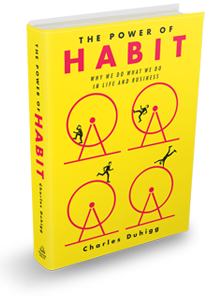
The Power of Habit by Charles Duhigg
Have you ever gotten into the car to go to destination A and a few turns later realized you’re going to destination B and have to turn around?

If so, you’ve experienced the power of habit.

Have you ever told yourself you will NOT eat the cookies sitting out on the counter and two minutes later pick one up and eat it?  Or perhaps it was the cigarette.  Or the drink.

Habit.

Did you know that the genius behind the methods of Tony Dungy–the only coach in the NFL history to reach the play-offs ten years in a row and the one who turned a troubled Colts team around and three years later took them to win the Super Bowl in 2007–was to teach his players to be faster than everyone else.  But they wouldn’t be faster because they would focus on increasing their physical speed. They would be faster because they would learn habits that would make their moves instinct.  When his strategy worked, Dungy’s players could move with a speed that was impossible to overcome.

According to some research, more than 40% of the actions we perform each day are not actual decisions, but habits.  And habits that we didn’t always consciously choose to start.  We have sleeping habits, shopping habits, exercise habits, eating habits.  Habits at work, at home, at school.  Habits of the mind.

Companies have a huge interest in changing our shopping habits.  Coaches have an interest in changing the habits we use when we play. Teachers have an interest in the habits of their classroom. Families and communities have habitual ways of interacting. We all have personal habits we’d like to adopt and others we’d like to give away.  But unless you know what you’re doing, habits can be extremely intransigent and slippery things.

The good news is that a lot of research has been done in the last few decades, and we now know how habits work. When we arm ourselves with this knowledge, we’ll have a much better chance of changing. Luckily for us, we don’t have to track all that information down.  In The Power of Habit: Why We Do What We Do In Life and Business, Charles Duhigg draws on hundreds of academic studies, interviews with more than three hundred scientists and executives, and research conducted at dozens of companies in his book and distills all this knowledge to its essence.

The title might sound boring, but Duhigg follows the style of Malcom Gladwell (Outliers, Blink, The Tipping Point), and the Heath brothers (Made to Stick), and has written a book that I couldn’t put down.  For example, I couldn’t stop reading about coach Tony Dungy, or Target as it predicts who is pregnant and how far along they are, or the scientists who couldn’t figure out why Alcoholics Anonymous works, or how bad organizational habits led to thirty-one people being burned alive in London’s King’s Cross subway stop.  I couldn’t stop reading about why Rosa Parks, not the first African American to refuse to give up her bus seat, could pivot the civil rights movement.  I couldn’t stop reading the stories of individuals losing bad habits, others picking up good ones, and others who lost their minds but not their habits. Duhigg uses these and many other examples and studies to illustrate the key principles underlying how habits work.  In the appendix, he gives us a guide for examining and forming our own habits.

I personally know the power of changing habits of the mind (which I’ve already written about). And teeth. A few years ago, I flossed once a week. It was such a pain. Now it’s a habit that I almost crave each night. I look back at how I made those changes and see it all laid out in Duhigg’s book. Can I actually change my habit of going to bed late? Stay tuned.

If you’re interested in forming the habits of a class, team, company, or family; if you want to change some of your own habits; if you’re interested in knowing why we do what we do and enjoy the style of Malcom Gladwell and Dan and Chip Heath, then I think you’ll love this book. Let me suggest you watch the video below.  Then go to http://charlesduhigg.com/the-power-of-habit/ and click on the “Additional Resources” to watch and read more. Then just get the dang book.


Share

Similar Posts

  • Taggart’s and a Secret

    taggartsgrillMost of the time when you go to hole-in-the-wall restaurant, it’s a hole-in-the-wall.


    But sometimes you strike gold.

    And my youngest daughter and I struck big-time gold last week two miles east of Morgan, Utah, in the canyon between Morgan and Henefer off of exit 108. I’ve driven that stretch many times and never knew anything was off that exit. Literally, if you blink, you’ll think nothing is there.

    But if you do, you will miss out on Taggart’s Grill.

    It’s nestled in some trees up against the northern slope. The first thing that strikes you when you get out of the car is the delicious aroma. Then you notice the peacocks running about. And then you enter the diner and see a display case of tantalizing, large desserts such as cheesecake, carrot cake, and huge pink-frosted cookies.

    The diner itself has a wonderful airy feeling with a high ceiling and lots of windows that offer views of the grove and garden surrounding the diner. There are seats outside in an area with a small waterfall. But we sat inside with the walls of log-cabin wood and the stained glass panels hanging in the windows.

    They serve a variety of dishes from sandwiches and soups to pizza, burgers, and fancy plates of salmon or tenderloin. And while the views and setting is awesome, the food is where they really shine.

    The beef stew was thick and amazing. The battered fries perfect. The sandwiches were wrapped in thick and soft flat bread that was delicious. And speaking of bread, they asked if I wanted a roll with the stew. I said yes. They didn’t bring out a roll–they brought out a small loaf of what appeared to be freshly baked bread. We of course had to try one of the desserts and opted for the
    carrot cake. It was lovely with a hint of almond in the cream cheese frosting.

    The portions were huge and so we took enough home for another meal for three.

    We’re going back.

    I want to try one of their burgers, the halibut, and the BLT.

    If you like great food at a great price and are anywhere near Morgan, don’t blink at exit 108. Just pull off and enjoy an awesome meal.

    *

    Parents of Rich Middle School students, what if I told you that researchers have uncovered a secret activity that teens enjoy that has the side benefit of actually raising their grades in all of their classes.

    But that’s not all. This one secret thing will help them get better jobs years in the future.

    It will help them make more money.

    And they won’t even know that it’s doing this for them. They won’t care. Because they won’t be doing it for the grades or money. They’ll be doing it for the enjoyment it brings. They’ll be doing it just because they like to do it.

    One little surprising thing.

    And it’s backed up by lots and lots of research.

    Do you want to know what this activity is?

    Do you want to open up opportunities for your child?

    If you do, come to the meeting Mrs. Brown is having at 7:00 p.m. on Wednesday, October 12 at the Rich Middle School.

    We will reveal all there.

    Share
  • Good Stuff! Crossnet and Bang!

    Today I have some good fun coming your way.

    The first is a game called Crossnet. It’s a mixture of volleyball and the playground game four square, and it’s a blast.

    You can have one person per square or two people. And just like four square, those wanting to play line up by square one, waiting for someone to get out.

    We did it with a huge group.  Our line always had 12-15 people in it, but you never waited long because the games moves fast. We laughed, teased each other, and had a great time.

    The other great thing was that we could play it with folks of all ages. We had folks from 55 all the way down to 8 playing. And they all enjoyed it.

    If you’re wondering what to do for the next family reunion or group activity, I think you’ll love Crossnet.

    *

    The next fun activity is a shootout card game called Bang!

    It’s played with 4-7 people. Each player is delt a unique Wild West character with special abilities and a role card. Some of the roles are on the side of law and order. Some are on the side of the outlaws.

    As you play you shoot it out, try to figure out who the outlaws are, get life points back, acquire guns, steal cards from each other, avoid the dynamite, and more.

    The game moves quickly. You can be done in less than 30 minutes, which is perfect for a family or date night. It’s one of our favorite family games.

    If you’re looking for a new, fun, quick game to play, give Bang! a try.

    I think you’ll be pleased you did.

    Share
  • Good Stuff: 8 Awesome Movies

    Summer is a great time to catch up on great movies you haven’t seen because sometimes the movies that are released to the theaters during this time are contenders for the dud award.

    I shall leave films such as Transformers: The Franchise Could Have Been So Cool or Pirates of the Caribbean: Johnny Depp Is Now Acting Really Weird nameless.

    Instead of watching duds, try a couple of these fantastic movies, all of which are based on true stories.

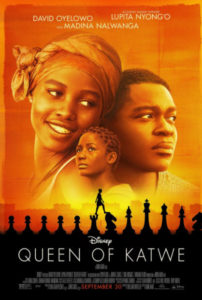
    Queen of Katwe. A tremendous film based on the true story of depicts Phiona Mutesi, a girl growing up in the slums of Katwe, a city in Uganda, who gets a chance to break out of that life with chess. You will come away having laughed and cheered and been touched in a poignant way. Highly recommended.

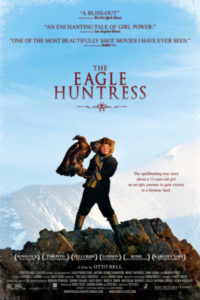
    The Eagle Huntress. A fascinating documentary about the first girl in Mongolia to compete as an eagle hunter—these are folks who capture and train golden eagles to hunt game like fox or rabbit. You’ll be introduced into a new and interesting culture that triggers you to think about your own.

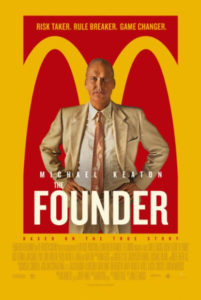
    The Founder. Ever wonder how McDonald’s got started? No, neither had I. Who cares, as long as the food is good, right? Well, if you’re like me, you’re in for an eye-opener. This tells the story of how Ray Kroc started McDonald’s, except, hint, he didn’t. Kroc is played by Michael Keaton. He’s one of my favorite actors, and I loved his performance. This story will fascinate you, and then make you think, and then make you really appreciate folks like Dave Thomas of Wendy’s.

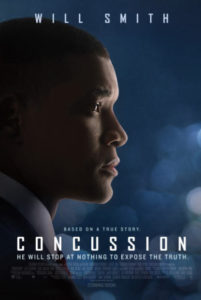
    Concussion. An engrossing, suspenseful film about the true story of Dr. Bennet Omalu and the tie between football and brain degeneration. Omalu was working as a forensic pathologist (one who figures out the cause of death) in Pittsburg, Pennsylvania. In 2002, Omalu performed an autopsy on Mike Webster, a former NFL star who played for the Pittsburg Steelers and is considered by some to be one of the best centers in NFL history. And his worked opened up a can of worms the NFL wanted to quash. I loved this film.

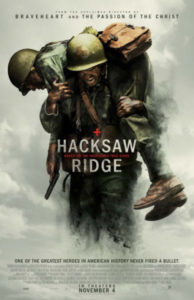
    Hacksaw Ridge. This one is based on the true story of Desmond Doss, a Seventh-day Adventist who did not believe in killing, but wanted to support his country and all those going to war. So he goes into World War 2 as a medic and is sent to the Pacific theater. His first engagement is the Battle of Okinawa. And, oh my holy heck, what he did during that battle is nothing short of amazing. There’s one part of the film in boot camp that seemed out of place. Really, some dude back in the 1940s was going to do pull ups in the barracks naked (nothing but a bum is shown in the film)? But then I recall that growing up in the 70s and 80s that we guys showered in communal showers. And that wasn’t a big deal. And earlier than that, swimming at the swimming hole often meant shucking your clothes and jumping in. So who knows? We have a similar funny scene in Mulan, but for some reason that one felt more organic. This one felt tacked on. It was a gag for humor and then, thankfully, Mel Gibson, who directed this, got on with the awesome story of Doss.

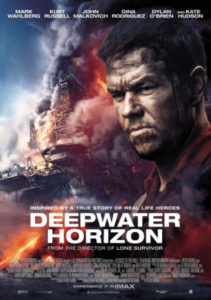
    Deepwater Horizon. This one is based on the true story of the Deepwater Horizon, an oil rig in the Gulf of Mexico that encounters a catastrophe. The details of how such rigs work and the issues involved are fascinating. But what will really get you is the heroism of the captain and crew.

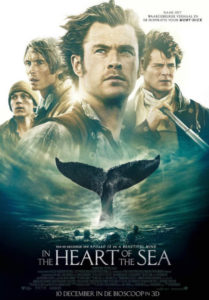
    In the Heart of the Sea. This is based on the true story of the whaleship Essex that was sunk in the Pacific in 1820 by a sperm whale and what the few that survived did to remain alive. Back in the 1700s and early 1800s, sperm whale oil, which was contained in the whale’s large head, was highly prized for lamps because it burned bright and odorless. It was also a great lubricant. Later the oil was replaced with kerosene and other and petroleum-based lubricants, but in those days there was a whole industry dedicated to harvesting it. I watched this with my teenage daughter, and we both found it a powerful tale.

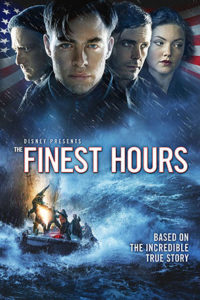
    The Finest Hours. This last one is based the book The Finest Hours: The True Story of the U.S. Coast Guard’s Most Daring Sea Rescue by Michael J. Tougias and Casey Sherman. It chronicles the 1952 United States Coast Guard rescue, in a dinky boat, of the crew of the SS Pendleton, a big tanker, after the ship split apart during a nor’easter off the New England coast. The movie was thrilling and heroic.

    And after you watch all of those, if you want some more great films based on true stories, well, you won’t go wrong with Tom Hanks in Sully or Captain Phillips or Bridge of Spies.

    Share
  • The Harry Potter Book of Mormon Hello

    For those who haven’t been tracking the Broadway scene, South Park creators Trey Parker and Matt Stone launched the production of The Book of Mormon musical last year in New York. It won 9 Tony Awards, including best muscial, delighted many critics, and is something I will never see, alas. It’s simply too vulgar for this Mo. However, the show’s cast album did something that hasn’t happened in over 40 years: It hit the top ten on Billboard’s pop charts. While I couldn’t listen to all the songs (yeah, I tried but was almost struck by lightning), “Hello,” the first, is great. But it doesn’t stop there. Oh, no. Tessa Netting, a 20-year-old Broadway actress, recently had the brilliant idea to combine the characters of Harry Potter with the song. I think you’ll be delighted with both.

    “Hello” from the musical

    “Hello – Harry Potter Book of Mormon Parody” which you can get on iTunes.

    You might want to listen to an interesting All Things Considered NRP interview where Stone and Parker talk about the music.

    Share
  • Buck, America the Vulnerable

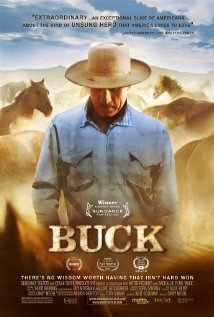
    Buck

    About two years ago I was walking out in Round Valley and saw a rider on a horse coming down a hill through the brush.  I got to him just as he moved onto the road. Right away, I noticed that there was something a bit off with the horse’s gear—the rider was not using a bridle. The rider, Wayne Batty, was using nothing more than a rope harness that went around the horse’s head. I was amazed; how did you steer the horse without a bit in its mouth?

    I asked Wayne if I might walk alongside as he rode. He agreed, and then began to talk about training and riding horses. I stuck with him for little over a mile before I had to turn back. I learned in that short period that Wayne was able to communicate with that horse with small nudges. The horse also communicated to him many things with its stance, ears, the cock of its head. Most importantly, I learned they both had built up a trust of each other. Wayne’s methods were not based on fear, it seemed, but something else.

    It reminded me a lot of the fascinating and compelling The Man Who Listens to Horses, the autobiography of Monty Roberts, that shares Roberts’ life and his development of natural horsemanship methods. Unlike many training approaches which seek to break a horse’s will through harsh punishment-based methods that often veer into abuse, natural horsemanship employs methods that are much gentler and seek to build trust in the handler. Roberts can join up with (he doesn’t “break” horses) a wild or un-ridden horse, be up on the saddle calmly riding the animal, in an incredibly short period of time.

    But Batty and Roberts aren’t the only ones practicing this. These methods have been around some time. One of the most famous practitioners and teachers is Buck Brannaman, who found his years of being severely physically abused by his father actually provided some insight into training horses.

    Says Brannaman: “I’ve started horses since I was twelve years old and have been bit, kicked, bucked off and run over. I’ve tried every physical means to contain my horse in an effort to keep from getting myself killed. I started to realize that things would come much easier for me once I learned why a horse does what he does. This method works well for me because of the kinship that develops between horse and rider.”

    Recently, a film was produced that looks at Brannaman’s life and methods. It’s called Buck and is worth every minute. If you love horses, you’ll love this movie. If you have a horse and think you might want to learn these methods, or just want to watch and listen, you might want to check out Brannaman’s teaching schedule at his site brannaman.com. He travels all over the country and is likely to hold a class within driving distance.

    America The Vulnerable

    A few years ago I received an email from my bank. At least, it looked legit to me. I opened it. It said it needed me to update some parts of my account and provided a link to the bank’s website. I clicked on the link, which took me to my bank’s website. At least, it looked exactly like my bank’s website. I entered my account number, login, and password. I made the requested changes and logged out.

    Two days later, somebody in Spain cleared every penny out of my account—thousands of dollars stolen.

    That email was a phishing (fishing) scam. The website had been a fake. I had willingly handed over my account number, login, and password to thieves.

    Luckily, the bank insures such thefts. But the problem of information security remains. Thieves living in Spain, or Russia, or LA, or China, can rob me blind from their bedrooms in their pajamas. They can do this because our information processing nowadays is increasingly tied to the internet.

    And they don’t just rob dopes like me, because it’s not just individual criminals who are in the business. Corporations and governments are in this business as well.

    They steal billions of dollars of trade secrets, engineering designs, and other intellectual property from American companies through computer hacking. They steal military secrets. For example, the US Navy spent years and about $5 billion dollars to develop a quiet electric motor for submarines that would make them incredibly hard to find and track. Chinese spies stole that technology. The Navy then spent billions more to develop a new radar for their top-of-the-line Aegis Cruiser. Chinese spies stole that, too.

    And they not only steal. Terrorists, crime organizations, and foreign governments can now insert malicious software into the computers that control, among other things, our electrical grid. They can use this in an attack, not just to shut the grid down for a while, but to destroy power generators. They can insert such software into our air traffic control system. Our train transportation systems. Our banks. They have already done this. They have already breached some of our most secure government systems.

    It sounds too far-fetched to be true, but it’s reality. Joel Brenner, who has served as the former senior counsel at the National Security Agency (NSA), the national counterintelligence executive in the office of the director of National Intelligence, and as the NSA’s inspector general writes about what he’s seen in America The Vulnerable: Inside the New Threat Matrix of Digial Espionage, Crime, and Warfare. In the book, he explains the cyber threats to individuals, corporations, and the country and what we can do about it. If you want a fascinating look into the next phase of crime, espionage, and warfare, and an introduction to some of the things you need to do to protect yourself and your company, and what we need to do as a nation, you’ll want to read this book.

    Share
  • Basic Economics, Avatar: the Last Airbender

    How to not be duped by political blarney

    Karl Marx was not a scientist. Nor was Adam Smith before him. They were philosophers. Theorists. Idea men. That’s what all economists in those days were. They had little tested knowledge, and so which economic system was best was all a matter of opinion.

    But things are now much different. Nations and local governments tried the various theories. And we’ve seen the results. We now have a whole century of data. Furthermore, economists now are scientists. They use scientific methods and deal with tested knowledge. Sure, there are still controversies, just as there are in any science, but the basic principles of economics today are NOT matters of opinion.

    For example, we know what happens when governments impose price controls in all their many varieties—rent caps, minimum wages, laws against price gouging, and medical care cost limits. These last few years we’ve seen a dramatic demonstration of what happens when they meddle with the prices of home loans. We know what happens when they impose tariffs or give subsidies to special groups like farmers or steel producers. We know what happens when they create barriers to people entering a market to compete, like they’ve done with immigrants. We know what taxes do.

    The unfortunate thing is that many of these principles seem to be ignored by our politicians. And by those who vote them in. And so we can have a Congress pass massive health care legislation that will cause health care shortages just as similar laws caused shortages in other countries. This is how we have a president who in a recent speech to the U.S. Chamber of Commerce suggested, in good Marxist fashion, that it was business owners who kept the American workers down by hoarding all the profits. Has he not looked at the data which shows that huge profits invite more competition, which tries to get ahead of the leader by cutting prices, which allows the American workers to get more for less, thus raising their standard of living?

    In the 1980’s and 1990’s India and China began to make fundamental changes to their economic policies, doing the things that have been proven to work. Suddenly, the economies of those nations started to grow. It’s estimated that 20 million people in India rose out of poverty in a decade. In China, more than a million people rose out of poverty EACH MONTH.

    But this seems lost on a number of politicians. Don’t let it be lost on you. We have critical elections coming up. One of the best things we can do is educate ourselves about these basic economic principles so we can cut through all the political blarney. I haven’t found a better, more enjoyable book on the subject than Basic Economic Principles: A Common Sense Guide to the Economy by Thomas Sowell. Sowell is an economist and Senior Fellow on Public Policy at the Hoover Institution at Stanford University. His book is written for the general public and so foregoes dry charts and theoretical ho-hum for lots of real-life examples and straight-forward explanations. There are times when I wish he would have gone into more detail on a few subjects, but what he lacks in depth in a handful of areas, he makes up with breadth. Furthermore, the way he presents the topic was interesting enough to make me stay up late a number of nights well past my bedtime. 

    Great family entertainment

    Do you want some fun family entertainment that includes laughs, wonder, and moments of poignancy? Something you can watch and enjoy with the kids? Then let me recommend the animated TV series Avatar: The Last Airbender. This is NOT the movie Avatar by James Cameron with all the big blue people Nor is it the movie The Last Airbender, based on the TV series, which many fans disliked. This is the original. The one that millions love.

    Through the miracle of Netflix, I started watching it with my girls a few months ago. And we’ve all been sucked in. It’s unlike any “cartoon” I’ve seen. In fact, you can’t call it a cartoon just as you can’t call The Incredibles or Lion King cartoons. This is great story telling. Furthermore, instead of it being a bunch of unconnected episodes, this series is telling a long story. It ran for three years on Nickelodeon and includes more than sixty 22-minute episodes.

    The series follows the adventures of the main protagonist Aang and his friends, who must save the world by ending the destructive war with the Fire Nation. Aang’s world is divided up into four nations—Air, Earth, Water, and Fire. In each nation are “benders” who can powers with the element of that nation. So Air Benders can fly and create huge winds; Fire Benders can generate and throw fire; Water Benders can create ice and waves.

    So it’s fantasy, and all of that is cool, but it’s the characters that we enjoy the most. We quote and laugh at some of their lines. And then there are the episodes with true dramatic moments.

    Avatar has been nominated for and won many awards, including the Annual Annie Awards, the Genesis Awards, the primetime Emmy awards and a Peabody Award. It’s excellent entertainment.

    Share

2 Comments

  1. I love Tony Dungy, but I have to say that running drills in order to make players react faster has been a part of football for . . . well, ever. The biggest difference between his success as compared to the success of other coaches on other teams was that he had players (namely Payton Manning) who were just as hard working/positive-habit-forming as he was. That has more to do with the kind of players you bring into the organization rather than how the franchise is run. It’s still hard work and he did an amzaing job of it.

  2. Manning certainly is an amazing player. But he was with the Colts and they were losing before Dungy came on the scene. Dungy came and turned things around. Just like he did with the Buccaneers. It’s true football players have been running drills since the dawn of time to make things automatic. But Dungy was drilling something different. Read the sections in the book on this, which I think you’ll find fascinating, and then let me know what you think 🙂

Comments are closed.