Taggart’s and a Secret

taggartsgrillMost of the time when you go to hole-in-the-wall restaurant, it’s a hole-in-the-wall.

But sometimes you strike gold.

And my youngest daughter and I struck big-time gold last week two miles east of Morgan, Utah, in the canyon between Morgan and Henefer off of exit 108. I’ve driven that stretch many times and never knew anything was off that exit. Literally, if you blink, you’ll think nothing is there.

But if you do, you will miss out on Taggart’s Grill.

It’s nestled in some trees up against the northern slope. The first thing that strikes you when you get out of the car is the delicious aroma. Then you notice the peacocks running about. And then you enter the diner and see a display case of tantalizing, large desserts such as cheesecake, carrot cake, and huge pink-frosted cookies.

The diner itself has a wonderful airy feeling with a high ceiling and lots of windows that offer views of the grove and garden surrounding the diner. There are seats outside in an area with a small waterfall. But we sat inside with the walls of log-cabin wood and the stained glass panels hanging in the windows.

They serve a variety of dishes from sandwiches and soups to pizza, burgers, and fancy plates of salmon or tenderloin. And while the views and setting is awesome, the food is where they really shine.

The beef stew was thick and amazing. The battered fries perfect. The sandwiches were wrapped in thick and soft flat bread that was delicious. And speaking of bread, they asked if I wanted a roll with the stew. I said yes. They didn’t bring out a roll–they brought out a small loaf of what appeared to be freshly baked bread. We of course had to try one of the desserts and opted for the
carrot cake. It was lovely with a hint of almond in the cream cheese frosting.

The portions were huge and so we took enough home for another meal for three.

We’re going back.

I want to try one of their burgers, the halibut, and the BLT.

If you like great food at a great price and are anywhere near Morgan, don’t blink at exit 108. Just pull off and enjoy an awesome meal.

*

Parents of Rich Middle School students, what if I told you that researchers have uncovered a secret activity that teens enjoy that has the side benefit of actually raising their grades in all of their classes.

But that’s not all. This one secret thing will help them get better jobs years in the future.

It will help them make more money.

And they won’t even know that it’s doing this for them. They won’t care. Because they won’t be doing it for the grades or money. They’ll be doing it for the enjoyment it brings. They’ll be doing it just because they like to do it.

One little surprising thing.

And it’s backed up by lots and lots of research.

Do you want to know what this activity is?

Do you want to open up opportunities for your child?

If you do, come to the meeting Mrs. Brown is having at 7:00 p.m. on Wednesday, October 12 at the Rich Middle School.

We will reveal all there.

Share

Similar Posts

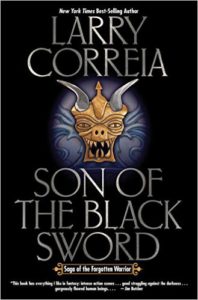
  • Correia’s Son of the Black Sword

    I just finished reading Larry Correia’s Son of the Black Sword, and enjoyed it immensely.

    It takes memes from King Arthur’s sword, Moses, the Shaolin monks, special operations forces, ancient India, prophets, and freedom and mixes them into an epic fantasy that’s simply tremendous.

    It has all the action and entertainment you expect from a Correia production. There are monsters. There are battles and wonderful scenes of sword fighting. There are magic and wizards, but it’s not the magic and wizards you’ve seen before (magic from demon body parts?!) And unlike many fantasies, which revolve around the magic—discovering how it works and some chosen person growing in its power—this story revolves around matters of justice and mercy and law and truth.

    This isn’t a story about magic. It’s a story about a man in terrible conflict.

    The main character, Ashok, is not just a Lord Protector, one trained in battle to kill demons and administer death to those who break the law, he’s the most fearsome of them all. And the most pure in his devotion to the law. There’s just one problem—he finds out that he himself is a terrible affront to the law.

    Discovering why that is and how it occurred is part of the enjoyment, so I won’t give it away. But along with that and all the action, you’ll be transported to a new world based on the old Indian caste system with a number of twists. You’ll encounter the court intrigue found in so many fantasies. But probably what was most delicious to me was a central mystery shrouded in the ancient past and a whole cast of wonderful characters. There’s Ashok, but we also get a courageous librarian/legal assistant, a tough female boat captain, a funny black market smuggler, and a veteran soldier who wants to restore the honor that was unjustly taken from him.

    As a reader, I was delighted. As an author, I found many things to admire (and some to be envious of), including the fact that when you’re in the point of view of a character, you’re with that character, caring about what they care about and seeing the world through their eyes.

    Son of the Black Sword is a book chock-full of delights. If you like fantasy and action, I think you’ll love it. As for me, I can’t wait for the second in the series.

    Share
  • What you need as a storyteller

    Brand-StorytellerOne of the most important things I ever learned about telling stories was in Orson Card’s weeklong boot camp where we “workshopped” stories by doing zero workshopping. Zero critiques. In fact, critiques were verboten.

    Instead, Card asked us to simply provide a report of what he called the three grunts a reader makes when things aren’t working–where it was boring, unclear, or didn’t ring true.

    We were to provide a report of our reader reaction, including parts that really entertained or interested us. NOTHING more.

    He compared it to going to the doctor. We were to report our “symptoms.” The writer’s job was to diagnose if it was an issue and prescribe a remedy, if any.

    Doing that with 19 stories over three days was amazing. It totally opened up what story was about. And taught me what beta reading was all about. One of the most insightful writing experiences I’ve ever had.

    Nowadays when I read, I try my best to simply report. And that’s it. If, afterwards, the writer wants to brainstorm ideas together, that’s fine. But I don’t ever want to diagnose and prescribe because there have been too many books that didn’t work for me that delighted tons of readers. My critique or advice would have been exactly the wrong thing.

    All I can do is report my reaction. And then think about what would have fixed it for me.

    Kristine Rusch recently wrote a great article about this and other things called “Writing by Committee” in which she suggests a list of things authors need to be successful. Give it a read. I think she makes a lot of good points.

    And a few I disagree with. She is quite forceful about writers not acting as first readers. I think that’s bunk. And she says as much in the comments. If a writer can give a reader response instead of a critique, that’s as helpful as a non-writer giving a reader response. I also disagree that you have to toss something and start over if it doesn’t work. If it’s fundamentally broken, sure. But many times a small adjustment gets you back on track.  Finally, yes, a story has to be surprising. At the same time, you had better deliver the type of experience you promise your reader. And that’s all defined by genre. You can’t promise your readers a thriller and deliver a romance. That only leads to irritated readers. I believe you have to consider your audience. But these are all quibbles. The article is great.

    BTW, please note I used “storyteller” in the title. I did that on purpose. More and more, I find I’m not interested in writing. “Writing” doesn’t seem to convey what I’m after. However, I am interested in telling cracking stories.

    Share
  • |

    The average American reads 17 books per year

    Americans and Reading

    The Pew Research Center has just published their findings on reading in America. It’s called “The Rise of E-reading“. There’s a LOT of fascinating information in the report. Here’s a taste:

    1. Americans 18 and older read on average 17 books each year. 19% say they don’t read any books at all. Only 5% say they read more than 50.
    2. Fewer Americans are reading books now than in 1978.
    3. 64% of respondents said they find the books they read from recommendations from family members, friends, or co-workers.
    4. The average reader of e-books read 24 books (the mean number) in the past 12 months; the average non-e-book consumer read an average of 15.

    Building an Audience

    I also want to recommend this week’s post by Kris Rusch on Audience. She has a number of interesting things to say about the dream of being a best seller and building an audience. The money quote comes as she refers to a post by Tracy Hickman:

    “The point here is that you do not have to feel as though you are in competition with the entire world. You don’t NEED the entire world to be a successful writer. What you need is an audience—just enough of an audience, mind you—who reads your words, is changed by them and wants to come back for more.”

    An audience. More importantly, an audience that reads and “is changed by” your words. Not an audience who loves them, not even an audience who likes them. An audience who is changed by them, and because of that experience, “wants to come back for more.”

    Simple. Important. Usually forgotten.

    She talks about lots more. Read the whole thing.

    My thoughts?

    First, there’s no need for authors or readers to worry about wading through “crap.”

    According to Pew, readers only read 15 or 24 books a year on average.  That’s not a lot of books.

    More importantly, it takes about 3 seconds to get a lead for a good book.  You hear something from a friend or family member, you look at the USA Today best sellers list, you browse a few books at a store or online, you read a blog and suddenly you’ve found a book. 

    Readers fill up their book reading slots much more quickly than they can ever empty them.  That’s why we all have years of reading in our queues.

    It doesn’t matter that there are millions of other books out there, a good majority of which might have been written by monkeys. There’s no need for authors to worry that readers will have to wade through a mountain of crap to find a good book. They don’t need to because they have leads for good books coming out their ears.

    Second, people purchase books that friends, family, and co-workers love.

    Which means that when you deliver a great experience to one person, it’s going to ripple out. It’s probably not going to be linear. It’s probably going to ripple out like viruses do into different population pockets. Or seeds do into different environments. It will run through one pocket, make a jump to one or more others, or it may not jump at all. Some pockets are big, some are small.

    The way to keep a virus going is to release it in a lot of places where it’s likely to thrive or in places that a lot of people travel through. And as Kris points out, writing is all about repeat business–making sure you have a stream of good product (something I hope to rectify with my own writing this year).

    Bottom line: the best way to build your writing business is to simply write the best book you can, and keep them coming.

    Third, the market is BIG. 

    If you read Rusch’s and Hickman’s articles, you’ll see that even the mega sellers only reach a fraction of those who read. This is reinforced by the statement made by Thomas McCormack, former CEO of St. Martin’s that you can read here. So just because 100,000 people read one book doesn’t mean 100,000 others won’t read mine.  

    Moreover, e-books and online shopping are broadening distribution. Brick and mortar stores only have so many slots for books. Every 8-12 weeks they rotate the old books out (like 12 weeks is old) and replace them with the new ones, unless, of course, your book is selling very well and gets “modeled” at the store.  The point is: when you only display a few books at a time, those books will get bigger sales numbers. This happens because there isn’t anything else to purchase.

    But you don’t have that limitation with e-books and online shopping. Nothing rotates out of the store. Sure, things rotate on and off the best seller lists. But the books are always there. With an ever growing selection, there won’t be as many mega sellers.  Publishers Weekly discusses this trend in their 2011 Facts & Figures articles, which list best-seller numbers (make sure you click through to the Trade Paperback article as well). The same thing has happened with TV station viewership with the explosion of channels, DVDs, and online streaming. Same thing happened with music.

    What this means is each author has a better chance of getting his or her books to those who will love them. We’ll still have best-sellers. But we’ll also have a lot more medium sellers as well. And that’s great for authors everywhere.

    Share
  • |

    Dewitt Jones and Clear Vision

    Not many people understand creativity. Dewitt Jones, a National Geographic photographer, does. And this video on the creative process, HOLY COW, it’s so good I had to buy it so I could watch it whenever the yearning took me.

    Clear Vision

    But this isn’t just for artists. The principles of creativity apply to any creative endeavor–from writing and drawing to building microchips and parenting. 

    Go here. Watch the brief clip. Then watch the whole Clear Vision video. Tell me what  you think.  

    Capture the zing!

    Share
  • Toy Story 3, How to Train Your Dragon, Rumbi Island Grill

    Toy Story 3

    It’s interesting that two of the most enjoyable films this year are both animated. The first is Toy Story 3. We all know how awful sequels can be, and, in fact, I didn’t like Toy Story 2 all that much. But Pixar defied the sequel slump with this one.

    Andy has grown up and is going to college. From a toy’s point of view, that’s tantamount to death because Andy has to clean out his room, and what is he going to do with all that junk anyway? The last few remaining toys barely miss the garbage truck and get sent, by accident, to the local day care instead. Sounds great for a toy, right? They’ll get played with every day forever. But things are not as they seem at the day care, and our crew of toys is put on the fast track to an early death. Will they be able to escape when the other toys there are ruled mob-style by a big pink teddy bear that smells of strawberries?

    I laughed and cried and cheered in this movie. There are hilarious scenes featuring Barbie and a Ken who’s gone over to the dark side. More gut busters with Buzz Lightyear when he’s put into Spanish mode and Mr. Potato Head who has powers we never would have suspected.

    But the movie goes beyond toys and action. It’s not just a cartoon. It’s about loyalty and friendship and heroics and love and family. Because my oldest will be leaving the nest next year, the final scenes carried extra power for me. But I think they will be effective for almost anyone because Pixar does in this movie what all great art does—it reaches into themes we all share. And in that moment, we identify so strongly with the characters that their situation becomes our own.

    How to Train Your Dragon

    Dreamworks’ How to Train Your Dragon, based on the novel by Cressida Cowell, is the movie I should have seen for my birthday. Instead, we went to the mind-numbing Clash of Titans. I still cringe at some of the massive plot holes in that one, even though Medusa rocked. Which only proves, once again, that cool effects can’t save a bad story. How to Train Your Dragon, on the other hand, delivers cool monsters, but never once did the writers make the mistake of thinking that cool monsters is what the story was about.

    The movie is about a young Viking named Hiccup who wants to be accepted, wants to become one of the burly defenders of his city, like his dad, Stoik the Vast. But Hiccup isn’t brawny. However, he is resourceful. And during a dragon attack, he brings down a mysterious Night Fury dragon with his invention. However, when he finds the dragon, he can’t bring himself to kill it. Instead, Hiccup and the dragon begin a friendship. But will Hiccup be able to save the dragon that everyone wants to kill? Will the Vikings be able to see the truth about the dragons before they’re destroyed? Most importantly, will Stoik be able to accept his son?

    I enjoyed the superb animation in this story as well as the dragons. But it was the characters and humor that made this movie so good. There’s Stoik who just can’t relate to his son, but tries to bond with a very interesting use of his dead wife’s brassier, Hiccup, the son, with his dry wit, and Gobber, a peg-leg family friend who has some of the best lines in the movie.

    Go see this show. You’ll laugh, and then you’ll wish you had a dragon of your own.

    Rumbi Island Grill

    The Rumbi Island Grill is a restaurant chain that started in Salt Lake City in 2000. They serve fast, casual tropical food at incredibly good prices. My favorite is their rice bowl. It comes with your choice of sauce, rice, and meat with sautéed vegetables. In the Netherlands I learned to love Indonesian food and the spicy-sweet peanut sauce that often accompanied it, which is why I can’t get enough of the Bali Island bowl with brown rice and shrimp. You might find you love the sauce so much you ask for two servings to pour over your bowl (oh, and add a dash of the hot sauce). The food’s great, but they’ve paid attention to the Hawaiian atmosphere as well. So even though it’s fast food (you order and they bring it out to you), you feel like you’re sitting in a casual dining restaurant.

    I always look for a Rumbi when I travel down to Salt Lake City or Provo. Now I don’t have to go so far–a restaurant has opened up in Logan right across from the Wal-Mart on the south end of town! I took Nellie there recently. The staff was friendly and the food was delicious–just what I’d come to expect.

    Now all we need is a Cheesecake Factory!

    Share
  • |

    Slush I Read by Jim C. Hines

    Laughs are lovely. I just came across this wonderful parody by novelist Jim C. Hines which will give you a few for free. Enjoy!

    Slush I Read
    by Jim C. Hines

    (Apologies to Seuss)

    I read slush.
    Slush I read.

    That slush I read.
    That slush I read!
    I do not like that slush I read.

    Do you like fanfic with vamps?

    I do not like them Mary Sue.
    Why do these vamps all worship you?

    Here’s a tale from D & D!

    I do not want your D & D.
    I do not like your elf PC.
    I can not stand your purple prose.
    I want to punch you in the nose!

    Would you like a hot sex scene?
    I wrote it for my online ‘zine!

    Go to Hines’ site and read the rest right now

    Share