|

Ender’s World: Fresh Perspectives on the SF Classic Ender’s Game

Smart Pop publishes smart, fresh, and engaging articles on the best of pop culture TV, books, and film, with a particular focus on science fiction and fantasy television and literature.

You want to hear what Scott Westerfield (Uglies, Pretties, etc.) has to say about Buffy?  Go to Smart Pop.

What about Orson Card’s thoughts on Joss Whedon’s Firefly universe? Smart Pop.

What about the venerable Lawrence Block on Robert B. Parker’s Spenser series? Um, Smart Pop.

Strange.  Do you see a pattern emerging? 

Whether it’s Mad Men, House, Hunger Games, George Martin’s epic fantasies, Halo, True Blood, or Alias, Smart Pop gathers together New York Times bestselling authors, television writers, psychologists, philosophers, and others–folks who love of pop culture and have something worth sharing about it–and asks them to share their insights.   

Recently, they’ve been putting together just such a collection on Ender’s Game.  It’s called Ender’s World: Fresh Perspectives on the SF Classic Ender’s Game. It’s coming out February 2013.  You can read more about it here.

I’m announcing this now because The Man was fortunate enough to be invited to contribute.  I love Ender’s Game.  LOVE IT.  How cool is it that I get to write about it in an anthology edited by the folks at Smart Pop and Card himself? And then get to read what everyone else has to say, including military strategists Colonel Tom Ruby and Captain John Schmitt.  As well as the little bits they’ll include on things like why the battle room is the shape it is and why they were recruiting kids.

But I’m also announcing this because in addition to the essays all we Ender-lovers get to write, Smart Pop is also going to include a series of Q&As with Scott Card, and they are currently soliciting the question from readers. FROM YOU. Right now.

You ever wonder about a character or part of the setting or event in Ender’s Game?  Ever wanted to know what inspired Card? Ever wanted to ask any question at all about Ender’s Game?  Now’s your chance. Just submit you question here: http://www.smartpopbooks.com/ask-orson-scott-card-a-question-about-enders-game/

You can see questions already submitted at Smart Pop’s Tumblr.

From a writer’s pov, I have to tell you that the folks at Smart Pop have been nothing but enjoyable and insightful to work with. I’m looking forward to this book!

Share

Similar Posts

  • |

    No Apology

    The Book

    Political TV ads can be fun. And annoying.

    Debates can be fun. And maddening.

    You can indeed learn things about the candidates from watching the ads and debates. But fifteen and thirty second snippets of information really don’t give you the full picture. And sometimes they actually hide the facts, producing nothing more than informational smog.

    Recently, I decided I wanted to really know what Mitt Romney thought.  What he was about.  What he hopes to accomplish if he wins the presidency. If Mitt was someone in my neighborhood, I’d go visit the man, and we’d have a chat.

    I’d ask him about his ideas and past. I’d ask him to give me examples. Because of the nature of the issues at stake and the number of them, I imagine our chat would probably last a few hours.  It might stretch over a number of evenings.

    Of course, I’d want time to consider our chat and determine where I did and didn’t agree with him. I’d want to hear what others thought. And I’d want to look into his history, his successes and failures.

    But the first step would be to go to the man himself and hear him out.

    I hate it when people put words in my mouth. I’m sure Romney, or anyone else running, hates that same thing. If I were running, I’d would hope folks would take the time to hear me out. They may ultimately disagree with me on many or a few things. But I’d hope, as they are gathering information, that they would take the time to actually go to the source and listen to what I myself had to say.

    Unfortunately, I can’t walk around the corner and knock on Mitt’s door. But he did write a book that was published in 2010, and it’s probably the next best thing to talking to Romney at his kitchen table. The book is called No Apology: The Case for American Greatness.

    I’ll admit I thought it was going to be a dry guide book explaining his position on every hot political issue. It’s not a guide book.  In fact, he leaves a number of topics out. Nor was it dry.

    I also suspected it might be a scathing attack piece on the Obama administration. It’s not that either.  Not even close. He does criticize some things where he and Obama differ, but he also commends him on a few things. Either way, Obama is a very small part of the book.

    So what IS this book?

    Romney states its purpose in the introduction: it’s “about what I believe should be our primary national objective: to keep America strong and to preserve its place as the world’s leading nation” and “the course I believe we must take to strengthen the nation in order to remain prosperous, secure, and free” (2). It’s about his ideas on how to make sure America does not falter as so many nations have, but remains wealthy, happy, and productive.

    I finished the book yesterday. I found it interesting, personable, sometimes surprising, and insightful.

    I found Mitt Romney to be a man self-deprecating humor.  He’s also a thinking man, one who likes to look at data to see what it shows. It’s clear he’s a man who does NOT think he knows everything or has a monopoly on every good idea, but he’s also a man who demands evidence.  I also saw a man who is kind.  He doesn’t talk much about his 14 years of service as a lay minister in his church in this book, but you can see how those years changed him as he discusses helping the unemployed, out-of-wedlock births, and single-parent families.  Finally, I saw a man who loves, LOVES, America and is convinced she can remain the hope of the earth, but only if we do things that foster our strength.

    This book outlines what he thinks those things are.

    The book is written in a conversational and easy style with many examples from his personal experience, studies, and history. Romney’s record of accomplishments demonstrates his skills and hard work ethic. This book explains to what end he would apply that skill and work.

    If you’re planning on voting this November for the president of the United States, I think you’ll find this book very useful.  You may end up agreeing with many things he says. You may end up disagreeing with him on many points. But before you can do either, you need to understand what Romney’s position actually is.  And the first step in doing so is to fully hear the man out, in his own words, from his own lips.

    As a result, whether you end up deciding he’s your candidate or not, you WILL come away with important insights into the issues discussed.

    What’s Next

    I want you to know that I do not worship George, Ben, Tom, Adam or any of the other guys who formed our constitution and started this nation.

    They put their lives and fortunes on the line for what they believed in. And I am immensely grateful for what they did.  I enjoy tremendous freedoms because of their courage, determination, and sacrifice. Those guys, by-and-large, rock!

    But I do NOT believe that their words are scripture nor that their ideas are sacrosanct—merely to be accepted and not to be considered and questioned and disagreed with.

    Even so, these guys were gutsy and brilliant. They attempted something everyone thought would fail.  Something that HAD failed every time it had been attempted in their recorded history. But they pulled it off and changed the world.

    These guys believed in the common man. They believed that the educated common man was the best person to hold the reins of government. Thomas Jefferson thought up a rhyme to make the idea easy to remember.  He said, “If a nation expects to be ignorant and free in a state of civilization, it expects what never was and never will be.”

    I can’t argue with that.

    Of course, we’re not going to become experts on every policy issue. But we certainly can become informed on the broad principles and issues. And we can certainly become informed about the candidates.

    Because I found No Apology so useful, over the next few days I’m going to summarize Romney’s main points, chapter by chapter, here. I’ll also point out interesting ideas and facts he shares as well as share any questions, quibbles, or disagreements I have.

    I hope you find it useful. More importantly, I hope you read the book and join in the conversation.

    Share
  • Teacher power, crawdad fun, and lemon bars

    Teacher Power

    When we find great teachers, we prize them not only because what we learn improves our lives but also because good learning can be one of the most exhilarating things we experience. Unfortunately, a lot of teaching stinks. It’s boring, misguided, useless.

    I’ve made a study of teaching. I’ve had to. For almost 20 years I’ve taught and designed courses in the private sector. And for many of those years, my work has been in a revenue-generating department. That means that my classes had better be effective and interesting, otherwise nobody signs up, revenue falls, and a lot of folks will stand around and wonder if it might not be better to just replace me with a potted plant.

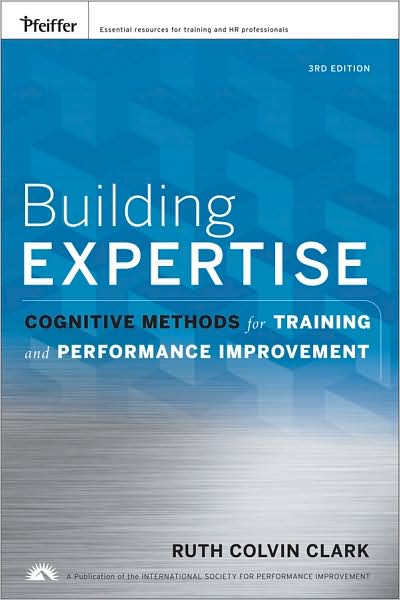
    I kind of like having a job. And so I’ve tried my best to find the most effective methods for instruction. In the last few decades, education researchers have put many teaching techniques and principles to the test. We know better now than ever before how to structure learning that is effective and interesting. And I have yet to find a better explanation of the proven techniques and principles than Ruth Colvin Clark’s Building Expertise: Cognitive Methods for Training and Performance Improvement, 3rd Edition. 

    Don’t let the “training” part fool you. We often associate “training” with learning procedures and simple tasks, e.g. the State pays for “sex education” in our schools, not “sex training.” But Clark isn’t using the term that way. Clark’s “training” includes all types of learning.

    Two things separate Clark from so many others who would offer advice on teaching. First, she bases everything on tested principles and techniques. I’m not talking about tested as in some teacher somewhere tried it and was impressed. I’m talking about scientifically valid testing that controls for variables and shows causation. The methods she describes are practical and proven. Second, she writes clearly enough and uses enough examples so that I can read about the principle and immediately see how I can apply it in my own class.

    Among other things, you’ll learn:

    • Why working memory is key to instruction and how to overcome its limits
    • How to motivate learners
    • How to structure learning
    • When to use lecture and when to put learners into action
    • When taking notes can actually be counterproductive

    You’ll even learn why assigning lots of practice is NOT always the best way to learn. In fact, sometimes your child will learn more if you do half of their homework questions for them. Sound ridiculous? It’s not. It’s science.

    You’ll find that there is no yellow brick road in teaching. Instead, you’ll see that the effectiveness of any method depends on whether it’s suited to the specific situation. And Clark will explain what the key factors in any situation are so you know which methods to apply and the trade-offs you’ll make when you do.

    If you’re a teacher in any setting–family, job, church, school, or recreation–or if you’re trying to teach yourself, this book (specifically the 3rd edition) will be a goldmine. I can’t recommend it highly enough.

    Crawdads & the Bear River Greenway in Evanston

    Here’s a recipe for a whole lot of family or date fun. And it costs almost nothing. Drive to Evanston, Wyoming. Make sure you bring a bucket. Pick up a few pieces of fried chicken at Wal-Mart then picnic at the Bear River Pavilion park. It’s the one with the small lake west of Wal-Mart and east of the overpass on 89. Keep your chicken bones.

    When you finish eating, attach a length of about four feet of string or yarn to each chicken bone. Weight the bone down with some rocks or washers. You want it to sink deep. Tie a loop for your finger in the end of the string. Then go out to the pier or the cement box on the northwest side of the small lake and drop your bone in.

    Wait.

    Slowing bring your chicken bone up. You’ll find a crawdad clinging to it, thinking he’s gone to free lunch heaven. Use a net to snag the crawdad. A simple fish aquarium net will do. You can get them at Wal-Mart for a few bucks. Plop crawdad into the bucket. Ooh and aah appropriately. Make sure he’s got some water to swim around in.

    Drop your line in again and repeat until you and the kids or dates are bored. We had a bucketful in about twenty minutes. You might want to pick a few of the crustaceans up. Just grab them on the sides just behind the spot where the arms of their big pincers join the body. Wave the crawdad at a selected victim—wife, daughter, girlfriend–for special effects.

    When you’re done, dump the critters back into the water. But don’t go home yet. Take a stroll along the greenway that follows the river and enjoy the beautiful sights. If you walk east from the park, you might be able to be at the right spot at the right time to see a train up close as it thunders by.

    We just did this with family from Colorado and California and had a great time. Who would have thought Evanston had this gem?

    Crocker’s Luscious Lemon Bars

    I luv lemon in desserts. I especially love lemon pies, but they take too long to make. Plus you’ve got the meringue to whip up, and half the people hate that stuff anyway. I’ve found lemon bars taste just as good, probably better, and are far easier. Here’s a recipe I just tried and loved. It’s from our Betty Crocker cookbook. Please remember to include the sugar. My sister, bless her heart, attempted it without, and she can verify that, surprise surprise, it just doesn’t taste quite as good.

    STEP 1: Preheat oven to 350 degrees.

    STEP 2: Make pastry crust.

    1.   Combine: 2 C flour, ½ C powdered sugar, 2 T cornstarch, and ¼ t salt

    2.   Use pastry blender and cut in ¾ C butter until it mixture resembles coarse crumbs

    3.   Press mixture into bottom of greased 13x9x2 inch pan

    4.   Bake for 18-20 minutes or until edges are golden

    STEP 3: While crust is cooking, make filling by stirring together: 4 slightly beaten eggs, 1.5 C granulated sugar, 3 T flour, 1 t lemon peel (optional),  ¾ C lemon juice, ¼ C half-and-half (you can substitute with light cream or milk if needed)

    STEP 4: When crust finishes, pour filling over hot crust.

    STEP 5: Put it all back into oven and bake for 15-20 minutes or until center is set, i.e. it doesn’t jiggle and slosh.

    STEP 6: Cool on a wire rack for 20 minutes.

    STEP 7: Cut into bars, but DO NOT EAT IT YET! The lemon bars will taste 500% better if you totally chill them in fridge (the chill is the secret, folks). So put that pan in the fridge and wait! It will take a few hours.

    STEP 8: When TOTALLY chilled, take out of fridge, sift some powdered sugar over the top, and serve.

    Try to refrain from eating half of the pan.

    Share
  • |

    John guest posts about writing memorable fiction on ReidWrite

    Luc Reid is the author of, among other things, Talk the Talk: The Slang of 65 American Subcultures.  He is also the lizard king of Codex, which he started and of which I’m so happy to be a member. He’s always starting provocative threads on Codex, making us all think and reexamine the principles of story and the whole writing business. He recently posted some insights about what makes memorable stories. A lot of other fellow Codexians joined in the discussion. Happily, he asked me to share some of my thoughts on his site, ReidWrite. They begin as follows:

    YOU’RE MINE, DEAR READER

     Mwuhahaha.

     Okay, maybe not. But you are wired to be mine. And you wouldn’t have it any other way.

    Let’s back up. Luc wrote about writing memorable. I agree with the idea that the stories that produce a strong emotional reaction are the most memorable. In fact, I believe that triggering of emotion is THE reason why linear narrative that puts us into the trance has lasted so long in so many forms and makes so much money.

    But can writers guide reader emotions? Or is it all just by accident?

    Read the rest here: http://reidwrite.livejournal.com/8331.html.

    BTW, when you’ve finished that, you might want to check out Luc’s new site, WillpowerEngine.com. It’s a place where he shares what he’s found in his research for his current book project, The Willpower Engine, on how self-motivation works. I think you’ll find a number of the posts there very interesting.

    Share
  • Temple Grandin, Butternut Soup, & Five Guys

    Must-See Movie

    Time magazine has named her one of the 100 most influential people in the world. This summer, the National Cattlemen’s Beef Association’s honored her with the Lifetime Achievement Award. She serves as an animal-welfare consultant for international companies like McDonalds, Wendy’s International, and Burger King. Her work has transformed the design of cattle handling facilities worldwide. In fact, fifty percent of the cattle in the U.S. and Canada are handled in equipment she has designed for meat plants.

    She is one of the most fascinating people I have read or listened to. Her name is Temple Grandin. And she’s autistic. When she was four years old she couldn’t speak a word. The doctors, at the time, wanted her mother to commit her to an institution. But her mother wouldn’t accept that. Temple learned to read. She was tormented in junior high and high school. But she persevered, got into college, was almost expelled, and ultimately earned a PhD in animal science.

    Recently, HBO produced a film about her called Temple Grandin. It is one of the best films I have seen in the last five years. It’s full of drama, heartache, triumph, and good humor. When you’re done, Temple Grandin will likely become one of your heroes.

    Claire Danes does a fabulous job playing Temple. The movie also features Julie Ormond as Temple’s mother, Catherine O’Hara as her aunt, and David Strathairn as Dr. Carlock. Earlier this year, the film won seven Emmy Awards. But I didn’t need that to know how good it was. All I had to do was look at my wife and girls who sat rapt as the story unfolded. Get it on DVD. And if you want to know more about Grandin’s ideas, go to www.grandin.com.

    Squash Devils

    My wife was recently possessed by an evil squash spirit.

    How do I know this?

    Simple. Have any of you out there ever been sitting around and suddenly got a mighty hankering for pureed squash? Even when you were in the Gerber bottle stage?

    No, didn’t think so.

    So what else would explain her sudden need for a bowl of butternut bisque?

    Alas, I did recall once having a tasty pumpkin soup in a fancy restaurant in California, and so I didn’t immediately call the Brethren in for an exorcism. Instead I went to allrecipes.com and looked up a recipe for her.

    I found “Butternut Squash Soup II” by someone named Maplebird, which inspired tons of confidence since all the great chefs are named after tree-animal mixes.

    Then Nellie made the soup. I partook. And the evil spirit must have jumped into me because I’m telling you right now that I could not get enough of it. The mouth feel, the taste—the TASTE. There wasn’t a thing squashy about it.

    Folks, this is the real deal. And at least 494 other people out on allrecipes agree with me and have rated it an average of 4.5 starts out of 5.

    Ingredients

    • 2 tablespoons butter
    • 1 small onion, chopped
    • 1 stalk celery, chopped
    • 1 medium carrot, chopped
    • 2 medium potatoes, cubed
    • 1 medium butternut squash – peeled, seeded, and cubed
    • 1 (32 fluid ounce) container chicken stock
    • Salt and freshly ground black pepper to taste

    Directions

    Melt the butter in a large pot, and cook the onion, celery, carrot, potatoes, and squash 5 minutes, or until lightly browned. Pour in enough of the chicken stock to cover vegetables. Bring to a boil. Reduce heat to low, cover pot, and simmer 40 minutes, or until all vegetables are tender.

    Transfer the soup to a blender, and blend until smooth. Return to pot, and mix in any remaining stock to attain desired consistency. Season with salt and pepper. Say a prayer and call for a priest or someone with the Melchizedek priesthood to be on hand just in case.

    Burger Salvation

    Okay, I know some of you are rolling your eyes. Squash? Have you got to be kidding?

    If that’s you, then let me recommend Five Guys burgers and fries. Burgers started to bore me years ago. But a buddy recently recommended Five Guys, and I’m so glad I went. They’re a national chain. In Utah, we have eight of their joints from Layton to Orem.

    They don’t offer salads or wraps or yogurt. They make four kinds of burgers, three kinds of dogs, and two kinds of fries. That’s it. You order the toppings you want–the regular things like grilled onion, cheese, and pickle, but you can also get grilled mushrooms, bacon, jalapenos, and BBQ sauce. More importantly, your burger is cooked fresh, right before your eyes. No microwaved unmeat retrieved from a mystery bin. It comes to you hot and juicy. The fries, cooked in 100% peanut oil, are served up sizzling. And there are a lot of them. I ate mine with a Cherry Coke.

    If you’re ever in the mood for burgers and fries, you’ve got to try Five Guys.

    Share