Good Stuff! Saving Mr. Banks, Elementary, Captain Phillips, & Lone Survivor

Saving Mr BanksOver the last two months I’ve been able to squeeze in a couple of hours to watch a few shows and some episodes of a TV series. I was plesantly surprised to have actually had a wonderfully good run. If you haven’t watched any of these, you’re in for some awesome entertainment.


Saving Mr. Banks

I didn’t think I’d like this movie. I enjoyed Mary Poppins as a child and enjoyed it again with my kids. But a movie on Disney getting the rights to make a movie? Boring. Except I was completely wrong. This is not a story about some woman selling the rights to her story. It’s about why she never wanted to sell the rights to Disney in the first place. It’s about her childhood and the real source of Mary Poppins. And to pull that off Saving Mr. Banks has to tell two stories: an often funny one about P.L. Travers who does not want to license her story and Disney’s final attempt to win her over, and a poignant one that reveals why Travers was so resistant. And it leaves the last twist, one that expands the meaning of the title in the viewer’s heart, to the very end. I loved this movie. I loved Hanks as the affable Disney and Thompson as the irascible Ms. Travers. Loved all of the other characters. If you enjoyed dramas like Miss Potter or The Blind Side, you’ll love this too.


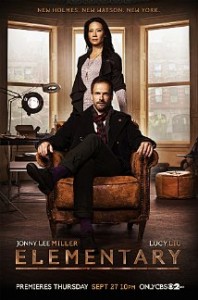
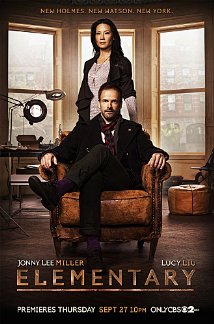
ElementaryElementary

I thought: another Sherlock Holmes series? Puh-lease. Yes, the two films featuring Robert Downing Jr. and Jude Law and the BBC series with Benedict Cumberbatch and Martin Freeman were superb. I loved both. But another Sherlock? Surely this is going to be some cheap attempt to capitalize on the success of the other two, something that is direct-to-DVD quality. Who is going to do it as well as Downing and Cumberbatch?

Boy, was I wrong (yet again!)

Elementary is delightful. Sherlock, played by the talented Johnny Lee Miller who made Eli Stone such a joy, is a modern day Brit living in New York. He’s in the final stages of drug rehab, living with a “sober companion.” The companion is Joan Watson, played by Lucy Lui. The Captain of the NYPD is one of Sherlock’s old friends an appeciates his skills and so brings him in as a consultant on various cases.

So how could they do anything different? Yes, you have the quick powers of observation and intellectual acrobatics the other Sherlocks have. But the female Watson and the whole recovering addict angle takes the stories in a new direction. This Sherlock has a past that haunts him. And this Watson is maybe a bit quicker than the other two, as wonderful as they are.

I wouldn’t have believed it if I hadn’t seen it, but there is room for three Sherlocks and Watsons. I can’t tell you which of the three pairs I enjoy more.

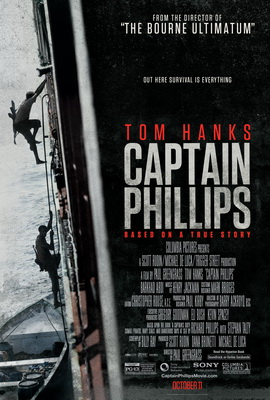
Captain_Phillips_PosterCaptain Phillips

As soon as the news stories about Somali pirates started breaking back in 2008 I knew it would lead to some thrillers. Heck, Abdul Hassan, “The One Who Never Sleeps” was one of the first zings I posted on this site. What I didn’t know was that the big thriller would be based on an actual story: the 2009 hijacking of the US-flagged MV Maersk Alabama, the first American cargo ship to be hijacked in two hundred years. Phillips is played by Tom Hanks, who always gives a great performance. But I also found the portrayal of the pirates interesting as well. As I did the many unexpected details of how these pirates operate and how the incident was brought to a close. If you like realistic thrillers, you’ll enjoy Captain Phillips.

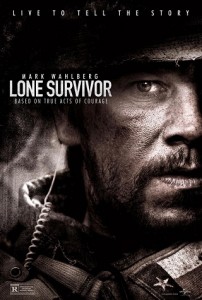
Lone Survivor

I reviewed the book Lone Survior back in 2011. You can read my full report there, but the bottom line is that it was an awesome read. However, as with all awesome reads, you become a bit wary of the films based on those books. I’m happy to say the filmmakers did a great job on this one. They paid huge attention to detail because they wanted to honor the fallen soldiers by getting it right.

Lone_Survivor_posterIn order to get it right, they brought Marcus Luttrel, the author, and a number of other SEALs onto the project as consultants. The SEALs put the actors through some basic training before they even began shooting. This was to not only help the actors get to the point where they handle their weapons and gear as someone seasoned might, but also so they could feel what is was to work as a team, an important part of being a SEAL. The SEALs stayed on to provide input as well during the shooting.

But the details went beyond that. I have never seen a military film that felt as real to me, especially when it came to the characters. SEALs are warriors. But that doesn’t capture the variety they come in. And in the opening 25% of the movie we see sides to these men that many movies do not portray. It was so refreshing! In fact, without the groundwork laid in the beginning, this film wouldn’t have had near the impact it did. Yeah, the action is ACTION! It’s thrilling. You have never seen some of the shots the film portrays. But the action means nothing without the men.

And this story is about the men.

It’s about what it means to be one of those guys and gals who put their lives on the line for the rest of us. And if you want a special treat, when the film is over, you’ll watch all the extras.

The f-word is used about five million times in this movie. I usually don’t like a lot of vulgarity in my entertainment. But I cut the folks some slack in this case because I felt the story was worth it. Besides, I didn’t consider it entertainment anyway, more documentary.

If you are interested in what it’s like for Special Operations forces, if you want a story to help you see what so many are doing for the rest of us, I don’t know that it gets any better than this.

Share

Similar Posts

  • Good Stuff! Tiny Habits

    We’re told we can change.

    We’re told that a key is to write “SMART” goals. Make them specific, measurable, realistic, and focused on results. Give them a deadline. And, for heaven’s sake, put them to paper because “a goal that is not written down is just a wish.”

    We’re told a key is to dream, that “whatever the mind can believe, it can achieve.”

    We’re told that the key to changing our life is changing our habits, and that they way to change our habits is to stick with something for twenty-one days.

    Except, well, how many habits have you been successful in establishing?

    How many of those lofty goals have you achieved?

    How many New Year’s resolutions have you really followed through with?

    The problem is that all of the good advice on goals and habits seems to only work for other people. And I grant that there might be some AAA+++ personalities out there with megawatts of motivation who seem to be able to do whatever they set their mind to.

    But that triple A plus personality passed me by. It passed a lot of us by.

    So are we doomed?

    B.J. Fogg, a Stanford researcher, says no. There’s hope for all of us. Because the key is not in having megawatts of motivation.

    It’s not that we disregard the power of motivation. It’s just that motivation, Fogg has found, is never constant. It comes in waves. And while we certainly want to take advantage of it when it comes and do things that increase it, a much more effective way to grow habits and meet goals and change our lives is to focus on the other things that drive behavior.

    Fogg has spent his career studying persuasion and habit. He works with companies to help them create products that are habit-forming. Think about Facebook, Twitter, or Candy Crush, and the habits those products form. These and similar companies have implemented the principles of habit so well that their products have become, for some, something of an addiction.

    So what’s the secret?

    Fogg has identified three things that must be present if we’re going to do something:

    1. The motivation to do it
    2. The ability to do it
    3. A trigger to remind us to do it

    When those three things are present, we act. And we often do so without thinking. If one of those three elements is missing, we don’t act. So if we want to start a new habit, we need to focus on these three things.

    But if motivation goes up and down, then we don’t want to rely on that part of the equation. Fogg’s insight is that it’s much easier and more effective to focus on the ability and the trigger parts.

    When we focus on the ability, we make the habit we want to form so tiny and small that it’s super easy to do. Such tiny behaviors require only the smallest levels of motivation. And if we’ve planted them in good ground (at a time of day where they can expand and linked to a good trigger), those tiny habits eventually grow into the full blown big habit we wanted all along.

    Does this work?

    Well, I started Fogg’s Tiny Habits back at the beginning of December. And I’m happy to report that starting new habits using this approach has been easy.

    Like falling off a log easy.

    For example, because I work on the computer, I know that to increase my health, I need to get at least forty minutes of good, heart-pumping activity each day. But did I start there? No.

    Did I start at twenty minutes?

    No.

    Ten minutes?

    No.

    Five? Surely, I started at five minutes.

    No.

    The Tiny Habits approach suggests starting much smaller. I started with doing one push up after I used the restroom. And it was an incline pushup on the stairs, which my daughter found hilarious.

    Yes, that’s how tiny you start them. Something that takes less than 30 seconds.

    That tiny habit grew. And I am now doing 60 regular floor pushups each day, plus 75 curls, 75 flies, 75 squats, and 75 bicycle crunches. It’s about 25 minutes of good activity. And it’s only going to grow. Come April, I’m pretty sure I’ll be around 100 pushups every day.

    And there was no twenty-one day business. Fogg has found that’s not the secret. Habits can form in just a few days.

    I started the delicious habit of kissing my wife for at least five seconds each day. Along with a five-second hug. And then a little more kissing, and little more hugging, and a little more kissing (when I can steal it). Did I mention it was delicious? This is a highly-recommend habit.

    I started the habit of daily morning scripture reading. I have tried to be consistent for years and couldn’t do it. But with this new approach, I think I’ve missed three times in the last two months.

    I started the habit of beginning the day with a positive thought, the habit of turning off my wireless mouse when I’m done at my desk, and I’ve also made great headway against the mother of all habits for me—going to bed by 10 PM.

    I can easily stay up until one a.m. reading, “researching” on the internet, wasting time watching political videos, or Facebooking. Or a million other things. This bad habit is so ingrained it is almost like someone else is controlling me. All day long I say I’ll go to bed only to find myself, yet again well past dark, screwing up my life plans. It’s like some evil villain has me on remote. I can’t tell you how many times I’ve tried to “motivate” myself to change this. All to no avail.

    But with the tiny habits approach, I finally figured out the triggers that were driving it. Then I engineered other triggers and tiny habits to replace them. And now my computer is off and behind a closed door most of the time in the evenings. I’m actually getting to bed. It’s huge progress. There are still some kinks to work out, but it’s only going to grow.

    I found the Tiny Habits program through my insurance provider. They had an annual wellness check in November, and on their website they had a link to Tiny Habits. I clicked, signed up for their tiny program, and I’m so happy I did.

    I’m hooked on tiny habits.

    And the cool thing is that you can begin learning and developing your ability to plant and grow tiny habits too. For free.

    If you want to change your life, I think you will love their free five-day, three-habit program. It’s there to teach you how to create tiny habits, triggers, and celebrate.

    Let me also recommend a few videos. Here’s the best video I’ve found that explains Fogg’s model of behavior and why tiny habits work.

    And here’s the best video that explains the pitfalls of relying mostly on motivation instead of bringing in the other two Musketeers.

    Researchers say that between 40-70% of all we do each day is driven by habit and external triggers. We think we’re exercising our agency all day long, but it’s an illusion. We’re not. Most of the day we’re running on auto pilot and responding to triggers. But we can change those routines. That’s the promise of tiny habits. And so far, the results for me have been promising. Give it a try. I think you’ll be happy you did.

    Notes

    SMART stands for specific, measurable, achievable, results-focused, and time-bound. SMART goals are helpful. But the key, Fogg has found, is in not trying to eat the whole SMART whale in one bite. Instead, you start with the tiniest part of the very first step. And then watch as the habit grows.

    I reviewed The Power of Habit by Charles Duhigg back in 2012. It provided great insight about habits, but not a tested program to actually change them. In fact, the author states himself that his book doesn’t provide a program, just a way of thinking about habits. Duhigg isn’t a behavioral scientist; he’s a reporter, trying to share what he’s found. The book was great. However, I tried to apply his insights, and, as expected, wasn’t very successful in changing things. But Fogg and his Tiny Habits fills that gap in a spectacular way. Fogg is a behavioral scientist and has taught thousands how to form habits. So read Duhigg for great stories and insights about habits in general. But go to Fogg for a tested program that will guide you step by step.

    Share
  • Interview with Author Kelly Barnhill

    Kelly Barnhill is a writer, teacher and Mom from Minneapolis. Her fiction has appeared in Postscripts, Weird Tales, Clarkesworld and other publications. She’s also published a number of high-interest science books for children. They have wonderful titles like Sewers and the Rats That Love Them, Blood-Sucking, Man-Eating Monsters, Sick, Nasty Medical Practices, and The Wee Book of Pee.  She states that “I’ve had like nine million jobs before this, including being a janitor, a park ranger, a wildland firefighter and a bartender (among others).” Kelly’s first novel, The Mostly True Story of Jack, will be published this year. I had the opportunity to interview her about the book and writing, and have to say I had a delightful time. Enjoy!

    * 

    JB: I have to start by saying I love the title of your book. It raises all sorts of questions in my mind. Was that part of the inspiration of the story or was it something you had to arrive at after a lot of hard work?

    KB: On the first question: Oh my. Titles. This title is the culmination of a whole lot of blood, sweat and tears. Okay, that’s not entirely true. Neither blood nor sweat, just tears – mine specifically. This book was originally called The Boy Without A Face, then Jack Be Quick, then The Curious Face in the Cornfield, then Uprooted, then the House at the Far Edge of Town, then the A Child of Earth and Magic, then…..oh lord, I can hardly remember. 

    The thing is, I typically don’t have a problem naming pieces. The title usually comes when I’ve untangled the first knot of text and the beating heart of the story is just starting to assert itself. This time, not so much. I was stymied from the beginning. I asked my kids their opinions, my agent, my agent’s assistant, every editor I’ve ever heard of. I asked my students, my Sunday School kids, kids on the block, kids at the park. 

    But that’s the thing when you have a title that doesn’t work – no amount of wanting it to be right will make it right. So I was bound to struggle and I was bound to hate – well, everything – because I just hadn’t hit on the right one yet. Until I did. And the fussing stopped (much to the great joy of everyone involved).

    JB: (laughing) That’s hilarious. I can see the desperate author hounding some kid on a swing. Of course, it shows persistence. And I’m betting it isn’t just a title that’s defied you. Have you run into plot or character snags that have been especially troublesome? If so, what do you do as a writer, how do you approach that?

    KB: Oh, clearly. I am one of those authors who does absolutely no planning before starting a project. Instead, I’ll get a little knot of text stuck in my head (usually when I’m out for a run) – something pleasing to the ear or gentle in the mind’s eye. And then I spend a whole lot of time figuring out the story behind it. What that means is that when I begin, I typically don’t know what exactly I’m writing. Is this a short story? A novel? A children’s book? A poem? It takes me a while to figure that out.

    Insane, you might say. Absolutely barking mad, you might mutter.

    Well, obviously, says I. But it’s fun.

    Anyway, I did a lot of select-all-deletes over the course of this novel (sometimes, deletes to the tune of 300 pages), retaining the characters, retaining the little bright spots that I managed to scrawl onto some note cards, but recomposing largely from memory, and re-engaging with the story in a fresh, new place.

    It’s a process I can’t really recommend. Except that I do. Whole-heartedly. There’s something thrilling about entering into a manuscript that doesn’t have any mistakes in it yet. Of course, it typically doesn’t have any words in it either at that point, but never mind.

    Along the way I’ve had to remove some fairly major characters, which forced me to completely re-imagine and recompose the book (again), but as I did so, the story was better, the writing was better, and I learned a lot doing it. So, I don’t like to call them “snags”. I like to call them “learning opportunities”. (Okay, fine, I also call them “throw-my-computer-in-the-creek-while-shouting-obscenities moments” but that’s not very nice to talk about.)

    JB: Kelly, I have to say, to find a simmering joy in the dreaded select-all-delete (folks, she’s wild, WILD!) Although I will say that starting a new project is always a thrill for me as well. So maybe we’re not too far apart, although I do enjoy my planning. So, what was the knot of text that started this story? Is it even there anymore? And how did it develop into the fantastic magic that’s at the heart of the tale? (Folks, as an aside, I have to tell you that the magic in this book is unlike anything I’ve read.)

    KB: Okay, you asked for it. Here is the original page. I’ll make the letters green, just because:

    Outside the house, a girl stood on the darkening street looking up. Her hands were shoved deep in the pockets of her ratty cut-offs, and her red-brown curls struggled out of the long braid that hung down the length of her back. Her bike lay on its side on the ground, the front wheel still slowly spinning around and around, until it finally stopped.

    Two boys walked slowly down the quiet street, their sneakered feet scarcely whispering against the pavement. One boy wore a bright orange seed cap over his even brighter blonde hair. He smiled at the girl as they approached. The other boy was very tall and he walked with a limp. Half of his face was obscured in a red knot of scars that bloomed over his skin like roses. He kept his eyes on the ground and did not speak. He never spoke. Both boys stood next to the girl. The boy with the cap tilted his chin towards the attic.

    “That kid get in today?” he asked, his eyes on the silhouette of the stranger in the window.

    “Yep,” the girl said.

    “Think he knows?” He turned to face the girl. His face, handsome and tan from so much time out of doors, shone in the last weak rays of the orange and pink sky.

    “How could he?” she asked. She reached over to the boy on her left, who was taller than her, though his pronounced slouch made it difficult to tell. She put her arm around his shoulder, and he, in turn, laid his face, bad side down, good side up, on hers. Only when they stood like this, could people see that they were brother and sister. “But he will,” she said.

    I wrote this while on a positively lovely run through Fort Snelling State Park in Minnesota. Well, that’s not exactly true. I thought it while I was running. I wrote it when I got home. But that’s how a lot of stories start for me – a bit of fluff twists into a thread and thickens to a cord and winds into a knot. And then I have a hell of a time figuring out where the thing leads.

    Now, that actually wasn’t everything that led me to JACK. There was another bit that I can’t find anywhere that was a conversation between a kid and his mom as they drove in a rental car towards a farm house in Iowa, where the kid would be staying while his parents worked through the details of their divorce. I didn’t realize that the kids on the street would occupy the same story as the kid in the car. Indeed, I had no idea that the kids on the street were talking about the kid in the car. I also had no idea that I was writing a book with magic in it either. That was a surprise.

    But to answer your earlier question, neither the conversation nor the bit about the kids looking at the house are in the book anymore, though little images and descriptions have drifted into the later drafts and taken root. That’s the magic of revisions – every cut is necessary, and every cut hurts, but something new always grows. And sometimes the bits of your novel that once were broken and wobbly and weak transform into some very pretty bits of fiction. It’s the transformation that gets us every time – or me, anyway. Honestly, it’s why I keep coming back to the page: I like change.

    And as far as the magic at the heart of the story – I can’t really say. I think that the magic was simply there, waiting for me to find it. Everything I know about the strange history of that town, the terrible events that happened in the past and the necessity for Jack and his friends to set things right – I only discovered those things by accident. I discovered them because I cared about Jack, and cared about his loneliness and his lack of place, and I wanted to understand him. (And yes, I totally get it that he’s not real, but in the end that doesn’t really matter, does it? I’m a mother, and a child in need is a child in need.)

    (Did I even answer your question? Why is it that every question sends me tumbling in all directions? I think I might be a dreadful interviewee. Maybe you should ask me easier questions. Like about darning socks.)

    JB: (laughing) You’re a wonderful interviewee. I love these answers. And I think my readers will appreciate very much what you’ve shared. In fact, I’m betting they’d want me to keep asking questions for quite some time, but I’ll limit myself to two more. First, the prose of your book has a flow to it. I haven’t pinpointed what it’s doing yet (I have noticed some parallelisms), but the prose is compelling. Just picks you up and carries you along. Is that flow important to you? Do you labor over it, or is it just something you enjoy, maybe seek out in other authors, and, therefore, seems to come naturally? Tell us your thoughts on this.

    KB: Oh, John, I am so glad you asked me this question! (Also, that you noticed, because I worked really hard on it!)

    Let me back up before answering that, though, because I think it’s really hard to separate how a writer builds text and uses words from how they think. There are people on earth – lots of them – who are visual thinkers. I am not one of them. In fact, I am not a visual thinker at all. Even now, when my house is quiet and my kids are at school, it is difficult for me to call up a mental image of their faces – but the texture and timbre of their voices is with me all the time. And it’s always been like that for me as a reader – I’m much more attracted to books with a strong aural sensibility. I like prose that is rhythmic and rich. I think language works best when it is a sensual experience – not just in what it evokes (though that’s clearly important) but how it feels in the mouth, how it feels in the ear.

    Now I think part of the reason for this is that, as a little girl, I was a delayed reader. And when I started reading, I was stuck in the bottom group (they never tell you you’re in the bottom group, but oh! As children we know. We know!). This is not to say I wasn’t experiencing and engaging with stories. Every night my dad read to us – first the Grimm stories, then Narnia, then Tolkein, then Dickens. I also had a little fisher-price record player (that I bought at a garage sale with my own money, so of course I thought it was awesome) and a bunch of dramatized books on records – Treasure Island, 20,000 Leagues Under the Sea, Watership Down, Call it Courage, Anne of Green Gables, and some others that I can’t remember.I would listen to those things so often that my siblings threatened to throw my record player out the window. So I’d lock myself in the closet and listen some more. And even now, I love stories out loud. My husband and I read to one another every night, I read to my kids, and I read my own work out loud as I revise, over and over and over again.

    My book sounds the way it does because I’ve read that thing out loud, cover to cover, approximately nine million times. Actually, that might be a conservative estimate. I want my stories to feel like a whisper on the skin, an insistent voice that you can’t shake. Now, mind you, I’ll probably never actually reach that goal, but it’s good having a target, anyway.

    JB: Wow. That’s lovely. You know, I’m not a style over substance guy, but I like sound. I’m attracted to prose that sings, even if it’s softly. This seems to be what you’re suggesting you look for. Not prose that necessarily stands up and shouts for people to look at it. But prose that, well, as you said, is a whisper on the skin. Oh, there’s a whole interview right there. In fact, I think, if you’ll agree, I’m going to have you back, maybe around the time Jack comes out to discuss that. In the meantime, I see you have a whole bunch of projects slated to come out. The Final Exile of the Insect King is another killer title. But Iron Hearted Violet is the one coming out next after Jack. Tells us about that one or anything else you think readers should know about. And since Jack is a ways off, tell us which of your published stories you’d suggest readers try while they’re waiting. I see a whole bunch you’ve linked to on your site.

    KB: Thanks John! This has been really fun, and I’d love to pop back over to your corner of the internets around launch-time (August 2! Mark your calendars!).

    Anyone who is interested in reading any of my fiction online can head over to my blog for a list of links (www.kellybarnhill.com). And any of you who are interested in buying some pretty cool collections could check out Sybil’s Garage #7, which has my story “The Dead Boy’s Last Poem” or Apex’s recent anthology Dark Faith, which has my story “Hush”. Another story that I feel pretty good about  is called “The Taxidermist’s Other Wife”, which appeared on Clarkesworld in December. That particular story came from an experience I had up in northern Minnesota (about ten miles south of the Canadian border), when I was teaching a fiction workshop to a bunch of hockey-playing high school seniors. One boy was telling me that it took him over an hour each way to get from home to school and back again. He said he’d been doing that for the last six years, ever since his town closed down the school. I asked him if all the kids in his town had to make the same kind of crazy commute, and he said, “Those of us who’re left, sure. There’s not many of us anymore. You kill the school, you kill the town. Everyone knows that.” The idea that the lifeblood of a town is bound up in its school  – and indeed, that a town can be killed, stuck with me, and transformed into an odd, mournful little piece. There is a deep love as well as a devastating sorrow that binds the people of my beautiful (and very cold) state to the land that surrounds them – and I feel that this story is the closest I’ve ever come to actually pinning those twin emotions down onto the page. 

    As for Iron-Hearted Violet  – that has been a devilishly tricky book to write, but I’m pretty happy with it. How to describe it? Hmmm. It’s the story of a girl who unwittingly releases an imprisoned, wicked god, and must sacrifice all that she knows and all that she loves in order to stop it from enslaving her – and every – world. There are banned stories and dragons with missing hearts and a grieving girl and  friendship and a magic book and sleeping gods and a multitude of universes gathering in great foamy waves and crashing against the shore. Mostly, getting the language and tone just right was incredibly tricky, and I went through something like a million drafts, so for me to say that I’m feeling happy with it is a pretty big deal.

    JB: Well, that gives us all some great things to try out. I’m personally looking forward to Jack.

    *

    John Sez: now there is someone who just loves to write. I love her sense of adventure in discovering the story and her willingness to generate a lot of stuff to get to the final story. And the sound of her prose. Not that all books have to have this, but it is nice. Furthermore, Kelly was just enjoyable to talk to. That fun voice comes out in her blog. She’s going to be someone to watch. In the meantime, for the rest of us, it’s back to work.  

    LINKS

    Kelly Barnhill’s website

    Codex Author Blog Tour 2011

    Share
  • |

    Dewitt Jones and Clear Vision

    Not many people understand creativity. Dewitt Jones, a National Geographic photographer, does. And this video on the creative process, HOLY COW, it’s so good I had to buy it so I could watch it whenever the yearning took me.

    Clear Vision

    But this isn’t just for artists. The principles of creativity apply to any creative endeavor–from writing and drawing to building microchips and parenting. 

    Go here. Watch the brief clip. Then watch the whole Clear Vision video. Tell me what  you think.  

    Capture the zing!

    Share
  • Good Stuff! StoryBrand

    Folks running for office, especially our wonderful citizens running for local county offices, business owners, and any of the rest of us who what to persuade people to listen, I’ve got something for you.

    I will bet that most of you aren’t aware that you’re muddling your message and losing votes, sales, and converts to your causes.

    Of course, maybe you’re way ahead of me. I thought I knew what I was doing. I have a master’s degree in business, spent a few years in business consulting, have created a few small startups, and currently am a product manager for large software company. Despite all of that, I had somehow missed something vital. Something simple and powerful. Something that has a dramatic effect on sales, votes, and converts. On getting people to even listen to what I had to say.

    And I’m not alone. I saw another company struggling with it this weekend.

    On Saturday I went and watched the latest Marvel movie at a theater in Logan. One of the pre-movie video ads was for a local company called Conservice. I don’t know how many thousands of dollars they spent on the ad they played. Or how much they spent on the many other ads we’ve seen over the years. But when it finished, I turned to Nellie and said, “I still don’t know what that company does or why I should care.”

    “I know,” she said. “I know.”

    We were both baffled. After years of seeing their ads, we still have no idea what they do, how it would make our lives better, or what action we should take to use their service.

    They have wasted thousands and thousands of dollars on their marketing.

    There’s another local company that advertises during those pre-movie slots. It’s called ARS. I saw one of their ads this weekend as well. But it only reminded me of what I already know. I know exactly what they do, how it would make my life better, and what action to take.

    If you have a flood, fire, or plumbing backup—whatever—they clean it up. “Got a mess? Call ARS.” That’s their one-liner.

    If I ever have a mess, I will call ARS. I will never call Conservice. I have no idea what they do.

    What’s the difference here?

    Clarity.

    And what generates that clarity?

    A complete focus on the customer. The ARS ads are all about the customer and their problems and needs.

    The Conservice ads, on the other hand, are all about Conservice. We’ve been in business for x years. Here’s what our building looks like. Here’s a worker planting a bush. Blah, blah, blah.

    The ARS ads are all about me, the guy in the theater seat, the thing I want and the problem I have. ARS features me as the hero in my own story. They present themselves as the helper—the Yoda or Gandalf or Haymitch who helps the hero get what they want. You got a mess? We’ll help you.

    The difference in the power of the two ads is night and day.

    Of course this means it’s been verified that I’m a dolt. After all the years in business and education, I should have known this. But the surprising truth is that I’m not alone.

    I look at the marketing we do at the billion-dollar company I work for and see this same issue everywhere. Millions of dollars spent on muddles. I look at company websites on the internet and see more muddles. I recently listened to pitches by many of our local citizens running for office and saw the same thing. It seems this communication muddle afflicts a lot of us.

    About five years ago, when I began investigating an idea for a new company, I came across the Lean Startup method pioneered by a guy at Stanford and began to see the light. But a few months ago, the curtains were completely pulled aside to let in the sunshine. And wow! What a revelation.

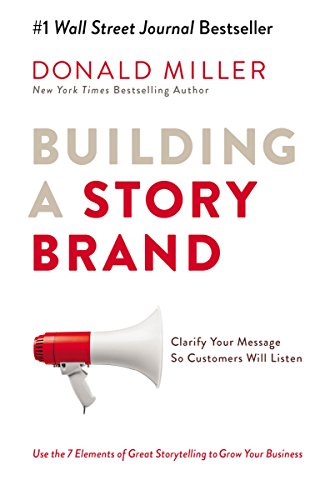
    If you want to get people to listen, you have got to hear what Donald Miller has to say. He’s consulted with thousands of companies on how to clarify their message so people will listen. His framework and method make clarifying your message so easy.

    He calls it the StoryBrand framework, and it’s brilliant. What it does is help you clarify your message so that a customer or voter or whoever will know within three seconds:

    1. What you offer
    2. How it will make their life better
    3. And what action they should take if they are interested

    But it goes beyond that. It helps you actually define what you should be offering in the first place. It’s a powerful product development tool. I’ve started using this in all my business efforts. And in my training and presentations.

    For example, I just used it to develop a presentation I delivered at a huge writer’s conference last week. The results were that after the presentation, I had a line of people wanting to thank me. I had people telling me I made them cry. Others wanted to give me a hug. They were grateful. I had people tell me it was the best presentation of the conference.

    This was not because I’m brilliant. I’m a dolt, remember. It’s because I used the StoryBrand framework to focus on those people. Their needs. Their problems. Their aspirations.

    If you’re running for office, if you have a business, if you want to persuade anyone to do anything, then let me recommend you listen to this guy and learn about this framework.

    Get the revelation. Get out of the muddle. And get people to listen.

    And when you’ve finished the Miller stuff above, read How to Write Copy That Sells by Ray Edwards, the guy who has partnered with Miller. It’s all about clarifying your message as well.

    Share
  • The Profiler, Almond Milk, and Uncle Sam

    Real crime 

    It’s 1990. You’re a housewife, homeschooling your children, and renting a room upstairs to a young man to make ends meet. There are a few odd things about the young man, but you overlook them. Then one day a woman is strangled on a jogging path near your home, and your first thought is that the young man living in your house has something to do with it.

    What do you do?

    Pat Brown found herself in this exact situation. She voiced her suspicions to her husband, but it was all too farfetched. However, the nagging thought wouldn’t let her go, and she soon uncovered evidence that made the young man a strong suspect.

    She took the evidence to the police, but they dismissed her as a bored housewife with an overactive imagination. She evicted the young man, but it would be six years before the authorities would finally bring him in for questioning.

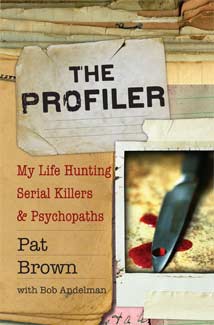
    Dismayed and frustrated, Brown started down a path that would lead to her become a professional criminal profiler, assisting police departments and victims’ families by analyzing both physical and behavioral evidence to make the most scientific determination possible about who committed a crime.

    In The Profiler: My Life Hunting Serial Killers and Psychopaths Brown tells about what happened with that young man and her journey to becoming a profiler, then she opens a number of other cases she’s worked on, giving the reader a behind-the-scenes look at how profilers work, and how their methods bring new investigative avenues to light. She also brings home very clearly just how many murders go unsolved. It’s an absolutely fascinating read.

    Milk that doesn’t moo

    I used to think soy milk was either for the lactose intolerant or hippies. And so I always avoided that milk section of the grocery store. But, having embarked on a new way of eating that I’ll explain in another column, I was induced to approach the alternative milk shelves. I purchased a carton of soy milk, but then I saw cartons of something even more strange: almond milk.

    Puzzling. I knew, of course, that almonds did not have udders. So nobody was out there hooking them up to tiny milking machines. And they were nuts, so it’s not like you can squeeze them to make them release their tasty juices. Instead, I learned that almond milk is made by finely grinding almonds together with water. I thought this was something new, invented perhaps by a Californian who’d had too much weed, but it appears many Medieval European recipes called for almond milk, and it has always been a popular beverage in the Middle East. So almond milk has been around for some time.

    But I didn’t know any of this. I just knew I loved almonds and that they provide all sorts of goodies for the human body. Besides, I have a hard time resisting adventures. So along with the soy, I picked up a carton of Silk’s PureAlmond regular, vanilla, and chocolate milk.

    The soy was okay, but it left a weird zingy taste in my mouth. Furthermore, soy contains estrogen. I’m sure it’s a fine product, but I live with four daughters and don’t need any more estrogen. And I certainly don’t need it mutating me in any, um, feminine ways. So I put the soy aside and gave the almond milk a go.

    It was delicious. I love the vanilla and regular flavors the best. In fact, I like it so much I only drink cow’s milk when the last drop of almond milk is gone, and I try to make sure that never happens. Some might worry that I’ll deplete my calcium stores, but not so. Almond milk actually has MORE calcium than cow’s milk along with vitamin D that allows the body to absorb the mineral. It also has 50% of the RDA of vitamin E, of which cow’s milk has none. But that’s all technical vitaminy stuff. It wouldn’t matter if the milk itself didn’t taste so dang good.

    The American breakfast

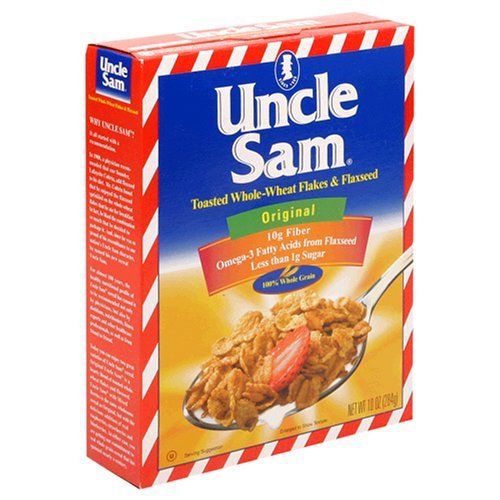
    I love cereal. We have our standard favorites as a family, but I also like to get a box of something new when we shop. I recently saw, perched up on the top shelf at Wal-Mart, boxes of  Uncle Sam.

    What the heck? Was this a Tea Party product? I know Utah is conservative, but come on. And what kind of nut sings “The Stars and Stripes” for breakfast?

    Well, I might.

    So I promptly snagged a box and read that it’s been around since 1908, thus making it politically neutral. Then I read the ingredients. It’s a simple cereal made of wheat berries that are steamed, rolled, and toasted to provide killer whole grain nutrition. Those wheat flakes are then mixed with flax seeds (omega 3’s anyone?). That’s it.

    I purchased a box, felt patriotic, and then gave it a try when we got home. I’ve been buying it regularly ever since. It’s slammed with 10 grams of fiber and 7 grams of protein, and goes great with Silk’s vanilla almond milk and a piece of fruit.

    Share
  • Short Reviews: Icefall, Gravity, 42, Z, and Lynda.com

    The last few weeks I’ve been burning the candles at both ends with publication tasks. So no time for long reviews, but I still wanted to share.

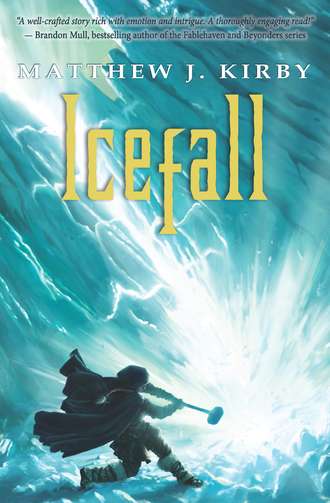
    Icefall by Matthew KirbyIcefall by Matthew Kirby

    Wow. I loved this book. LOVED IT! It’s Norse historical fiction. A war is coming, and the king sends his children away to a remote fjord steading to keep them safe. He also sends a number of trusted warriors, a company of beserkers, a cook, a thrall, and a skald. But the fjord isn’t remote enough.

    It’s a fine tale full suspense, wisdom, surprise, and two lovely character arcs. It’s told from the point-of-view of Solveig, the king’s plain daughter. And her voice and the details Kirby includes totally transported me to their world. A wonderful tale, wonderfully told.

    Gravity

    I don’t know if I like 3D very much, but Bullock and Clooney do a marvelous job. Do you remember Tom Hanks in the excellent Castaway where he’s marooned on a tiny island? This is Bullock’s Castaway, except the physics of space are deadly. A great film.

    42

    This film is about Jackie Robinson, the first Black man to play in the White leagues of American baseball, and recounts his first year. It stars Harrison Ford as the owner of the Brooklyn Dodgers, the guy who is determined to bring Blacks into the game he loves, as well as Chadwick Boseman who is new to me. I watched this with the whole family, and we were all enthralled. What a great story.

    World War Z

    I not a big zombie fan. So for me to recommend this means it had to be good. It was good. A delicious thriller with plenty of scare. I really liked the thriller feel to this. My wife and two youngest daughters sat on the couch holding each other’s hands. I sat in my La-Z-Boy throne heart pumping with the action.

    Lynda.com

    As I mentioned above, I’ve been working hard trying to get my books out the door. (Please, boys, just get out! It’s time for you to make your way in the world!) I’m using Adobe InDesign to format them for Kindle and EPUB, but I barely know the program. That caused some big problems. But then I subscribed to Lynda.com–a training website. I can’t tell you how happy I am that I did.

    For $25 per month (and you can just subscribe for one month), you get access to hundreds of high-quality online classes recorded by experts. Each class is usually a few hours long, made up of videos that are usually each shorter than ten minutes. The site allows you to create playlists of various courses you want to take, makes recommendations, and lets you know which videos in a class you’ve watched. It also includes a verbatim transcript so you search for the part of the video that’s interesting to you.

    The workhorse I’ve been using is “InDesign CS6 to EPUB, Kindle, and iPad” by Anne-Marie Concepcion. It’s 7.5 hours long.  I’ve also been referring to parts of “InDesign CC Essential Training” by David Blatner and “Creating Long Documents with InDesign” by Mike Rankin. And I have 16 other courses in my playlist that I can’t wait to get to like “Designing a Book Cover” by Nigel French and others on graphic design, typography, and logos.

    If you need training on some software product, go out to Lynda.com and see if they have a course for you.

    Share