Good Stuff! The Highwayman by Alfred Noyes

Alfred Noyes (1880-1958) wrote poetry that thundered and sang. It’s the kind of stuff that begs to be read aloud. And I want to share with you one of my favorites–“The Highwayman.” I love it for the sound, the story, and the awesome images (note all the color).

All you need to know is that back in the 1600s and 1700s, a highwayman was a robber, often on horseback, who held up travelers. And that when it mentions “priming,” it’s talking about the charge of powder used to ignite a musket.

For maximum pleasure, let me suggest you start Loreena McKennitt’s killer ballad version I’ve embedded at the end, then scroll back up and read along as she sings.

THE HIGHWAYMAN
By Alfred Noyes

The wind was a torrent of darkness among the gusty trees.
The moon was a ghostly galleon tossed upon cloudy seas.
The road was a ribbon of moonlight over the purple moor,
And the highwayman came riding—
Riding—riding—
The highwayman came riding, up to the old inn-door.

He’d a French cocked-hat on his forehead, a bunch of lace at his chin,
A coat of the claret velvet, and breeches of brown doe-skin.
They fitted with never a wrinkle. His boots were up to the thigh.
And he rode with a jewelled twinkle,
His pistol butts a-twinkle,
His rapier hilt a-twinkle, under the jewelled sky.

Over the cobbles he clattered and clashed in the dark inn-yard.
He tapped with his whip on the shutters, but all was locked and barred.
He whistled a tune to the window, and who should be waiting there
But the landlord’s black-eyed daughter,
Bess, the landlord’s daughter,
Plaiting a dark red love-knot into her long black hair.


And dark in the dark old inn-yard a stable-wicket creaked
Where Tim the ostler listened. His face was white and peaked.
His eyes were hollows of madness, his hair like mouldy hay,
But he loved the landlord’s daughter,
The landlord’s red-lipped daughter.
Dumb as a dog he listened, and he heard the robber say—

“One kiss, my bonny sweetheart, I’m after a prize to-night,
But I shall be back with the yellow gold before the morning light;
Yet, if they press me sharply, and harry me through the day,
Then look for me by moonlight,
Watch for me by moonlight,
I’ll come to thee by moonlight, though hell should bar the way.”

He rose upright in the stirrups. He scarce could reach her hand,
But she loosened her hair in the casement. His face burnt like a brand
As the black cascade of perfume came tumbling over his breast;
And he kissed its waves in the moonlight,
(O, sweet black waves in the moonlight!)
Then he tugged at his rein in the moonlight, and galloped away to the west.

He did not come in the dawning. He did not come at noon;
And out of the tawny sunset, before the rise of the moon,
When the road was a gypsy’s ribbon, looping the purple moor,
A red-coat troop came marching—
Marching—marching—
King George’s men came marching, up to the old inn-door.

They said no word to the landlord. They drank his ale instead.
But they gagged his daughter, and bound her, to the foot of her narrow bed.
Two of them knelt at her casement, with muskets at their side!
There was death at every window;
And hell at one dark window;
For Bess could see, through her casement, the road that he would ride.

They had tied her up to attention, with many a sniggering jest.
They had bound a musket beside her, with the muzzle beneath her breast!
“Now, keep good watch!” and they kissed her. She heard the doomed man say—
Look for me by moonlight;
Watch for me by moonlight;
I’ll come to thee by moonlight, though hell should bar the way!

She twisted her hands behind her; but all the knots held good!
She writhed her hands till her fingers were wet with sweat or blood!
They stretched and strained in the darkness, and the hours crawled by like years
Till, now, on the stroke of midnight,
Cold, on the stroke of midnight,
The tip of one finger touched it! The trigger at least was hers!

The tip of one finger touched it. She strove no more for the rest.
Up, she stood up to attention, with the muzzle beneath her breast.
She would not risk their hearing; she would not strive again;
For the road lay bare in the moonlight;
Blank and bare in the moonlight;
And the blood of her veins, in the moonlight, throbbed to her love’s refrain.

Tlot-tlot; tlot-tlot! Had they heard it? The horsehoofs ringing clear;
Tlot-tlot; tlot-tlot, in the distance? Were they deaf that they did not hear?
Down the ribbon of moonlight, over the brow of the hill,
The highwayman came riding—
Riding—riding—
The red coats looked to their priming! She stood up, straight and still.

Tlot-tlot, in the frosty silence! Tlot-tlot, in the echoing night!
Nearer he came and nearer. Her face was like a light.
Her eyes grew wide for a moment; she drew one last deep breath,
Then her finger moved in the moonlight,
Her musket shattered the moonlight,
Shattered her breast in the moonlight and warned him—with her death.

He turned. He spurred to the west; he did not know who stood
Bowed, with her head o’er the musket, drenched with her own blood!
Not till the dawn he heard it, and his face grew grey to hear
How Bess, the landlord’s daughter,
The landlord’s black-eyed daughter,
Had watched for her love in the moonlight, and died in the darkness there.

Back, he spurred like a madman, shouting a curse to the sky,
With the white road smoking behind him and his rapier brandished high.
Blood red were his spurs in the golden noon; wine-red was his velvet coat;
When they shot him down on the highway,
Down like a dog on the highway,
And he lay in his blood on the highway, with a bunch of lace at his throat.

. . .

And still of a winter’s night, they say, when the wind is in the trees,
When the moon is a ghostly galleon tossed upon cloudy seas,
When the road is a ribbon of moonlight over the purple moor,
A highwayman comes riding—
Riding—riding—
A highwayman comes riding, up to the old inn-door.

Over the cobbles he clatters and clangs in the dark inn-yard.
He taps with his whip on the shutters, but all is locked and barred.
He whistles a tune to the window, and who should be waiting there
But the landlord’s black-eyed daughter,
Bess, the landlord’s daughter,
Plaiting a dark red love-knot into her long black hair.

 

Share

Similar Posts

  • FireBoy and WaterGirl and date night with Number 4

    It was date night with daughter number 4. I asked her what she’d like to do.

    She said she wanted to play a computer game. She likes the ones on friv.com. Probably because there are a couple hundred to choose from, and they’re free.

    Every time we’d play games before, we’d play Miragine War. Warriors, monks, zombies. My army against hers. Sometimes I’d win. Sometimes she’d win. It’s a fun game. It gets a little tedious with the back and forth, but we always had a good time with the slaughter.

    This time she wanted to play something new called FireBoy and WaterGirl.

    Fireboy and Watergirl


    The animation is done in a style similar to FancyPants, which I just love. Not as exaggerated, but still fun movement. The two characters are cute. FireBoy dies in water. WaterGirl dies in fire. Both die in the green mud. And the interesting thing is that it isn’t a competition. I don’t have anything against games that pit players against each other. I love them. But this one was a nice change. The two players actually have to help each other to progress. Part of the fun is figuring out exactly what each of you have to do and in what order to make it through the scenarios.

    So daughter 4 and I laughed and yelled and cheered when we didn’t die. We had a great time. We must have played for at least two hours.

    If you’re looking for a good date, give FireBoy and WaterGirl a try. Oh, and if you go to Friv.com to play it, it’s the little guy with the burning head.

    Fireboy and Watergirl on Friv

    Share
  • Ramsey’s Total Money Makeover & Brown Cow Yogurt

    Wear some financial underpants

    I graduated from BYU with a Master’s degree in accounting. BYU’s accounting program is regularly ranked as one of the top three schools in the nation.

    Whoa. Go, John. I ought to be some kind of financial superstar, right? You’d think I would have come out of that program with all my crap put together, living within my means, investing wisely, making a bundle of moo-lah. I’d have a tidy stash.

    Yeah, nope.

    That program taught me how to account for money, but not how to use it. Or maybe I was just too dumb to get it. We came rolling out of school with thousands of dollars of debt. So instead of graduating and building our wealth, we worked to pay off the man.

    Dumb, dumb, dumb.

    I can tell you right now my daughters aren’t going to do the same. They will pay as they go. I’m not co-signing any loans. They’re not going to use credit cards. If it takes them a few years longer to graduate, then it takes them a few years longer.

    But they’ll be free when they finish. No shackles for my girls.

    I always thought it was a good idea not to send them out into the world without underpants. Or knowing how to brush their teeth. It’s equally important I don’t send them out there not knowing how to build wealth and reap all the security and peace that comes with it.

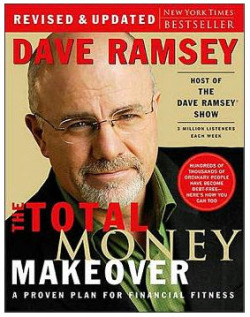
    This is why every child of mine is going to get a copy of Dave Ramsey’s The Total Money Makeover. It’s a goofy title, but the principles in it are sound. I can’t tell you how much I wished I’d known and followed the steps he outlines there on how to build wealth when I was just starting out.

    1. Save $1,000 in an emergency fund
    2. Pay off all your debt except the mortgage using the debt snowball (and don’t go into debt)
    3. Complete your emergency fund by saving three to six months’ expenses
    4. Maximize retirement investing
    5. Save for your kids’ college
    6. Pay off the home mortgage early
    7. Build wealth and give like crazy
    8. Live like no one else

    The book starts out by talking about the debt myth, i.e. debt is a great tool and should be used to create prosperity. Sometimes a little debt can be helpful. But in the vast majority of cases “debt adds considerable risk, most often doesn’t bring prosperity, and isn’t used by wealthy people nearly as much as we are led to believe.” Ramsey goes on to say, “Your largest wealth-building asset is your income. When you tie up your income, you lose. When you invest your income, you become wealthy and can do anything you want.  How much could you give every month, save every month, and spend every month if you had no payments? Your income is your greatest wealth-building tool, not debt. Your Total Money Makeover begins with a permanently changed view of the Debt Myths.”

    After tackling debt, Ramsey outlines other money myths and wealth-destroying attitudes and then explains each of the principles of the steps outlined above.

    I love this book so much it’s part of my gift package to every couple that invites me to their wedding reception. I hope those new couples follow his recommendations. It will bring them peace. If you want to give your children the gift of financial peace, if you want that peace yourself, I recommend you buy this book today and start following those baby steps. You can get the book for a mere $10 bucks at his website http://www.daveramsey.com.

    While you’re waiting for it to come, you might want to go over to Larry Correia’s site (another accountant and fiction author), and read his hilarious comments on some real folks who actually were sent out without any financial underwear: http://tinyurl.com/3zx9tbo.

    Thick and Creamy

    I love thick, creamy yogurt.

    Mix it with some raisins or fresh fruit, and I’m in heaven.

    The problem is that most of the yogurt on the shelves today is weird Splenda- or NutraSweet-filled crap. Or it’s full of sugar. And none of it has that thick mouth feel.

    I had some great yogurt up in Oregon a few years ago, but could never find anything like it here. Then a little while ago I hit the jackpot.

    Hello, Brown Cow Greek Yogurt.

    Thick. Oh, baby is it thick. Creamy. And full of goodness: 23 grams of protein, 9 grams of sugar, 0 grams of fat, and active cultures of more of our belly friends than any other yogurt I’ve found—give a big welcome to S. Thermophilus, L. Bulgaricus, L. Acidophilus, Bifidus, and L. Casei.

    I get the plain style. This allows me to mix it to my taste with fruit, granola, or a little bit of sugar or honey.

    If you’ve been looking for some good yogurt, let me recommend Brown Cow.

    Share
  • |

    Superstars Writing Seminar DVDs

    Aspiring authors, I wasn’t able to attend, but heard from a few who were that the Superstars Writing Seminar in Pasadena with Eric Flint, Brandon Sanderson, Dave Wolverton, Rebecca Moesta, and Kevin J. Andersen was EXCELLENT. 

    See clips of parts of the videos here (still a lot of good info): http://www.youtube.com/view_play_list?p=2F211054CBD822A8

    Purchase the full recordings on DVD or MP3 here: www.writerscanon.com

    Topics include:

    • Econ 201 for Writers: Economics of Commercial Publishing
    • Inside Editors: How editors look at manuscripts, novels & short fiction
    • Dirty Secrets: What you need to know about being a Professional Author
    • From Slushpile to #1 New York Times Bestseller in 4 Years
    • Intellectual Property: How to Exploit Yours
    • Balancing Acts: Writing World & Real World
    • Agents: the A Word
    • Networking for Writers
    • Self-Promotion for Authors
    • Novel Contracts
    • Self-Publishing: Realities & Pitfalls
    • Pitching the Big Proposal
    • Two Heads Are Better than One: Collaborative Writing
    • New Media: Using It to Get an Edge
    • E-Publishing
    • Movies, TV and Authors
    • Anatomy of a Major Book Release
    • Myths of Publishing
    • Eleven Tips to Increase Your Writing Productivity
    Share
  • The Profiler, Almond Milk, and Uncle Sam

    Real crime 

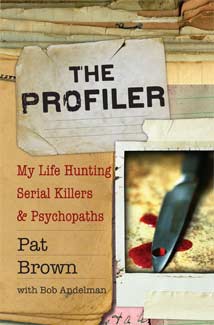
    It’s 1990. You’re a housewife, homeschooling your children, and renting a room upstairs to a young man to make ends meet. There are a few odd things about the young man, but you overlook them. Then one day a woman is strangled on a jogging path near your home, and your first thought is that the young man living in your house has something to do with it.

    What do you do?

    Pat Brown found herself in this exact situation. She voiced her suspicions to her husband, but it was all too farfetched. However, the nagging thought wouldn’t let her go, and she soon uncovered evidence that made the young man a strong suspect.

    She took the evidence to the police, but they dismissed her as a bored housewife with an overactive imagination. She evicted the young man, but it would be six years before the authorities would finally bring him in for questioning.

    Dismayed and frustrated, Brown started down a path that would lead to her become a professional criminal profiler, assisting police departments and victims’ families by analyzing both physical and behavioral evidence to make the most scientific determination possible about who committed a crime.

    In The Profiler: My Life Hunting Serial Killers and Psychopaths Brown tells about what happened with that young man and her journey to becoming a profiler, then she opens a number of other cases she’s worked on, giving the reader a behind-the-scenes look at how profilers work, and how their methods bring new investigative avenues to light. She also brings home very clearly just how many murders go unsolved. It’s an absolutely fascinating read.

    Milk that doesn’t moo

    I used to think soy milk was either for the lactose intolerant or hippies. And so I always avoided that milk section of the grocery store. But, having embarked on a new way of eating that I’ll explain in another column, I was induced to approach the alternative milk shelves. I purchased a carton of soy milk, but then I saw cartons of something even more strange: almond milk.

    Puzzling. I knew, of course, that almonds did not have udders. So nobody was out there hooking them up to tiny milking machines. And they were nuts, so it’s not like you can squeeze them to make them release their tasty juices. Instead, I learned that almond milk is made by finely grinding almonds together with water. I thought this was something new, invented perhaps by a Californian who’d had too much weed, but it appears many Medieval European recipes called for almond milk, and it has always been a popular beverage in the Middle East. So almond milk has been around for some time.

    But I didn’t know any of this. I just knew I loved almonds and that they provide all sorts of goodies for the human body. Besides, I have a hard time resisting adventures. So along with the soy, I picked up a carton of Silk’s PureAlmond regular, vanilla, and chocolate milk.

    The soy was okay, but it left a weird zingy taste in my mouth. Furthermore, soy contains estrogen. I’m sure it’s a fine product, but I live with four daughters and don’t need any more estrogen. And I certainly don’t need it mutating me in any, um, feminine ways. So I put the soy aside and gave the almond milk a go.

    It was delicious. I love the vanilla and regular flavors the best. In fact, I like it so much I only drink cow’s milk when the last drop of almond milk is gone, and I try to make sure that never happens. Some might worry that I’ll deplete my calcium stores, but not so. Almond milk actually has MORE calcium than cow’s milk along with vitamin D that allows the body to absorb the mineral. It also has 50% of the RDA of vitamin E, of which cow’s milk has none. But that’s all technical vitaminy stuff. It wouldn’t matter if the milk itself didn’t taste so dang good.

    The American breakfast

    I love cereal. We have our standard favorites as a family, but I also like to get a box of something new when we shop. I recently saw, perched up on the top shelf at Wal-Mart, boxes of  Uncle Sam.

    What the heck? Was this a Tea Party product? I know Utah is conservative, but come on. And what kind of nut sings “The Stars and Stripes” for breakfast?

    Well, I might.

    So I promptly snagged a box and read that it’s been around since 1908, thus making it politically neutral. Then I read the ingredients. It’s a simple cereal made of wheat berries that are steamed, rolled, and toasted to provide killer whole grain nutrition. Those wheat flakes are then mixed with flax seeds (omega 3’s anyone?). That’s it.

    I purchased a box, felt patriotic, and then gave it a try when we got home. I’ve been buying it regularly ever since. It’s slammed with 10 grams of fiber and 7 grams of protein, and goes great with Silk’s vanilla almond milk and a piece of fruit.

    Share
  • You thought Bad Penny was fiction?

    How about former CIA operatives and Navy Seals forming a private group to rescue child slaves?

    Last January, Ballard made a bold move and left his job to form his own team of former CIA operatives and Navy Seals who operate undercover to bust child slavery rings

    . . . . .

    Ballard’s organization is called Operation Underground Railroad, and members call themselves abolitionists. The references to 19th-century slave liberation are deliberate.

    There are currently 25 million people living in slavery, according to the 2014 Global Slavery Index research released by anti-trafficking organization Walk Free Foundation. The U.S. State Department puts the figure closer to 21 million, and about two million of those slaves are children.

    Ballard’s line of work has opened his eyes to a problem most people are blind to — the fact that there are more people living in slavery now than at the height of the trans-Atlantic slave trade.

    . . . . .

    Ballard knows better than anyone just how easy it is to buy a child. In an operation in Haiti earlier this year, he posed as a trafficker and visited an orphanage where two children — a brother and sister ages 2 and 3 — were sold to him for $15,000 apiece.

    That’s the going rate for a child, says Ballard, and over time, the owner can make millions of dollars by selling the child for sex or forced labor.

    Read the rest at Heroes of 2014. Become an abolitionist here.

    Then go on to read about another hero–the Iron Angel–who is helping folks out of another kind of slavery.

    Then a third called the Vicar of Bagdad, who has had over 1,000 of his flock killed for their beliefs.

    Here’s the full list of the six featured heroes.

    Share
  • Interview with Edmund Schubert, editor of IGMS

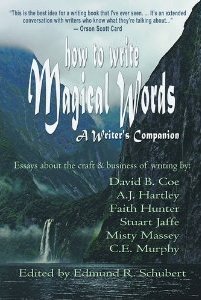
    I recently had the wonderful opportunity to interview Edmund Schubert, the editor for Orson Scott Card’s Intergalactic Medicine Show, about How To Write Magical Works: A Writer’s Companion, a collection of essays about the craft and the business of writing that he edited. Ed’s someone to listen to. But so are the authors whose essays fill the book: Faith Hunter, David Coe, C.E. Murphy, Misty Massey, A.J. Hartley, and Stuart Jaffe. Here’s what he had to say about this book.

    John: Edmund, you recently edited How To Write Magical Words: A Writer’s Companion. It’s chock full of advice from some pretty successful fiction authors, and an editor who, having purchased one of my stories, has shown exceptional taste (grin). But there are a lot of how-to’s by successful authors out there. What makes this book different, do you think? What’s the special value this book brings to the table?

    Edmund: I think the biggest thing that differentiates this book from others on the subject is its diversity of opinions. Most how-to books are written by one person, giving on perspective, but the truth is that there are many paths to success in this business. The Magical Words book was intentionally designed to replicate the give-and-take that exists on the MW blog. Sometime the MW writers agree, sometimes they don’t. The other thing that makes this book different is that it also includes some of the follow-up questions asked by readers of the blog, and the accompanying reply. That makes this book feel/read more like a writer’s conference than your basic info-dump book.

    John: I think the concept is great. And the contributors have quite a bit of experience. I know you can’t comment on every essay in the collection, but are there one or two that stood out to you while editing?

    Edmund: There were a few that stood out to me. One by Catie and one by David, both on the subject of money/advances. Those stood out to me because of how very blunt and honest they were about finances, and it’s information I think more people need to be aware of.

    The other one that stood out for me did so for personal reason. Catie’s essay about Visualizing The Story made me feel so much better about myself as a writer and my chances of success, because for years I’ve been hearing all these other writers at conventions talk about how their stories are like movies in their heads and all they have to do is record the action and the dialogue, and I used to hear that really worry because at best I might see a slide show of of bits and pieces of the action, but I’m totally making the rest up. Hearing Catie say that she didn’t/couldn’t visualize the story that way either gave me hope.

    John: I’m sure aspiring authors are going to be very interested in what Catie and David say about money. It’s also interesting that sometimes we writers hear other successful writers talk about how the invention process works for them, compare our process with theirs, and assume we’re lacking. In reality, the way we approach it might be just as effective. That’s one of the things I like about this book—it has multiple contributors. Let me ask one more question. You see a lot of stories as editor of Intergalactic Medicine Show. What are some of the topics addressed in this book that, based on the biggest issues you encounter in submissions, authors would be wise to carefully consider?

    Edmund: Magical Words as a group have two mantras: the first is that there is no one right way to do this crazy thing called writing, and the second is the exception that proves the rule: the one and only true answer to everything is BIC. Butt In Chair. You put your butt in the chair and you write. You figure it out as you go along. And the more you write, the more the other advice you hear will make sense. You want to be a writer? Write. The rest is details.

    ***

    John sez, amen to that. And amen to this book. I really enjoyed the format and the insights shared. I never tire talking about craft and business with other writers. With over 100 essays and 313 pages, this book has lots to share. If you want to hear what some very smart and a few very published authors have to say about writing, you’ll want to pick up your own copy.

    Share