You thought Bad Penny was fiction?

How about former CIA operatives and Navy Seals forming a private group to rescue child slaves?

Last January, Ballard made a bold move and left his job to form his own team of former CIA operatives and Navy Seals who operate undercover to bust child slavery rings

. . . . .

Ballard’s organization is called Operation Underground Railroad, and members call themselves abolitionists. The references to 19th-century slave liberation are deliberate.

There are currently 25 million people living in slavery, according to the 2014 Global Slavery Index research released by anti-trafficking organization Walk Free Foundation. The U.S. State Department puts the figure closer to 21 million, and about two million of those slaves are children.

Ballard’s line of work has opened his eyes to a problem most people are blind to — the fact that there are more people living in slavery now than at the height of the trans-Atlantic slave trade.

. . . . .

Ballard knows better than anyone just how easy it is to buy a child. In an operation in Haiti earlier this year, he posed as a trafficker and visited an orphanage where two children — a brother and sister ages 2 and 3 — were sold to him for $15,000 apiece.

That’s the going rate for a child, says Ballard, and over time, the owner can make millions of dollars by selling the child for sex or forced labor.

Read the rest at Heroes of 2014. Become an abolitionist here.

Then go on to read about another hero–the Iron Angel–who is helping folks out of another kind of slavery.

Then a third called the Vicar of Bagdad, who has had over 1,000 of his flock killed for their beliefs.

Here’s the full list of the six featured heroes.

Share

Similar Posts

  • Some 101 for Congress and the President

    It’s not really rocket science.

    1. If you have loans outstanding and the payment is due, you owe the creditors a payment. Payables for Idiots 101.
    2. If you have received goods and services, then you owe your vendors a payment. Payables for Idiots 102.
    3. You pay your bills. End of story. That’s what grown ups do. If you have to float some debt for a few months, you do it. And you staple a note to your head to stop spending like a slot machine junkie. Payables for Idiots 103.

    The debts we have are for goods and services we’ve already received. So increase the debt limit and pay your damn bills. What about spending?

    1. You do not spend more than you take in year after year. If you do, that’s called running your business into the ground. In the case of the Congress (primarily Harry Reid’s Senate at this point, although many, but not all, of the Republicans were happy to go along with dumb spending earlier) and the President, it’s the country they’re running into the ground. Spending for Idiots 101.
    2. If you’ve got all sorts of cool things planned like Acorn subsidies for pimps and Antarctica Jell-O wrestling grants for scientists, but you can’t afford them—i.e. you have to go into debt to get them–you cancel those plans. Spending for Idiots 102.
    3. The problem is that Congress and the President buy all sorts of crap and expect to put it on a credit card when it comes due. And there’s nothing to prevent them from doing it.
    4. They’re like irresponsible teenagers. They need controls that won’t allow them to overspend. Kind of like putting limits on a teenager’s cell phone minutes. Or forcing them to use a debit card. When they’re out of cash, they get a card denied response from their vendors.
    5. So you set spending limits, debt limits, and force them to balance the budget each year, except in extreme emergencies like when space aliens try to wipe out humanity. Spending for Idiots 103.

    This means you pass Cut, Cap, and Balance and quit spending money you don’t have. Really difficult stuff. What about getting out of debt?

    1. You eat rice and beans until you’re debt is gone or down to a manageable level. That means you cancel crap you can’t pay for. Sorry earmarks, you’re gone. Sorry grants for nude artists in trees, you’re gone. Sorry subsidies for PBS, you’re gone.  Finances 200: How to Not Be A Money Moron.
    2. You figure out how to reduce your current cost structure. This means you figure out a way to reduce the costs of Medicare, Medicaid, Social Security, and every other service or product you provide, cutting those that aren’t essential. You hire someone like Mitt Romney who knows how to go through every line in a budget and turn a bloated ship around.  Finances 300: No, You Can’t Pay For Your Sister’s Hair Implants with My Money.
    3. You remind people this is the freaking U S of A. A place where a man or woman can make themselves. Not where the government changes your diapers and feeds you mush three times a day. Communism and socialism have failed. They were badly conceived utopias, much like multi-level soap and vitamin marketing schemes that are supposed to usher in the Second Coming.  Finances 400: The USA Buried the USSR for a Reason.
    4. You increase your revenues.
    5. However, if you raise taxes, you’re actually going to depress your revenues. Think about this. Which car company has bigger revenues–Lamborgini or Honda? Who is going to put out, if they’ve got Louie the Fingers and his buddy Jockstrap taking increasing amounts of their money in a protection racket? Don’t be a thug. Be an enabler.  Do what Wal-Mart does and go for volume.  Do what Ebay does–create the environment that entices tons of commerce, entices people to dramatically increase their transactions. Transactions go through the roof; you take only a tiny cut, and, shazam, you increase your revenues.  Finances 500: Um, Do You Want People to Work to Become Rich or Do You Want Them To Pick Up Torches and Burn the Houses of the Rich Down?

    Cut spending, reduce cost structure, and increase your revenues. That’s getting out of debt.

    Is this really that hard?

    EDIT: 8/1 Seems that “wacky” Ron Paul actually has a simple commonsense approach that doesn’t sound crazy. Why couldn’t we do this?

    Share
  • Interview with Author Leah Cypess

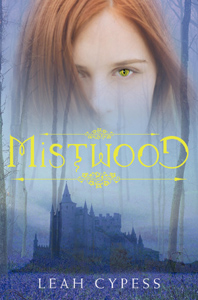
    Leah Cypess says, “After selling my first story (Temple of Stone) while in high school, I gave in to my mother’s importuning to be practical and majored in biology at Brooklyn College. I then went to Columbia Law School and practiced law for almost two years at Debevoise & Plimpton LLP, a large law firm in New York City. I kept writing and submitting in my spare time, and finally, a mere 15 years after my first short story acceptance, I sold my first novel, Mistwood, to Greenwillow Books (HarperCollins).”

    Leah lives in Brookline, Massachusetts (right outside of Boston) with her husband Aaron, a researcher and doctor at the Joslin Diabetes Center, and their two daughters. She majored in biology, minored in journalism, went to law school, worked as a lawyer, and has just started to learn about hawking and hunting. She’s published a number of short stories, which are all available for free on her website.

    I just had the opportunity to interview Leah about her writing process and books. Enjoy!

    *

    JB: MISTWOOD, published by HarperCollins in April, 2010, is your debut novel. But is it the first you’ve written?

    LC: Most definitely not. I wrote, revised, and submitted four manuscripts before Mistwood. (Technically, five; but I don’t count the first one, because it wasn’t very good, and I didn’t know what I was doing with the submissions process either. I was fifteen years old.)  In fact, after getting the offer from HarperCollins, I acquired an agent, who asked me to send him a list of my previous manuscripts and their submission histories.  The list was sixteen pages long.

    JB: Holy cow, five novels and 16 pages of submission history. That’s a lot of dedication. And faith in the face of rejection. I’m intrigued. How did the sale of this novel come about? Was it just another submission to yet another editor or did you have some connection? What was different with this book?

    LC: Both the faith and the sale were helped by the fact that I could see incremental improvements. My first novel received mostly form rejection letters, a couple of letters inviting me to submit further, and one revision request. My second received a lot of personal rejection letters, many more requests from various editors to submit future works, and one two-page revision request. The third made it to the acquisition committee at two houses. So I could tell I was getting closer, though it was still pretty dispiriting to think I might never make that final leap into publication. (After Novel #3 was turned down by both acquisition committees, even though it was being championed by senior editors in both cases, I had a couple of bad days.)

     In the end, I think what was different about Mistwood was mostly luck.

    It wasn’t my most perfect manuscript – there was a lot of revising to do after it was accepted! – but it was the one that resonated with the right editor at the right time. This was an editor who had asked me to submit future books after rejecting the query for Book #3, then requested Book #4 and written me a detailed and regretful email about why she didn’t feel it was right for her. By the time I sent her the query for Mistwood, she was obviously confident enough in my abilities to request that I email her the full manuscript, and to read it right away. After all those years, the acceptance for Mistwood came just a few months after I started submitting it.

    JB: I’m betting your persistence and work made some of that luck. Work seems to be a little bit of magic all by itself and has been used by a lot of other authors I know. Hum (grin). So let’s talk about the book. You should know you made The Top 200 YA Authors list I just published on my site. It ranks YA authors by average number of readers per book. And while the list can’t purport to be anything but a reflection of the tastes of the area’s library patrons, I think it’s probably representative of what’s going on in my region. So congrats! The book starts right off with a bang. It’s about a shape shifter. I know shape shifters have been around forever, but most fantasy these days seems to be about vampires and werewolves. Tell us a little bit about the core idea of the novel and its genesis.

    LC:  That’s awesome that I’m on the Top 200 YA Authors list – thanks for letting me know!

    I’ve been reading fantasy/science-fiction “forever” (I cut my teeth on the Edgar Rice Burroughs books my father had stored in our garage), so shapeshifters are just as familiar to me as vampires and werewolves.

    The core idea of the novel is that of an inhuman creature grappling with the fact that she seems to be turning human — while trying to figure out why, exactly, this has happened to her, and who and what she truly is. (And, of course, fending off assassins and dealing with palace intrigue.) That idea developed over the course of writing the novel – I started out with a scene of men riding into a misty forest in search of the magical creature who lived there, with no clear idea of what that creature was or why they wanted her. Then I kind of made the rest up as I went along. (This writing process is one of the reasons the novel was revised nine times before being published!)

    JB: I really liked the beginning. No wonder you felt compelled to follow the idea. And nine revisions! It sounds like you use drafts, as opposed to outlines or other tools, to help you discover your stories. Were these big revisions, almost complete rewrites?

    LC: Thanks! I’m glad you liked it

    I usually don’t rewrite scenes completely – most of my editing of already-written material consists more of snipping unnecessary parts and adding little bits and pieces. (Especially of description, which I tend to leave out entirely in the first draft.) But I do a lot of moving scenes around, deleting some scenes, and writing some new ones.

    Though I don’t use an outline when I first write, I usually create one during the revision process so I can keep track of the jigsaw-puzzle my manuscript has become.

    JB: That’s interesting. Well, I have just one more question for you. Tell us what’s coming next.

    LC: What’s next is NIGHTSPELL, a stand-alone companion novel to MISTWOOD, which will be published in May 2011. It’s about a country where an ancient spell allows murder victims to return as ghosts to seek vengeance on their killers… and if they don’t manage that, they remain ghosts forever. After a couple of hundreds of years of this, the kingdom – Ghostland – has evolved into a place where the living and the dead co-exist, albeit uneasily. My main character, Darri, is a foreigner to Ghostland; she is a barbarian princess who abhors the idea of ghosts and is only there to rescue her younger sister Callie, who was sent as a hostage four years ago. But Callie has changed in those four years, and now has secrets of her own.  In her quest to save her sister from herself, Darri will ultimately face a decision that will force her to reexamine beliefs she has never before questioned – and lead her into the heart of a conspiracy that threatens the balance of power between the living and the dead.

    JB: Oh my bleeping heck. That just gave me a case of massive author envy. I was thinking about writing a ghost story just yesterday and thought, “naw, ghosts are all played out.” Curse you, Cypess!

    Sheesh, talk about a parting shot. Well, I would ask about the next book, seeing NIGHTSPELL must be ready to go if it’s coming out in May, but I can only stand so much punishment. The good news, if I put my reader hat on, is that it looks like I get to put a tickler in my Outlook for this May. In the meantime, I going to suggest to my readers to give MISTWOOD a go. Thanks, Leah, for your time. I enjoyed the interview.

    LC: Thanks, John!

    *

    John sez: folks, I think I’m going to make interviews a regular feature. I just loved finding out more about Leah. It’s also interesting to see just how much work she’s put into this. I know that a good number of authors sell their first or second novel (see the Hines stats in the on writing section), but for a good number of others it’s later novels that sell. In either case, I think it’s clear that good old fashioned work makes up a big part of the secret sauce.

    Ah, that was fun. But, dang it, I should have asked her about her lawyer and biology background. Next time.

    LINKS

    Leah Cypess’s website

    The first three chapters of Mistwood

    Praise for Mistwood

    Codex Author Blog Tour 2011

    Share
  • |

    JB Speculates: eBooks, Book Contracts, Agents, and Libraries

    I’ve looked in the crystal ball I hide under my desk and caught a glimpse of what ebooks will change in the next few years. Specifically I saw what will happen to:

    • Book Contracts
    • Literary Agents
    • eBook Aggregators and Libraries

    After showing me the vision, the ball thanked me for shopping at Walmart. Weird.

    PRINT ONLY CONTRACTS

    The only reason to have a print publisher is to get distribution you cannot obtain on your own, or to get it more cheaply than it would cost you if you tried to get it on your own. That’s it. Now, it’s true publishers have excellent art departments and story editors. But you can contract out cover art, copy editing, formatting, and even story editing yourself.

    Distribution is the main thing publishers offer that you can’t get anywhere else.

    BTW, when I’m talking about distribution, I’m talking mostly about getting the books out to places people can see and purchase them. For example, publishers can get your book into hundreds or thousands of books stores all at the same time–Barnes & Noble, Hastings, Walmart, Costco, indie book stores, airport book stores, grocery stores, drug stores, etc. Publishers can get you display in those stores so consumers see your book. One form of that are the racks and new book displays. Another is one that Scholastic does so well, i.e. displaying and selling titles in tens of thousands of classrooms with its book catalogs. A single author just can’t do that. 

    It’s also true publishers can convince some platform venues, that would never look at a self-pubbed author, to spotlight your book.  For example, it’s unlikely a self-published author will be able to convince Booklist, Publishers Weekly, and Library Journal, which have huge platform for library book purchasers, to review a book.  But publishers have no problem getting their stuff in there. Likewise, it’s often much easier for publishers to get endorsements from other authors or people with platform than it is for a single author.  Of course, there are so many places that have some kind of platform, that publishers don’t have a lock on them all, e.g. Goodreads and Amazon reader reviews.  But for the sake of simplicity, let’s just look at the distribution end.  

    Because 90% of book sales are still hardcopy, the only way to have HUGE sales numbers, right now, is through a print publisher. I’m talking about the numbers you see in the Publishers Weekly top selling books, where you have to sell at least 100k copies in hard back, 500k copies in mass market, to even make the list.

    Publisher’s lock on this ability will erode. We can see signs of this in the USA Today Top 150 already. I consider this to be the most accurate picture of what truly is selling the most. Here’s why. And ebooks are starting to be the best selling format for a number of books. On that list, they add up sales of a title in all formats and then list the best-selling format. So when you see an (E) at the end of the listing, you know it’s selling more ebooks than any other format. E’s are starting to pop up all over and we’re still in the early adopter stage for ebooks and ereaders.

    So what does this mean?

    If I put on my author business slacks (why does it always have to be hats we change?), I’d be crazy to turn down a publisher that wanted to offer me monster distribution. A bird in the hand is worth two in the bush. You offer me $500k now, I’m taking the money and running all the way to the bank and then the $6.99 Indian all-you-can-eat buffet.

    Of course, I’m not likely to get that kind of an offer. We new writers are more likely to get an offer for, what were Hines’ numbers? $6k – $12k? And for that the publisher will want all our ebook rights and will tie them up for years and years and years. And then they’ll try to give us a fraction of what we could get selling directly. Furthermore, they don’t provide such books the same push to garner platform spotlight. They don’t spend the money to give them the prime display in bookstores. This means the difference between what they bring to the table for us smaller authors and what we can do on our own is much less. And the ebook has narrowed that even further.

    How much further? Well, how many books would you have to sell to make that advance of $6k – $12k? If you’re selling your books for $2.99 for the Kindle, you get about $2.00 a book. That means you’d have to sell 3k-6k copies of an ebook to earn as much as that average advance. 

    Do you think you can sell 3k – 6k copies of an ebook at $2.99?

    Some authors will be able to do this. Some won’t. If you wanted to do that in three years, you’d have to sell about 150-350 books per month. For a more in depth comparison between traditional publishing and self-publshing ebooks, see Dean Smith’s blog on cash flow.  

    Maybe you don’t think you can make those numbers. But maybe you can. The point is that if you think you can, then you can make as much on your own as you can with a publisher. This means there is absolutely no financial reason on earth to take the publisher’s deal. None. Now, if you have non-financial reasons, that’s another thing, but when looking at dollars and cents, it’s fairly clear the publisher’s ability to put you into their distribution channels isn’t worth what it will cost you. Especially since the ebook is forever and may keep selling for years to come AND because the market for ebooks is still in the early adopter phase–it’s only going to grow massively over these next years.

    But this doesn’t mean paper publishing is dead. It’s not. Nor will it be for some time. Just because SOME authors can make as much in the ebook market on their own as they can with a publisher through their distribution channels doesn’t mean all of them can. Furthermore, publishers with distribution have something to offer even those who successfully publish ebooks themselves.

    Let’s say you have an ebook series that starts to sell well for you, 1,000 per month. That’s $2k per month, $24k per year. If a publisher wanted to buy the rights to that from me, they would have to pay me MORE than $70k as an advance. MORE. Because I can make that on my own in three years selling it myself. In fact, since ebooks are forever, I have to look at the present value of all of those years of sales. That income stream is going to be a LOT MORE than $70k, even if we think sales will taper off after five or six years.

    How many big publishers are going to want to pay that?

    Probably none. Or, at least, I suspect those deals will be few and far between. But there is money to be made in paper, even if that market is shrinking. There will be some smaller publishers who, for the right price, will offer paper distribution. And if they can get me distribution that I couldn’t get myself for paper, or do it at a lower cost, then I’d want to sell them paper rights. Why not?

    And so what I see in the crystal ball are some authors, the ones who do well selling ebooks, being able to sign contracts with publishers that sell paper rights only. I know the big publishers probably won’t go for that in the near term, but smaller publishers will see the value and step up to the plate.

    AGENTS

    What about agents? Are they going to die?

    I think if we remember that literary agents are SALES agents, then their future becomes clear. The only reason to get a sales agent is because doing so makes my property worth more (same reason for getting a publisher, btw). If, by letting them focus on sales and letting me focus on getting more product out the door, I make more money than I would if I tried to do BOTH the selling and the producing, then I want an agent.

    I want to sell as many rights as I can to as many people as possible–gaming, film, audio, foreign, merchandise, etc. I’d be a fool to say, well, no, I’ve got this little ebook gig going. I’m not going to sell any of these many other rights to anybody. No, I’m just going to let them sit in my basket and earn me nothing. Let them go to waste.

    !?

    A good agent should be able to sell more than I could on my own because they have a better ability to reach AND close editors AND other people that are in the market for purchasing rights to my property. They’ll also allow me to sell more because all the time I would have spent selling, I can now use to create more product. So not only do I have more books, and therefore rights, to sell, I can hopefully sell them for a better price and terms than I could on my own.

    I’d be a fool not to increase my revenue. I’d be a fool not to have a good agent.

    So as long as there are people who want to purchase these non-ebook rights, and an agent can make a sale I couldn’t or can make it for less than what it would cost me to do it on my own, then agents will be useful. Because of this, because we’ll always have more than ebook rights to sell, I don’t see a role for good agents ever going away.

    EBOOK AGGREGATORS & LIBRARIES

    When more and more people begin reading ebooks what happens to the libraries?

    Ebooks cost less. So a lower price per book would simply allow libraries to purchase more books and expand the collection. But wait, they don’t need rooms and rooms to hold all the paper. You can store the world’s library in one computer room. Shoot, this means that housing the collection on a server instead of on the shelves would cost less. This would allow for an even bigger collection. But why maintain a server and manage your own collection if you can network to the collection down the road?

    In fact, what if there were a mega service with millions of titles you could subscribe to? That would be even cheaper. Then you wouldn’t have to pay book purchasing agents or IT folks to keep your server running.

    Enter the ebook aggregators–the Netflixes of ebooks (I know somebody somewhere is working on this business plan; is it you?)

    I’m betting the whole library system goes national. I’m betting you’ll have some government aggregators, but they’ll probably be dwarfed by the private companies. You’d subscribe to the aggregator’s service just as you do Netflix today and many university libraries currently subscribe to electronic periodical collections.

    The aggregators will probably charge users as Netflix does for a certain number of books checked out at the same time. If a large entity like a library wanted to subscribe, I bet the aggregator would charge access to the collection based on number of users at the library. The library would pass some of that fee onto patrons. The rest of the fee would be paid by the community’s tax dollars, just as those tax dollars pay for the current collections. You might even have device manufacturers coupling subscriptions with purchase of the product as incentives to buy their devices.

    When the aggregators step in, we suddenly end up with a different mix of distribution channels that will coexist:

    1. Author –> ebook retailer (Amazon Kindle, B&N Nook, etc.) –> reader
    2. Author –> subscription aggregator –> reader
    3. Author –> subscription aggregator –> public and school libraries –> reader
    4. Author –> publisher –> subscription aggregator –> then option 2 or 3 above
    5. Author –> publisher –> current distribution channels

    Surprised by #5? Well, the current distribution channels are not going away until every book can be read on an ereader and everyone who reads has and wants to read on such a device. That’s going to take some time, if it happens at all.

    Why would readers buy individual titles ala distribution channel 1 above? Some people just want to own. Other readers will be happy to purchase the books because they don’t want to wait for a checkout slot to open up, e.g. I already have my allotted number of books checked out and I really want this one on hand all the time because it’s Suzie’s favorite. Other readers will want to customize a book with highlights, margin notes, links, etc. just as many of us like to mark up paper texts. We’ll need our own copy for that. Still, I think the bulk of reading will move to the subscriptions. For example, right now I purchase DVDs I love, even though I can get them from Netflix. But the number of DVD’s I own are a fraction of those I watch. Most TV and film I watch once and it goes back to Netflix until I want to see it again. And this checking out becomes even easier where there’s nothing physical to send through the mail.

    Please note: there will probably be some form of gatekeeping with the aggregators. I doubt they will carry every scrap of anything ever written. They’ll carry a lot of stuff, but not every written word. Furthermore, when you have hundreds of thousands of titles, you’ll need mechanisms for helping your subscribers find great content suited to their tastes. A lot of “people who read this read that,” review services, etc.–the next generation of Netflix recommendations, Goodreads reviews, and Pandora like tools. 

    Aggregators won’t be the only gatekeepers, however. The key is in getting notice. And there will be many places with platform that will be able to shine a spotlight on a book. Think about all the places you find out about movies today—radio movie programs, TV movie reviews, Rotten Tomatoes, Newspaper Reviews, Yahoo viewer and critic review summaries, Kids-in-mind, and on and on. Look at all the ways you find music. There will be just as many ways to find books.

    As far as paying authors, I suspect aggregators will pay authors each time a book is checked out, or, if it’s a must-have name author, they will pay to list the title plus a per use payment.

    So that’s the future I saw in my strange little ball. Feel free to comment or add your own thoughts.

    Share
  • La Brea Bakery Breads Cookbook, Very Young Girls

    Divine Nature

    I became a fan of bread when I lived in Europe. But not just any bread. I’m talking about the kind of bread with a crust that crackles and is chewy. With an inside that’s soft. Bread that doesn’t need anything on it, but makes you sing when you eat it with soup or a thin smear of butter. Alas, I came home and could not find such bread. It was all Wonder Bread nonsense and its many sandwich bread relatives.

    Luckily, I married a gal who had lived in Europe as well. And who, for a few years, actually had some time to bake. It took some time to find a cookbook with recipes that worked. It took some practice. But she was finally able to recreate that crackle, chewy, soft (not the shattering, roof-of-mouth cutting stuff either). And we enjoyed great bread for a few years. Then she took a job outside the home and we’ve been relegated to American sandwich bread again.

    Enter four daughters. Three of whom are working through a church program like the Boy Scouts that’s meant to help them develop key virtues. Each of the virtues requires they complete a number of tasks to educate them about that virtue. When they’ve completed the tasks for a virtue, they are to devise and undertake a ten hour project to help them practice what they’ve learned.

    Recently, I sat down with my oldest to see where she was and found to my surprise that she still had a number of things to complete. As I reviewed the requirements with her, I pointed out that she’d fulfilled the requirements for all of these virtues many times over. But she refused to count her activities that might apply because she didn’t perform them at the time with the intent to fulfill the requirements. She wanted her accomplishment to be purposeful. She’s focused on the intent of the program, not the award for the award’s sake. (Where do such children come from?) I saw her point, applauded it, and went back to work trying to help her brainstorm what she could do.

    We came to the virtue called Divine Nature, which states: “Be partakers of the divine nature. Giving all diligence, add to your faith virtue; and to virtue knowledge; and to knowledge temperance; and to temperance patience; and to patience godliness; and to godliness brotherly kindness; and to brotherly kindness charity.” Many of the activities revolve around womanhood and family. But it was the big project she needed to complete, one that “will help you practice what you have learned. This should be a significant effort that will take at least ten hours to complete.”

    Some of the suggested projects had to do with service in the community, others with talents. Then I read: “Develop a skill you could use in your future home, such as cooking, sewing, making repairs, organizing, or designing.”

    Cooking?

    My bread soul stirred.

    Cooking?! Baking is cooking.

    Memories of crackling crust and soft centers filled the mind of my bread beast. “Bread!” I declared.

    Luckily, Daughter Number 1 had also eaten her mother’s bread and missed it. “Bread,” she agreed. And we pulled the book out that my wife had found so useful, and began.

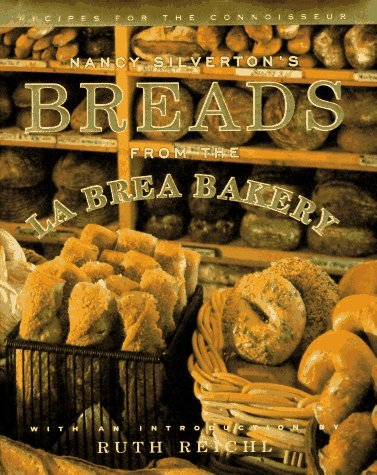
    The book is Nancy Silverton’s Breads From The La Brea Bakery. Silverton is a master chef.  She owns and operates the Campanile restaurant and the La Brea Bakery in Los Angeles. Her bread is sought for all over the nation. Her breads and the breads she shares in this book are all made with a sourdough starter that she teaches you to make from scratch with grapes. Actually, you don’t make it, but feed it. Because it’s a living thing. And after a while it becomes almost like a strange family pet growing on the counter and in the fridge.

    Some might hear “sour” and turn away, but Silverton explains how to keep the starter from becoming too sour. The result is a crackling, chewy, soft bread with a light tang that’s delicious. In fact, Daughter Number 1 just made bagels from the recipe in the book. There’s no tang at all. They’re the best bagels I’ve had. She’s also made the regular loaf, pancakes, and waffles from this same starter. They’re all delicious.

    The book starts off with a lesson in bread making then shares about 60 recipes, everything from baguettes to whole-wheat sandwich bread to sourdough onion rings. The only downside to the book is that I wish it had more pictures. An illustration, for example, in the section on rolling bagels would have been helpful. But we found one on youtube, and it sufficed. And I will confess that I didn’t think once about pictures when eating the bread.

    BTW, we’ve stopped calling this bread. Now, when it’s time, one of us will say, “I think it’s time to make some divine nature.”

    Our Young Girls

    I was recently reading about organized crime and their main activities.  In the section about what ties such groups have to prostitution, the authors reported that it’s estimated that 20% of all prostitutes are street walkers. Another 15% are call girls or escort service workers, and the remaining number, 65%, work in an establishment of some kind—massage parlors, brothers, bars, and hotels.  

    The authors reported that most street walkers have a lover or companion relationship with their pimp. This didn’t make sense to me at the time. But after watching Showtime’s Very Young Girls, I now understand what they’re talking about.

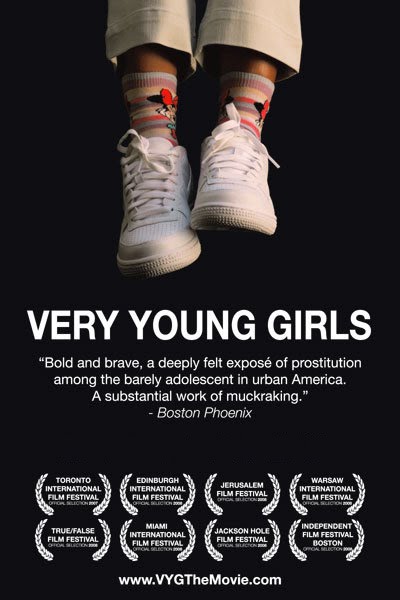
    This film is a documentary about teenage girl prostitutes in New York City and the GEMS (Girls Education and Mentoring Services) that helps them to find a new direction, which is not always easy.

    One of the awful statistics the film reveals is that the average age of entry into street walker prostitution in the United States is just thirteen.

    No, that’s not a typo. It’s thirteen. THIR-TEEN.

    The film introduces us to Rachel Lloyd who dropped out of school and became a teenage stripper and hooker. But she got out. She changed her life and then started the GEMS program to help young girls who found themselves in situations like the one from which she escaped. Lloyd began the program in her apartment and eventually got funding to open a recovery center where girls can seek shelter while they’re trying to redirect their lives.

    The film profiles a number of the girls working through the program. Some of these kids are kidnapped off the street and forced into the “life” as they call it. Some are lured away by pimps who initially act as if they want them to be their girlfriends, flattering them and showing them a good time, and only after they’ve been sleeping together for a while do the pimps then explain that they need to make some money.

    Many of these girls come from broken homes. Many have grown up believing the sexual messages portrayed by the media. The girls are beaten and given drugs.

    Some have been so psychologically manipulated by their pimps that they feel compelled to return. Others have successfully broken with their pasts.

    And all of them are just kids. KIDS!

    This is a movie that’s hard to watch. It’s not graphic in any way. It’s simply the subject matter. It’s also eye-opening and, while the problem is huge, does provide some hope. Thank the Lord for people like Rachel Lloyd. And for people everywhere who live upstanding lives and by kindness and good teaching save their children and others in their communities from this terrible waste. Rent this movie on Netflix. I think you’ll find it’s well worth the time.

    Share
  • Good Stuff! Some Calm on the Climate

    Is the sky falling?

    When we politicize science it sure seems that way.

    For example, a while back I reviewed The Big Fat Surprise by Nina Teicholz. What she found in her research about fat and sugar was that we followed the exact wrong diet path over the last 40 years by (1) rushing to judgment on the science in a field that was tricky and (2) politicizing it. This, in turn, affected the science. And not in a good way. Here’s a quote from the book.

    “Once ideas about fat and cholesterol became adopted by official institutions, even prominent experts in the field found it nearly impossible to challenge them. One of the twentieth century’s most revered nutrition scientists, the organic chemist David Krivtchesky, discovered this thirty years ago when on a panel of the National Academy of Sciences, he suggested loosening the restriction on dietary fat. “We were jumped on!” he told me. “People would spit on us!…they were so angry that we were going against the suggestions of the American Heart Association and the National Institutes of Health”

    “This kind of reaction met all experts who criticized the prevailing view on dietary fat, effectively silencing any opposition. Researchers who persisted in their challenges found themselves cut off from grants, unable to rise in their professional societies, without invitations to serve on expert panels, and at a loss to find scientific journals that would publish their papers. As a result, for many years the public has been presented with the appearance of a uniform scientific consensus on the subject of fat, especially saturated fat, but this outward unanimity was only made possible because opposing views were pushed aside.”

    For the rest of us, the result has been the highest obesity and diabetes rates we’ve ever seen. And it seems to me that we’ve been doing this same thing with climate science.

    Instead of vigorous and spirited debate and research, we’re rushing to judgment and politicizing it. The media, non-climate scientists, activists, politicians, and others have turned it into a religious eco frenzy. And so we end up with people like Bill Nye the science guy (who was a mechanical engineer and then TV host for a children’s science program, not a climate scientist) suggesting that “climate deniers” go to prison.

    Prison?

    I think Bill had a bad dream about Nazi Germany, socialist Russia, or ISIS.

    We all want clean air and water. We all want awesome rivers and lakes. We all want good science. Is it possible to remove the politics and frenzy so we don’t go off into the weeds again? I don’t know. But I did find these short videos helpful. If you’re interested in the climate, I think you’ll enjoy them.

    In the first one, Richard Lindzen, an MIT atmospheric physicist, addresses the politicization.

    In the one, Will Happer, emeritus professor of physics at Princeton University,  addresses whether we can actually accurately predict the climate.

    This one by Patrick Moore, an ecologist and one of the founders of Greenpeace who subsequently left the organization because of its anti-science activism, explains why CO2 is actually awesome.

    In this one Moore gives more details and argues that maybe we need more CO2.

    In this one, Bjorn Lomborg argues against climate alarmism. Of course, Lomborg isn’t a climate scientist. However, if his facts are correct, then he asks an important question.

    The other thing to ask is so what? So let’s say the seas rise a bit and it gets a bit warmer. We might lose some beach front properties over a number of years. That’s not new. It might accelerate and reach farther inland. Okay. But nobody is going to die. They’ll just rebuilt somewhere else.

    So let’s avoid prison and climate pogroms and disastrous dashes off into public policy like we did with fat and sugar. Let’s simply support our scientists in doing what they do best. Let’s promote a vigorous search for more insight.

    Notes

    Share
  • Miss Potter, Downton Abbey, Human Planet

    Miss Potter, a true romance

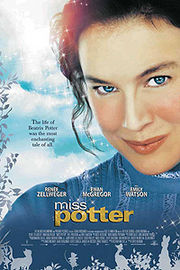
    How many shows are good enough that you can walk into them partway through and within a minute become completely engrossed? I found two this week. The first is the 2006 film Miss Potter, which tells the story of Beatrix Potter (1866-1943), who is the best selling children’s author of all time. You might know her by the most famous of her 23 illustrated children’s stories: The Tale of Peter Rabbit.

    As a side note, Potter spent a lot of time at her family’s country home in the Lake District. I was lucky enough to be able to vacation there once, but never knew until I saw this film that the gorgeous landscapes that had been preserved were partially due to her donation of 4,000 acres.  

    The movie opens with the fact that Potter, who is played so well by Renée Zellweger, has missed her early chances of marriage. She’s a young spinster, and, having a number of her illustrations purchased, is determined to make some money publishing her own illustrated stories. The movie follows her journey to publication, which met with opposition from both publishers and her family, but the real heart of the film is the story of her meeting and falling in love with Norman Warne, whom her parents, especially her mother, don’t approve of because he’s a tradesman. The film is full of wonderful drama, humor, tragedy, and solace. I can’t recommend it highly enough. In fact, I found myself watching it a second time two days later with my girls with just as much enjoyment.

    Downton Abbey, a period drama

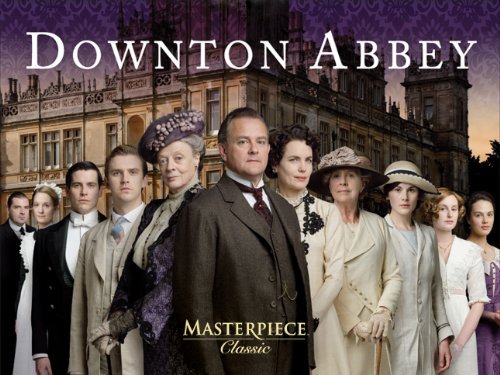
    The second show is the BBC miniseries Downton Abbey.  Its first season of seven episodes aired last year in the USA on PBS’s Masterpiece Theater.  The second season will air at the beginning of 2012.  

    The series is set in the fictional Downton Abbey and follows the lives of the aristocratic Crawley family and their servants. The stories take place over the time period that starts with the sinking of the Titanic in April 1912 to the outbreak of the First World War on 4 August 1914.

    The main story line running through the episodes is the fact that the Crawley family must give up the estate to a distant relation because they have no male heir. But what I find so refreshing is that the stories of various servants are included. Some are funny. Some pull at your heart strings.

    So far I’ve met and enjoyed some truly delightful characters as well as a couple of villains. If you enjoyed the BBC’s Pride & Prejudice or the Cranford series, I think you’ll enjoy this.

    Human Planet, an amazing documentary

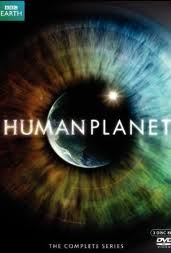
    These last two weeks I’ve watched with fascination the eight episodes of the BBC and Discovery documentary series Human Planet. One species on our planet has adapted to every environment on earth—that’s us. The series looks at a number of remarkable ways humans have adapted to the various habitats.

    You’ll see people from all over the globe who do things you never would imagine. Here’s just a small sample:


    • -Folks in Churchill, Manitoba Canada who trick or treat on Halloween with hungry polar bears stalking the streets
    • -A man in Papua New Guinea practicing the ancient art of shark calling in a small canoe
    • -Dolphins that help humans fish in Brazil
    • -A wild honeyguide bird working with Maasai boys to steal honey from wild African bees
    • -Mongolians using tamed golden eagles to hunt fox
    • -People in the eastern Amazon who love their pet monkeys so much they breastfeed them
    • -Inuit Canadians who risk death going under the arctic ice during low tide to gather mussels
    • -Three Dorobo in Kenya stealing food from a lion pride of more than twenty lions


    Oh, and how could I not mention the three children who hunt tarantulas in Venezuela, roasting them up as tasty treats that taste a little like crab. I could go on and on. There are sixty-three of these stories in all, grouped into eight episodes that each focus on a certain habitat, including deserts, the Arctic, jungles, mountains, grasslands, rivers, and cities. Each episode also includes a behind-the-scenes story about the filming of one of the episodes. And some of these are as thrilling as the stories themselves.

    In fact, that’s one of the things I love about this series. In addition to showing me fascinating things I’ve never seen, a number of the stories also raise the adrenaline just a bit. And yet, that’s not all. Because while presenting “strange” cultures, the stories humanize these folks so that instead of presenting aliens, these people feel more like fascinating distant relations. This is storytelling at its finest. If you like nature shows at all, you’ll be totally delighted with Human Planet.

    Share

One Comment

Comments are closed.