You thought Bad Penny was fiction?

How about former CIA operatives and Navy Seals forming a private group to rescue child slaves?

Last January, Ballard made a bold move and left his job to form his own team of former CIA operatives and Navy Seals who operate undercover to bust child slavery rings

. . . . .

Ballard’s organization is called Operation Underground Railroad, and members call themselves abolitionists. The references to 19th-century slave liberation are deliberate.

There are currently 25 million people living in slavery, according to the 2014 Global Slavery Index research released by anti-trafficking organization Walk Free Foundation. The U.S. State Department puts the figure closer to 21 million, and about two million of those slaves are children.

Ballard’s line of work has opened his eyes to a problem most people are blind to — the fact that there are more people living in slavery now than at the height of the trans-Atlantic slave trade.

. . . . .

Ballard knows better than anyone just how easy it is to buy a child. In an operation in Haiti earlier this year, he posed as a trafficker and visited an orphanage where two children — a brother and sister ages 2 and 3 — were sold to him for $15,000 apiece.

That’s the going rate for a child, says Ballard, and over time, the owner can make millions of dollars by selling the child for sex or forced labor.

Read the rest at Heroes of 2014. Become an abolitionist here.

Then go on to read about another hero–the Iron Angel–who is helping folks out of another kind of slavery.

Then a third called the Vicar of Bagdad, who has had over 1,000 of his flock killed for their beliefs.

Here’s the full list of the six featured heroes.

Share

Similar Posts

  • |

    No Apology

    The Book

    Political TV ads can be fun. And annoying.

    Debates can be fun. And maddening.

    You can indeed learn things about the candidates from watching the ads and debates. But fifteen and thirty second snippets of information really don’t give you the full picture. And sometimes they actually hide the facts, producing nothing more than informational smog.

    Recently, I decided I wanted to really know what Mitt Romney thought.  What he was about.  What he hopes to accomplish if he wins the presidency. If Mitt was someone in my neighborhood, I’d go visit the man, and we’d have a chat.

    I’d ask him about his ideas and past. I’d ask him to give me examples. Because of the nature of the issues at stake and the number of them, I imagine our chat would probably last a few hours.  It might stretch over a number of evenings.

    Of course, I’d want time to consider our chat and determine where I did and didn’t agree with him. I’d want to hear what others thought. And I’d want to look into his history, his successes and failures.

    But the first step would be to go to the man himself and hear him out.

    I hate it when people put words in my mouth. I’m sure Romney, or anyone else running, hates that same thing. If I were running, I’d would hope folks would take the time to hear me out. They may ultimately disagree with me on many or a few things. But I’d hope, as they are gathering information, that they would take the time to actually go to the source and listen to what I myself had to say.

    Unfortunately, I can’t walk around the corner and knock on Mitt’s door. But he did write a book that was published in 2010, and it’s probably the next best thing to talking to Romney at his kitchen table. The book is called No Apology: The Case for American Greatness.

    I’ll admit I thought it was going to be a dry guide book explaining his position on every hot political issue. It’s not a guide book.  In fact, he leaves a number of topics out. Nor was it dry.

    I also suspected it might be a scathing attack piece on the Obama administration. It’s not that either.  Not even close. He does criticize some things where he and Obama differ, but he also commends him on a few things. Either way, Obama is a very small part of the book.

    So what IS this book?

    Romney states its purpose in the introduction: it’s “about what I believe should be our primary national objective: to keep America strong and to preserve its place as the world’s leading nation” and “the course I believe we must take to strengthen the nation in order to remain prosperous, secure, and free” (2). It’s about his ideas on how to make sure America does not falter as so many nations have, but remains wealthy, happy, and productive.

    I finished the book yesterday. I found it interesting, personable, sometimes surprising, and insightful.

    I found Mitt Romney to be a man self-deprecating humor.  He’s also a thinking man, one who likes to look at data to see what it shows. It’s clear he’s a man who does NOT think he knows everything or has a monopoly on every good idea, but he’s also a man who demands evidence.  I also saw a man who is kind.  He doesn’t talk much about his 14 years of service as a lay minister in his church in this book, but you can see how those years changed him as he discusses helping the unemployed, out-of-wedlock births, and single-parent families.  Finally, I saw a man who loves, LOVES, America and is convinced she can remain the hope of the earth, but only if we do things that foster our strength.

    This book outlines what he thinks those things are.

    The book is written in a conversational and easy style with many examples from his personal experience, studies, and history. Romney’s record of accomplishments demonstrates his skills and hard work ethic. This book explains to what end he would apply that skill and work.

    If you’re planning on voting this November for the president of the United States, I think you’ll find this book very useful.  You may end up agreeing with many things he says. You may end up disagreeing with him on many points. But before you can do either, you need to understand what Romney’s position actually is.  And the first step in doing so is to fully hear the man out, in his own words, from his own lips.

    As a result, whether you end up deciding he’s your candidate or not, you WILL come away with important insights into the issues discussed.

    What’s Next

    I want you to know that I do not worship George, Ben, Tom, Adam or any of the other guys who formed our constitution and started this nation.

    They put their lives and fortunes on the line for what they believed in. And I am immensely grateful for what they did.  I enjoy tremendous freedoms because of their courage, determination, and sacrifice. Those guys, by-and-large, rock!

    But I do NOT believe that their words are scripture nor that their ideas are sacrosanct—merely to be accepted and not to be considered and questioned and disagreed with.

    Even so, these guys were gutsy and brilliant. They attempted something everyone thought would fail.  Something that HAD failed every time it had been attempted in their recorded history. But they pulled it off and changed the world.

    These guys believed in the common man. They believed that the educated common man was the best person to hold the reins of government. Thomas Jefferson thought up a rhyme to make the idea easy to remember.  He said, “If a nation expects to be ignorant and free in a state of civilization, it expects what never was and never will be.”

    I can’t argue with that.

    Of course, we’re not going to become experts on every policy issue. But we certainly can become informed on the broad principles and issues. And we can certainly become informed about the candidates.

    Because I found No Apology so useful, over the next few days I’m going to summarize Romney’s main points, chapter by chapter, here. I’ll also point out interesting ideas and facts he shares as well as share any questions, quibbles, or disagreements I have.

    I hope you find it useful. More importantly, I hope you read the book and join in the conversation.

    Share
  • Ninja Master Prep, Bountiful Baskets, and Feeling Good

    Kung Fu Your Food

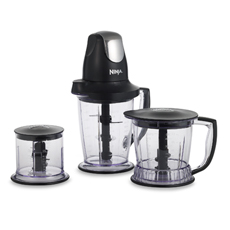
    It sounds like something off of a bad infomercial—black-clad ninjas, blenders, and, if you order now, a zirconium ruby that can withstand the pressure of a full elephant’s weight! But we didn’t get the Ninja Master Prep Professional—a six-cup pitcher and three two-cup prep bowls–from an infomercial. Santa’s up to his old tricks again. The dirty dog one-upped me and gave it to my wife for Christmas.

    Most blenders and food-processors use a single blade at the bottom of the container. When you make thicker smoothies, this means you have to stir and poke the chunks to the bottom. When you chop vegetables, it means that sometimes the stuff on the bottom turns to soup while larger chunks whirl around on top. And when it’s time to serve or remove the contents, you have to deal with the blades.

    But the Ninja Master Prep turns all that on its head. It uses multiple blades–one each at the bottom, middle, and top. You hold the motor in your hand. This configuration processes the food quickly and evenly. For example, we had 48 ounces of thick, perfectly-blended smoothies made from frozen strawberries in thirty seconds. And serving was a breeze because we simply set the motor aside, pulled the blade column out, and were left with a normal pitcher.   

    If you’re looking for a new blender or food processor, give the Ninja Master Prep Professional a try. You can find it at Sam’s Club, Target, Kohl’s, and many places online, including Amazon.com.

    Now, Grasshopper. You must learn respect–Hee-yah!

    Easy Eating

    One of the best changes we can make in our diets is to include more fruits and vegetables. I’ve found one of the easiest ways to do this is to order a weekly boxful from Bountiful Baskets (BountifulBaskets.org), a co-op which has hundreds of pickup locations in ten western states.

    The produce is cheap. And because you don’t choose what you’re going to get, you’re introduced to vegetables and fruits you might not otherwise try. Some might think that leads to eating less produce, but we’ve found it’s actually the reverse.

    One of the biggest headaches of cooking is planning the meals. In fact, I think having a menu is most of the battle. Bountiful Baskets eliminates a good portion of that planning and required shopping. Instead of trying to figure out what to cook, we know what we have to cook. It’s right there in the basket. All we need to do is build a number of the week’s meals around the produce. A few clicks on allrecipes.com and we’re ready to go.

    If you want to eat a more healthy and delicious diet, give Bountiful Baskets a go.  

    Be Happy

    It’s the holiday season and a joyous time for many people. But it’s also the worst time of year for others. We recently had another suicide in our little county. Some people might prefer we sweep such things under the rug. But it breaks my heart. Especially since such tragedy is avoidable. And I’m not talking about removing the problem with medication, although sometimes people do need to treat chemical imbalances. For many, much, if not all, of their depression is fueled by specific types of thoughts.

    These thoughts are not wacky, crazy things. In fact, they may seem innocuous or normal to some. But they are deadly all the same. Identifying and shining the truth on these thoughts takes some work, but the liberation is worth every ounce of effort.

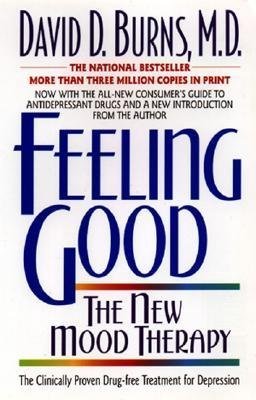
    It’s unrealistic to expect to be full of joy every minute of our lives. But it’s also not necessary, nor is it normal, to live a life dominated by feelings of worthlessness, hopelessness, pain, and self-loathing. If you or someone you know seems to feel these things on a regular basis, please, get a copy of Feeling Good by David Burns. Just read the first hundred pages and perform the techniques found there. And if you need some help being consistent, find a counselor to help you.

    Along with the jolts and pains, life provides an abundance of joys. Don’t let yourself, or those close to you, miss them.

    Share
  • 2 Great Cook’s Country Recipes

    Yeah, I know–I should be writing. But I promised you two wonderful recipes from my experiments with the Cook’s Country June/July 2011 issue. There were a whole bunch of other recipes we tried that worked out well, but these were our favorites and good enough to get me to subscribe.

    By the way, I found these recipes were not only tasty, but they were great to do on a date (in this case, with my daughters). Why just eat when you can enjoy the time together as well?  Besides, two people working together make these recipes a breeze.

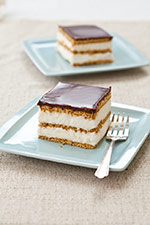
    Chocolate Eclair Cake

    Chocolate, vanilla pudding, whipped cream, and graham crackers–baby, is this good!  I found I liked the cake best with HALF of the pudding and whip cream mixture. You’ll see the half amounts in parentheses. That way I got a taste of the pudding, graham, and ganache in every bite. The directions make it look like there’s a lot of steps, but they all go quickly.

    INGREDIENTS

    Pudding Mixture

    • 1 ¼ C sugar (1/2 + 1/8 C)
    • 6 T cornstarch (3 T)
    • 1 tsp salt (1/2 tsp)
    • 5 C whole milk (2.5 C)
    • 4 T unsalted butter cut into chunks (2 T)
    • 5 tsp vanilla (2.5 tsp)

     Whip Cream Mixture

    • 2 T water (1 T)
    • 1 ¼  tsp unflavored gelatin (1/2 + 1/8 tsp)
    • 2 C heavy cream (1 + ¼ +1/8 C)

    Graham Crackers

    14 ounces of Nabisco Honey Maid graham crackers

    Ganache topping

    • ¾ C  heavy cream
    • 1 C semisweet chocolate chips
    • 5 T light corn syrup

     DIRECTIONS

     Make Pudding

    1. Combine sugar, cornstarch, and salt in large saucepan
    2. Wisk milk into sugar mixture and bring to boil over medium-high heat, scraping bottom with rubber spatula.
    3. Immediately reduce heat to medium-low and continue to cook and scrape until thick bubbles appear on surface, about 4-6 minutes
    4. Take off heat and wisk in butter and vanilla.
    5. Transfer hot pudding to large bowl and place plastic wrap directly on surface.
    6. Refrigerate for about 2 hours until cool.

     Make Whip Cream Mixture

    1. Stir water and gelatin together and let sit for 5 minutes.
    2. Microwave until gelatin dissolves and mixture gets bubbly around the edges, 15-30 seconds
    3. Whip 2 cups of cream on medium-low for about 1 minute, until foamy.
    4. Increase to high and whip for 2 minutes, until soft peaks form
    5. Add gelatin mixture and whip for 1 minute, until stiff peaks form

     Combine Pudding and Whip Cream Mixture

    1. Wisk one-third of whipped cream into chilled pudding.
    2. Fold remaining whipped cream into pudding.

     Layer Pudding Whip Cream Mixture with Graham Crackers

    1. Line bottom of 13 x 9 inch baking dish with a layer of graham crackers. Break and cut crackers if you have to.
    2. Top the bottom layer of crackers with ½ of the pudding whip cream mixture
    3. Place another layer of crackers over the pudding.
    4. Top that layer with the rest of the pudding whip cream mixture
    5. Place one last layer of crackers over the second layer of pudding whip cream mixture

     Make Ganache and Pour Over

    1. Microwave chocolate chips, ¾ C cream, and corn syrup in bowl 1-2 minutes, stirring occasionally.
    2. Cool for 10 minutes to room temperature
    3. Cover top layer of graham crackers with glaze
    4. Refrigerate cake for 6 – 24 hours. Then serve.


    Dill Potato Salad

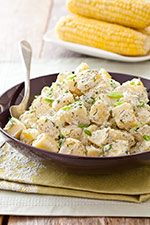
    A potato salad with a perfect dill zing. Everybody in the Brown household loved this. Super wife especially loved it because she does not like eggs. Please note that there’s fresh dill used in all three parts. So when you shop, make sure you get enough for all three.

     INGREDIENTS

     Dill Vinegar

    • ¼ C white wine vinegar
    • 1 T minced fresh dill

     Boiling Mixture

    • 1 disposable coffee filter
    • ½ C coarsely chopped dill leaves and stems
    • 3 pounds Yukon Gold potatoes (don’t get any other type), peeled and cut into ¾ inch pieces
    • 1 T salt

     Dressing

    • ½ C mayonnaise
    • ¼ C sour cream
    • 1 T Dijon mustard
    • ½ tsp salt
    • ¼ tsp pepper
    • 2 T minced fresh dill
    • 3 scallions (green onions) green parts only sliced thin

     DIRECTIONS

     Make Dill Vinegar

    1. Combine vinegar and 1 T minced dill in bowl and microwave until steaming, 30-60 seconds
    2. Cool at room temperature for 15-20 minutes

     Boil Potatoes

    1. Place chopped dill inside disposable coffee filter and time with thread.
    2. Put potatoes, dill sachet, and salt into large pot with enough water to cover the potatoes by 1 inch.
    3. Bring to boil on high heat then reduce heat to medium and simmer until potatoes are tender, 10 minutes

     Cool and Soak Potatoes

    1. Drain potatoes thoroughly and throw away dill sachet
    2. Drizzle 2 T of the dill vinegar over hot potatoes and gently toss until evenly coated
    3. Refrigerate until cooled, 30 minutes. This allows the Yukon potatoes to suck up the dill vinegar.

     Make dressing and Combine with Potatoes

    1. Wisk mayonnaise, sour cream, remaining dill vinegar, mustard, salt, and pepper until smooth
    2. Add dressing to cooled potatoes
    3. Stir in scallions and 2 T minced dill.
    4. Cover and refrigerate to let flavors meld, 30 minutes.
    5. Serve with salt and pepper to taste.

     EDIT 9/7: Somehow I deleted four of the dressing ingredients when I posted. They’ve been added back 🙂

    Share
  • Good Stuff! Mr. Holmes and 13 Hours, the book

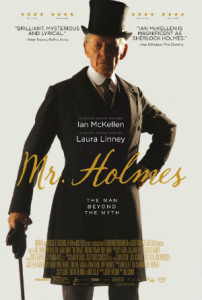
    Earlier this month I watched Mr. Holmes.

    Mr._Holmes_poster

    It left me with this fine peace. With this feeling of goodness and light, in spite of, or probably because of, a number of poignant moments. It also surprised me.

    To write a story like this, to give people this kind of gift…

    What a wonderful, powerful thing.

    Now, it was not a thriller. It’s not an episode of Sherlock or Elementary. It’s not a murder mystery. It reminds me of Saving Mr. Banks most, but also of Miss Potter, maybe even The King’s English. It has that kind of tempo.

    Basically, Sherlock Holmes is a much older man. He’s retired. And there’s a case he’s trying to solve. But, again, this isn’t a murder mystery. This story is about Sherlock himself and wisdom and the beauty of change whenever it occurs.

    The story lingered with me, and I avoided reading or watching anything else for a few days to savor it. Give yourselves a treat. Watch this wonderful story.

    *

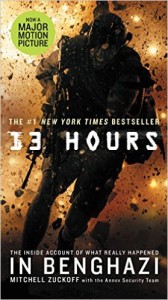
    The book 13 Hours: The Inside Account of What Really Happened in Benghazi was the answer to so many questions.

    13_Hours_ZuckhoffWant really happened in Benghazi?

    What we’re we doing there?

    Who are the brave men who tried to save the ambassador?

    It was also a thrilling read in the tradition of Marcus Luttrell’s Lone Survivor. As such, it purposely avoids the political aspect of the incident. It’s not about what the officials of the United States government did, said, or knew, or the political firestorm that ensued.

    It’s not a hit piece on Clinton and Obama, nor is it any kind of defense. Instead it simply documents the events on the ground in those last 13 hours, relying most heavily on what the five American security contractors who rushed to give aid said happened. Those men–two former Marines, two former SEALs, and a former Army Ranger—teamed up with Mitchell Zuckoff, the writer, to simply set the record straight.

    I couldn’t put the book down. Not only because the book’s well-written and the characters and situation are compelling, but also because of the insight it shared into some key dynamics within Libya itself. For example, it helps you understand why the revolt against Muammar Gaddafi centered in Benghazi, not Tripoli. It also touches on some of the currents inside these Muslim-majority countries close to the epicenter of Sunni extremism—Egypt and Saudi Arabia–so volatile. And it shares details, large and small, as only those who experience such things first hand can.

    If you want a fascinating account of really happened on the ground in Benghazi, get this book.


    Share
  • Good Stuff: Books Worth Multiple Readings Part 1

    Would you like to improve your relationship with your spouse or children?

    Would you like to improve your experience with teachers, coaches, and administrators this coming year at school as you try to influence them and work with them for the benefit of your children?

    Would you like to simply have a better time with the people in your community?

    There are some books so full of practical wisdom about relationships that they deserve to be read every year or three. I want to recommend two such books to you. The first is How to Win Friends and Influence People by Dale Carnegie.
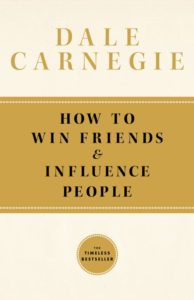
    This book has been in print for eighty years. And not only that, it has been, year after year, one of the bestselling books out there for almost each of those eighty years. For example, Amazon right now ranks it the #9 most read book. You’ll see other books come and go on that list. But books like this and Stephen R. Covey’s The Seven Habits of Highly Successful People stay.

    There are thousands of how-to books published each year on relationships in business and personal settings. Most are never seen again. But this one has stayed because people find it so useful they recommend it over and over again.

    And I wish to heck I’d not waited ten years to pick my copy up again.

    As I re-read the book this last month, I saw that if I’d been thinking about the practical guidelines Carnegie shares, I could have avoided a number of public and private arguments I’ve had over the last few years.

    I could have avoided subjecting those relationships to attack, coming to my senses, and then trying to clean up the mess, large or small.

    But even more important, I could have added a little more sweetness to my life and the life of others I encounter on my way. There are only so many days we have here on earth, and how much better it is to add additional drops of honey to them instead of vinegar.

    One of the wonderful things about his book is that Carnegie shares the wisdom in a down-to-earth way with lots of examples and stories. He shares wisdom on building relationships, being liked, winning people to your way of thinking, and how to make your requests for change known without giving offense or rousing resentment. And he does it simply and in a way that you feel like you’re sitting down with a good-humored grandfather. There are no dry, abstract parts. Just look at a sampling of the chapter titles.

    • “If You Want to Gather Honey, Don’t Kick Over the Beehive”
    • “He Who Can Do This Has the Whole World with Him. He Who Cannot Walks a Lonely Way”
    • “An Easy Way to Become a Good Conversationalist”
    • “If You Must Find Fault, This Is the Way to Begin”
    • “Give a Dog a Good Name”

    I can tell you that every time I try to approach things the way he proposes, they almost always seem to go better.

    If you have an issue you want to discuss with a school teacher, coach, or administrator this year, let me suggest you first listen to what Carnegie has to say. I can promise you you’ll get much farther. And you will probably end up enjoying the interaction.

    If you want to improve your time with your wife and kids, open this book and look for insights.

    If you want to have a better time with your co-workers or boss, I suggest reviewing the wisdom you’ll find here.

    Carnegie doesn’t possess all the wisdom there is to be had about relationships. There are many people out there with great insights. But, gee whiz, he provides a great start. If you want to add some sweetness to your life, I think you’ll find this book a great help.

    Let me illustrate this Carnegie stuff with an experience I had with one of our high school coaches two years ago. I have a vast background in basketball that includes, well, nothing. I basically know how to dribble a ball. Oh, yeah, I also played church ball two or three years in a row back in the 1980s. So, as you can see, my knowledge is vast.

    And not to toot my own horn, but this wasn’t just any church ball team. This was a team that improved the sport.

    How? You ask.

    Well, during one of those church ball years, me and the guys from my ward (“congregation” for those not familiar with the Mormon faith) thought it would be capital to make jeans and concert tee-shirts our uniforms. Back in those days concert tee-shirts looked like this.
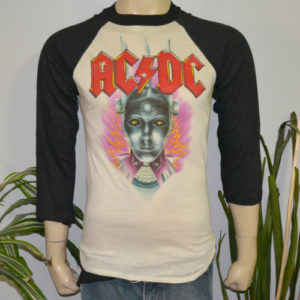
    This meant we ran up and down the church courts with drugs, sex, and rock and roll on our chests (I’m sure that’s precisely what the brethren had in mind for the program).

    As you can see, we were way up there on the basketball ladder.

    So back to this coach. My daughter was playing on the high school team, and the team was having a consistently hard time with one type of defense. And I thought, “Self, there’s got to be a way to break that defense.” These are the big thoughts that basketball gurus like myself have.

    And so I researched and watched and talked to folks who had actually played basketball competitively (unfortunately, without concert tee shirts) and identified an offensive counter that looked like it might work.

    And I sent an email to the coach sharing my idea.

    Now, the coach could have reacted in many ways. Especially given the fact that (1) he had already thought of the idea I was proposing, (2) had already tried it in games that, yes, I had attended, and (3) probably knew just a teensy bit more about basketball and his team than I did even though my church ball team had vastly superior uniforms.

    But this coach, whether he knew it or not, was following a number of the principles found in Carnegie’s book, including the chapter titled “Let the Other Person Save Face”. This meant that instead of rolling his eyes or ridiculing or saying something like, “Brown, are you blind?”, he explained what he was doing and then expressed his appreciation. He was happy I was so invested. He thanked me.

    And here’s the thing: he meant it.

    I replied that if he ever wanted someone to suggest an idea he was already trying, to just call. I’d be happy to help.

    We laughed, but the important thing is that what could have been a wedge became a good experience for all. And, more than ever, I wanted to work with him to help my daughter in the program.

    I will give you one more example. There’s a mother who had four of her children go through my wife’s seventh and eighth grade language arts classes. Now, Nellie is a worker. She expects her students to work. She wants to have a good time, loves having great interactions with the kids, but she also wants them to improve and learn, and knows that’s going to take some work. Sometimes the assignments, despite her best efforts, aren’t clearly understood. Sometimes they’re a bit challenging. And this sometimes creates frustration.

    There are a lot of ways that parents deal with this. But this one mother took an approach that, whether she knew it or not, followed many of the principles in the book including those shared in “You Can’t Win an Argument” and “A Formula That Will Work Wonders For You”. This resulted in a fabulous working relationship. It helped the mother have less stress. Helped her kids. And helped Nellie improve her program.

    The issues the mother encountered could have become wedges, but instead, because of how she handled them, they became stepping stones. And this didn’t happen with this one individual. There are many mothers and fathers who have taken a similar approach with similar results. The principles work every time.

    I could go on with many more examples in other situations, but why listen to mine? Carnegie has a book full of them. If you want to improve your relationships or persuade others to your way of thinking, you’ll want to start by reading this book.

    The second book I want to recommend is I Don’t Have to Make Everything All Better by Gary and Joy Lundberg. But this post is full, so stay tuned, and next time I’ll explain what awaits you in its fabulous pages.


    Share
  • Top 200 YA Authors of 2010

    On Thursday I posted the top 200 YA  novels of 2010. Today I’m happy to share the top 200 authors. You might be wondering: if we already have a top 200, why post this? Because yesterday was about individual titles. Today’s post is about authors. Some authors might not have any books that are checked out in huge numbers. But because they have a lot of books available, the numbers of checkouts they do have add up. Yesterday’s list showed you the volume for individual books. Today’s list shows you the volume for each author. You’ll see it does result in a different ranking.

    This list is based on the same dataset as the previous list. And so while I can’t claim it represents the top YA authors for the whole United States, it does show who is being read in this neck of the woods. It’s a great list for those wanting to find YA authors to try.  Please be aware that these are YA books as defined by the library, which takes its cue from places like Booklist and School Library Journal. Other books like the first three Harry Potters, Brandon Mull’s Fablehaven series, and some of Dashner’s stuff are considered Middle Grade and so do not appear on this list. Later, I might do a combined list.

    There were 1,283 authors on the list. “Times Checked Out” is the sum of all the times any of the author’s books were checked out. “Number of Titles” is the number of different titles the author has that were checked out. “Avg Check Outs per Title” is the average number of times each title was checked out. “%” is percentage of total checkouts. Rank is rank. Another way to sort this would be by the Avg Check Outs per Title to see who’s getting the highest number of readers per book. But I’ll let you fiddle with that on your own. Again, I’m very happy to see a number of Utahans on the list. Kudos to the following (ranking in parentheses):

    • Stephenie Meyer (4)
    • Shannon Hale (5)
    • Jessica Day George (10)
    • Chris Heimerdinger (18)
    • Jack Weyland (38)
    • Lisa Mangum (55)
    • Mette Ivie Harrison (56)
    • Aprilynne Pike (71)
    • Brandon Sanderson (73)
    • Ally Condie (82)
    • James Dashner (94)
    • Bree Despain (110)

    EDIT: 1/15/2011 12:57 AM. Okay, okay here’s the list by average checkout: Top 200 YA Authors of 2010, Part 2. A number of people drop off, new names appear, and positions shuffle.

    EDIT: 1/16/2011 9:32 AM: Informed that Bree Despain is also a Utah author.

    The List

    Author Times Checked Out Number of Titles Avg Check Outs per Title % Rank
    Rick Riordan 989 8 124 2.68% 1
    Suzanne Collins 888 3 296 2.98% 2
    Tamora Pierce 634 26 24 1.60% 3
    Stephenie Meyer 529 5 106 1.56% 4
    Shannon Hale 517 6 86 0.96% 5
    John Flanagan 413 9 46 0.93% 6
    Meg Cabot 396 37 11 0.58% 7
    P.C. Cast and Kristin Cast 393 7 56 0.37% 8
    Scott Westerfeld 354 12 30 1.19% 9
    Jessica Day George 328 6 55 0.99% 10
    D.J. MacHale 328 15 22 0.32% 11
    L.J. Smith 326 22 15 0.15% 12
    J.K. Rowling 318 4 80 0.30% 13
    Darren Shan 313 24 13 0.14% 14
    Cassandra Clare 309 4 77 1.25% 15
    Lisi Harrison 304 23 13 0.40% 16
    Eoin Colfer 302 11 27 0.13% 17
    Chris Heimerdinger 280 16 18 0.50% 18
    Cameron Dokey 271 9 30 0.74% 19
    Anthony Horowitz 260 24 11 0.46% 20
    James Patterson 257 8 32 0.23% 21
    Angie Sage 246 6 41 0.11% 22
    Joseph Delaney 240 9 27 0.33% 23
    Richelle Mead 202 6 34 0.21% 24
    Christopher Paolini 191 3 64 0.10% 25
    Alyson Noel 188 9 21 0.10% 26
    Garth Nix 182 11 17 0.21% 27
    Sara Shepard 181 8 23 0.41% 28
    Hilari Bell 178 12 15 0.10% 29
    Michael Scott 165 4 41 0.61% 30
    Gary Paulsen 163 26 6 0.20% 31
    Ellen Schreiber 160 9 18 0.20% 32
    Patricia C. Wrede 158 9 18 0.78% 33
    Frewin Jones 155 8 19 0.19% 34
    Melissa de la Cruz 154 7 22 0.28% 35
    Maggie Stiefvater 153 4 38 0.09% 36
    Ally Carter 152 5 30 0.37% 37
    Jack Weyland 151 11 14 0.09% 38
    Suzanne Weyn 150 8 19 0.09% 39
    Sarah Dessen 150 9 17 0.37% 40
    Margaret Peterson Haddix 144 8 18 0.46% 41
    Libba Bray 136 4 34 0.82% 42
    Rachel Caine 134 9 15 0.09% 43
    R.L. Stine 132 43 3 0.09% 44
    Caroline B. Cooney 132 30 4 1.07% 45
    Kelley Armstrong 131 3 44 0.27% 46
    Gerald Morris 129 10 13 0.09% 47
    Diana Wynne Jones 128 6 21 0.26% 48
    Jean Ferris 127 13 10 0.17% 49
    Anna Godbersen 127 5 25 0.17% 50
    Cecily von Ziegesar 126 24 5 0.17% 51
    Janette Rallison 125 10 13 0.08% 52
    Markus Zusak 124 4 31 0.08% 53
    Lurlene McDaniel 124 47 3 0.17% 54
    Lisa Mangum 124 2 62 0.91% 55
    Mette Ivie Harrison 123 4 31 0.08% 56
    Ann Rinaldi 119 31 4 0.72% 57
    Kate Brian 118 21 6 0.08% 58
    Carolyn Meyer 115 12 10 0.08% 59
    Cinda Williams Chima 113 5 23 0.38% 60
    Amelia Atwater-Rhodes 112 11 10 0.08% 61
    Frank Beddor 110 3 37 0.08% 62
    Heather Brewer 108 5 22 0.08% 63
    Laurie Halse Anderson 108 8 14 0.30% 64
    Herbie Brennan 106 5 21 0.30% 65
    Kristin Cashore 105 2 53 1.91% 66
    Robin McKinley 105 6 18 0.07% 67
    R.D. Henham 104 7 15 0.21% 68
    Donna Jo Napoli 104 15 7 0.14% 69
    Catherine Jinks 101 10 10 0.21% 70
    Aprilynne Pike 101 2 51 0.21% 71
    Louise Rennison 101 10 10 0.55% 72
    Brandon Sanderson 100 4 25 0.34% 73
    Debbie Viguie 100 6 17 0.46% 74
    Melissa Marr 99 4 25 0.07% 75
    Catherine Fisher 98 8 12 0.13% 76
    Jonathan Stroud 97 6 16 0.99% 77
    Lauren Brooke 95 26 4 0.33% 78
    L.A. Meyer 95 8 12 0.13% 79
    Lisa McMann 94 3 31 0.13% 80
    Simone Elkeles 93 7 13 0.39% 81
    Ally Condie 93 6 16 0.32% 82
    Lynne Ewing 91 18 5 0.06% 83
    Donita K. Paul 90 6 15 0.06% 84
    Carrie Jones 88 3 29 0.06% 85
    Lois Lowry 86 3 29 0.06% 86
    Kenneth Oppel 80 4 20 0.19% 87
    Mary Hoffman 79 7 11 0.06% 88
    Philip Reeve 78 9 9 0.57% 89
    Jen Calonita 78 6 13 0.12% 90
    Holly Black 78 5 16 0.12% 91
    Laurie Faria Stolarz 76 7 11 0.06% 92
    Catherine Gilbert Murdock 76 4 19 0.24% 93
    James Dashner 75 2 38 0.06% 94
    Diane Duane 75 9 8 0.06% 95
    Philip Pullman 73 9 8 0.18% 96
    Gordon Korman 72 16 5 0.18% 97
    Neal Shusterman 72 9 8 0.47% 98
    Jerry Spinelli 72 8 9 0.17% 99
    Jane Yolen 71 14 5 0.06% 100
    N.D. Wilson 70 3 23 0.23% 101
    Ellen Hopkins 70 6 12 0.06% 102
    Carrie Ryan 69 2 35 0.45% 103
    Becca Fitzpatrick 68 2 34 0.05% 104
    Lesley Livingston 68 3 23 0.05% 105
    Esther Friesner 68 6 11 0.05% 106
    Megan Whalen Turner 68 4 17 0.43% 107
    Alex Flinn 68 3 23 0.48% 108
    Elizabeth Knox 67 2 34 0.48% 109
    Bree Despain 66 2 33 0.32% 110
    Bryan Davis 66 8 8 0.11% 111
    Patrick Carman 66 5 13 0.84% 112
    Nancy Werlin 65 6 11 0.05% 113
    Ann Brashares 64 4 16 0.05% 114
    K.A. Applegate 64 18 4 0.05% 115
    Rachel Cohn 64 9 7 0.05% 116
    Linda Buckley-Archer 63 3 21 0.05% 117
    Cornelia Funke 63 2 32 0.05% 118
    Ted Dekker 62 7 9 0.05% 119
    Vivian Vande Velde 62 13 5 0.21% 120
    Nancy Springer 62 7 9 0.05% 121
    Carolyn Keene 61 49 1 0.15% 122
    Kieran Scott 60 6 10 0.10% 123
    Robin Palmer 59 3 20 0.45% 124
    Claudia Gray 59 3 20 0.30% 125
    Victoria Hanley 58 4 15 0.55% 126
    Carl Hiaasen 58 3 19 0.15% 127
    Philip Pullman  57 2 29 0.15% 128
    Lauren Kate 57 2 29 0.29% 129
    Marilyn Kaye 57 29 2 0.05% 130
    Lili St. Crow 56 2 28 0.14% 131
    Sharon Shinn 56 5 11 0.05% 132
    T.A. Barron 55 6 9 0.05% 133
    Marissa Doyle 55 2 28 0.05% 134
    Celia Rees 54 6 9 0.05% 135
    Alane Ferguson 54 6 9 0.05% 136
    Ridley Pearson 54 4 14 0.05% 137
    Elizabeth Scott 54 4 14 0.05% 138
    Clare B. Dunkle 53 6 9 0.05% 139
    Jaclyn Moriarty 52 4 13 0.05% 140
    James A. Owen 52 4 13 0.05% 141
    Justin Somper 52 5 10 0.05% 142
    David Klass 52 11 5 0.19% 143
    E. Lockhart 51 6 9 0.24% 144
    Cornelia Funke  51 1 51 0.09% 145
    Rachel Vail 51 3 17 0.28% 146
    Susan Beth Pfeffer 49 4 12 0.09% 147
    Rachel Vincent 49 3 16 0.14% 148
    K.M. Grant 49 7 7 0.27% 149
    Michael Grant 49 3 16 0.14% 150
    Maureen Johnson 48 4 12 0.05% 151
    Terry Pratchett 48 5 10 0.05% 152
    Kay Lynn Mangum 48 3 16 0.05% 153
    Sarah Mlynowski 48 5 10 0.05% 154
    Judy Blundell 48 1 48 0.05% 155
    Wayne Thomas Batson 48 7 7 0.05% 156
    Christopher Pike 47 19 2 0.05% 157
    David Lubar 47 8 6 0.05% 158
    Janet Lee Carey 46 3 15 0.40% 159
    Kami Garcia & Margaret Stohl 46 2 23 0.31% 160
    Lene Kaaberbol 45 4 11 0.54% 161
    Alison Croggon 45 4 11 0.98% 162
    Tera Lynn Childs 45 3 15 0.13% 163
    Lois Duncan 45 13 3 0.13% 164
    Carol Lynch Williams 44 3 15 0.09% 165
    Louis Sachar 44 2 22 0.17% 166
    Laini Taylor 44 3 15 0.13% 167
    Martha Finley 44 14 3 0.08% 168
    Kimberly Pauley 43 2 22 0.04% 169
    John Grisham  43 1 43 0.04% 170
    Beth Fantaskey 43 2 22 0.04% 171
    Guillaume Prevost 43 3 14 0.08% 172
    Margaret Mahy 43 5 9 0.04% 173
    A.J. Butcher 42 5 8 0.04% 174
    Lauren Conrad 42 3 14 0.04% 175
    Justine Larbalestier 42 5 8 0.04% 176
    Deb Caletti 42 4 11 0.13% 177
    Joan Lowery Nixon 42 16 3 0.04% 178
    Aimee Friedman 42 3 14 0.04% 179
    Gloria Whelan 41 10 4 0.04% 180
    Anne Osterlund 41 2 21 0.04% 181
    Philip Caveney 41 3 14 0.04% 182
    Eva Ibbotson 41 2 21 0.04% 183
    Michael Carroll 41 3 14 0.04% 184
    Francine Pascal 40 14 3 0.04% 185
    Walter Dean Myers 40 11 4 0.13% 186
    Gillian Shields 40 3 13 0.08% 187
    Isobelle Carmody 40 7 6 0.46% 188
    Fuyumi Ono  40 4 10 0.12% 189
    Stuart Hill 39 3 13 0.12% 190
    William Sleator 39 14 3 0.08% 191
    Michael Cadnum 38 11 3 0.08% 192
    Timothy Zahn 38 6 6 0.16% 193
    Sharon M. Draper 38 9 4 0.16% 194
    Peter Abrahams 37 5 7 0.33% 195
    Madeline L’Engle 37 11 3 0.12% 196
    Jenny B. Jones 37 3 12 0.28% 197
    Kimberly Derting 37 1 37 0.92% 198
    William Nicholson 37 3 12 0.20% 199
    Susane Colasanti 36 3 12 0.94% 200
    Ben Mikaelsen 36 5 7 0.08% 201
    Jacquelyn Mitchard 36 5 7 0.08% 202
    Richard Peck 36 9 4 0.04% 203
    Tim Green 36 6 6 0.04% 204
    Marilyn Reynolds 36 8 5 0.04% 205
    Sarah Miller 36 3 12 0.04% 206
    Sara Zarr 36 3 12 0.04% 207
    Share

One Comment

Comments are closed.