Why stories follow patterns

There is a lively discussion on The Passive Voice about Kris Rusch’s recent blog post which challenges the use of the term “churn out” to describe writers who write quickly. In the comments, someone said that folks also use “formula” or “formulaic” as a pejorative. Another commenter said that in computer design, they use design patterns, and suggested that’s probably a better word. Here’s my response.

Design pattern is right.

The people who decry familiar patterns are those that completely misunderstand one of the main purposes of fiction.

Readers go to fiction to have an emotional experience–thrill, horror, dread, falling in love, mirth, wonder, wish-fulfillment, etc.

Those emotions are not created out of nothing.

They’re not created haphazardly.

They are generated by a specific . . . pattern.

1. You receive some stimulus–from your environment or your own thoughts or something you’re lead to think, such as via a book.

2. You make an assessment about what’s going on and what might happen in the future and how that impacts you or someone else. There are two assessment systems. One is incredibly quick. Almost subconscious. The other is a bit slower. You can read about them in Daniel Kahneman’s Thinking, Fast and Slow and Jenefer Robinson’s Deeper Than Reason. Robinson even relates the science to fiction.

3. If the assessment says it’s something that will affect you or someone you can sympathize with, you feel an emotion. The emotion focuses your attention. For example, if there’s a mountain lion stalking you, you don’t want to forget she’s there. It also prepares you to act–to pursue something desirable, avoid something that’s not, etc. It also writes that emotion on the face to communicate it to others to solicit help or warn (we are social animals).

Okay, so certain cues or assessments are required to produce certain emotions. If the cues aren’t there, the emotion doesn’t arise.

Certain stimuli lead to an assessment that there’s a threat. Other stimuli lead to assessments that there’s an opportunity, for love, money, sex, security, etc.

Suspense, surprise, and curiosity have all been studied in experiments. There’s a certain structure required for each. If you take the same story, but simply change the structure, you end up with different reader effects. See more here.

This means that a reader who wants to feel the experience of falling in love is going to have to be guided through the pattern of cues that produce the assessments that lead to the emotion.

There are lots of variations in the pattern that will work. But we can’t give a reader the pattern for horror and expect them to feel romance.

Duh.

You can’t give a reader a downer ending and expect her to feel joy.

Again, there are certain delights readers are going to certain genres for. Folks read romance after romance precisely because those romances do specific things to them. And they want to experience them again and again.

For example, one thing romance readers love is the joy of a happily-ever-after (HEA) ending. So if that’s what they’re looking for, then that’s what the product must provide for them to be satisfied. We follow patterns, but change them enough so that the reader doesn’t get bored.

So, yeah. Patterns. It’s like the very essence of what we’re doing.

We are all working with patterns, whether we know it or know. And the sooner we learn what the general patterns are for the type of story we’re trying to tell, which could also be called the type of experience we’re trying to provide, the quicker we gain control over our writing.

Share

Similar Posts

  • |

    Slush I Read by Jim C. Hines

    Laughs are lovely. I just came across this wonderful parody by novelist Jim C. Hines which will give you a few for free. Enjoy!

    Slush I Read
    by Jim C. Hines

    (Apologies to Seuss)

    I read slush.
    Slush I read.

    That slush I read.
    That slush I read!
    I do not like that slush I read.

    Do you like fanfic with vamps?

    I do not like them Mary Sue.
    Why do these vamps all worship you?

    Here’s a tale from D & D!

    I do not want your D & D.
    I do not like your elf PC.
    I can not stand your purple prose.
    I want to punch you in the nose!

    Would you like a hot sex scene?
    I wrote it for my online ‘zine!

    Go to Hines’ site and read the rest right now

    Share
  • Some Key Concepts for Love Stories

    My first four professionally published short stories were all love stories of one kind or another. I love good love stories. And so when the Writing Excuses team podcasted about this topic with Dave Wolverton, I was excited to hear what they had to say. Of course, they didn’t dissappoint. However, I would like to add a few things here.

    1. A love story or romance is a happiness story. The problem is one of danger to, lack of, or opportunity for the happiness that comes with having a close bond with someone else. To be loved and included, to be valued by someone.

    2. Love stories don’t have to be between two characters who are romantically interested in each other. They can be between two people who become friends or a person who is on the outs with a particular group as with RAINMAN, or between a father (or father figure) and son as in TREASURE PLANET, or a mother and daughter.

    3. It seems to me that these social story problems can be broken down into four elements.

    1. Raising the idea
    2. Making the characters attractive
    3. Raising obstacles and conflict
    4. Showing signs of progression

    RAISING THE IDEA

    Just as with any story problem, we have to know there’s an issue. The idea of possibility or lack has to be presented to us. And the specific person who we hope the character bonds with has to be identified. How is this done?

    Lots of ways. But I can see two big ones right off the bat. The first has to do with what a character notices about the other person. In a romantic love story, it might be some thoughts about another’s attractiveness, either looks or character. This could happen when the character sees the other person, touches them, hears them speak. And it doesn’t have to be a stranger. Perhaps they had a crush on that person when they were younger. There are all sorts of cues we use to signal romantic potential. All we have to do is raise a few of those for the reader and the idea is planted.

    The second way the idea is raised is by having some other character raise it. Someone else notices the person and thinks them attractive. Or they make a suggestion that our character getting together with them is a possibility.

    So when Jack sees Mary he can think about when the blankety blank she’s going to get off the commando team because all she does is distract the men. Not him, of course. Or Bill can tell Jack that Mary has been watching him. And Jack can say, she can look all she wants because she’s never going to get a piece of this.

    MAKING THE CHARACTERS ATTRACTIVE

    The second thing I see that’s necessary is that the other person is attractive to the reader. Or, at least, the reader could see how the character could be attracted to this person. This doesn’t always have to be physical beauty. Nor does it have to be sexual attraction. A buddy story would be about something else–about someone who we think is admirable in some way. But it has to happen for the reader to believe the story.

    Of course, our hero may be duped. Jack might be falling for Cindy when she’s really just after his money. The readers know both sides and can see how Jack’s choices make sense, even while we feel great anxiety of the trouble coming down the line. 

    RAISING OBSTACLES AND CONFLICT

    These are key, of course. No obstacles or conflicts and there is no story. Jack sees Jill. Says I love you. They marry. The end. So we have to have obstacles. They can start immediately with the character recognizing a possiblity. For example, Jack is simply oblivious to Jill’s interest in him. And when he decides to trust his friend’s advice to pursue her, he sees her with another man. She’s not an option for him afterall.

    If we think about yes-buts and no-furthermores and that usually the hero has to fail at the end of act 2 for us to feel triumph at the end of act 3, we’ll see that obstacles and conflicts progress just as they do in any other story.

    There are many obstacles or points of conflict. Distance (CASTAWAY), social status, fears of rejection, a stuttering problem, another person who Jack is interested in or who Jill is interested in, something Jill does that Jack doesn’t agree with, jobs that are demanding and keep them apart or make them keep secrets (TRUE LIES). Are too closely related. It’s against your vows or values (you’re a nun or he’s a client) Etc.  Many are internal and have to do with trust, fear, competing desires, and commitment.

    The key to the obstacles, I’ve found, is in making it hard to choose or fulfill commitment. It isn’t about sex or kissing. Because you can have a story where two people have sex and it doesn’t resolve any tension in the love story (what if the guy is seen that night with another woman?). It’s about two people being able to say I love or value you and meaning it.

    And so anything that would keep them from commiting works. And after they’ve committed, anything that would make one recant. Or be unable to enjoy that love going forward.

    SHOWING SIGNS OF PROGRESSION

    The last thing is that the audience needs to know that things are moving forward. In plotting, we need a few yesses along the way or the story’s over. How do we do this? What are the signs? I can think of a few.

    1. The character’s thoughts are more and more about the other person, noticing all sorts of things, dealing more and more with inner dilemmas.
    2. The character’s actions become more and more open. The lingering looks, or glances she tries to  hide, the touching. The character’s words become more and more direct. Usually oblique at first and then more clear later.
    3. There is more validation from other characters.

    Why do so many stories have the characters in a romance dance? Not because dancing is some mystical thing. No, it’s a romantic cue. We associate romance with dancing. And being in such close proximity raises the pulse. But you can put people in close proximity in many other ways–in a crate as they’re being smuggled into the country, standing smashed together in a subway, retracting a bullet from the leg, cutting and washing hair (John Travolta in PHENOMENON), etc.  The reason why we do this; however, is so that we can get a yes, a sign of progression. Of course, we could also use it to raise a devestating conflict as when Maria dances with Captain Von Trapp in THE SOUND OF MUSIC. But that’s only devestating because during the dance they had declared in subtle ways that they were interested in one another.

    So we raise obstacles and show signs of progression, back and forth, the obstacles pointing more and more toward disaster until at the end of act 2 Jack loses…and we get the no-but plot turn. No, he’s failed completely. But then a desperate glimmer of hope…

    In the end we need final confirmation. One thing that says, yes, they’re committed. Often in romantic love stories writers use sex as a blunt confirmation. I think it’s often the lazy way out. Here, show Jack and Jill having sex. Okay, next plot point. It’s lost most of its power for me. And such a thing should be anything but cliche. My advice is to think of many other ways that show commitment and value. A few examples off the top of my head are what Dean Koontz in his ODD THOMAS series did this for Odd and Stormy, FAR AND AWAY with Joseph and Shannon, WHAT ABOUT BOB, and SABRINA. In fact, having sex was turned on its head in this one. Lovely.

    At least think about other options because romantic love stories are not about sex. Sexual tension stories are. But that’s a different problem. A different type of story. And it seems writers sometimes confuse these two. Romantic love stories are about two people finally saying, yes, I love you, I value you, and I mean it, and always will. And as an audience, we believe.

    And if that doesn’t move you, then remember that one of the things we go to stories for is surprise. Something new. How wonderful would it be if something as simple and Jackbiking into Jill’s work place with a parrot on his shoulder is the ultimate moment of the story, and says everything that needs to be said? And when Jill looks up at the commotion, her heart to this point hardened or desolate, and sees the bird, the audience weeps or cheers…

    Share
  • Indie Thoughts: Lessons from Marie Force

    Some promo tips from mega-seller Marie Force.

    I just changed the cover of a book (Maid for Love, book 1 in my McCarthys of Gansett Island Series) that’s been on sale for three years and free for two as a loss leader for a series that has 11.5 books (as of today–release day for book 11). I changed the cover (of books 2 and 3 as well) just ahead of a BookBub ad for Maid for Love. This book has been on BookBub quite a few times since it’s been free and lately, I could expect about 25,000 or so downloads across the platforms after a BookBub ad. This time, the number was closer to 70,000 downloads with a huge conversion to books 2 and beyond. Another thing we did before the BookBub ad was drop the prices on books 2-3 from $4.99 to $2.99 and books 4-6 from $4.99 to $3.99, leaving the front list at $4.99. I realized with 11 books and a novella in the series, it would cost a new reader more than $50 to buy the full series, thus the price break on the earlier books. Both the new cover for Maid for Love and the new pricing for books 2-6 yielded very impressive results. The series has sold more than 1.3 million ebooks since it debuted in 2011 and the last three have been top 10 NYT bestsellers. I was hoping to gain many more new readers from these strategies, and so far, it seems to be working just as I’d hoped it would. I love being able to try these things as an indie author!

    Another poster congratulated her and said he’d gone and purchased the book. It was free; why not give it a shot?

    Thanks, Bill. Hope you enjoy Maid for Love, and thanks for the congrats. The 1.3 million sales is especially thrilling when you consider that Maid for Love was rejected all over the place. Except by the readers. 🙂

    Find more at The Passive Voice.

    What’s Marie using? A series with a number of titles in it, competitive pricing, loss-leader sampling that sometimes includes a free book, and BookBub.

    More about Marie and her books on her website.

    Share
  • Become A Story Idea Machine

    Now’s your chance

    It’s here. I finally figured out how to:

    • Hold the Novel Writers Academy courses
    • Give you one-on-one guidance (not canned videos)
    • And still accommodate my writing schedule and commitments

    The course that’s open for applications is called Create Story Ideas That Beg to Be Written. It’s purpose is to transform you into a story idea machine.

    And you can be there in six weeks. Before the end of the year.

    I will be working with only a small set of people. I can’t accommodate more and give you the one-on-one feedback you need. And so you need to apply to get in.

    The deadline for applications is midnight, October 27th. So contact me now to get the application instructions.


    A cracking good story idea requires five critical elements. Until you have all five, you’ll struggle to plot. You’ll write a few scenes and run out of gas. You’ll feel like the story just isn’t going anywhere. And that’s because it isn’t. It can’t. A story isn’t a story without all five elements.

    However, once you develop these five things, your story will suddenly roar to life. There are a few other elements that are important as well, but these five things form the core of the story setup. 

    In this course you’re not going to merely learn about all of those story elements. You’re going to go deep and learn what can only be learned by actually doing the work and developing story idea after story idea with personal one-on-one feedback from someone who knows what they’re doing.   

    When you finish, you won’t just know story theory. You will be a story idea machine. And you will be that because you have put in the work. The right work.  

    Again, this is not a course full of lectures and videos. This is a course where you’re going to work. And develop the insights and skills that only come from doing the work.

    You’re actually going to:

    • Come up with story setup after story setup after story setup
    • And improve them with one-on-one feedback. 

    It’s going to:

    • Eliminate years of you wandering about in the story wilderness trying to figure things out on your own. 
    • Put you miles ahead of other writers who have no idea what’s really at the core of story. 

    You are going to learn how to develop killer story ideas on purpose instead of on accident. Which means you’ll be able to do again and again. Reliably. Like clockwork. 

    Course details

    Here are the details. 

    • 6-week course 
    • Starts: November 2
    • Ends: December 19
    • One week off right in the middle for the US Thanksgiving holiday 

    The focus of the class is not on learning about story, although you will do that. The majority of your time will be spent on developing stories. 

    You can’t become a carpenter by watching videos and reading books about it. You have to get out on the work site, cut wood, and pound nails. You have to make the mistakes all beginning carpenters make, get feedback, and improve. The same goes for writing. And you’re going to work in this class. You develop 21 story setups. In fact, you develop more because the 21 are just the ones you turn into me. And with each one your skills, insights, and abilities grow.  

    In the beginning, your setups will be bare bones. By the end, they’ll be fully developed setups that beg to be written. Setups you can use to immediately write the first draft  of your novel, whether that’s in outline or chapter form. 

    Here’s what you do each week. 

    Week 1. November 2-7

    • Uncover the secrets of what’s really at the heart of story and how to generate ideas. 
    • Define your genre requirements
    • Create story setups 1-3

    Week 2. November 9-14

    • Uncover the secrets to compelling characters 
    • Create character sketches
    • Create story setups 4-7 

    Week 3. November 16-21

    • Uncover the secrets to formidable obstacles
    • Create story setups 8-11 

    Week 4. November 30-December 5

    • Uncover the secrets to interesting casts
    • Create story setups 12-15

    Week 5. December 7-12

    • Uncover the secrets to managing multiple storylines and series
    • Create story setups 16-19 

    Week 6. December 14-19

    • Create story setups 20-21. These are your capstone projects where you apply everything you’ve learned and take it to the next level

    As you can see, in this class you develop story idea after story idea after story idea. I didn’t detail it above, but each week you will also be lifting the hood on your favorite stories and actually seeing how they work. Story after story after story. In this class, you are marinated in the work of developing characters, THOMs, goals, obstacles, settings, casts, and more. And because of that, each week will not only bring an explosion of insights, but new skills and abilities.

    Every week you get two private, one-on-one, live sessions with me where you get encouragement and feedback on what you’ve developed. And then we’ll work as a group, applying the principles and brainstorming even MORE ideas for each other’s stories. 

    At first you might feel a bit shy and worried about your ideas and abilities. But you’ll soon get over that. By the end of the course you’ll be one of those people that can generate terrific ideas easily. And you’ll be able to do that because you will have put in the work to become a different writer.  

    Apply now!

    The normal cost of the course is $899. But because this is the first time I’ll be running through it, and we’re likely to run into a few kinks that need to be worked out, I’ve dropped the price to $599. I personally guarantee my course. You’ll be totally oh-my-gosh-I’m-so-happy-I-took-that-class satisfied, or I’ll give you your money back. No questions asked.

    Now’s your chance to stop spinning your wheels. I can’t tell you how much I wish I’d had something like this when I’d started:

    • The secrets about the true core of story.
    • The secrets about how to come up with ideas. 
    • Actual work with personal one-on-one feedback. 
    • Laser focused on what actually matters, not a bunch of ridiculous writing rules. 

    When you finish, you will be a story idea machine. 
     
    You won’t know plotting. That’s a different course and set of skills. You won’t know how to write chapters. But you’ll know how to create the engine that powers all the rest of that. You’ll know how to create the core that makes awesome plots and chapters possible. 

    If you want to take this course, click the button below and contact me. I will tell you exactly how to apply.

    I’m not going to be able to accept everyone who wants to take the class. I have a very strict limit on the number of students I can work with. So you need to get your application in before the deadline of midnight, October 27th.

    Don’t wait!

    Share
  • How much does author Jim C. Hines make?

    Dear But-All-Writers-Are-Rich,

    Jim C. Hines is a hard working midlist author with a couple of fun series out. Hines reveals what he makes in his post 2011 Writing Income. More importantly he reveals what he’s been making for a few years. For more information on advances etc., please peruse my page on Writing Business Facts & Figures.

    Sincerely,

    The Man

    Share
  • I hate mission statements, but…

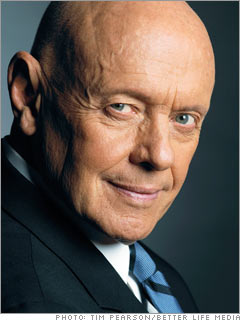
    Stephen R. Covey (or is it Lex Luthor?)
    Stephen R. Covey (or is it Lex Luthor?)

    First of all, if I could look like Stephen R. Covey does in that picture, I would shave my head and never look back. Holy moly, I love that picture. But that’s not why I’m writing.

    James Maxey is a writer who I respect and whose comments on the boards of Codex Writers often make me think or laugh. He recently started a thread about writing mission statements.

    Ack!

    I groaned when I first read the title of his topic. I know first-hand how useful goals are. I know how vital it is to identify what’s vital in any endeavor. Heck, I’m a Covey-lover through and through.

    But every mission statement I’ve seen has either been useless corporate toilet paper (because they’re printed on stuff that’s too stiff and rigid to be of any help in the bathroom) or it’s a personal artifact that has a six week half life, after which it turns into something like that singing fish you bought and can’t for the life of you figure out why or where to put it now that you realize you could have eaten a steak for just as much money and the pleasure would have lasted longer.

    And yet consciously thinking about how you want to live is so powerful. I think the corporate world ruined the term for me. I cannot bring myself to write a “mission statement.” I know what I want to do in my various roles in life. I know how I want to live. But I cannot use that label. Alas.

    So here’s my “what I want to do” as far as writing is concerned. It’s not crisp and clean. And if I had to write it again, it would come out differently. But it has the gist.

    —-

    I want to make people fall in love like I did when I first watched the Sound of Music–that sweet, pure yearning. And when they’re out of love, I want them to see a way back.

    Every once in a while I want the ground to shift under the feet of my readers like it shifted under mine when I first watched Les Miserables with Anthony Perkin.

    I want them to laugh.

    I want to give them the wonder and adventure that was given me when I read the Hobbit.

    I want them, at least once, to shout in triumph.

    I want to share my delight in people who are fascinating, flawed, salt-of-the-earth, odd, funny, strong or a hundred other wonderful things, but who show some courage, a little or a lot.

    I want readers to weep at the hope of redemption. I want them to despair at loss.

    I want the sun to shine. I want the world to crack.

    And when my readers are done, when the book’s closed and they sit back, I want the story and people to linger, I want my readers to want to go back. I want them to feel it was, not only a surge of living, but a good thing to have once been lost in the pages of my book.

    Share

6 Comments

  1. John,

    I love this post, very insightful overview of how patterns affect readers and why we writers need to be aware of them.

    I’ve been writing fiction for a number of years. Starting in 2008 I’ve taken a number of very helpful workshops and classes on the craft of fiction, including Kij Johnson’s 2 week novel outlining class at the Center for the Study of Science Fiction in Lawrence. Kij talked about appropriating what she called “spines” from existing stories to utilize them in our own stories. Your post shows why that works.

    Recently rewatched 2014 Heist movie, The Art of the Steal. Not only is it a highly entertaining movie, it’s a very clever example of the heist pattern: what’s the target/mark, planning for the heist, the execution of the heist, and the aftermath.

    Of course the writer-director of the film put his own spin on it, but the movie gave me the satisfaction I enjoy from watching a great caper unfold. Patterns, this I will keep before me and internalize as I work on my next novels. Thanks!

  2. Boy, Johnson’s “21 Monkeys and the Abyss” was sooooo good. I bet her course was awesome. And 2 weeks! Was that 80 hours? Or two evenings a week apart?

    That “appropriating spines” idea is exactly what I’m talking about, although that’s a cooler and creepier name (grin).

    And your example of THE ART OF THE STEAL is a good example. Heists are a certain type of problem and require a certain general series of events to tackle. And because we want to be in suspense and anticipation, there are certain things, cues, we have to give the reader as we roll it out.

    BTW, I’m reading Brandon Sanderson’s STEELHEART. So many parallels to his MISTBORN. Another heist-type story. And yet different.

  3. John,

    Her course was awesome! It ran over two weeks, from Sunday evening until the second Friday. There were eight of us students. Each of us submitted the first three chapters of our novels and a 5-10 page outline. We spent the first week workshopping the outlines, and the second week workshopping our revised outlines. Evenings were spent working on brainstorming the revision our novels in a group setting, with Kij and her assistant Barbara usually on hand. Kij calls this process “fishbowling.”

    I liked it so much when I got back to Oregon I formed a new writers group with three other authors. Not a critique group, but a brainstorming and support group, what Dale Carnegie called a “mastermind” group. I’ve been in my share of critique groups over the years, and they can be invaluable, but this is a whole different kettle of very inspiring fish, so to speak (grin). It has made a huge difference in my writing and mindset.

    Looking forward to reading Steelheart by Sanderson!

  4. Interesting. When you get more time, I’d be interested in hearing more specifics about how one of these are run, and how it’s different than a critique group.

  5. Hi John,

    Here’s a rundown of the brainstorming/fishbowl method for a writers group. It seems to work best with four members. In Kij Johnson’s class we had eight students, but the fishbowl sessions usually ran anywhere from one on one up to three or four writers brainstorming.
    We use this technique for brainstorming an outline, or world building, science fictional or fantasy ideation, and even for a revision outline. The author types up the outline, his/her notes, and any questions about the material she’d like the group to consider, emailing them out a few days beforehand to give the others time to read and reflect.

    The day of the meeting the author might use a white board to capture notes, draw diagrams, ETC. In Kansas we used big sheets of butcher paper and laid out post-its on them, to show plot arcs, world building details ETC.

    The group then asks the author questions, throws out ideas, and the author does likewise. This is a very organic, back and forth process. We’ve done it with world building, with bare outlines and detailed ones. It’s a perfect process for discussing the characters, their motives and any places where the logic of their actions seems to be astray, missing, or just doesn’t seem right.

    The author decides what to use out of this, and can call for a follow-up “fishbowl” if needed.

    This is the process in a nutshell. Feel free to drop me a line if you need more info or have more questions.

    Best,

    Dale

  6. Aha! So it’s not so much a critique or feedback session. It’s more of a facilitated development session where questions direct the idea generation and everything is captured as you go.

    You know, I used to do meeting facilitation. This goes right along with a lot of what I learned there. It’s interesting how powerful it is to simply capture what folks are saying on a board or sheet up front so it’s visible. Having that info in front of you, instead of disappeared into the ether, seems to always produce more and better insights.

    Thanks for sharing this!

Comments are closed.